Germany
Retirement Planning Template for Germany
See your gesetzliche Rente, Riester, Ruerup, and bAV projections alongside estimated retirement expenses - in a Google Sheets template you own.
In Depth
Gesetzliche Rente, Riester, and Betriebliche Altersvorsorge - Germany's Three-Pillar System
Germany's retirement system rests on three pillars, and understanding how they interact is central to any long-term plan. The first pillar is the gesetzliche Rentenversicherung (statutory pension), funded by mandatory contributions split equally between employee and employer at 18.6% of gross salary. Each year of contributions earns Entgeltpunkte (pension points), and the annual Renteninformation letter provides an estimate of projected monthly benefits. For someone earning the average salary over 45 years, the statutory pension currently replaces roughly 48% of pre-retirement income - a figure that is expected to decline gradually.
The second pillar, betriebliche Altersvorsorge (bAV), covers employer-sponsored pension schemes. Since 2002, employees have a legal right to Entgeltumwandlung - converting part of their gross salary into pension contributions, which reduces both income tax and social security payments. Many employers add their own contributions on top. The specifics vary widely: some companies offer Direktversicherung (direct insurance), others use Pensionskassen or Unterstützungskassen. Checking what your employer offers and how much they match is a practical first step.
The third pillar is private provision, where the Riester-Rente and Rürup-Rente (Basisrente) are the main government-supported options. Riester contracts come with state subsidies (Grundzulage of EUR 175/year, plus Kinderzulage for parents) and tax benefits, though fees and product complexity have drawn criticism over the years. Rürup is designed primarily for the self-employed and offers large tax deductions on contributions. Beyond these, many Germans supplement with ETF savings plans (ETF-Sparplan), which have become increasingly popular through low-cost brokers.
One detail worth noting: Germany is gradually transitioning to full taxation of pension income. For those retiring in 2025, 83.5% of the statutory pension is taxable, rising to 100% for retirements from 2058 onward. This means the effective value of pension income depends partly on when retirement begins. Factoring in tax treatment across all three pillars gives a more realistic picture of actual retirement income.
Germany
Retirement Planning in Germany: Key Factors
Germany's retirement system has three layers: the statutory pension, company pensions, and private provision. Understanding how these work together is central to planning.
The gesetzliche Rente provides a foundation
The statutory pension (gesetzliche Rentenversicherung) is funded by contributions of 18.6% of gross salary (split between employer and employee). Your projected pension depends on Entgeltpunkte (earning points) accumulated over your career. The current standard retirement age is 67. Your annual Renteninformation shows projected benefits - a key input for retirement planning.
Riester and Ruerup offer tax-advantaged private savings
Riester-Rente provides government subsidies (up to EUR 175/year plus EUR 300 per child) and tax deductions for contributions up to EUR 2,100/year. Ruerup-Rente (Basisrente) allows higher tax-deductible contributions (up to roughly EUR 27,565 in 2025) and is especially useful for self-employed individuals who don't qualify for Riester. Both have specific withdrawal rules at retirement.
Betriebliche Altersvorsorge adds an employer layer
Company pensions (betriebliche Altersvorsorge or bAV) allow salary conversion (Entgeltumwandlung) of up to EUR 302/month (2025) tax-free and social-contribution-free. Some employers add matching contributions. The trade-off is that salary conversion reduces your gross salary, which slightly reduces statutory pension accrual and other social benefits.
The pension gap can be significant
The statutory pension typically replaces about 48% of average earnings - well below the 70-80% many people target for retirement. This Versorgungsluecke (pension gap) grows for higher earners, since the statutory pension has a ceiling. Personal savings and private pensions are needed to bridge this gap.
Obtener la Plantilla
Primeros Pasos
Setting Up for German Retirement With Riester and bAV
Enter current retirement savings
List all retirement-related assets: Riester-Rente current value, Ruerup-Rente value, bAV entitlements (from your employer), ETF/investment portfolios, Bausparvertrag, life insurance (Lebensversicherung) surrender value, and any other long-term savings.
Note your statutory pension projection
Your annual Renteninformation shows your projected monthly pension at age 67. Enter this as expected retirement income. Remember that the projected amount is in today's euros and will be subject to income tax in retirement.
Set Riester, bAV, and ETF-Sparplan contributions
Enter Riester or Ruerup contributions, bAV Entgeltumwandlung amounts, ETF-Sparplan contributions, and any other regular retirement savings. This drives growth projections in the template.
Project retirement expenses
Estimate monthly retirement spending - housing (rent or Hausgeld if owning), health insurance (Krankenversicherung der Rentner), food, utilities, transport, travel, and leisure. Health insurance contributions continue in retirement, paid on pension income.
Calculate your Versorgungsluecke
Compare total projected retirement income (statutory pension + Riester/Ruerup + bAV + investment income) with projected expenses. The difference is your pension gap. The template helps you determine how much additional savings is needed to close it.
Véalo en Acción
Así es la plantilla
Explora la plantilla para ver cómo gestiona el presupuesto, las categorías y el seguimiento de gastos - todo adaptable a tu configuración financiera local.
- Selector de moneda integrado
- Categorías personalizables
- Seguimiento de presupuesto vs. real
- Gráficos y resúmenes visuales
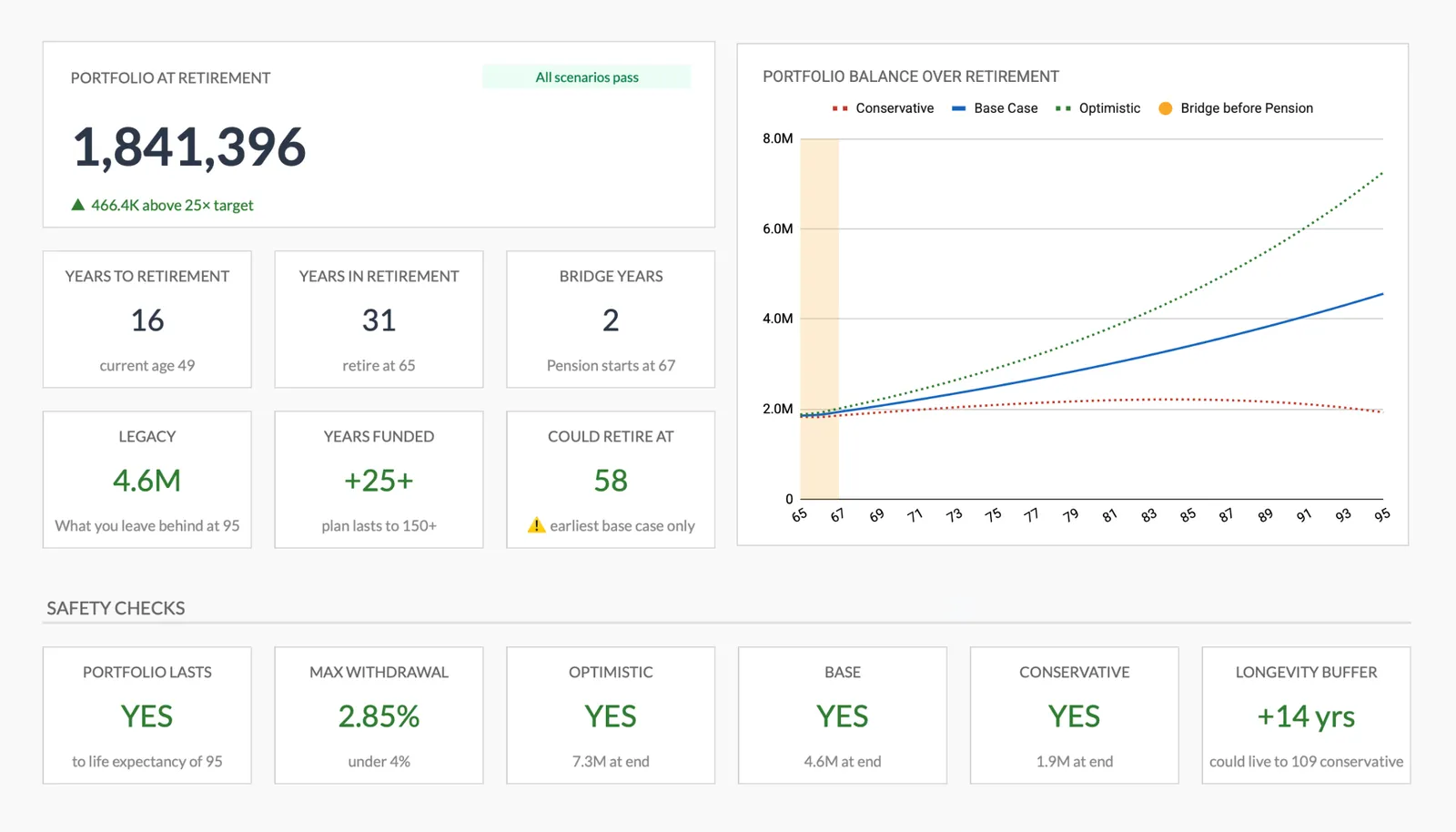
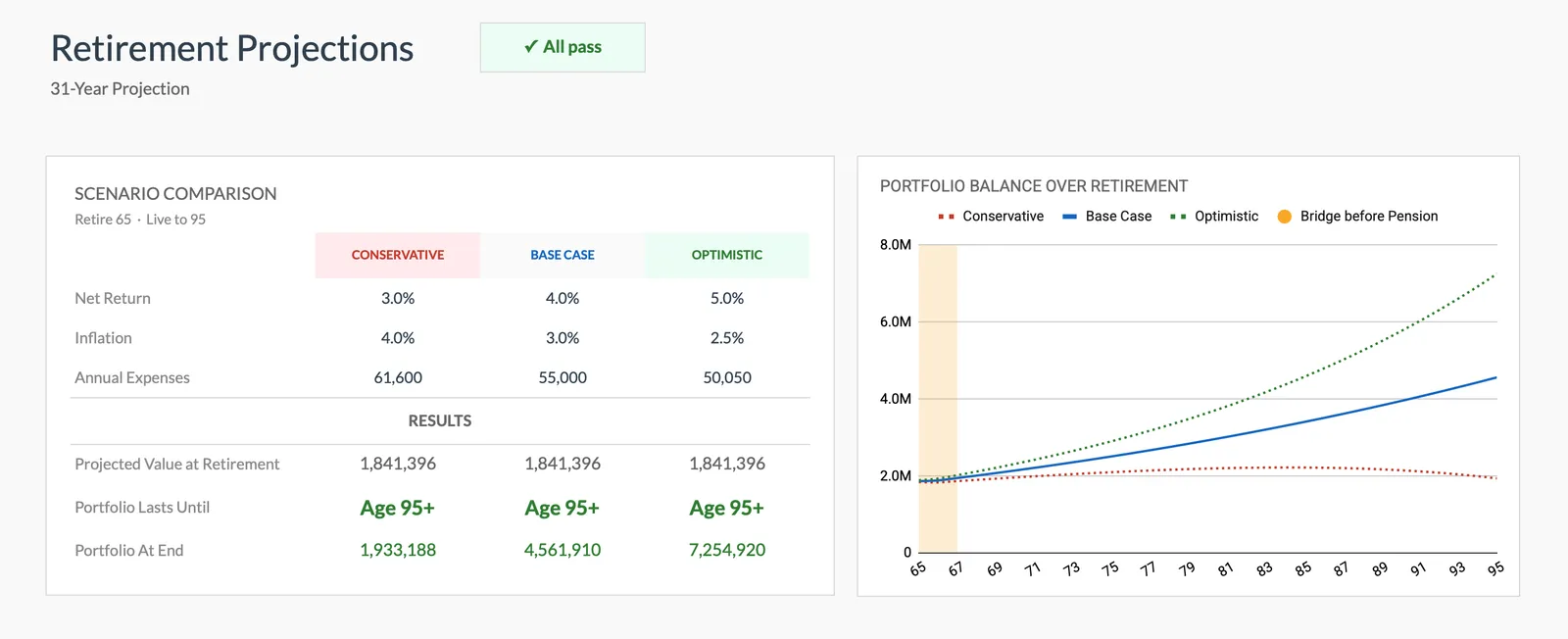
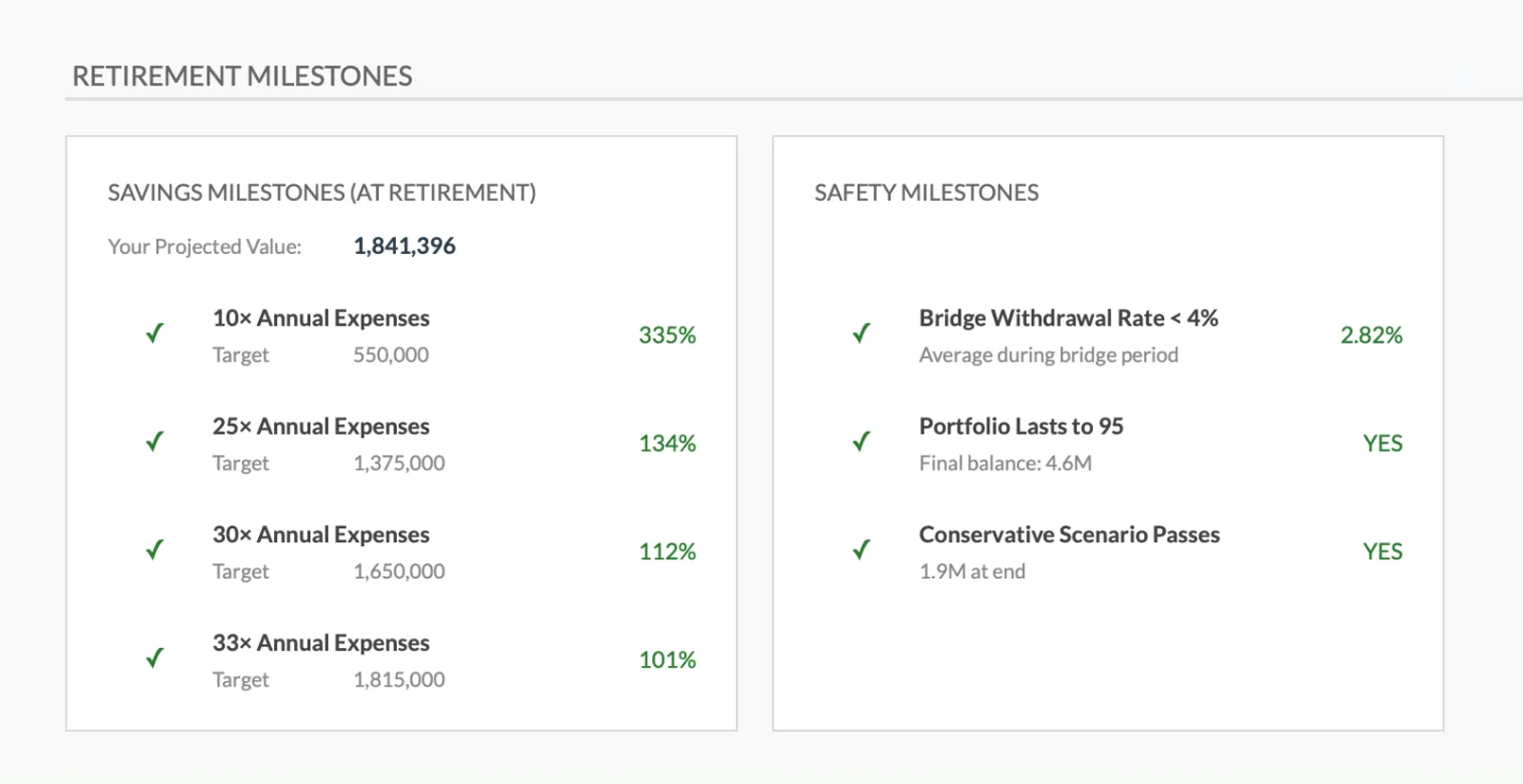
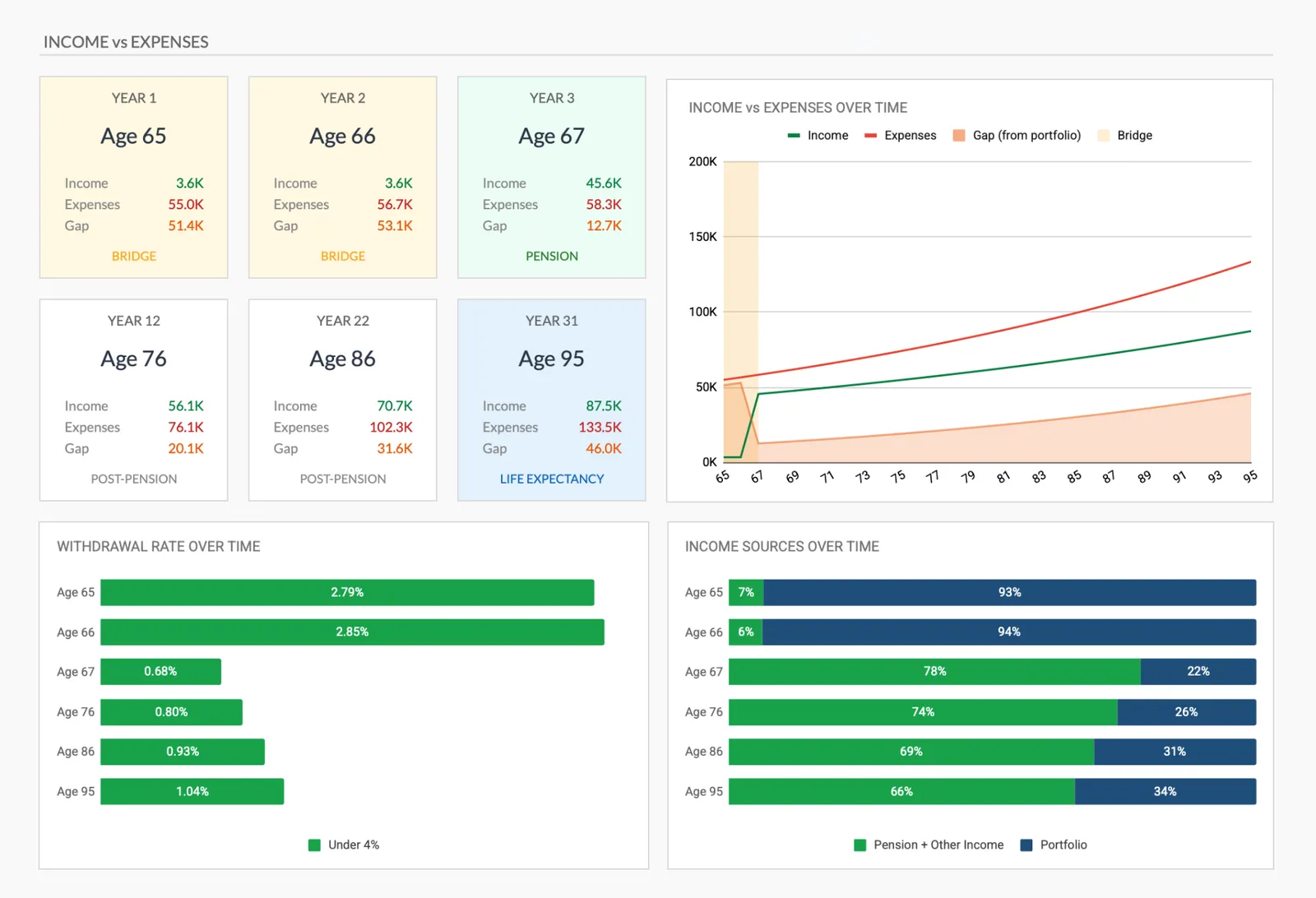
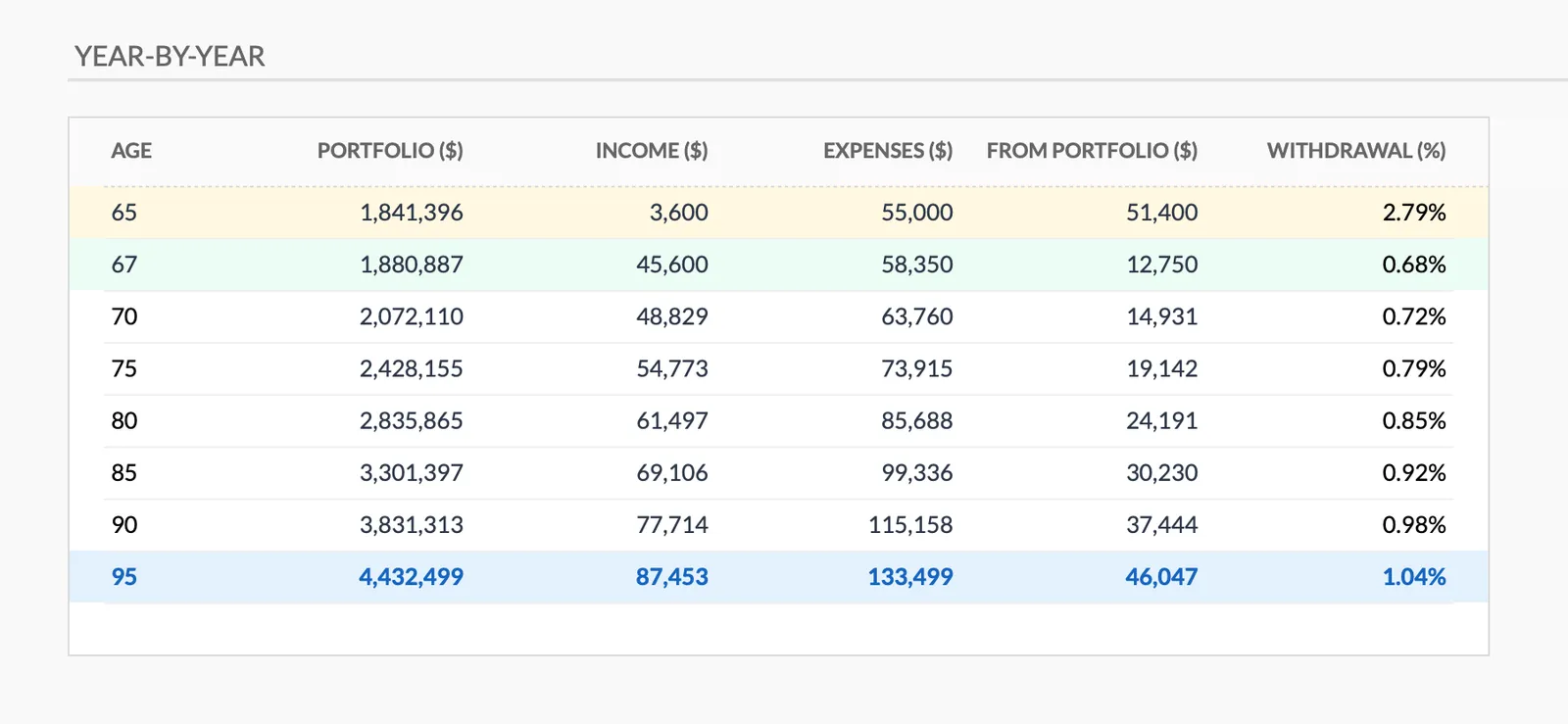
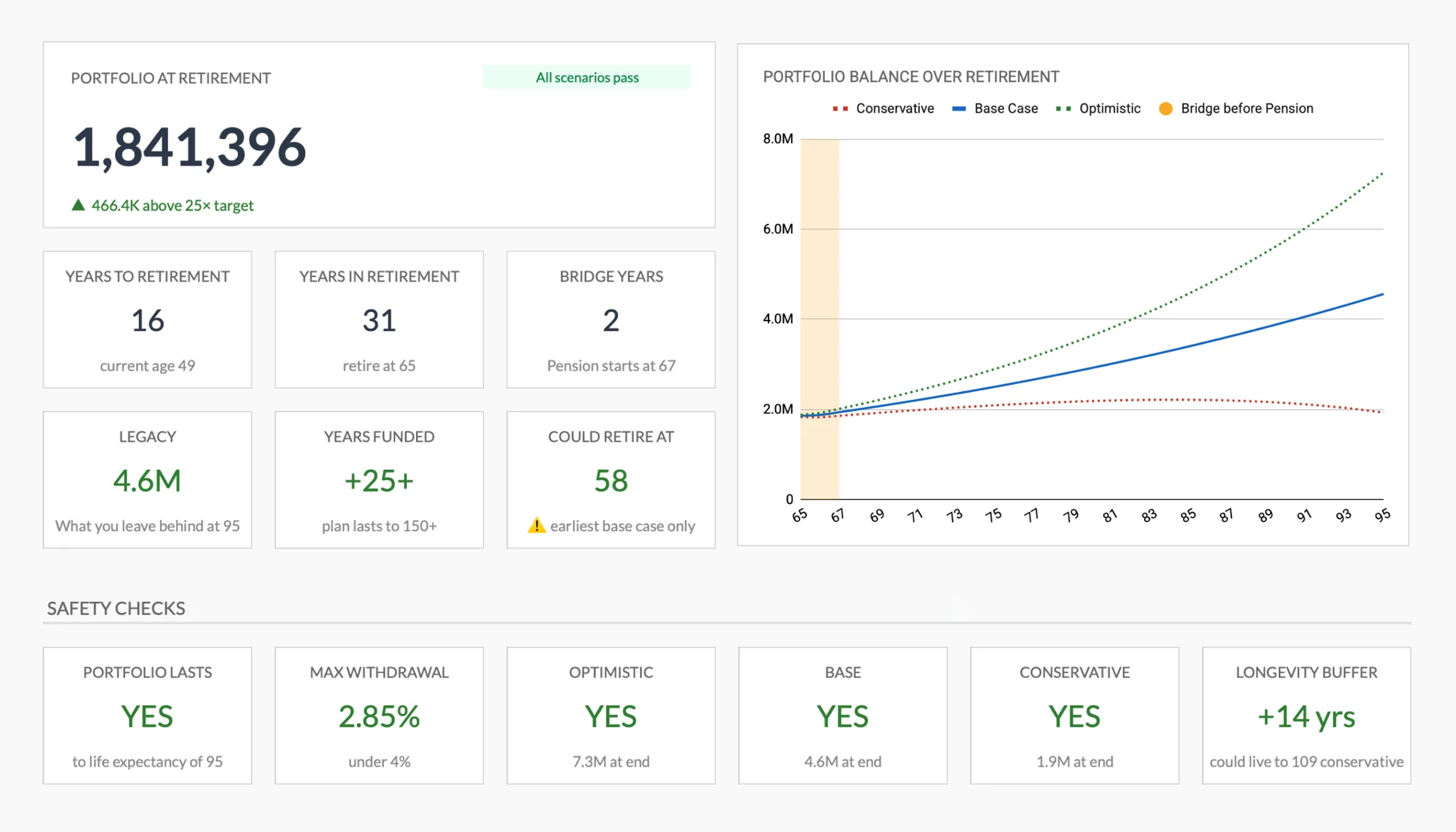
Complete retirement overview with projections
Project your retirement savings growth
Track progress toward retirement goals
Plan your retirement income against expenses
Detailed year-by-year retirement projection
Preguntas Frecuentes
Retirement Planning Template for Germany - FAQ
When can I retire in Germany?
The standard retirement age (Regelaltersgrenze) is 67 for those born in 1964 or later. Early retirement is possible from 63 with deductions (0.3% per month before 67) if you have 35+ contribution years. Those with 45+ contribution years can retire at 65 without deductions. The Renteninformation shows your specific dates and amounts.
How much will my statutory pension be?
It depends on your Entgeltpunkte. One year of average salary earns 1 Entgeltpunkt, currently worth about EUR 39.32/month (West, 2025). Someone with 40 years at average salary would receive roughly EUR 1,573/month before tax. Your Renteninformation provides personalized projections.
Riester or Ruerup - which is better?
It depends on your situation. Riester works well for employees (especially those with children, due to the Kinderzulage) and offers government subsidies. Ruerup is typically more suitable for self-employed individuals or high earners seeking larger tax deductions. Some people use both.
Is my statutory pension taxed?
Yes. Germany is transitioning to full taxation of pensions. For those retiring in 2025, 83.5% of the statutory pension is taxable. This percentage increases each year until 100% is reached for retirements from 2058 onward. The basic tax-free allowance (Grundfreibetrag) of roughly EUR 12,084 means lower pensions may still be tax-free.
How do I account for inflation?
Germany's long-term inflation target is 2% (ECB target). Statutory pensions are adjusted annually (roughly in line with wage growth, not inflation directly). For personal savings, using real returns (nominal minus inflation) gives more realistic projections. The Renteninformation shows projections both with and without assumed indexation.
What about the pension gap for higher earners?
The statutory pension has a contribution ceiling (Beitragsbemessungsgrenze) of EUR 96,600/year (West, 2025). Income above this doesn't generate additional pension points. Higher earners therefore face a proportionally larger pension gap and may need more aggressive private savings through Ruerup, bAV, and personal investments.
Can't find the answer you're looking for? Contact our team
Explorar Más
Free Tools for Germany
¿Listo para comenzar?
Descargue instantáneamente y comience a gestionar sus finanzas, o contáctenos para diseñar un paquete de plantillas personalizado para sus necesidades.