
Monthly budgeting controls day-to-day spending; annual budgeting reveals patterns and prepares you for irregular costs like insurance and holidays. Run them as one system, where each month's category totals roll up into a yearly view, and you stop being surprised by your own spending. Here's how both fit together.
Budgeting is one of those things most people have tried at some point, yet few stick with it. You download an app, track expenses for two weeks, then life gets busy and the whole system falls apart.
The problem isn’t willpower. It’s that most budgeting guidance focuses on only one timeframe - usually monthly. But managing money well actually requires two perspectives: the monthly view for controlling day-to-day spending, and the annual view for seeing patterns and planning ahead.
When you combine both, budgeting becomes less about restriction and more about clarity. You know where your money goes, you can plan for big expenses before they hit, and you stop being surprised by your own spending.
This guide walks through how monthly and annual budgeting work together as a complete system.
The Two Timeframes of Budgeting
Think of monthly and annual budgeting as two different lenses for looking at your finances.
Monthly budgeting is where you control what’s happening right now. It’s tactical work: tracking income, categorizing expenses, and making sure you’re not overspending in any area. This is the hands-on work of managing money.
Annual budgeting is where you see the full picture. It shows trends across months, reveals seasonal patterns, and helps you plan for irregular expenses that don’t show up every month but still impact your finances.
Most people only do monthly budgeting. That’s better than nothing, but it has blind spots:
- You might budget perfectly in January but forget that car insurance is due in March
- You see that you spent $400 on dining out last month, but you don’t know if that’s normal or a spike
- Holiday spending catches you off guard every December because you never planned for it
Annual budgeting fills these gaps. It gives you context for your monthly numbers and helps you prepare for expenses before they arrive.
A simple way to think about it: monthly budgeting is the steering wheel, annual budgeting is the GPS. You need both to get where you want to go.
Monthly Budgeting: Taking Control of Your Spending
Monthly budgeting is where most people start, and for good reason. It’s the foundation of understanding your finances.
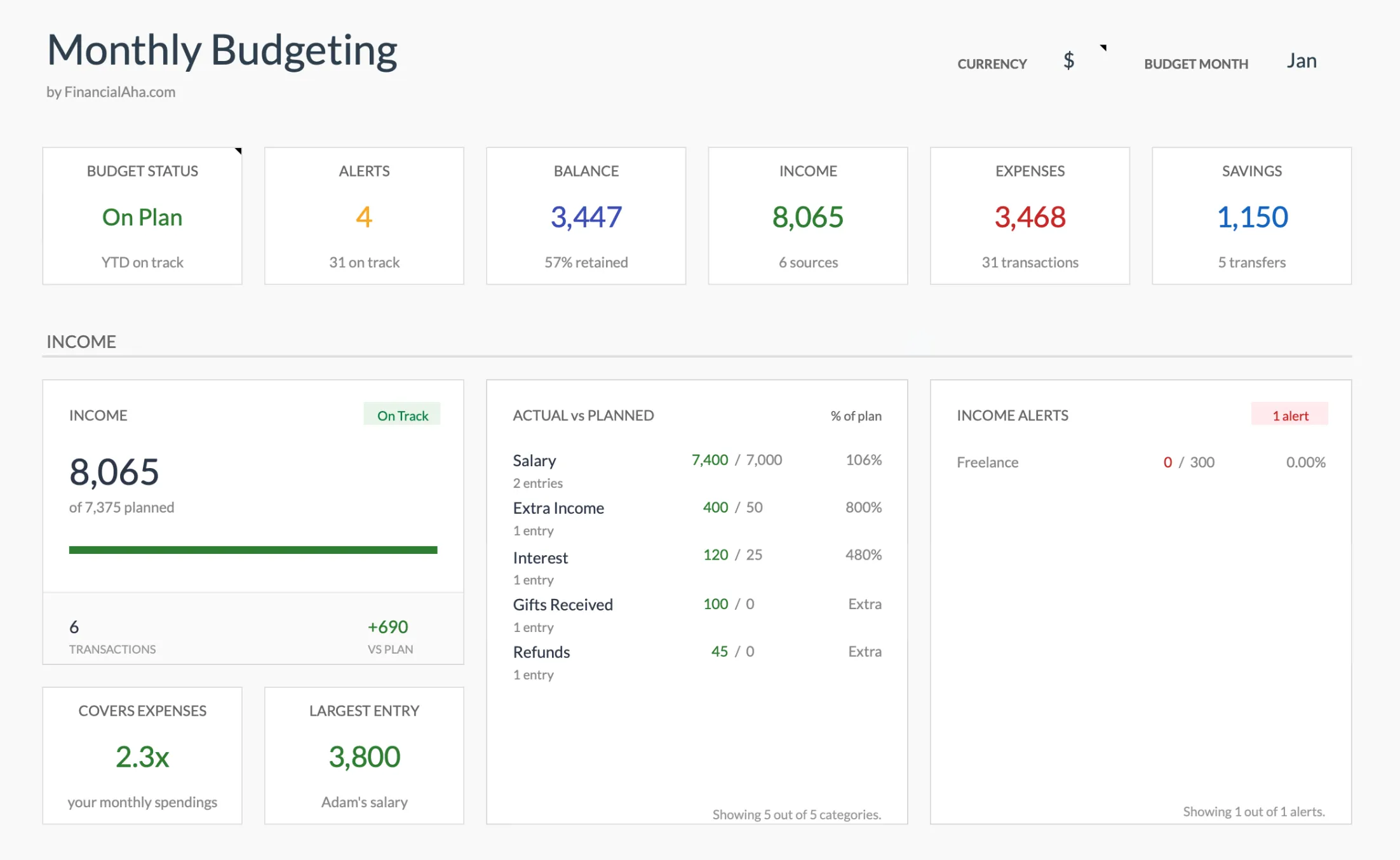
At its core, monthly budgeting means planning how your income will be allocated across expenses, savings, and goals, then tracking what actually happens.
Popular Budgeting Methods
There are several approaches to structuring a monthly budget. The right one depends on how much detail you want and what works with your habits.
The 50/30/20 approach divides after-tax income into three buckets: roughly 50% for needs (housing, utilities, groceries, debt payments, transportation), 30% for wants (entertainment, dining out, subscriptions), and 20% for savings. The Consumer Financial Protection Bureau frames the same split as a simple spending rule to live by. A budget calculator can help you see how your income might split across these categories.
Zero-based budgeting assigns every dollar of income to a specific category until you reach zero. Nothing is left “unallocated.” This method offers more control but requires more active management.
Envelope budgeting allocates cash (physical or virtual) into category “envelopes.” When an envelope is empty, spending in that category stops. It works well for people who tend to overspend in specific areas.
None of these methods is inherently better than the others. The one you’ll actually use consistently is the one that works.
What to Track Each Month
A functional monthly budget typically includes:
- Income: Salary, side income, any money coming in
- Fixed expenses: Rent or mortgage, insurance, subscriptions, loan payments, debt repayments - amounts that stay the same each month
- Variable expenses: Groceries, utilities, transportation, dining out - amounts that fluctuate
- Savings and goals: Emergency fund contributions, vacation savings, investments - tracked as transactions and as progress toward specific targets
Transaction tracking can be as detailed or simple as you prefer. Some people log every individual purchase. Others group similar transactions together - for example, logging all grocery shopping for the week as a single entry. Both approaches work; the key is capturing where your money goes.
The End-of-Month Routine
Monthly budgeting works when it becomes a habit, not a chore. A simple end-of-month routine takes 10-15 minutes and follows a natural progression.
Start by reviewing total spending by category, then compare those amounts to what you had planned. Note any surprises or areas that might need adjustment - categories where you consistently overspend or underspend are worth paying attention to. Finally, set up the next month’s budget based on what you learned. Over time, this process refines your budget to match how you actually spend rather than how you imagine you spend.
This small time investment prevents money from slipping through the cracks and keeps you engaged with your finances without obsessing over them. The rhythm of monthly review also creates natural check-in points - moments to pause and notice patterns before they become problems.
Annual Budgeting: Seeing the Bigger Picture
Monthly budgets show you what’s happening right now. Annual budgets show you what’s happening over time.
This matters because not all expenses are monthly. Car registration, holiday gifts, annual subscriptions, back-to-school costs, travel, home maintenance - these expenses are real, but they don’t show up in a typical month’s budget.
An annual view helps you:
- Spot trends: Is grocery spending creeping up? Are utility costs seasonal? An annual view reveals patterns that monthly snapshots miss.
- Plan for irregular expenses: When you can see the whole year, you can spread large expenses across months instead of scrambling when they arrive.
- Measure real progress: Saving $200 one month feels good, but seeing $2,400 saved over a year shows meaningful change.
What Annual Budgeting Shows You
An annual budget typically displays:
- Monthly totals for each spending category across all 12 months
- Year-to-date spending compared to what you planned
- Trends in income and expenses over time
- Progress toward savings goals
This bird’s-eye view transforms budgeting from a monthly grind into a tool for understanding your financial life.

With this perspective, seasonal patterns become obvious. High-spending months stand out clearly, and you can see whether categories are trending up or down over time. That kind of context changes how you think about individual months - a $500 grocery bill feels different when you can see it’s actually $50 below your monthly average.
Planning for Irregular Expenses
One of the most useful parts of annual budgeting is planning for expenses that don’t happen every month.
Consider everything you pay for throughout a year that isn’t a regular monthly bill:
- Insurance premiums (car, home, health)
- Vehicle registration and maintenance
- Holiday and birthday gifts
- Travel and vacations
- Annual subscriptions and memberships
- Home repairs and maintenance
- Medical expenses (glasses, dental work)
- Back-to-school or seasonal clothing
When you map these out across the year, you can set aside money each month so these expenses don’t disrupt your budget when they arrive.
For example, if you typically spend $1,200 on holiday gifts and travel in November and December, setting aside $100 per month throughout the year means that spending is already covered.
This is where the annual view really proves its worth. Without it, December hits and suddenly there’s $1,200 in holiday spending with no plan to cover it. With the annual view, that expense was anticipated and prepared for months ago.
How Monthly and Annual Budgeting Work Together
The real power comes from connecting these two timeframes into a single system where each informs the other.
The workflow starts with tracking transactions throughout the month - logging income and expenses as they happen, or reviewing bank statements weekly. At the end of each month, review and close out by totaling spending by category and comparing it to your plan. Those monthly totals then transfer to your annual view, where each month’s summary feeds into the yearly picture. On a quarterly basis, review the annual view to look for trends, adjust plans, and prepare for upcoming expenses.
This creates a feedback loop. Monthly tracking provides the raw data. Annual views reveal the patterns hidden in that data. Those patterns inform how you approach the next month. Over time, you’re not just recording numbers; you’re building an understanding of your own financial rhythms.
When to Look at Each View
Different timeframes serve different purposes:
- Weekly or as needed: Log transactions, quick check on spending
- End of each month: Full review, category totals, set up next month
- Quarterly: Review annual trends, adjust category budgets if needed, plan for next quarter’s irregular expenses
- Year-end: Full annual review, assess goal progress, plan for the coming year
This rhythm keeps you connected to your finances without requiring daily attention.
The Compounding Effect
Small improvements in monthly budgeting create significant annual results.
Reducing dining out by $50 per month might feel minor. But that’s $600 per year - visible in your annual view as real progress. When you can see how monthly decisions compound over time, it becomes easier to stay motivated.
The annual view provides perspective. The monthly view provides control. Together, they create a system that actually works.
Getting Started: A Simple System You Can Stick With
Complex systems fail. Simple systems survive. Here’s how to start without overcomplicating things.
The first step is choosing your tracking method. Options include spreadsheets, budgeting apps, or pen and paper. The right choice is whatever you’ll actually use. Spreadsheets offer flexibility and a clear view of your data, and how to create a monthly budget in Google Sheets walks through building one step by step. Apps offer automation and convenience. Paper works for people who think better with physical tools.
Most budgeting tools come with default categories that cover common expenses: housing, utilities, groceries, transportation, and so on. These defaults work well for most people. You can always adjust or add categories later based on your actual spending patterns - but starting with sensible defaults saves setup time.
Once you’ve picked a method, start with just one month. Don’t try to build the perfect system before you begin. Track for one month, see what you learn, and adjust based on reality rather than assumptions. After your first month, transfer your category totals to an annual tracker - this takes five minutes. After a few months, patterns will start to emerge.
Budgeting isn’t a one-time setup. It’s an ongoing practice that gets easier over time. The first few months require more effort. After that, it becomes routine.
If you prefer ready-made tools, the Monthly Budget Template and Annual Budget Planner are built to sit side by side. The monthly file logs transactions and compares budget against actual for a single month. The annual file holds a twelve-month plan and actual grid for the same categories, with monthly averages and year-to-date totals. They are separate Google Sheets files, so each month’s totals move across by copy and paste rather than on their own.
Common Budgeting Mistakes to Avoid
Knowing what doesn’t work is as useful as knowing what does.
Being too detailed: Tracking 50 categories guarantees burnout. Simplicity sustains habits.
Forgetting irregular expenses: Annual insurance, holiday spending, and car repairs are real costs. If they’re not in your plan, they’ll disrupt your budget.
Not reviewing regularly: A budget you don’t look at isn’t a budget. Even five minutes weekly keeps you connected.
Treating the budget as rigid: Life changes. Unexpected expenses happen. A budget is a guide, not a cage. Adjust when needed.
Giving up after one bad month: Overspending in one category doesn’t mean the system failed. It means you have information to work with. Adjust and continue.
Only looking at monthly data: Without the annual view, you miss trends and repeat the same patterns year after year.
Each of these mistakes is recoverable. The key is recognizing when something isn’t working and adjusting rather than abandoning the whole system.
Related
- Monthly Budget Template - track income, categorize expenses, and compare planned versus actual for one month at a time
- Annual Budget Planner - a twelve-month plan and actual grid per category, with monthly averages, year-to-date totals and annual goal progress
- Budgeting Bundle - the monthly and annual templates plus the Travel Budget Planner, in one purchase
- Budget Calculator - see how your income splits across needs, wants, and savings
- How to Create a Monthly Budget in Google Sheets - a step-by-step build from a blank sheet
Frequently asked questions
How do I reduce spending in a category like dining out?
Check your current spending, set a lower budget amount as your target, and watch the difference between budget and actual spending throughout the month.
How do I budget for annual expenses like insurance or holidays?
Divide the total cost by the number of months until it's due, then set aside that amount monthly as a savings goal.
How do I track debt payoff progress?
Set your regular debt payment as a budget expense, then create a separate debt payoff goal to track progress toward becoming debt-free.
What's the difference between a monthly and annual budget?
A monthly budget tracks income and expenses for a single month in detail. An annual budget shows monthly totals across the entire year, revealing trends and patterns.
How do I budget with irregular income?
An annual view smooths out month-to-month variation. For monthly planning, base your budget on your lowest typical month and save the extra from higher-income months.
Do I need both a monthly and an annual budget, or is one enough?
A monthly budget alone works for controlling current spending, but it has blind spots: annual insurance, holiday gifts, and car maintenance never appear in a single month. The annual view exists to catch those. Many people start monthly, then add the annual roll-up once a few months of data exist.
Which budgeting method should I pick: 50/30/20, zero-based, or envelope?
None is inherently better. 50/30/20 is the lightest to set up, zero-based gives the most control but needs the most upkeep, and envelope budgeting suits people who tend to overspend in specific categories. The one you keep using consistently is the one that works.
Sources
- My spending rule to live by (50/30/20) - Consumer Financial Protection Bureau
About this article
The 50/30/20 needs, wants, and savings split is checked against the Consumer Financial Protection Bureau's spending-rule worksheet Template sheets, inputs and outputs checked on 2026-09-10 against the shipped Monthly Budgeting (Summary, Budget Plan, Transactions, Goals) and Annual Budgeting Planner (Summary, Annual Plan, Annual Financial Goals) Google Sheets, which are also what the screenshots show Last reviewed September 2026.