Retirement Planning Template
Retirement Planning Template for Couples
Plan retirement for two - coordinate Social Security timing, model joint income needs, and ensure the plan works for whichever partner lives longer.
In Depth
Two Timelines, One Retirement Plan
Couples rarely retire at exactly the same time with exactly the same resources, which creates a planning challenge that single-person models cannot address. One partner may have a pension while the other has a 401(k). One may plan to work until 67 while the other wants to stop at 60. The years between the first and second retirement represent a transition period where income drops, healthcare coverage may change, and the financial plan needs to support one retired and one working partner simultaneously.
Social Security strategies for couples involve a set of decisions that interact with each other. A higher-earning spouse who delays claiming until 70 increases not only their own benefit but potentially the survivor benefit as well. The lower-earning spouse may benefit from claiming earlier if the household needs income during the gap years. These claiming decisions are interconnected - changing one partner's timing affects the other's options. Having both partners' full financial picture visible in one place makes it possible to compare scenarios meaningfully.
The surviving spouse scenario is a dimension of couples retirement planning that is uncomfortable but financially significant. When one partner passes, the household loses one Social Security benefit, potentially a pension, and moves to single-filer tax brackets - which are narrower than joint brackets. This can mean higher taxes on the same withdrawal amounts. Some couples find that Roth conversions during the joint retirement years help reduce this future tax burden for the surviving partner.
The Challenge
Why Couples Need Joint Retirement Planning
Retirement for two is more than double retirement for one. Different ages, different Social Security records, survivorship considerations, and shared spending create planning complexity that individual models miss.
Two Social Security records need coordination
When each partner claims Social Security dramatically affects household income. Spousal benefits, survivor benefits, and claiming age optimization require modeling both records together.
Different retirement ages complicate planning
If one partner retires at 58 and the other at 65, the plan needs to handle seven years of single-income coverage, healthcare bridge costs, and shifting income sources.
The surviving partner needs to be covered
When one partner passes, household income often drops more than expenses. Pension reductions, Social Security changes, and tax bracket shifts all affect the surviving partner.
Healthcare bridge is often needed before Medicare
If one partner retires before 65, COBRA or marketplace insurance creates a significant expense that lasts until Medicare eligibility.
Ready to take control of your couple finances?
What You Get
Joint Retirement Planning Features for Couples
Dual retirement income modeling
Model income for both partners independently and combined. See how the household income picture changes as each partner starts retirement.
Social Security optimization scenarios
Compare claiming at 62, full retirement age, and 70 for each partner. See the lifetime income difference for the household.
Survivorship analysis
Model what happens financially when each partner passes first. See whether the surviving partner is covered.
Healthcare cost bridge
Plan for the gap between early retirement and Medicare eligibility. Model insurance costs during the bridge years.
Joint withdrawal strategy
Plan account drawdown across both partners' retirement accounts. Optimize for tax efficiency and longevity.
What-if scenario comparison
Compare different retirement ages, spending levels, and market assumptions. See which combinations work and which fall short.
See It In Action
What the template looks like
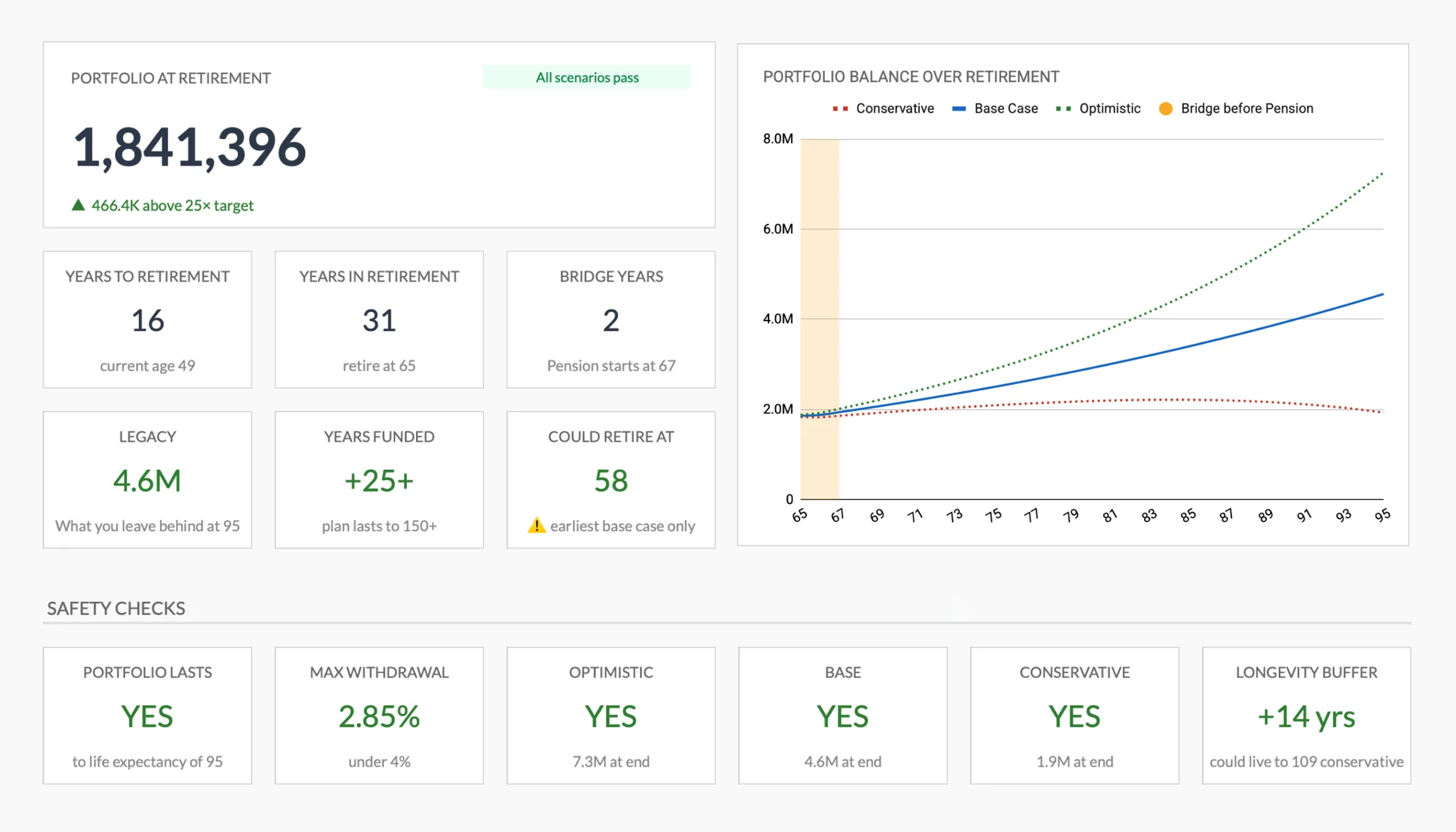
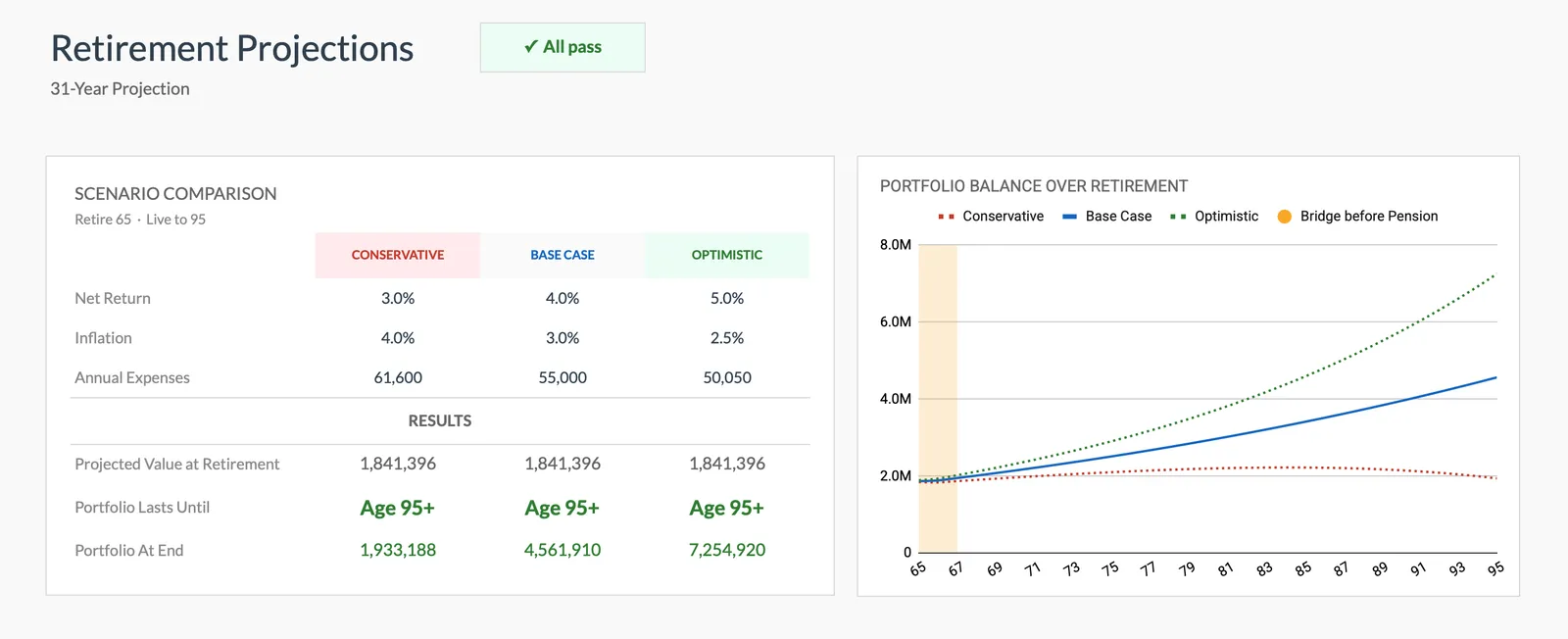
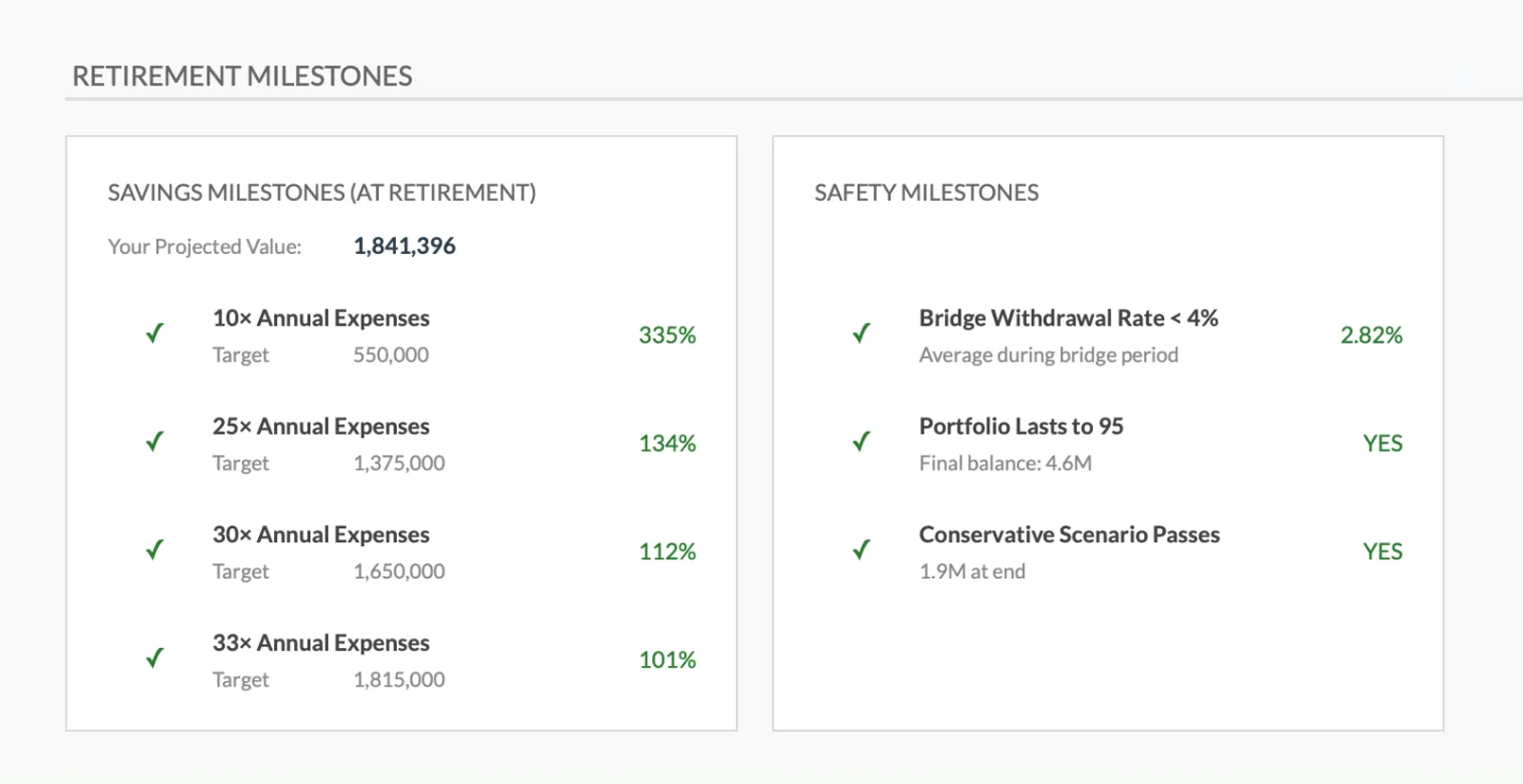
Browse through the template to see how it handles retirement projections, milestone tracking, and income planning.
- Retirement overview dashboard
- Savings growth projections
- Retirement milestone tracking
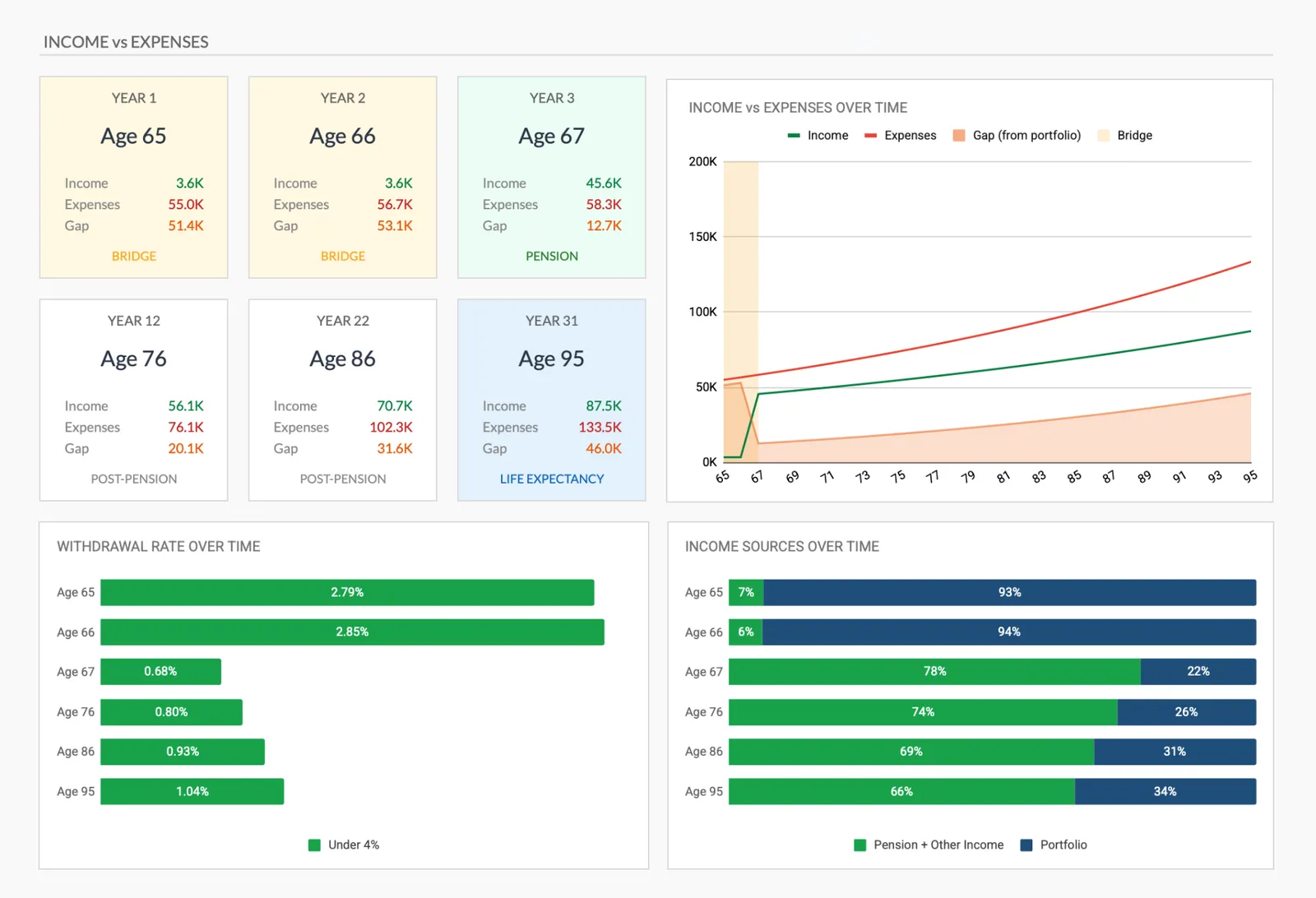
- Income vs expenses analysis
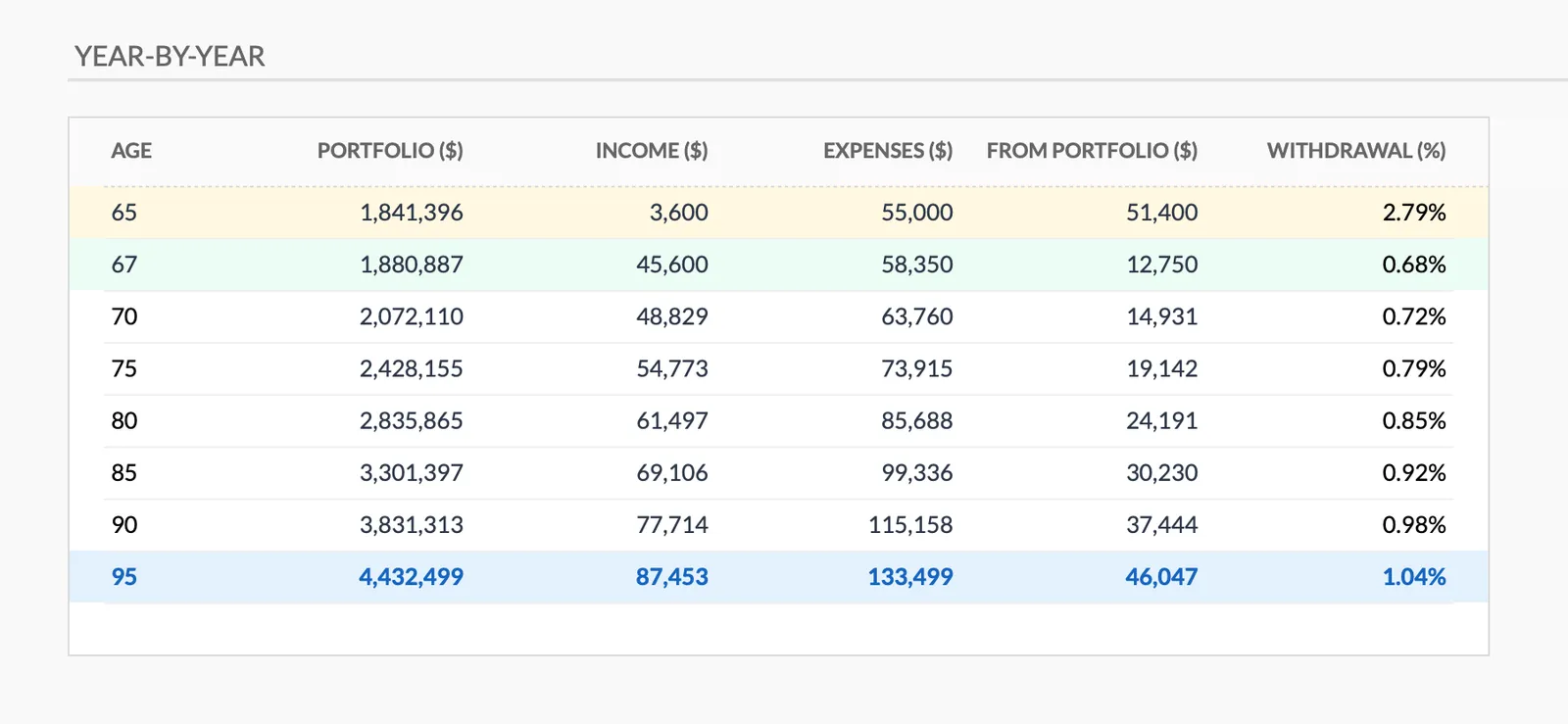
- Year-by-year projection
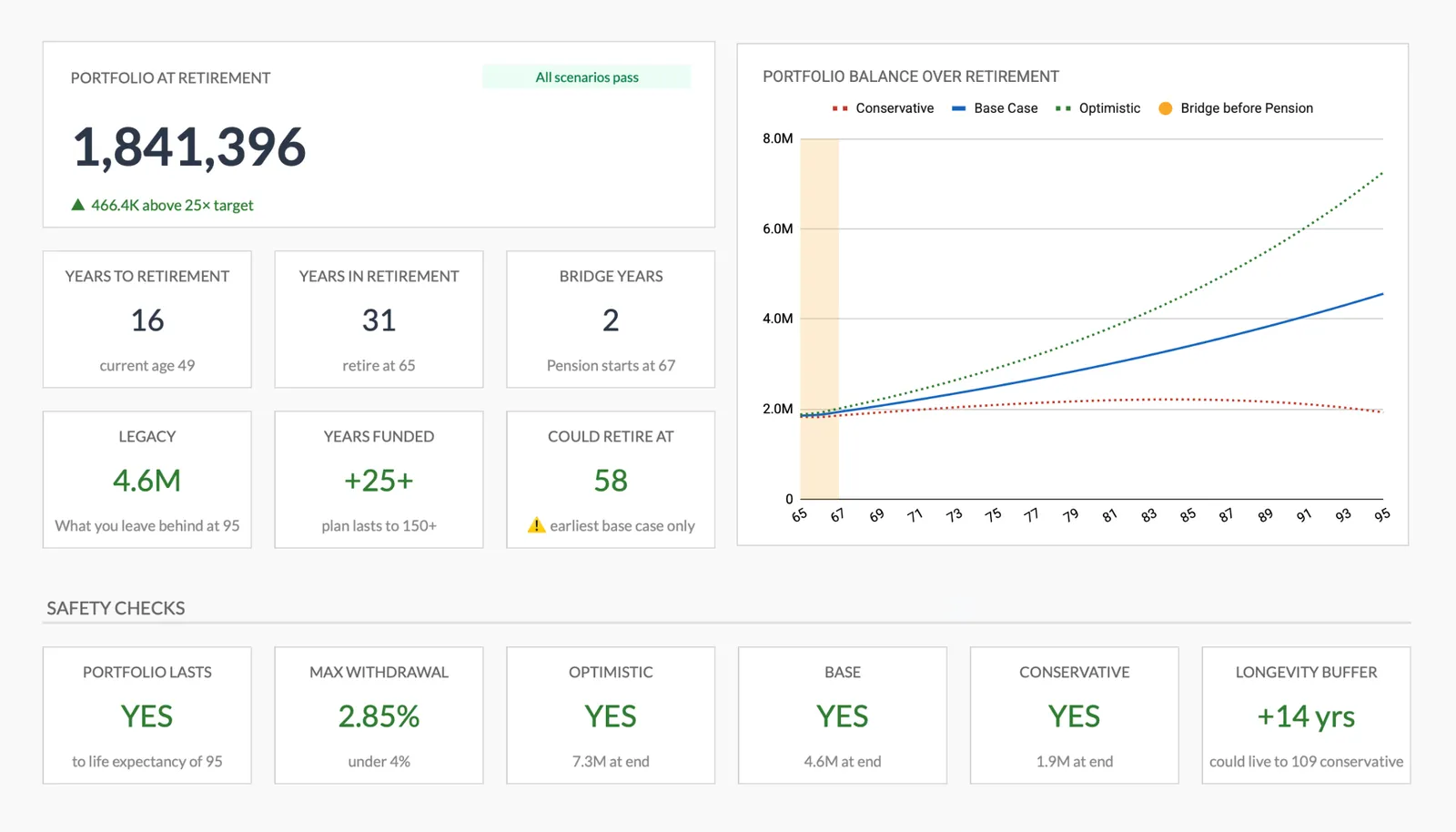
Complete retirement overview with projections
Project your retirement savings growth
Track progress toward retirement goals
Plan your retirement income against expenses
Detailed year-by-year retirement projection
Getting Started
Begin Planning Retirement as a Couple
Enter both partners' financial details
List retirement accounts, Social Security estimates, pension information, and other assets for each partner.
Set target retirement ages
Enter the planned retirement age for each partner. The template models the transition period and ongoing income.
Define household spending needs
Enter your expected joint retirement spending. The template models this against combined income sources.
Run Social Security scenarios
Test different claiming ages for each partner. See which combination provides the best household outcome.
Check survivorship scenarios
Model the financial impact of each partner passing first. Ensure the surviving partner's needs are met.
Common Questions
Retirement Planning for Couples - FAQ
Should we both claim Social Security at the same age?
Not necessarily. The optimal claiming strategy depends on age difference, income history, health, and other factors. The template lets you compare different combinations.
What about spousal Social Security benefits?
The template can model spousal benefits. A lower-earning spouse may receive up to 50% of the higher earner's benefit, depending on claiming timing.
How do we handle different retirement dates?
The template models each partner separately. If one retires at 55 and the other at 65, the plan shows the transition - single income years, healthcare bridge, and the shift to joint retirement.
What if one partner has a pension and the other does not?
Enter pension income for the partner who has it. The template shows how this guaranteed income affects the withdrawal strategy for the other partner's accounts.
Can we model downsizing?
Yes. Model the proceeds from selling your home and reduced housing costs. See how downsizing changes the retirement picture.
How does this handle the surviving partner's tax situation?
After one partner passes, the surviving spouse moves to single filing status with different brackets. The template can model this tax change.
Can't find the answer you're looking for? Contact our team
Start retirement planning as a couple
One-time purchase. No subscription. Your financial data stays in your Google Drive.