Net Worth Tracker
Net Worth Tracker for Real Estate Investors
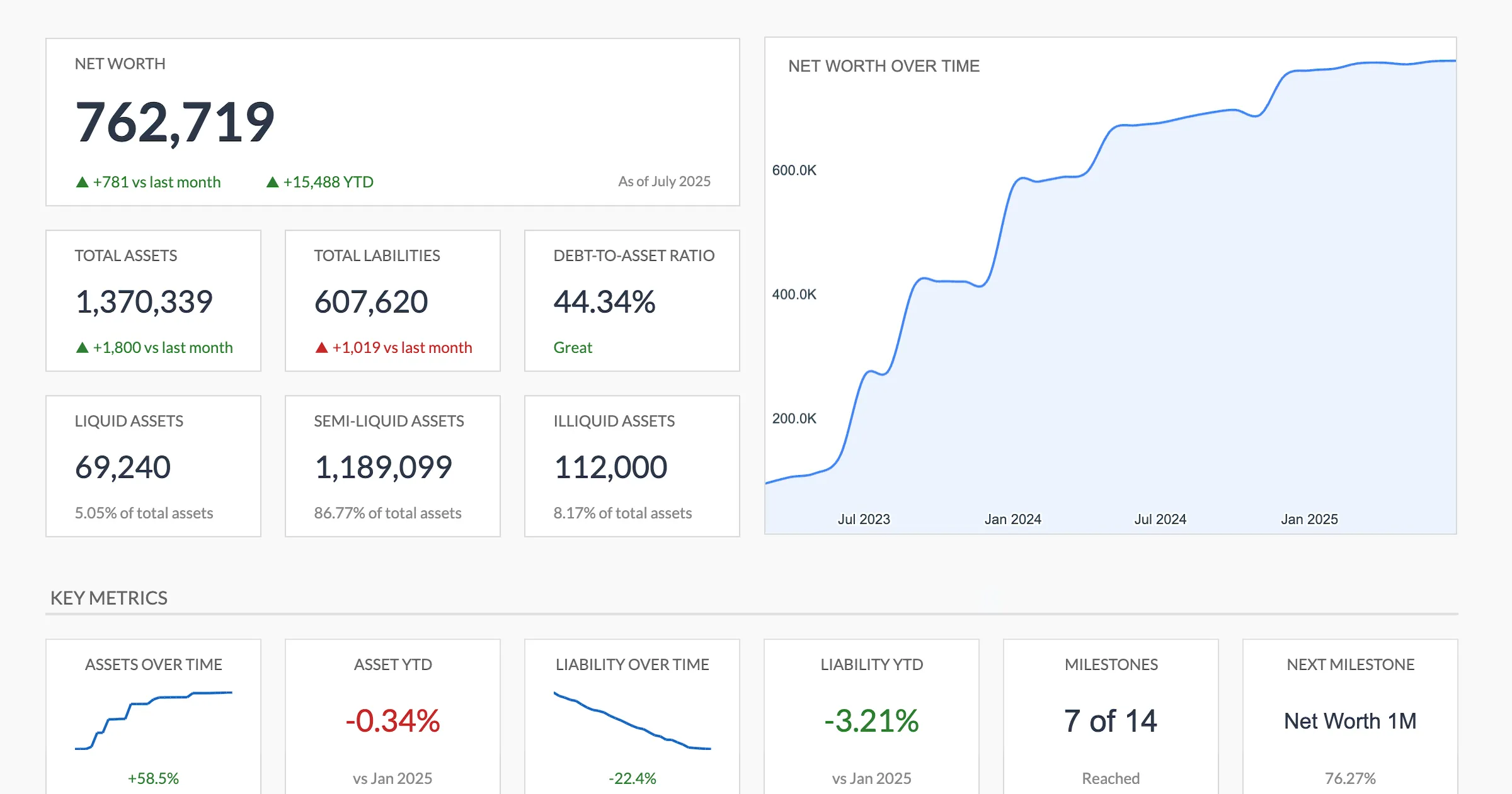
Track wealth that includes property by listing each building under Real Estate, each loan under Mortgage, and reading total net worth off one summary.
In Depth
Property Equity and the True Measure of Real Estate Wealth
Real estate wealth operates on different rules than financial asset wealth, and a net worth tracker that treats property equity the same as a stock portfolio misses important nuances. Property values do not update daily - they require periodic estimation. Equity builds through two channels at once, appreciation and mortgage paydown, which means wealth can grow even in flat markets as loan balances decrease. Understanding these dynamics requires tracking that accounts for the unique characteristics of real estate as an asset class.
The liquid versus illiquid composition of net worth is one of the most revealing metrics for real estate investors. A net worth of $800,000 that is 80% in property equity and 20% in liquid assets presents a very different financial reality than the same number split evenly between the two. The investor with concentrated property holdings has substantial wealth on paper but limited flexibility to respond to opportunities or emergencies without selling or borrowing. Tracking this ratio over time shows whether the portfolio is becoming more or less liquid as properties are acquired or sold.
For investors with multiple properties, the net worth tracker also reveals how individual properties contribute to the overall picture. One property might be building equity rapidly through aggressive principal paydown while another sits with minimal appreciation and a large mortgage balance. Keeping each property as its own row on the asset side, and each loan as its own row on the debt side, makes it possible to read the portfolio building by building rather than only in aggregate.
The Challenge
Why Real Estate Investors Need to Track Net Worth
Real estate builds wealth differently than stocks or bonds. Equity grows through appreciation and mortgage paydown, but it is illiquid and harder to measure. This is one net worth tracker you set up around a property portfolio, with buildings on the asset side and loans on the debt side.
Property equity is hard to see
Unlike a brokerage account with a daily balance, property equity must be calculated - estimated value minus mortgage balance. Without tracking, equity growth from both appreciation and principal paydown goes unmeasured.
Leverage amplifies both gains and risk
Real estate investors often use significant leverage. A 20% down payment means 5x leverage on appreciation - great in good markets, risky in bad ones. Net worth tracking shows the real impact.
Liquid versus illiquid wealth matters
Net worth of $500K mostly in property equity feels very different from $500K in stocks. Tracking the breakdown between liquid and illiquid assets reveals your actual financial flexibility.
Multiple properties compound complexity
Each property has its own value, mortgage balance, equity position, and performance. Without consolidation, the portfolio-level picture is invisible.
Ready to take control of your real estate investor finances?
What You Get
Tracking Features for Real Estate Portfolios
A row for every property
Each building gets its own named row under the Real Estate category, with a value column for every month. The category total and its share of assets land on the summary.
Liquid asset tracker
Track bank accounts, investment accounts, and other liquid holdings. See the balance between property wealth and accessible cash.
Mortgage balance tracking
Record mortgage balances for each property. Watch principal paydown contribute to net worth alongside appreciation.
Monthly net worth snapshots
Combined net worth including all property equity, liquid assets, and debts. Track the total every month.
Liquid versus illiquid breakdown
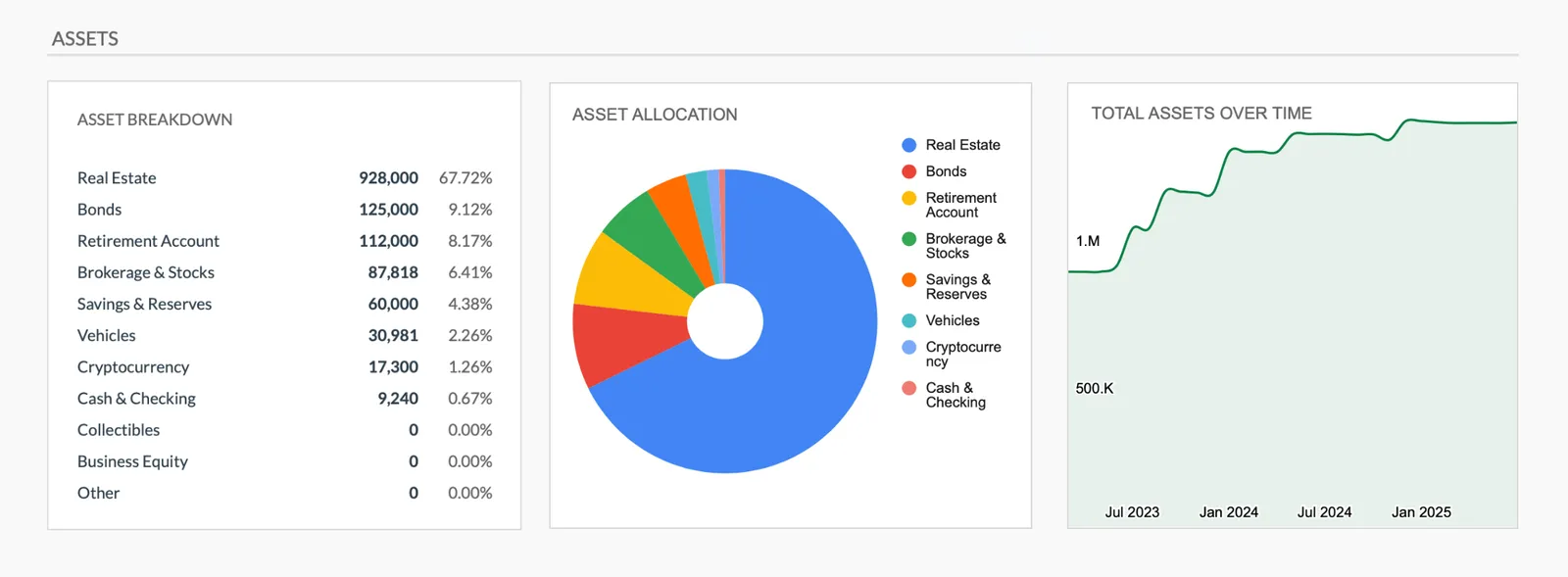
The summary splits total assets into liquid, semi-liquid, and illiquid buckets with a percentage on each, and the asset breakdown shows what share real estate holds.
Net worth trend over time
Chart showing total net worth growth. See how property appreciation and principal paydown contribute alongside liquid asset growth.
See It In Action
What the template looks like
Browse through the template to see how it handles asset tracking, liability management, and net worth analysis over time.
- Net worth dashboard with trends
- Asset and liability breakdown
- Key financial health metrics
- Milestone tracking
- Historical net worth over time
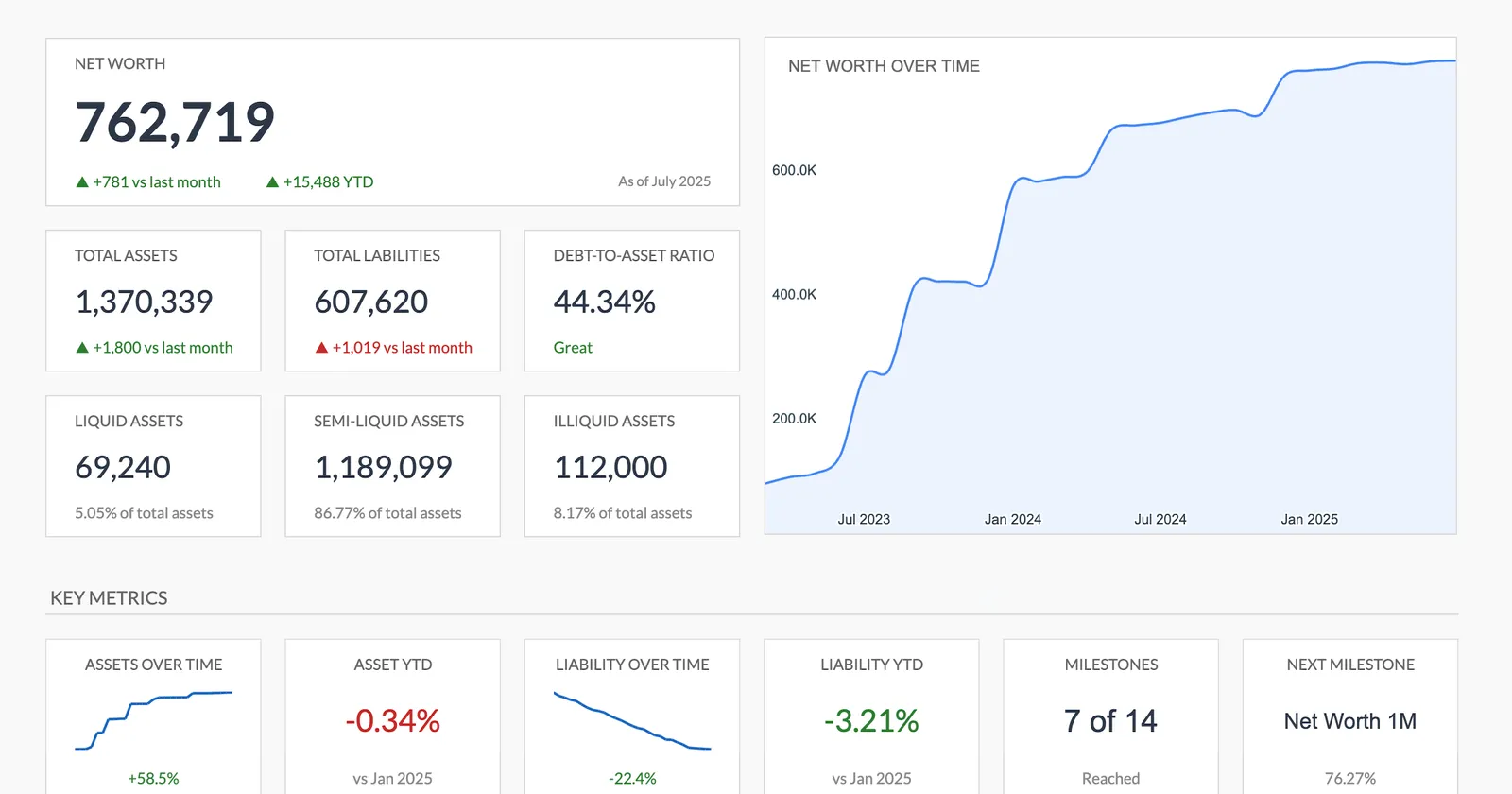

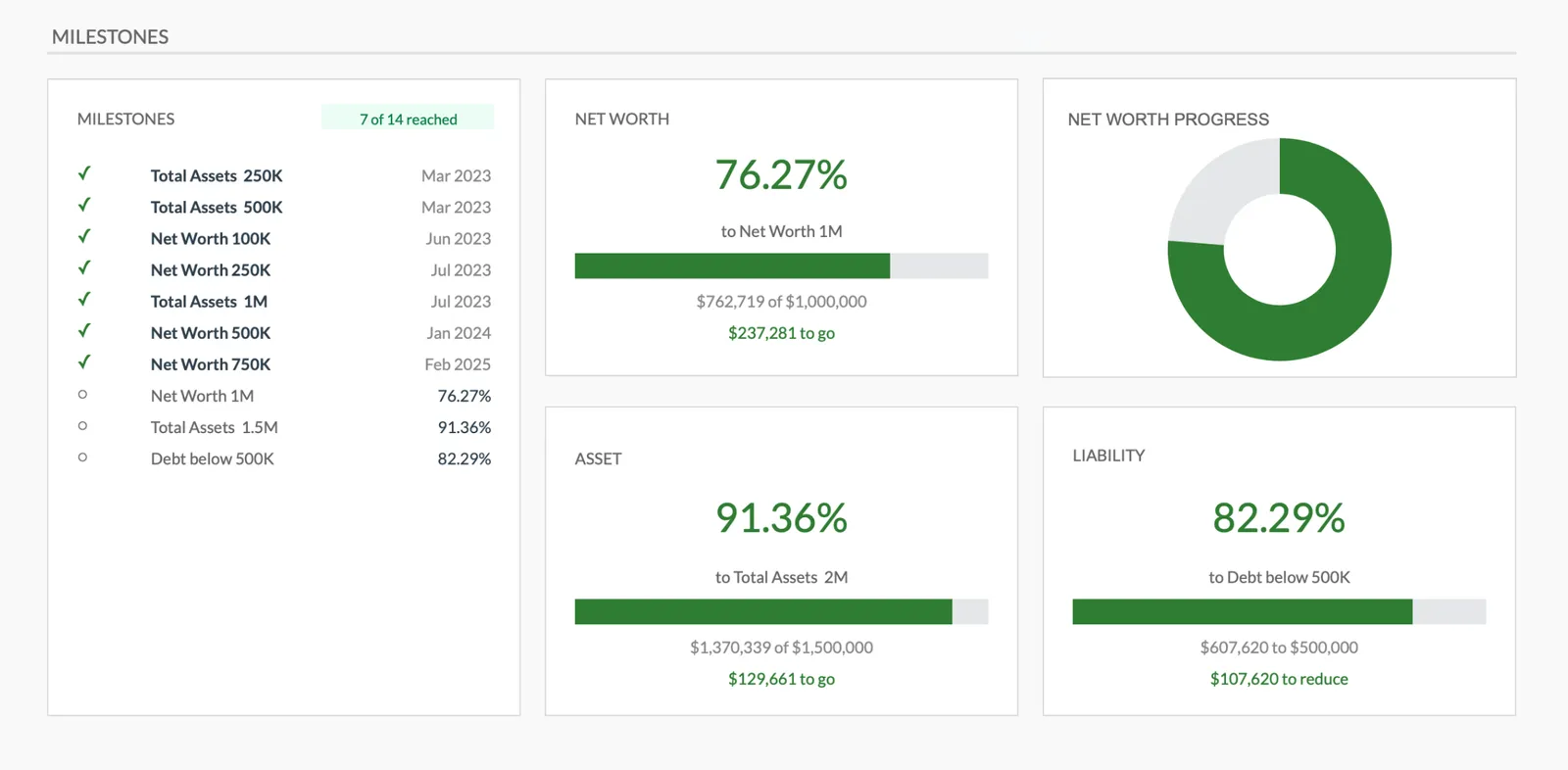
Track your net worth over time with charts
Breakdown of all your assets
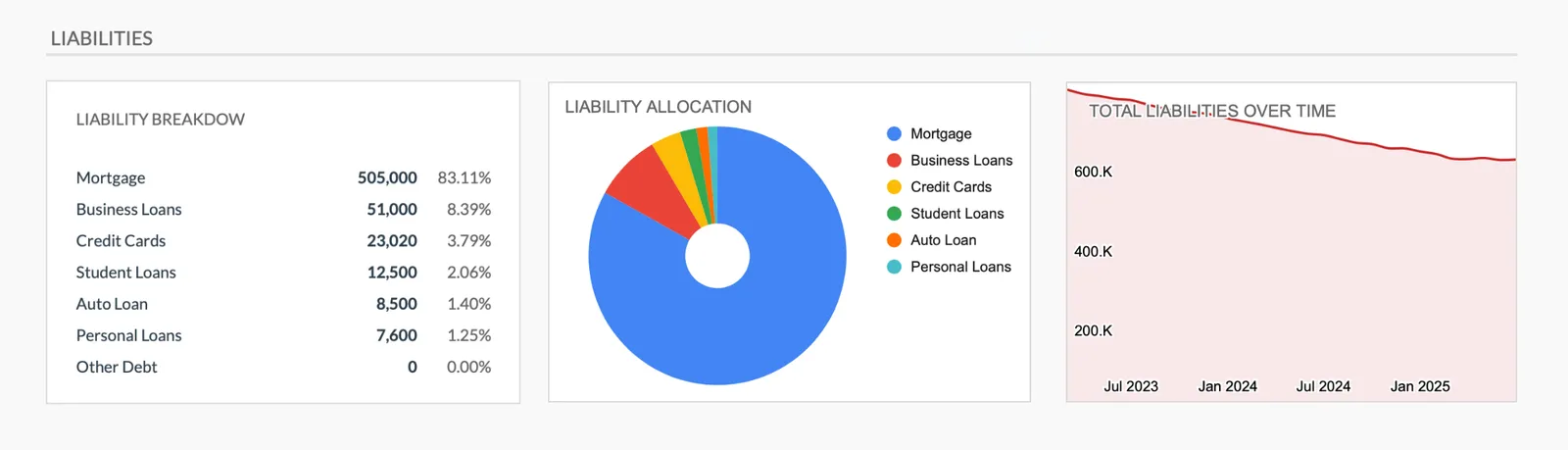
Track all debts and liabilities
Key financial health indicators
Set and celebrate net worth milestones
Getting Started
Start Tracking Your Real Estate Net Worth
List all properties with current estimates
Enter each property with a reasonable market value estimate. Be conservative - optimistic valuations distort the picture.
Record all mortgage balances
Enter the current balance of each loan as a row under Mortgage on the Liabilities sheet. The summary subtracts total liabilities from total assets.
Add liquid assets and other investments
Bank accounts, brokerage accounts, retirement funds - everything that is not real estate.
Update monthly
Refresh mortgage balances monthly. Update property values quarterly or when you have new comparable sales data.
Track the liquid versus illiquid ratio
The asset breakdown shows what share of total assets sits in real estate, and the liquidity split sits beside it. Heavy concentration in property is worth knowing about before it matters.
Common Questions
Net Worth Tracker for Real Estate Investors- FAQ
How should I estimate property values?
Use conservative estimates based on comparable sales, Zillow or Redfin estimates, or recent appraisals. Consistency in your method matters more than precision.
Should I include rental income?
This tracker measures net worth - assets minus liabilities. Rental income affects your net worth indirectly through cash accumulation and mortgage paydown.
How often should I update property values?
Quarterly is reasonable for most markets. Update more frequently if you are in a rapidly changing market or have a pending transaction.
What about property improvements?
Major improvements can increase property value. Adjust your estimate when you complete significant renovations, factoring in the added value - which may be less than the cost.
Does this track rental property performance?
This template focuses on net worth measurement. For rental property income, expenses, and cash flow analysis, a dedicated rental tracking tool is more appropriate.
Should I include my primary residence?
Including it gives a complete net worth picture. Some investors separate investment property equity from primary residence equity for a clearer view of their investment portfolio.
Can't find the answer you're looking for? Contact our team
Start tracking net worth as a real estate investor
One-time purchase. No subscription. Your financial data stays in your Google Drive.