Financial Planning Template
Financial Planning Template for Expats
One financial planning template you set up around life abroad, with accounts from your home country, your current country and anywhere in between listed in a single base currency.
In Depth
Financial Planning Across Borders and Currencies
Living abroad introduces a dimension to financial planning that domestic residents never encounter - the constant interplay between currencies, jurisdictions, and systems that were not designed to work together. A pension contribution in one country, a property mortgage in another, and savings in a third currency create a web that no single banking app or statement can untangle. The only way to see the real picture is to pull everything into one view with a common denominator.
Currency fluctuations add a layer of uncertainty that goes beyond normal market volatility. Someone holding savings in euros while earning in dollars and planning to retire in a country using a third currency faces a three-way exchange rate dynamic that can meaningfully shift their financial position without any change in their actual behavior. Tracking everything in a base currency over time reveals these shifts and prevents unpleasant surprises during major life transitions.
One aspect of expat financial planning that often gets overlooked is the retirement gap. Pension systems rarely transfer cleanly between countries, and years spent abroad may not count toward social security or state pension benefits back home. A financial plan that maps retirement accounts across jurisdictions makes these gaps concrete rather than abstract, which is where planning for them can actually begin.
The Challenge
Why Expats Need Cross-Border Financial Planning
Living abroad splits your financial life across countries. Accounts in different currencies, retirement systems in different jurisdictions, and obligations that span borders all need a unified view.
Assets live in multiple countries
Bank accounts back home, local accounts abroad, retirement funds in one country, property in another - without consolidating everything, your true financial position is unclear.
Currency fluctuations affect real wealth
Savings in one currency can gain or lose value relative to your spending currency. Converting every balance into the same currency as you update is what makes those movements visible.
Retirement systems do not always transfer
Pension contributions in one country may or may not count in another. Social security agreements vary. Tracking what you have in each system prevents gaps in long-term planning.
Planning to return - or not - changes everything
Whether you plan to repatriate, move to a third country, or stay abroad permanently affects where to save, what to invest in, and how to structure finances.
Ready to see your expat finances in one place?
What You Get
Planning Tools for Expat Finances
Every country on one asset table
The sheet holds a single currency and there is no country column, so each account goes in as its own named row at the rate you used. The summary totals them and splits the total by asset type.
Cross-border debt overview
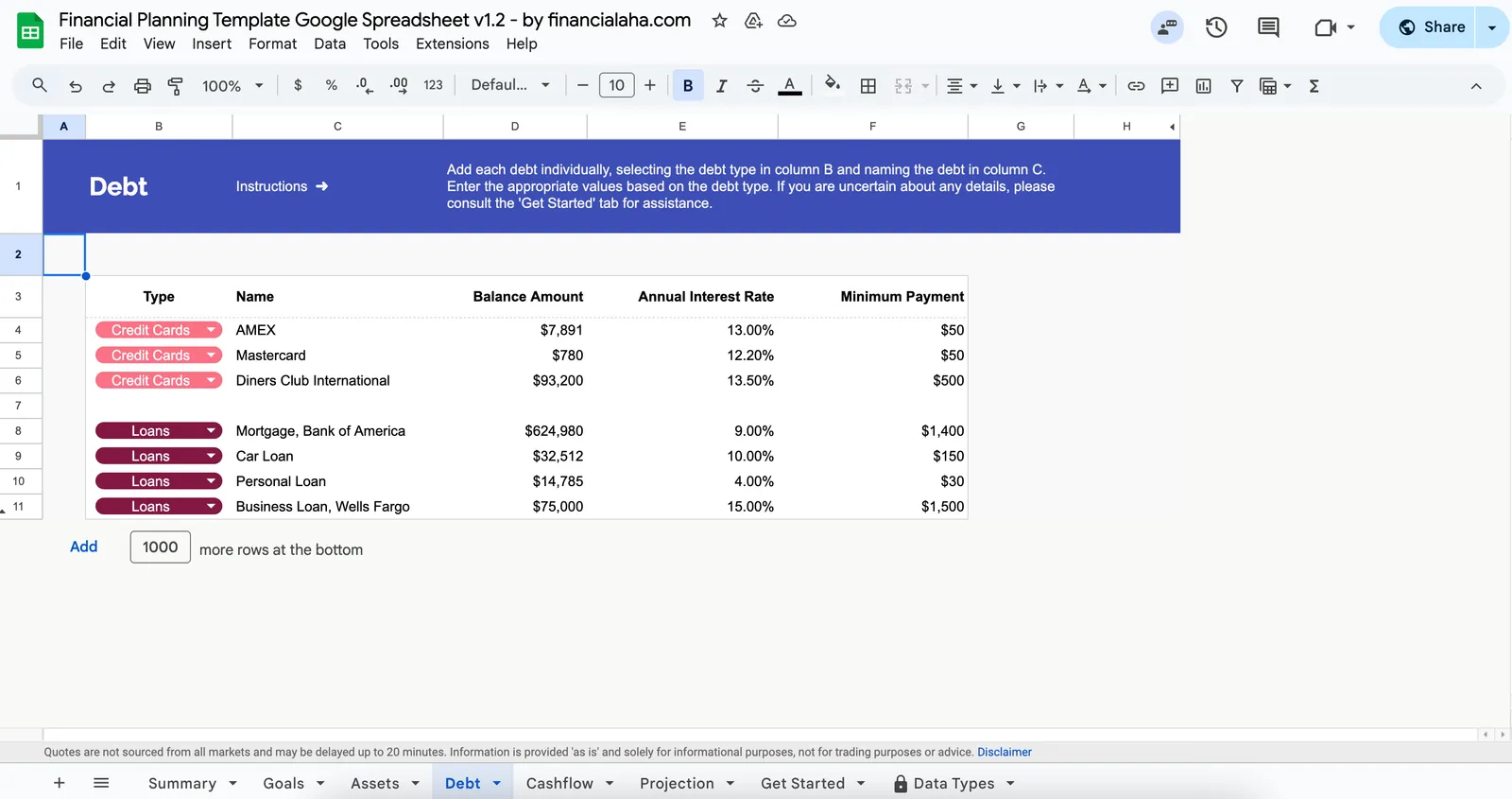
Debts go on the Debt tab wherever they are held, each with a balance, an annual interest rate and a minimum payment, converted to your base currency as you enter them.
Retirement account mapping
Each pension or retirement account goes in as its own asset row, named for the country and the scheme it belongs to, with a value and an annual growth assumption.
Targets in your base currency
The Goals tab takes net worth, liquid money, total assets, maximum debt, debt-to-income ratio, and average monthly income, expenses and savings, all in the one currency the sheet works in.
Net worth in your base currency
All assets minus all debts in the single currency you set the sheet up in. The summary recalculates it every time you refresh balances.
Financial projections
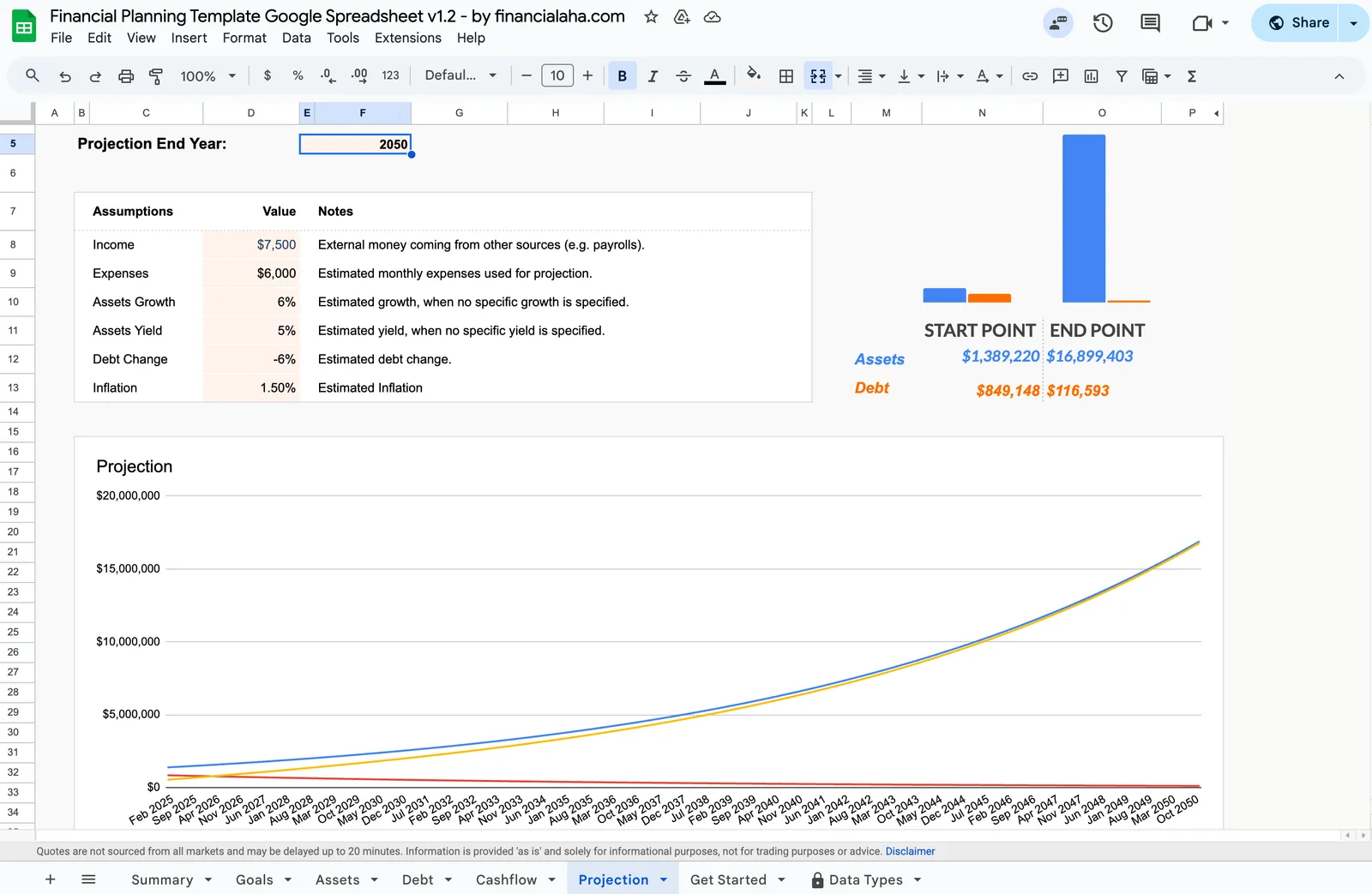
Change the assumptions for monthly income, monthly expenses, asset growth, asset yield, debt change and inflation, then read the assets and debt figures at the end year you pick.
See It In Action
What the template looks like
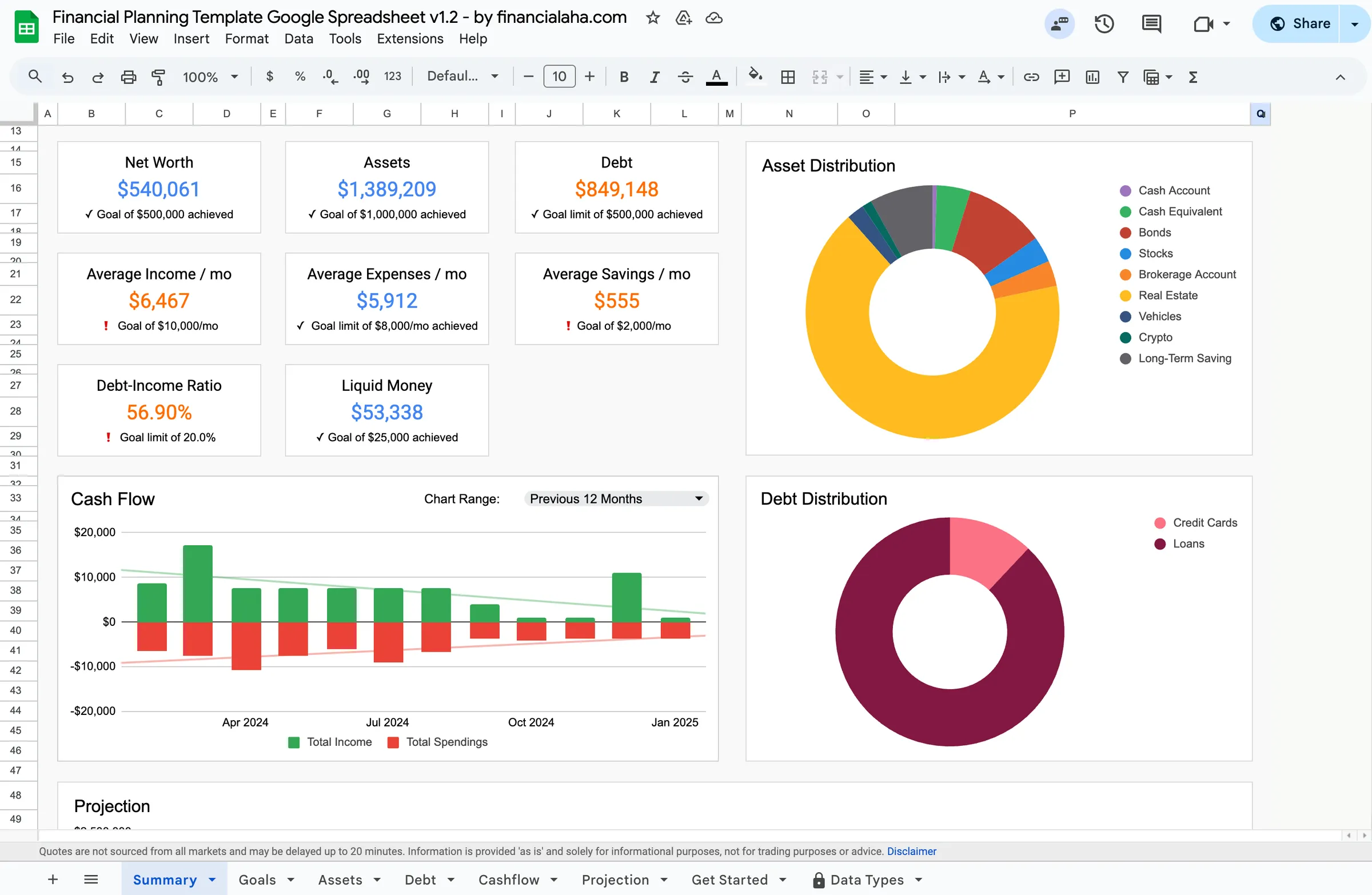
Browse through the template to see how it handles financial planning, goal tracking, asset management, and projections.
- Complete financial overview dashboard
- Goal setting and progress tracking
- Asset and debt management
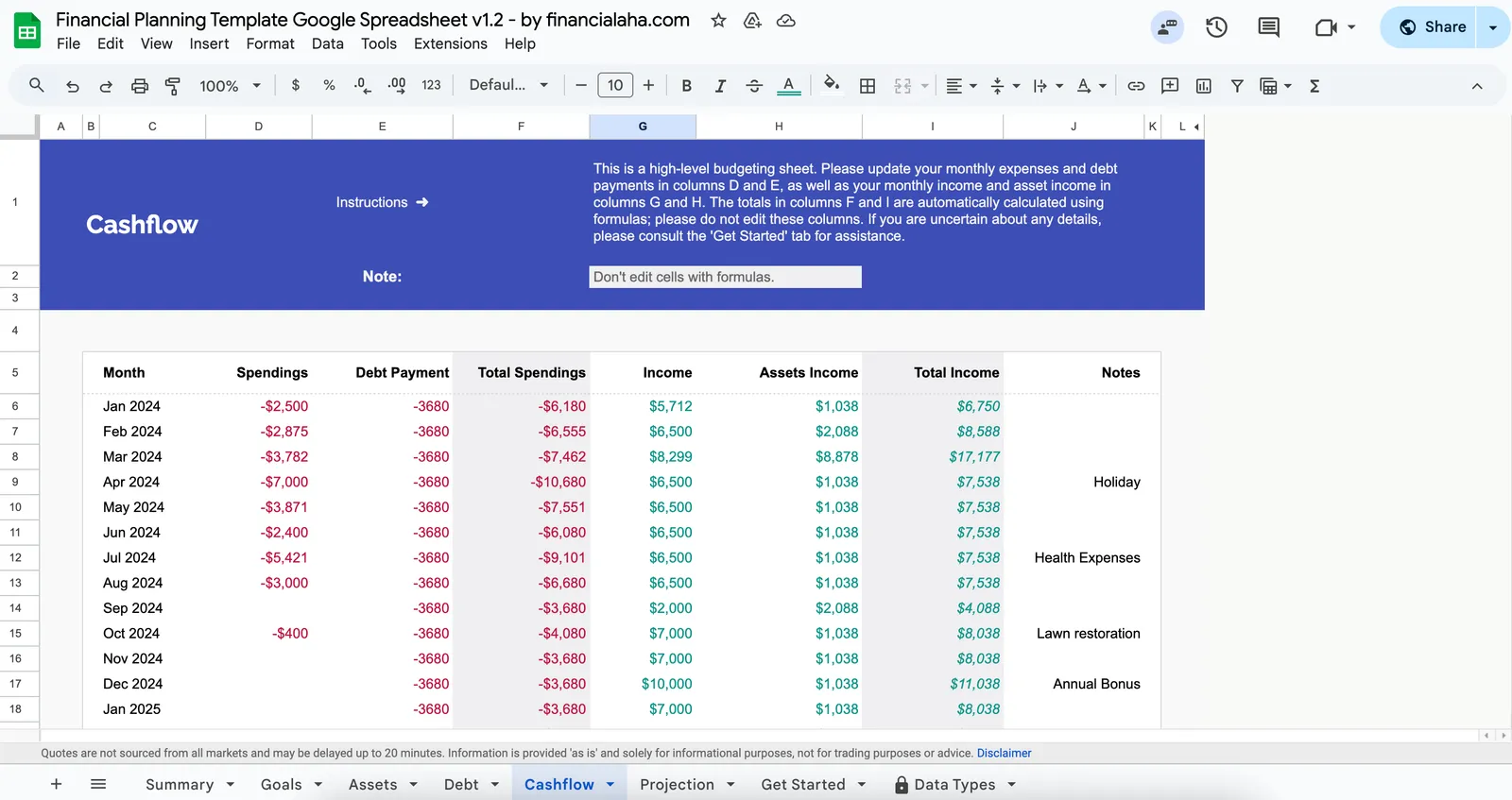
- Cash flow analysis
- Financial projections
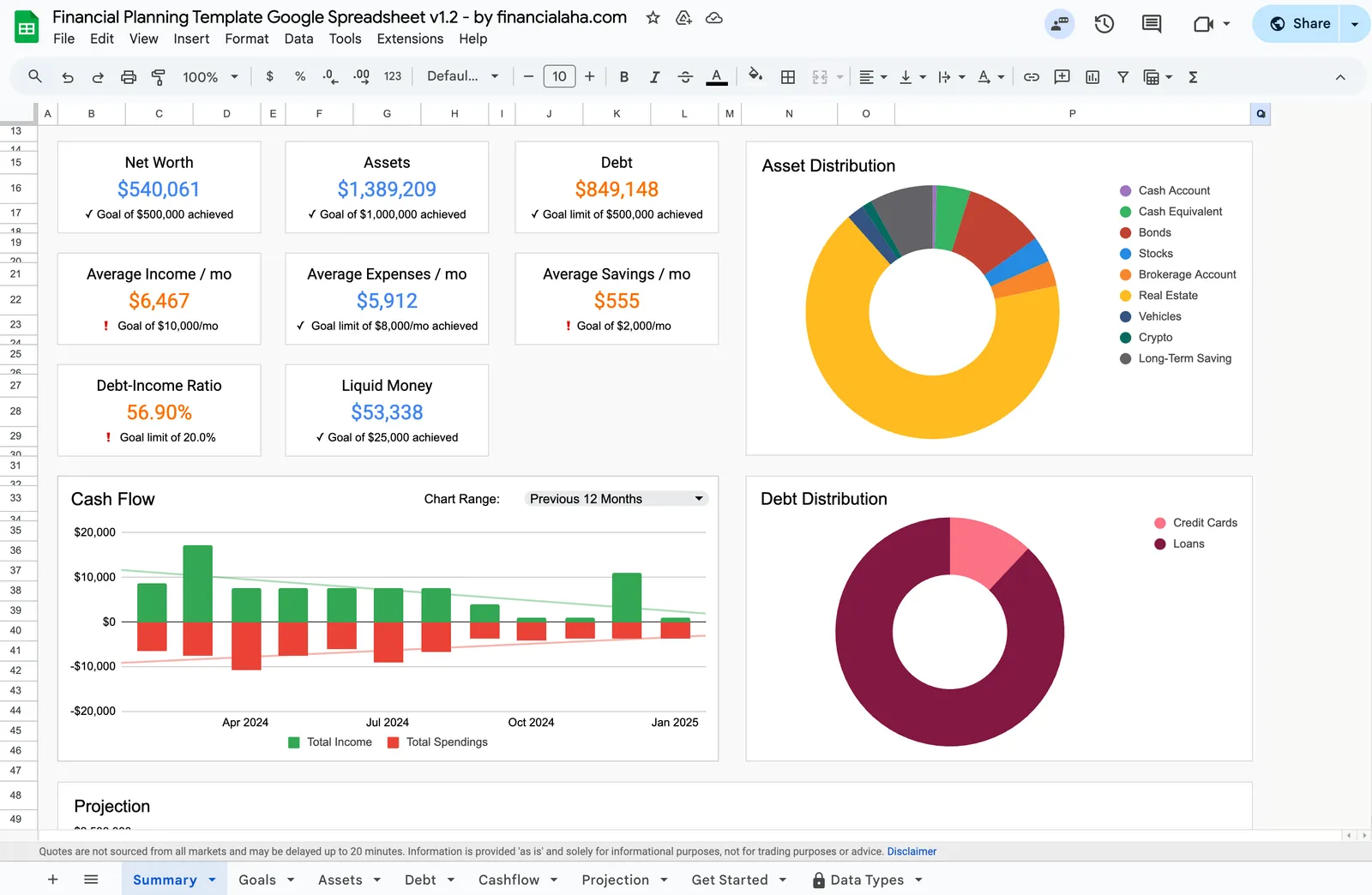
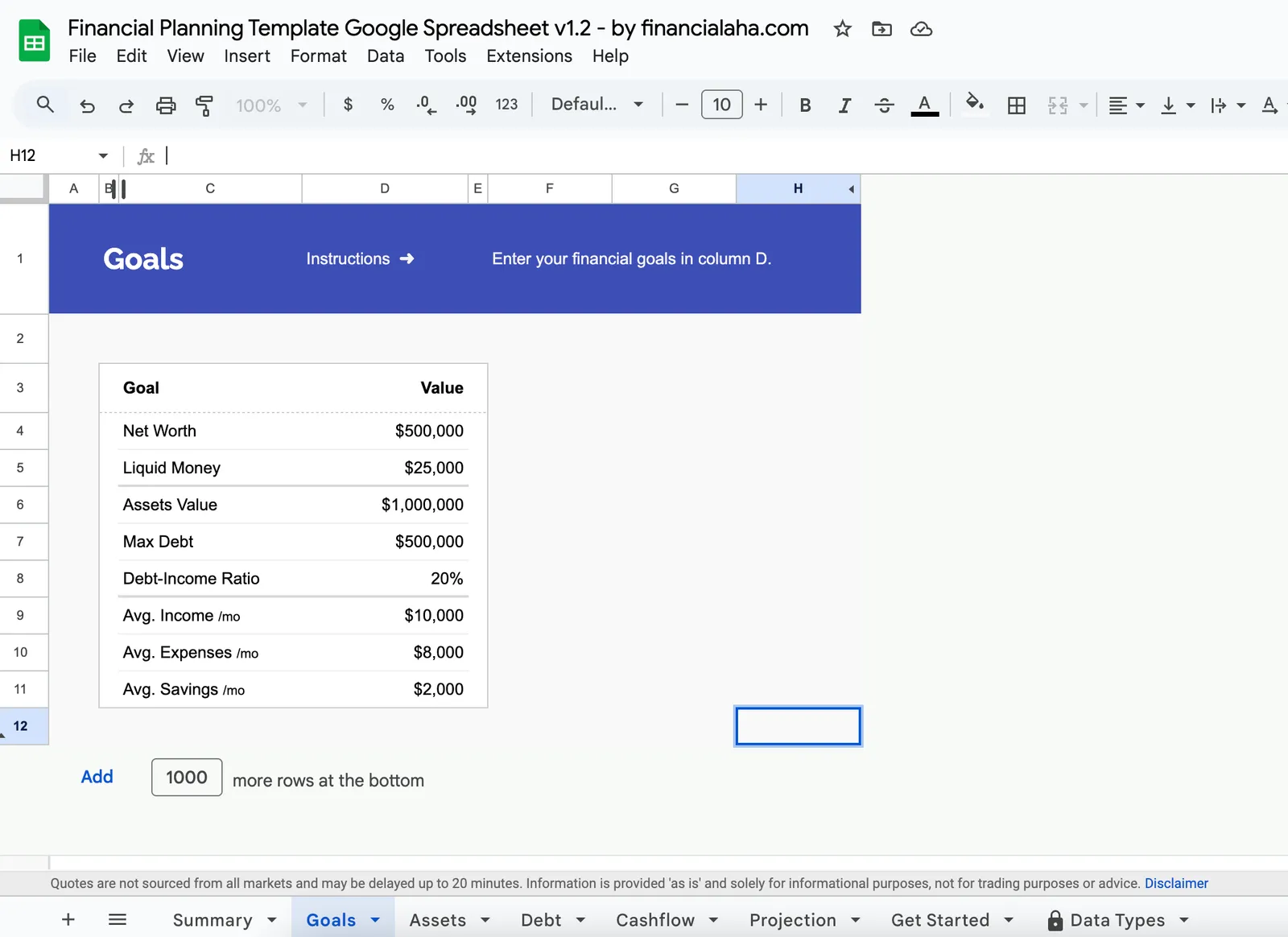
Complete financial overview with net worth and goals
Set and track progress toward financial milestones
Track all your assets in one place
Monitor and plan debt repayment
Visualize your income vs spending over time
Project your financial future
Getting Started
Start Planning Finances as an Expat
List accounts in every country
Gather balances for all accounts - home country, current country, and anywhere else you hold assets or debts.
Pick your base currency
Decide which currency the sheet will hold, then convert every other holding into it as you enter values. No conversion is built in, so the rate you use is the rate you type.
Map your retirement accounts
List pension and retirement accounts from each country with current values and contribution status.
Fill in your targets
A repatriation fund fits the liquid money row on the Goals tab, and a property purchase shows up in the total assets target.
Update balances and exchange rates monthly
Refresh each balance at the rate you used that month. The summary recalculates net worth, the ratios and both distribution charts.
Common Questions
Financial Planning for Expats- FAQ
Does this handle multiple currencies?
The sheet works in one currency. Accounts held in another are converted by you, at the rate you choose, before the figure goes in, which keeps the totals and charts consistent.
What about tax implications of living abroad?
This template tracks your financial position, not tax obligations. For tax-specific tracking, the Annual Tax Planner handles deductions, estimated payments, and multi-jurisdiction considerations.
Can I track property in my home country?
Yes. Property goes in as a Real Estate asset row with your own estimated value, converted to the currency the sheet works in.
How do I handle pension systems I cannot access yet?
They go in as long-term saving assets at their current value. There is no notes column on the asset table, so the access age or residency rule usually goes into the name.
What if I move to a third country?
Add the new accounts as rows. If you switch which currency the sheet holds, every existing value needs converting into the new one by hand.
Is this useful if I plan to repatriate?
Especially useful. Seeing all assets globally helps plan the financial logistics of moving back - closing accounts, transferring funds, and integrating back into your home country financial system.
Can't find the answer you're looking for? Contact our team
Start financial planning as an expat
One-time purchase. No subscription. Your financial data stays in your Google Drive.