Annual Tax Planner
Annual Tax Planner for Couples
One annual tax planner you set up around a household: both incomes in a single log, deductions at household level, and the withholding from two employers set against what is owed.
In Depth
Joint Filing, Dual Incomes, and Household Tax Strategy
Filing jointly as a couple combines two income streams into a single tax return, which creates both advantages and complications. The joint filing brackets are wider than single filer brackets, but they are not simply double - a detail that can cause what is sometimes called the marriage penalty for two high earners. When both partners work, the combined income often pushes the household into a higher marginal bracket than either would face individually, making withholding calculations at each employer insufficient.
Withholding gaps are one of the most common tax surprises for dual-income couples. Each employer calculates withholding based on that job alone, using the W-4 information provided. But the combined household income may push into higher brackets, trigger phaseouts on deductions, or create liability for the Net Investment Income Tax. Some couples discover a gap of several thousand dollars between total withholding and actual tax owed. Tracking combined income throughout the year makes this gap visible before April.
The decision between filing jointly and separately affects more than just tax rates. Joint filing typically results in lower total tax, but filing separately can make sense in specific situations - income-driven student loan repayments, medical expense deductions relative to AGI, or liability concerns. Having both partners' income and deduction data organized in one place allows for a meaningful comparison of both filing options before committing to one.
The Challenge
Why Couples Need Joint Tax Planning
Filing jointly changes the math. Two incomes interact with bracket thresholds, deduction limits, and withholding calculations in ways that individual planning misses.
Two W-4s often mean wrong total withholding
Each employer withholds as if their paycheck is the only income. Combined, the household may be significantly under-withheld - especially if both partners earn similar amounts.
Deduction strategy requires household-level thinking
Standard versus itemized depends on combined deductions. Charitable giving, mortgage interest, and state taxes need to be viewed at the household level, not individually.
One partner with side income adds complexity
If one partner has freelance income, rental properties, or investment gains, the tax picture changes for the whole household - not just that partner.
Filing status affects everything
Married filing jointly versus separately changes brackets, deduction eligibility, and credit availability. The right choice depends on specific circumstances.
Ready to take control of your couple finances?
What You Get
Tax Planning Features for Joint Filing
Both incomes in one log
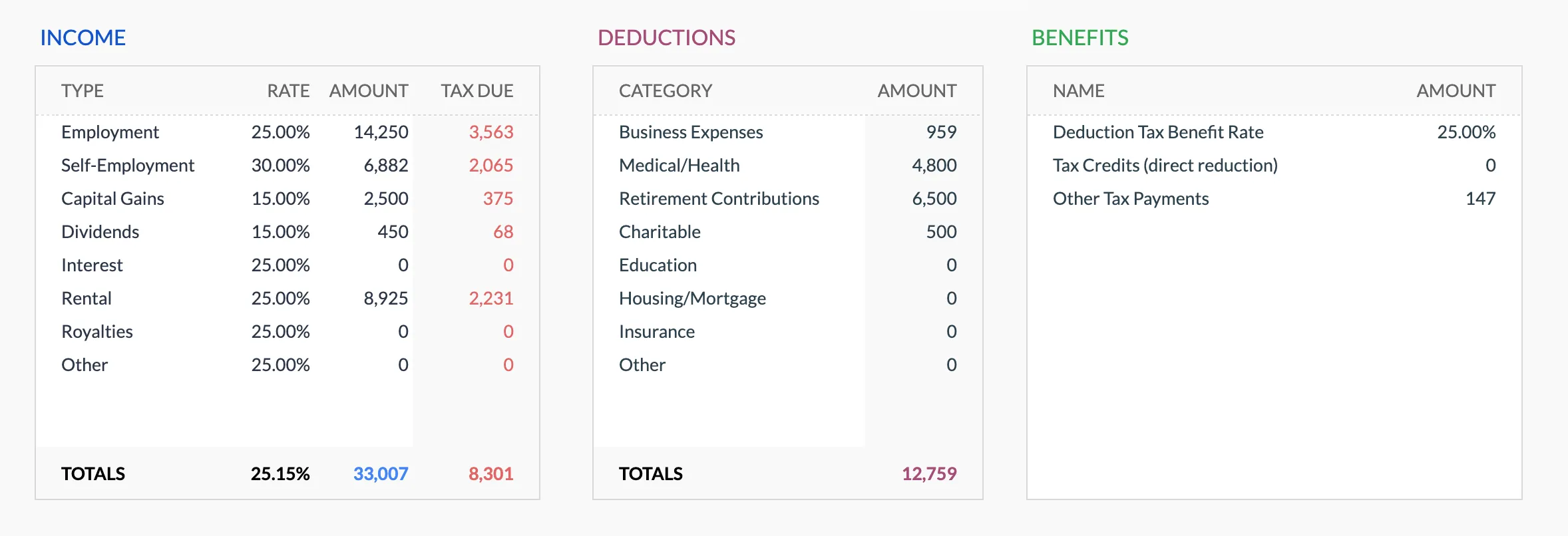
Each paycheck is a dated row with an amount and the tax withheld from it, and the partner's name goes in the description. The dashboard combines them by income type.
Combined withholding monitor
Track withholding from both employers. See whether combined withholding covers projected joint tax liability.
Joint deduction tracker
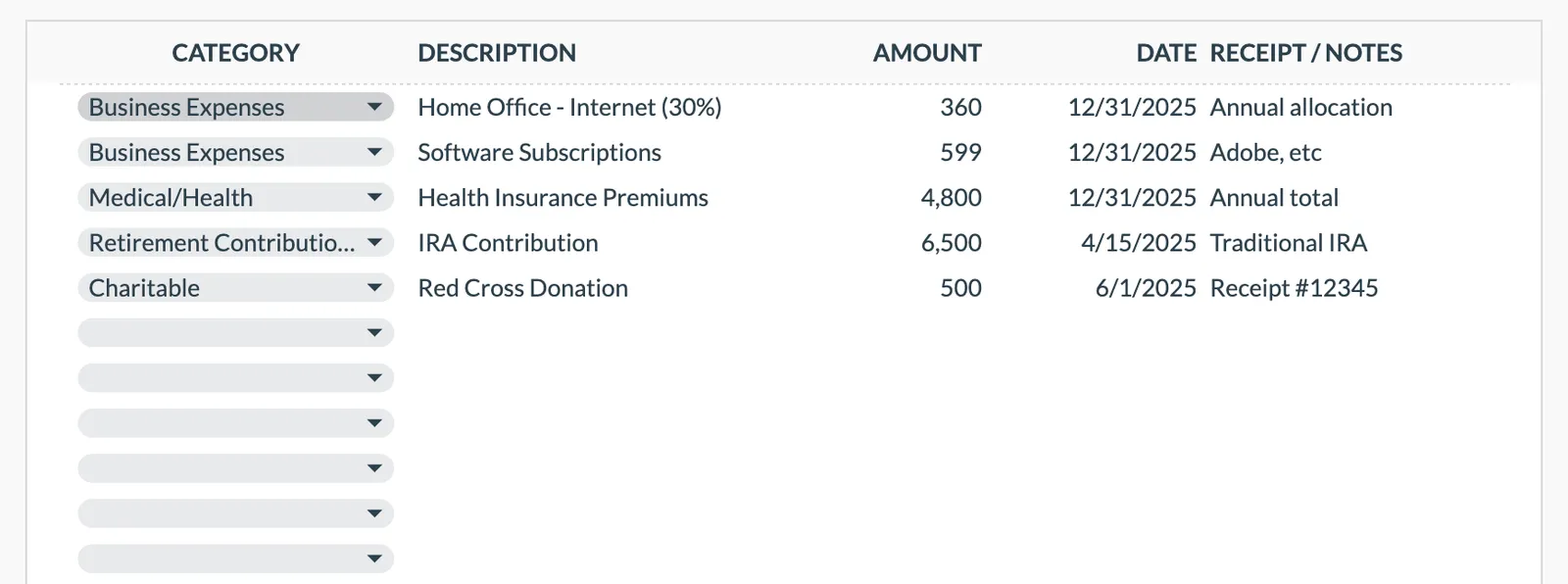
One deduction list for the household, with Housing/Mortgage, Charitable, Medical/Health, and Insurance among the eight categories.
Documents checklist for two filers
Fourteen records are listed, W-2s from all employers among them, each with a done box. The dashboard shows how much of the list is gathered.
Estimated payment tracker
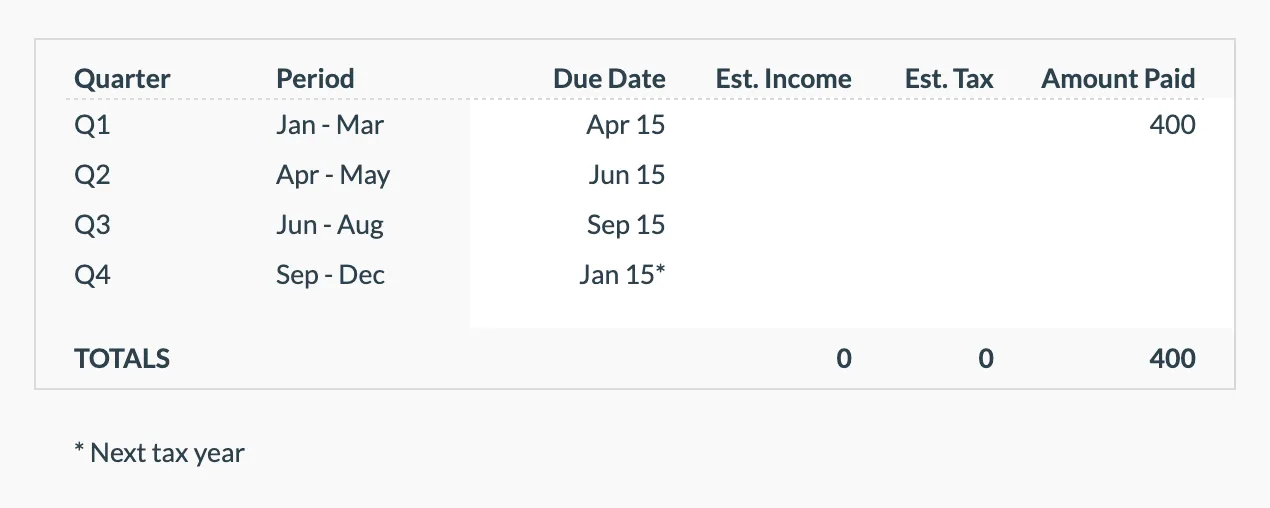
If additional payments are needed beyond withholding, track them here. Common when one partner has non-W-2 income.
Year-end household tax summary
Combined income, combined deductions, total withholding, estimated payments, and projected liability. Complete household picture.
See It In Action
What the template looks like
Browse through the template to see how it handles income tracking, deductions, quarterly payments, and tax projections.
- Tax overview dashboard
- Income source tracking
- Deduction organization
- Quarterly payment planning
- Tax projection estimates
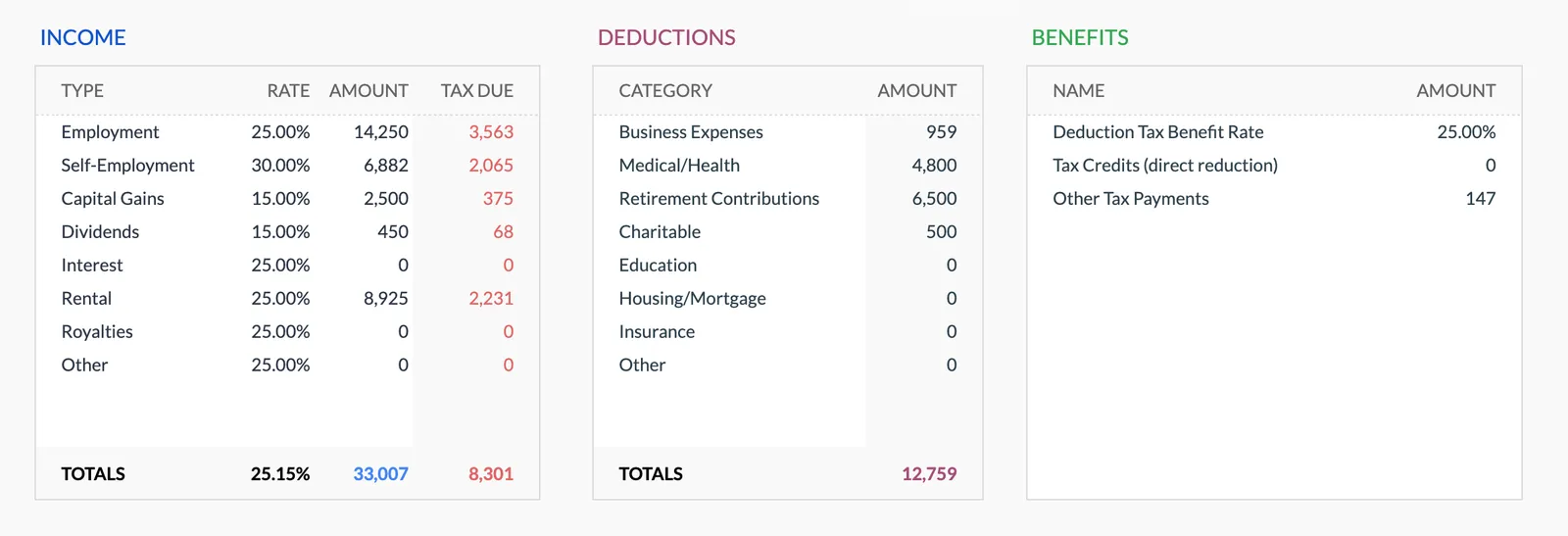
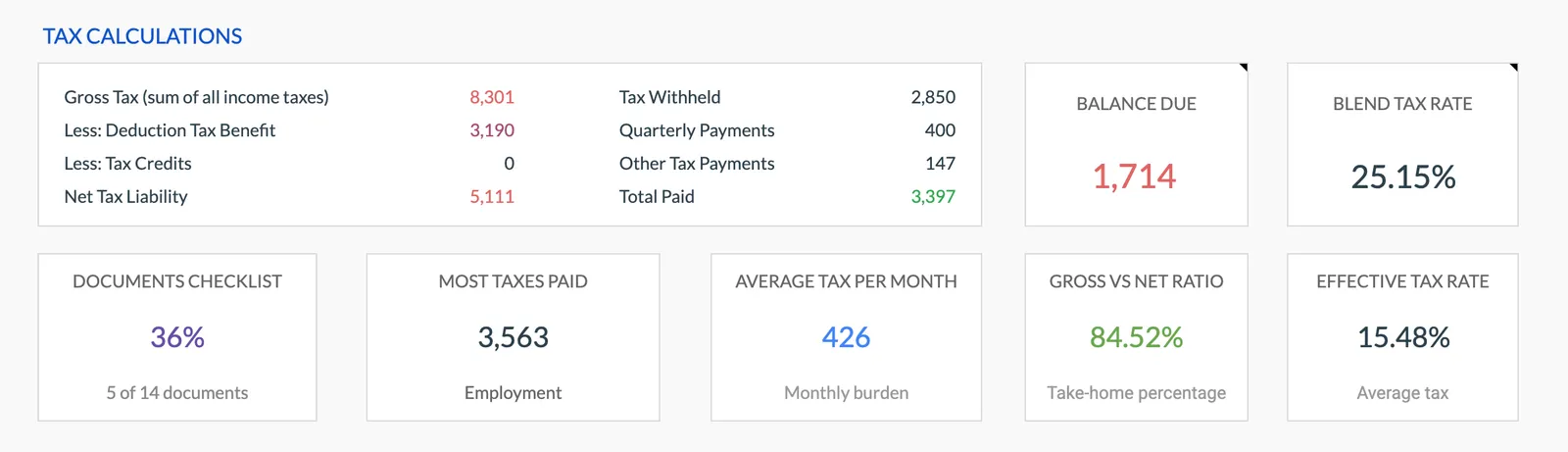
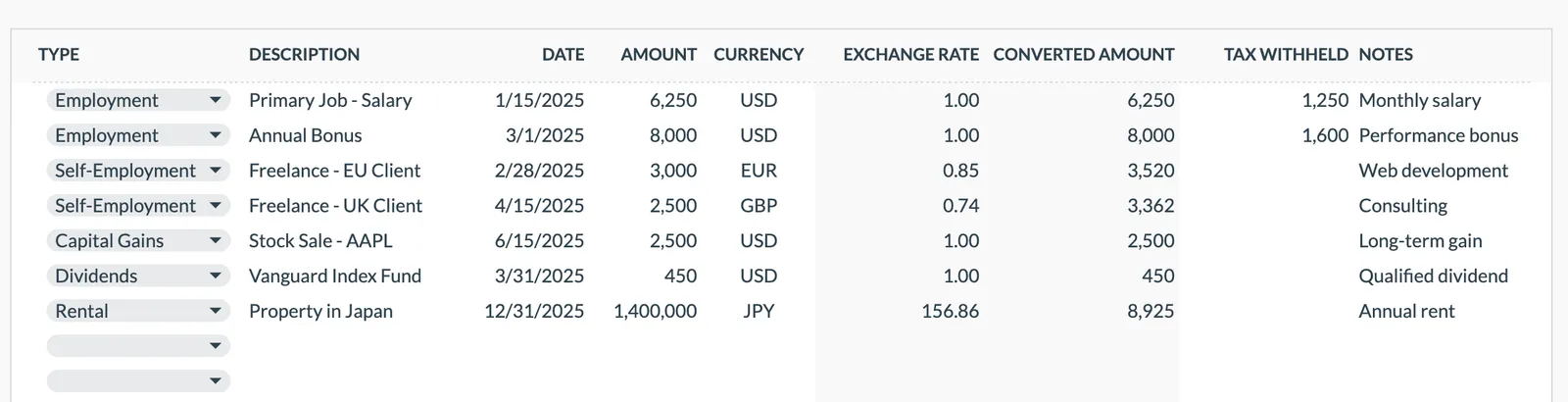
Annual tax overview with key figures
Detailed tax breakdown and projections
Track all income sources for tax purposes
Organize and track tax deductions
Plan and track quarterly estimated tax payments
Getting Started
Start Planning Your Joint Tax Return
Enter both partners' income details
List salary, bonus projections, and any other income for each partner. Include non-W-2 income.
Track withholding from each paycheck
Record tax withholding from both employers. The template sums it into a combined total.
Log joint deductions
Track household deductions as they occur - mortgage payments, charitable donations, state tax payments.
Check withholding adequacy mid-year
By July, you have enough data to see whether combined withholding will cover the year. Adjust W-4s if needed.
Review the Q4 figures together
The balance due figure in Q4 shows where the household has landed before the return is prepared.
Common Questions
Tax Planner for Couples- FAQ
Is filing jointly always a good idea?
It depends on the circumstances, and the planner does not compare the two. Income-driven loan repayment and certain deduction situations are the cases where filing separately is worth examining with a tax professional.
How do we fix under-withholding?
If combined withholding is insufficient, either partner can adjust their W-4 or you can make estimated payments. The template shows the gap so you know how much to adjust.
What if one partner is self-employed?
Track self-employment income and deductions in the template. Estimated payments for SE tax are the self-employed partner's responsibility, but the combined filing affects the total household picture.
Can we each track our own sections?
Yes. Each partner can update their own income and withholding. Joint deductions can be entered by either partner. The template combines everything.
What about investment income?
Track dividends, capital gains, and interest from both partners' accounts. This income affects your household bracket and may trigger NIIT at combined levels.
Does this handle state taxes?
The template focuses on federal tax planning. Track state tax payments as a deduction. If you need detailed state planning, add a section using the same income data.
Can't find the answer you're looking for? Contact our team
Start tax planning as a couple
One-time purchase. No subscription. Your financial data stays in your Google Drive.