Monthly Budget Template
Monthly Budget Template for Small Business Owners
Track your owner draw or salary, separate personal from business finances, and budget your household on income that varies with the business.
In Depth
Separating the Business Wallet From the Personal One
Small business owners face a budgeting challenge that employees never encounter - their personal income is a variable output of a system they control but cannot fully predict. The business might have a strong revenue month, but that does not automatically mean the owner can take more money home. Inventory needs, payroll obligations, tax payments, and reinvestment requirements all claim their share before the owner draw materializes.
The blurring of business and personal finances is the most common financial mistake small business owners make. Using the business account for personal groceries, covering a business expense with a personal card, or simply not knowing which account a payment came from - these habits create confusion that compounds over months. Some business owners find that treating themselves as an employee of the business, with a consistent monthly draw amount, brings the same predictability that a salary provides.
Cash flow timing creates a particular kind of stress for business owners. Outstanding receivables might show $40,000 owed to the business, but if only $5,000 is in the operating account today, personal bills still need to be paid. This gap between money earned and money available means the personal budget has to be built around cash that has actually arrived, not revenue that has been invoiced.
Retirement savings often takes a back seat for business owners who reinvest heavily in their company. The logic is understandable - the business is the investment. But businesses can fail, and owners who reach their fifties without retirement savings outside the business face a different kind of financial pressure. Tracking personal savings as a fixed budget line item - even a modest one - keeps this from being perpetually deferred.
The Challenge
Why Business Owners Struggle with Personal Budgets
When you own the business, the line between business money and personal money blurs. Your income depends on the business's performance, and the temptation to blur the two creates financial chaos.
Personal income depends on business performance
A strong quarter allows a larger owner draw. A slow month might mean taking nothing. Personal budgeting is impossible without a consistent view of what the business can actually pay you.
Business and personal expenses mix
The phone is for both. The car serves both. Meals blur between business development and personal dining. Without clear separation, neither your business books nor your personal budget is accurate.
Cash flow timing creates personal stress
The business may have outstanding invoices worth $50,000 but only $3,000 in the account today. Paying yourself requires cash, not receivables. Personal bills do not wait for clients to pay.
Tax obligations are complex
Self-employment tax, income tax, possibly business entity taxes - the total tax burden is significant and varies with business structure. Underestimating taxes means personal spending cuts later.
Ready to take control of your small business owner finances?
What You Get
Budget Tools for Small Business Finances
Owner draw and salary tracking
Track what you actually take from the business each month. See the pattern over time to establish a sustainable personal income level.
Household categories separate from business
Standard household budgeting categories - housing, food, transportation, insurance, and discretionary spending.
Owner draw targets vs. actual personal spending
Set personal spending targets based on your sustainable draw amount. Compare against actual spending monthly.
Tax obligation tracking
Track personal tax set-asides from your owner draw. Keep this visible so quarterly payments are funded.
Savings goal tracking
Personal savings, retirement contributions, and emergency fund progress - tracked separately from business reserves.
Monthly household summary
Total personal income, total personal expenses, and net savings. Clear separation from business finances.
See It In Action
What the template looks like
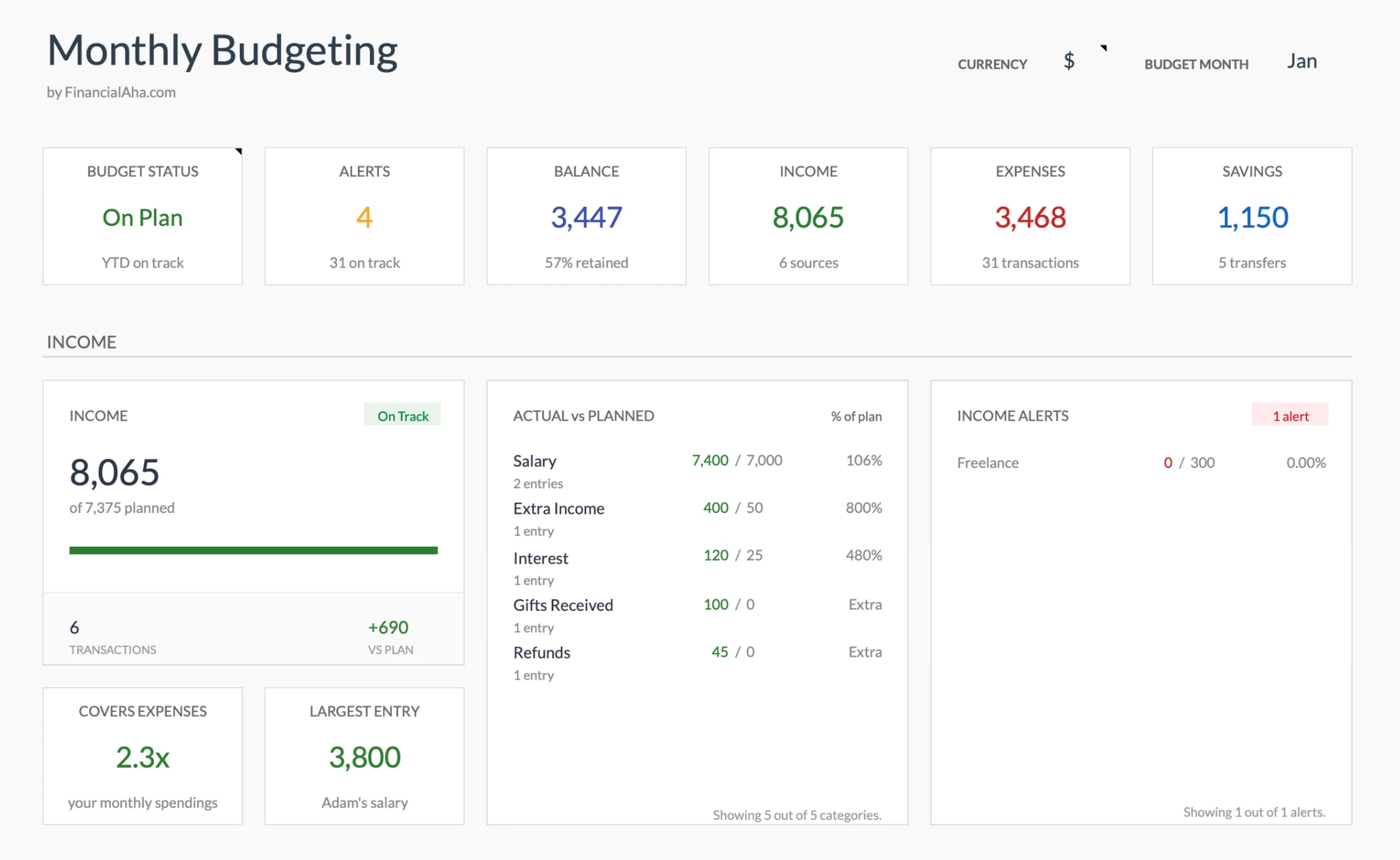
Browse through the template to see how it handles income tracking, expense budgets, savings goals, and spending analysis.
- Dashboard with key metrics at a glance
- Transaction logging with categories
- Budget vs actual comparison
- Visual charts and breakdowns
- Fully customizable categories

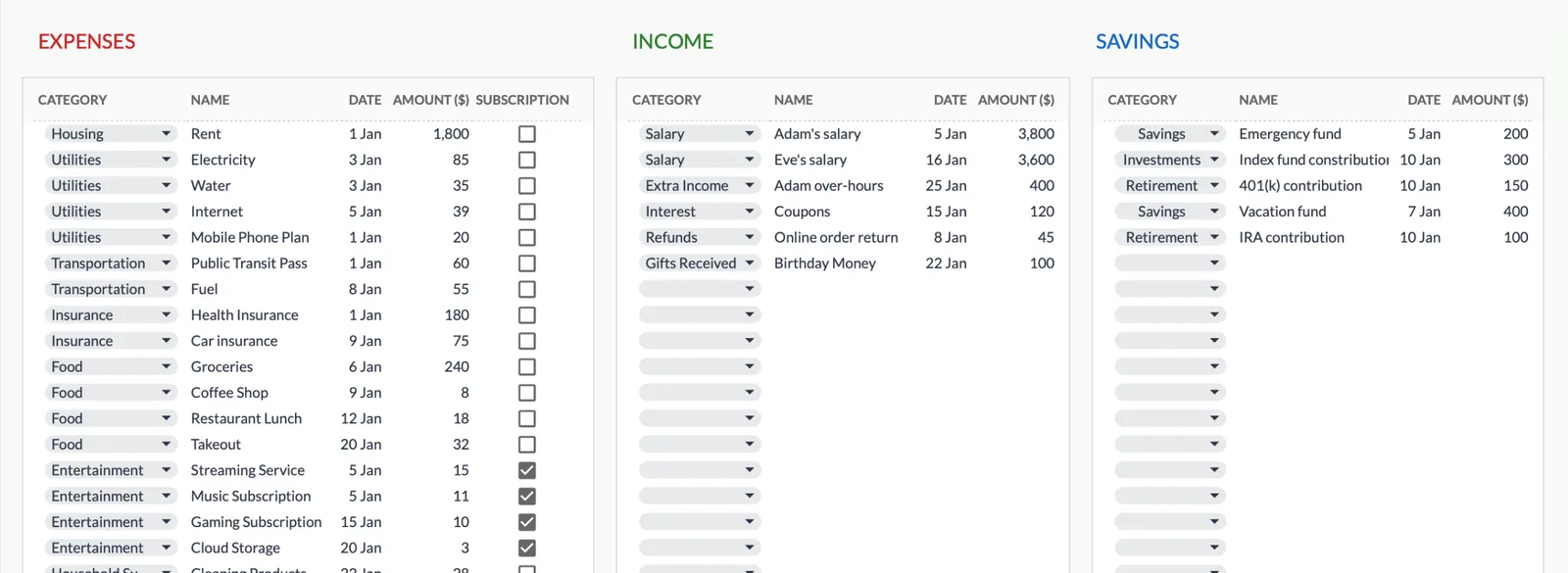
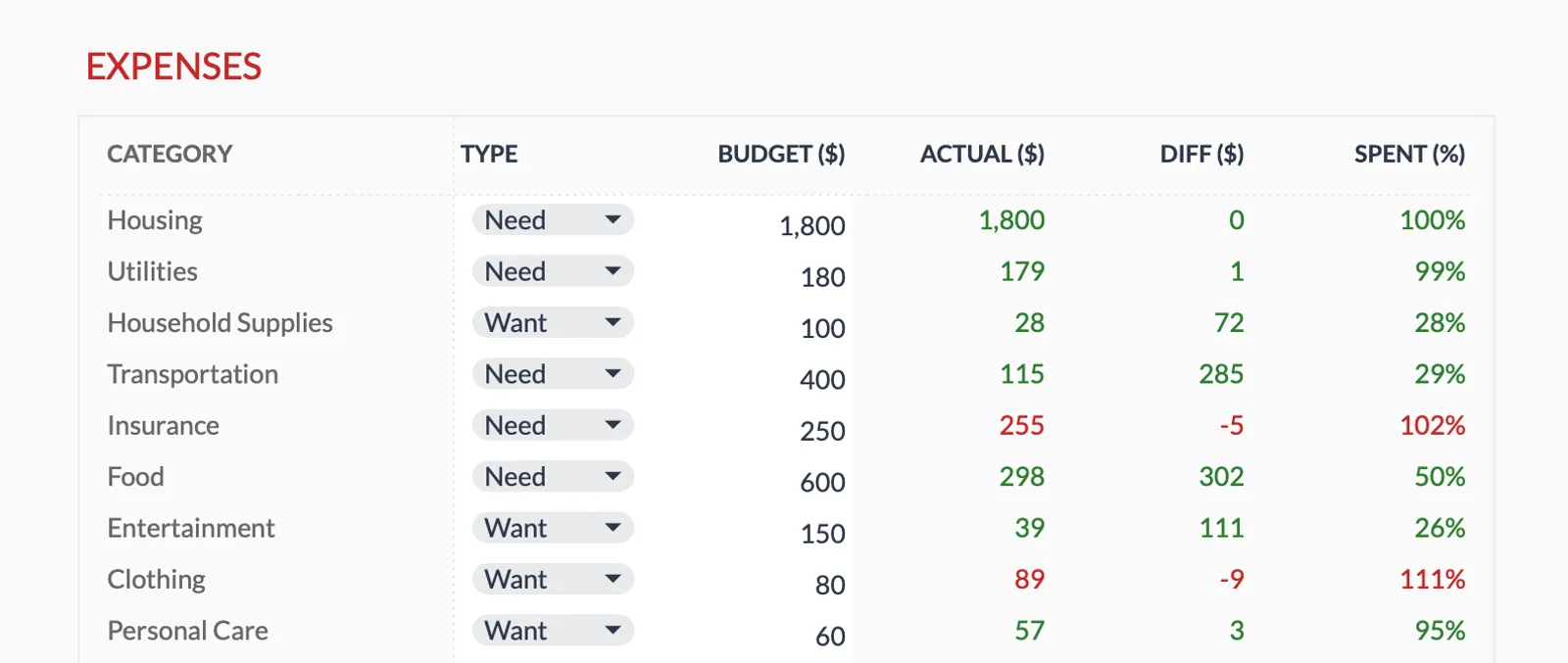
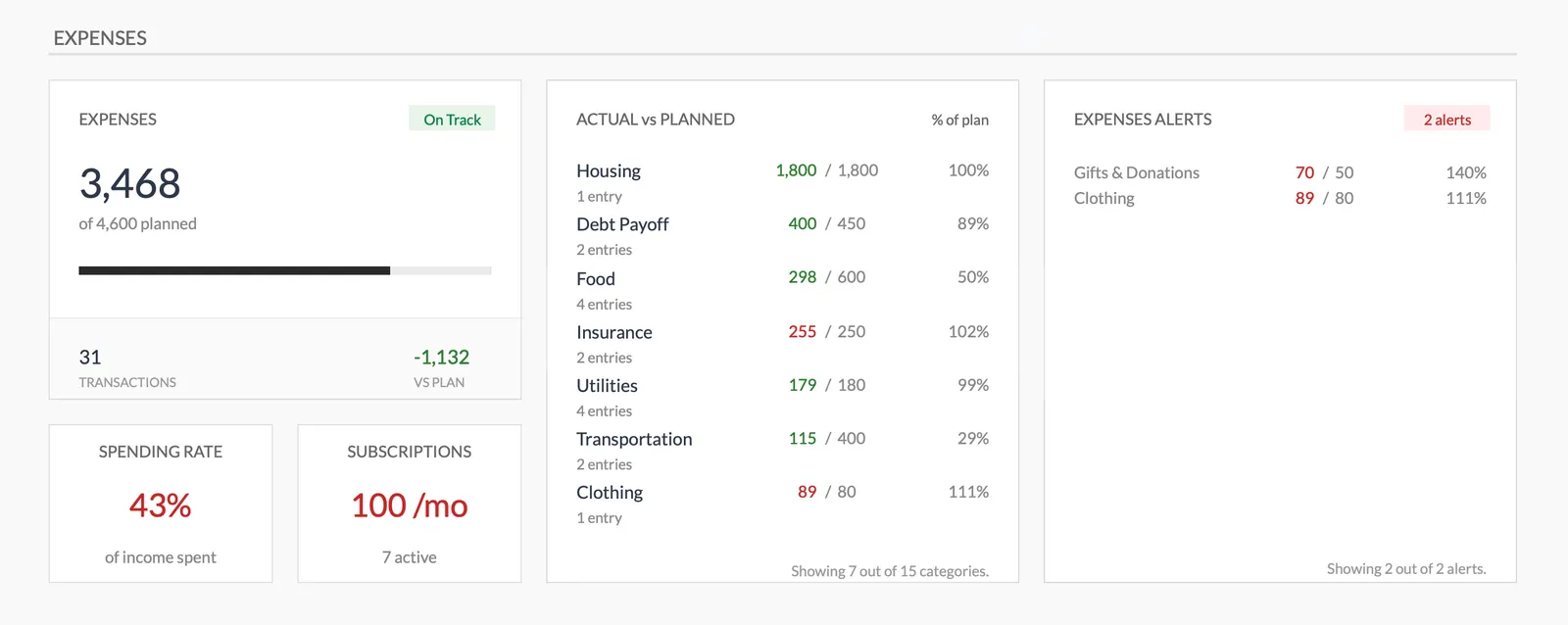
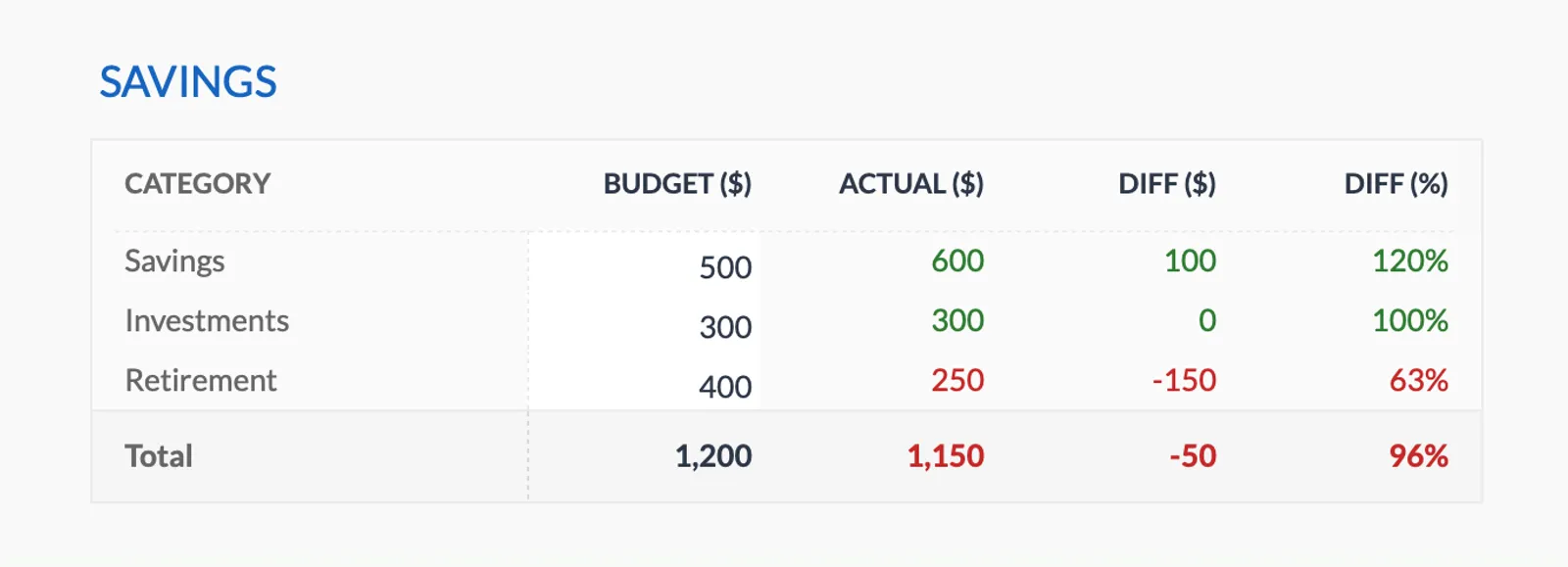
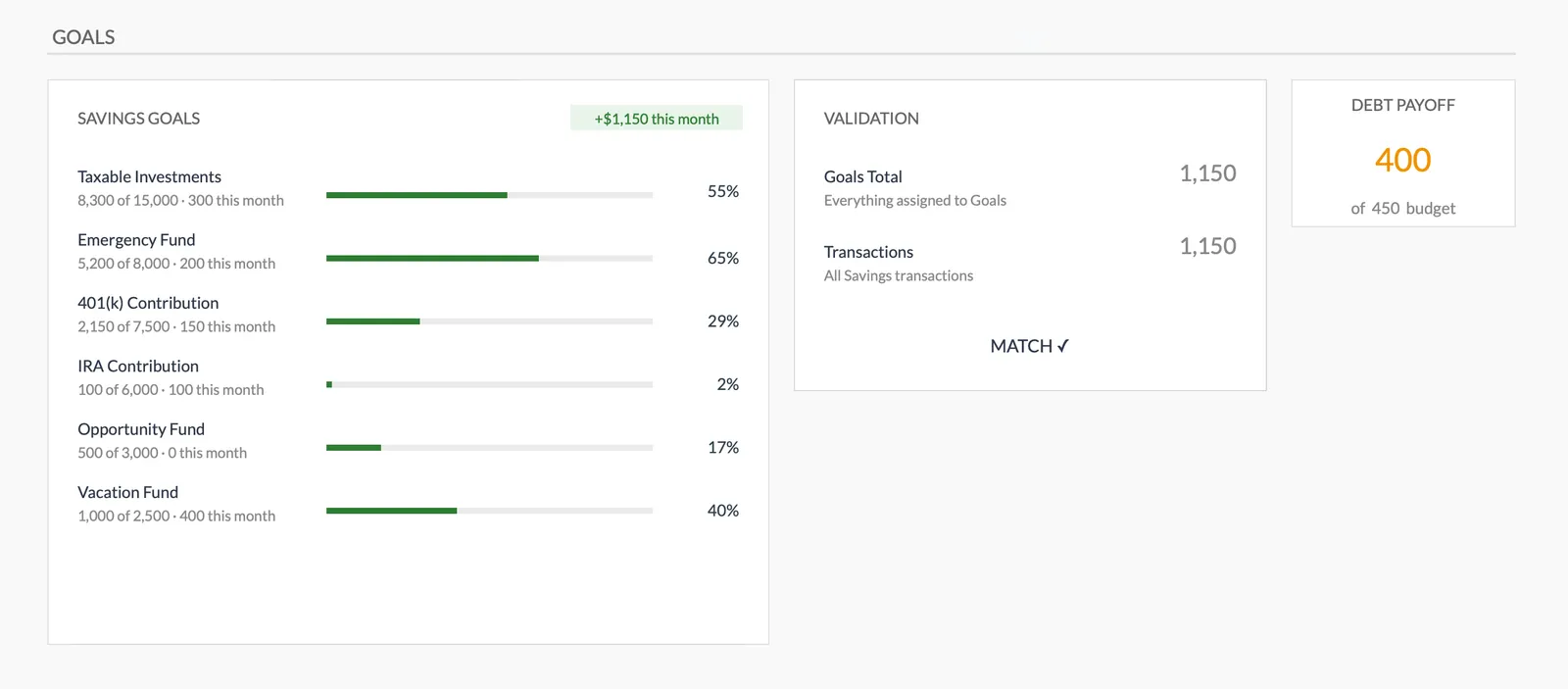
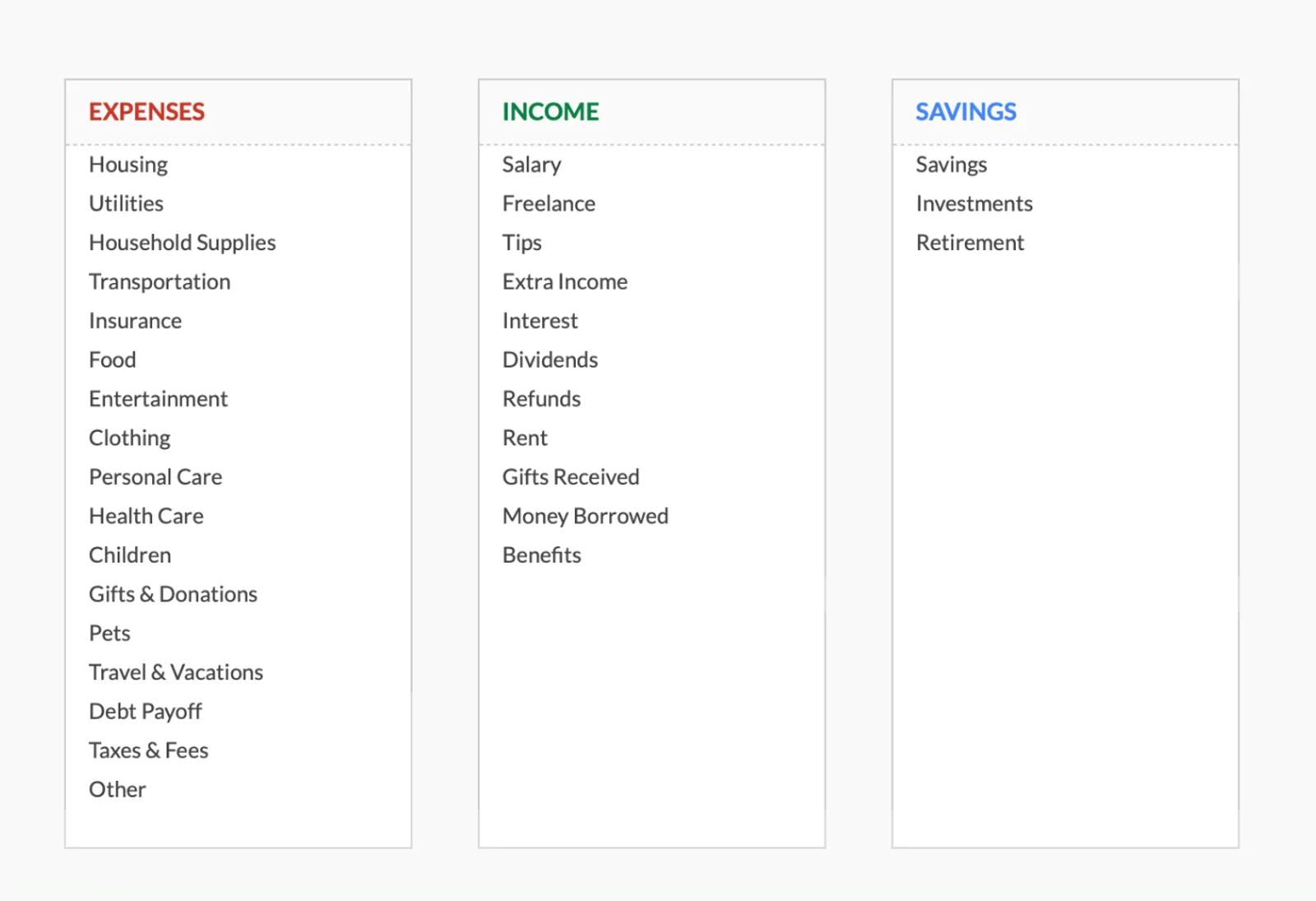
Dashboard with income, expenses, and savings at a glance
Log transactions with automatic categorization
Set targets per category and track actual spending
Visual breakdown of where your money goes
Track savings goals alongside your budget
Monitor progress toward financial goals
Fully customizable expense, income, and savings categories
Getting Started
Setting Up Your Business Owner Budget
Determine your sustainable draw
Review the last 6-12 months of business performance. Set a personal income level the business can consistently support.
Enter your personal income
Log your owner draw, any W-2 salary from the business, and other personal income sources.
Set household spending targets
Allocate your personal income across living expense categories. Build targets around the sustainable draw, not the best month.
Track personal expenses only
Keep business expenses in your business books. This template covers only personal and household spending.
Adjust when business income changes
If the business grows or contracts, revisit your draw amount and adjust personal spending targets accordingly.
Common Questions
Monthly Budget for Small Business Owners - FAQ
Should I pay myself a salary or take draws?
This depends on your business structure and has tax implications. The template tracks whatever method you use - salary, draw, or a combination. The key is having a consistent amount to budget around.
How do I budget when the business has a bad month?
If you have set your draw at a sustainable level, occasional bad months in the business should not require personal budget changes. Maintaining a personal emergency fund provides a buffer.
Can I track business expenses here too?
This template is designed for personal budgeting. Mixing business and personal expenses in one template creates the same confusion it is meant to solve. Keep business finances in a separate system.
What about retirement savings as a business owner?
Track retirement contributions in the savings section. Whether you use a SEP-IRA, Solo 401(k), or other vehicle, seeing the monthly contribution alongside your budget keeps it prioritized.
How do I handle months when I take extra from the business?
Enter the actual amount taken. The template shows when spending exceeds your target draw, making it clear when extra withdrawals happen and their impact on your budget.
What if my spouse also works in the business?
Track both personal incomes from the business. The template handles multiple income sources and helps you budget the household around the combined amount.
Can't find the answer you're looking for? Contact our team
Start budgeting as a small business owner
One-time purchase. No subscription. Your financial data stays in your Google Drive.