Monthly Budget Template
Monthly Budget Template for Freelancers
Track irregular income, set aside taxes, and manage variable expenses in a budget built for the reality of freelance work.
In Depth
Irregular Income and the Monthly Budget Challenge
Freelancing breaks the one assumption that most budgets are built on - a predictable paycheck arriving on a predictable schedule. Income can swing dramatically between months. A $9,000 month followed by a $2,500 month is not unusual, and building a sustainable life around that kind of variability requires a different relationship with money than salaried work demands.
The gap between gross freelance income and actual take-home is wider than many expect. There is no employer covering half the payroll taxes, no subsidized health insurance, no paid time off, and no employer-matched retirement contributions. When a client pays $5,000 for a project, the freelancer keeps significantly less after self-employment tax, income tax, health insurance premiums, and business expenses. Budgeting from the gross number rather than the net is a common and costly mistake.
Quarterly estimated taxes represent one of the trickier aspects of freelance budgeting. The IRS expects payments four times a year based on projected annual income - but when income is unpredictable, so is the tax obligation. Many freelancers find that setting aside a fixed percentage of every payment as it arrives, rather than trying to calculate quarterly totals, creates a simpler and more reliable system.
One approach that many freelancers find useful is budgeting from their lowest reasonable income month rather than their average. This means essential expenses are always covered, and the surplus from stronger months flows to savings, taxes, and goals rather than inflated lifestyle spending. It requires discipline during good months, but it eliminates the panic during lean ones.
The Challenge
Why Freelancers Need a Different Budget
Traditional budgets assume a consistent paycheck on the same date every month. Freelance income does not work that way, and a budget that ignores this reality fails within weeks.
Income varies month to month
One month brings $8,000 from overlapping projects. The next drops to $2,400 between contracts. A budget built for a steady salary does not account for these swings. Freelancers need a system that works with unpredictable amounts arriving at unpredictable times.
Quarterly taxes are easy to miss
No employer withholds taxes for you. The IRS expects quarterly payments - miss one and penalties follow. Setting aside 25-30% of every payment requires a system that makes the math visible.
Business and personal expenses blur
Your home office internet is partially deductible. That laptop serves both work and personal use. Without clear categories separating business from personal spending, tax season becomes an archaeological dig through mixed transactions.
No employer benefits to lean on
Health insurance, retirement, disability coverage - freelancers pay for everything at higher individual rates. A freelancer budget needs to account for these costs rather than treating them as invisible payroll deductions.
Ready to take control of your freelancer finances?
What You Get
How This Template Handles Freelance Finances
Income tracking by source
See how much each client or project contributes monthly. Spot client concentration risk when one source dominates.
Tax set-aside tracking
A dedicated section to track the percentage set aside from each payment. See your quarterly tax fund building in real time.
Business vs. personal categories
Separate categories for business expenses and personal spending. Makes tax deductions easier to identify at year end.
Freelance estimates vs. actual cash flow
Set targets based on your average or minimum income month, then see how actuals compare as payments arrive.
Savings goal tracking
Track emergency fund progress, equipment savings, and personal goals alongside your freelance budget.
Customizable expense categories
Start with pre-built categories and adapt them - add software subscriptions, professional development, or equipment.
See It In Action
What the template looks like
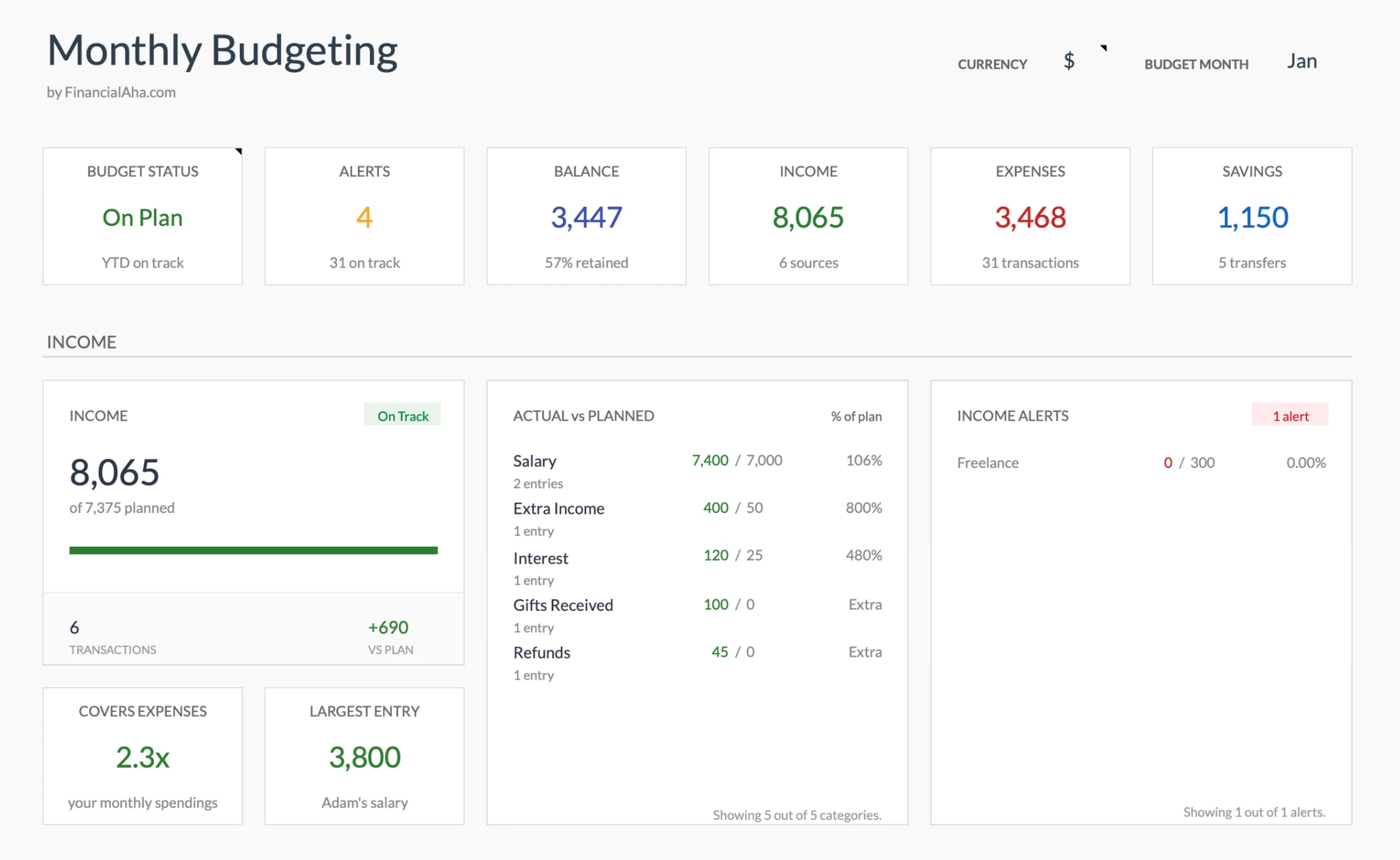
Browse through the template to see how it handles income tracking, expense budgets, savings goals, and spending analysis.
- Dashboard with key metrics at a glance
- Transaction logging with categories
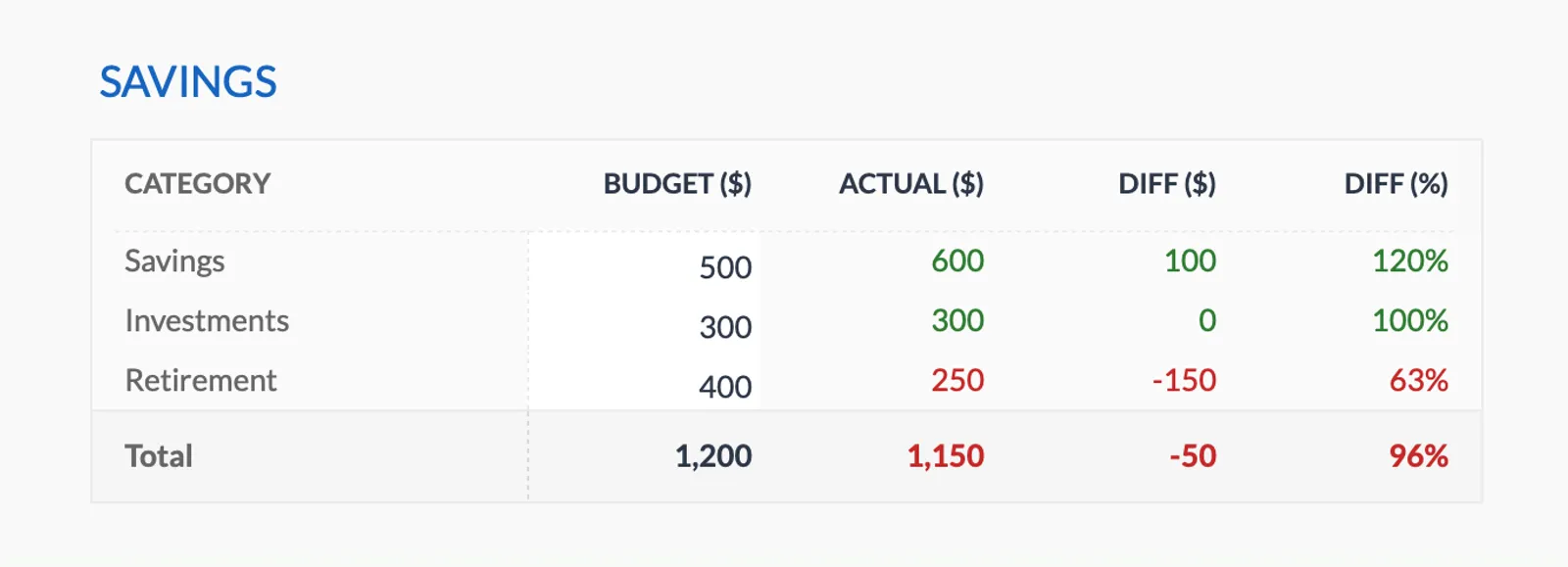
- Budget vs actual comparison
- Visual charts and breakdowns
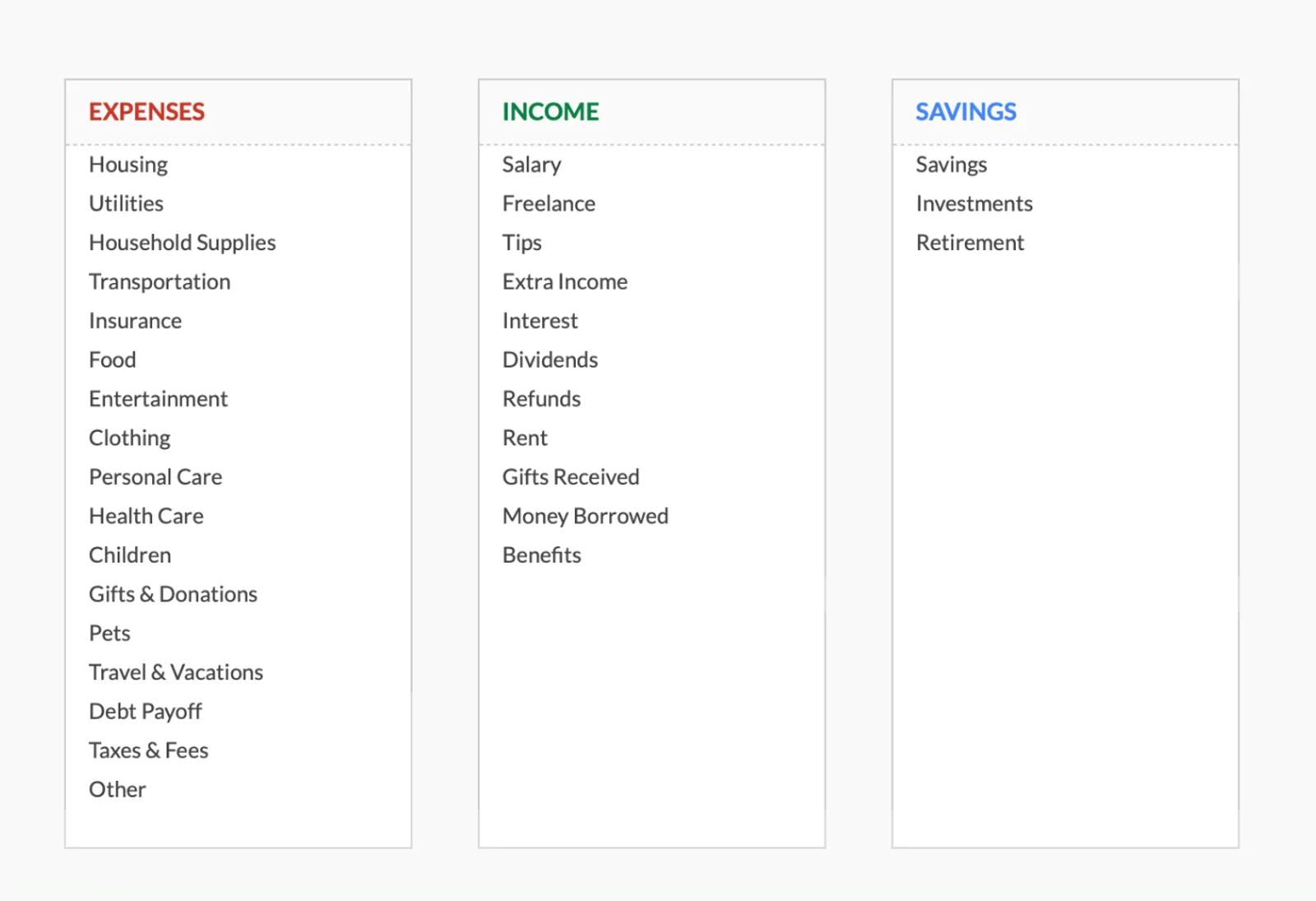
- Fully customizable categories

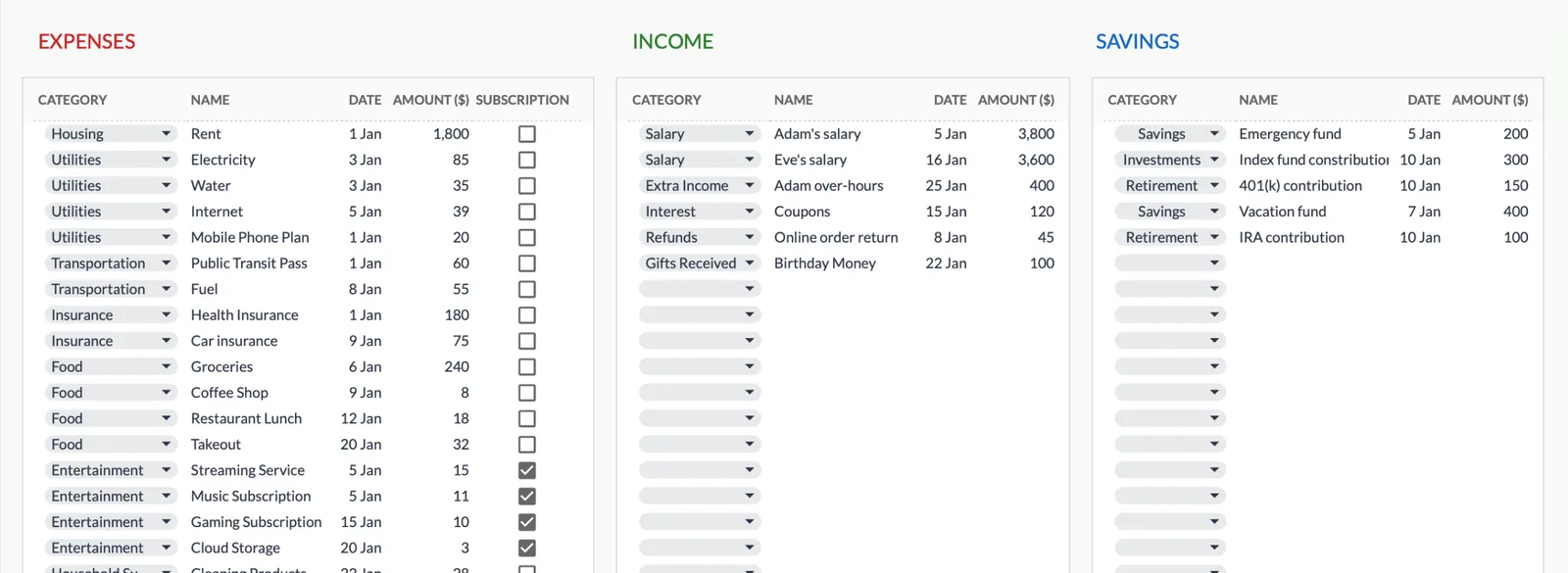
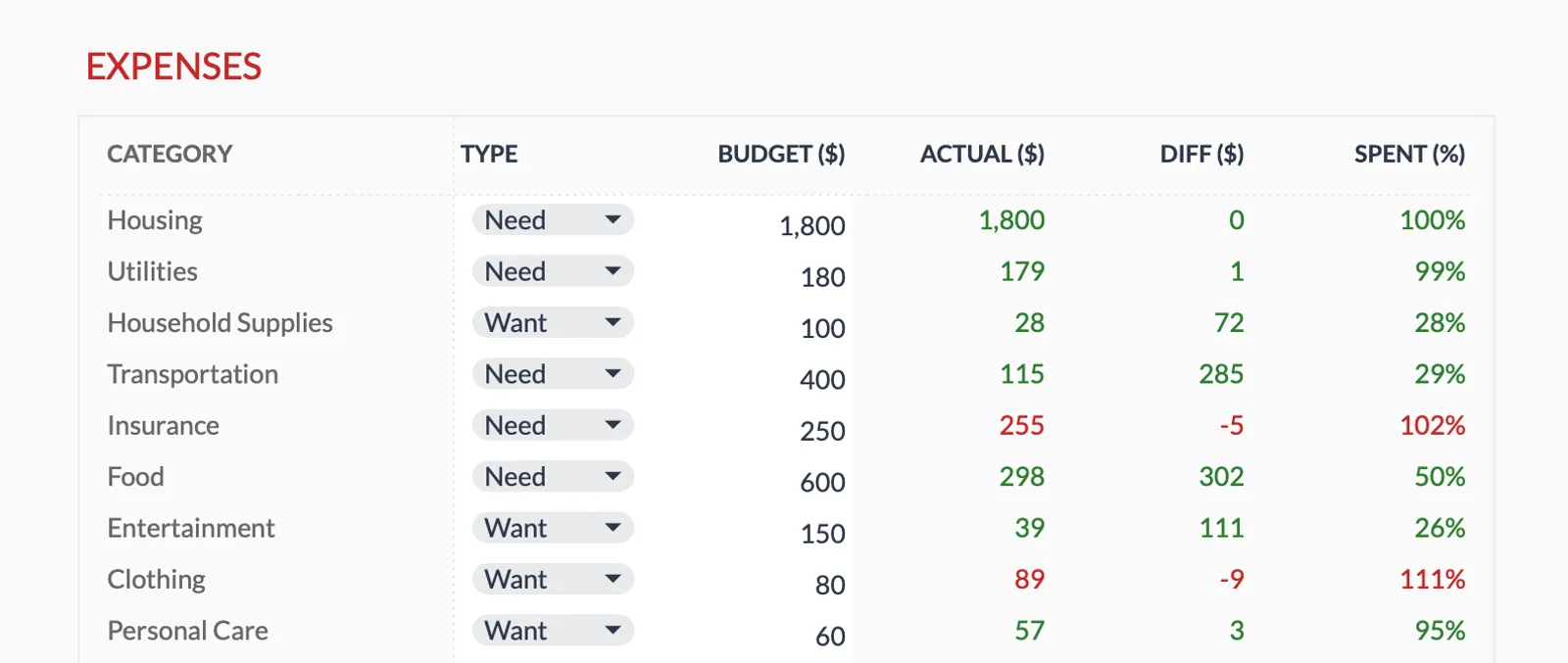
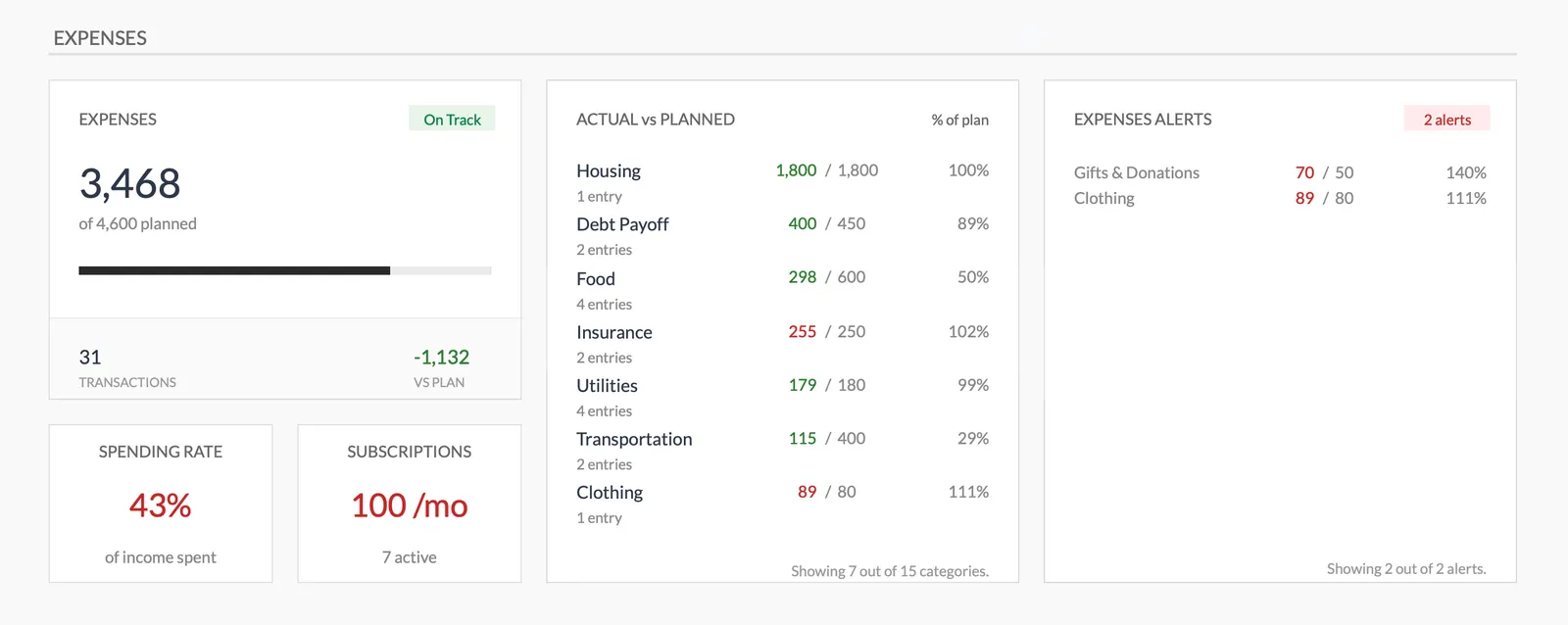
Dashboard with income, expenses, and savings at a glance
Log transactions with automatic categorization
Set targets per category and track actual spending
Visual breakdown of where your money goes
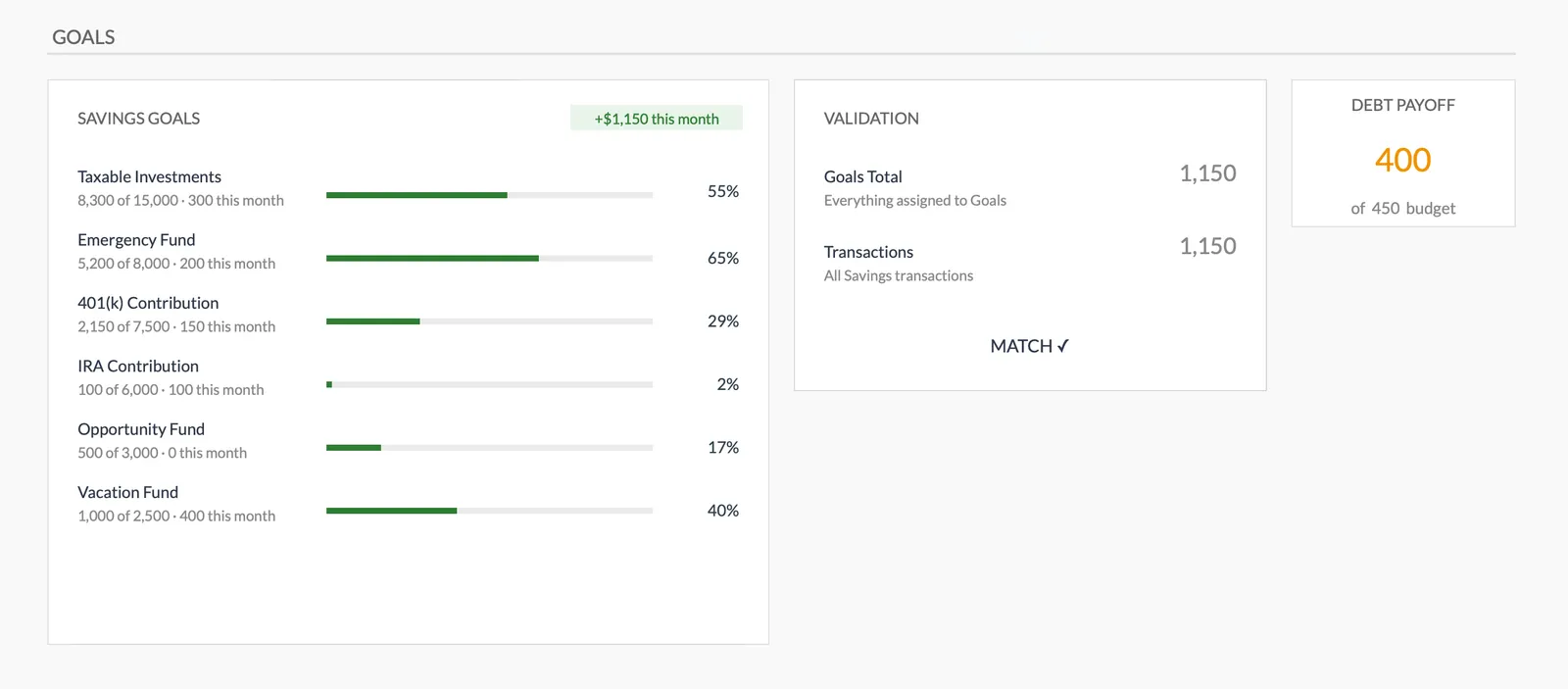
Track savings goals alongside your budget
Monitor progress toward financial goals
Fully customizable expense, income, and savings categories
Getting Started
Your First Steps as a Freelancer
Enter your income as it arrives
Log each client payment when it hits your account. The template totals your income as the month progresses.
Set aside taxes immediately
Record the tax portion of each payment. Watching this number grow prevents the quarterly surprise.
Budget from your minimum month
Set expense targets based on your lowest reasonable income month. Good months build savings; lean months stay covered.
Separate business and personal expenses
Use the dedicated categories for each. This discipline pays off every tax season.
Review monthly and quarterly
Monthly reviews catch spending issues. Quarterly reviews align with tax payments and help you assess income trends.
Common Questions
Monthly Budget for Freelancers - FAQ
How do I budget when I don't know next month's income?
Budget based on your lowest reasonable income month. If that is $3,500, build your expenses around that number. When you earn more, the surplus goes to savings and taxes. When you earn less, your essentials are still covered.
How much should I set aside for taxes?
A common starting point is 25-30% of gross income, though the exact amount depends on your tax bracket, deductions, and state. The template tracks whatever percentage you choose so the amount is always visible.
Can this replace accounting software?
This is a budgeting tool, not accounting software. It helps you plan spending, track income, and set aside taxes. For invoicing, expense receipt tracking, and formal bookkeeping, a dedicated tool is more appropriate.
What if I have a mix of freelance and part-time W-2 income?
Add all income sources. The template tracks totals regardless of type. Your tax set-aside would apply only to the freelance portion since the W-2 job withholds automatically.
How do I handle months with no income?
Enter zero for income and fund expenses from savings. The template shows the deficit clearly, which helps you plan how many months your reserves can cover.
Is there a way to track annual income trends?
This template covers one month at a time. For 12-month patterns and annual totals, the Annual Budgeting Planner provides that longer view.
Can't find the answer you're looking for? Contact our team
Start budgeting as a freelancer
One-time purchase. No subscription. Your financial data stays in your Google Drive.