Monthly Budget Template
Monthly Budget Template for Digital Nomads
Track income and expenses across countries and currencies with a budget built for people who work from anywhere.
In Depth
Budgeting Without a Fixed Address
Digital nomads face a budgeting challenge that is genuinely unique - the cost of living changes every time they change locations. A month in Chiang Mai and a month in Berlin might differ by a factor of three. Standard budgeting advice assumes stable housing costs, predictable utility bills, and consistent grocery prices. None of that applies when your home base shifts every few weeks or months.
Currency conversion adds a layer of invisible cost that is easy to underestimate. Earning in one currency while spending in another means exchange rates directly affect purchasing power. A 5% swing in the dollar-to-euro rate can turn a comfortable month into a tight one without any change in spending behavior. Some nomads find that tracking everything in a single base currency reveals these shifts more clearly.
Travel itself is a budget category that location-independent workers carry permanently. Flights, visas, travel insurance, coworking day passes, SIM cards, and the inevitable duplicate purchases when moving between places - these costs do not exist for someone with a fixed address. They can easily add $500 to $1,000 per month on top of normal living expenses.
Tax obligations for nomads can span multiple jurisdictions depending on citizenship, residency status, and time spent in each country. Setting aside a consistent percentage of income for taxes - even when the exact obligation is unclear until year-end - prevents a situation where a large tax bill arrives with no reserves to pay it.
The Challenge
Why Digital Nomads Need a Travel-Ready Budget
When your cost of living changes every month because you changed countries, standard budgeting breaks down. Digital nomads face financial complexity that home-based workers never encounter.
Living costs vary dramatically by location
A month in Lisbon costs half of what a month in London costs. Moving between locations means your baseline expenses shift constantly, making it impossible to set static spending targets.
Currency exchange eats into income
Earning in dollars while spending in euros, baht, or pesos introduces constant conversion. Exchange rate fluctuations can swing monthly costs by 5-10% without any change in spending habits.
Travel costs layer on top of living costs
Flights, visas, travel insurance, and transit between cities add expenses that people with a fixed address do not have. These irregular costs are easy to underestimate when planning a monthly budget.
Tax obligations span multiple jurisdictions
Depending on citizenship and time spent in various countries, tax obligations can get complicated. Setting aside the right amount for taxes requires awareness of how long you stay where.
Ready to take control of your digital nomad finances?
What You Get
How This Template Handles Nomad Finances
Flexible income tracking
Track income from clients, platforms, or employers regardless of currency. Convert everything to your base currency for a clear monthly total.
Location-adaptive expense categories
Categories for accommodation, coworking spaces, travel, visas, travel insurance, and SIM cards - the real costs of nomad life.
Location-based targets vs. real spending
Set targets based on your current location's cost of living and track how actual spending compares.
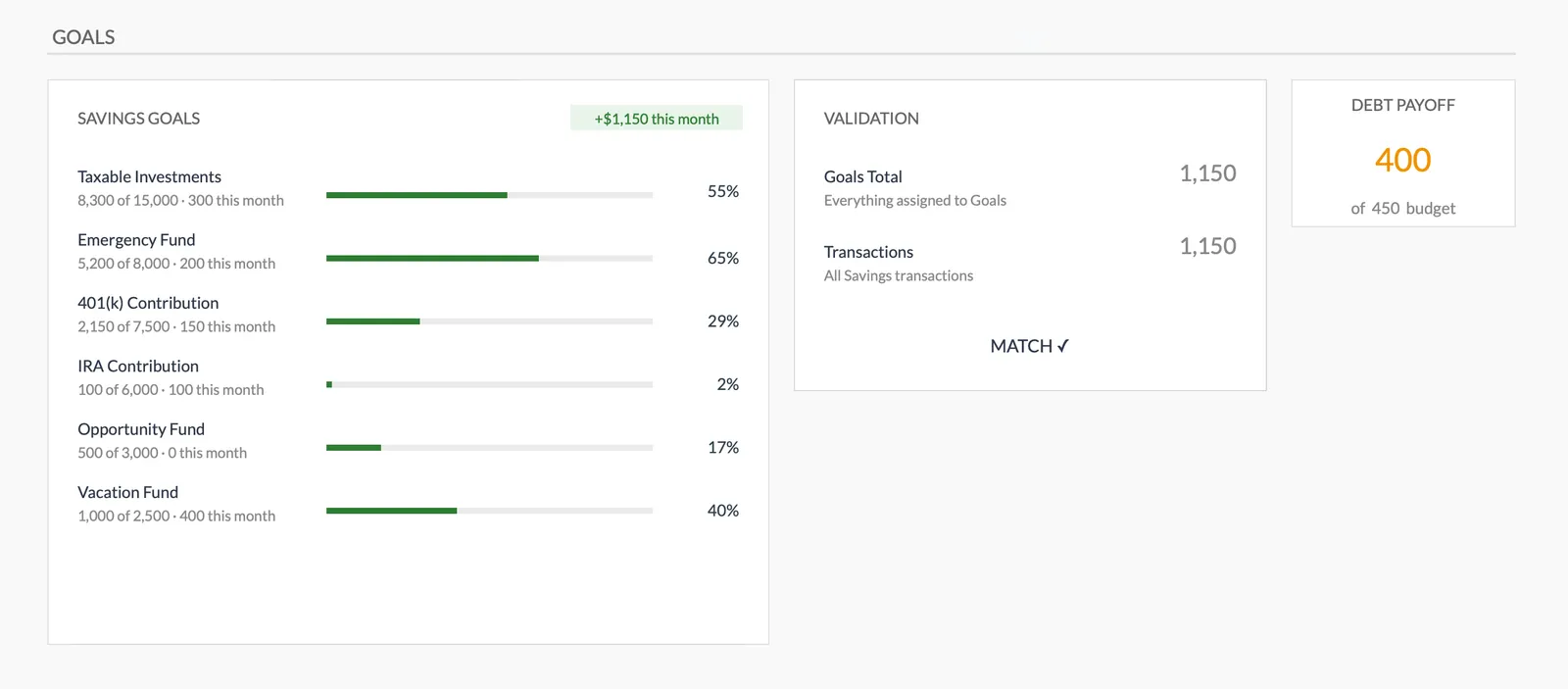
Savings goal tracking
Track progress toward goals even when monthly costs vary. See how different locations affect your ability to save.
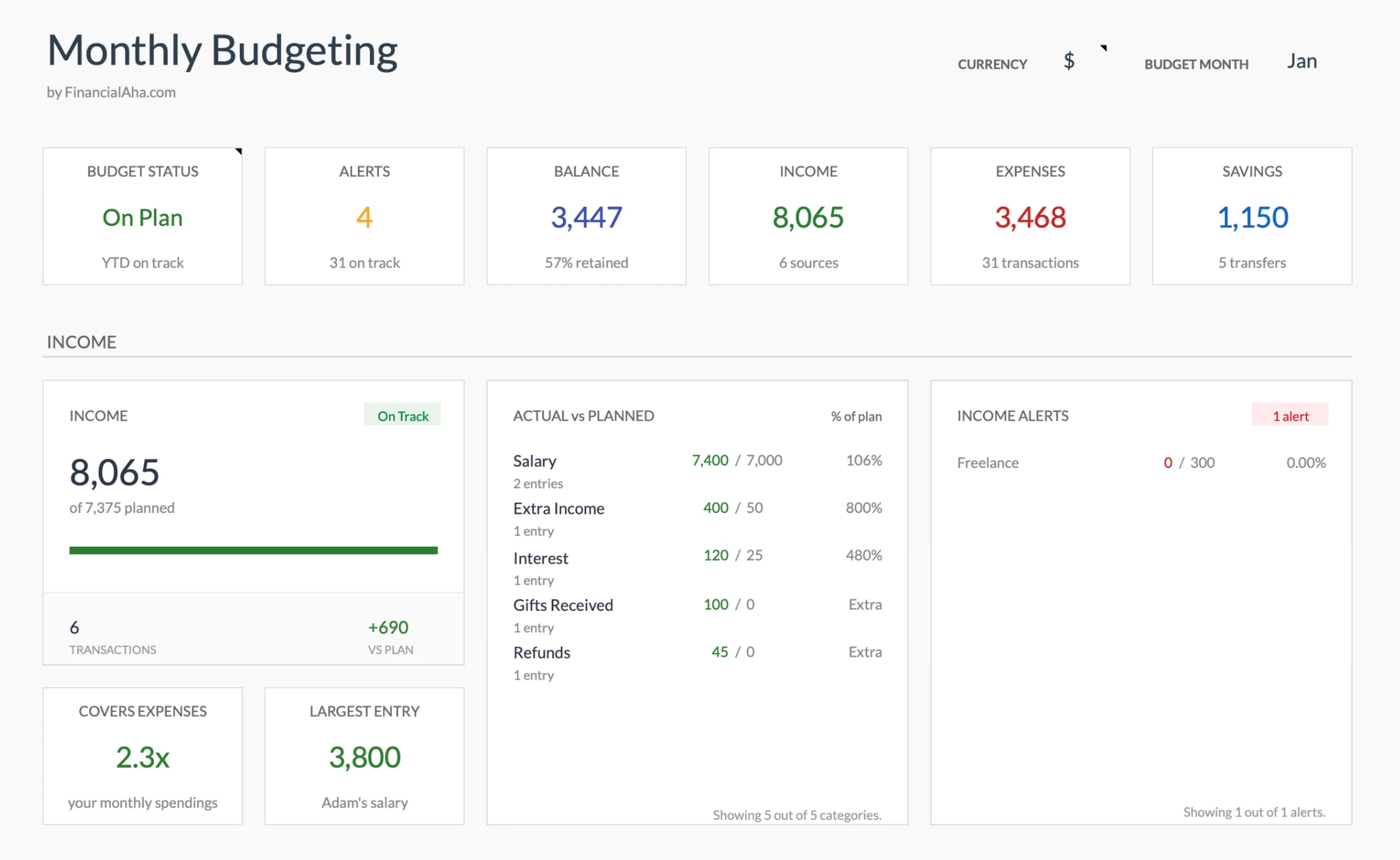
At-a-glance monthly numbers
Total income, total expenses, and net result for the month. See the bottom line regardless of how many currencies were involved.
Categories for the nomad lifestyle
Add categories for your specific lifestyle - whether that is surf lessons, language classes, or remote work equipment.
See It In Action
What the template looks like
Browse through the template to see how it handles income tracking, expense budgets, savings goals, and spending analysis.
- Dashboard with key metrics at a glance
- Transaction logging with categories
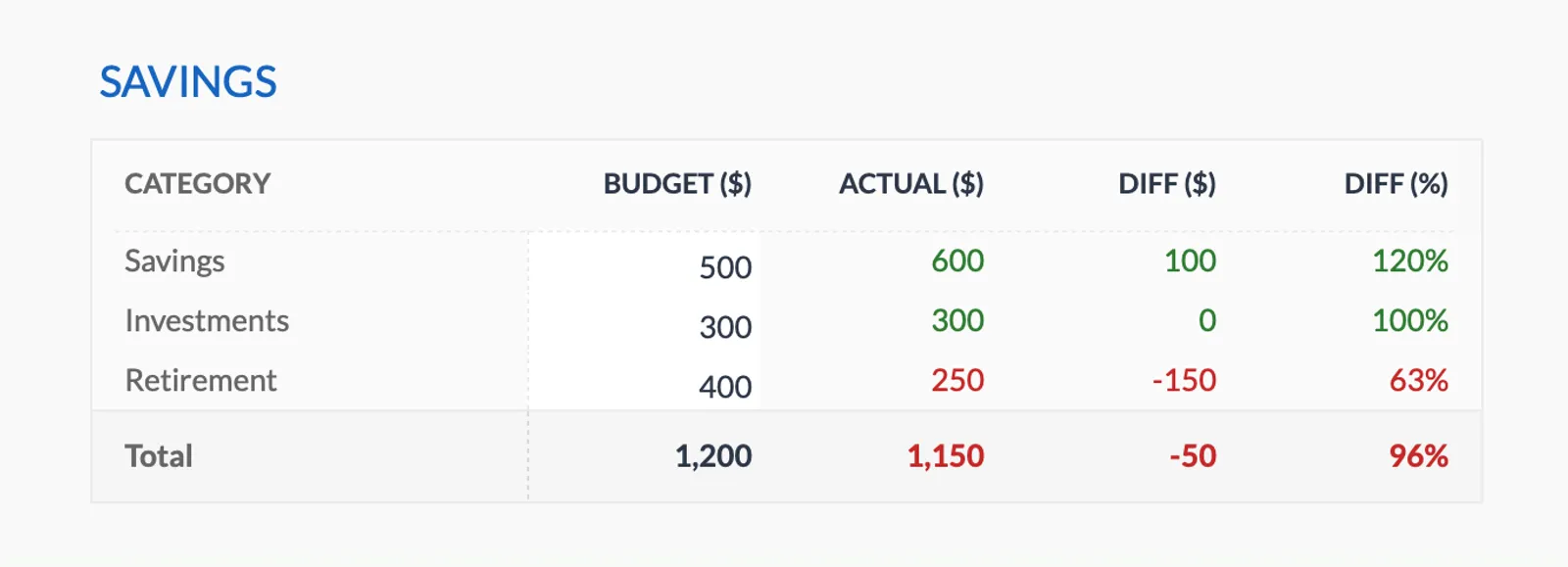
- Budget vs actual comparison
- Visual charts and breakdowns
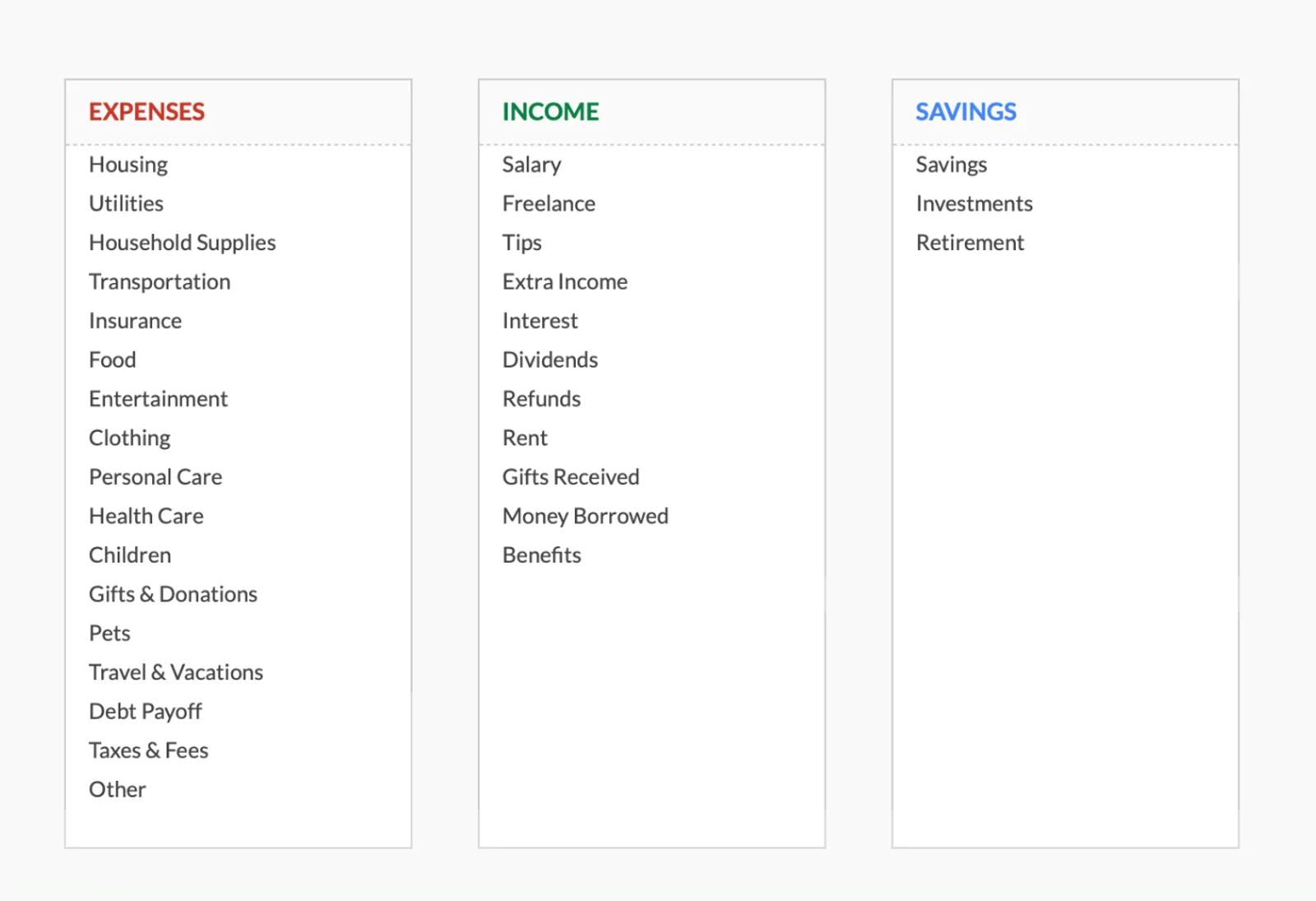
- Fully customizable categories

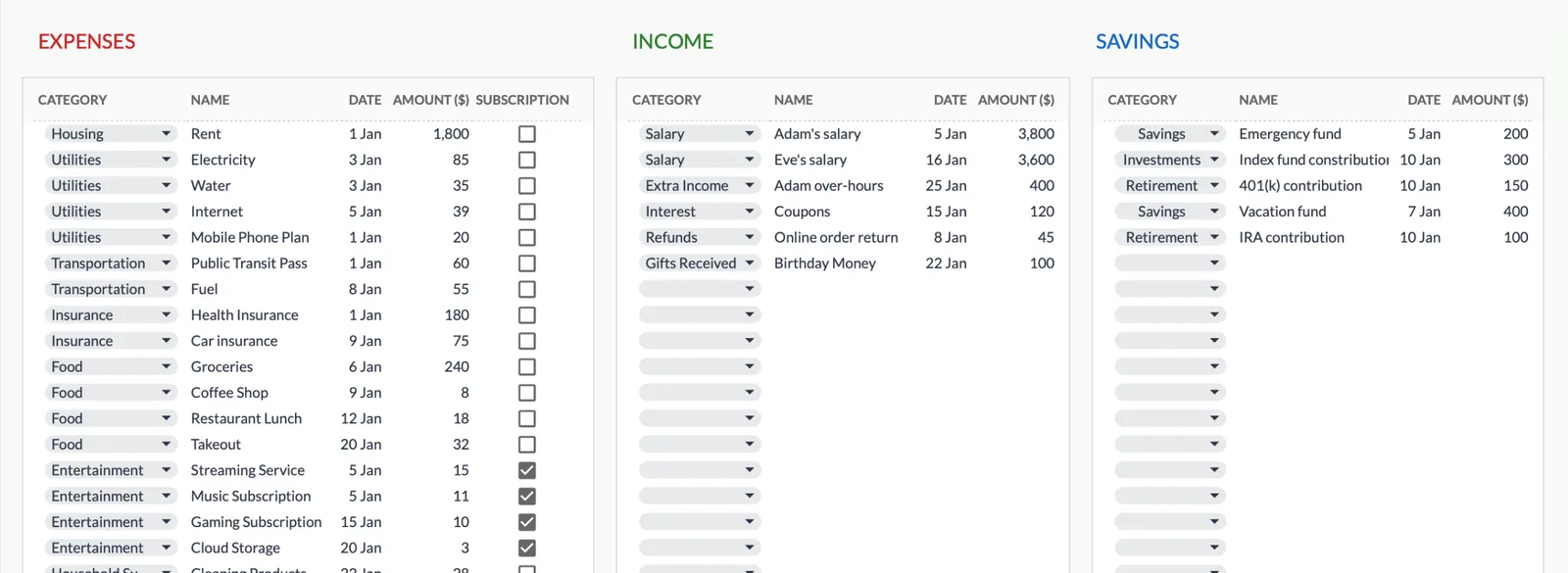
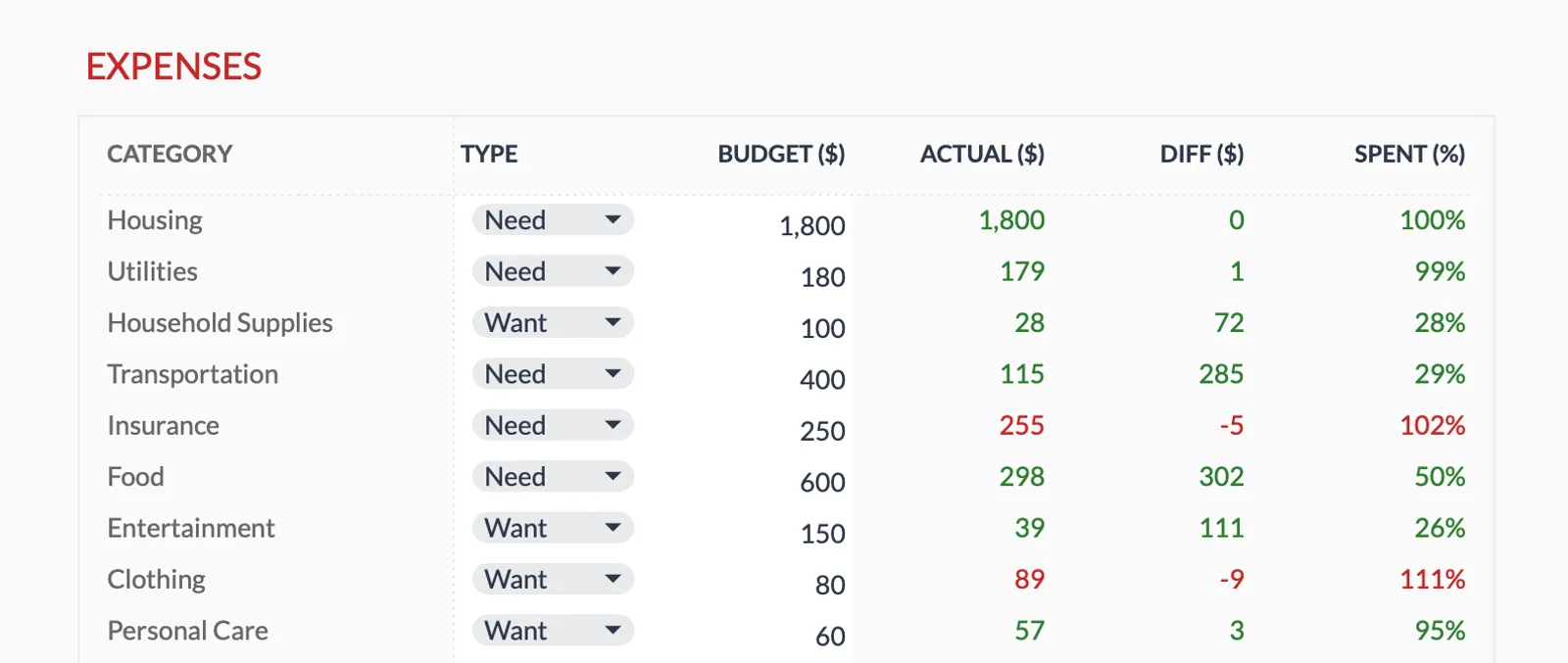
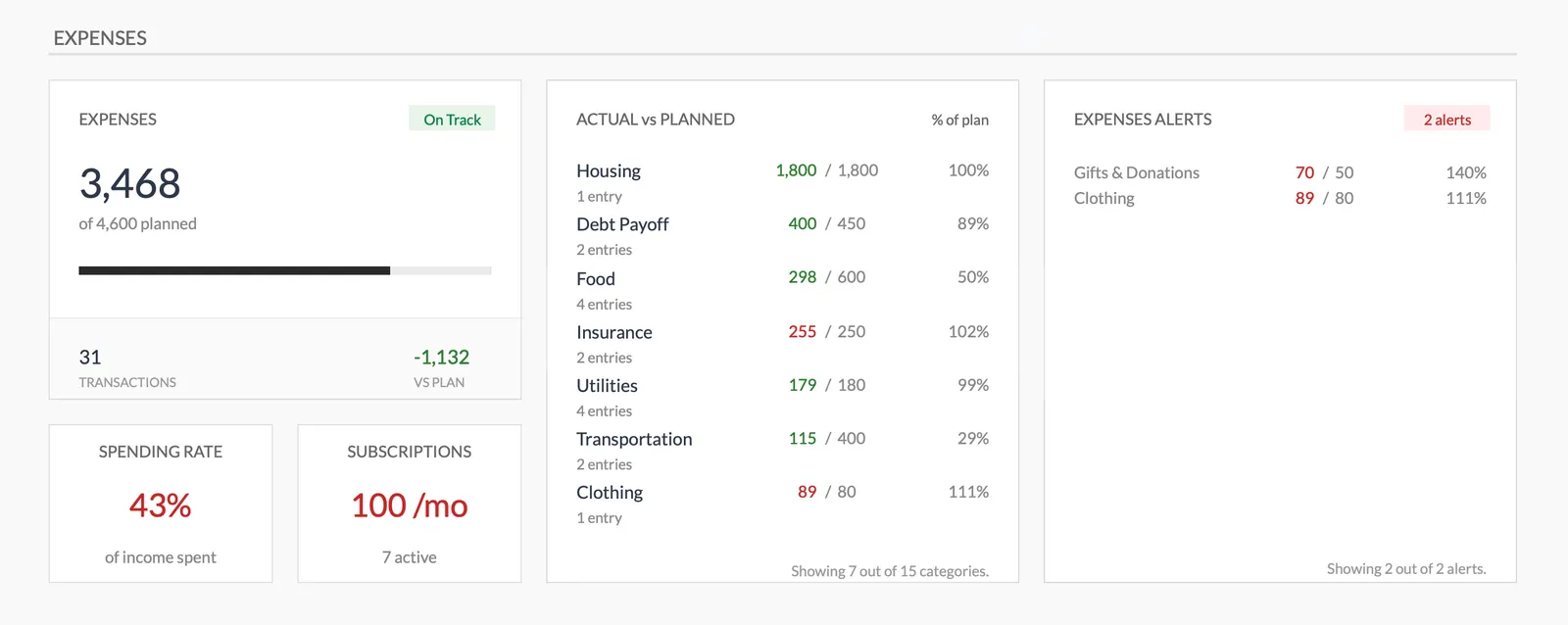
Dashboard with income, expenses, and savings at a glance
Log transactions with automatic categorization
Set targets per category and track actual spending
Visual breakdown of where your money goes
Track savings goals alongside your budget
Monitor progress toward financial goals
Fully customizable expense, income, and savings categories
Getting Started
Setting Up a Location-Independent Budget
Choose your base currency
Pick the currency you earn in or think in. All entries will be converted to this base for consistent tracking.
Enter your income sources
Add client payments, platform income, or salary. Note the currency each arrives in if applicable.
Set location-based targets
Estimate costs for your current location and set targets accordingly. Update these when you move.
Log expenses as they happen
Track purchases in whatever currency they occur. Convert to your base currency using the day's rate.
Reassess when changing locations
Before moving to a new city or country, review targets and adjust for the new cost of living.
Common Questions
Monthly Budget for Digital Nomads - FAQ
How do I handle multiple currencies?
Pick one base currency and convert all entries. The template tracks amounts in your base currency so everything is comparable. Use the daily exchange rate at the time of each expense.
Can this help me compare costs between locations?
After tracking for a few months in different locations, your data shows exactly what each place costs. This becomes a valuable reference for planning future travel.
What about visa costs and travel insurance?
Add these as expense categories. Some are monthly (insurance), others are periodic (visas). Spreading annual costs across 12 months gives a more accurate monthly picture.
How do I budget when I do not know next month's location?
Budget for your current location this month. If you tend to move frequently, track your average monthly spend across locations to establish a baseline.
Should I track in local currency or my home currency?
Track in your base currency for consistency. This lets you compare month over month even when locations change. Note the local currency amount if you want that detail.
What about tax set-asides?
Add a tax savings category and set aside a percentage of each payment. The right percentage depends on your tax situation, but having a category makes it visible.
Can't find the answer you're looking for? Contact our team
Start budgeting as a digital nomad
One-time purchase. No subscription. Your financial data stays in your Google Drive.