Monthly Budget Template
Monthly Budget Template for Consultants
Manage project-based fees, retainer income, business expenses, and tax obligations in a budget that fits consulting work.
In Depth
Project Fees, Payment Delays, and the Cash Flow Gap
Consulting income has a timing problem that separates it from most other forms of self-employment. Work completed today may not generate payment for 30, 60, or even 90 days depending on client payment terms. This disconnect between effort and income means a consultant can be fully booked and still cash-poor - a situation that makes budgeting from received payments rather than invoiced amounts essential for financial stability.
The overhead of running a consulting practice often surprises people transitioning from salaried employment. Professional liability insurance, software licenses, marketing costs, continuing education, and the time spent on business development rather than billable work all reduce the effective hourly rate below what the day rate might suggest. Some consultants find that tracking these costs monthly reveals their true margin and helps price future engagements more accurately.
Retainer agreements and project-based fees create different budgeting dynamics. Retainers provide predictable monthly income that functions somewhat like a salary. Project fees arrive irregularly and often in milestone-based installments. Many consultants have a mix of both, which means their monthly income is partially predictable and partially variable - requiring a budget that accommodates both patterns without treating either as guaranteed.
The personal versus business expense boundary is a persistent challenge in consulting. The home office, the phone, the internet connection, professional development that doubles as personal interest - these dual-purpose expenses need clear categorization for both tax purposes and honest personal budgeting. Some consultants find that maintaining a strict separation - even if it means two phone plans or two sets of books - simplifies both their tax situation and their personal budget clarity.
The Challenge
Why Consultants Need Project-Aware Budgeting
Consulting income combines the variability of freelancing with the overhead of running a business. Project timelines, delayed payments, and high business expenses create a financial picture that needs careful management.
Project income is lumpy
A three-month project pays upon milestones or completion - not biweekly. Income arrives in bursts that must be stretched across the gaps. Some months bring multiple payments; others bring none.
Clients pay on their schedule, not yours
Net-30 or net-60 payment terms mean work completed in March may not pay until May. Budgeting from invoiced amounts rather than received payments creates a dangerous cash flow mismatch.
Business expenses are significant
Software subscriptions, professional insurance, marketing, travel to client sites, continuing education, and professional memberships add up quickly. These costs persist even during slow periods.
No employer handles taxes or benefits
Quarterly estimated taxes, health insurance, retirement contributions - all come from gross income. The gap between what clients pay and what you actually keep is larger than most consultants expect.
Ready to take control of your consultant finances?
What You Get
Features Built for Consulting Income
Project and retainer income tracking
Log income by project or retainer client. See which engagements drive revenue and which are winding down.
Business expense categories
Track software, insurance, travel, marketing, subcontractors, and professional development separately from personal expenses.
Tax set-aside tracking
Reserve a percentage of each payment for quarterly taxes. The running total shows whether you are on track.
Projected engagement fees vs. actual revenue
Set monthly targets based on projected income and compare against real results as payments arrive.
Personal spending allocation
After business expenses and taxes, see the amount available for personal living costs.
Totals update in real time
Every total updates automatically. Enter numbers and the template handles the math.
See It In Action
What the template looks like
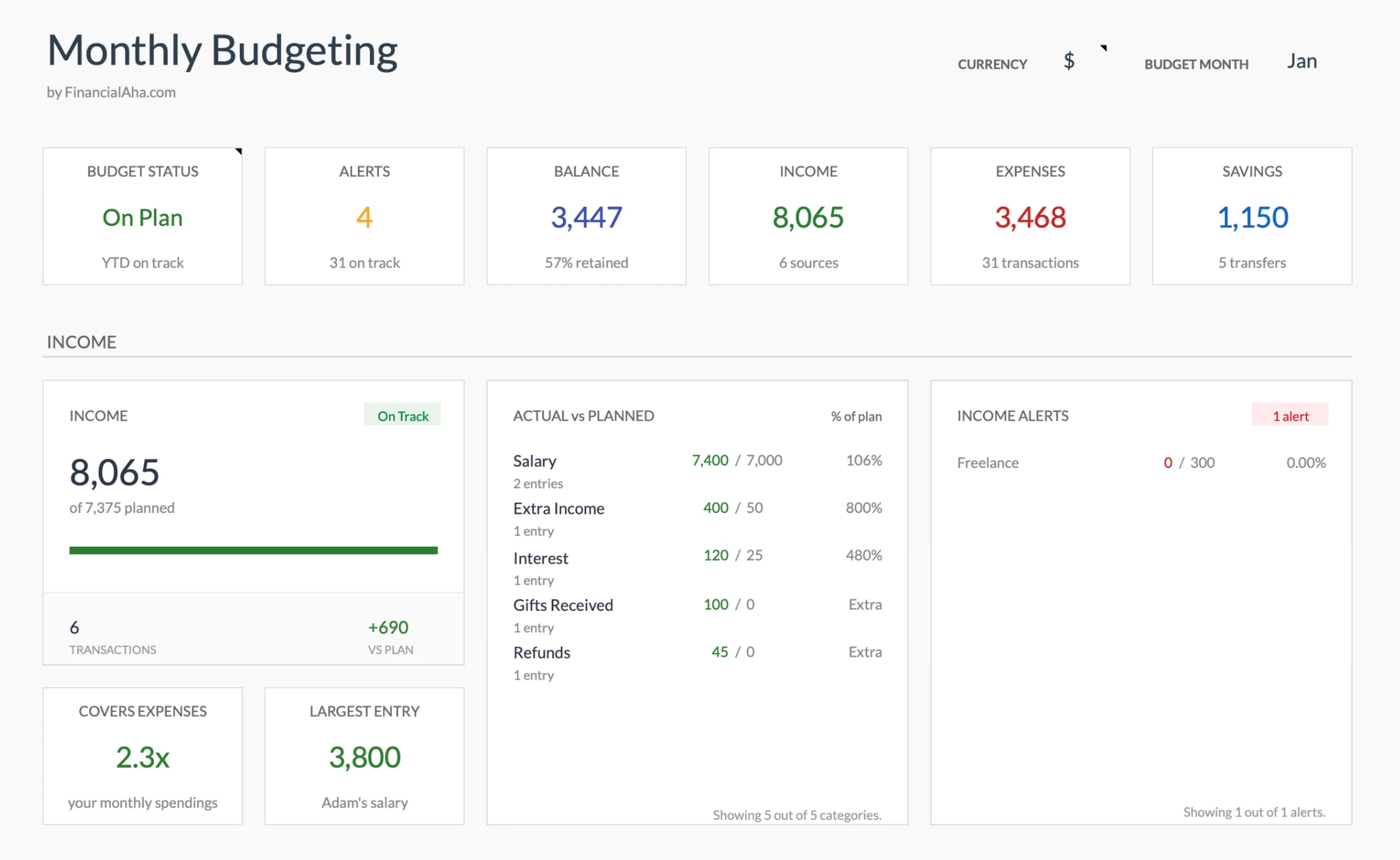
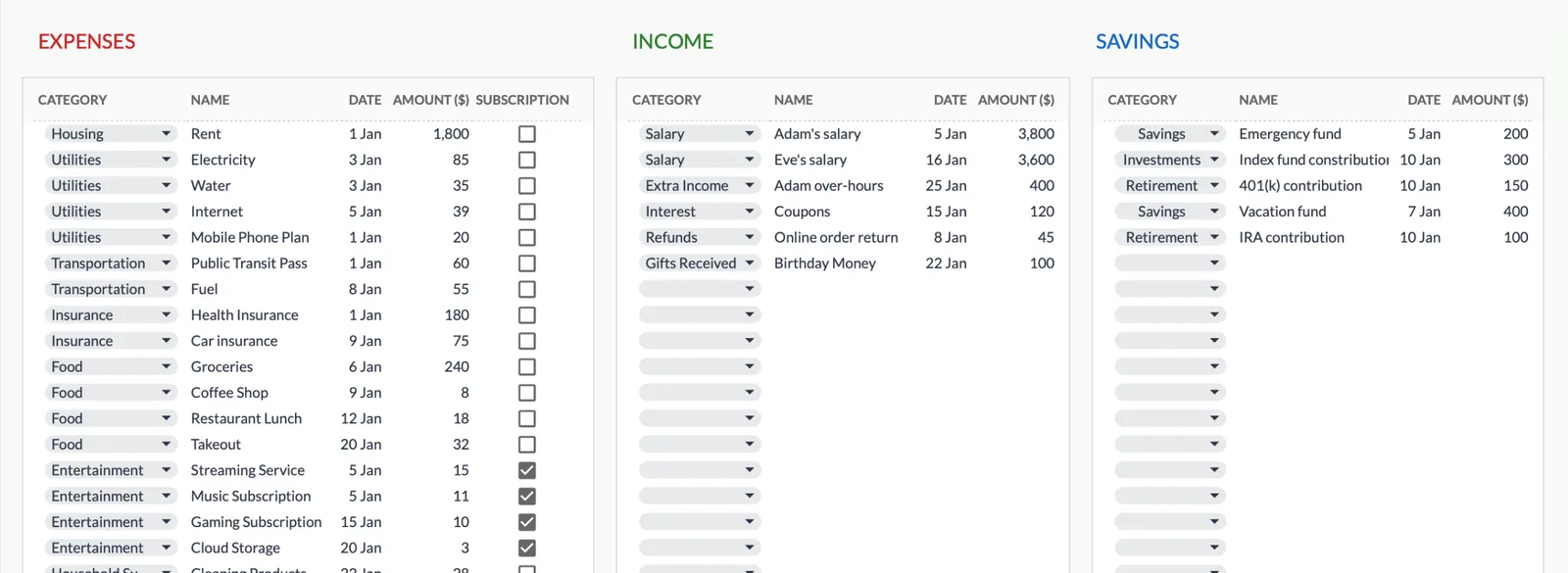
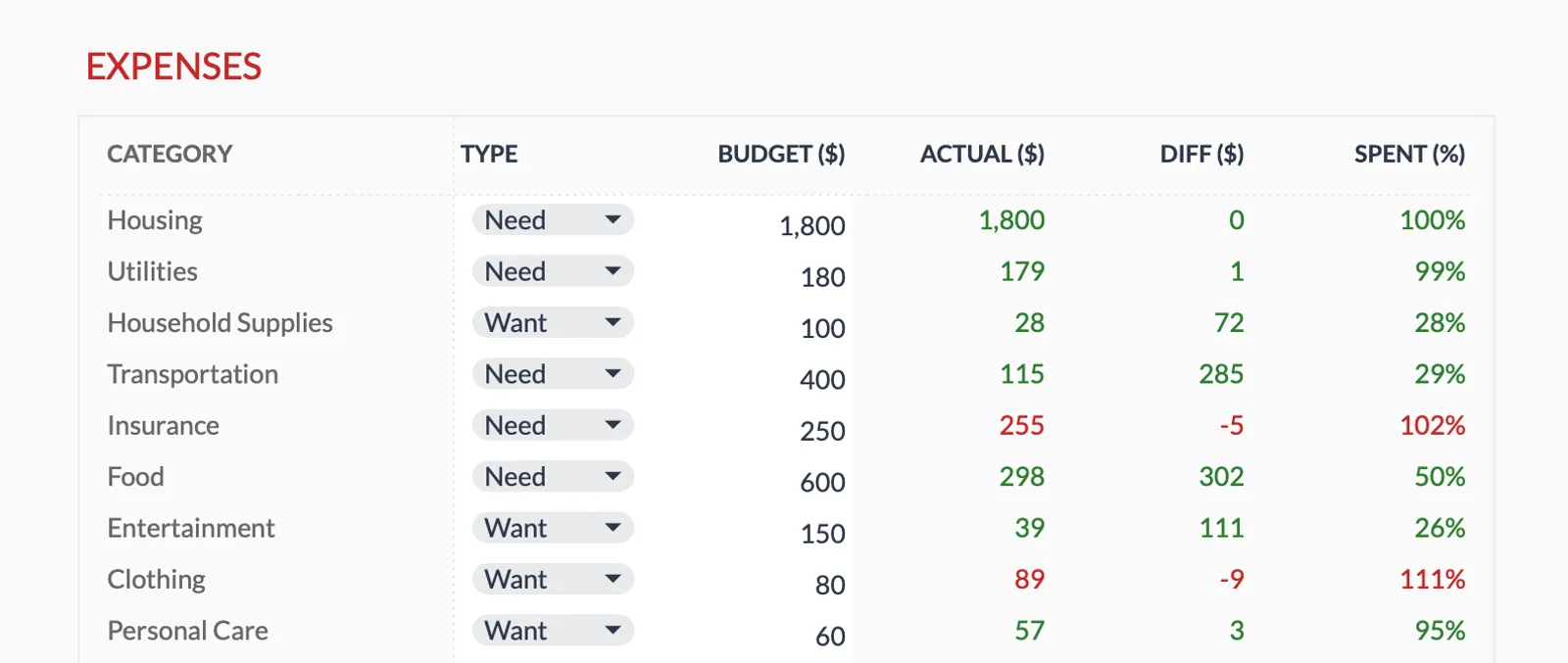
Browse through the template to see how it handles income tracking, expense budgets, savings goals, and spending analysis.
- Dashboard with key metrics at a glance
- Transaction logging with categories
- Budget vs actual comparison
- Visual charts and breakdowns
- Fully customizable categories

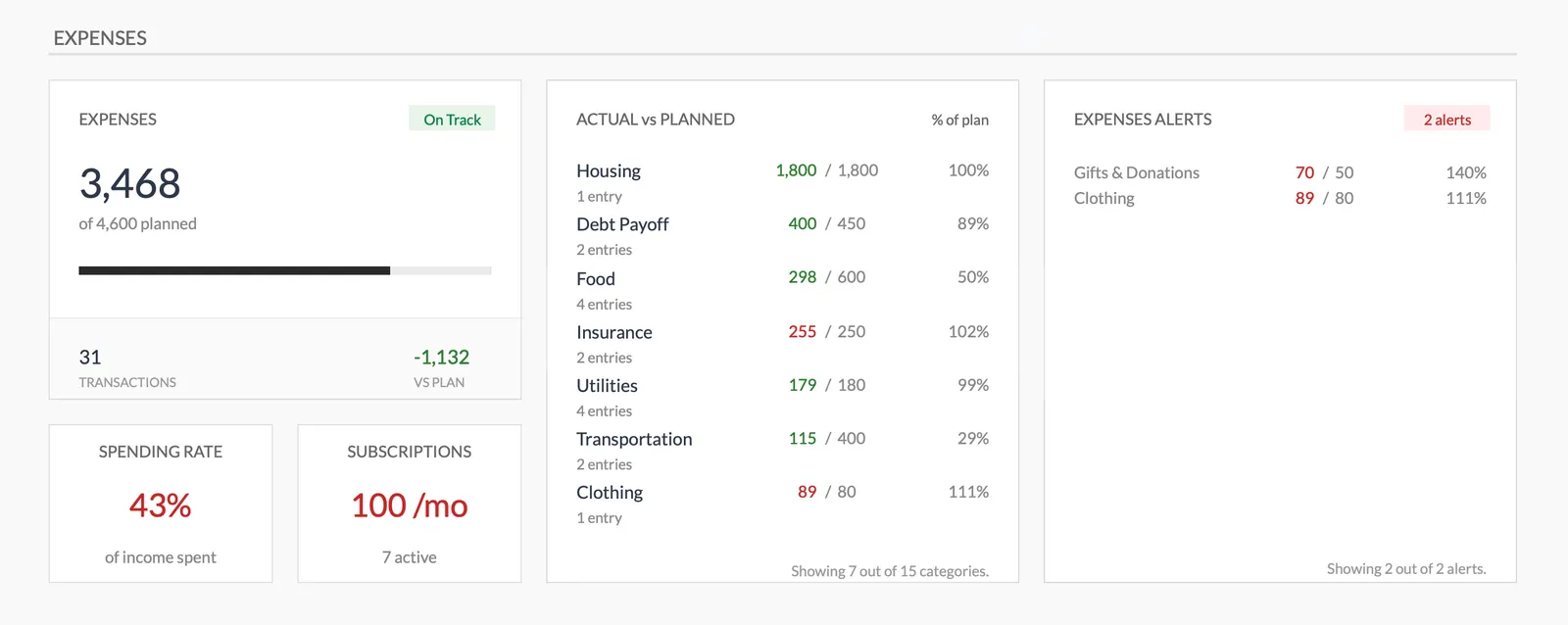
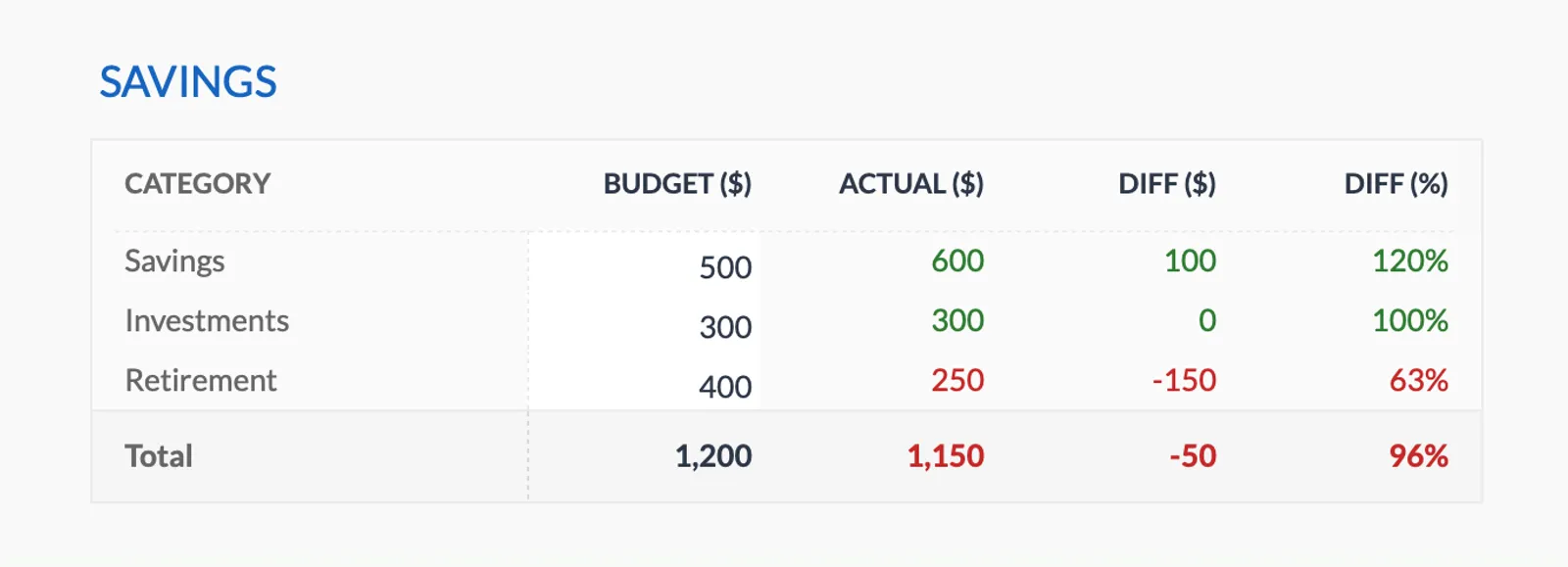
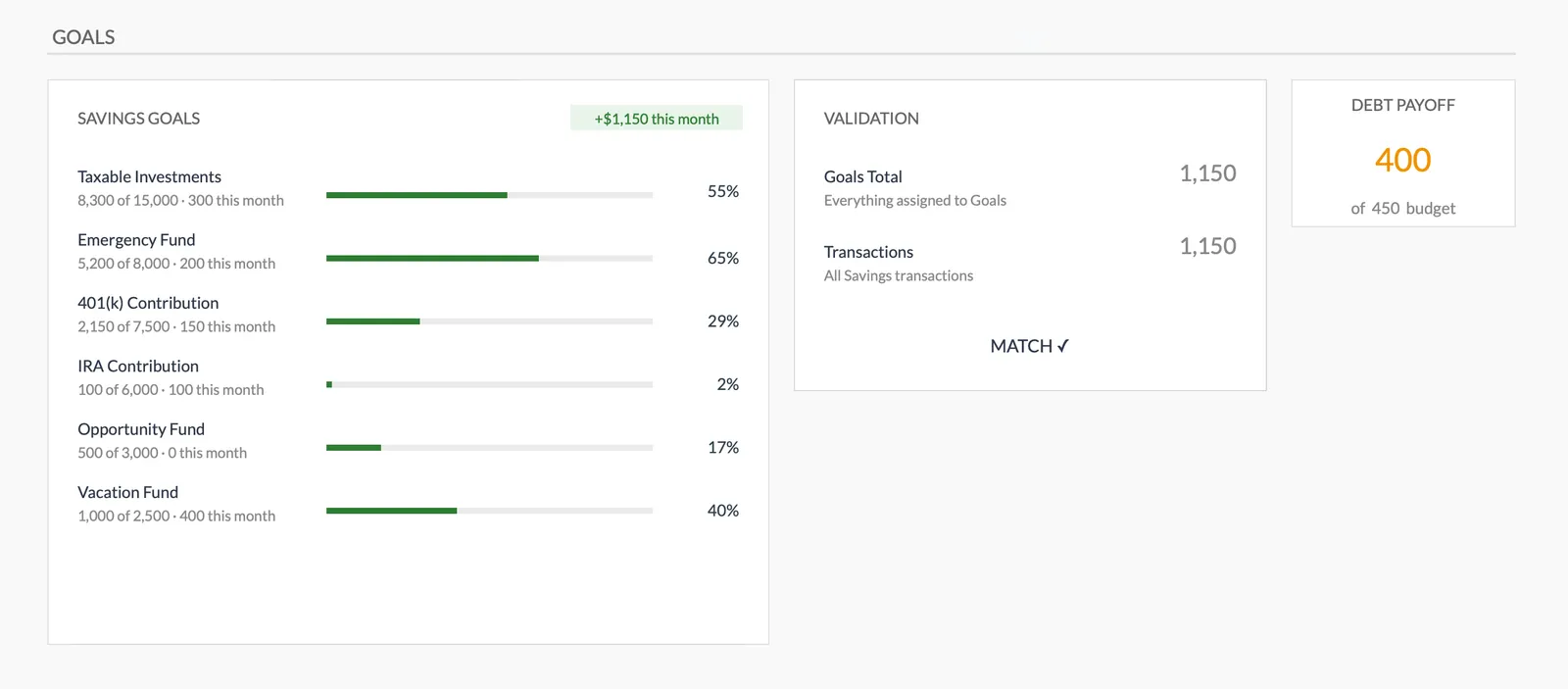
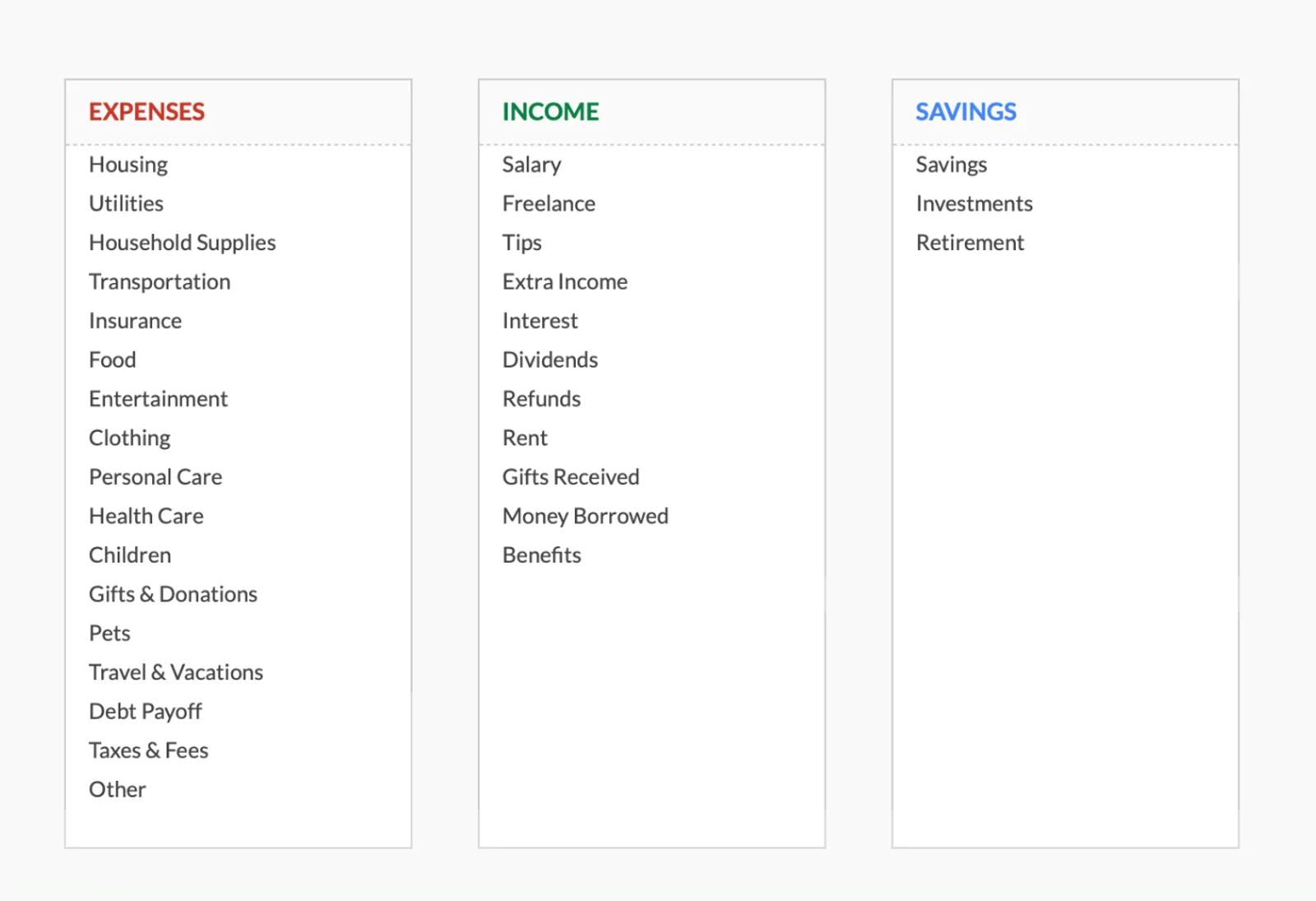
Dashboard with income, expenses, and savings at a glance
Log transactions with automatic categorization
Set targets per category and track actual spending
Visual breakdown of where your money goes
Track savings goals alongside your budget
Monitor progress toward financial goals
Fully customizable expense, income, and savings categories
Getting Started
Quick Start for Consultant Budgeting
Map your expected income
List active projects and retainers with expected payment dates. This creates a rough income forecast for the month.
Log payments when received
Enter income only when it hits your account. Invoiced-but-unpaid amounts are not spendable income.
Track business expenses as they occur
Log every business cost in its category. Consistent tracking simplifies tax deductions and shows true profitability.
Set aside taxes and savings
Before budgeting personal expenses, reserve taxes and savings. What remains is your actual discretionary income.
Review monthly against your forecast
Compare what you expected to earn and spend against what actually happened. Adjust next month's plan based on the data.
Common Questions
Monthly Budget for Consultants - FAQ
How do I handle net-30 or net-60 payment terms?
Budget based on when money arrives, not when you invoice. If January work pays in March, March is when it appears in your budget. Maintaining a cash reserve covers the gap between work and payment.
Can I track multiple projects simultaneously?
Yes. Add a line for each project or client. The template totals all income sources and shows which clients contribute most to your monthly revenue.
What about subcontractor payments?
Add subcontractor costs as a business expense category. This shows your actual margin on projects that require additional help.
How do I budget during slow periods?
If you have built a reserve during busy months, draw from it during slow periods. The template tracks the withdrawal so you know how long your reserves last at current spending levels.
Should I separate business and personal accounts?
This is generally good practice for tax purposes. The template tracks both business and personal expenses regardless of whether they flow through one account or two.
Is this suitable for a consulting firm with employees?
This template is designed for solo consultants or small practices. A firm with payroll and multiple revenue streams may need more robust accounting tools alongside this budget.
Can't find the answer you're looking for? Contact our team
Start budgeting as a consultant
One-time purchase. No subscription. Your financial data stays in your Google Drive.