Annual Budget Template
Annual Budget Template for Small Business Owners
Plan 12 months of personal finances around variable business income, owner draws, and tax obligations that change with business performance.
In Depth
Annual Planning When Business and Personal Finances Overlap
Small business owners live in two financial worlds at once - the business has its own revenue cycles, expenses, and tax obligations, while personal life has its own bills, goals, and timelines. An annual planner forces these two worlds onto the same page. When the business has a slow quarter, the personal budget needs to know about it months in advance rather than at the moment the checking account runs low.
Revenue seasonality is something most business owners understand intuitively but rarely quantify. The annual view makes patterns concrete - which months consistently bring in more, which ones tend to run lean, and how the gap between busy and slow seasons affects the owner draw. This visibility helps with decisions like when to make large purchases or when to build up reserves.
Tax obligations represent one of the largest annual expenses for business owners, yet they often operate as a parallel financial system. Quarterly estimated payments, self-employment tax, and the gap between reported income and actual cash received all create timing mismatches that only resolve over a full year. Seeing tax set-asides alongside other expenses prevents the common surprise of owing more than expected in April.
Planning for the year also creates space for intentional business investment. Without the annual view, reinvestment decisions compete with monthly bills for attention. When the full year is mapped out, it becomes clearer which months have genuine surplus available for growth spending versus which months just feel temporarily flush.
The Challenge
Why Business Owners Need an Annual Personal Budget
When business income funds personal life, the annual view becomes essential. Seasonal business patterns, tax obligations, and variable draws all affect personal finances in ways that only a 12-month view reveals.
Business seasons become personal seasons
If the business is seasonal, personal income follows the same pattern. A retail owner's December boom funds January's personal expenses. An annual budget maps these business cycles to personal cash flow.
Tax obligations arrive in chunks
Quarterly estimated taxes, annual insurance premiums, and business tax payments create concentrated personal cash outflows. The annual view shows when these hit and how to prepare.
Owner draw amounts may vary throughout the year
Taking more during strong months and less during slow ones is common. An annual budget shows whether the total annual draw is sustainable and whether personal spending adjusts accordingly.
Personal and business planning need alignment
A major personal expense - a home renovation, a child's tuition - may coincide with a period when the business needs reinvestment. The annual view shows these conflicts before they become crises.
Ready to see a full year of your small business owner finances?
What You Get
Annual Budget Features for Business Owners
12-month personal income planner
Rename an income row for owner draws or salary and map the expected amount for each month, adjusting for business seasonality and known cash flow patterns.
Tax payments in the months they fall
Taxes & Fees is one of the built-in expense categories, so quarterly estimated payments and filing costs get a planned figure in the month they are due and an actual when paid.
Annual personal spending plan
Budget household expenses across 12 months. Account for seasonal variations in heating, cooling, holidays, and school costs.
Personal savings and investment tracking
Rename the Retirement savings row for a SEP-IRA or Solo 401(k) and record planned versus actual each month, alongside targets on the goals sheet.
Annual summary metrics
Total personal income from the business, total personal spending, total saved, and overall savings rate.
Owner draw plan vs. actual spending each month
Compare planned draws and spending against actuals. See whether the annual plan is holding up or needs revision.
See It In Action
What the template looks like
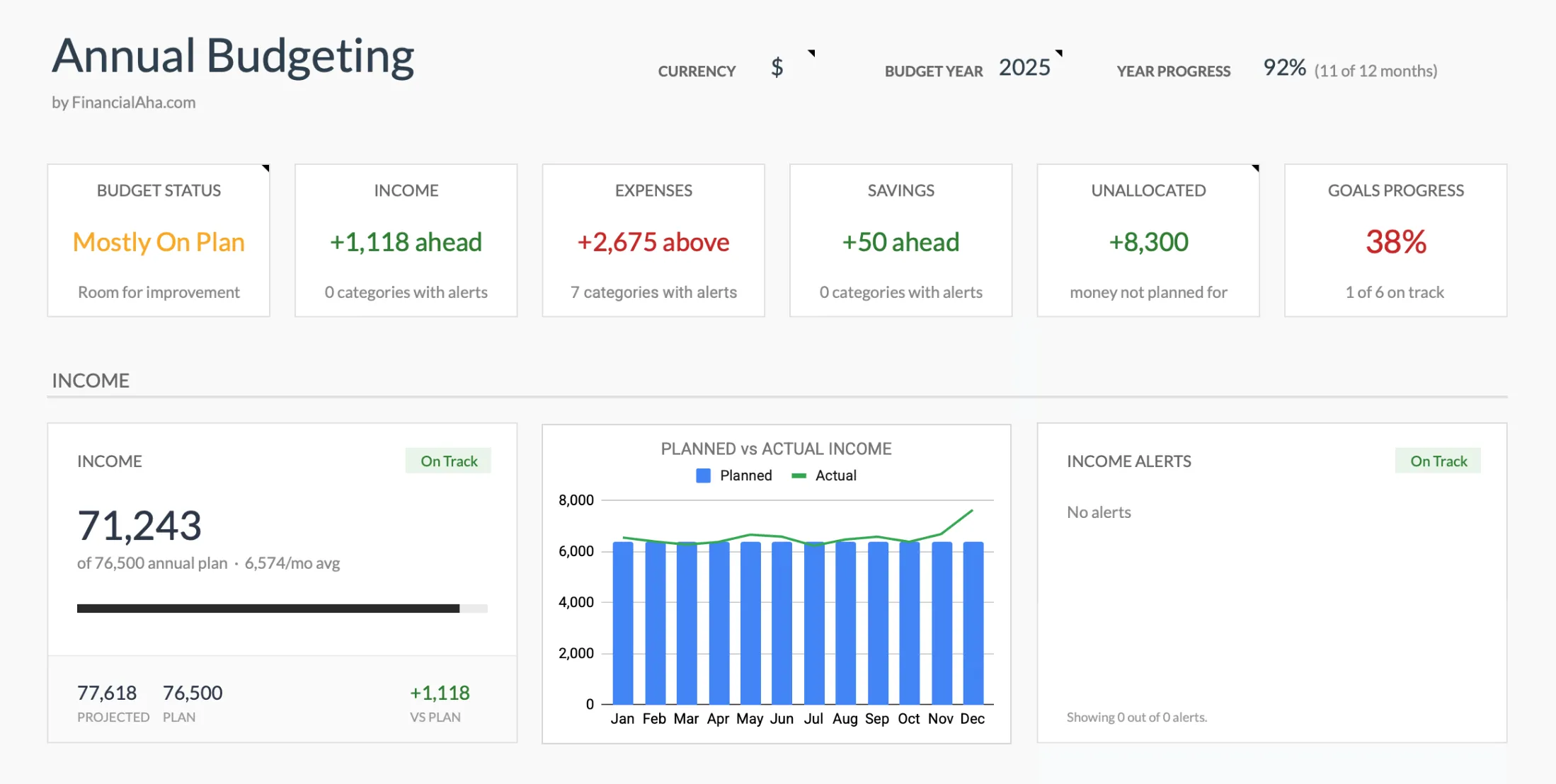
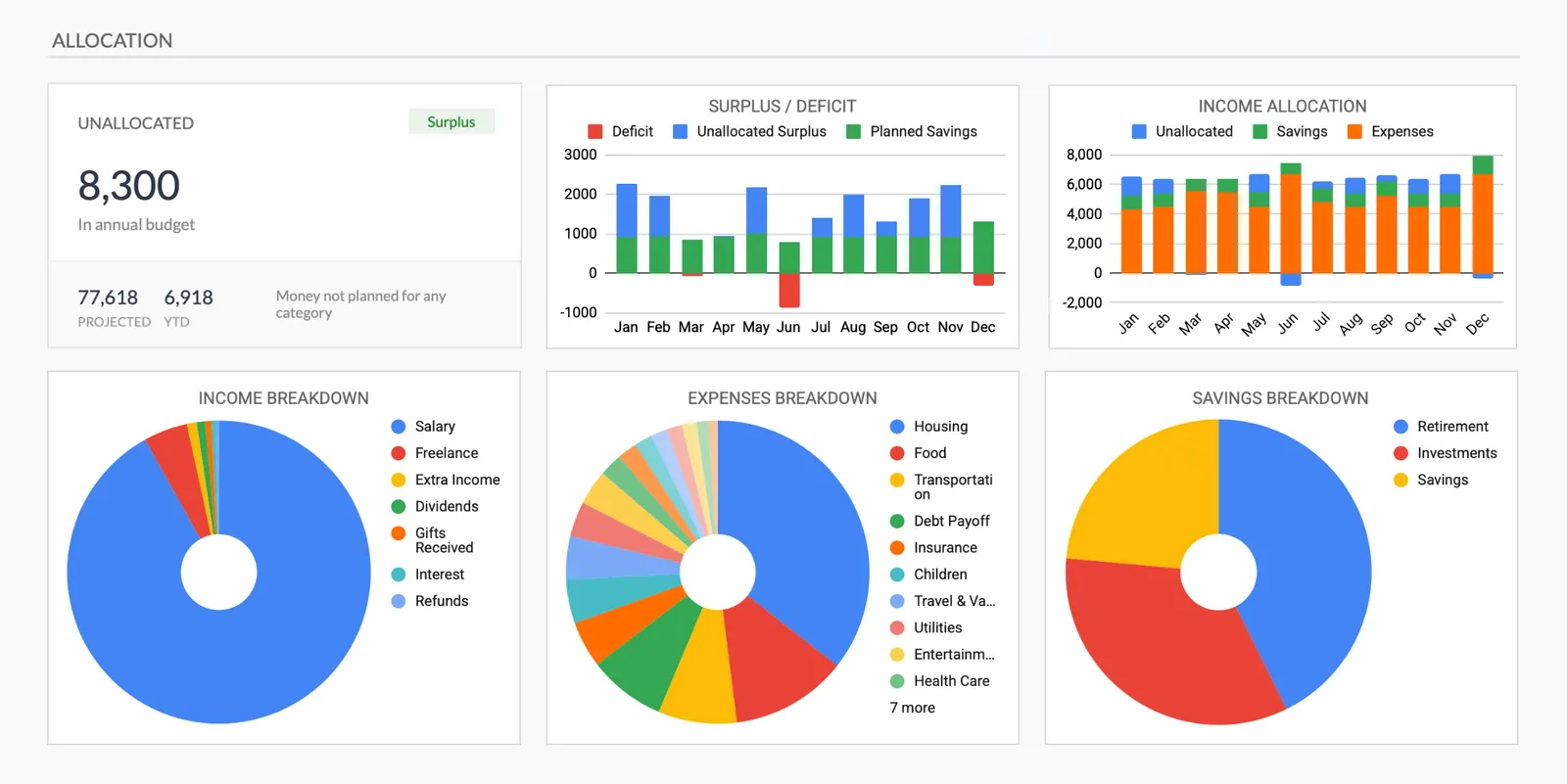
Browse through the template to see how it handles income tracking, expense budgets, savings goals, and spending analysis.
- Dashboard with key metrics at a glance
- Transaction logging with categories
- Budget vs actual comparison
- Visual charts and breakdowns
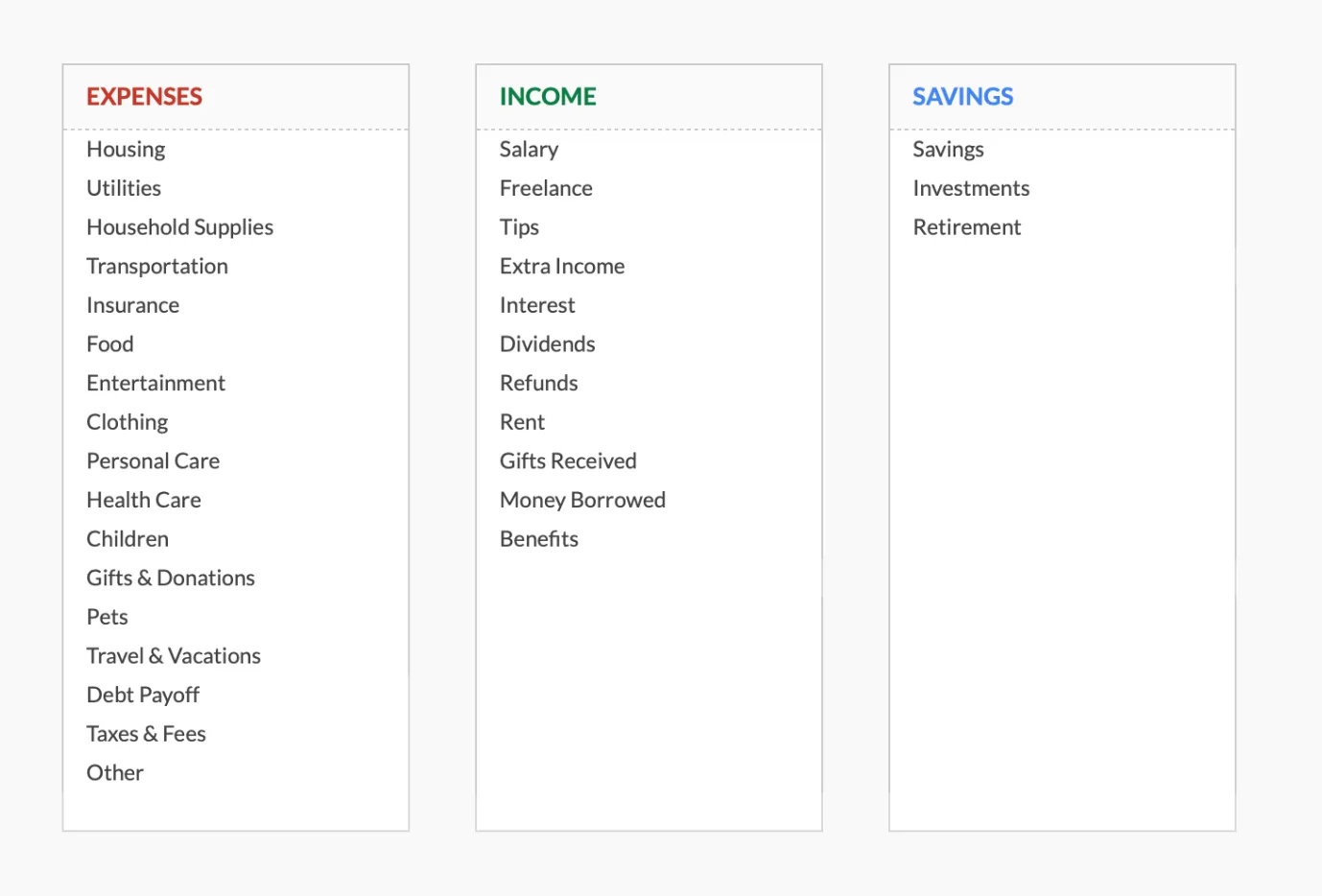
- Fully customizable categories
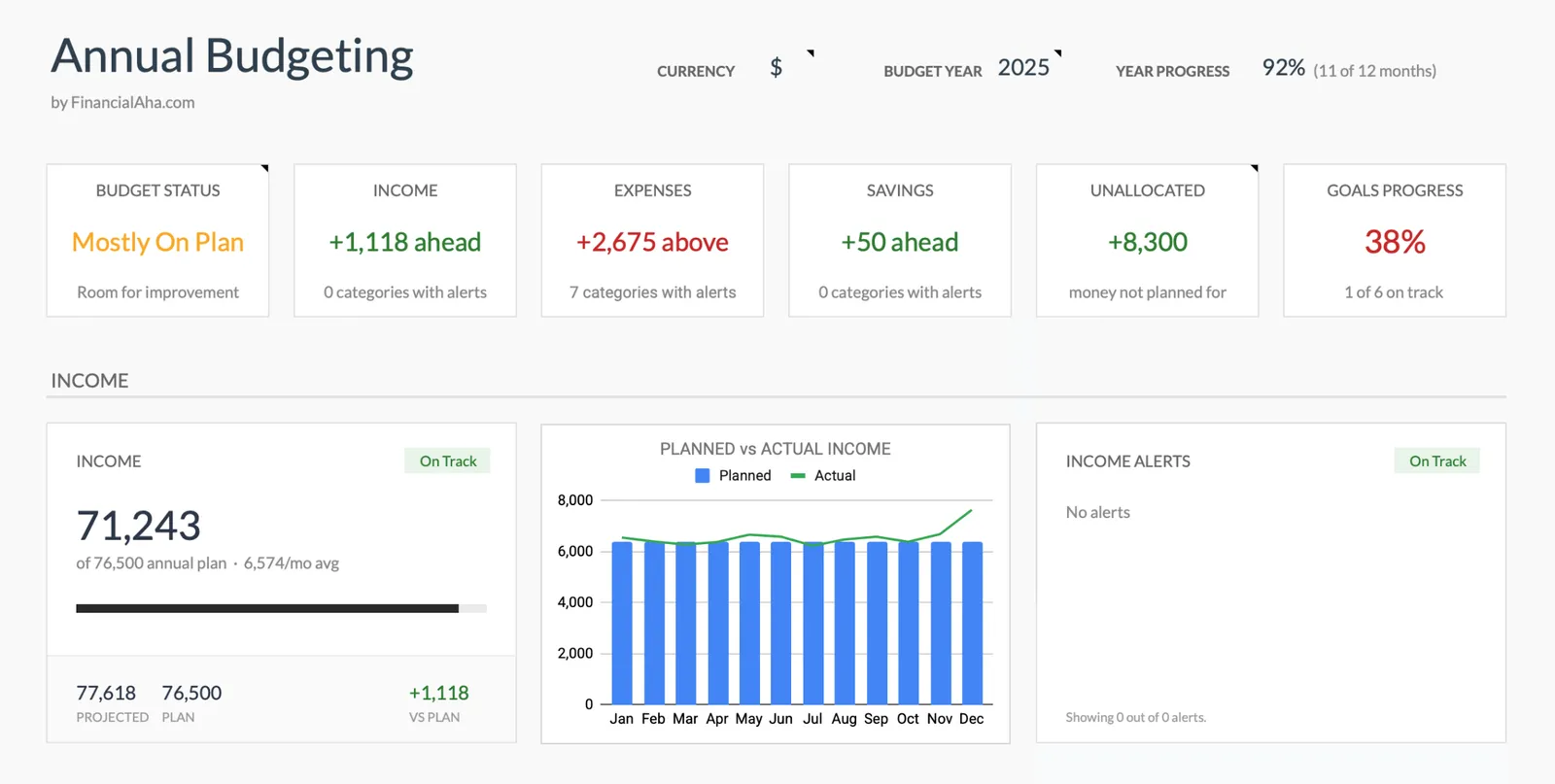

Full year budget overview with monthly breakdown
See how your budget is allocated across categories
Track key metrics across the year
Customizable categories for your annual plan
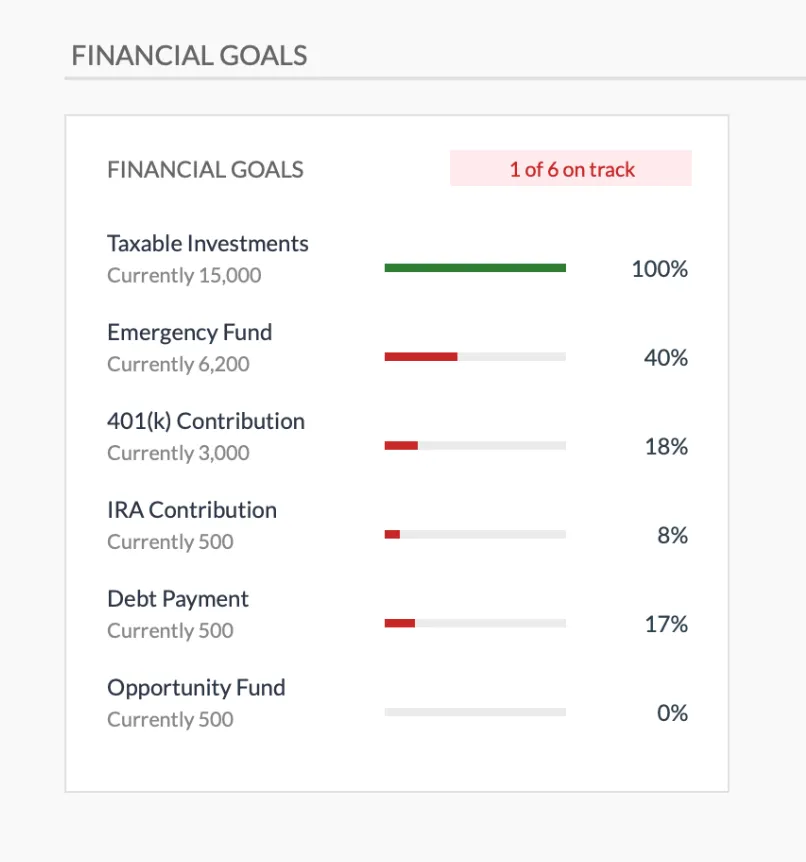
Set and track annual financial goals
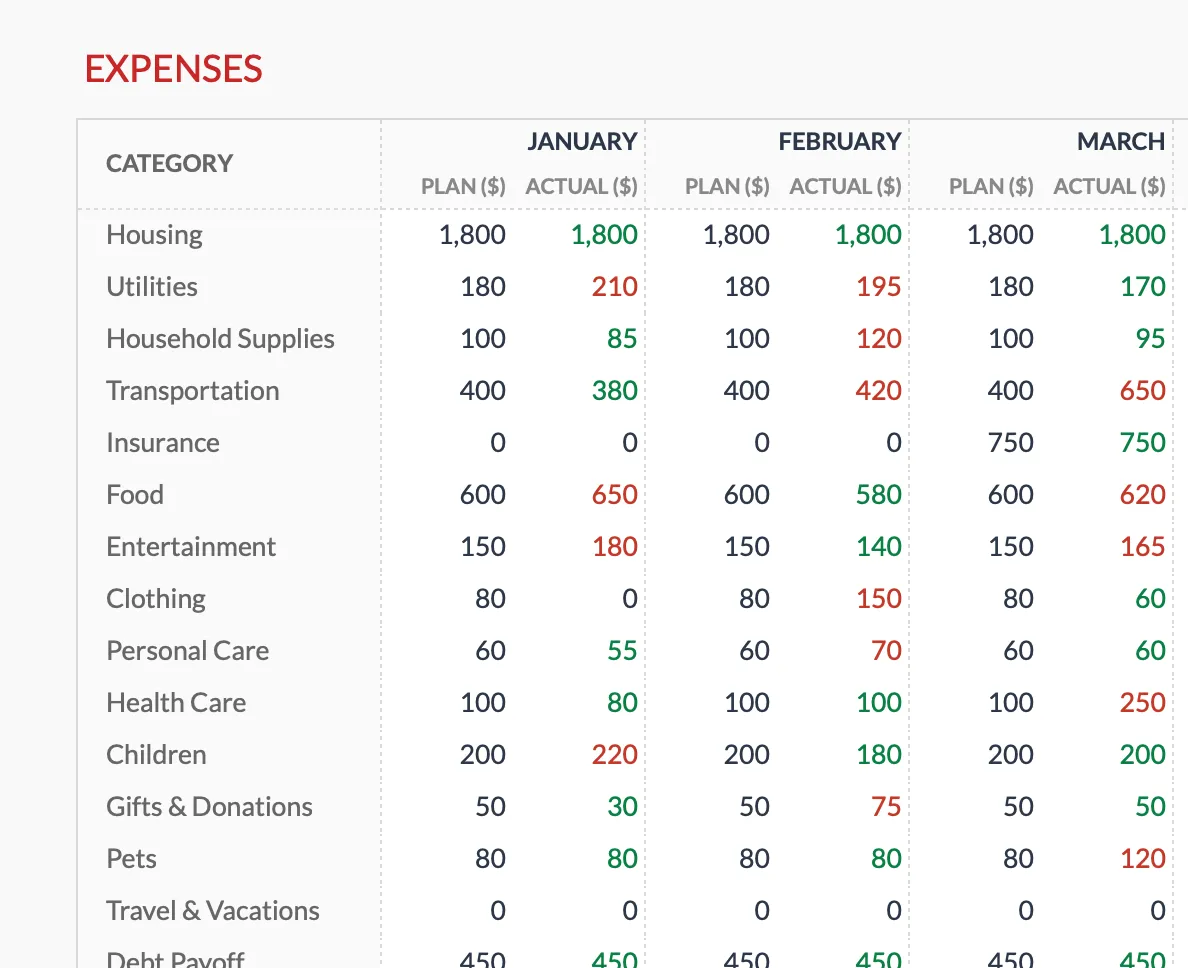
Track expenses month by month across the year
Getting Started
Setting Up an Annual Business Budget
Project your annual owner draw
Based on business projections, estimate how much you will take from the business each month. Use conservative numbers.
Map tax obligations across the year
Put quarterly estimated payments on the Taxes & Fees row and annual premiums on Insurance, each in the month it is due.
Plan personal spending by month
Budget household expenses with seasonal adjustments. Flag months with above-average personal costs.
Set personal savings goals
Decide on retirement contributions and personal savings targets for the year. Distribute across months.
Review quarterly alongside business performance
Every quarter, compare personal plan to actuals and adjust remaining months based on how the business is performing.
Common Questions
Annual Budget for Small Business Owners - FAQ
Should I plan my personal budget before or after the business budget?
Ideally, both at the same time. Your personal needs inform how much you need from the business. Business capacity determines how much you can take. They are interdependent.
What if the business has a bad year?
The annual planner shows the impact of reduced draws on your personal finances immediately. Seeing the full-year effect helps you decide where to cut personal spending or tap reserves.
How do I plan for retirement contributions?
SEP-IRA and Solo 401(k) contribution limits depend on business income. The template tracks planned contributions and can be adjusted as actual business income becomes clear.
Can I use this alongside business accounting software?
Yes. This covers personal finances only. Your business books track revenue, expenses, and profitability. This template tracks what happens after money moves from the business to your personal life.
What about health insurance premiums?
Insurance is one of the built-in expense categories, so premiums sit there month by month. The annual total gives you the figure to hand to whoever prepares your return.
How do I handle a year when I need to reinvest heavily in the business?
Reduce planned owner draws in the months requiring reinvestment and adjust personal spending targets. The template shows the personal impact of business reinvestment decisions.
Can't find the answer you're looking for? Contact our team
Start annual budgeting as a small business owner
One-time purchase. No subscription. Your financial data stays in your Google Drive.