Nebraska
Belastingplanner-sjabloon voor Nebraska
Organiseer uw federale en staatsbelastingplanning voor Nebraska in Google Sheets. Volg inkomen, aftrekposten en geschatte betalingen.
In Depth
Nebraska's Dalende Tarieven en de Realiteit van Onroerendgoedbelasting
Nebraska is bewust op weg om zijn inkomstenbelastingtarieven te verlagen. De progressieve stelstels blijven bestaan, maar het maximale tarief is gefaseerd verlaagd, met verdere verlagingen gepland voor toekomstige jaren. Deze gefaseerde aanpak betekent dat het tarief voor een belastingjaar niet met het volgende overeenkomt, dus op de hoogte blijven is nuttig. Zelfs als de tarieven dalen, betekent de progressieve structuur dat hogerverdieners nog steeds meer per dollar betalen dan degenen in lagere stelstels.
De volledige vrijstelling van Sociale Zekerheidsprestaties van Nebraska staatsbelasting is een relatief recente ontwikkeling. Eerder was Nebraska een van een afnemend aantal staten die Sociale Zekerheid belastte. De gefaseerde invoering is nu voltooid, waardoor Nebraska aansluit bij de meeste staten die deze prestaties vrijstellen. Militaire pensioenen zijn ook volledig vrijgesteld, wat Nebraska onderscheidt van enkele buurstaten.
Eén gebied waarop Nebraska minder gunstig afsteekt is de onroerendgoedbelasting. De tarieven liggen boven het nationale gemiddelde en zijn een blijvend punt van zorg voor inwoners, vooral in landbouwgebieden waar grondwaarden de aanslagen bepalen. Het schooldistrictskrediet voor onroerendgoedbelasting van de staat wordt sinds belastingjaar 2024 rechtstreeks op de aanslag onroerendgoedbelasting toegepast in plaats van geclaimd op de aangifte inkomstenbelasting, en er lopen doorlopend wetgevende initiatieven voor aanvullende verlichting. Voor federale doeleinden telt deze onroerendgoedbelasting samen met eventueel betaalde staatsinkomstenbelasting mee voor het SALT-plafond.
Nebraska
Belastingplanning in Nebraska
Nebraska heeft een progressieve inkomstenbelasting met een maximaal tarief dat geleidelijk is gedaald. De staat heeft ook in de afgelopen jaren uitzonderingen voor pensioeninkomsten uitgebreid.
Progressieve Inkomstenbelasting
Nebraska heeft een progressieve inkomstenbelasting met drie schijven voor belastingjaar 2026. De staat verlaagt de tarieven stapsgewijs, waarbij het maximale tarief in 2027 naar verwachting 3.99% bereikt.
Uitzondering Sociale Zekerheid
Nebraska heeft geleidelijk een volledige uitzondering voor Sociale Zekerheidsprestaties ingevoerd. Inkomsten uit Sociale Zekerheid zijn nu volledig vrijgesteld van Nebraska staatsbelasting.
Onroerendgoedbelasting
Nebraska heeft relatief hoge onroerendgoedbelastingen, boven het nationale gemiddelde [2]. Het schooldistrictskrediet voor onroerendgoedbelasting wordt rechtstreeks op de aanslag onroerendgoedbelasting toegepast in plaats van geclaimd op de aangifte inkomstenbelasting.
Pensioeninkomsten
Naast Sociale Zekerheid belast Nebraska de meeste andere pensioeninkomsten tegen normale tarieven. Militaire pensioenen zijn volledig vrijgesteld.
Haal de Jaarlijkse Belastingplanner
Aan de Slag
Het Belastingplanningsmodel voor Nebraska Instellen
Voer inkomsten in met behulp van huidige Nebraska-tarieven
Voeg alle inkomstenbronnen toe - lonen, zelfstandige activiteiten, investeringen en andere inkomsten. Omdat de progressieve tarieven in Nebraska volgens een vast schema dalen, komen de tarieven van vorig jaar mogelijk niet overeen met dit jaar. Het gebruik van huidige cijfers garandeert dat uw staatsbelastingprognose nauwkeurig is.
Volg onroerendgoedbelasting voor staatkrediet en federale SALT
Nebraska's bovengemiddelde onroerendgoedbelastingen kunnen aanzienlijk zijn. Voer uw bedrag aan onroerendgoedbelasting in om te zien hoe dit samenhangt met het schooldistrictskrediet voor onroerendgoedbelasting, dat nu rechtstreeks op uw aanslag onroerendgoedbelasting wordt toegepast, en met het federale SALT-plafond, waar onroerendgoedbelasting en staatsinkomstenbelasting om dezelfde beperkte ruimte concurreren.
Let op de volledige staatsuitzondering voor Sociale Zekerheid
Als u Sociale Zekerheidsprestaties ontvangt, zijn deze nu volledig vrijgesteld van Nebraska staatsbelasting. Voer ze in de inkomstenrubriek in voor federale doeleinden, maar houd er rekening mee dat ze niet bijdragen aan uw belastbaar staatsinkomen. Dit onderscheid is belangrijk bij het vergelijken van uw federale en staatsramingen.
Plan geschatte betalingen met dalende tarieven in gedachten
Voor zelfstandige ingezetenen of personen met beleggingsinkomsten moeten driemaandelijkse geschatte betalingen de huidige jaarlijkse tarieven weerspiegelen. Omdat Nebraska's tarieven dalen, kan het baseren van schattingen op vorig jaar's verplichting tot overbetaling leiden. De prognose van het model helpt de betalingen af te stemmen op de werkelijk verwachte verplichting.
Bekijk het gecombineerde federale en staatsbeeld
Het dashboard toont uw verwachte belastingverplichting op beide niveaus. Nebraska's progressieve tariefstelsels, gecombineerd met hoge onroerendgoedbelastingen, creëren een totaal belastingplaatje dat het waard is om driemaandelijks te herzien - vooral omdat de tariefsverlagingen het staandeel jaar na jaar veranderen.
Zie het in Actie
Hoe de belastingplanner eruit ziet
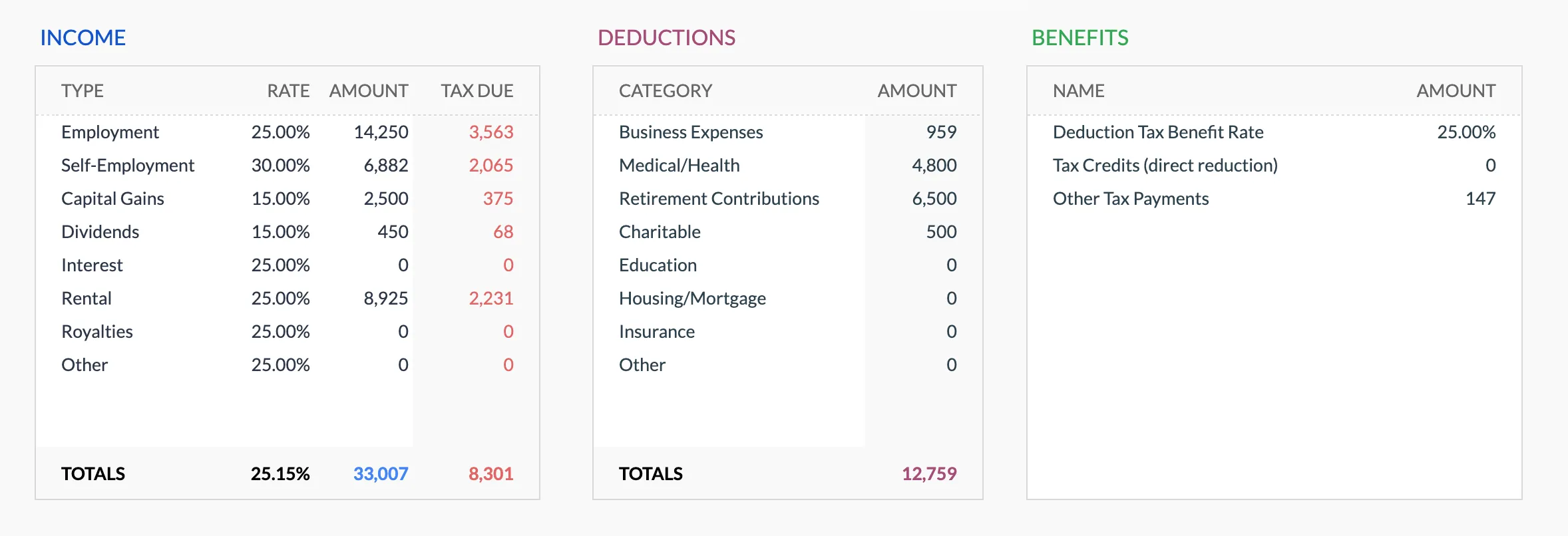
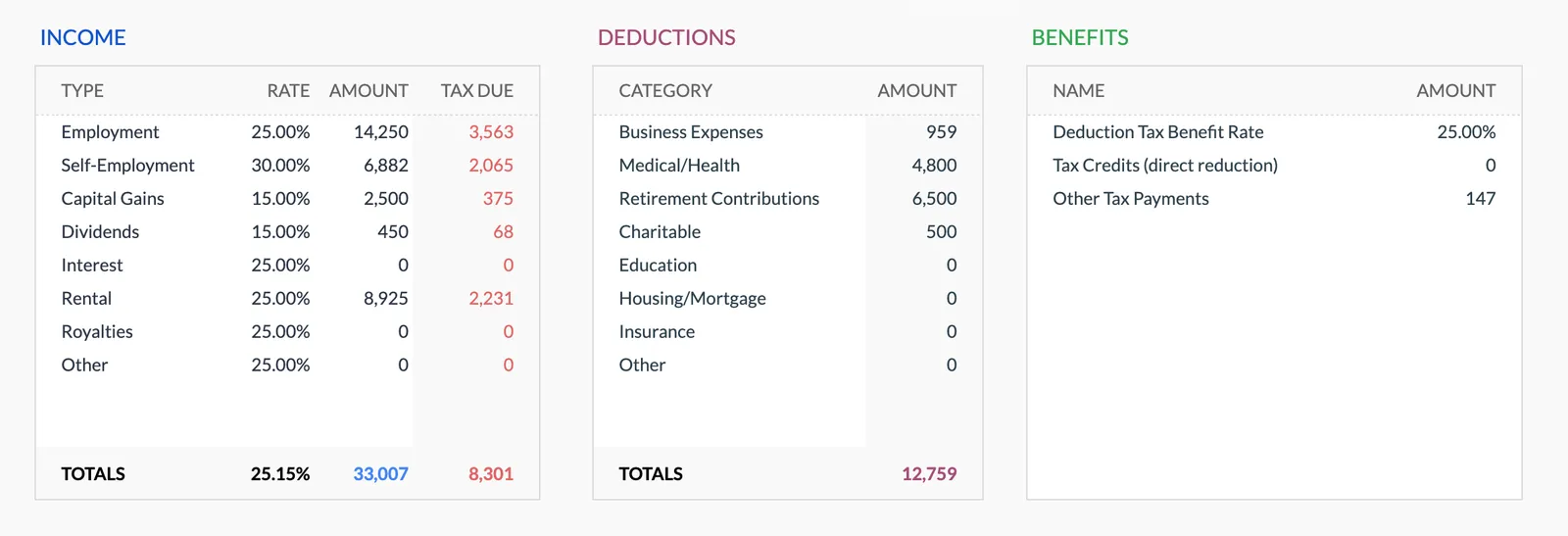
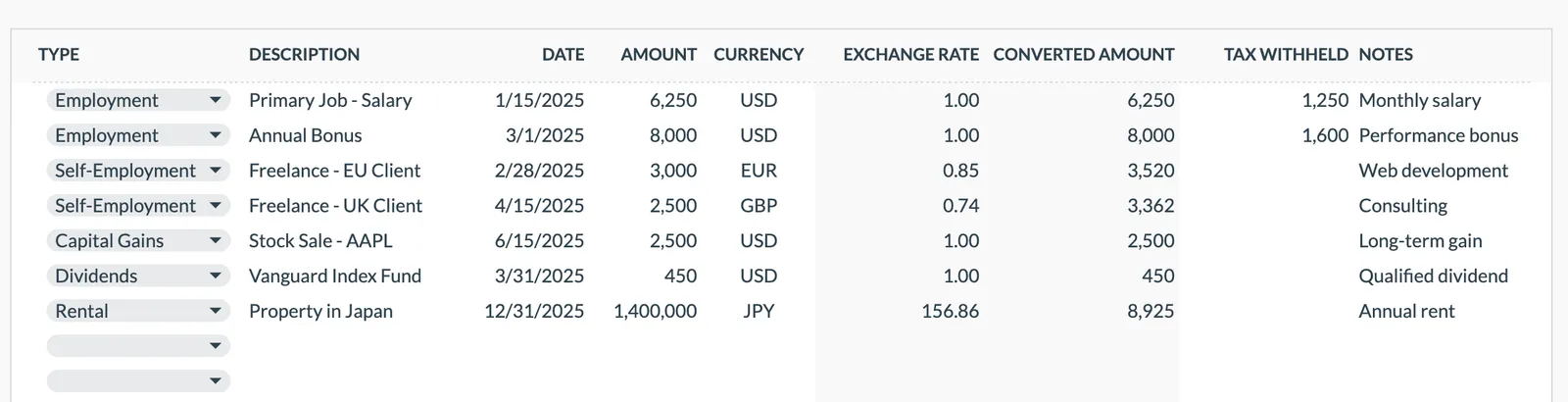
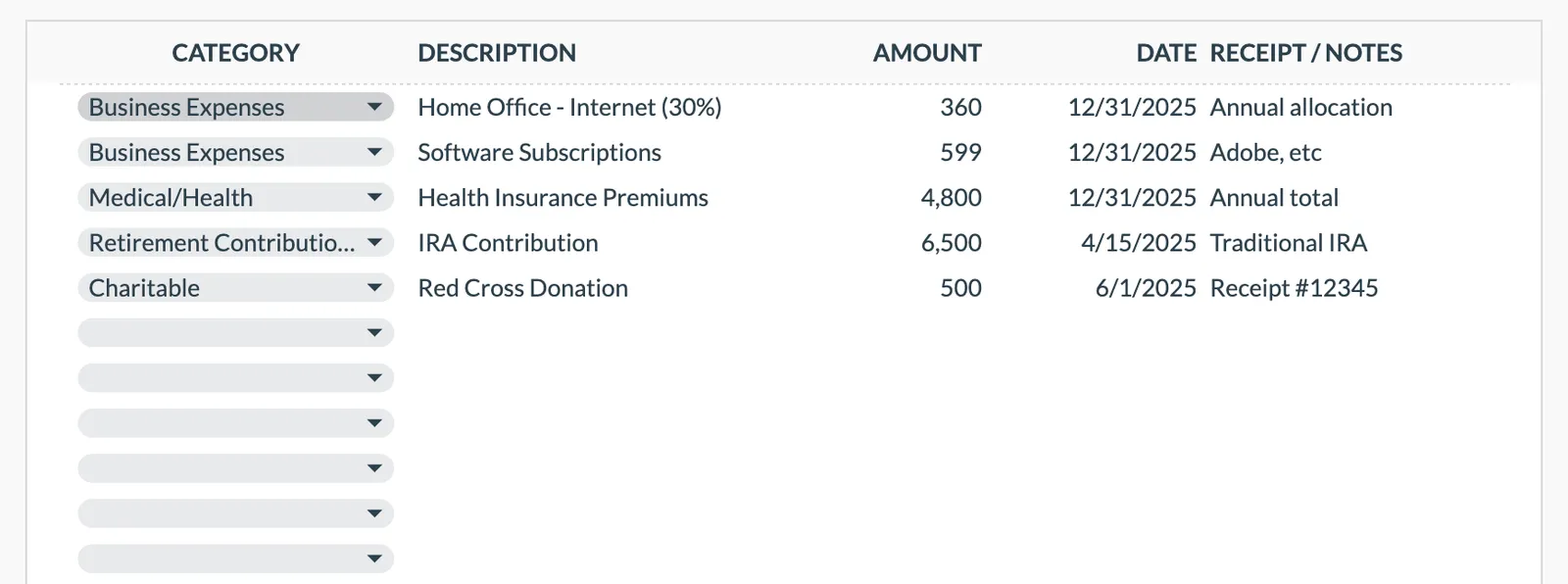
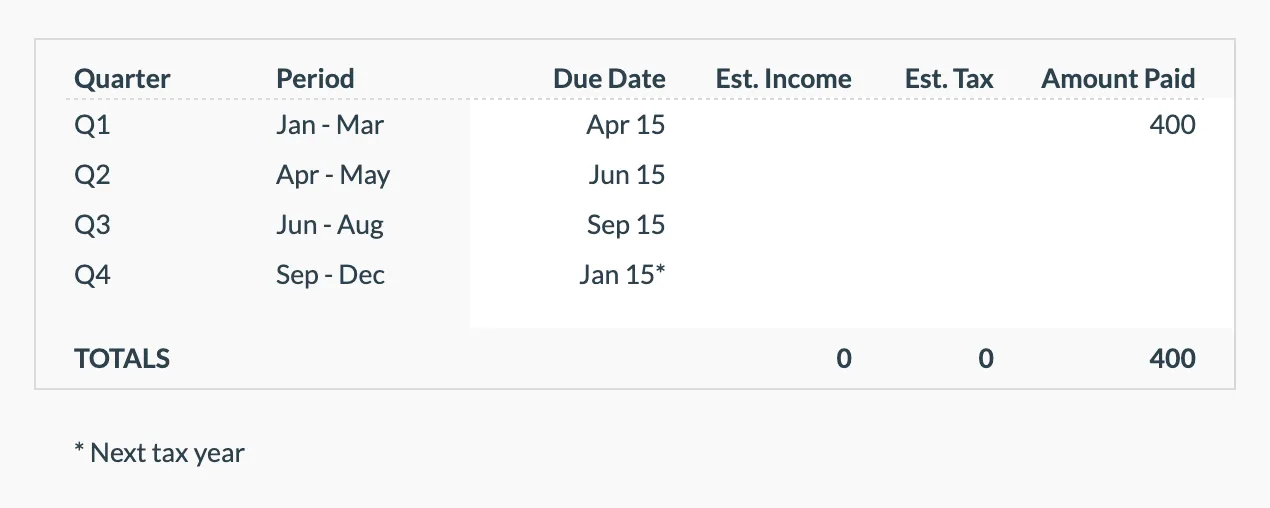
Bekijk het sjabloon om te zien hoe het inkomsten, aftrekposten, kortingen en geschatte kwartaalbetalingen bijhoudt.
- Dashboard met jaarlijks belastingoverzicht
- Inkomsten bijhouden per bron
- Organisatie van aftrekposten en kortingen
- Tracker voor kwartaalbetalingen
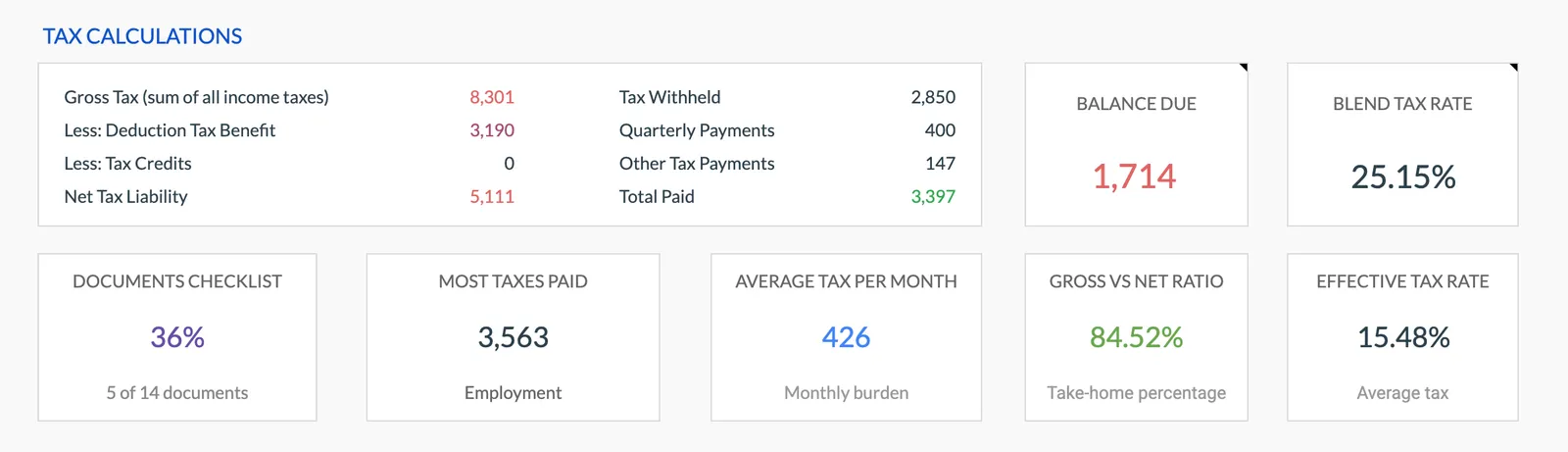
Annual tax overview with key figures
Detailed tax breakdown and projections
Track all income sources for tax purposes
Organize and track tax deductions
Plan and track quarterly estimated tax payments
Veelgestelde Vragen
Belastingplanning in Nebraska - FAQ
Wat zijn de huidige inkomstenbelastingtarieven in Nebraska?
Nebraska heeft een progressieve inkomstenbelasting met tarieven van 2.46% tot 4.55% voor belastingjaar 2026 [1], nadat het maximale tarief daalde van 5.2% in 2025, met een verdere geplande verlaging tot 3.99% in 2027. De schijven gelden bij verschillende inkomensdrempels, afhankelijk van uw aangiftestatus. Omdat de tarieven onder het verlagingsschema van jaar tot jaar veranderen, is het voor nauwkeurige planning van belang de tarieven van het lopende jaar te controleren.
Belast Nebraska Sociale Zekerheidsprestaties?
Nebraska heeft Sociale Zekerheidsprestaties volledig vrijgesteld van staatsbelasting. Dit is een relatief recente wijziging - de staat belastte eerder een deel van de prestaties. De volledige uitzondering geldt ongeacht het inkomniveau, waarmee Nebraska aansluit bij de meeste staten op dit punt.
Hoe beïnvloeden Nebraska's hoge onroerendgoedbelastingen belastingplanning?
De onroerendgoedbelastingen in Nebraska liggen boven het nationale gemiddelde, vooral in landbouwgebieden waar grondwaarden de aanslagen bepalen. Sinds belastingjaar 2024 wordt het schooldistrictskrediet voor onroerendgoedbelasting rechtstreeks op de aanslag onroerendgoedbelasting toegepast in plaats van geclaimd op de aangifte inkomstenbelasting, zodat het de rekening meteen verlaagt. Voor federale doeleinden telt betaalde onroerendgoedbelasting samen met de staatsinkomstenbelasting mee voor het SALT-plafond, en in Nebraska kan dat gecombineerde totaal voor veel huiseigenaren dat plafond benaderen of overschrijden.
Wordt militaire pensioenbijslag in Nebraska belast?
Militaire pensioenbijslag is volledig vrijgesteld van Nebraska staatsbelasting. Deze uitzondering geldt ongeacht het ontvangen bedrag. Overig pensioeninkomsten - inclusief pensioenen, 401(k) uitkeringen en IRA-opnamen - worden doorgaans belast tegen de normale progressieve tarieven.
Dalen Nebraska's belastingtarieven nog steeds?
Ja. Nebraska heeft wetgeving aangenomen om de inkomstenbelastingtarieven over een reeks jaren te verlagen. Het maximale tarief daalde naar 4.55% voor belastingjaar 2026 en bereikt naar verwachting 3.99% in 2027. Deze gefaseerde aanpak betekent dat het tarief voor het ene belastingjaar kan afwijken van het volgende, dus het gebruik van cijfers van het lopende jaar in het model is belangrijk voor nauwkeurige prognoses.
Kunt u het antwoord niet vinden dat u zoekt? Neem contact op met ons team
Officiële belastingbronnen
Voor actuele tarieven, formulieren en aangiftedeadlines specifiek voor Nebraska:
Sources
Organiseer je belastingplanning voor Nebraska
Eenmalige aankoop. Geen abonnement. Uw financiële gegevens blijven in uw Google Drive.
Tax rules, rates, and contribution limits change, and official publications can themselves lag behind the law in force. We review these figures on a best-effort basis against sources we consider authoritative, but we cannot guarantee they are current, complete, or that better sources do not exist, and nothing here is tax, legal, or financial advice. For decisions, the relevant government authority is the reference. Last reviewed: August 2026.