Montana
Tax Planner Template for Montana
Track your federal and Montana state tax planning in Google Sheets. Montana uses a two-rate income tax, 4.7% and 5.65% for the 2026 tax year.
In Depth
Montana - No Sales Tax, Two Income Tax Rates
Montana joined the rate-cutting trend by collapsing its previous multi-bracket system into two rates. For the 2026 tax year, 4.7% applies to the first $47,500 of taxable income for single filers and $95,000 for joint filers. Above those thresholds the rate is 5.65%, down from 5.9% in 2025, with a further cut to 5.4% scheduled for 2027. This hybrid approach reduces the tax on lower-income earners while keeping calculations simpler than the old multi-bracket structure.
The absence of sales tax in Montana means that income tax and property tax are the primary state-level obligations for residents. Montana is one of only five states with no general sales tax, aside from the resort tax a few tourist communities levy. For households that spend a large portion of their income on goods and services, this absence is notable. It also means the state relies more heavily on income tax revenue, which partly explains why its top rate is not as low as some other low-rate states.
Montana's treatment of retirement income is mixed. Social Security benefits are taxable in Montana, following rules that mirror the federal treatment (where up to 85% of benefits may be taxable depending on total income). The partial exemption for pension and retirement income ended with the 2024 tax year, replaced by a $5,500 subtraction for filers age 65 and older. Property tax assistance programs help lower-income homeowners and renters, with credits available through the state income tax return.
Montana
Tax Planning in Montana
Montana simplified its income tax to two rates, 4.7% and 5.65% for the 2026 tax year. The state has no general sales tax, making income tax a larger component of the overall tax picture.
Two-Rate Income Tax
Montana replaced its old multi-bracket system with two rates. For the 2026 tax year, 4.7% applies to the first portion of taxable income and 5.65% applies above that threshold, down from a 5.9% top rate in 2025.
No Sales Tax
Montana is one of five states with no sales tax. This means income tax and property tax are the primary tax planning considerations for residents.
Retirement Income
Montana taxes most retirement income at regular rates, with a $5,500 subtraction for filers age 65 and older since tax year 2024. Social Security benefits are taxed in Montana, following rules similar to the federal treatment.
Property Tax
Montana property tax rates vary but are generally moderate. Property tax assistance programs are available for lower-income homeowners and renters.
Get the Annual Tax Planner
Getting Started
Using the Tax Planner as a Montana Resident
Enter income with Montana's two rates in mind
Add all income sources: wages, self-employment, investments, and other earnings. Montana's two rates make the state calculation simpler than in multi-bracket states, though the 4.7% rate on the first portion of income and 5.65% above it still create a two-tier effect worth tracking against your federal brackets.
Track deductions in a no-sales-tax state
Without any sales tax paid, Montana residents' SALT deduction comes from state income tax and property tax only. Enter property tax amounts and note that you cannot claim a sales tax deduction on your federal return. This simplifies the itemizing decision but limits your SALT total.
Account for Social Security and retirement income
If you receive Social Security benefits, Montana taxes them similarly to the federal rules - up to 85% may be taxable depending on total income. Enter all retirement income sources so the template can reflect how your total income level affects the taxability of those benefits at both levels.
Check for property tax assistance eligibility
Montana offers property tax credits through the state income tax return, particularly for lower-income, elderly, and disabled residents. Use the notes section to track whether you qualify, as these credits reduce your state tax liability and may change your overall tax picture.
Review your combined federal and state projection
The dashboard shows your tax picture across both levels. With only two Montana rates, the state portion is predictable once you know your income - the complexity is on the federal side with its multiple brackets, and in determining how much Social Security is taxable at each level.
See It In Action
What the tax planner looks like
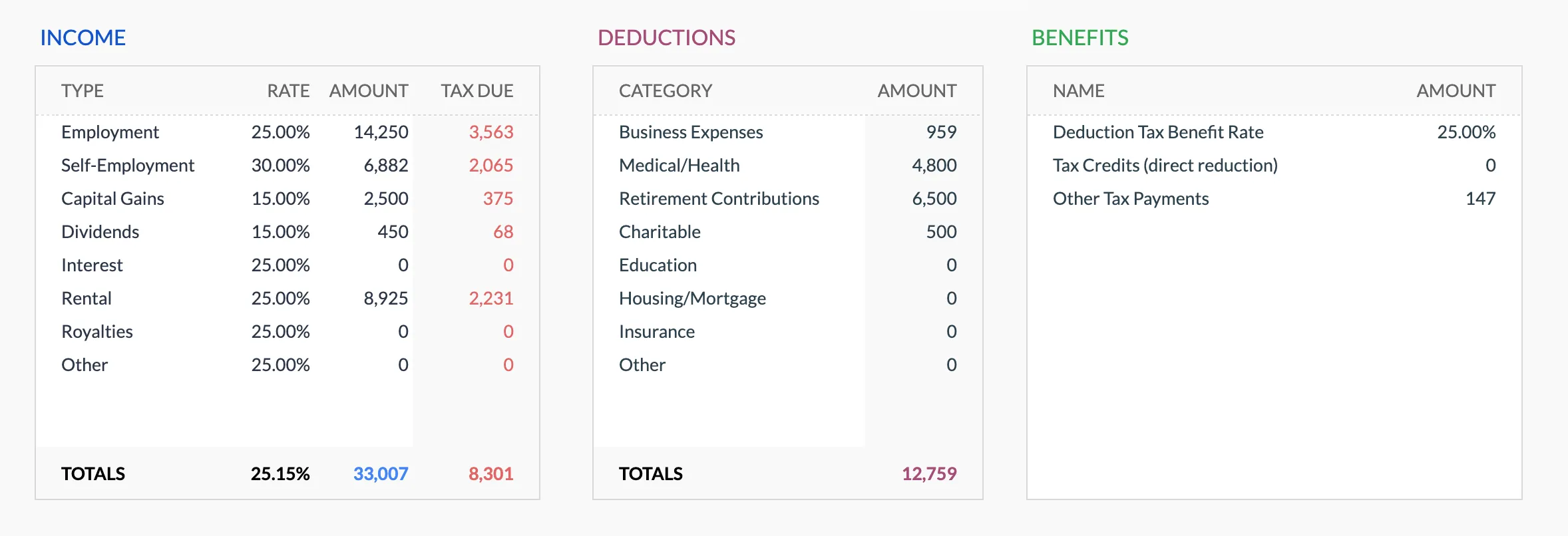
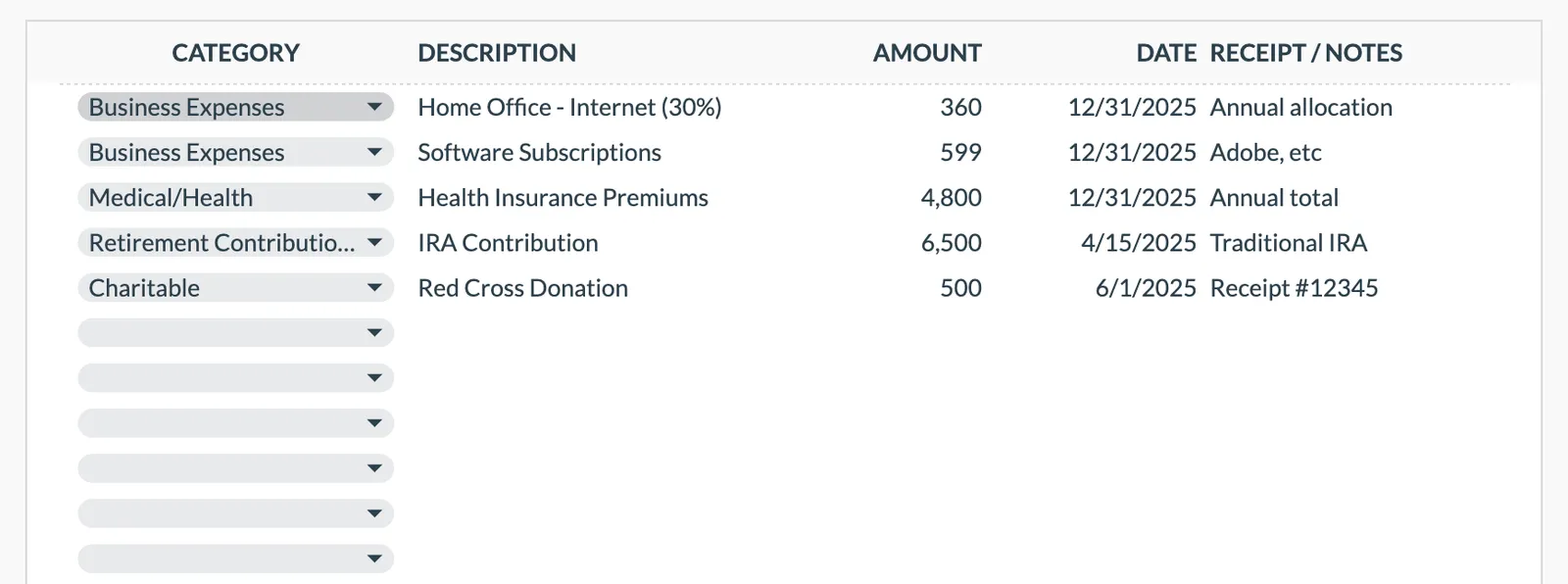
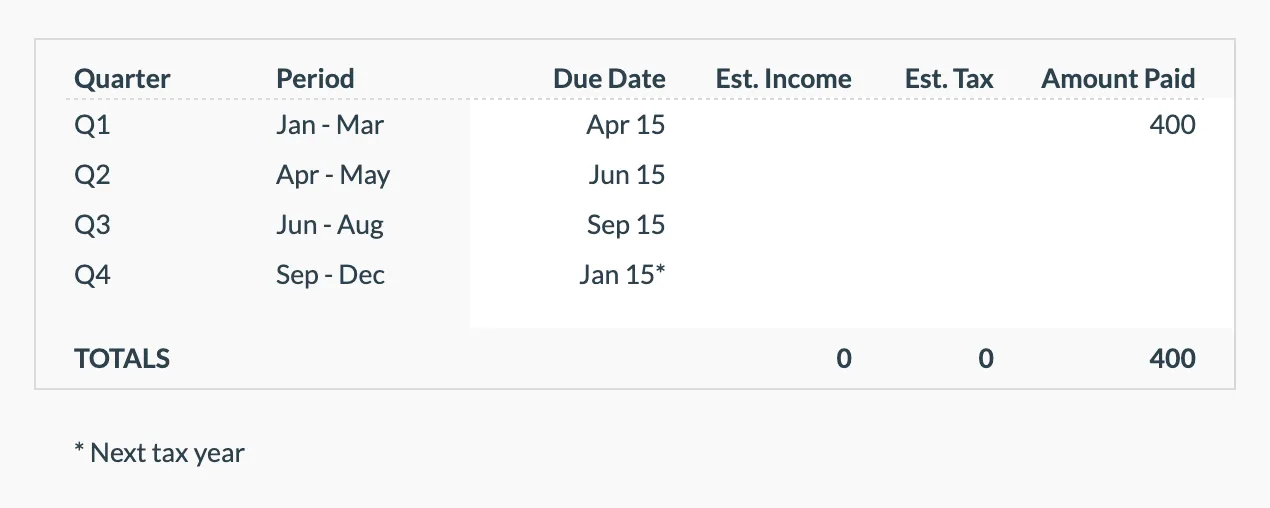
Browse through the template to see how it tracks income, deductions, credits, and estimated quarterly payments.
- Annual tax overview dashboard
- Income tracking by source
- Deductions and credits organizer
- Quarterly payment tracker
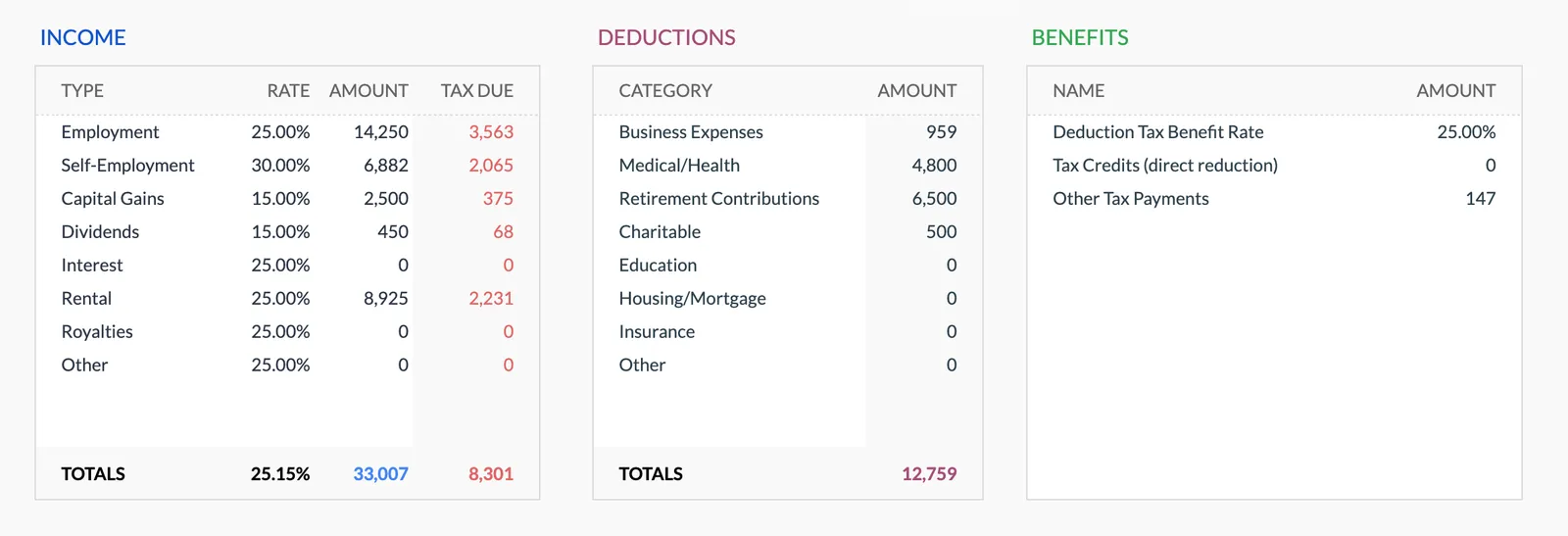
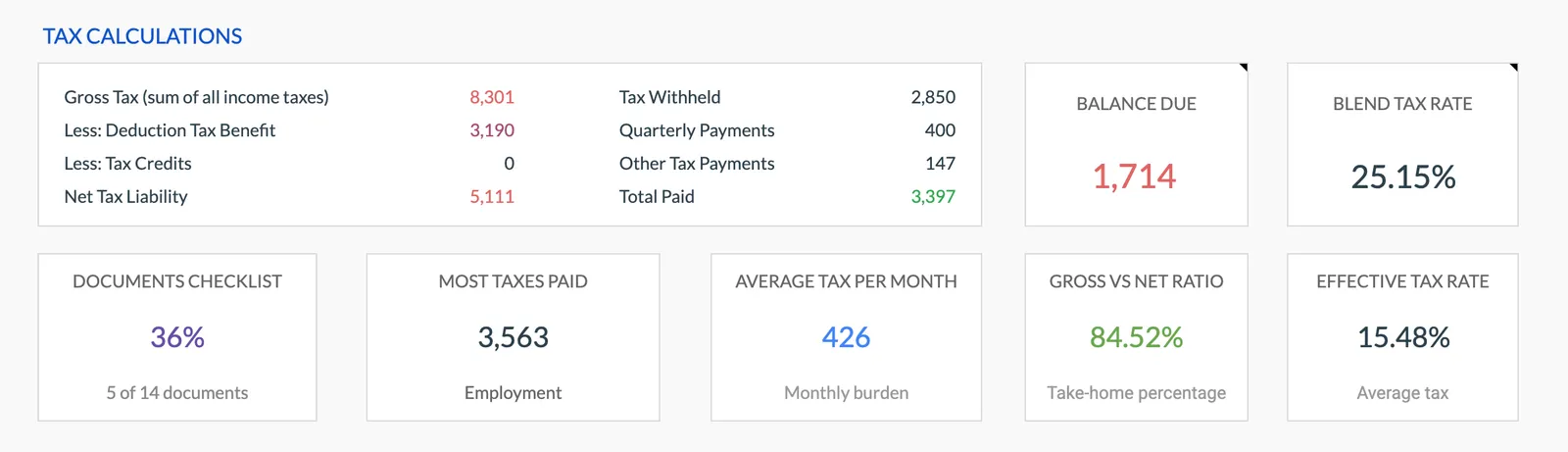
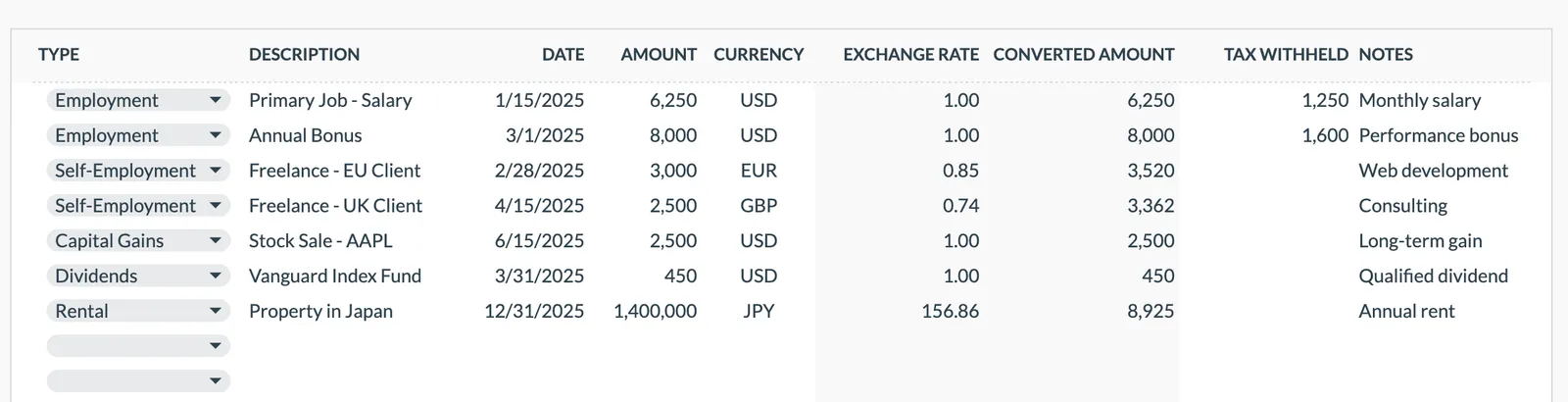
Annual tax overview with key figures
Detailed tax breakdown and projections
Track all income sources for tax purposes
Organize and track tax deductions
Plan and track quarterly estimated tax payments
Common Questions
Tax Planning in Montana - FAQ
How does Montana's two-rate income tax work?
Montana replaced its previous multi-bracket system with two rates [1]. For the 2026 tax year, 4.7% applies to the first $47,500 of taxable income for single filers and $95,000 for joint filers. Above those thresholds the rate is 5.65%, reduced from 5.9% in 2025 and scheduled to reach 5.4% in 2027. Montana is also one of five states with no general sales tax, so income tax and property tax are the primary state-level obligations.
Does Montana have a sales tax?
No. Montana has no general sales tax, making it one of only five states without one, though a handful of resort communities levy a local resort tax. This means income tax and property tax are the main taxes residents plan for. On your federal return, you cannot claim a sales tax deduction since none is paid, so the SALT deduction for Montana residents comes from state income tax and property tax.
How does Montana tax retirement income and Social Security?
Montana taxes Social Security benefits following rules similar to the federal treatment, where up to 85% of benefits may be taxable depending on total income. The partial exemption for pension and retirement income was repealed starting with the 2024 tax year, leaving a $5,500 subtraction for filers age 65 and older [2]. Tracking total income matters because it determines how much Social Security is subject to state tax.
Is property tax assistance available in Montana?
Montana offers property tax assistance programs for lower-income homeowners and renters, with credits available through the state income tax return. Elderly and disabled residents may qualify for additional relief. Property tax rates vary across the state but are generally moderate. These property taxes count toward the federal SALT deduction cap alongside state income tax paid.
Did Montana previously allow a deduction for federal taxes paid?
Montana historically allowed residents to deduct federal income taxes paid from their state taxable income - a feature only a handful of states offered. This deduction was eliminated starting with the 2024 tax year, alongside the move to the two-rate structure. For residents who used this deduction in prior years, the change affects year-over-year comparisons of state tax liability.
Can't find the answer you're looking for? Contact our team
Official Tax Resources
For current rates, forms, and filing deadlines specific to Montana:
Sources
Organize your tax planning for Montana
One-time purchase. No subscription. Your financial data stays in your Google Drive.
Tax rules, rates, and contribution limits change, and official publications can themselves lag behind the law in force. We review these figures on a best-effort basis against sources we consider authoritative, but we cannot guarantee they are current, complete, or that better sources do not exist, and nothing here is tax, legal, or financial advice. For decisions, the relevant government authority is the reference. Last reviewed: August 2026.