Montana
Modèle de planificateur fiscal pour Montana
Suivez votre planification fiscale fédérale et de l'État du Montana dans Google Sheets. Le Montana utilise un impôt sur le revenu à deux taux, 4.7% et 5.65% pour l'année fiscale 2026.
In Depth
Montana - Pas de Taxe de Vente, Deux Taux d'Impôt sur le Revenu
Le Montana a rejoint la tendance à la réduction des taux en regroupant son ancien système à plusieurs tranches en deux taux. Pour l'année fiscale 2026, 4.7% s'applique aux premiers $47,500 de revenu imposable pour les déclarants célibataires et aux premiers $95,000 pour les déclarants conjoints. Au-delà de ces seuils, le taux est de 5.65%, contre 5.9% en 2025, avec une nouvelle baisse à 5.4% prévue pour 2027. Cette approche hybride réduit l'impôt des personnes à faibles revenus tout en gardant les calculs plus simples que l'ancienne structure à plusieurs tranches.
L'absence de taxe de vente au Montana signifie que l'impôt sur le revenu et la taxe foncière sont les principales obligations au niveau de l'État pour les résidents. Le Montana est l'un des cinq seuls États sans taxe de vente générale, hormis la taxe de villégiature que prélèvent quelques communautés touristiques. Pour les ménages qui consacrent une grande part de leur revenu aux biens et services, cette absence est notable. Cela signifie aussi que l'État dépend davantage des recettes de l'impôt sur le revenu, ce qui explique en partie pourquoi son taux maximum n'est pas aussi bas que dans certains autres États à faible taux.
Le traitement des revenus de retraite au Montana est mitigé. Les prestations de Sécurité sociale sont imposables au Montana, selon des règles qui reflètent le traitement fédéral (où jusqu'à 85% des prestations peuvent être imposables selon le revenu total). L'exonération partielle pour les revenus de pension et de retraite a pris fin avec l'année fiscale 2024, remplacée par une déduction de $5,500 pour les déclarants de 65 ans et plus. Des programmes d'aide fiscale foncière aident les propriétaires et les locataires à faibles revenus, avec des crédits disponibles par le biais de la déclaration de revenus de l'État.
Montana
Planification Fiscale du Montana
Le Montana a simplifié son impôt sur le revenu en le ramenant à deux taux, 4.7% et 5.65% pour l'année fiscale 2026. L'État n'a pas de taxe de vente générale, ce qui fait de l'impôt sur le revenu une composante plus importante du tableau fiscal global.
Impôt sur le Revenu à Deux Taux
Le Montana a remplacé son ancien système à plusieurs tranches par deux taux. Pour l'année fiscale 2026, 4.7% s'applique à la première portion du revenu imposable et 5.65% s'applique au-delà de ce seuil, contre un taux maximum de 5.9% en 2025.
Pas de Taxe de Vente
Le Montana est l'un des cinq États sans taxe de vente. Cela signifie que l'impôt sur le revenu et la taxe foncière sont les principales considérations de planification fiscale pour les résidents.
Revenus de Retraite
Le Montana impose la plupart des revenus de retraite aux taux réguliers, avec une déduction de $5,500 pour les déclarants de 65 ans et plus depuis l'année fiscale 2024. Les prestations de Sécurité sociale sont imposées au Montana, selon des règles similaires au traitement fédéral.
Taxe Foncière
Les taux d'imposition foncière du Montana varient mais sont généralement modérés. Des programmes d'aide fiscale foncière sont disponibles pour les propriétaires et les locataires à revenus faibles.
Obtenir le planificateur fiscal annuel
Premiers pas
Utilisation de l'Outil de Planification Fiscale en tant que Résident du Montana
Entrez les revenus en gardant à l'esprit les deux taux du Montana
Ajoutez toutes les sources de revenus: salaires, travail indépendant, placements et autres gains. Les deux taux du Montana rendent le calcul de l'État plus simple que dans les États à plusieurs tranches, même si le taux de 4.7% sur la première portion du revenu et celui de 5.65% au-delà créent tout de même un effet à deux paliers qu'il vaut la peine de suivre par rapport à vos tranches fédérales.
Suivez les Déductions dans un État sans Taxe de Vente
Sans taxe de vente payée, la déduction SALT des résidents du Montana provient uniquement de l'impôt sur le revenu de l'État et de la taxe foncière. Entrez les montants de la taxe foncière et notez que vous ne pouvez pas demander une déduction de taxe de vente sur votre déclaration fédérale. Cela simplifie la décision de détailler mais limite votre total SALT.
Tenir Compte de la Sécurité Sociale et des Revenus de Retraite
Si vous recevez des prestations de Sécurité sociale, le Montana les impose de manière similaire aux règles fédérales - jusqu'à 85% peuvent être imposables selon le revenu total. Entrez toutes les sources de revenus de retraite afin que le modèle puisse refléter comment votre niveau de revenu total affecte l'imposition de ces prestations aux deux niveaux.
Vérifiez l'Admissibilité à l'Aide Fiscale Foncière
Le Montana offre des crédits d'impôt foncier par le biais de la déclaration de revenus de l'État, en particulier pour les résidents à faible revenu, les personnes âgées et les personnes handicapées. Utilisez la section des notes pour suivre si vous y avez droit, car ces crédits réduisent votre obligation fiscale de l'État et peuvent modifier votre situation fiscale globale.
Examinez votre Projection Combinée Fédérale et de l'État
Le tableau de bord montre votre situation fiscale aux deux niveaux. Avec seulement deux taux au Montana, la portion d'État est prévisible une fois que vous connaissez votre revenu. La complexité se situe du côté fédéral avec ses multiples tranches, et dans la détermination de la part de la Sécurité sociale imposable à chaque niveau.
Voir en action
À quoi ressemble le planificateur fiscal
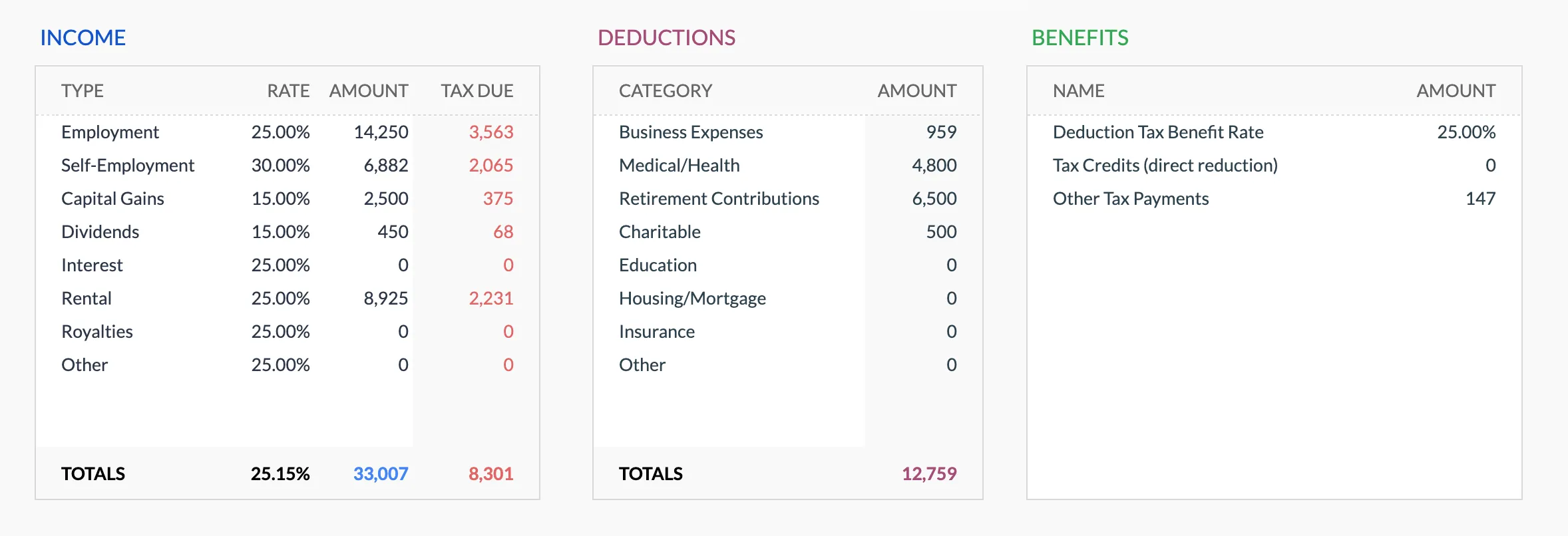
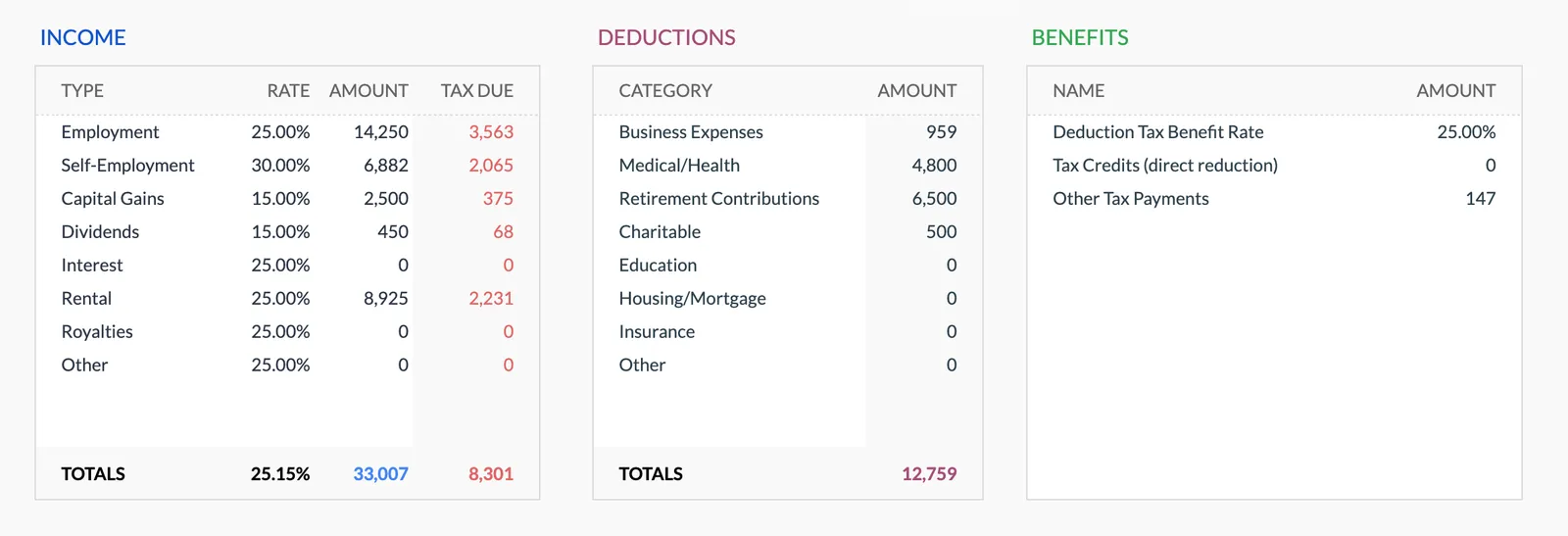
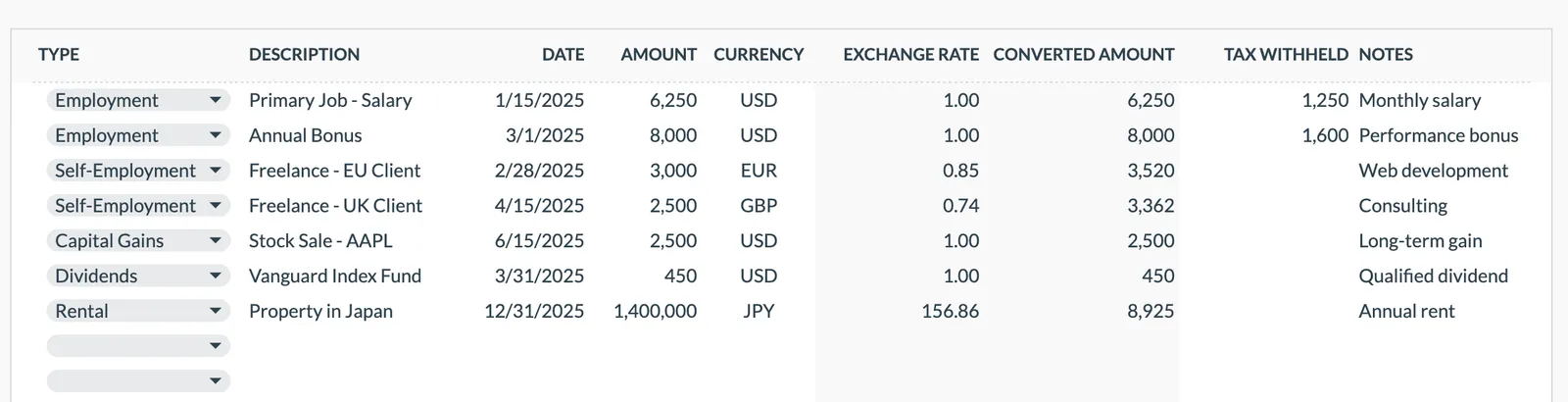
Parcourez le modèle pour voir comment il suit les revenus, les déductions, les crédits et les paiements trimestriels estimés.
- Tableau de bord fiscal annuel
- Suivi des revenus par source
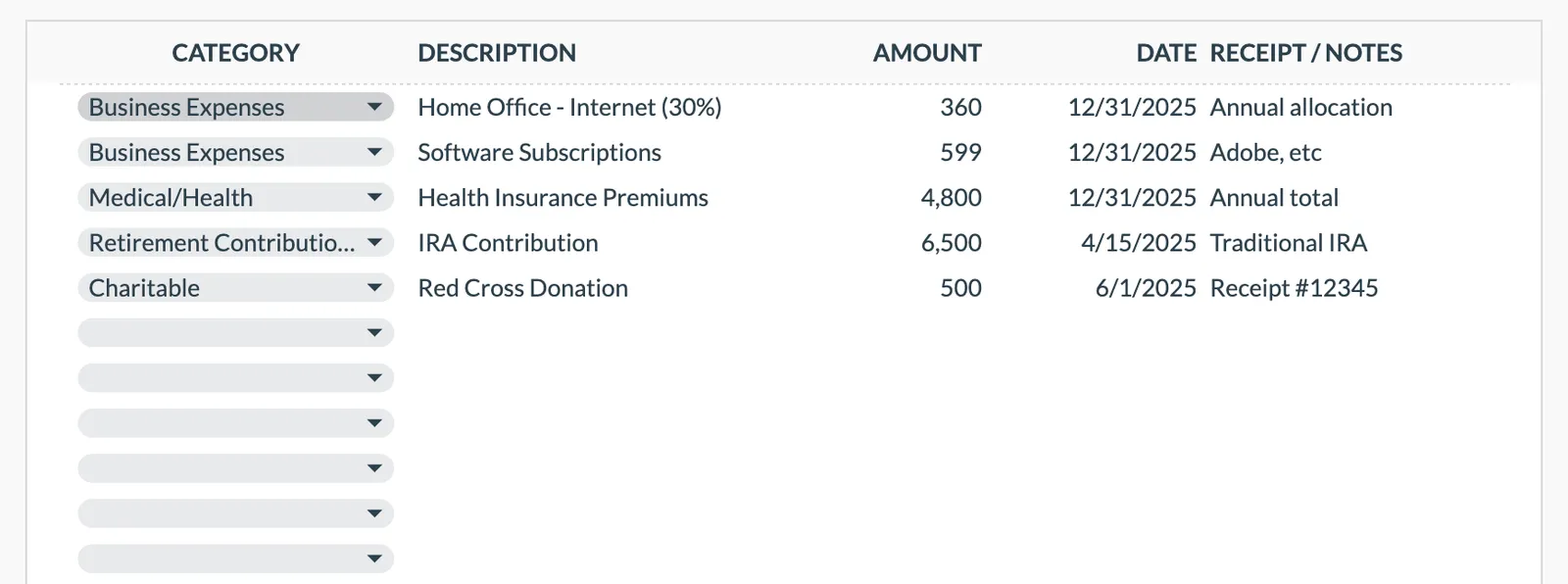
- Organisateur de déductions et crédits
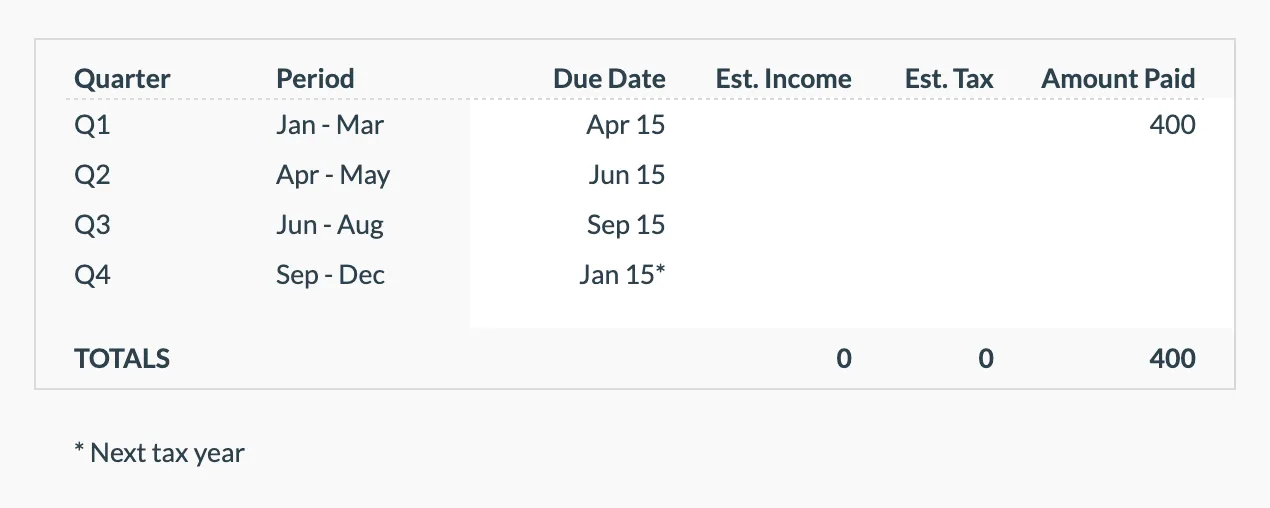
- Suivi des paiements trimestriels
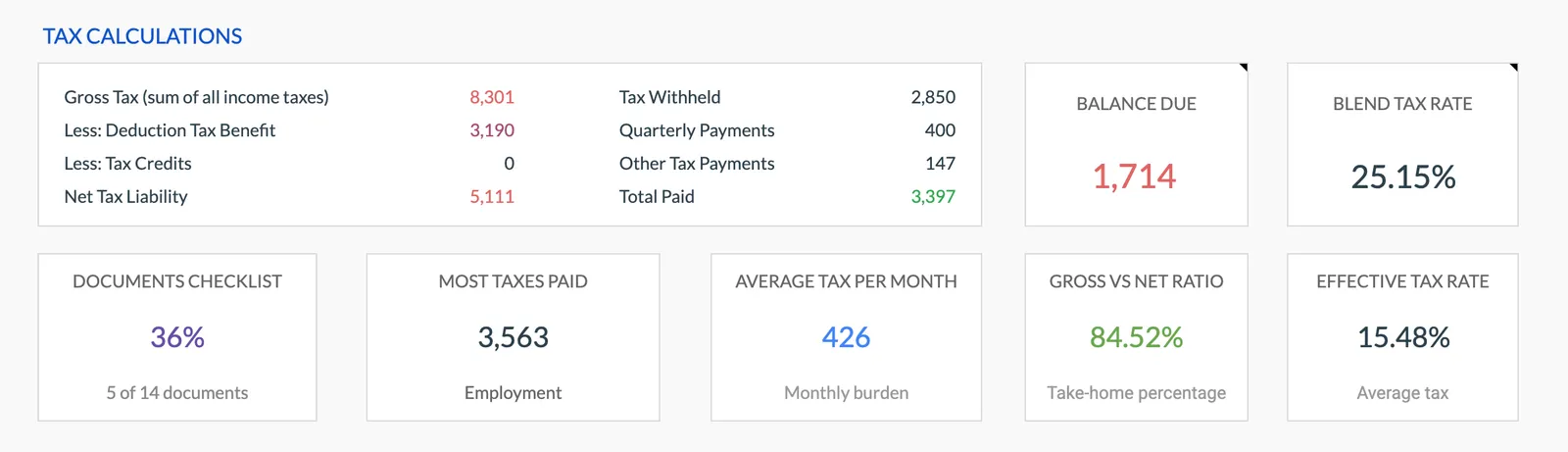
Annual tax overview with key figures
Detailed tax breakdown and projections
Track all income sources for tax purposes
Organize and track tax deductions
Plan and track quarterly estimated tax payments
Questions fréquentes
Planification fiscale en Montana - FAQ
Comment fonctionne l'impôt sur le revenu à deux taux du Montana?
Le Montana a remplacé son ancien système à plusieurs tranches par deux taux [1]. Pour l'année fiscale 2026, 4.7% s'applique aux premiers $47,500 de revenu imposable pour les déclarants célibataires et aux premiers $95,000 pour les déclarants conjoints. Au-delà de ces seuils, le taux est de 5.65%, réduit par rapport à 5.9% en 2025 et prévu pour atteindre 5.4% en 2027. Le Montana est également l'un des cinq États sans taxe de vente générale, l'impôt sur le revenu et la taxe foncière sont donc les principales obligations au niveau de l'État.
Le Montana a-t-il une Taxe de Vente?
Non. Le Montana n'a pas de taxe de vente générale, ce qui en fait l'un des cinq seuls États sans, bien qu'une poignée de communautés touristiques prélèvent une taxe de villégiature locale. Cela signifie que l'impôt sur le revenu et la taxe foncière sont les principaux impôts que les résidents doivent planifier. Sur votre déclaration fédérale, vous ne pouvez pas demander de déduction pour taxe de vente puisqu'aucune n'est payée, la déduction SALT des résidents du Montana provient donc de l'impôt sur le revenu de l'État et de la taxe foncière.
Comment le Montana impose-t-il les Revenus de Retraite et la Sécurité Sociale?
Le Montana impose les prestations de Sécurité sociale selon des règles similaires au traitement fédéral, où jusqu'à 85% des prestations peuvent être imposables selon le revenu total. L'exonération partielle pour les revenus de pension et de retraite a été abrogée à partir de l'année fiscale 2024, laissant une déduction de $5,500 pour les déclarants de 65 ans et plus [2]. Suivre le revenu total est important car cela détermine la part de la Sécurité sociale soumise à l'impôt de l'État.
Y a-t-il une Aide Fiscale Foncière Disponible au Montana?
Le Montana offre des programmes d'aide fiscale foncière pour les propriétaires et les locataires à faible revenu, avec des crédits disponibles par le biais de la déclaration de revenus de l'État. Les résidents âgés et handicapés peuvent avoir droit à un allègement supplémentaire. Les taux d'imposition foncière varient dans tout l'État mais sont généralement modérés. Ces taxes foncières s'ajoutent au plafond SALT fédéral ainsi que l'impôt sur le revenu de l'État payé.
Le Montana Permettait-il Autrefois une Déduction pour les Impôts Fédéraux Payés?
Le Montana permettait historiquement aux résidents de déduire les impôts fédéraux sur le revenu payés de leur revenu imposable de l'État, une caractéristique que seule une poignée d'États offraient. Cette déduction a été supprimée à partir de l'année fiscale 2024, en même temps que le passage à la structure à deux taux. Pour les résidents qui utilisaient cette déduction les années précédentes, le changement affecte les comparaisons de la charge fiscale de l'État d'une année sur l'autre.
Vous ne trouvez pas la réponse que vous cherchez ? Contactez notre équipe
Ressources fiscales officielles
Pour les taux actuels, formulaires et délais de déclaration spécifiques à Montana:
Sources
Organisez votre planification fiscale pour Montana
Achat unique. Sans abonnement. Vos données financières restent dans votre Google Drive.
Tax rules, rates, and contribution limits change, and official publications can themselves lag behind the law in force. We review these figures on a best-effort basis against sources we consider authoritative, but we cannot guarantee they are current, complete, or that better sources do not exist, and nothing here is tax, legal, or financial advice. For decisions, the relevant government authority is the reference. Last reviewed: August 2026.