United Kingdom
Financial Planning Template for the United Kingdom
Bring your ISAs, workplace pension, SIPP, savings targets, and long-term goals together in one financial planning template you own in Google Sheets.
In Depth
Building a Financial Plan Around UK Tax Efficiency
The UK's tax-efficient savings landscape is broader than many people realise. For 2026-27 there is a £20,000 ISA allowance, a £60,000 pension annual allowance with carry-forward from up to three previous years, a £1,000 personal savings allowance for basic rate taxpayers (£500 at higher rate), a £500 dividend allowance, and a £3,000 capital gains exempt amount. Most of these are use-it-or-lose-it at the end of the tax year on 5 April. A financial plan that records usage against each one, and notes how close the year end is, keeps that picture in view rather than leaving it to memory.
Property occupies an outsized role in UK financial planning. For first-time buyers, saving a deposit while paying rent is the central planning challenge. The Lifetime ISA's 25% bonus is the main remaining government support for that, capped at £1,000 of bonus a year and tied to conditions on the property price and how the money is withdrawn, since the Help to Buy equity loan scheme closed to new applicants in March 2023. For homeowners, the mortgage is typically the largest single financial commitment, and decisions about overpaying, remortgaging, or fixing rates have long-term implications that ripple through the rest of a financial plan.
Student loan repayments affect disposable income for a large portion of working-age Britons, but they work differently from conventional debt. Plan 2 borrowers repay 9% of income above £29,385 for the 2026-27 tax year, and the debt is written off 30 years after the April repayment first became due. Plan 5 loans, covering students who started courses in England from autumn 2023, run for 40 years instead. For many graduates this functions more like a temporary additional tax than a debt to be cleared, and whether voluntary overpayments change the total repaid at all depends on likely lifetime earnings, which is the sort of thing a financial plan can model over time.
United Kingdom
Financial Planning in the United Kingdom: Key Considerations
The UK offers several tax-efficient savings vehicles and a state pension system. A financial planning template helps organize these alongside your personal goals.
ISAs are the cornerstone of UK tax-efficient saving
For the 2026-27 tax year the ISA allowance is £20,000 across Cash ISAs, Stocks & Shares ISAs, Innovative Finance ISAs, and Lifetime ISAs (a £4,000 sub-limit with a 25% government bonus, for accounts opened before age 40). Money inside an ISA is free of UK tax on interest, dividends, and gains. From April 2027 the cash ISA share of the allowance is set to be capped at £12,000 a year for savers under 65. Tracking usage of the allowance in a financial plan makes it visible how much room is left before the tax year ends.
Pension planning involves multiple layers
Between the State Pension (35 qualifying years of National Insurance for the full new State Pension, £241.30 a week for the 2026-27 tax year), workplace auto-enrolment pensions, and personal pensions (SIPPs), seeing the combined retirement picture means bringing everything into one place. Pension contributions receive tax relief at your marginal rate, so the gross amount going into the pot is larger than the amount leaving your pay.
Property is central to UK financial planning
The UK housing market makes property a significant planning consideration, whether that means saving for a first home, managing a mortgage, or holding property as part of long-term wealth. The Lifetime ISA is now the main dedicated first-home savings account, since Help to Buy ISAs closed to new savers in 2019 and the Help to Buy equity loan scheme closed to new applicants in March 2023. Stamp duty, conveyancing costs, and ongoing maintenance are part of the calculation.
Student loan repayment plans affect disposable income
UK student loans repay automatically through PAYE at 9% of income above a plan threshold. For the 2026-27 tax year the thresholds are £26,900 on Plan 1, £29,385 on Plan 2, £33,795 on Plan 4, and £25,000 on Plan 5, with postgraduate loans repaid at 6% above £21,000 as published by GOV.UK. These repayments reduce disposable income but are written off after 30 to 40 years depending on the plan. Worth factoring into financial plans as a long-term cash flow impact rather than traditional debt.
Get the Template
Getting Started
Adapting the Financial Planner for UK Accounts
List all accounts and current values
Enter bank accounts, ISAs (Cash and S&S), workplace pension, SIPP, general investment accounts (GIA), Premium Bonds, and any debt. Current values give you today's snapshot.
Map out your tax-efficient allowances
Track annual ISA usage (£20,000 limit), pension annual allowance (£60,000 or 100% of earnings, whichever is lower), and the capital gains annual exempt amount (£3,000 for 2026-27). A financial plan that monitors these allowances shows where each one stands before the tax year closes.
Project your State Pension entitlement
Check your National Insurance record at gov.uk to see qualifying years and projected State Pension amount. Enter this into the template as future income. Gaps in your record can sometimes be filled by making voluntary NI contributions.
Define goals with timelines
Whether it's a house deposit, wedding fund, pension target, or emergency fund - enter each goal with a target amount and date. The template helps track progress toward each one.
Review annually, update quarterly
A major review once a year (perhaps in April when the new tax year starts) sets direction. Quarterly balance updates keep the numbers current without creating unnecessary work.
See It In Action
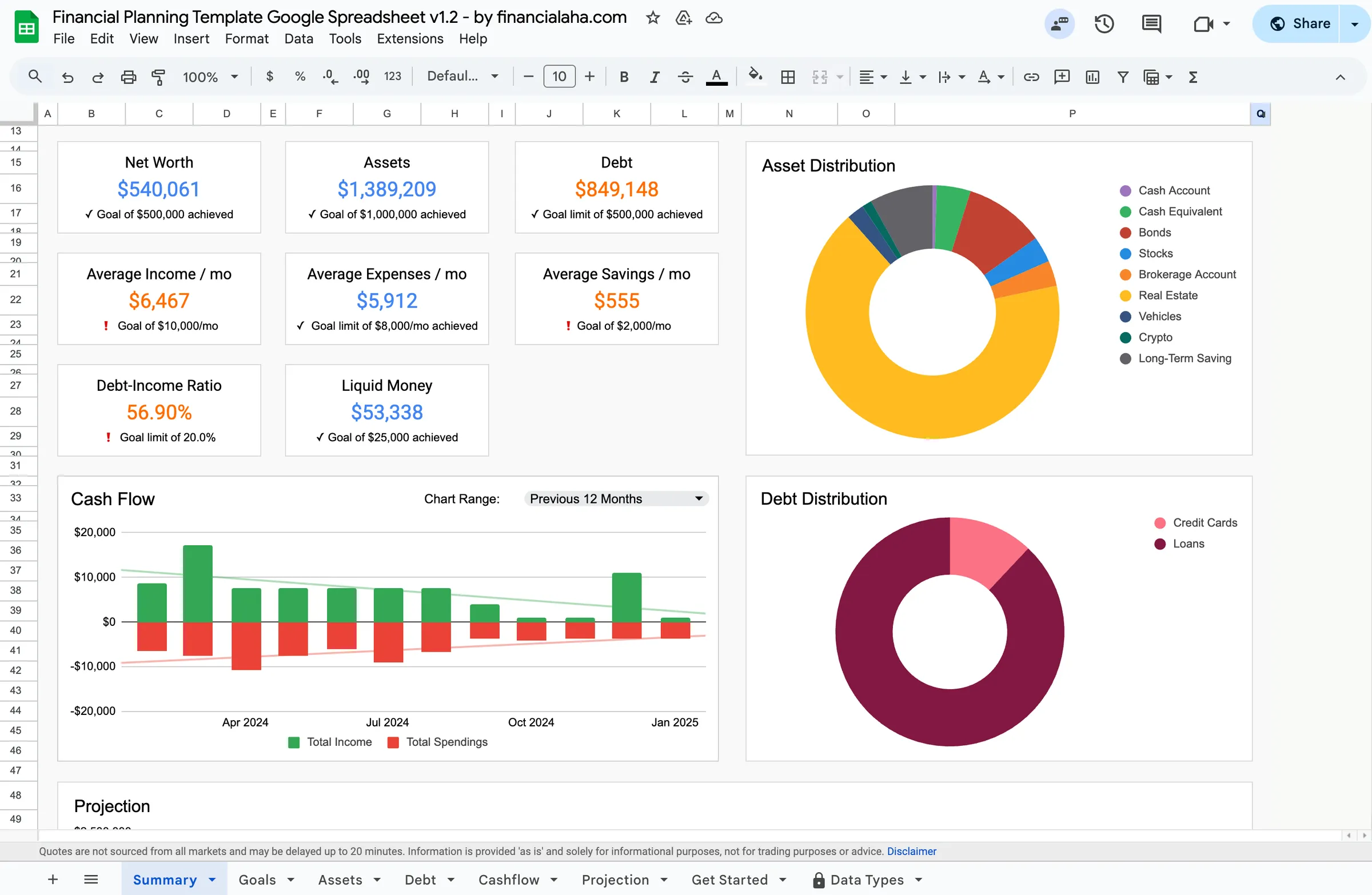
What the template looks like
Browse through the template to see the dashboard, the entry sheets, and the summaries it produces, all adaptable to your local financial setup.
- Built-in currency selector
- Calculations update automatically
- Visual summaries of your numbers
- No setup required
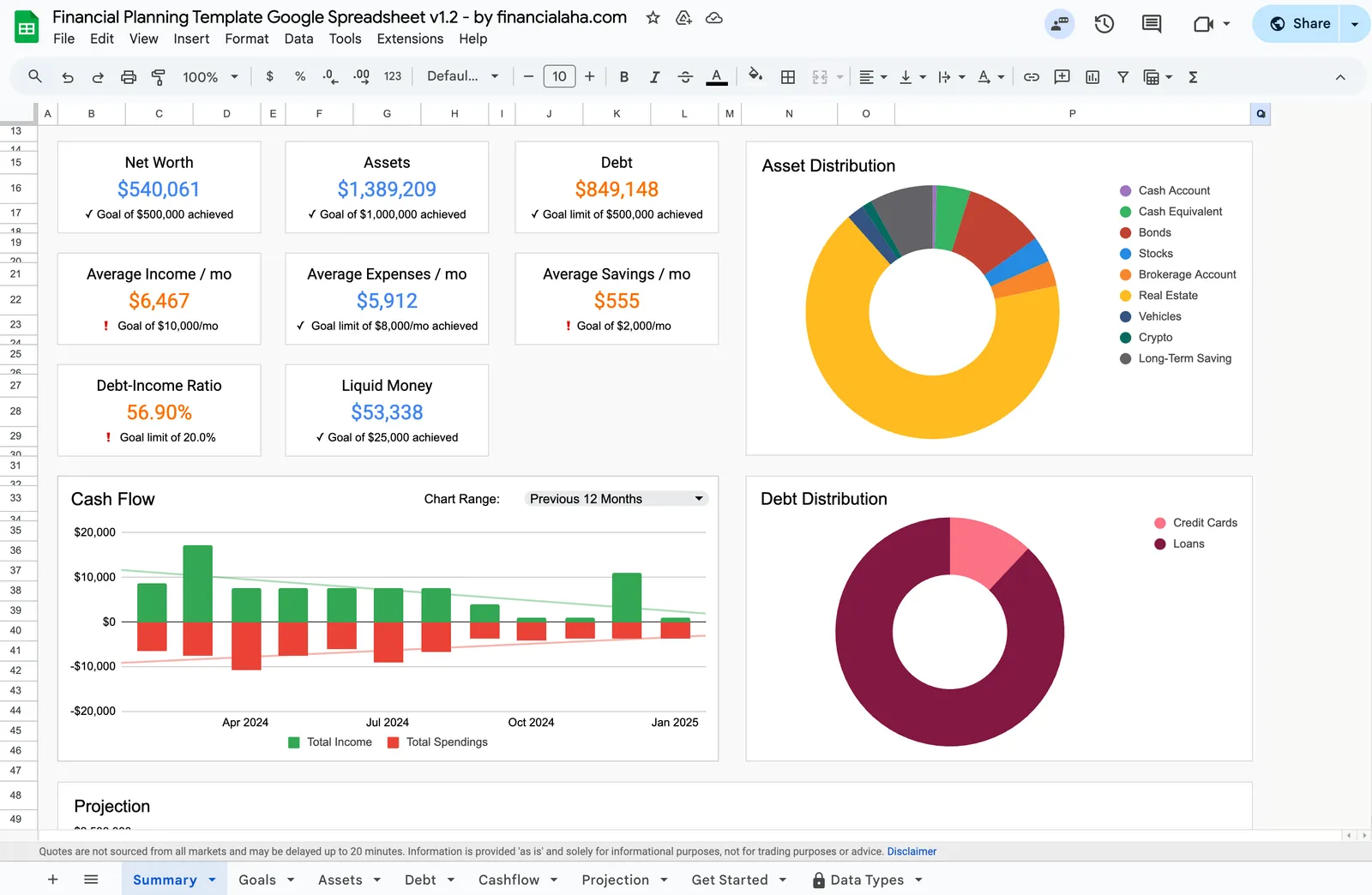
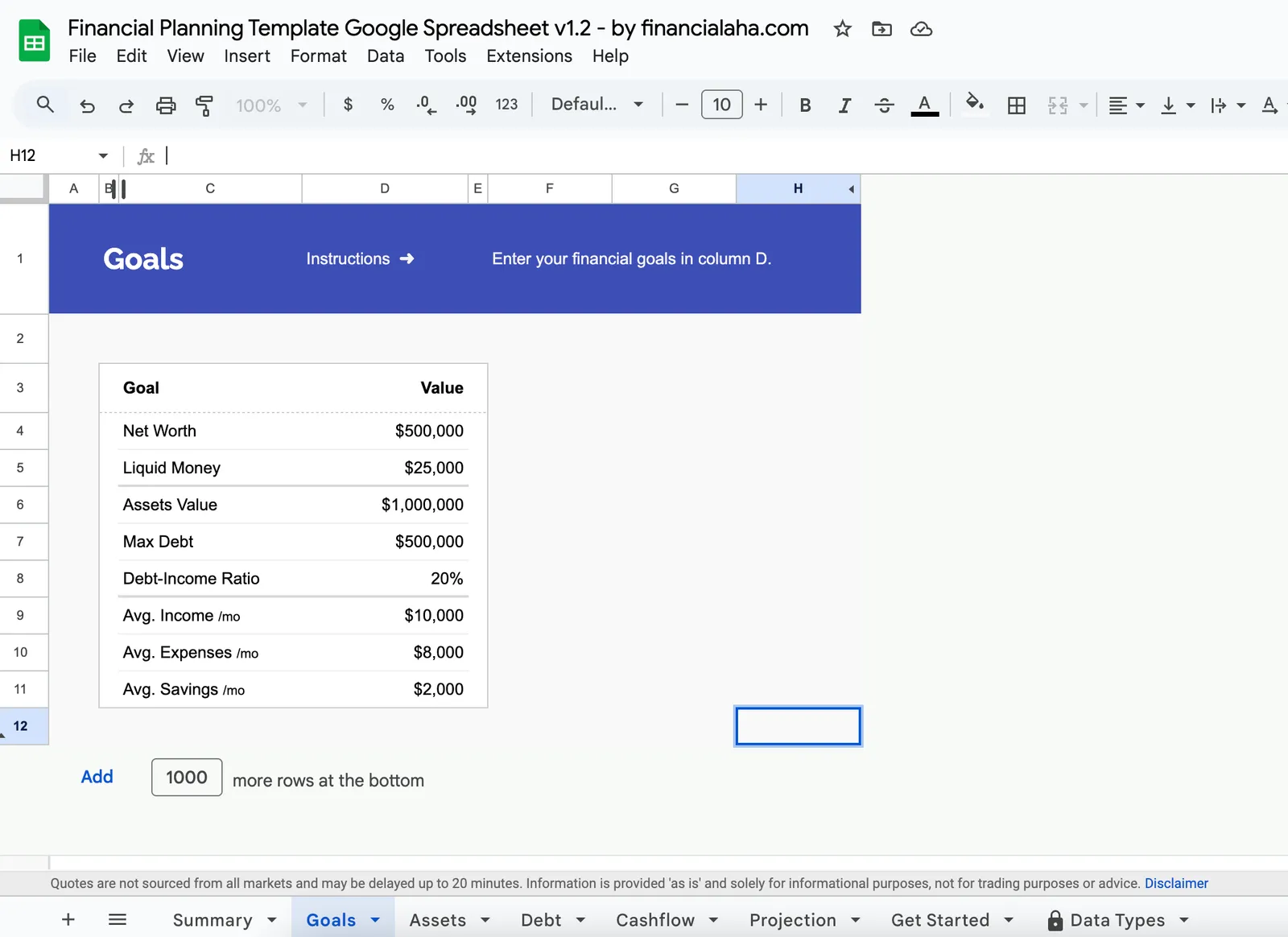
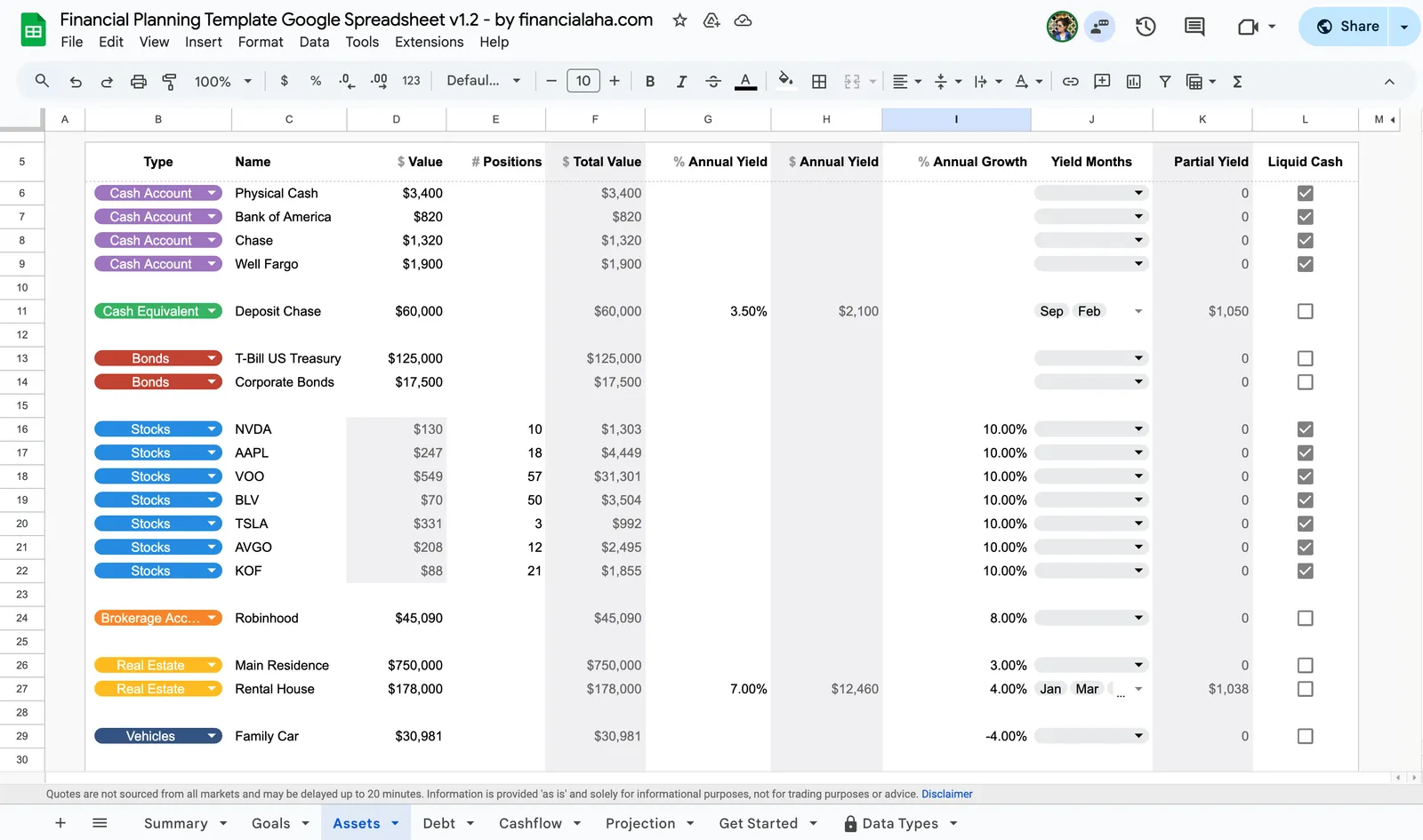
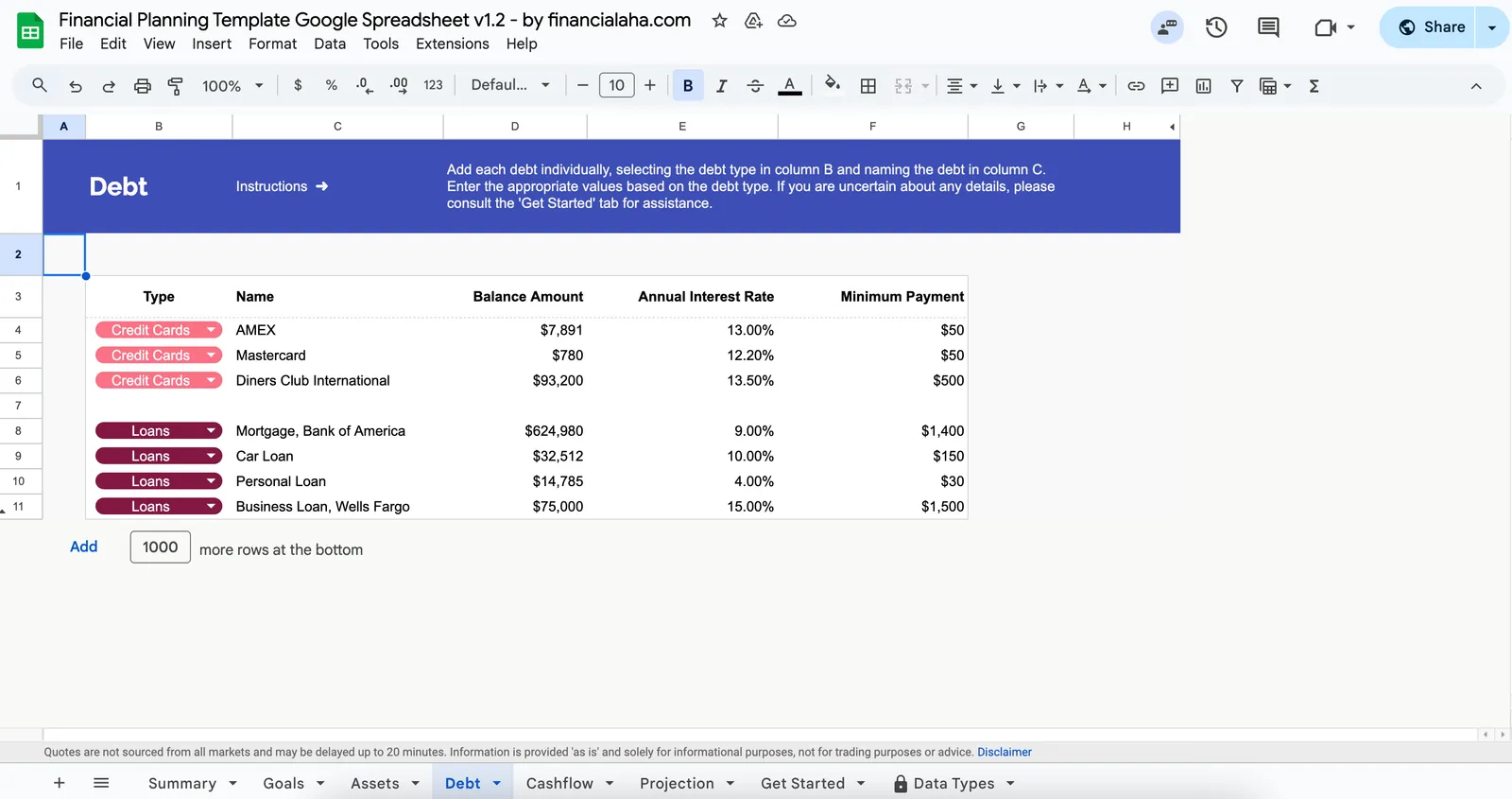
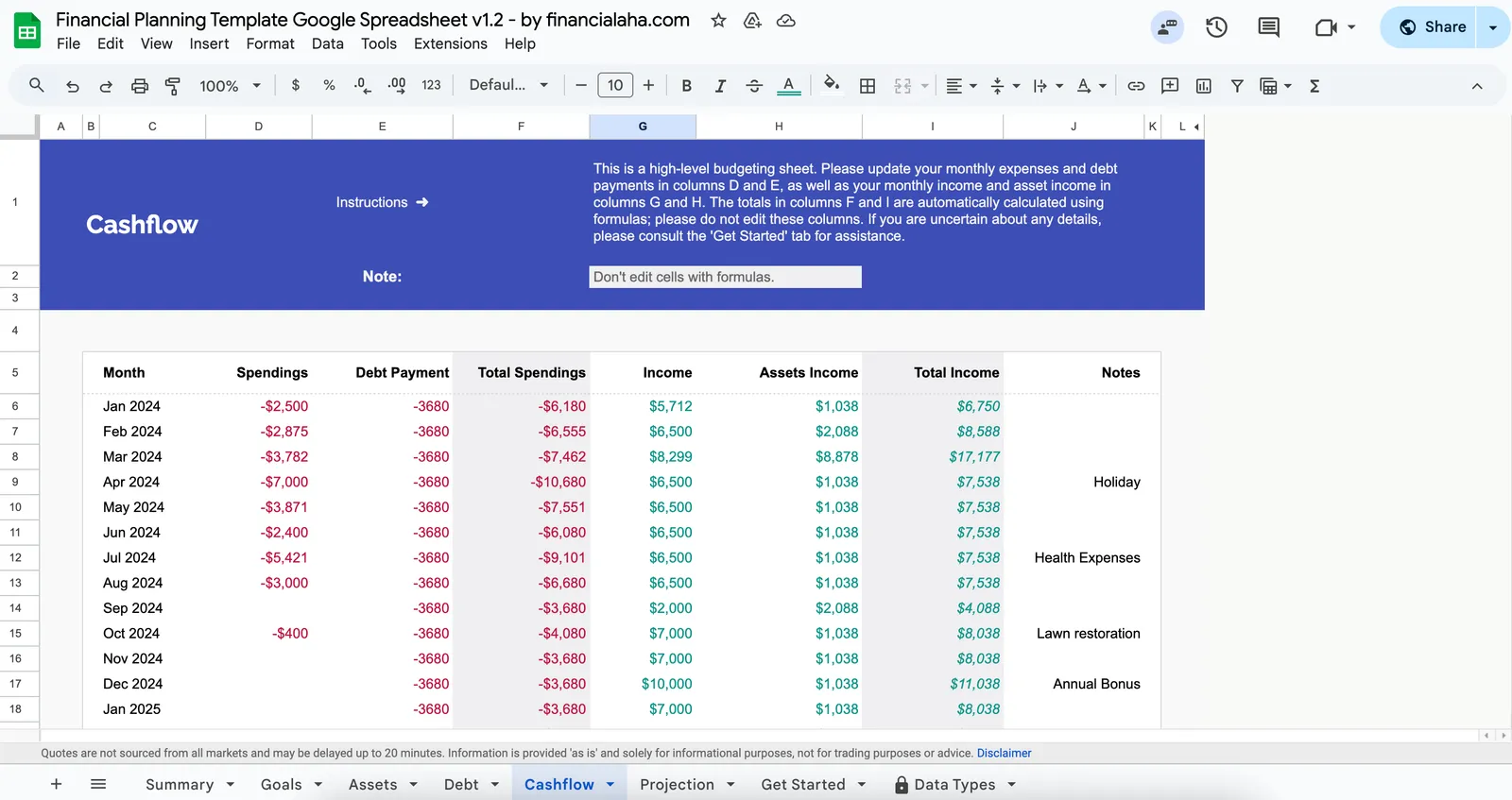
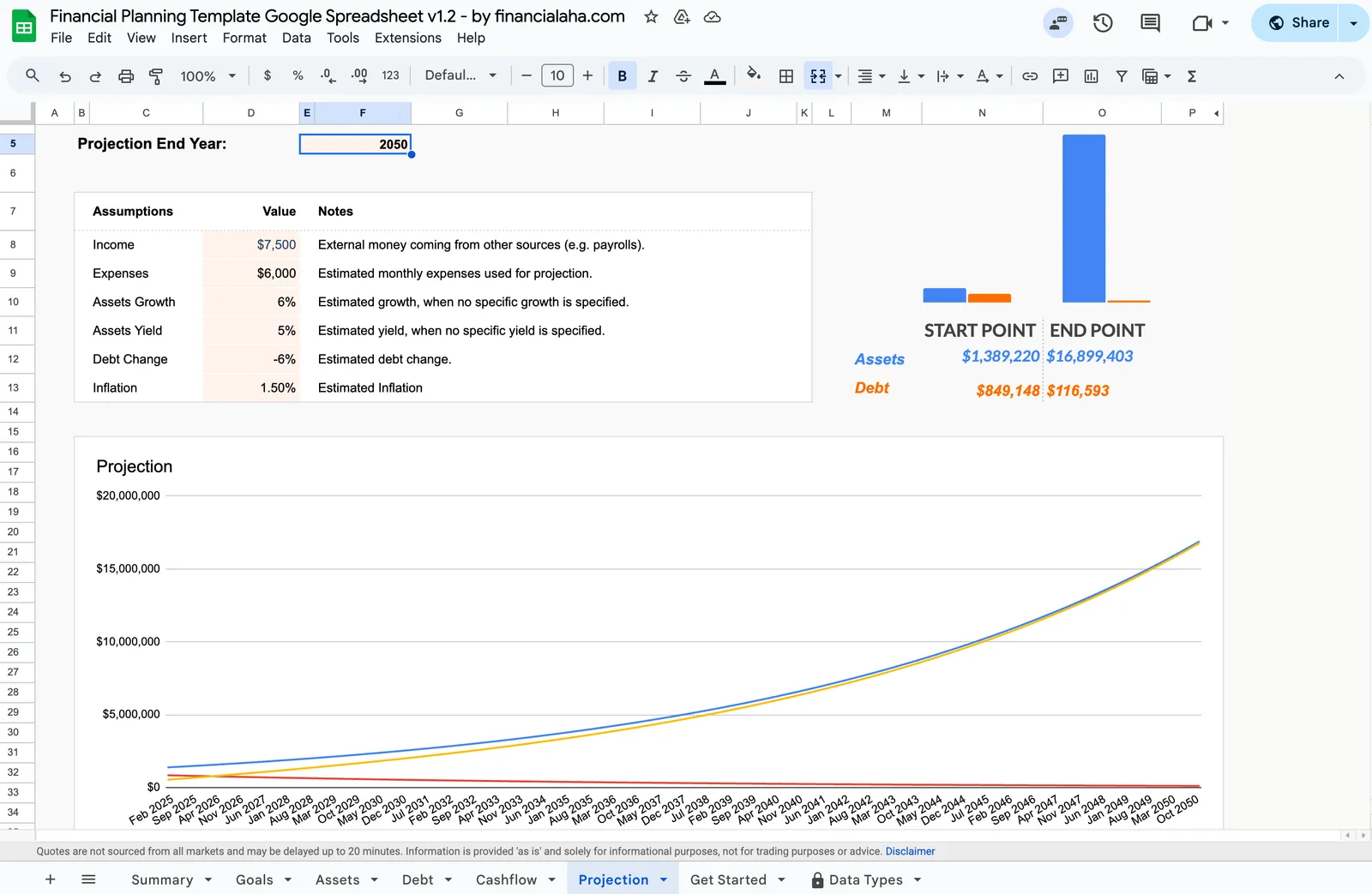
Complete financial overview with net worth and goals
Set and track progress toward financial milestones
Track all your assets in one place
Monitor and plan debt repayment
Visualize your income vs spending over time
Project your financial future
Common Questions
Financial Planning Template for the United Kingdom - FAQ
Can this replace a financial adviser?
This template organizes your financial information - it doesn't provide advice. For complex situations like pension transfers, inheritance tax planning, or significant investment decisions, a qualified financial adviser (IFA) can provide personalized guidance. The template is a useful tool to bring to those conversations.
Does it account for UK tax allowances?
You can track your usage of various allowances (personal allowance, ISA allowance, pension annual allowance, CGT exempt amount) in the template. It doesn't calculate taxes but helps keep track of where things stand against each limit.
How do I include my workplace pension?
Add your workplace pension with the current fund value and annual contribution amount (both your contribution and employer's). Most workplace pension providers have an online portal where you can check your current value.
Should I include my home's value?
Including your property (estimated value minus mortgage) gives a complete net worth view. Some people also track "financial assets only" separately for a picture of accessible wealth. Either approach works - consistency matters more.
Can I plan for early retirement or FIRE?
Yes. The template works for any timeline. For early retirement in the UK, key considerations include accessing pension before the minimum pension age (55 now, rising to 57 on 6 April 2028), bridging income from ISAs and GIAs, and healthcare (NHS remains available regardless of employment status).
Can't find the answer you're looking for? Contact our team
Explore More
Free Tools for the United Kingdom
Ready to get started?
Download instantly and start managing your finances, or contact us to design a custom template package for your needs.
Tax rules, rates, and contribution limits change, and official publications can themselves lag behind the law in force. We review these figures on a best-effort basis against sources we consider authoritative, but we cannot guarantee they are current, complete, or that better sources do not exist, and nothing here is tax, legal, or financial advice. For decisions, the relevant government authority is the reference.