South Africa
Net Worth Tracker for South Africa
Put your retirement annuities, TFSA balance, property equity, and outstanding loans side by side to see where you stand financially, all in one Google Sheet.
In Depth
Retirement Funds, TFSAs, and the Rand Factor
For many working South Africans, retirement fund balances across pension funds, provident funds and retirement annuities together represent the largest single asset. These balances grow through employer and employee contributions plus voluntary top-ups, compounding quietly over years. Including them in a net worth tracker gives the complete picture, even though access before retirement is restricted and taxed under the withdrawal benefit table.
Tax-free savings accounts have become a useful newer tool since their introduction in 2015. The annual contribution limit moved from R36,000 to R46,000 with effect from 1 March 2026, while the lifetime cap stayed at R500,000, and returns inside the account are free of income tax, dividends tax and capital gains tax. For anyone contributing consistently, the current balance is a genuine asset worth tracking alongside other investments.
South Africa's relatively high interest rate environment makes the liability side of net worth especially visible. Carrying debt here costs more than in many developed markets, so watching home loan, vehicle finance, and personal loan balances fall over time gives useful feedback. Tracking assets and liabilities together shows whether wealth is genuinely growing or simply being offset by borrowing costs.
South Africa
Net Worth in South Africa: What to Track
South Africans hold wealth in a mix of retirement products, property, and investment accounts. A net worth tracker brings all of these together.
Retirement funds are often the largest asset
Pension funds, provident funds, and retirement annuities typically represent a significant portion of net worth for working South Africans. These balances build through employer and employee contributions plus voluntary top-ups. Including them gives a complete picture, though access before retirement is restricted and withdrawals are taxed under the withdrawal benefit table, which starts at 18% above R27,500.
Tax-free savings accounts are a newer wealth-building tool
South Africa's tax-free savings accounts (TFSAs) carry an annual contribution limit of R46,000 from 1 March 2026, up from R36,000, against a lifetime limit of R500,000 that has not changed. Growth inside the account is free of income tax, dividends tax and capital gains tax, so for anyone who has been contributing, the current value belongs in the asset column.
Property is a major asset but valuations fluctuate
For homeowners, property equity (market value minus outstanding bond) can be a large net worth component. South African property markets vary significantly by region. Recent comparable sales give a more defensible figure than an aspirational asking price, and some people keep a deliberately cautious number so the trend line stays honest.
Debt levels in South Africa are worth monitoring
Home loans, vehicle finance, personal loans, and credit card debt are common. Borrowing costs in South Africa remain high by the standards of many developed markets, which makes the liability side move quickly. Tracking each liability separately shows the full cost of borrowing and the progress made in paying it down.
Get the Template
Getting Started
Tailoring the Net Worth Tracker to South African Rands
List all assets with current balances
Enter bank savings, tax-free savings account, retirement annuity value, pension fund balance (from your latest benefit statement), unit trusts, shares (JSE and international), property market value, and any other assets.
Add bond, vehicle finance, and other debts
Include home loan (bond) outstanding, vehicle finance, personal loans, credit card balances, store card balances, and any other debts. The goal is a complete picture.
Switch the display to ZAR
Select ZAR from the currency dropdown in the header. Once set, all values display consistently in rand.
Refresh balances as statements arrive
Monthly updates work well for bank accounts and debt balances. Retirement fund values from benefit statements might only be available quarterly or annually, so those get updated when new statements arrive.
Track the trend over time
In a high-interest environment, watching debt decrease while savings grow is especially meaningful. The trajectory tends to say more than any single number.
See It In Action
What the template looks like
Browse through the template to see the dashboard, the entry sheets, and the summaries it produces, all adaptable to your local financial setup.
- Built-in currency selector
- Calculations update automatically
- Visual summaries of your numbers
- No setup required
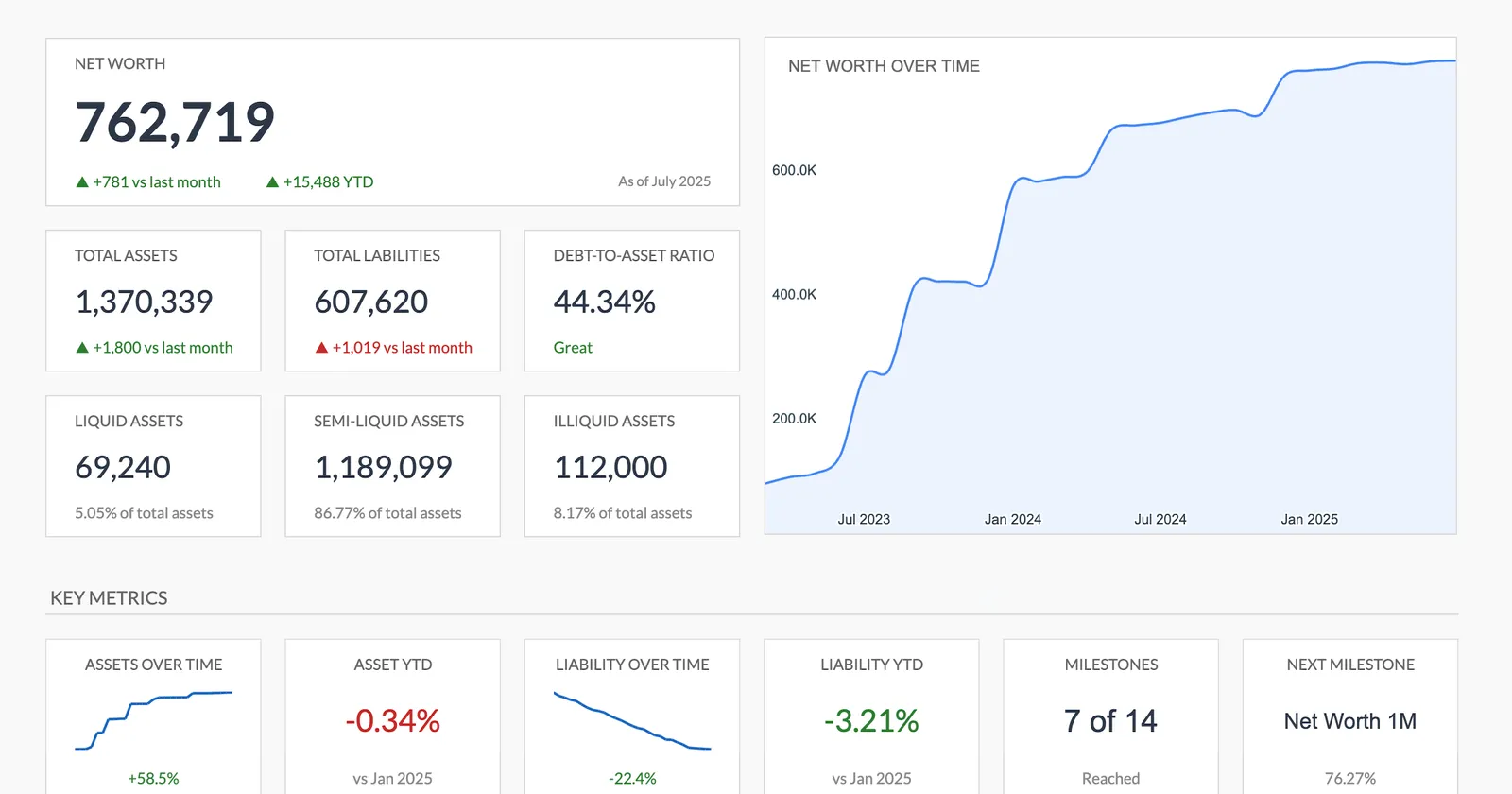

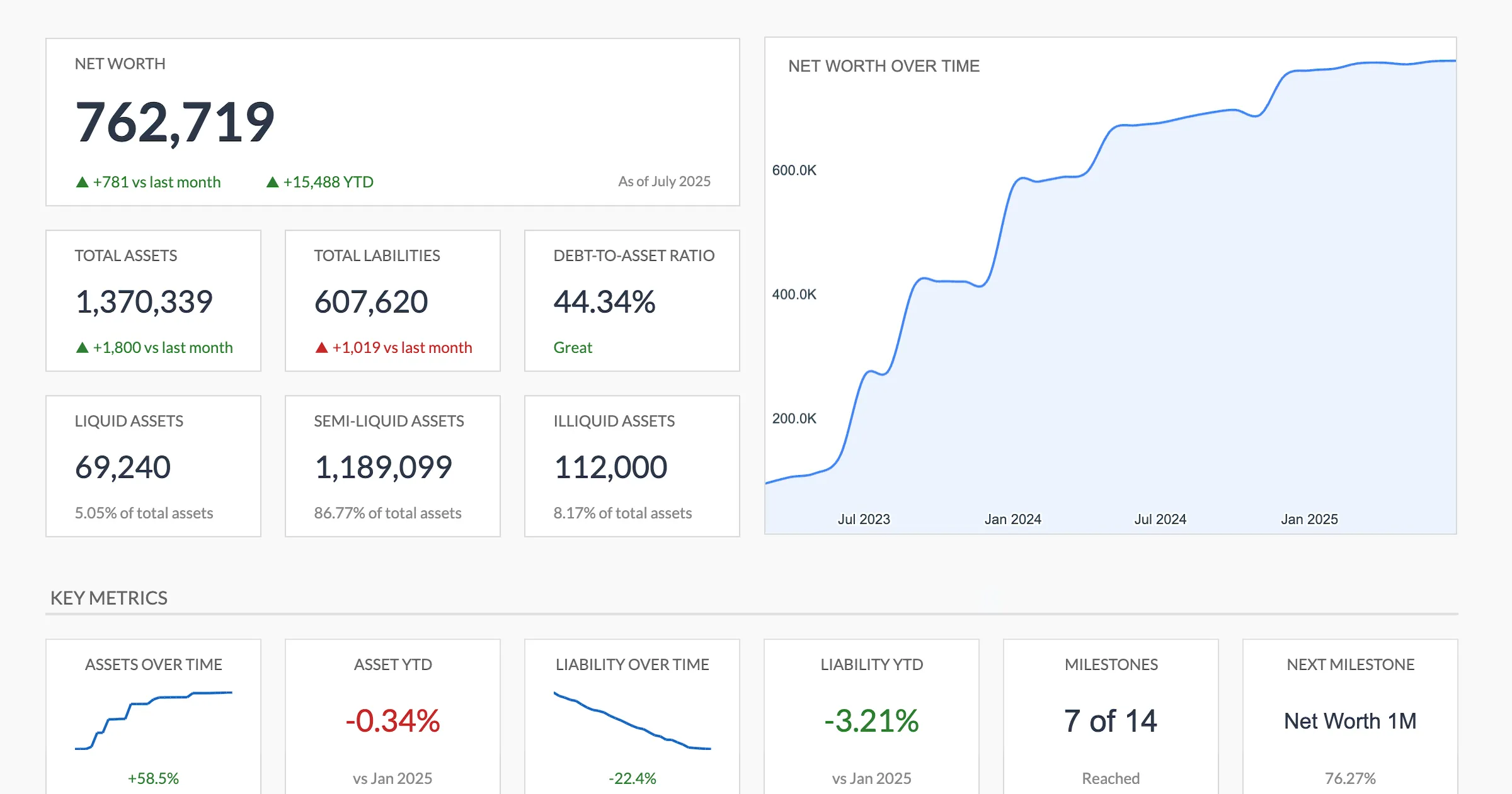
Track your net worth over time with charts
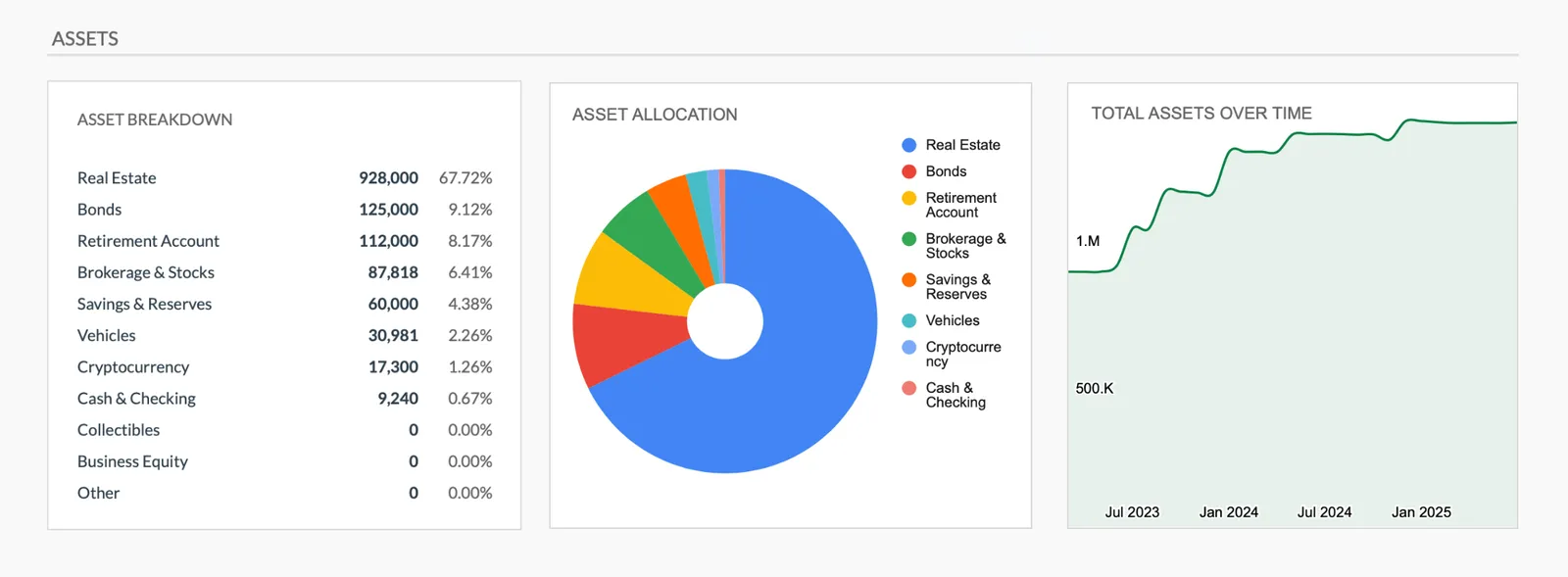
Breakdown of all your assets
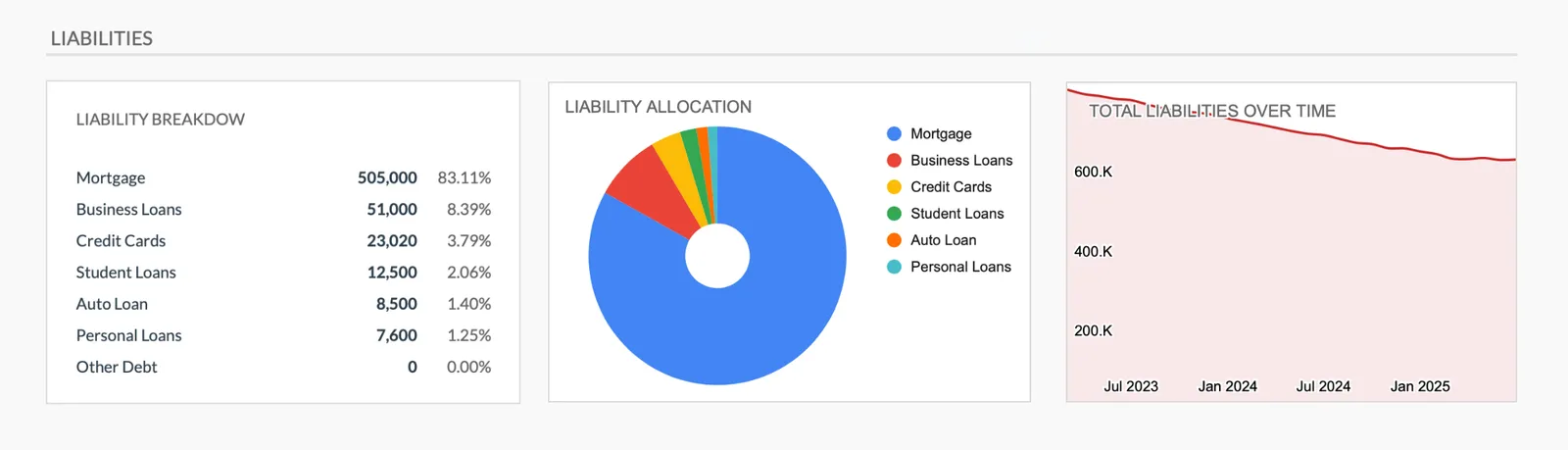
Track all debts and liabilities
Key financial health indicators
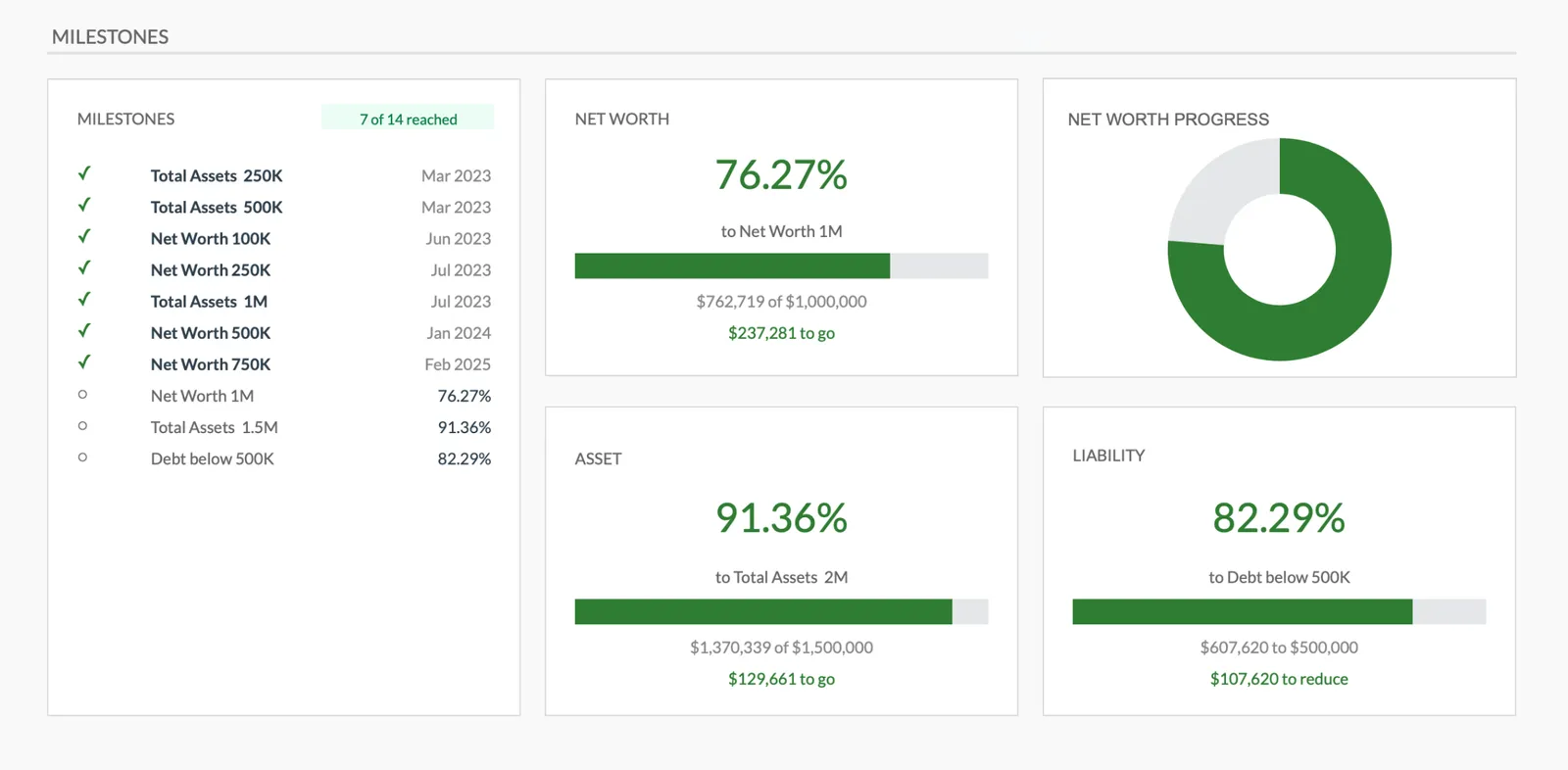
Set and celebrate net worth milestones
Common Questions
Net Worth Tracker for South Africa - FAQ
Should I include my retirement annuity in net worth?
Most net worth calculations do include it, since RA funds are your money even though access is restricted until age 55. Some people also track "accessible net worth" separately, excluding retirement funds, to see what is available now.
How do I estimate my property value in South Africa?
Recent comparable sales in the same area are the usual reference point, and Property24 and Private Property publish recent sale prices. A municipal valuation is updated periodically and may not reflect current market value. Subtracting the outstanding bond leaves the equity position.
Should I include offshore investments?
Offshore holdings are part of net worth, so assets held through platforms like EasyEquities or Allan Gray, or in direct offshore accounts, can go in at their current ZAR value. Individuals may move up to R1 million a year offshore under the single discretionary allowance, plus up to R10 million a year under the foreign capital allowance with SARS tax clearance.
What about two-pot retirement system withdrawals?
The two-pot system, in force since 1 September 2024, allows one withdrawal per tax year from the savings component, which receives one third of new contributions, subject to a R2,000 minimum. Withdrawals are added to taxable income and taxed at marginal rates. The retirement component, two thirds of new contributions, stays locked until retirement.
What schedule works for updating South African net worth?
Monthly for bank accounts and debts, quarterly for investment and retirement fund values, and annually for property value is a common rhythm. A schedule that gets followed produces a more readable trend than an ambitious one that lapses.
Can't find the answer you're looking for? Contact our team
Explore More
Free Tools for South Africa
Ready to get started?
Download instantly and start managing your finances, or contact us to design a custom template package for your needs.
Tax rules, rates, and contribution limits change, and official publications can themselves lag behind the law in force. We review these figures on a best-effort basis against sources we consider authoritative, but we cannot guarantee they are current, complete, or that better sources do not exist, and nothing here is tax, legal, or financial advice. For decisions, the relevant government authority is the reference.