India
Retirement Planning Template for India
Bring your EPF, PPF, NPS and mutual fund balances together with projected retirement expenses, all in one Google Sheets template.
In Depth
EPF, NPS, and the Compound Interest Question
India has no universal public pension of the kind found in many Western countries. The Employees Pension Scheme pays EPF members a modest amount, government employees have separate arrangements including the Unified Pension Scheme offered to central government staff from April 2025, and for most private-sector workers retirement income comes from personal savings held in EPF, PPF, NPS and mutual funds. The arithmetic therefore rests almost entirely on individual accumulation, and because compounding is exponential, the length of the contribution period moves the final figure more than the contribution amount does.
EPFO declared 8.25 per cent interest for the 2025-26 financial year, and PPF has paid 7.1 per cent since July 2024. Both are strong rates for declared-return instruments. Even so, a corpus built over a 25 to 30 year career may fall short of funding a retirement that lasts another 25 to 30 years. NPS adds market-linked growth and the extra INR 50,000 deduction under what the Income-tax Act, 2025 now numbers as Section 124(3), with the trade-off that at least 40 per cent of the corpus must buy an annuity at exit unless the total is INR 5 lakh or less.
Inflation is the factor that changes everything in Indian retirement arithmetic. Consumer prices rose 4.45 per cent in the year to July 2026, within the Reserve Bank's 4 per cent target band, and the past decade has mostly sat between 4 and 6 per cent. At 6 per cent, expenses costing INR 50,000 a month today would exceed INR 1.6 lakh a month in 20 years. Real returns, meaning nominal growth minus inflation, produce a less encouraging projection than nominal ones, and the difference between the two assumptions is often larger than any other choice in the model.
India
Retirement Planning in India: Key Factors
Retirement planning in India involves a mix of government-backed schemes, market-linked instruments, and limited public pension coverage for private-sector workers.
EPF and PPF provide a foundation but may not be sufficient
EPF, with its matching employer contribution, and PPF both offer declared returns with tax benefits. EPFO declared 8.25% for the 2025-26 financial year, and PPF has paid 7.1% since July 2024. Solid as those rates are, the corpus they build often falls short of what a long retirement costs once healthcare inflation and rising life expectancy are in the picture.
NPS offers market-linked growth with tax benefits
The National Pension System invests across equity and debt and carries an extra INR 50,000 deduction under Section 80CCD(1B), renumbered as Section 124(3) by the Income-tax Act, 2025 that took effect on 1 April 2026. That deduction sits in the old regime only, though employer NPS contributions remain deductible in both regimes, under what was Section 80CCD(2) and is now Section 124(1) and (2). At exit, up to 60% of the corpus can be taken as a tax-free lump sum and at least 40% must buy an annuity, with a full lump sum permitted where the corpus is INR 5 lakh or less.
Inflation and healthcare costs require attention
Indian consumer price inflation has mostly run between 4% and 6% over the past decade, and stood at 4.45% in July 2026 against the Reserve Bank of India's target of 4% give or take two percentage points. Even at that pace, purchasing power erodes substantially across a 20 to 30 year retirement, and medical costs have historically risen faster than the headline index. Inflation assumptions are one of the largest levers in any retirement projection.
No universal social security means self-reliance
There is no universal contributory state pension for private-sector workers. The Employees Pension Scheme pays a modest amount to EPF members, and government employees have their own arrangements, including the Unified Pension Scheme option introduced for central government staff from April 2025. For most people, retirement income therefore comes from personal savings, investments and family support, which puts the weight of the arithmetic on individual planning.
Get the Template
Getting Started
Personalizing the Retirement Planner for India
Enter current retirement savings
Every retirement-related balance goes in: EPF from the EPFO passbook, PPF, NPS, mutual fund SIPs earmarked for retirement, fixed deposits and any other long-term savings. Those balances are the starting point for the projections.
Note EPF, PPF, NPS, and SIP contributions
Enter the annual amount going into each instrument, covering EPF from employee and employer, PPF deposits, NPS contributions and retirement-focused SIPs. These figures drive the growth projections in the template.
Estimate retirement expenses
Project monthly spending in retirement across housing, healthcare, food, utilities, travel and insurance. Many projections start at 70% to 80% of current expenses, though healthcare typically moves the other way with age. Inflation carries those figures forward to future prices.
Set realistic return assumptions
Return assumptions are inputs, not facts, and small changes move the result a long way. Figures in the range of 8% to 9% for equity mutual funds, 7% to 8% for EPF and PPF, and 5% to 6% for debt instruments are commonly used, with expected inflation subtracted to give a real return. Running the same plan at a lower assumption shows how much of the outcome rests on it.
Run different scenarios
Duplicating the template lets you test different retirement ages, spending levels and return assumptions side by side. There is no fixed retirement age for private-sector workers in India, so comparing ages between 50 and 65 shows what each additional working year adds.
See It In Action
What the template looks like
Browse through the template to see the dashboard, the entry sheets, and the summaries it produces, all adaptable to your local financial setup.
- Built-in currency selector
- Calculations update automatically
- Visual summaries of your numbers
- No setup required
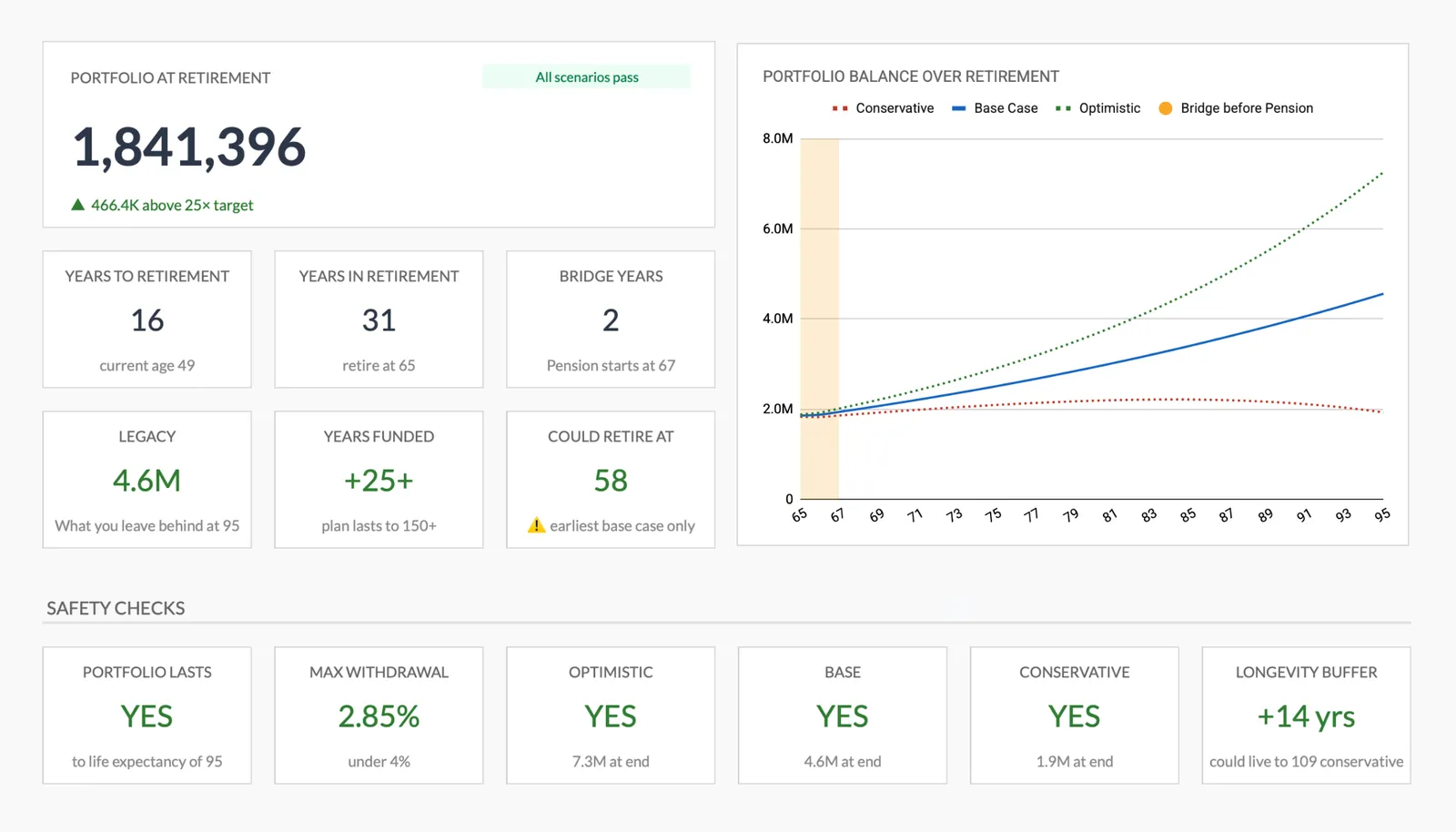
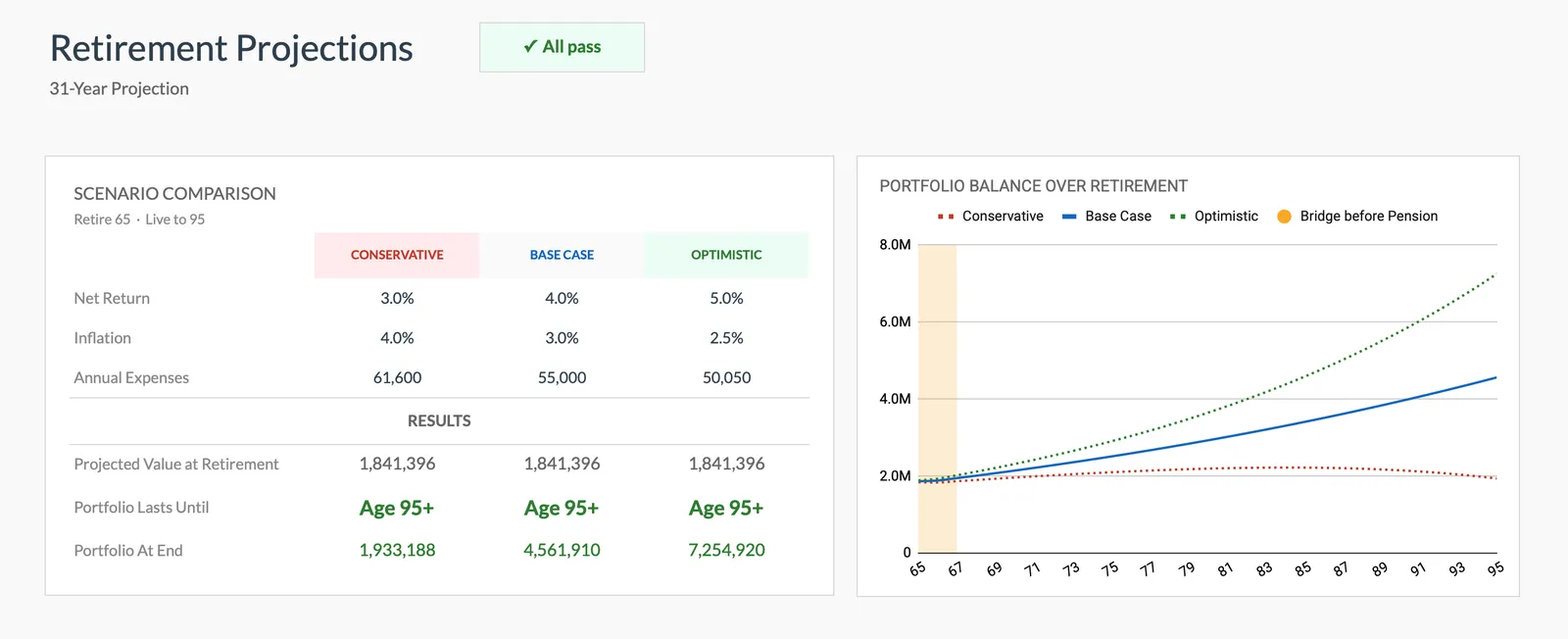
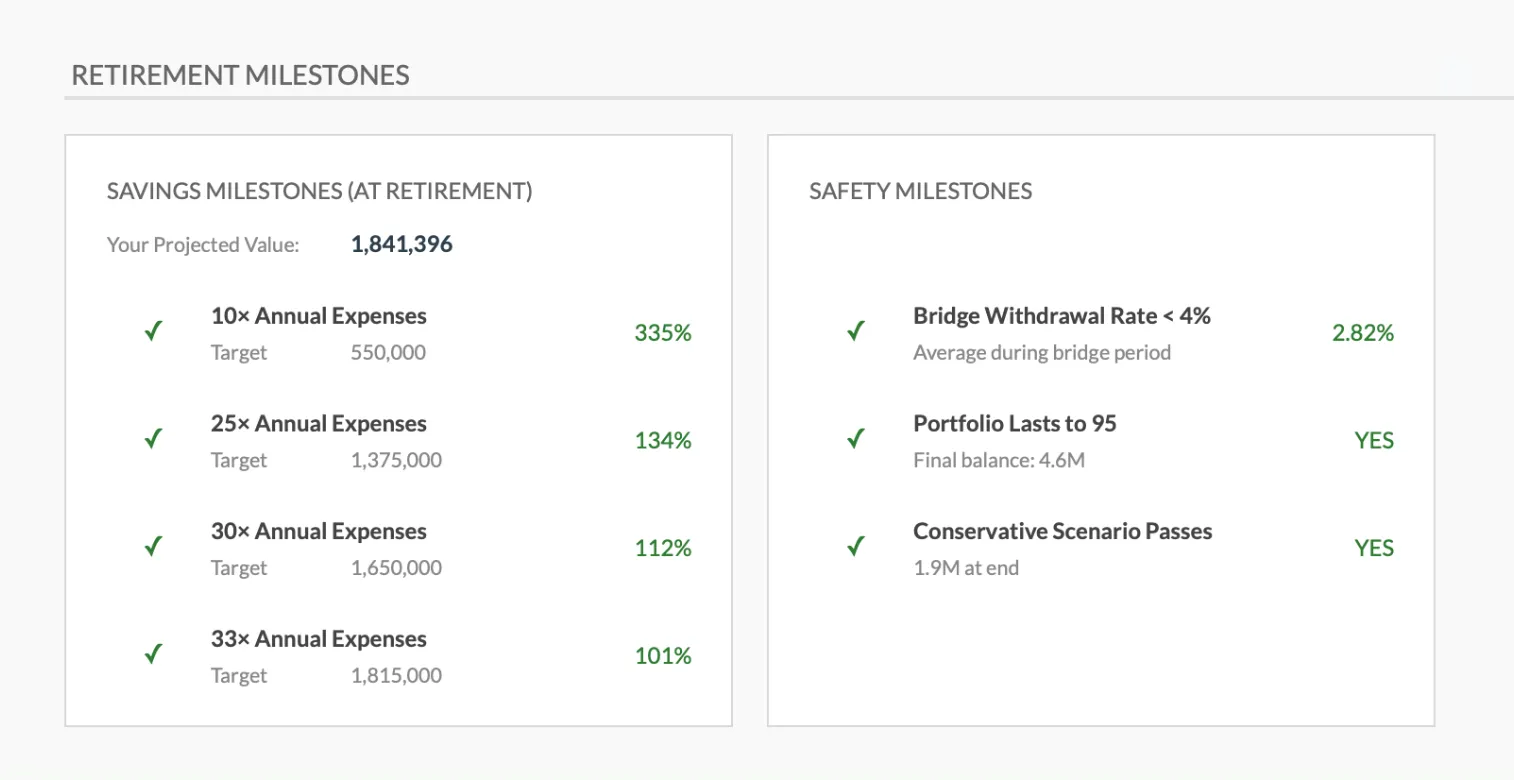
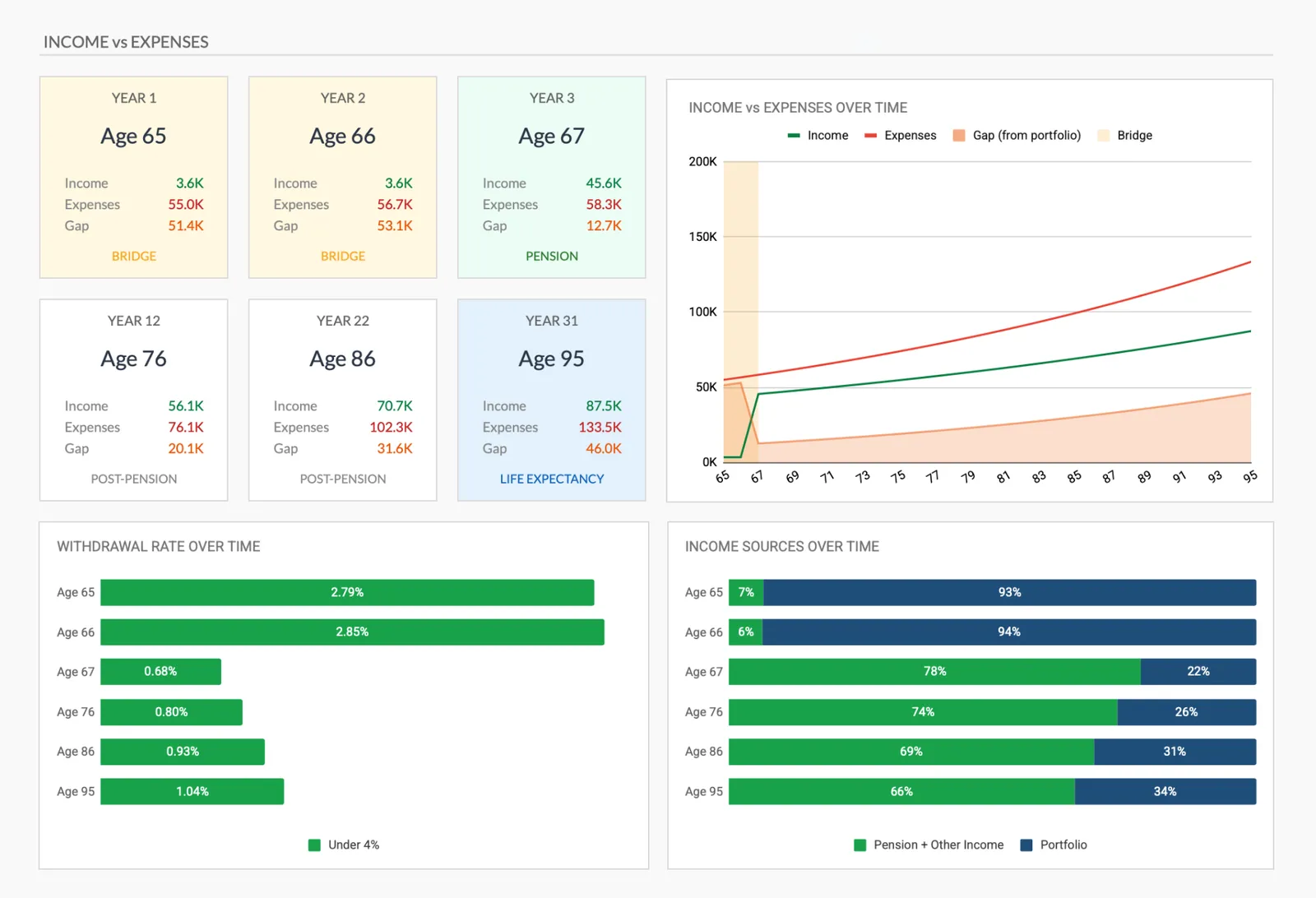
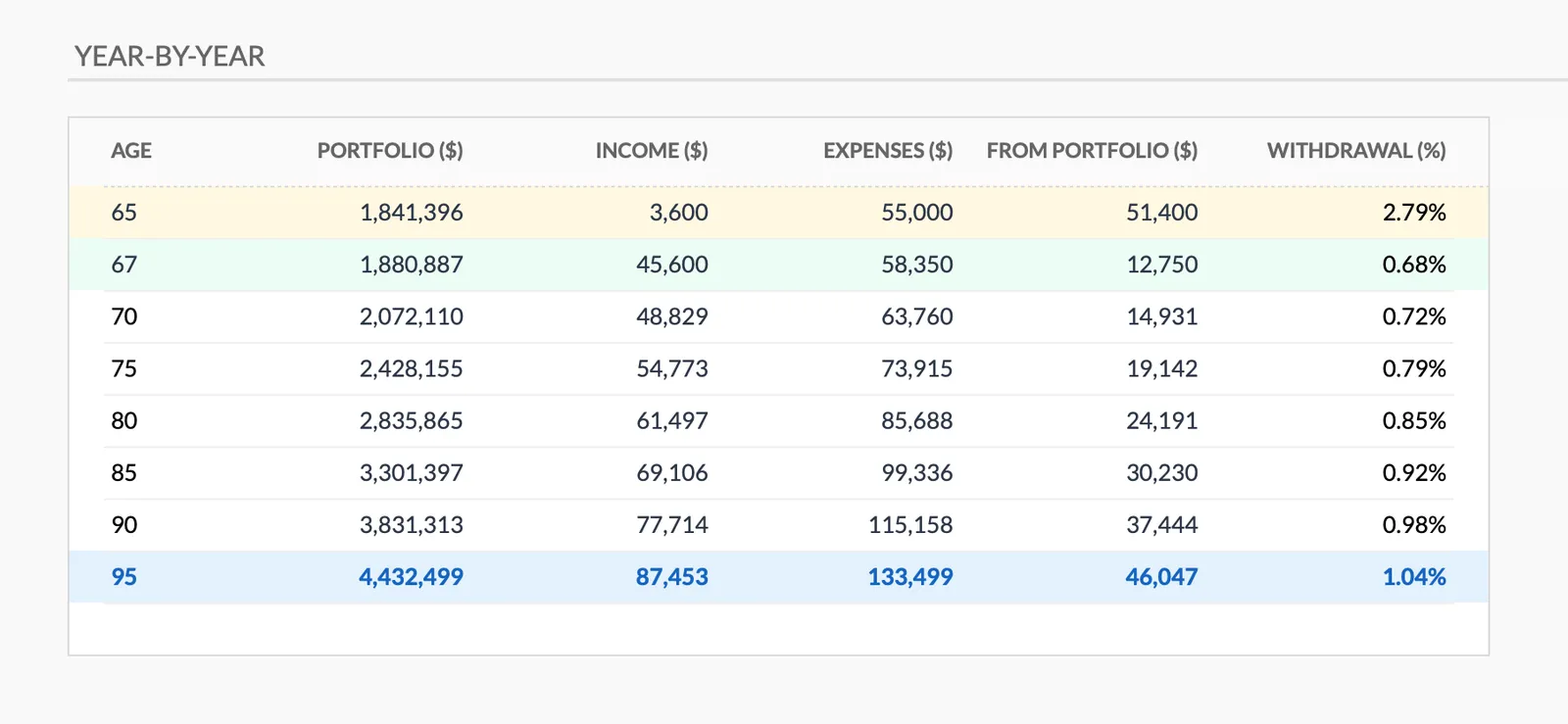
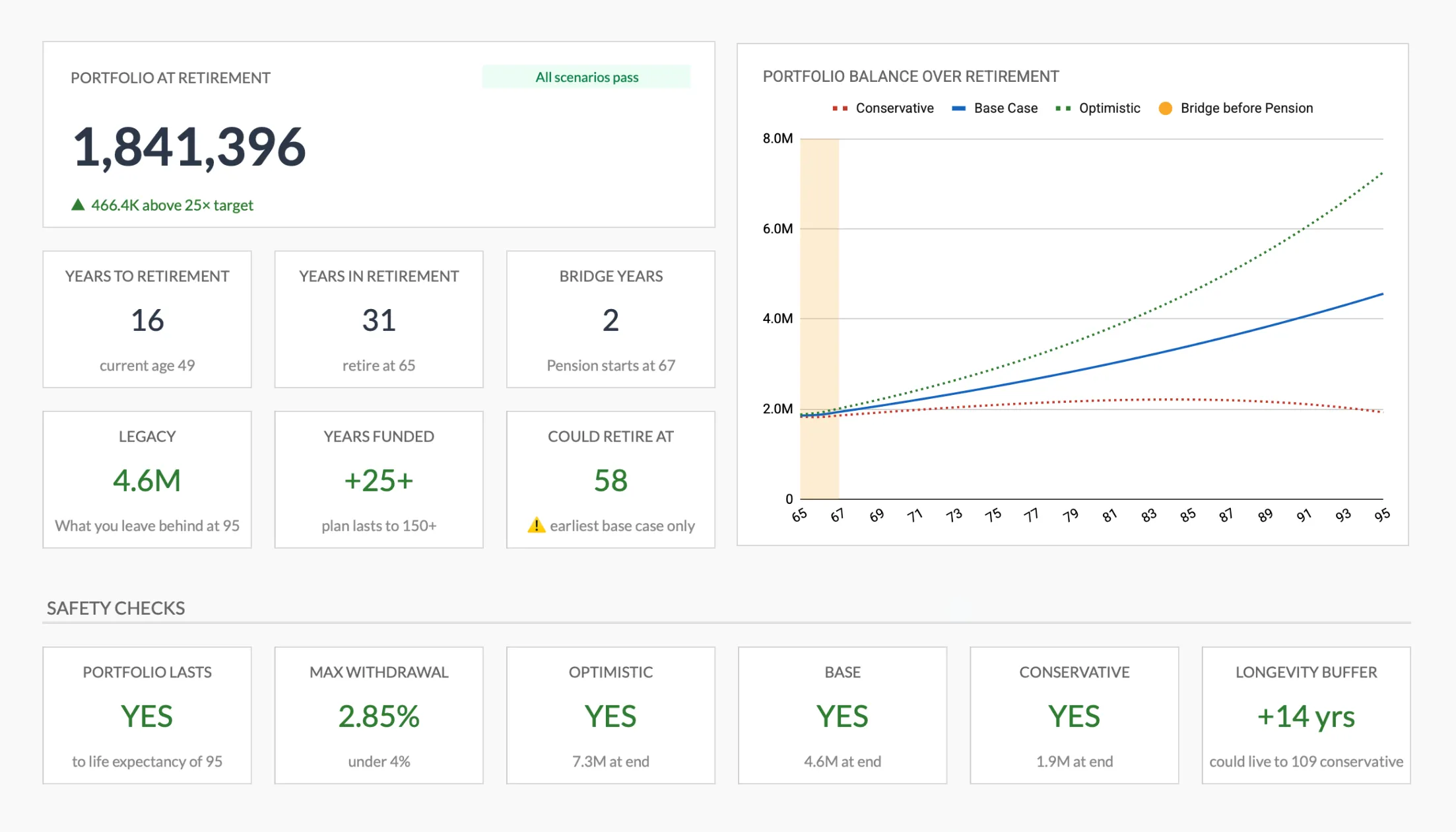
Complete retirement overview with projections
Project your retirement savings growth
Track progress toward retirement goals
Plan your retirement income against expenses
Detailed year-by-year retirement projection
Common Questions
Retirement Planning Template for India - FAQ
How much do I need to retire in India?
There is no single answer. One common approach estimates annual expenses in retirement and multiplies by 25 to 30, allowing for a long retirement and Indian inflation. On that arithmetic, someone expecting INR 50,000 a month in expenses arrives at roughly INR 2 crore to INR 2.5 crore. The template is where those specific numbers get worked through.
Can I withdraw EPF before retirement?
Partial withdrawal is allowed for defined purposes such as housing, medical treatment and education. EPFO reorganised the withdrawal grounds in 2026 into broad categories covering essential needs, housing and special circumstances, with a minimum share of the eligible balance retained after a partial claim. Full settlement is available on retirement, which the scheme treats as from age 55, and after a continuous period of unemployment. Money taken out early stops compounding, which is the part projections tend to understate.
Is NPS better than mutual funds for retirement?
Each has trade-offs. NPS carries the extra INR 50,000 deduction and low fund management charges, but locks money until 60 apart from limited partial withdrawals, and requires at least 40% of the corpus to buy an annuity. Mutual funds are more flexible with no deduction beyond Section 80C. Plenty of people hold both.
How do I account for inflation in India?
A 5% to 6% assumption is a common baseline, above the 4.45% recorded in July 2026 and the Reserve Bank's 4% target. At 6%, expenses costing INR 50,000 a month today would cost over INR 1.6 lakh a month in 20 years. Using inflation-adjusted returns rather than nominal ones keeps the projection in today's money.
What about family support in retirement?
Family support is a real part of how retirement works in India, and it is also the hardest input to forecast, since it depends on other people's circumstances decades ahead. Some people therefore build the projection on their own resources and treat family support as upside rather than a line in the plan. The template can be run both ways to see the size of the gap.
Can I plan for early retirement in India?
Yes, the template works for any retirement age. Early retirement in India runs into healthcare cover, since Ayushman Bharat PM-JAY is limited to eligible households and to everyone aged 70 and above, leaving private insurance to fill the years before that. Access to locked instruments is the other constraint, alongside a retirement that may run 40 years or more and so responds sharply to the withdrawal rate assumed.
Can't find the answer you're looking for? Contact our team
Explore More
Free Tools for India
Ready to get started?
Download instantly and start managing your finances, or contact us to design a custom template package for your needs.
Tax rules, rates, and contribution limits change, and official publications can themselves lag behind the law in force. We review these figures on a best-effort basis against sources we consider authoritative, but we cannot guarantee they are current, complete, or that better sources do not exist, and nothing here is tax, legal, or financial advice. For decisions, the relevant government authority is the reference.