Canada
Financial Planning Template for Canada
See your TFSA, RRSP, RESP, FHSA, and CPP projections in one place alongside your long-term goals - in a Google Sheets template you own.
In Depth
Registered Accounts and the Canadian Planning Puzzle
Financial planning in Canada often comes down to a sequencing question - which registered account gets funded first. The TFSA, RRSP, RESP, and FHSA all offer tax advantages, but they work differently and serve different timelines. Someone in a lower tax bracket today might lean toward the TFSA, while a high earner could get more immediate value from RRSP deductions. There is no universal order that works for everyone.
The provincial dimension adds another layer. A financial plan built in Quebec needs to account for the Quebec Pension Plan (QPP) instead of CPP, provincial parental leave benefits, and a different set of tax credits. In Alberta, the absence of a provincial sales tax and historically higher incomes create different planning dynamics. Even the cost of childcare varies dramatically - from subsidized rates in Quebec to thousands per month in Ontario and BC.
One aspect of Canadian financial planning that often gets overlooked is the RRSP contribution deadline. Contributions made in the first 60 days of the calendar year can be claimed on the previous year's tax return, which creates a planning window. Having a clear picture of available room, and a plan for using it before the deadline, is what determines the size of the refund that feeds back into the rest of the plan.
Canada
Financial Planning in Canada: Key Considerations
Canada offers several tax-advantaged accounts and government programs that form the building blocks of a financial plan. Seeing everything in one place makes it easier to use these effectively.
Registered accounts are the foundation of Canadian financial planning
TFSA (tax-free growth, flexible withdrawals), RRSP (tax-deferred, reduces current taxes), RESP (education savings with government grants), and FHSA (first home savings, tax-deductible) each serve different goals. Contribution room varies by account and personal history. Tracking all of these in one view shows the available room across accounts side by side.
CPP and OAS form the retirement income base
The Canada Pension Plan provides retirement income based on contributions over your working life, with a maximum of $1,507.65 a month at age 65 for 2026 and an average for new beneficiaries closer to $800. Old Age Security adds up to about $742 a month at 65 for those aged 65 to 74 in 2026, clawed back above an income threshold. These government benefits form a base that affects how much personal saving the rest of the plan has to cover.
Provincial differences affect financial planning
Provincial tax rates, healthcare coverage, childcare programs (like Quebec's subsidized daycare), and housing costs vary dramatically. A financial plan in Alberta looks quite different from one in Ontario or Quebec. Customizing the template to reflect your province's specifics makes it more accurate.
The FHSA is a newer tool for first-time buyers
Introduced in 2023, the First Home Savings Account combines features of the TFSA and the RRSP: contributions are tax-deductible like an RRSP, and withdrawals for a qualifying home purchase are tax-free like a TFSA. The limit is $8,000 a year up to $40,000 over the life of the account, which is why it shows up in plans built around a first home.
Get the Template
Getting Started
Adapting the Financial Planner for Canadian Accounts
List all accounts with current balances
Enter every account: chequing, savings, TFSA, RRSP, RESP, FHSA, non-registered investments, and any debt (mortgage, student loans, credit lines). Use current balances from your latest statements or online banking.
Track registered account contribution room
Note your available TFSA room, RRSP room (from your CRA Notice of Assessment), RESP lifetime limit ($50,000 per child), and FHSA room. The CRA's My Account portal shows exact TFSA and RRSP contribution room.
Estimate CPP and OAS benefits
Check your estimated CPP benefit through your My Service Canada Account. OAS is income-tested, with the recovery tax starting at net income above $95,323 for 2026. Enter projected benefits as future retirement income.
Define goals with dollar amounts and timelines
Home purchase, emergency fund, children's education, retirement, travel, or other goals - each needs a target amount and date. The template tracks progress toward each one.
Review annually after tax season
After filing taxes (April deadline), you receive updated RRSP and TFSA contribution room. This is a natural time to review the financial plan, update account balances, and adjust goals.
See It In Action
What the template looks like
Browse through the template to see the dashboard, the entry sheets, and the summaries it produces, all adaptable to your local financial setup.
- Built-in currency selector
- Calculations update automatically
- Visual summaries of your numbers
- No setup required
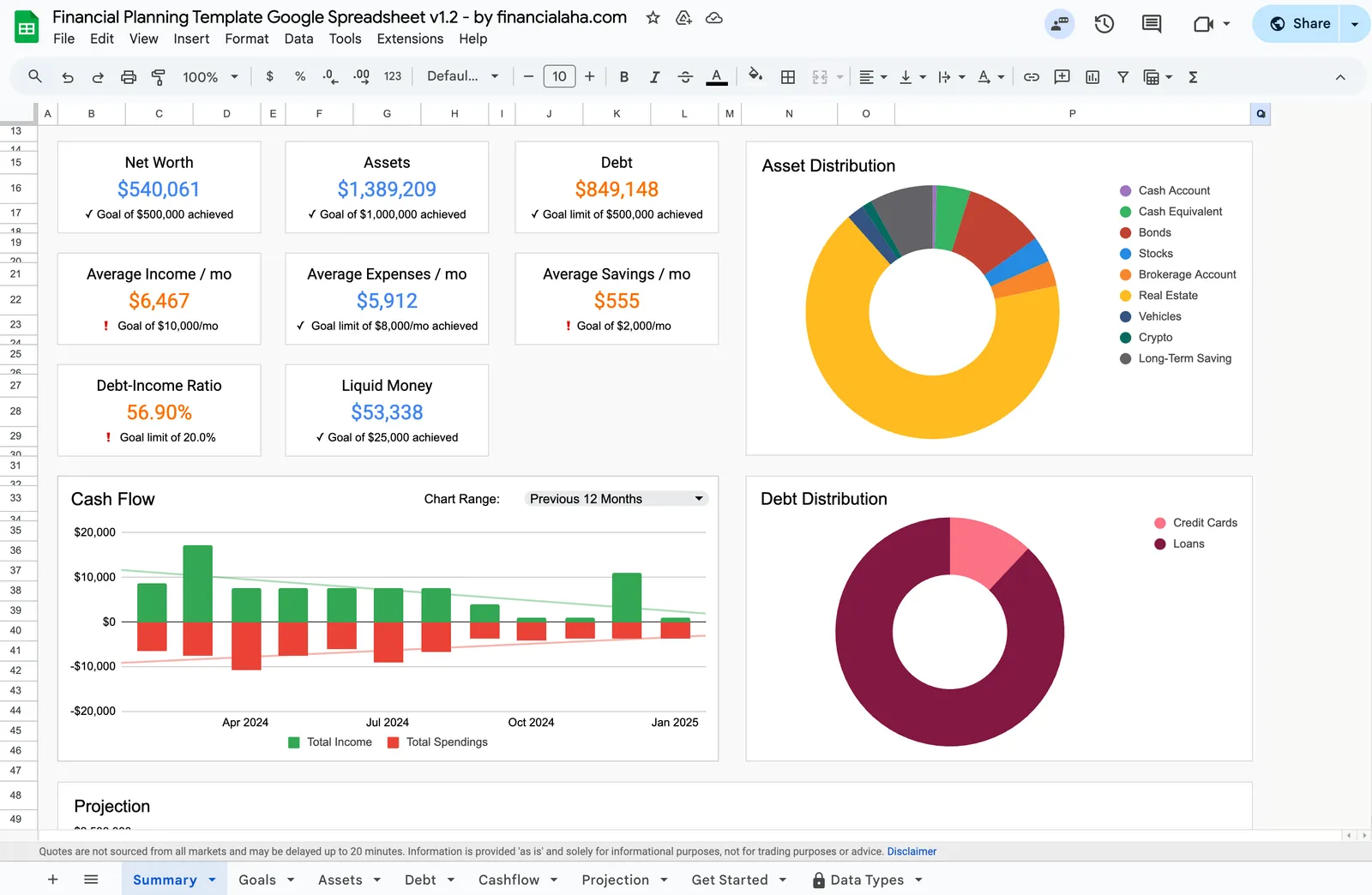
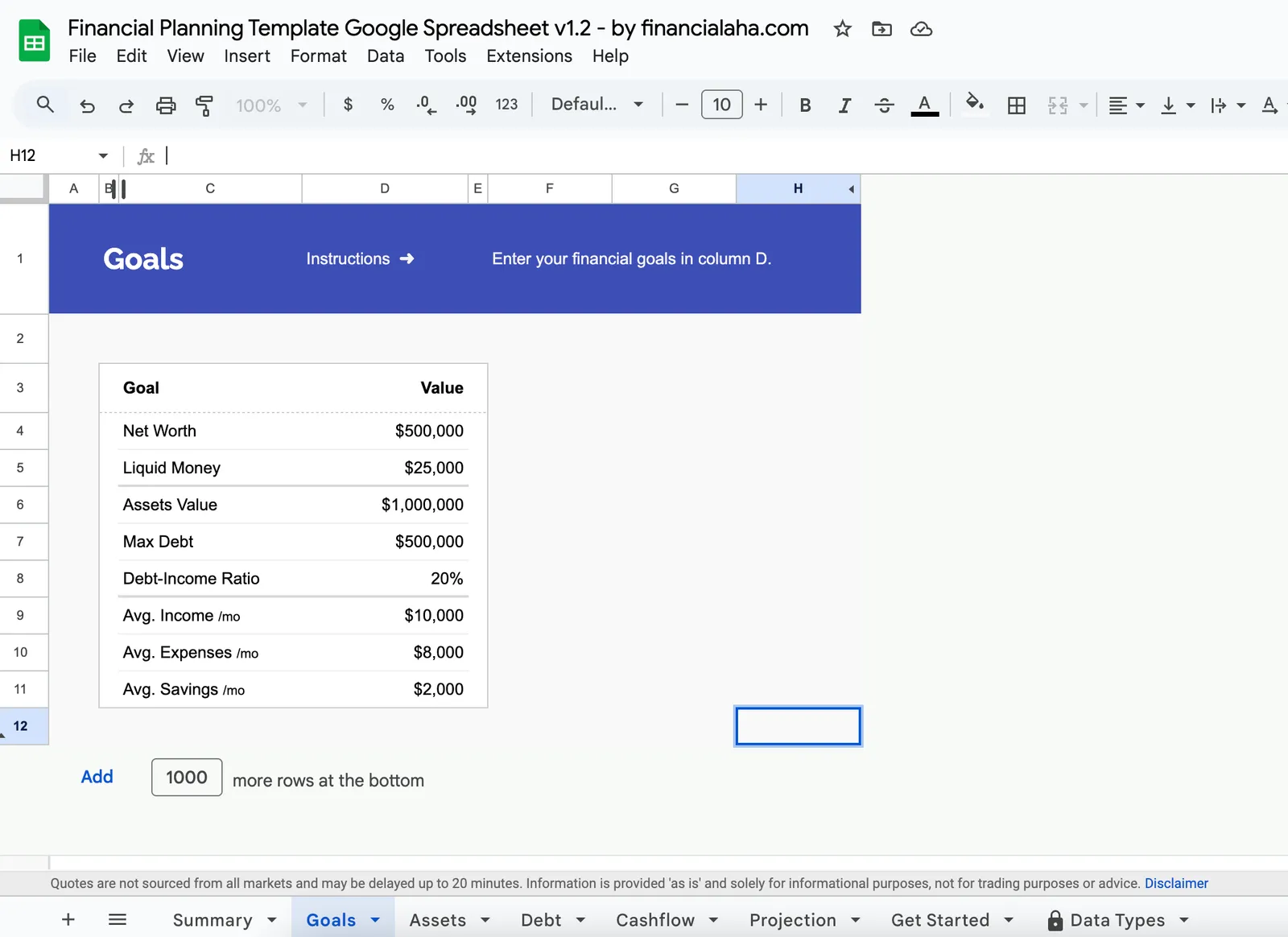
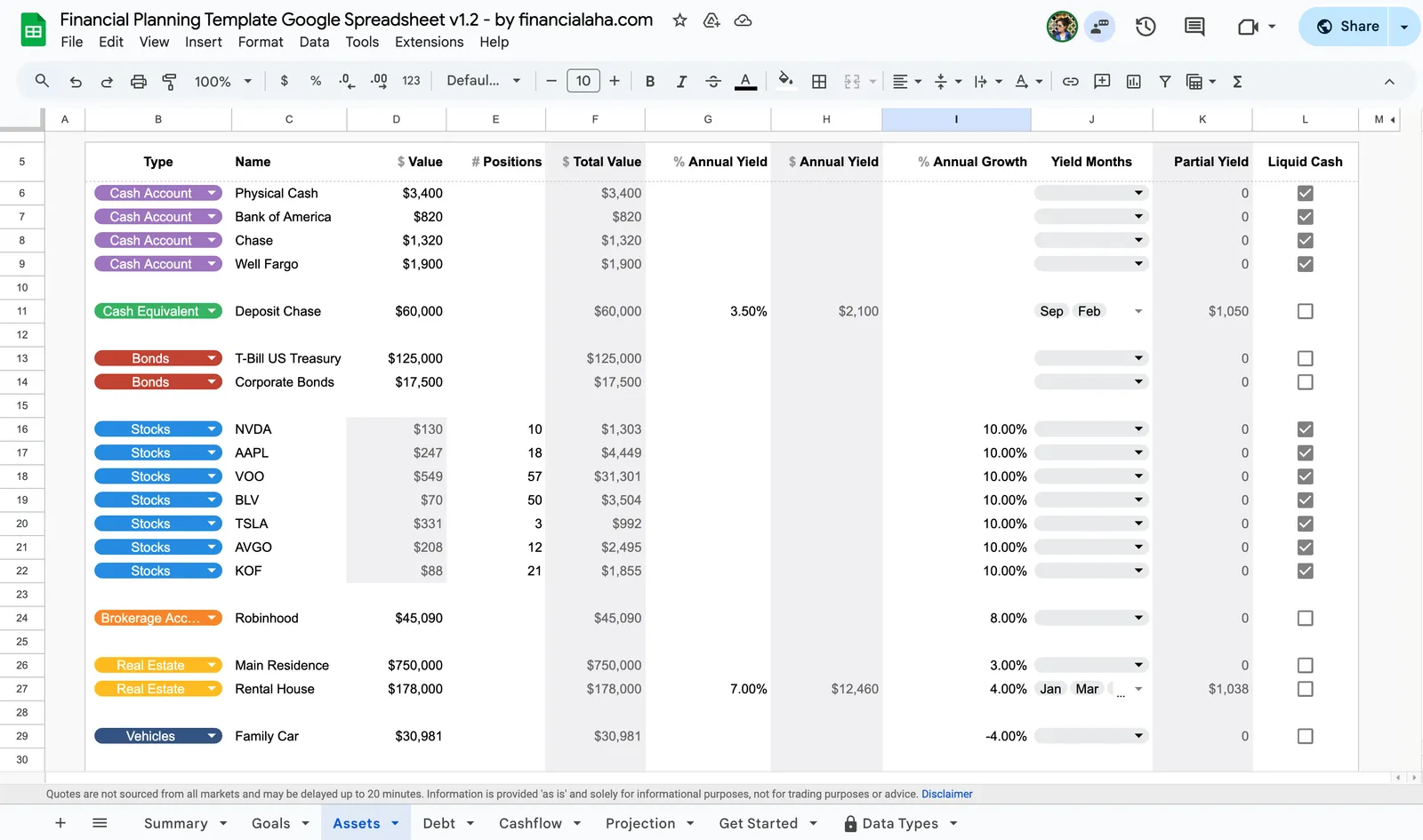
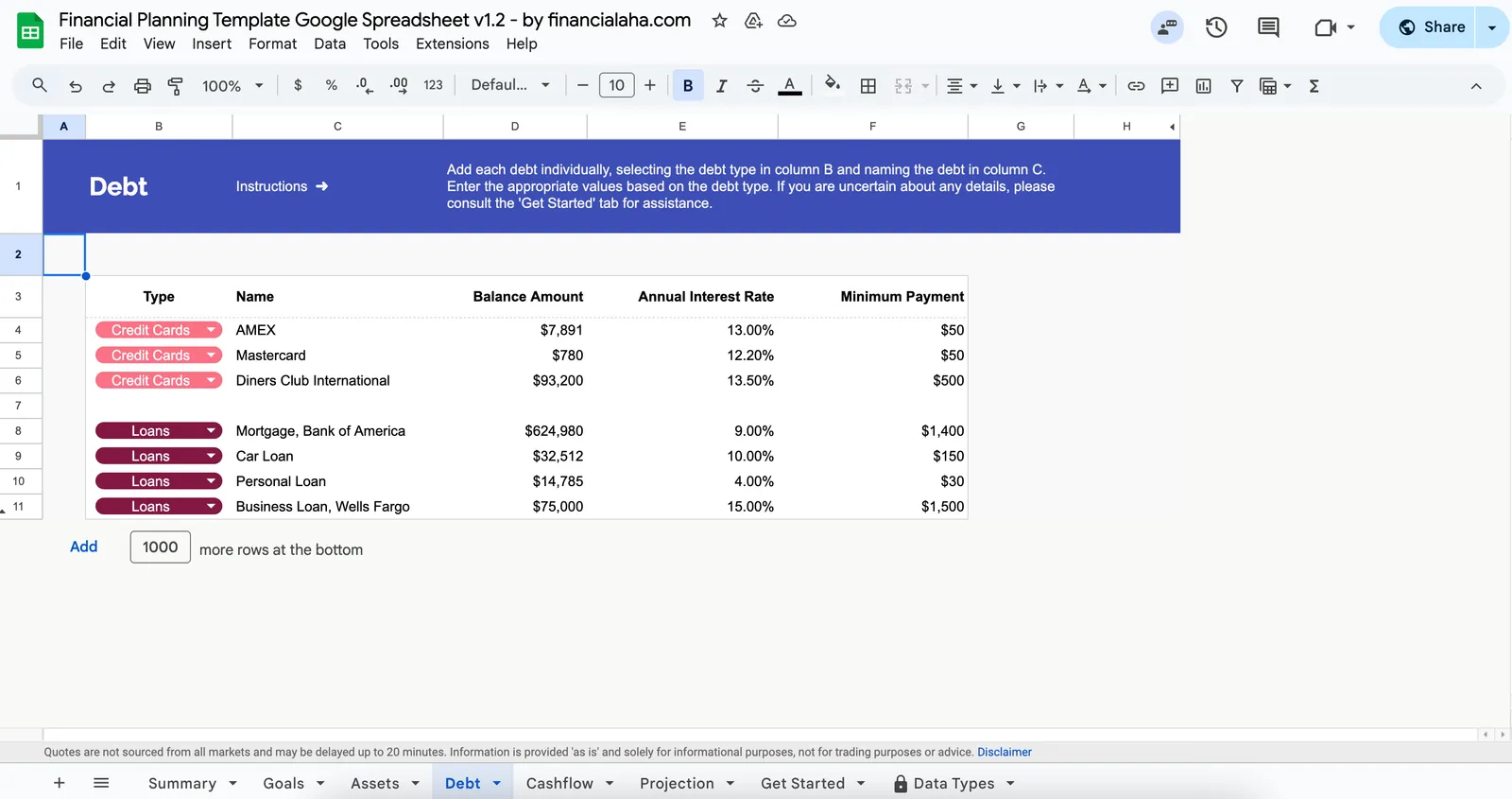
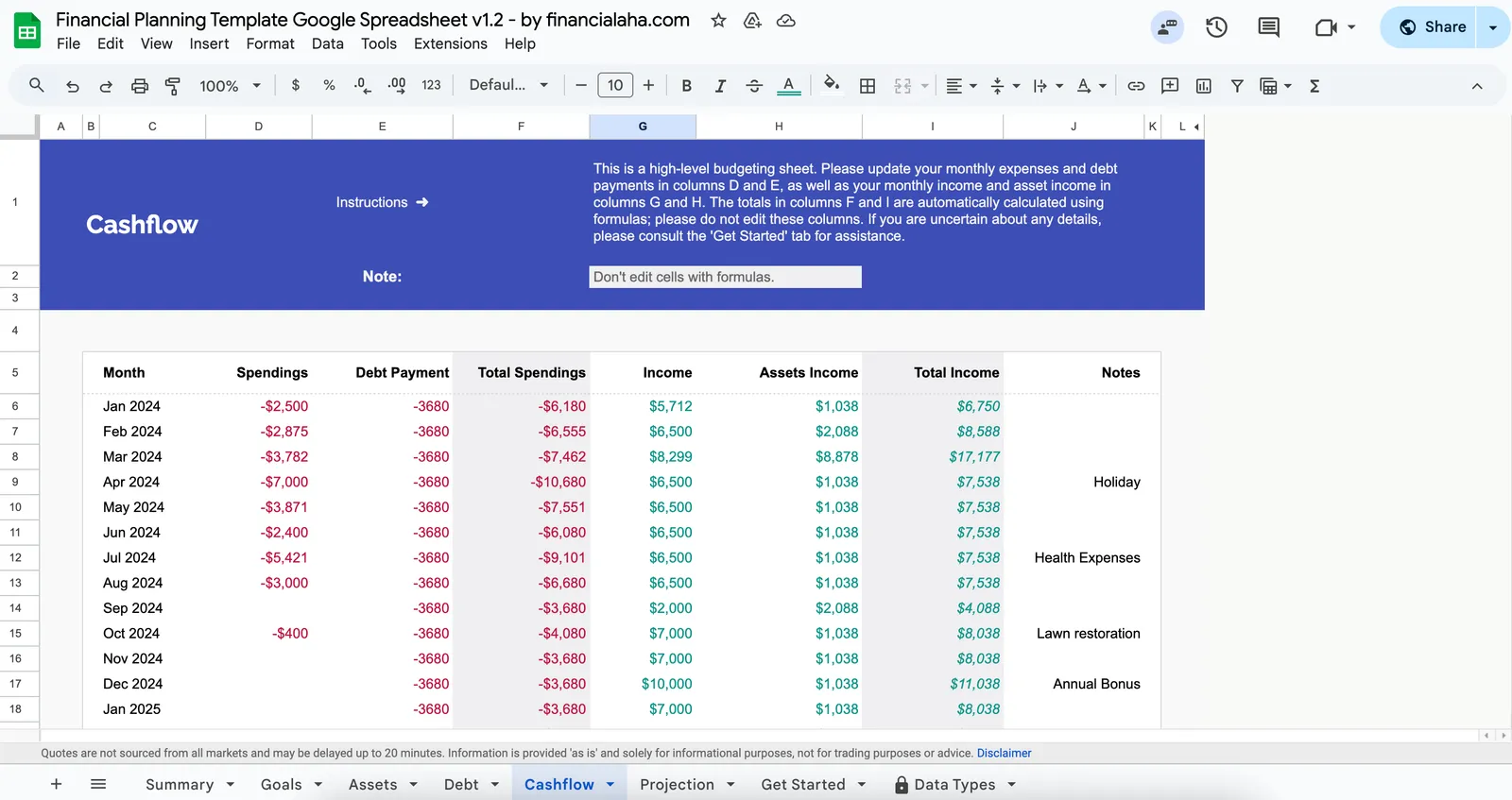
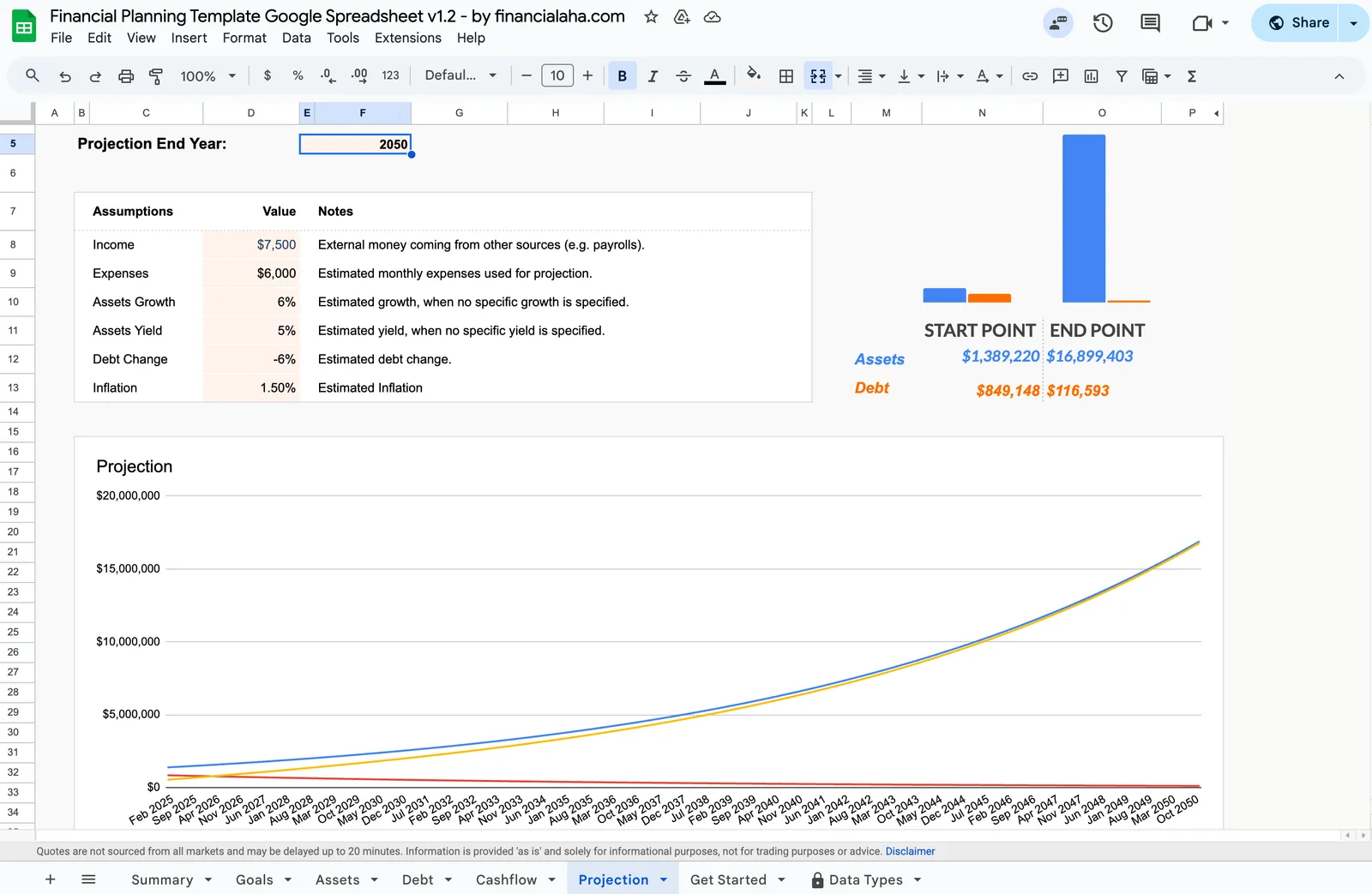
Complete financial overview with net worth and goals
Set and track progress toward financial milestones
Track all your assets in one place
Monitor and plan debt repayment
Visualize your income vs spending over time
Project your financial future
Common Questions
Financial Planning Template for Canada - FAQ
Should I prioritize TFSA or RRSP?
This depends on your current and expected future tax rate. If you expect to be in a higher bracket in retirement, TFSA may be better since withdrawals are tax-free. If you're in a high bracket now, RRSP contributions provide a larger immediate tax deduction. Many Canadians contribute to both. The template helps track contributions to each.
Can I track RESP grants and contributions?
Yes. Add the RESP with both your contributions and the Canada Education Savings Grant (CESG) amounts. The government matches 20% on the first $2,500 contributed annually per child (up to $500/year in grants, $7,200 lifetime). Tracking this ensures you're capturing available grant money.
Does this replace a financial adviser?
The template organizes your financial data - it doesn't provide personalized advice. For complex situations like tax optimization, estate planning, or insurance needs, a fee-only financial planner can provide guidance. Having your information organized makes those conversations more productive.
How do I handle the FHSA?
Add the FHSA as an account in the template. Track your $8,000 annual and $40,000 lifetime contribution limits. Since contributions are tax-deductible, note the expected tax refund - some people direct their RRSP/FHSA refund back into savings as part of their plan.
Can I plan for both spouses?
Yes. Add accounts for both spouses. This is especially useful for spousal RRSP planning (where the higher-income spouse contributes to the lower-income spouse's RRSP for future income splitting) and for ensuring both partners use their TFSA room.
Can't find the answer you're looking for? Contact our team
Explore More
Free Tools for Canada
Ready to get started?
Download instantly and start managing your finances, or contact us to design a custom template package for your needs.
Tax rules, rates, and contribution limits change, and official publications can themselves lag behind the law in force. We review these figures on a best-effort basis against sources we consider authoritative, but we cannot guarantee they are current, complete, or that better sources do not exist, and nothing here is tax, legal, or financial advice. For decisions, the relevant government authority is the reference.