Hong Kong
Monthly Budget Template for Hong Kong
Track your income in HKD, manage MPF contributions, and everyday expenses - all in a Google Sheets template you own.
In Depth
A 15% Tax Cap, 5% MPF, and the Housing Cost That Overshadows Both
Hong Kong's salaries tax system caps the effective rate at 15% of net assessable income (after deductions) through the standard rate mechanism. Progressive rates of 2%, 6%, 10%, 14%, and 17% apply to net income in bands, but the 15% standard rate on total net income kicks in whenever it produces a lower figure. There is no VAT, no capital gains tax, no dividend tax, and no estate duty. This makes Hong Kong one of the lightest personal tax environments among developed economies - and means the gap between gross and net salary is unusually narrow.
The Mandatory Provident Fund requires 5% from both employer and employee, each capped at HKD 1,500/month on maximum relevant income of HKD 30,000. For someone earning HKD 60,000/month, the mandatory MPF contribution is still just HKD 1,500 - effectively 2.5% of actual income. Tax-Deductible Voluntary Contributions (TVC) of up to HKD 60,000/year offer a way to save more while reducing salaries tax liability. The MPF balance is locked until age 65 in most cases, making it a long-term asset rather than accessible savings.
Where Hong Kong budgets come under the most pressure is housing. Property stamp duty tiers add 1.5% to 4.25% of the purchase price for permanent residents buying their first home, with higher rates for non-first-time buyers and non-permanent residents. Rent or mortgage payments frequently consume 40-50% of household income even for well-paid professionals. The result is that despite low taxes, disposable income after housing can be tighter than salary figures might suggest.
Hong Kong
Budgeting in Hong Kong: What's Different
Hong Kong's financial system features low taxes, mandatory provident fund contributions, and a high cost of living. Understanding these shapes how you approach budgeting.
Low tax rates mean more take-home pay
Hong Kong has one of the world's lowest tax regimes. Salaries tax is charged at progressive rates (2-17%) or a standard rate of 15% on net assessable income, whichever is lower. There is no sales tax, VAT, or capital gains tax. This means a larger portion of your gross salary becomes take-home pay compared to most other developed economies.
MPF contributions are mandatory but modest
The Mandatory Provident Fund requires 5% employee contribution and 5% employer contribution, each capped at HKD 1,500/month (based on maximum relevant income of HKD 30,000). For higher earners, the MPF contribution is a small percentage of total income. Budgeting from your after-MPF salary accounts for this deduction.
No capital gains tax simplifies investment tracking
Hong Kong does not impose capital gains tax, dividend tax, or estate duty. Investment returns are yours in full. For budgeting purposes, this means investment income doesn't create a separate tax complication - a simpler picture than many other financial centres.
Housing dominates Hong Kong budgets
Hong Kong is consistently ranked among the most expensive housing markets globally. Rent often consumes 30-50% of income, even for well-paid professionals. Whether renting or paying a mortgage, housing is typically the single largest budget category by a wide margin. Tracking this alongside other expenses helps see the full cost-of-living picture.
Property stamp duty adds significant purchase costs
Hong Kong levies Ad Valorem Stamp Duty (AVD) on property purchases at tiered rates from 1.5% (properties up to HKD 3 million) to 4.25% (above HKD 21.739 million) for residential properties acquired by Hong Kong permanent residents. Non-first-time buyers previously faced a flat 15% rate, though this was adjusted in recent policy changes. Buyer's Stamp Duty of 15% for non-permanent residents adds further cost. These duties are a substantial upfront expense on top of already high property prices.
Obtener la Plantilla
Primeros Pasos
Configuring the Budget Template for Hong Kong
Switch the currency to HKD
There's a currency picker at the top of the dashboard - switch it to HKD. The calculations stay the same - only the display changes.
Enter your after-MPF salary
Use the amount actually credited to your bank account after the 5% MPF employee contribution. Your payslip shows the net amount. If you have other income (bonuses, investments), add those as separate lines.
Customize expense categories for Hong Kong
Add categories for rent or mortgage, management fees, utilities (CLP/HK Electric, Towngas, water), mobile and broadband, MTR/transport, groceries, dining out (a significant category for many Hong Kong residents), helper salary (if applicable), and insurance premiums.
Set aside money for annual tax payment
Hong Kong assesses salaries tax annually with bills typically issued in January-April. Since tax isn't withheld from your monthly pay (unlike many countries), setting aside a monthly amount for the annual tax bill is important. The IRD provides provisional tax estimates.
Plan for Hong Kong-specific expenses
Account for annual expenses like rates and government rent (billed quarterly), tax payments, insurance renewals, and travel. Some expenses are seasonal - higher electricity in summer due to air conditioning, and potentially higher spending during Chinese New Year and holiday periods.
Véalo en Acción
Así es la plantilla
Explora la plantilla para ver cómo gestiona el presupuesto, las categorías y el seguimiento de gastos - todo adaptable a tu configuración financiera local.
- Selector de moneda integrado
- Categorías personalizables
- Seguimiento de presupuesto vs. real
- Gráficos y resúmenes visuales

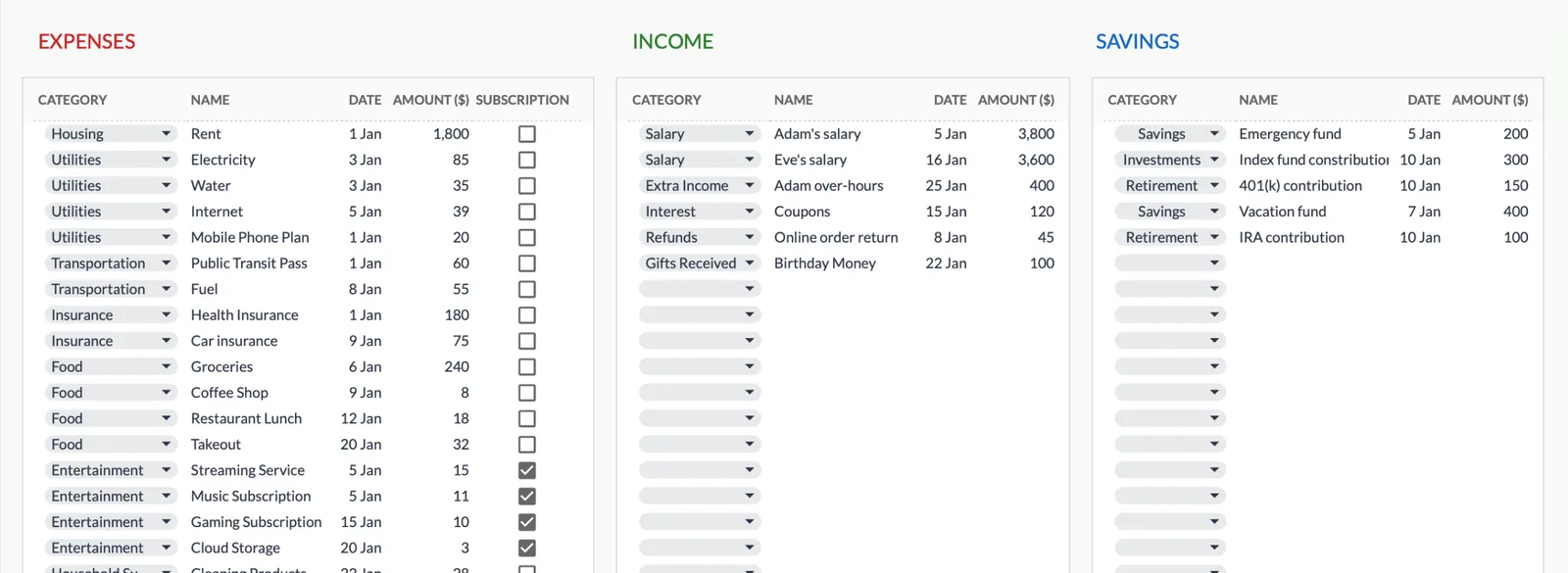
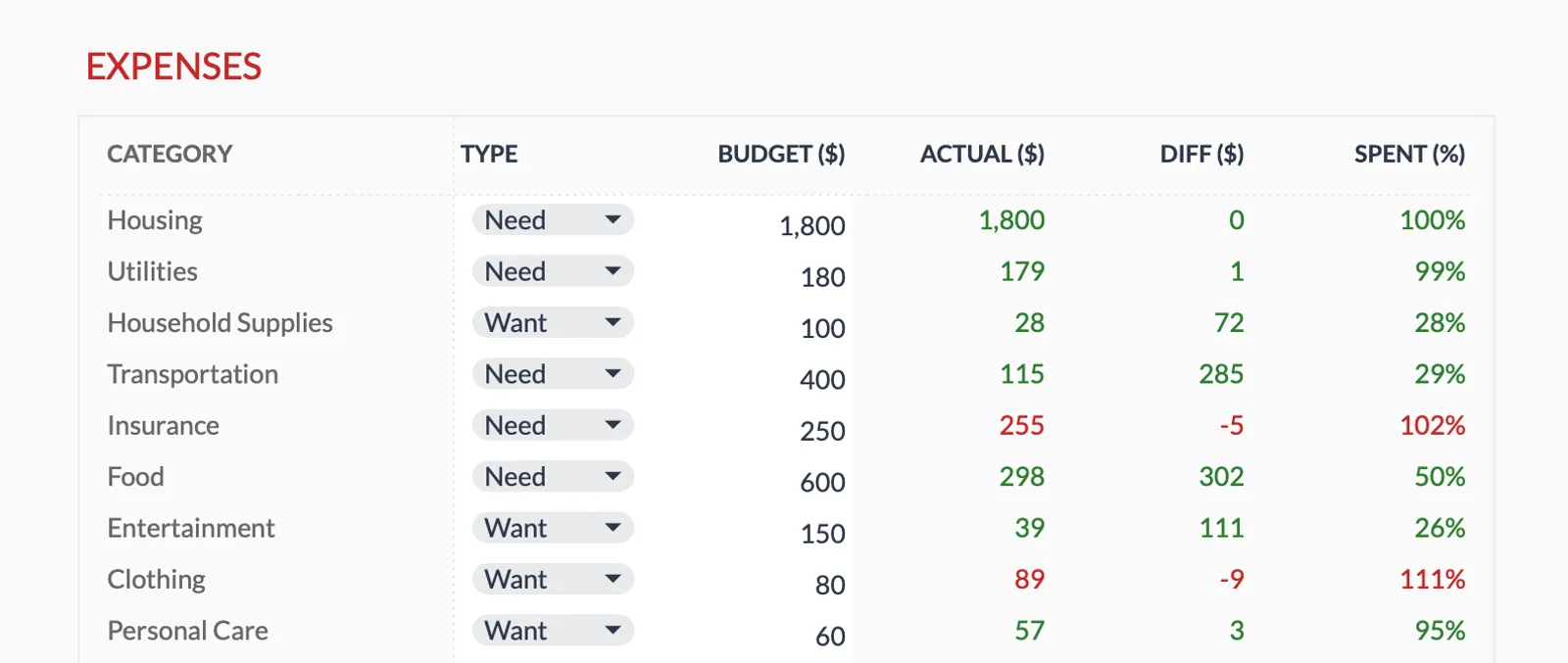
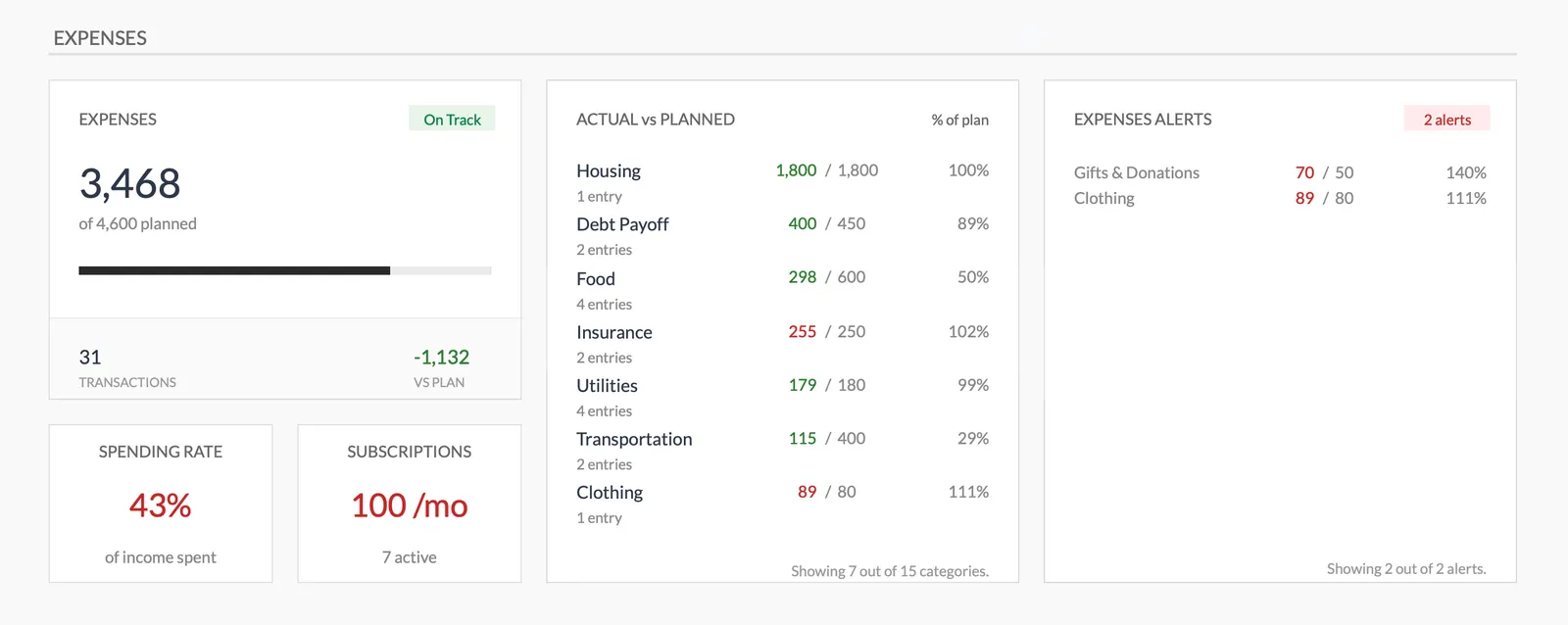
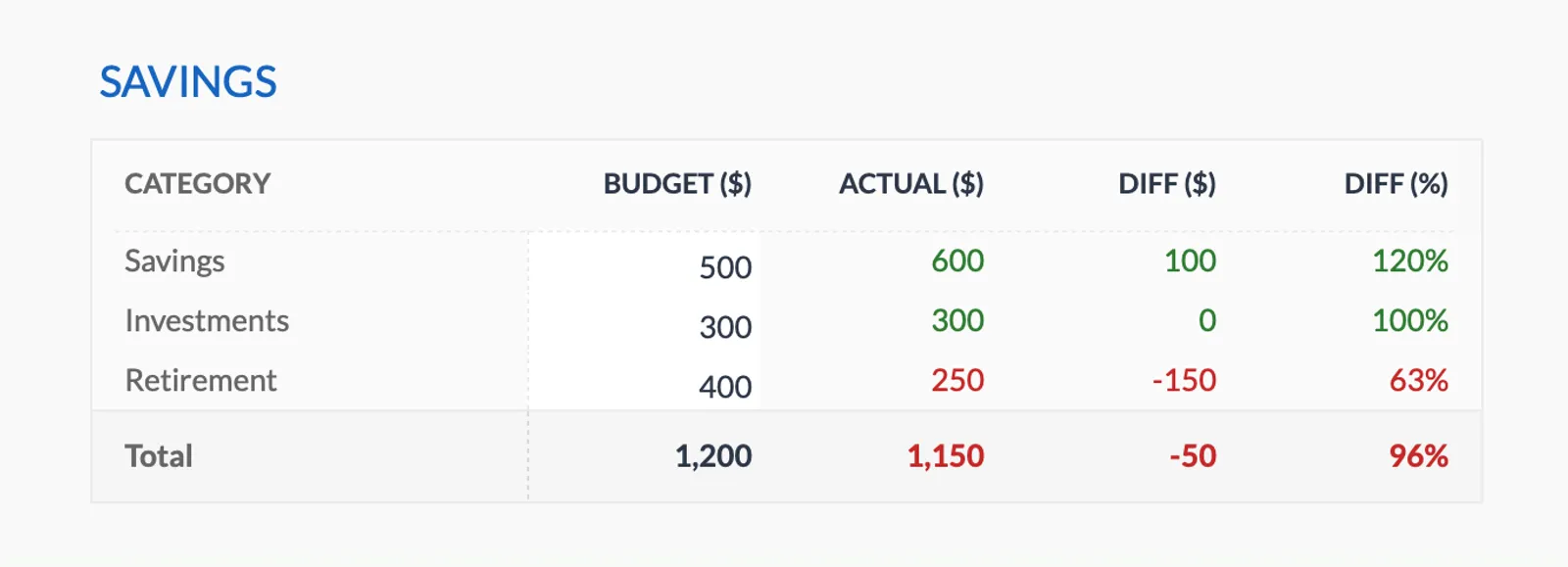
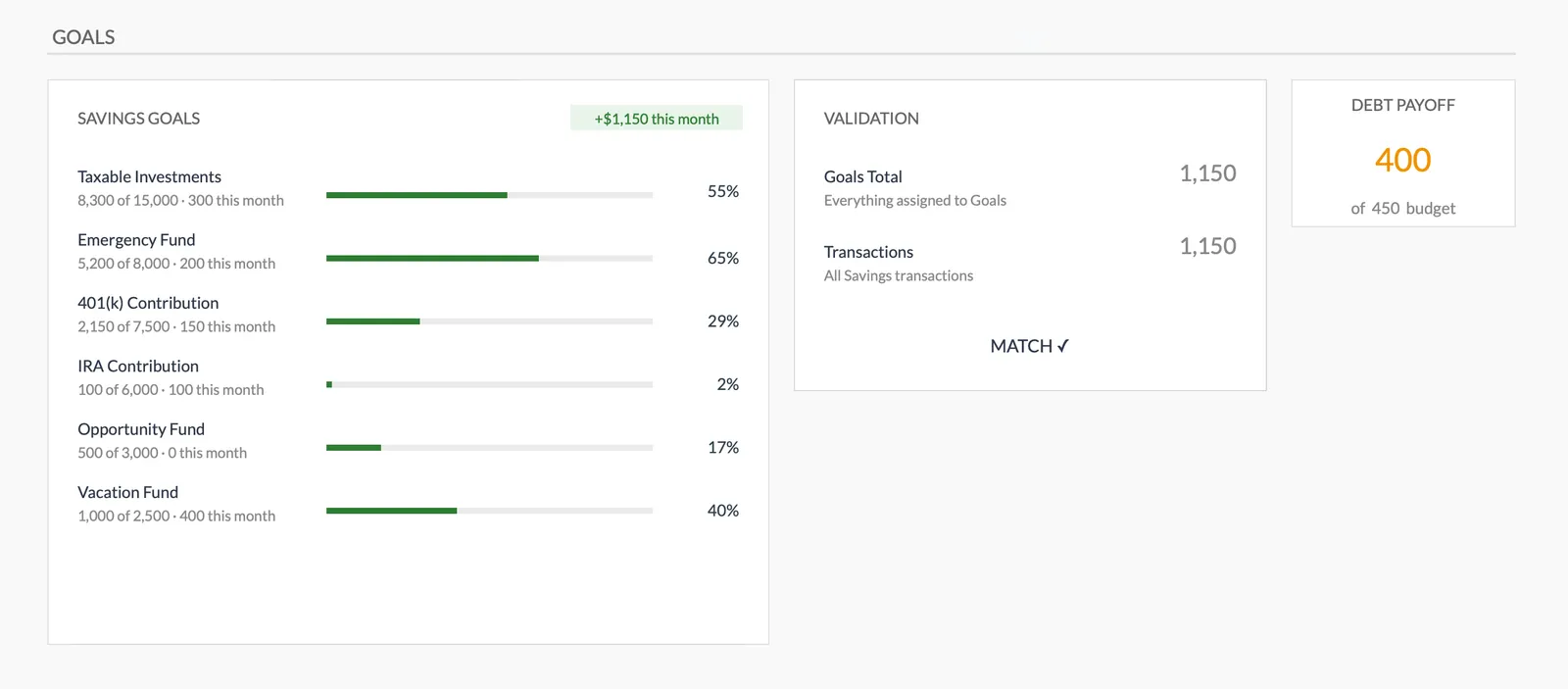
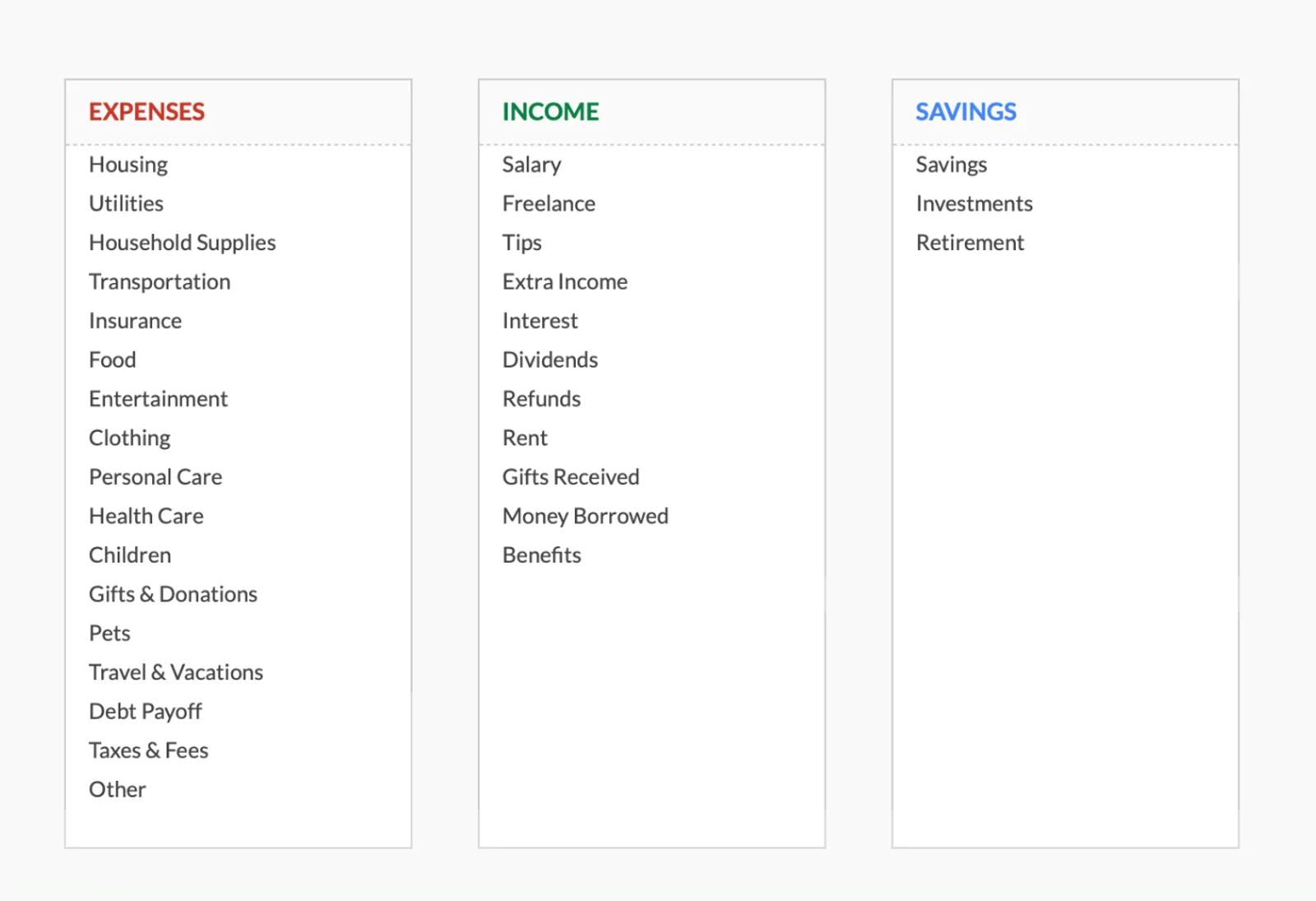
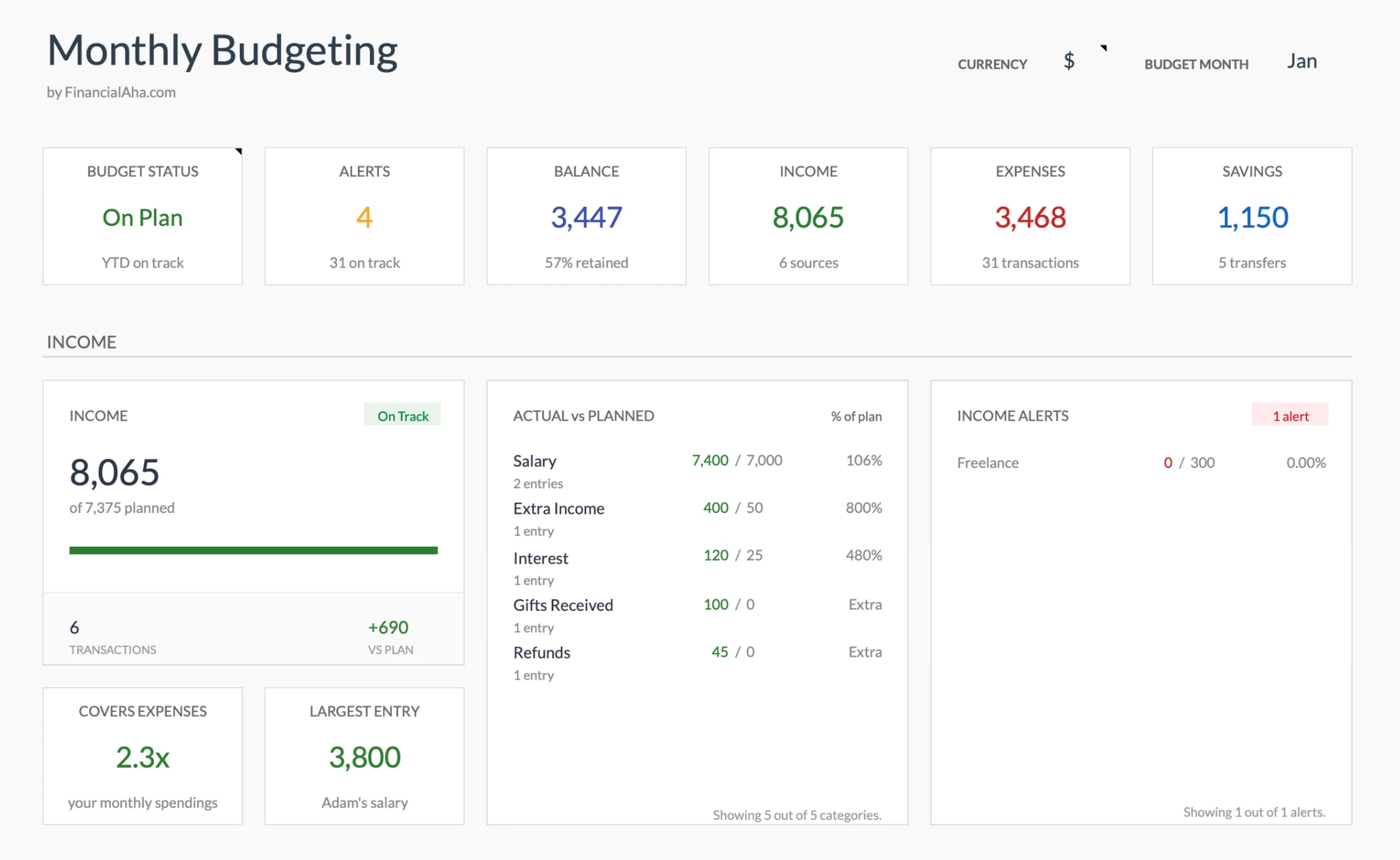
Dashboard with income, expenses, and savings at a glance
Log transactions with automatic categorization
Set targets per category and track actual spending
Visual breakdown of where your money goes
Track savings goals alongside your budget
Monitor progress toward financial goals
Fully customizable expense, income, and savings categories
Preguntas Frecuentes
Monthly Budget Template for Hong Kong - FAQ
Does this template use Hong Kong dollars?
Yes - select HKD from the currency dropdown in the header. The math applies in any currency, so the formulas don't change.
Should I track MPF in my budget?
MPF employee contributions (5% capped at HKD 1,500/month) are deducted before your take-home pay. Just use your net salary as income. If you make voluntary MPF contributions (TVC), track those as a budget category since they come from your disposable income.
How do I budget for annual tax payments?
Estimate your annual salaries tax (use the IRD tax calculator or last year's assessment) and divide by 12. Set aside that amount monthly. Hong Kong allows payment by instalments - the first provisional payment is typically due in January.
Can I track helper salary and expenses?
Yes. If you employ a domestic helper, add their salary, food allowance, insurance, and visa-related costs as budget categories. These are significant monthly expenses for many Hong Kong households.
Is there a Hong Kong-specific version?
The template is the same worldwide - designed to be customizable. This page explains how to adapt it for Hong Kong finances. You can rename categories and set everything up to match your specific situation.
How does this compare to Hong Kong banking apps like ZA Bank or Mox?
Banking apps offer automated spending tracking for transactions within their ecosystem. This template covers all spending regardless of payment method, offers more customization, and keeps data in your own Google Drive. Manual entry requires more effort but provides a more complete view.
Can't find the answer you're looking for? Contact our team
¿Listo para comenzar?
Descargue instantáneamente y comience a gestionar sus finanzas, o contáctenos para diseñar un paquete de plantillas personalizado para sus necesidades.