Retirement Planning Template
Retirement Planning Template for Pre-Retirees
Assess retirement readiness, model income scenarios, and plan the transition from working to retired - built for the critical 5-10 years before retirement.
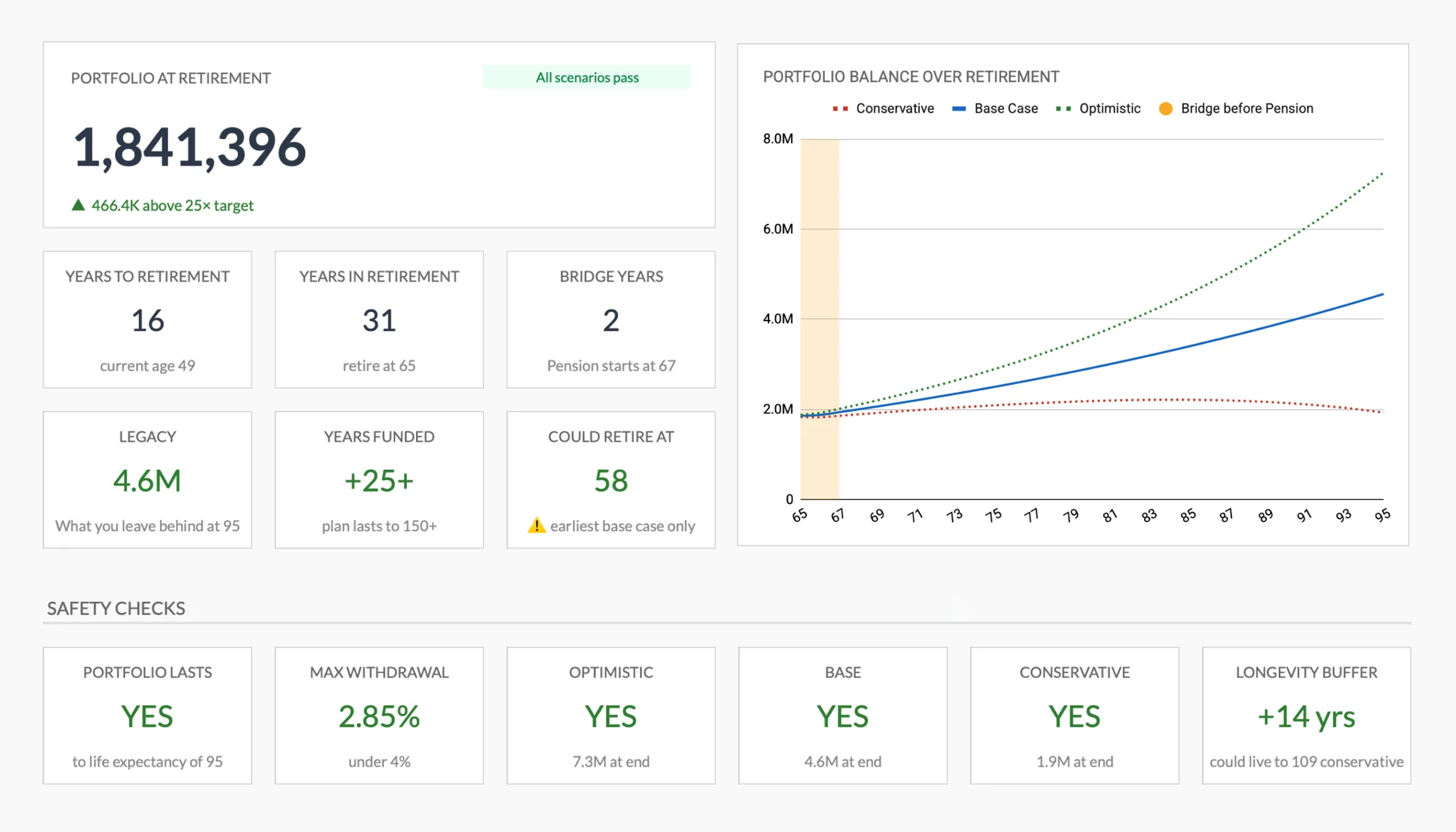
In Depth
The Final Stretch - Planning in the Five Years Before Retirement
The five to ten years before retirement represent the period with the highest leverage for course corrections. Small adjustments during this window - an extra year of work, a modest reduction in planned spending, or a shift in asset allocation - can have outsized effects on retirement sustainability. One additional working year means another year of savings contributions, one fewer year of withdrawals, and a higher Social Security benefit. For someone close to the boundary between comfortable and tight, these adjustments can change the outlook significantly.
Healthcare planning before Medicare eligibility is a practical concern that affects retirement timing for many pre-retirees. The gap between leaving employer-sponsored insurance and qualifying for Medicare at 65 must be bridged with individual coverage, COBRA, or a spouse's plan. Marketplace insurance costs depend on household income, which creates a connection between withdrawal strategy and insurance premiums. Some pre-retirees find that the cost of two to three years of private health insurance is the factor that determines whether they can retire at 62 or need to wait until 65.
The sequence in which retirement income sources activate matters more than many pre-retirees realize. Social Security, pensions, required minimum distributions, and portfolio withdrawals each have optimal starting points that depend on the others. Starting Social Security at 62 provides income immediately but locks in a permanently reduced benefit. Delaying until 70 maximizes the monthly check but requires drawing more from savings in the interim. Mapping out when each income source begins - and what the household looks like in each year of the transition - is where a planning tool proves its value.
The Challenge
Why the Pre-Retirement Phase Is Critical
The 5-10 years before retirement are the most important planning window. Decisions about timing, savings, Social Security, and spending set the trajectory for everything that follows.
Retirement readiness is hard to assess
Is your portfolio large enough? Will your income cover expenses? Can you maintain your lifestyle? These questions require modeling, not guesswork.
Small timing changes have big impacts
Working one or two more years can dramatically improve retirement security - additional savings, fewer withdrawal years, and higher Social Security. But is it necessary?
The transition plan needs to be specific
Healthcare before Medicare, bridging the income gap, starting Social Security, beginning withdrawals - the first years of retirement require a specific, month-by-month plan.
Catch-up contributions create urgency
After 50, catch-up contribution limits for 401(k) and IRA allow additional tax-advantaged savings. Maximizing these in the final working years can significantly boost retirement readiness.
Ready to take control of your pre-retiree finances?
What You Get
Planning Features for the Pre-Retirement Years
Retirement readiness assessment
Compare your projected retirement income against expected expenses. See whether you have a surplus, a gap, or are right on target.
Retirement date scenario modeler
Compare retiring in 1 year, 3 years, or 5 years. See how each timeline affects portfolio size, income, and long-term sustainability.
Income transition planner
Map the shift from employment income to retirement income. See when each source starts and whether there are gaps to bridge.
Social Security timing analysis
Model claiming at 62, full retirement age, and 70. See the breakeven point and lifetime income difference for each option.
Healthcare bridge cost estimator
If retiring before 65, estimate healthcare costs between retirement and Medicare eligibility.
Final working years optimization
See the impact of maximizing catch-up contributions, reducing spending, or making other changes in the remaining working years.
See It In Action
What the template looks like
Browse through the template to see how it handles retirement projections, milestone tracking, and income planning.
- Retirement overview dashboard
- Savings growth projections
- Retirement milestone tracking
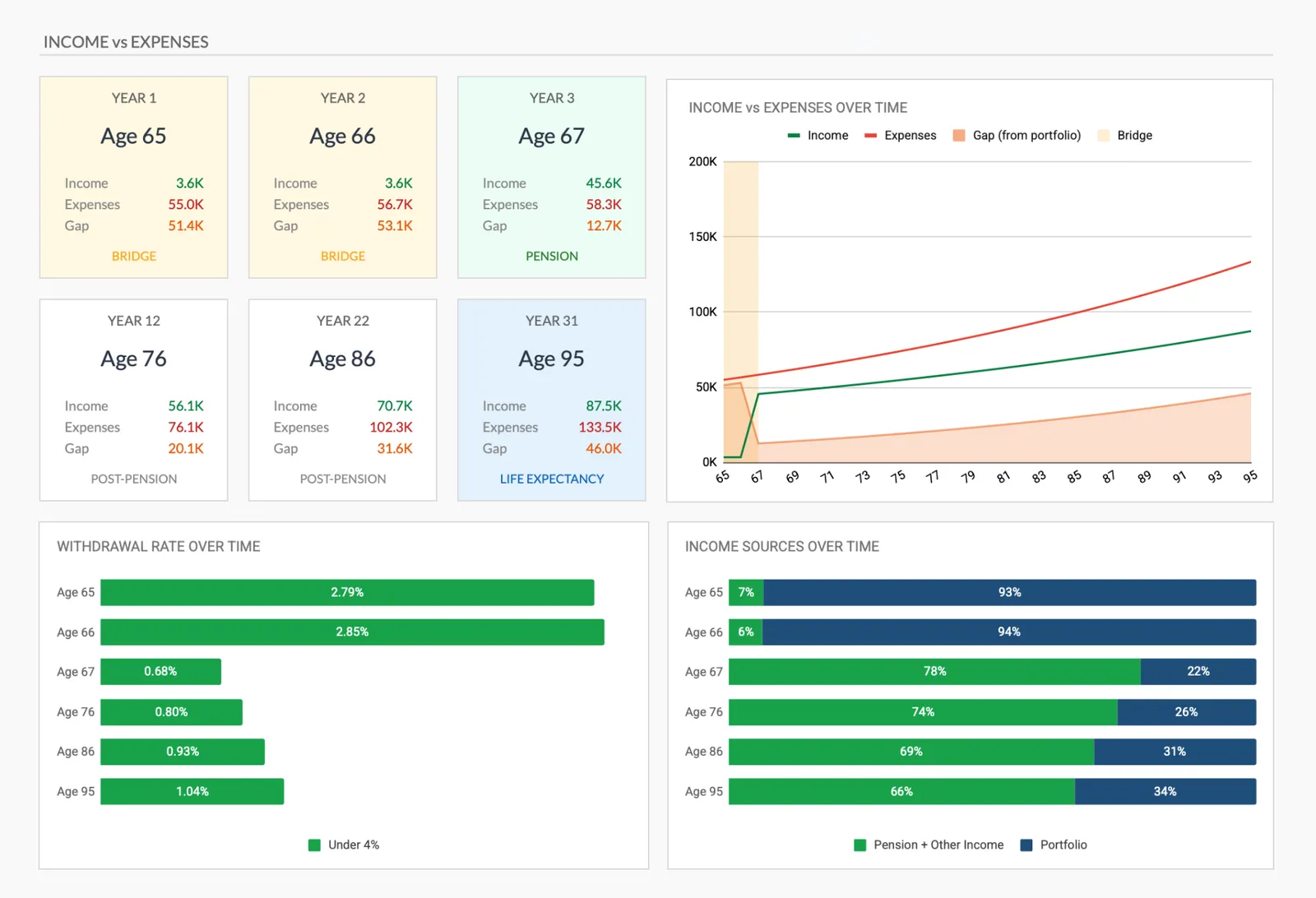
- Income vs expenses analysis
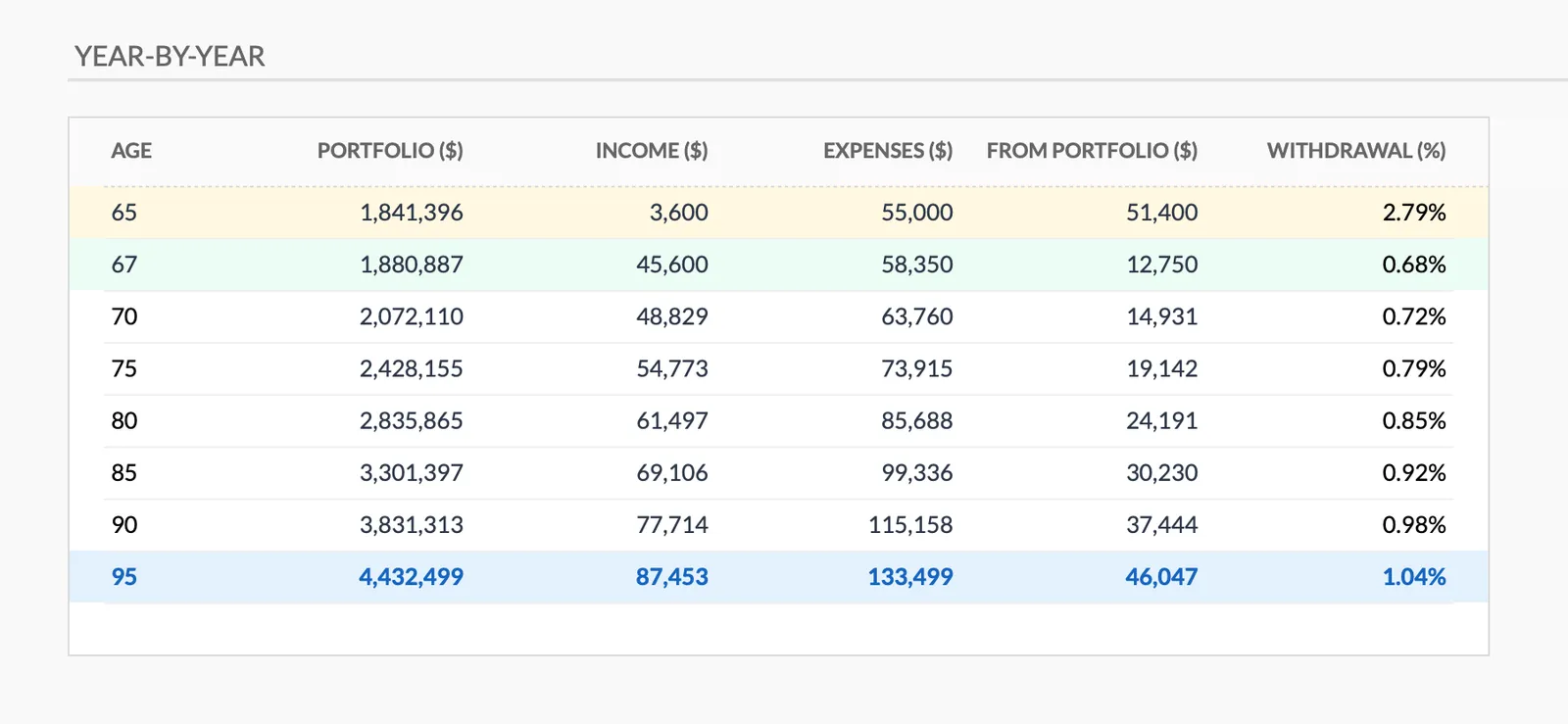
- Year-by-year projection
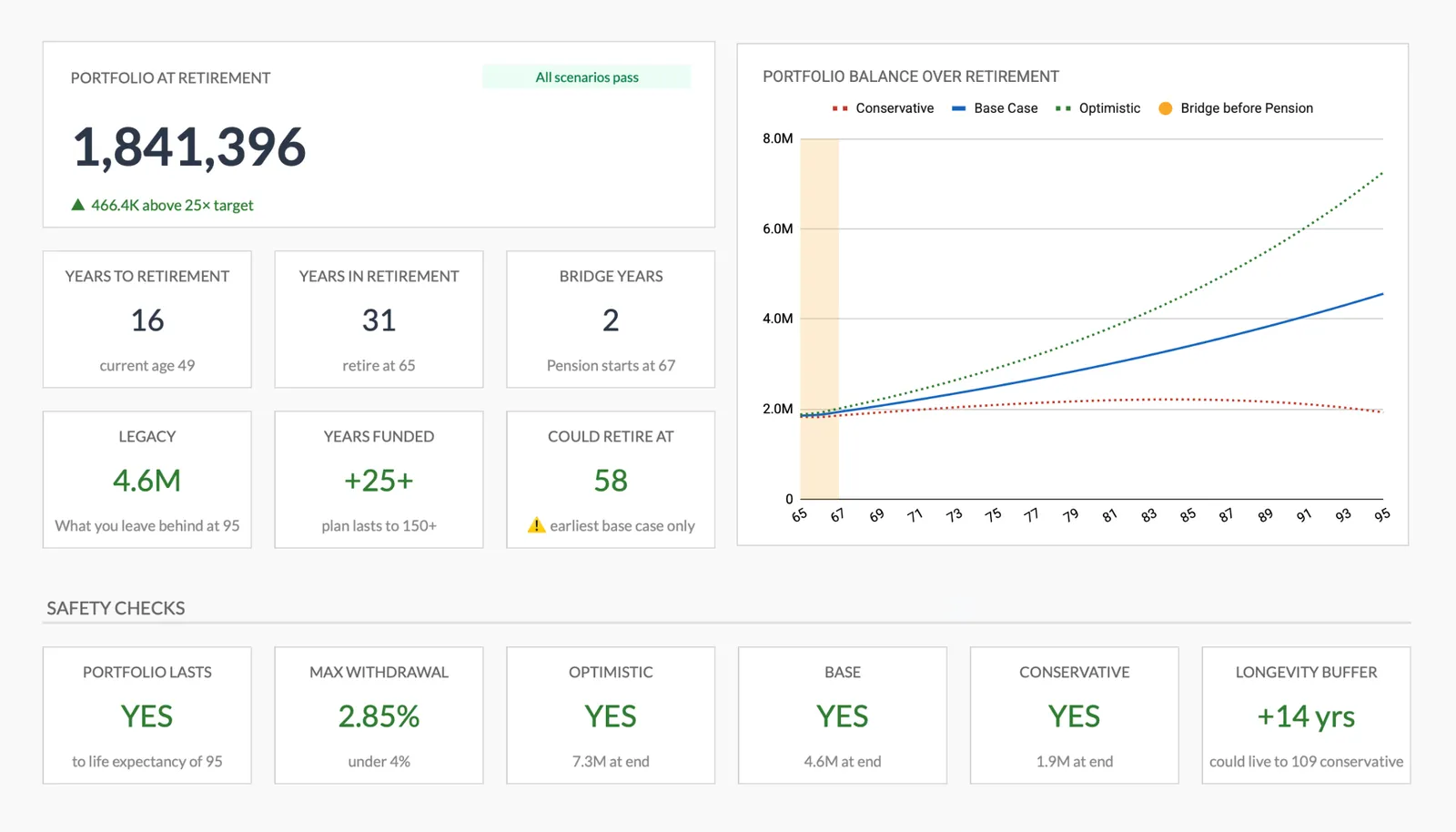
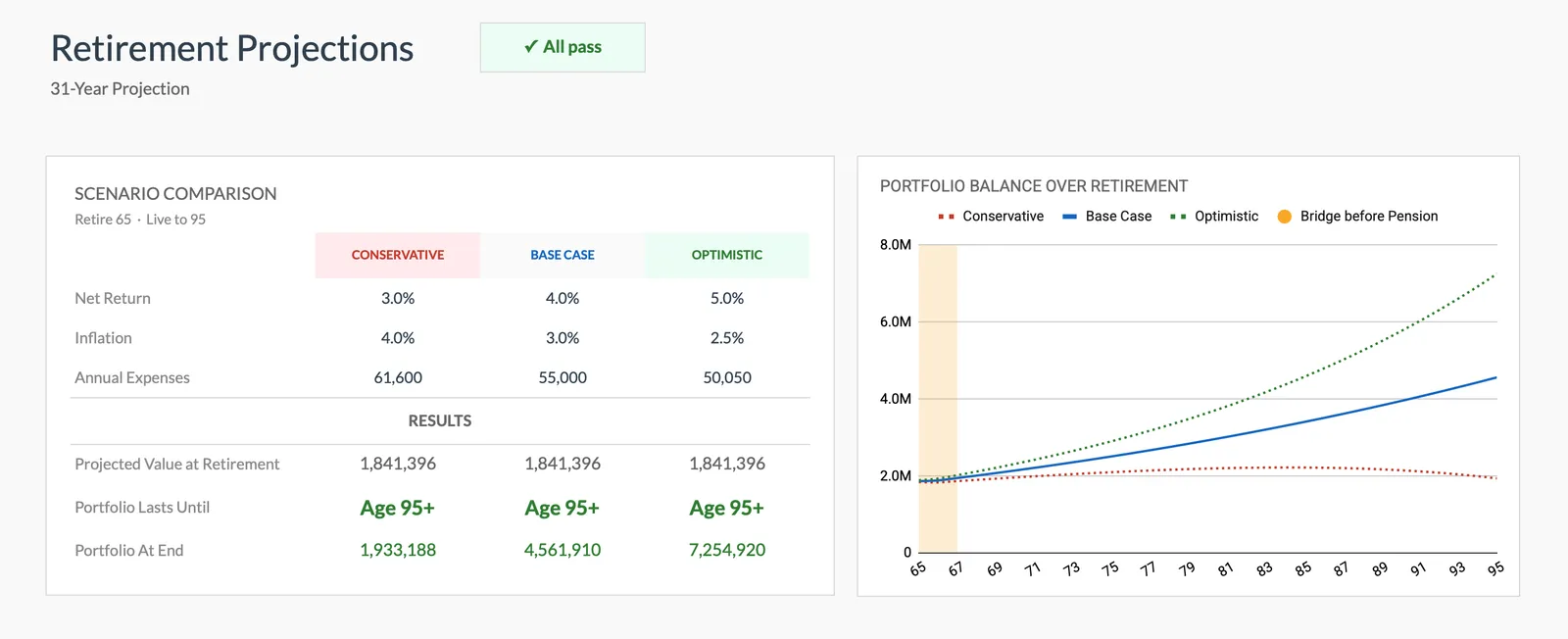
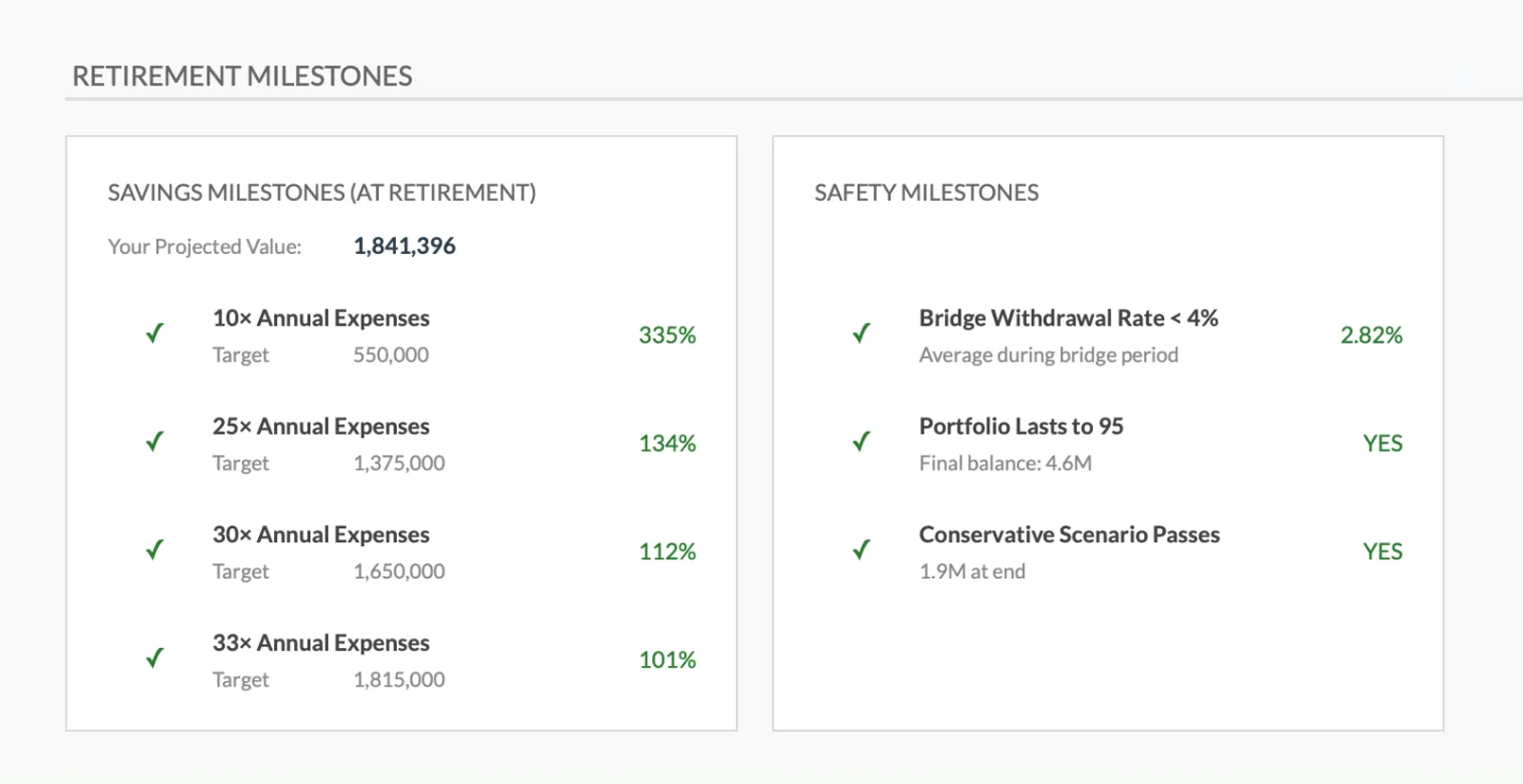
Complete retirement overview with projections
Project your retirement savings growth
Track progress toward retirement goals
Plan your retirement income against expenses
Detailed year-by-year retirement projection
Getting Started
Begin Your Pre-Retirement Countdown Plan
Assess your current position
Enter current portfolio balances, expected Social Security benefits, pension details if applicable, and other retirement income sources.
Define your expected retirement spending
Be specific about what retirement life costs. Include housing, healthcare, travel, and daily living expenses.
Run the readiness assessment
See whether your current trajectory supports your retirement plan. Identify any gaps between projected income and spending.
Model different retirement dates
Test various dates. Sometimes working 1-2 more years closes a significant gap. Other times, the plan already works.
Create your transition plan
Map the first 3 years of retirement specifically - when each income source starts, what healthcare costs, and where withdrawals come from.
Common Questions
Retirement Planning for Pre-Retirees - FAQ
How do I know if I am ready to retire?
The readiness assessment compares projected income to expected expenses. If income covers expenses under conservative assumptions with margin for surprises, readiness is strong.
Should I wait for full retirement age for Social Security?
The template models different claiming ages. Delayed claiming increases monthly benefits by roughly 8% per year between 62 and 70. Your health, other income, and needs affect the decision.
What about healthcare costs before Medicare?
If retiring before 65, estimate marketplace insurance costs. This is often $500-$1,500+ per month for a couple and is a significant factor in retirement timing.
How much difference does one more year of work make?
One additional year means more savings, one less year of withdrawals, and higher Social Security. The template quantifies this - sometimes the impact is surprisingly large.
What if I have a pension?
Enter pension details including amount, start date, and COLA provisions. Pension income significantly changes the retirement equation because it provides guaranteed income.
Can I model part-time work in early retirement?
Yes. Add part-time income for the first few years of retirement. See how even modest earnings reduce the withdrawal rate and extend portfolio longevity.
Can't find the answer you're looking for? Contact our team
Start retirement planning as a pre-retiree
One-time purchase. No subscription. Your financial data stays in your Google Drive.