Retirement Planning Template
Retirement Planning Template for Military
Plan for military retirement with pension modeling, TSP projections, VA benefit tracking, and second-career income scenarios.
In Depth
Military Pensions, the TSP, and Second-Career Planning
Military retirement differs from civilian retirement in ways that create both advantages and unique planning challenges. A service member who retires after 20 years under the legacy High-3 system receives 50% of the average of their highest 36 months of base pay - not total compensation (BAH and BAS are excluded from the pension calculation). An O-5 retiring at 20 years with a High-3 average of $10,000/month receives a $5,000/month pension. Under the Blended Retirement System (BRS), the multiplier is 40% at 20 years instead of 50%, but the government TSP match (up to 5% of base pay) and a possible continuation pay bonus partially offset the difference. Understanding which system applies and modeling the pension alongside TSP projections and second-career income is essential for realistic planning.
TSP management for military retirees parallels 401(k) planning in many ways but has distinctive features. The TSP's expense ratios are among the lowest available (roughly 0.04-0.06%), making it an exceptionally cost-effective accumulation vehicle. However, TSP withdrawals before age 59 and a half generally trigger a 10% early withdrawal penalty unless the member separated from service during or after the year they turned 55. For a service member retiring at 42, that creates a 13-year gap where TSP funds are not penalty-free accessible. Some retirees bridge this gap with pension income and second-career earnings, while others explore substantially equal periodic payments (72(t) distributions) to access TSP funds earlier. The Roth TSP option adds another dimension - contributions were taxed going in, so qualified withdrawals in retirement are tax-free.
VA disability compensation is a factor in military retirement planning that has no civilian parallel. A 50% disability rating provides roughly $1,075/month tax-free (2024 rate for a single veteran), while a 100% rating provides approximately $3,737/month. Because this income is not subject to federal or state income tax, its after-tax value is significantly higher than the face amount. For a retiree in the 22% federal bracket, $3,000/month in VA disability has the same purchasing power as roughly $3,850/month in taxable income. This tax-free income stream affects everything from withdrawal strategies for taxable accounts to Social Security claiming timing to Roth conversion planning.
The Challenge
Why Military Retirement Planning Has Unique Considerations
Military retirement can happen at 38 or 42, not 62 or 65. That creates a uniquely long retirement window with income sources and benefits that civilian planning tools do not address.
Pension starts decades before traditional retirement
A military pension at 40 is a powerful asset, but it may not cover full living expenses for 40+ years. Planning the gap between pension income and total needs is essential.
TSP needs a long-term strategy
The Thrift Savings Plan is a significant accumulation tool, but withdrawal timing, Roth versus traditional balance, and coordination with pension income requires deliberate planning.
VA benefits affect the financial picture
Disability compensation, healthcare benefits, education benefits, and home loan advantages all have financial value. Incorporating them into the retirement plan gives a more complete picture.
Second careers change the math
Most military retirees work a second career. Planning for this income - its duration, level, and eventual end - adds a layer that standard retirement planning misses.
Ready to take control of your military finances?
What You Get
Retirement Planning Tools for Military Careers
Military pension calculator
Model pension income based on years of service, pay grade, and retirement system (legacy, BRS, or redux). See monthly and annual pension amounts.
TSP projection modeler
Project TSP growth through second career contributions, investment returns, and catch-up contributions. Model withdrawal strategies.
VA benefit tracker
Track disability compensation, healthcare eligibility, and other VA benefits. Factor them into total retirement income.
Second career income modeling
Model income from post-military employment. See how this additional income affects savings, TSP growth, and overall retirement readiness.
Multi-phase retirement projection
Plan for phases - active duty to military retirement, second career, full retirement, and Social Security start. See income in each phase.
What-if scenarios
Compare different retirement points, second-career durations, TSP withdrawal ages, and Social Security claiming strategies.
See It In Action
What the template looks like
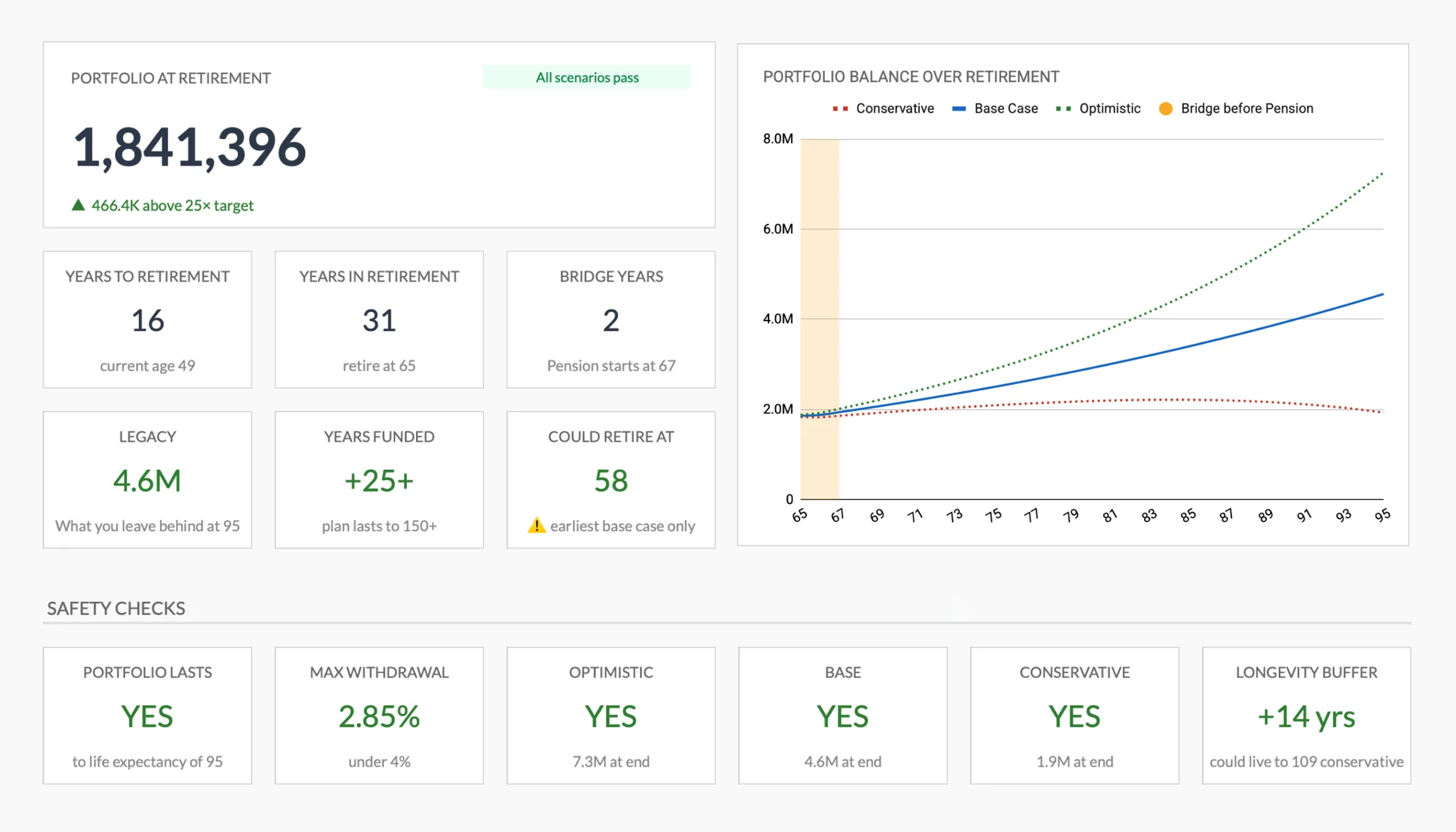
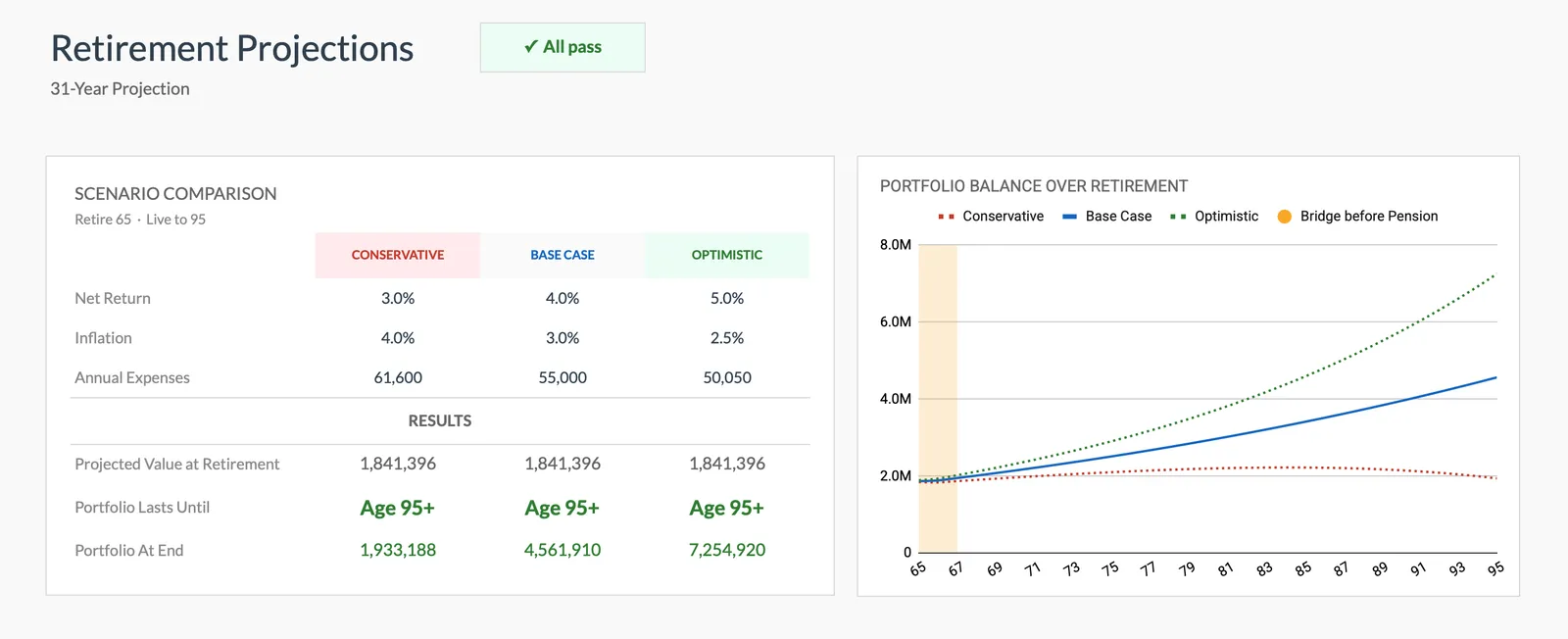
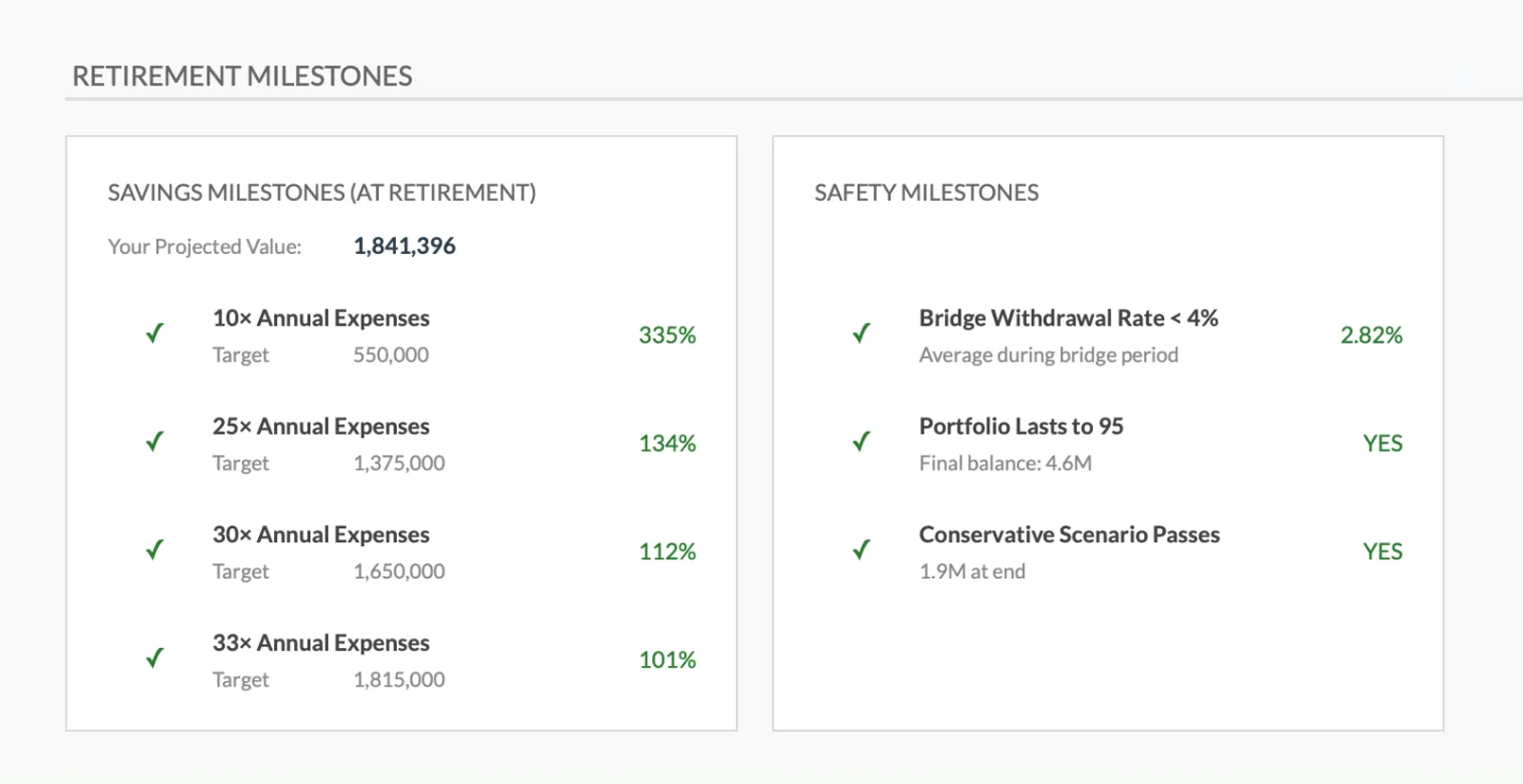
Browse through the template to see how it handles retirement projections, milestone tracking, and income planning.
- Retirement overview dashboard
- Savings growth projections
- Retirement milestone tracking
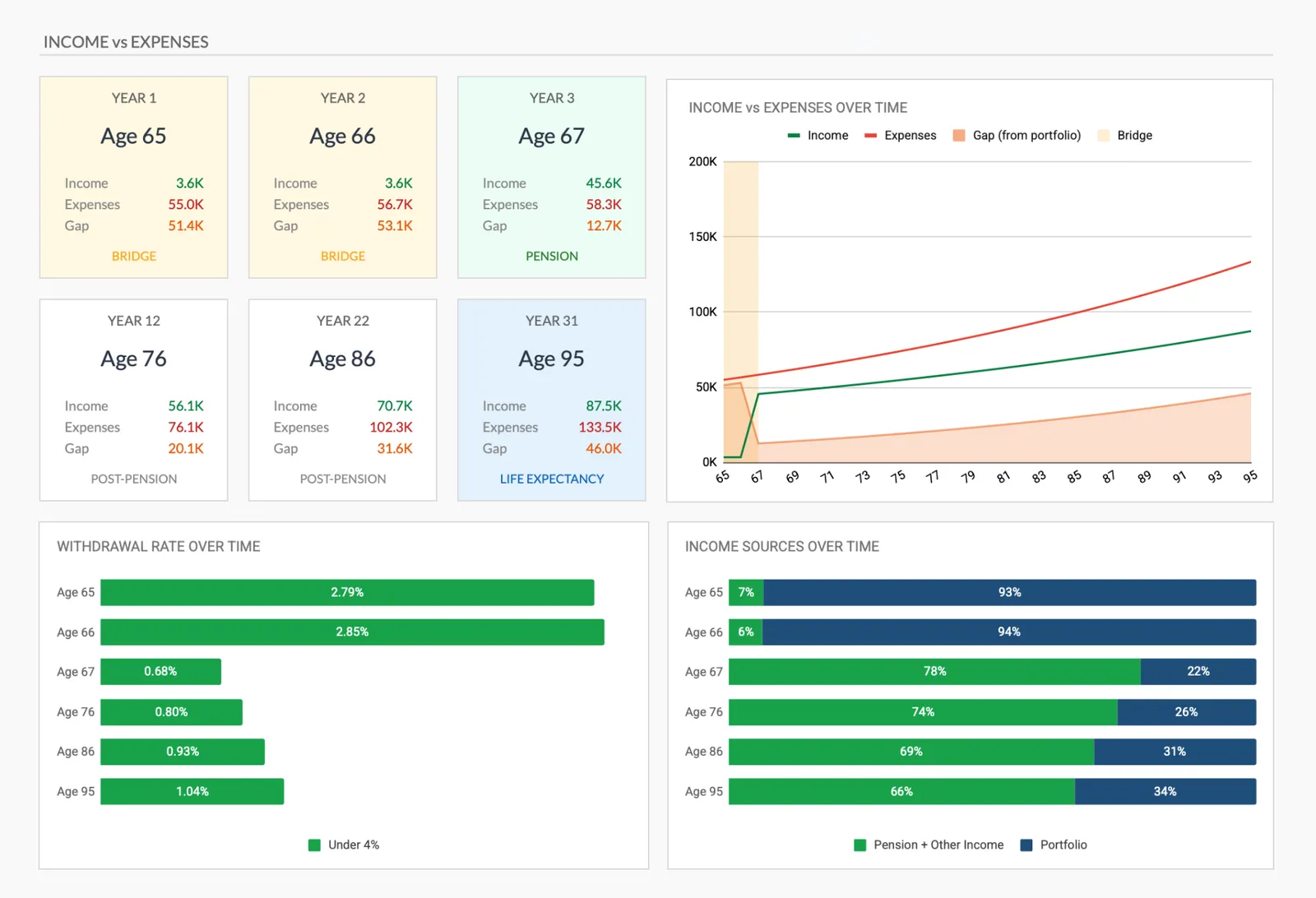
- Income vs expenses analysis
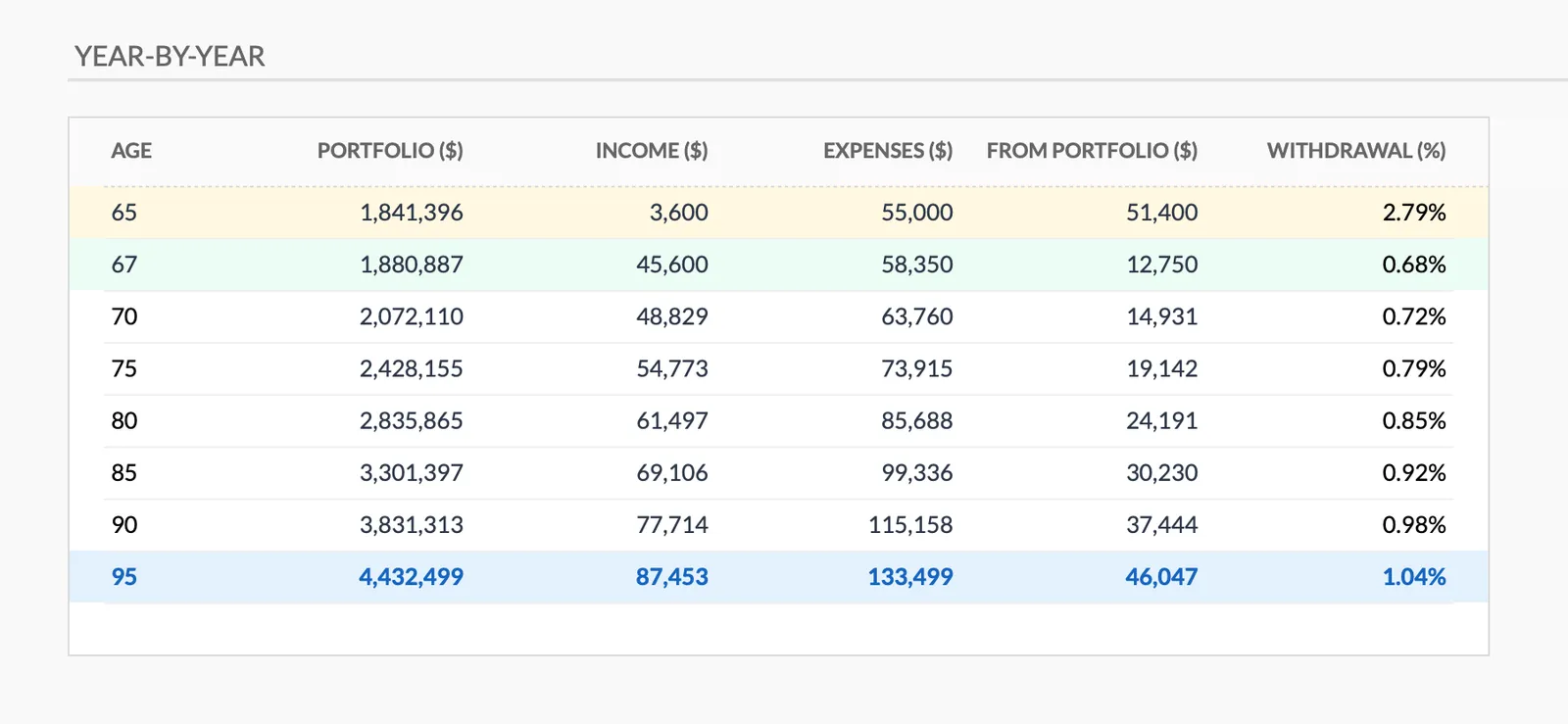
- Year-by-year projection
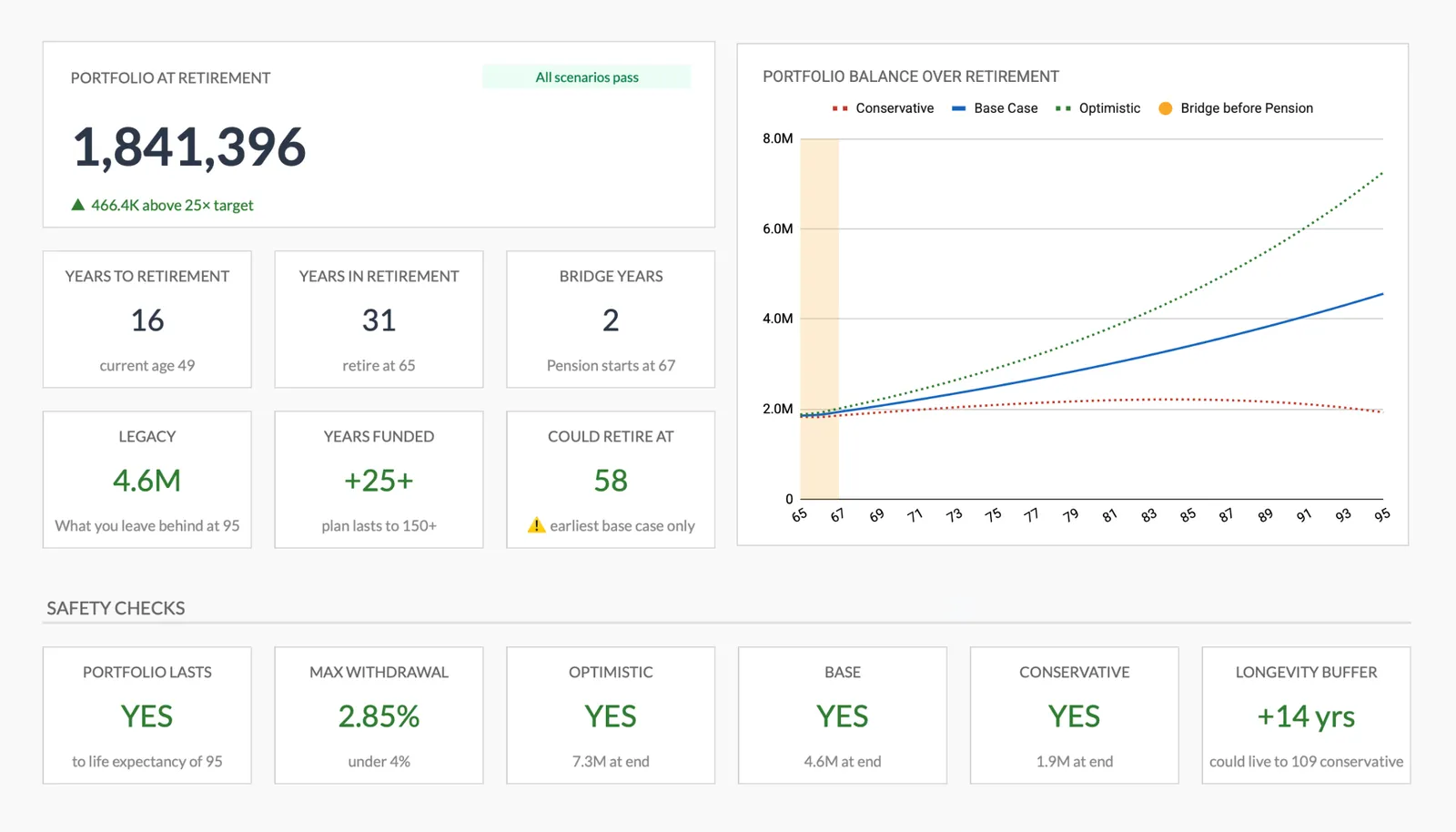
Complete retirement overview with projections
Project your retirement savings growth
Track progress toward retirement goals
Plan your retirement income against expenses
Detailed year-by-year retirement projection
Getting Started
Start Your Military Retirement Plan
Enter your military service details
Years of service, current pay grade, expected retirement date, and retirement system. The template estimates your pension.
Add TSP and other investment balances
Enter current TSP balance, Roth TSP balance if applicable, and any other investment accounts.
Model your second career
Enter expected post-military income, duration, and any additional retirement contributions.
Include VA benefits
Enter disability rating and compensation amount. Note healthcare coverage and other benefits.
Run multi-phase projections
See your financial picture across all life phases - from military retirement through full retirement.
Common Questions
Retirement Planning for Military - FAQ
Does this handle the BRS versus legacy pension system?
The template can model either system. BRS includes both a pension (at a lower multiplier) and government TSP matching. Enter the parameters for your specific system.
What about COLA adjustments on military pension?
Military pensions receive cost-of-living adjustments. The template can include COLA assumptions in long-term projections.
How do I handle VA disability compensation?
Enter your current compensation amount. VA disability is tax-free, which affects the total after-tax income picture. Track it separately from taxable income.
Should I include the GI Bill?
If you plan to use education benefits for additional credentials during your second career, include the financial value. If transferring to dependents, note the education savings impact.
What about military pension division in divorce?
If your pension is divided, enter only your portion. The template works with whatever amount you will actually receive.
Can this plan for retiring at 20 versus 30 years?
Compare different military retirement points. See how additional years of service affect pension, TSP growth, and overall retirement readiness.
How do I account for the difference between High-3 and BRS pension calculations?
The High-3 system provides 2.5% of the average of your highest 36 months of base pay per year of service (50% at 20 years). BRS provides 2.0% per year (40% at 20 years) but adds government TSP matching up to 5% of base pay. Enter your retirement system and the template adjusts the pension estimate accordingly.
How do I model the gap between military retirement and TSP penalty-free access?
If retiring before age 55, TSP withdrawals generally carry a 10% early withdrawal penalty until age 59 and a half. The template models this gap period, showing how pension income, second-career earnings, and other savings can bridge the years before penalty-free TSP access begins.
Can't find the answer you're looking for? Contact our team
Start retirement planning as a military
One-time purchase. No subscription. Your financial data stays in your Google Drive.