Retirement Planning Template
Retirement Planning Template for High Earners
Plan retirement with a larger portfolio and more complexity - model tax-efficient drawdowns, Social Security optimization, and multi-decade sustainability.
In Depth
Maximizing Retirement Accounts on a High Income
High earners often have access to retirement savings vehicles that are not available at lower income levels - mega backdoor Roth contributions, deferred compensation plans, and cash balance pensions alongside traditional 401(k)s. The combined contribution capacity across these accounts can exceed $100,000 per year, but each has different rules about access, taxation, and timing. Understanding which accounts to prioritize and how much to allocate to each is a planning question that becomes clearer when the full income and tax picture is visible.
The gap between current spending and retirement spending is often larger for high earners than for other groups. Someone accustomed to a $300,000 annual lifestyle faces a replacement income challenge that is qualitatively different from someone spending $60,000. Social Security replaces a much smaller percentage of income at higher levels, meaning more of the retirement spending must come from personal savings. Some high earners find that their expected retirement expenses - including travel, housing, and healthcare - actually exceed their current discretionary spending once mortgage payments end but other costs increase.
Tax diversification across account types becomes increasingly important at higher income levels. Having assets spread across traditional pre-tax accounts, Roth accounts, and taxable brokerage accounts provides flexibility to manage taxable income in retirement. This matters because IRMAA surcharges on Medicare premiums, taxation of Social Security benefits, and capital gains rates all depend on reported income. A retirement plan that draws from the right account mix in the right year can meaningfully reduce the lifetime tax burden compared to withdrawing from a single account type.
The Challenge
Why High Earners Face Different Retirement Planning Challenges
High income often means larger portfolios, but also higher spending expectations, more complex tax situations, and retirement planning that goes beyond the basics.
Lifestyle expectations require larger portfolios
Maintaining a high-income lifestyle in retirement requires a proportionally larger portfolio. The difference between needing $60K and $200K annually in retirement is enormous in accumulation terms.
Tax-efficient drawdown is more impactful
At higher portfolio values, the difference between efficient and inefficient withdrawal sequencing can be hundreds of thousands of dollars in lifetime taxes.
Social Security replaces a smaller percentage of income
Social Security is progressive - it replaces a smaller share of higher incomes. High earners must fund a larger portion of retirement from personal savings.
Early retirement is achievable but requires careful planning
Higher savings rates make early retirement possible, but higher spending levels mean the portfolio must be proportionally larger and the withdrawal strategy more precise.
Ready to take control of your high earner finances?
What You Get
Retirement Tools for High-Income Professionals
Multi-account portfolio modeler
Model drawdowns across 401(k), IRA, Roth, taxable, and other accounts. Optimize the sequence for tax efficiency.
Tax bracket management
Plan withdrawals to stay within target tax brackets. Model Roth conversions in lower-income years to reduce future RMDs.
Retirement lifestyle modeling
Model different spending levels - current lifestyle, reduced spending, or enhanced retirement lifestyle. See the portfolio impact of each.
Social Security optimization
Model claiming at different ages. For high earners, delayed claiming to 70 often provides significant benefit due to higher PIA.
What-if scenario analysis
Compare early retirement versus working longer, different spending levels, and various market assumptions.
Long-term sustainability projections
Project portfolio survival under different conditions. Stress test with unfavorable market sequences and inflation assumptions.
See It In Action
What the template looks like
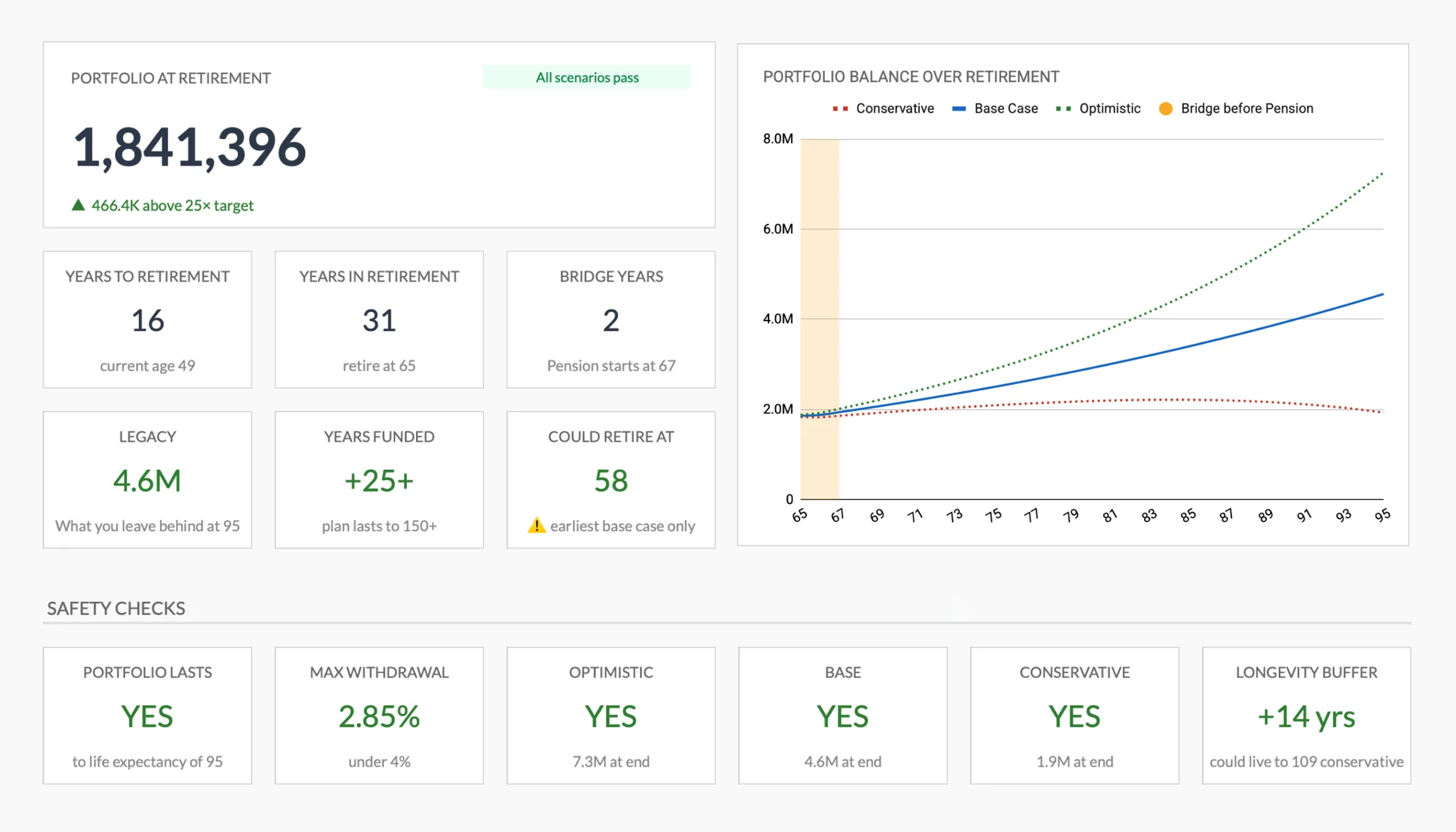
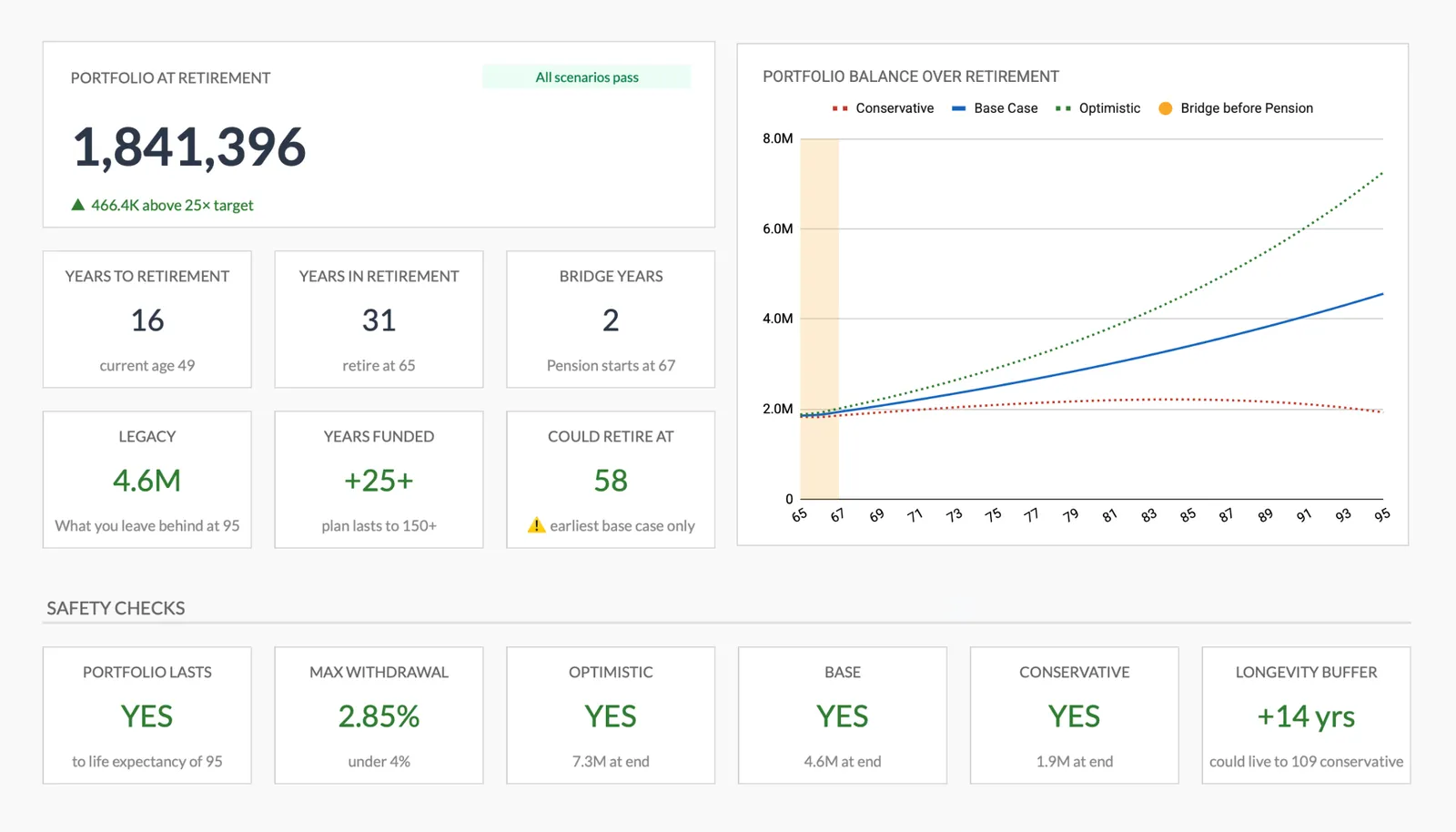
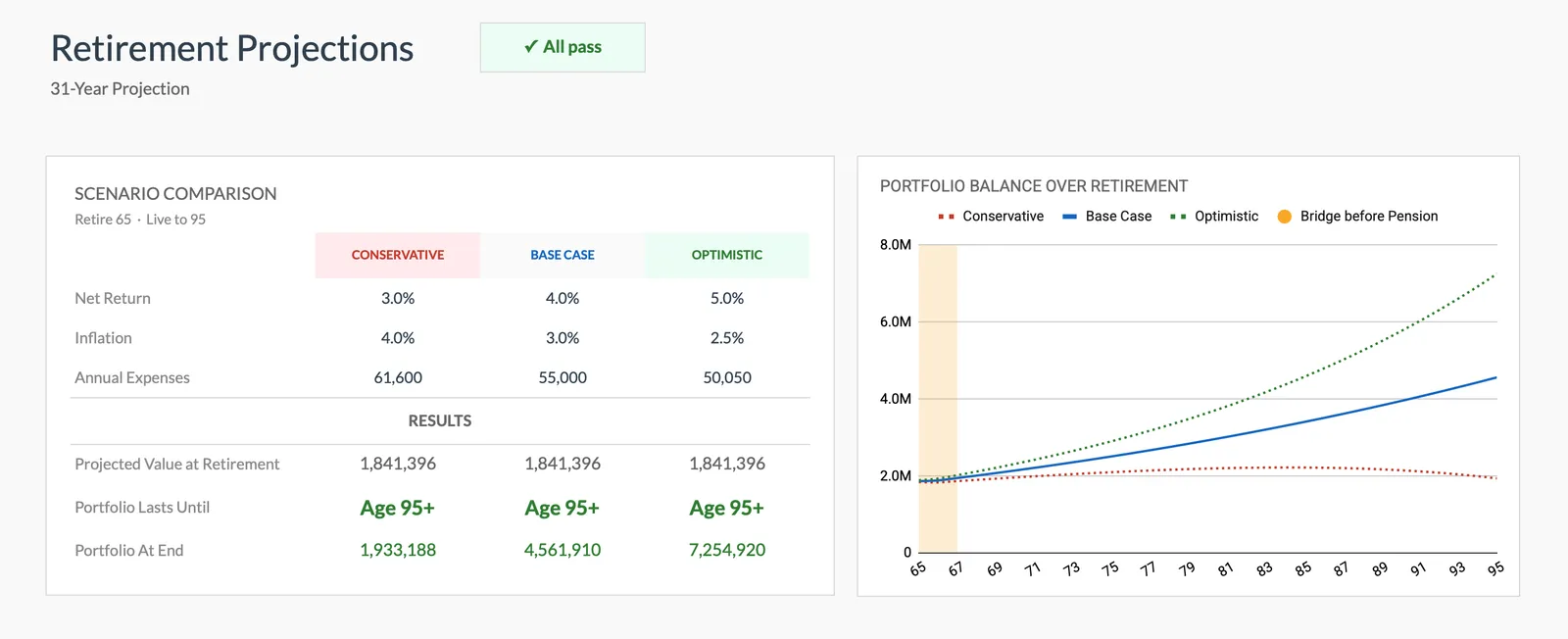
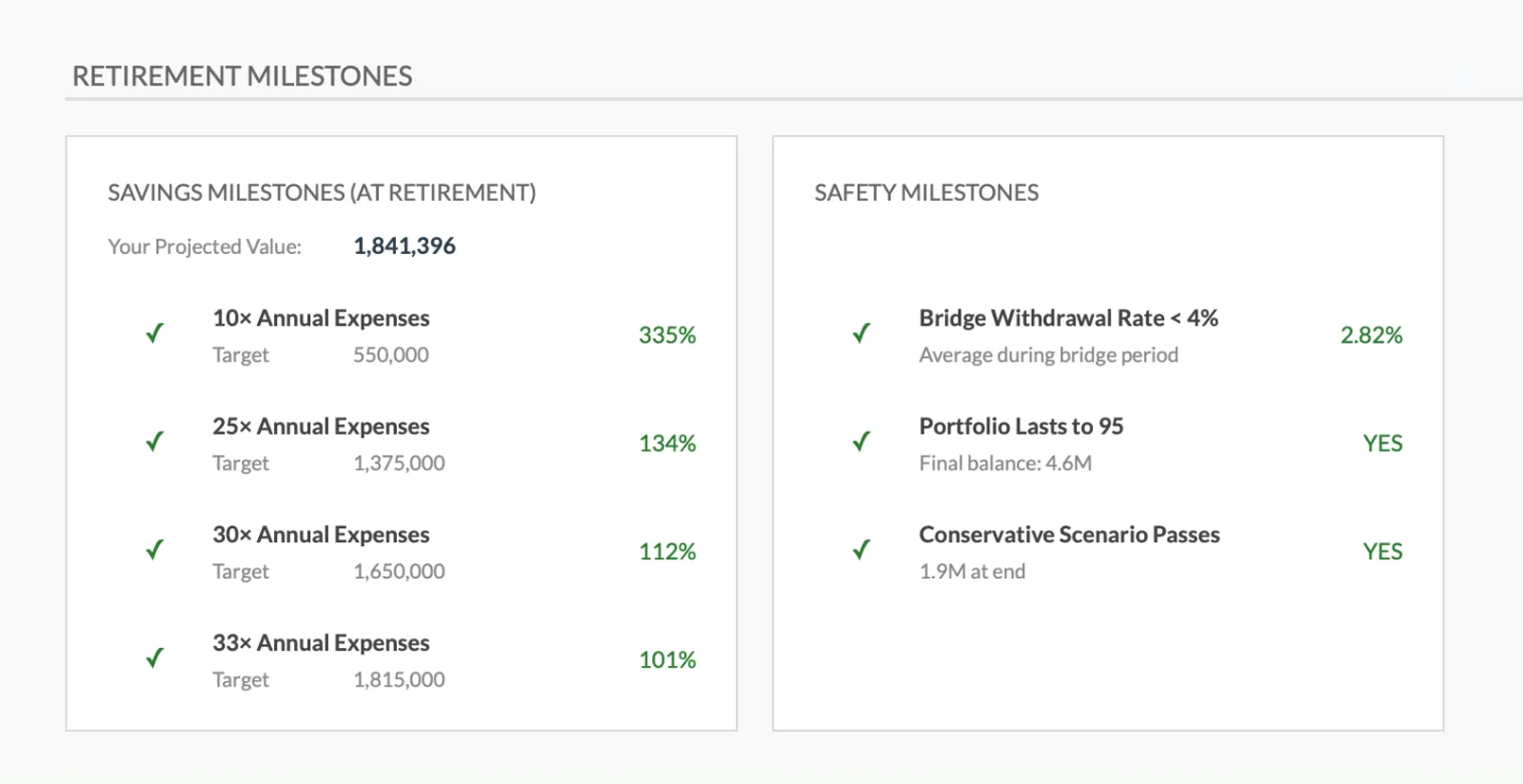
Browse through the template to see how it handles retirement projections, milestone tracking, and income planning.
- Retirement overview dashboard
- Savings growth projections
- Retirement milestone tracking
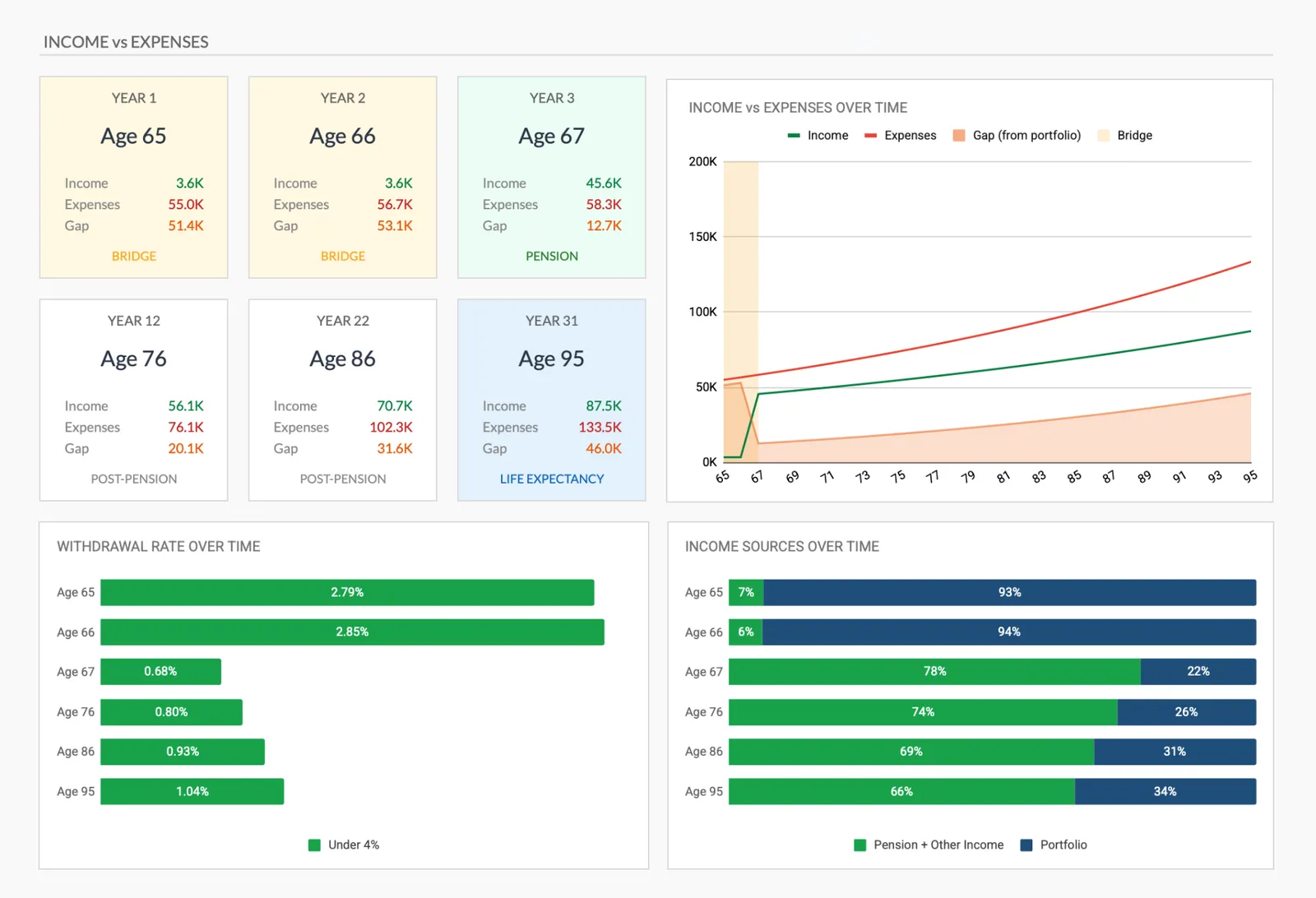
- Income vs expenses analysis
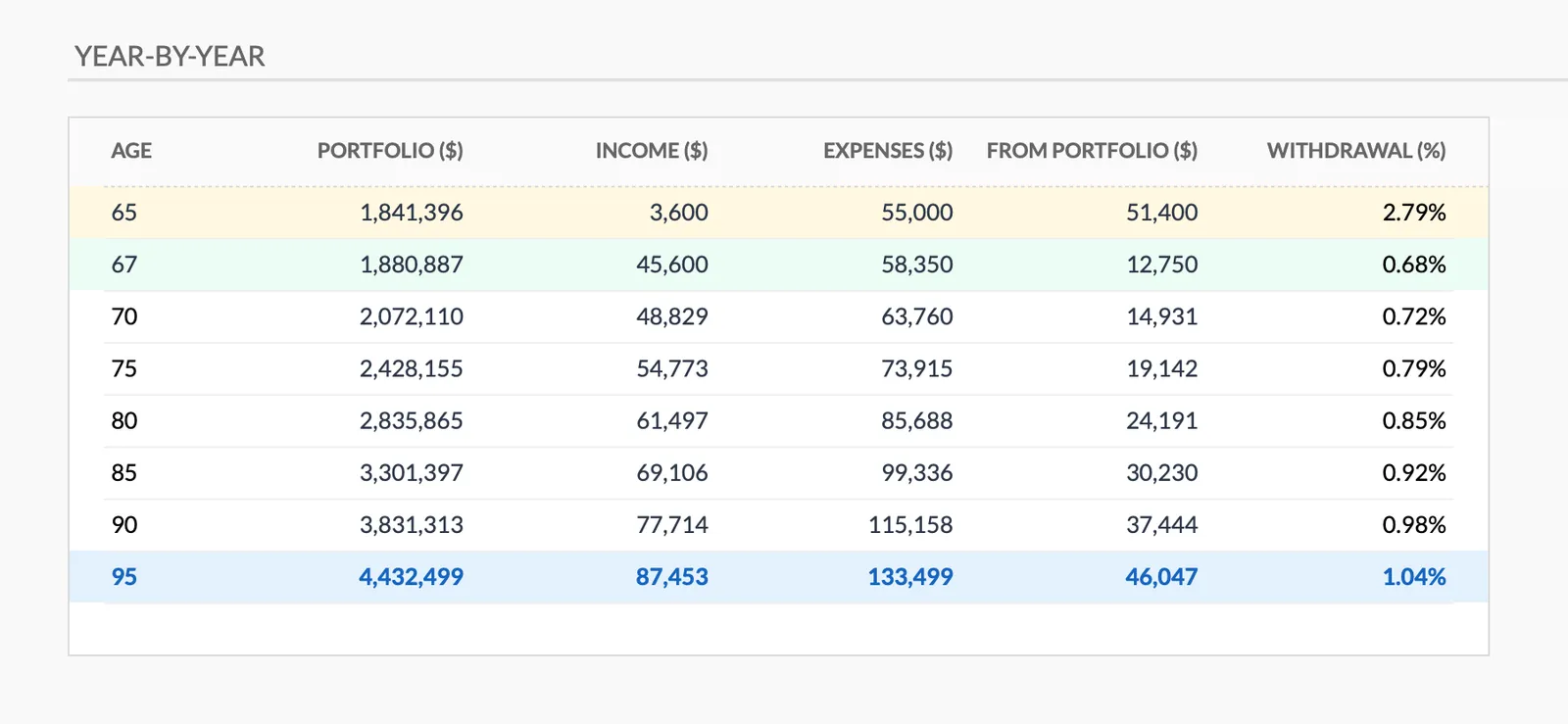
- Year-by-year projection
Complete retirement overview with projections
Project your retirement savings growth
Track progress toward retirement goals
Plan your retirement income against expenses
Detailed year-by-year retirement projection
Getting Started
Start Your High-Income Retirement Plan
Enter all portfolio details
List every investment account with current balance and type. Include employer plans, personal accounts, and taxable investments.
Define your retirement spending target
Be realistic about the lifestyle you want. Higher spending needs a larger portfolio and more careful withdrawal planning.
Map income sources and timing
Social Security estimates, any pension income, rental income, or other sources. Note when each source starts.
Model withdrawal sequences
Test different drawdown orders. See the tax impact of drawing from traditional versus Roth versus taxable accounts first.
Stress test the plan
Run unfavorable scenarios - lower returns, higher inflation, longer retirement. Ensure the plan has adequate margin.
Common Questions
Retirement Planning for High Earners - FAQ
How much do I need to retire at my lifestyle level?
A common starting point is 25x annual spending. The template lets you model your specific spending level and see whether your portfolio supports it under various scenarios.
Should I do Roth conversions before retirement?
The template helps model Roth conversion strategies. For high earners, converting in lower-income years - such as between retirement and Social Security start - can reduce lifetime taxes.
What about the IRMAA surcharge on Medicare?
Higher income in retirement triggers IRMAA surcharges on Medicare premiums. The template helps plan withdrawals to manage AGI and potentially avoid IRMAA thresholds.
How does this handle stock options or deferred compensation?
Model deferred compensation payouts as future income in the years they will be received. Their timing affects tax brackets and withdrawal needs.
Can I model leaving wealth to heirs?
Include a legacy target in your projections. See how your withdrawal rate and portfolio growth interact to support both retirement spending and a target bequest.
Is early retirement realistic for high earners?
High savings rates make it mathematically possible. The template models whether your specific portfolio and spending level support the timeline you have in mind.
Can't find the answer you're looking for? Contact our team
Start retirement planning as a high earner
One-time purchase. No subscription. Your financial data stays in your Google Drive.