Annual Tax Planner
Annual Tax Planner for Small Business Owners
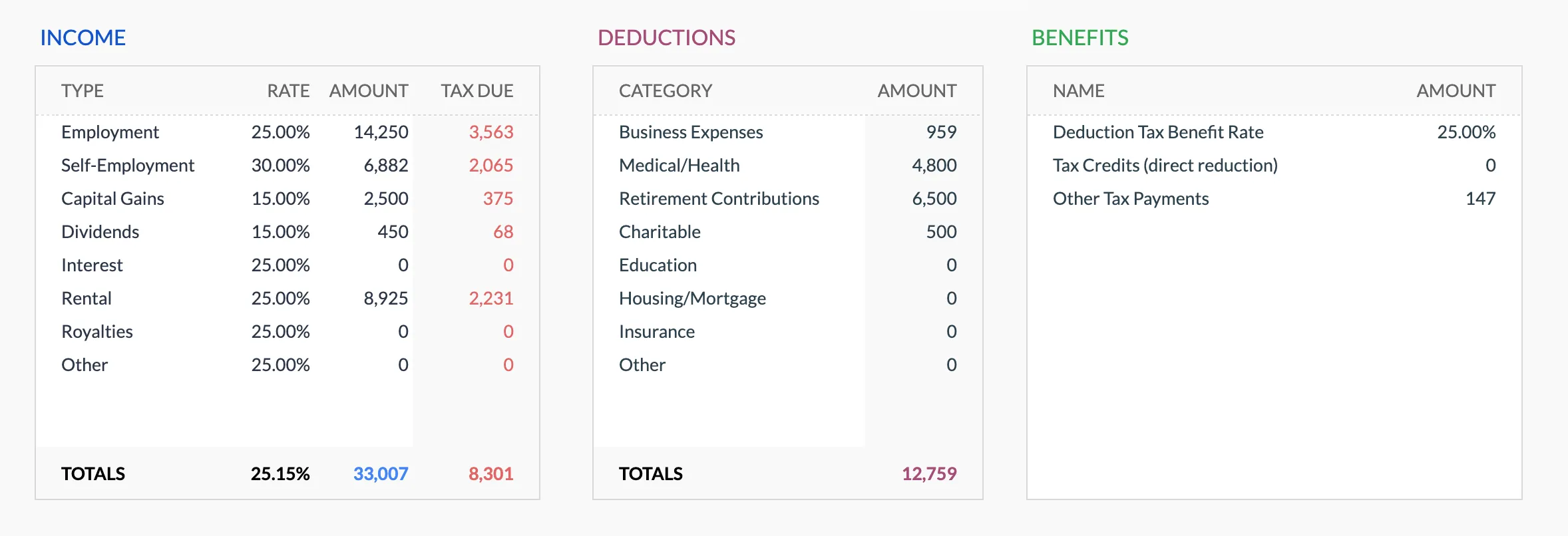
One annual tax planner you set up around a small business: revenue in the income log, deductions by category, quarterly estimated payments, and the balance still due.
In Depth
Business Structure, Payroll, and Owner Tax Obligations
Small business owners operate in a tax environment where personal and business finances are deeply intertwined. For sole proprietors and single-member LLCs, all business profit flows directly to the personal tax return through Schedule C. For S-corps, the owner pays themselves a salary subject to payroll taxes, while remaining profits pass through as distributions. Each structure has different tax implications, and the right choice depends on income levels, profit margins, and how the owner compensates themselves.
The Qualified Business Income deduction - sometimes called the pass-through deduction - allows eligible business owners to deduct up to 20% of qualified business income. However, the deduction has income limits and restrictions based on business type. Service businesses like consulting or professional practices face phaseouts at higher income levels, while product-based businesses may qualify regardless of income. Tracking business income and understanding which category the business falls into is essential for estimating the actual tax benefit.
Estimated quarterly payments for small business owners involve more variables than for individual freelancers. Payroll tax deposits, owner draws versus salary, retirement plan contributions, and equipment purchases all affect the tax calculation. Many small business owners find that the gap between their bookkeeping software - which tracks cash flow - and their tax picture - which tracks taxable income - is wider than expected. A dedicated tax planning view that translates business activity into estimated tax obligations bridges that gap.
The Challenge
Why Small Business Owners Need Year-Round Tax Planning
Small business taxes are more complex than personal taxes. Business income passes through to personal returns, deductions have specific rules, and the quarterly payment stakes are higher.
Pass-through income affects personal brackets
For sole proprietors, partnerships, and S-corps, business profit flows to your personal return. Business performance directly changes your personal tax bracket.
Business deductions have specific requirements
Section 179, bonus depreciation, home office, vehicle use, meals, and employee costs all have specific rules. Tracking them correctly throughout the year prevents missed deductions and audit risk.
Quarterly estimated payments are significant
Business owners often owe substantial quarterly payments. Underpayment triggers penalties, and the amounts can be large enough to create cash flow challenges.
QBI deduction has complex requirements
The Qualified Business Income deduction can reduce tax significantly but has income limits, specified service trade restrictions, and W-2 wage/asset tests.
Ready to take control of your small business owner finances?
What You Get
Tax Tools for Small Business Deductions
Business revenue tracker
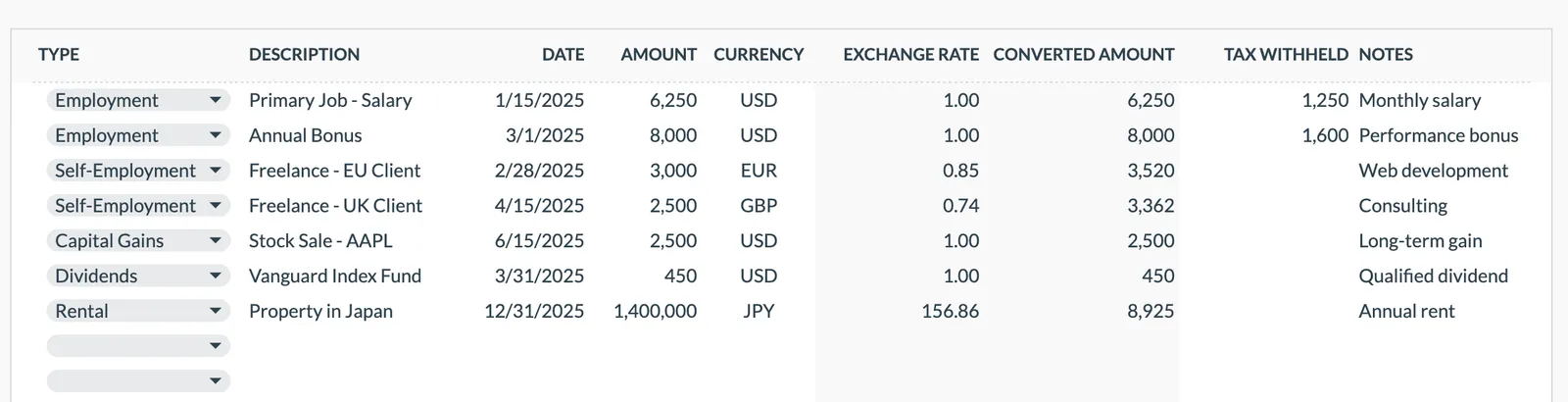
Each payment is a dated row with an amount and a description. The dashboard shows the annual total and the tax due against it.
Deduction categories that hold business costs
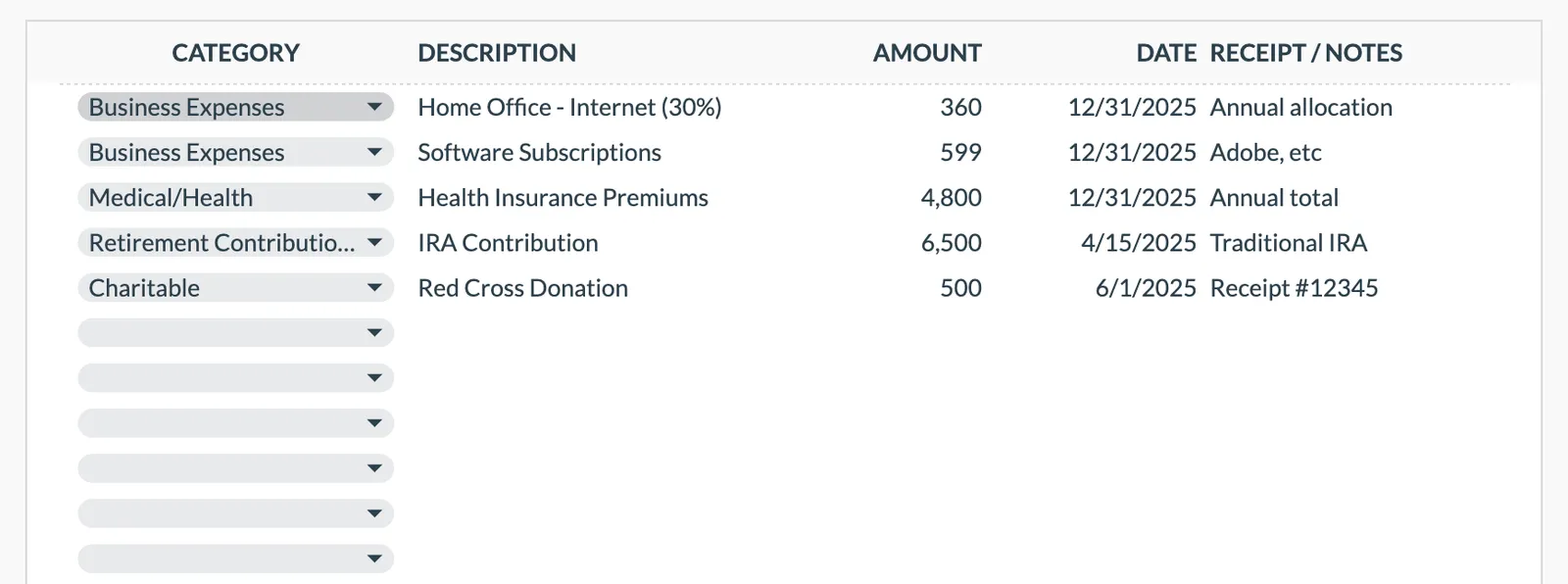
Eight categories ship with the sheet, including Business Expenses, Insurance, Education, and Retirement Contributions. Rent, utilities, marketing, and payroll are typed as descriptions under Business Expenses.
Quarterly payment rows with due dates
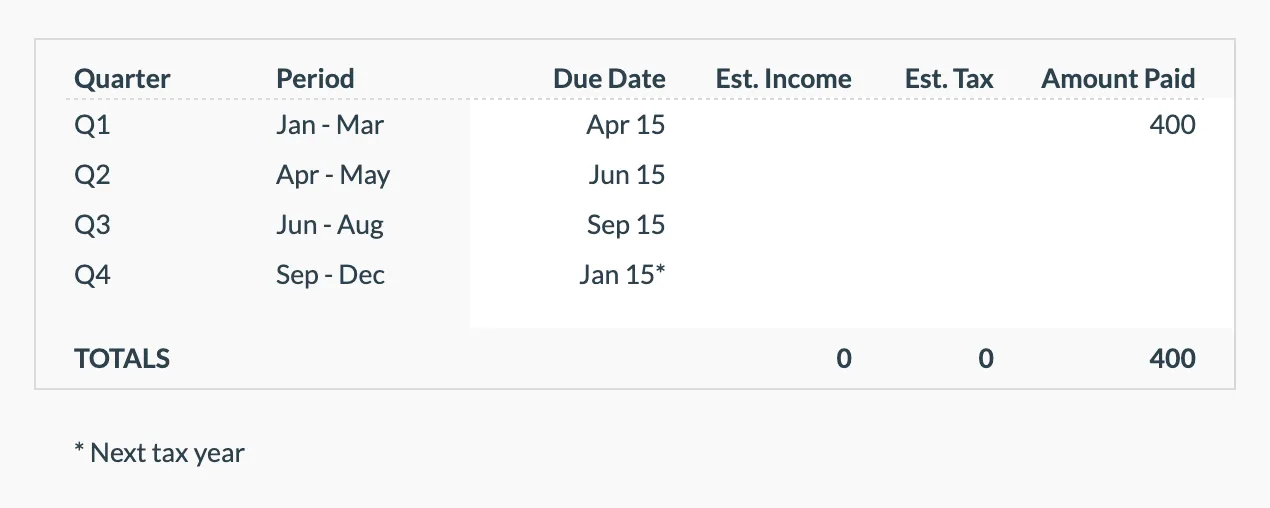
The four quarters come with their periods and due dates. You enter the estimated income and estimated tax for each, then the amount paid.
Self-employment income on its own line
For sole proprietors and single-member LLCs, Self-Employment is one of the eight dashboard income types, with a rate you set and its own tax due figure.
Owner salary and contributions in their usual places
S-corp salary goes in as employment income with its withholding, and retirement contributions sit under their own deduction category. There is no separate owner draw section.
Year-end business tax summary
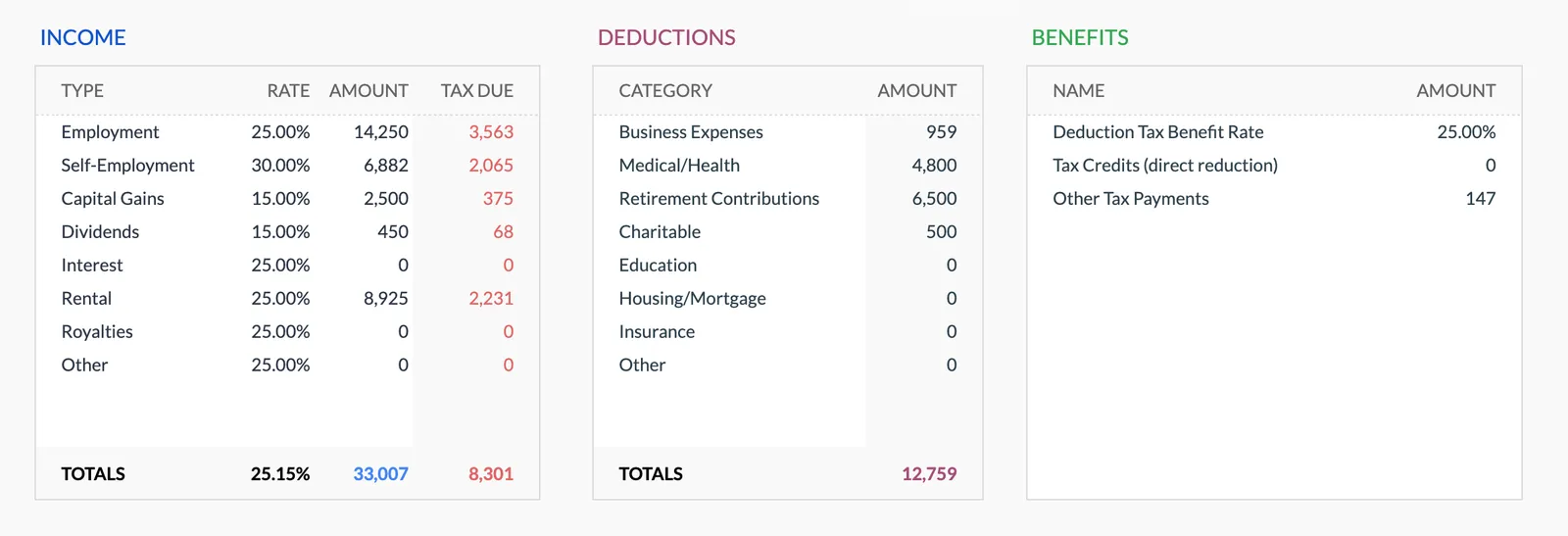
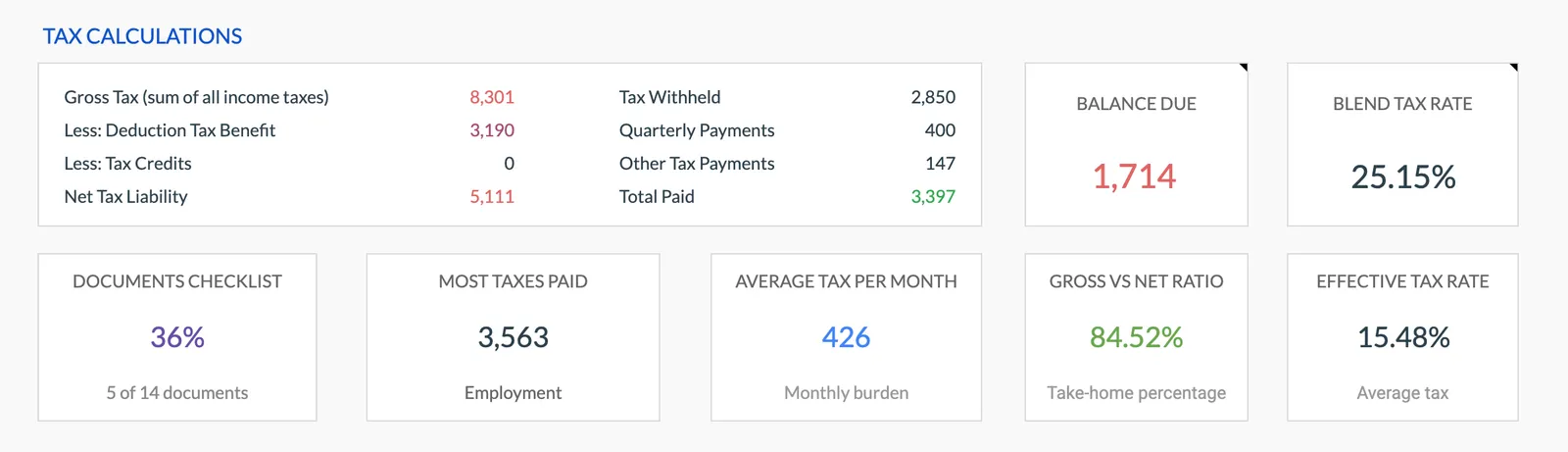
Total income, total deductions, the tax due from the rates you set, payments made, and the balance remaining. A reference for Schedule C or business return preparation.
See It In Action
What the template looks like
Browse through the template to see how it handles income tracking, deductions, quarterly payments, and tax projections.
- Tax overview dashboard
- Income source tracking
- Deduction organization
- Quarterly payment planning
- Tax projection estimates
Annual tax overview with key figures
Detailed tax breakdown and projections
Track all income sources for tax purposes
Organize and track tax deductions
Plan and track quarterly estimated tax payments
Getting Started
Begin Organizing Business Tax Deductions
Set up revenue tracking
Enter revenue as it comes in, dated and described. The dashboard keeps the annual total and the tax due against it.
Log business expenses consistently
Enter expenses weekly or as they occur. Consistent tracking is more important than perfect categorization.
Calculate quarterly payments before each deadline
Work the estimate out from income less deductions, then enter it on the Quarterly Payments sheet with the amount paid.
Track owner compensation
Salary goes in as employment income with its withholding, and retirement contributions under their deduction category. Draws are noted in descriptions rather than tracked separately.
Prepare for year-end tax planning
The balance due figure in Q4 shows where the year has landed, with the records behind it ready for a preparer.
Common Questions
Tax Planner for Small Business Owners- FAQ
Does this work for S-corps?
There is one template rather than an entity-specific version. Sole proprietors, single-member LLCs, and S-corp owners all use the same income types, with salary entered as employment income and distributions described on their own rows.
What about the QBI deduction?
Track business income that may qualify for the QBI deduction. The deduction calculation has income limits and other tests that your tax preparer can evaluate using your organized data.
Can I track payroll expenses?
Yes. Employee wages, payroll taxes, and benefits are deductible business expenses. They go under Business Expenses with the period named in the description.
How do I handle large equipment purchases?
Track the full cost and purchase date. The deduction method - Section 179, bonus depreciation, or standard depreciation - can be determined at filing time.
What about business vehicle expenses?
The vehicle deduction is worked out from your own records and entered as an amount under Business Expenses. The business-use percentage can go in the description alongside it.
Does this replace bookkeeping software?
This template focuses on tax planning and estimated payment tracking. For full business accounting, including invoicing, accounts receivable, and payroll, dedicated bookkeeping software may still be needed.
Can't find the answer you're looking for? Contact our team
Start tax planning as a small business owner
One-time purchase. No subscription. Your financial data stays in your Google Drive.