Monthly Expenses Tracker
Monthly Expenses Tracker for Personal Trainers
Track gym rental fees, certification costs, equipment, and marketing expenses to see what building a training business actually costs.
In Depth
Tracking the Real Costs of a Training Business
Personal training income is session-based, which means revenue scales directly with hours worked - and drops to zero during sick days, vacations, and cancellations. A trainer charging $75 per session who conducts 25 sessions per week grosses $1,875 weekly, but that number assumes full attendance. Client cancellations (even with a 24-hour policy, enforcement is inconsistent), holiday weeks with reduced schedules, and the trainer's own time off can reduce actual monthly session counts by 15-25%. Tracking sessions delivered versus sessions scheduled reveals the real utilization rate - the number that determines actual income.
Certification and continuing education costs represent a permanent expense category unique to fitness professionals. An initial NASM, ACE, or NSCA certification costs $400-$700, and recertification every two years runs $99-$199 plus the cost of earning required CEU credits. Specialty certifications in areas like corrective exercise, nutrition coaching, or senior fitness add $300-$600 each. CPR/AED renewal is another $50-$75 every two years. When multiple renewals land in the same quarter - which happens more often than trainers expect - the combined hit can reach $500-$1,000 in a single month.
The seasonal rhythm of personal training creates predictable expense patterns worth tracking. January through March brings a surge of new clients driven by New Year commitments, often requiring additional gym floor time or facility access fees. By April, roughly 40-50% of those new clients have dropped off, but the fixed costs remain. Summer can bring a shift to outdoor training (lower facility costs but equipment transport expenses), while November and December see widespread cancellations as clients prioritize holidays over sessions. Tracking expenses by month across a full year reveals which seasons require building a financial cushion.
Equipment costs for independent trainers are ongoing and easy to underestimate. Resistance bands wear out every 3-6 months ($20-$50 per set), foam rollers degrade, TRX straps need replacement, and portable equipment like kettlebells and slam balls take a beating with daily use. Trainers who travel to clients add vehicle costs - fuel, mileage wear, and the time between sessions that generates no income but still costs money. A mobile trainer driving 30 minutes between clients three times per day burns 1.5 hours of unpaid travel time and $15-$25 in fuel and vehicle wear daily.
The Challenge
Why Personal Trainers Need Expense Tracking
Training sessions bring in revenue, but the costs of maintaining a fitness career eat into that income from multiple angles. Without tracking, profitability is a guess.
Gym and space fees are a major ongoing cost
Renting gym space, paying facility access fees, or maintaining a home gym setup represents a significant monthly expense. Independent trainers especially need to see these costs clearly.
Certifications and education are expensive
Initial certifications, specialty credentials, CEU requirements, and renewal fees create ongoing professional development costs. These are easy to forget between renewal cycles.
Equipment and supplies need regular replacement
Resistance bands, mats, weights, measurement tools, and demonstration equipment wear out. The replacement cycle creates costs that are not obvious month to month but significant annually.
Marketing and client acquisition cost money
Website hosting, social media tools, business cards, promo materials, and client management software are costs of keeping the pipeline full.
Ready to take control of your personal trainer finances?
What You Get
Tracking Features for Trainer Finances
Fitness business expense categories
Pre-built categories for gym fees, certifications, equipment, insurance, marketing, and client management tools.
Living expenses vs. training business costs
Separate section for personal living expenses. See business and personal costs clearly.
Client and business totals recalculated live
Category totals update automatically. Check your biggest cost areas any time.
Training business cost recap
Total business expenses, total personal expenses, and combined total. Compare business costs against session revenue.
Categories for training and coaching costs
Add categories for your specific model - online coaching tools, nutrition certification, video equipment, or travel to client locations.
No setup needed
Open and start tracking. No income entries, no budget targets - just expense recording.
See It In Action
What the template looks like
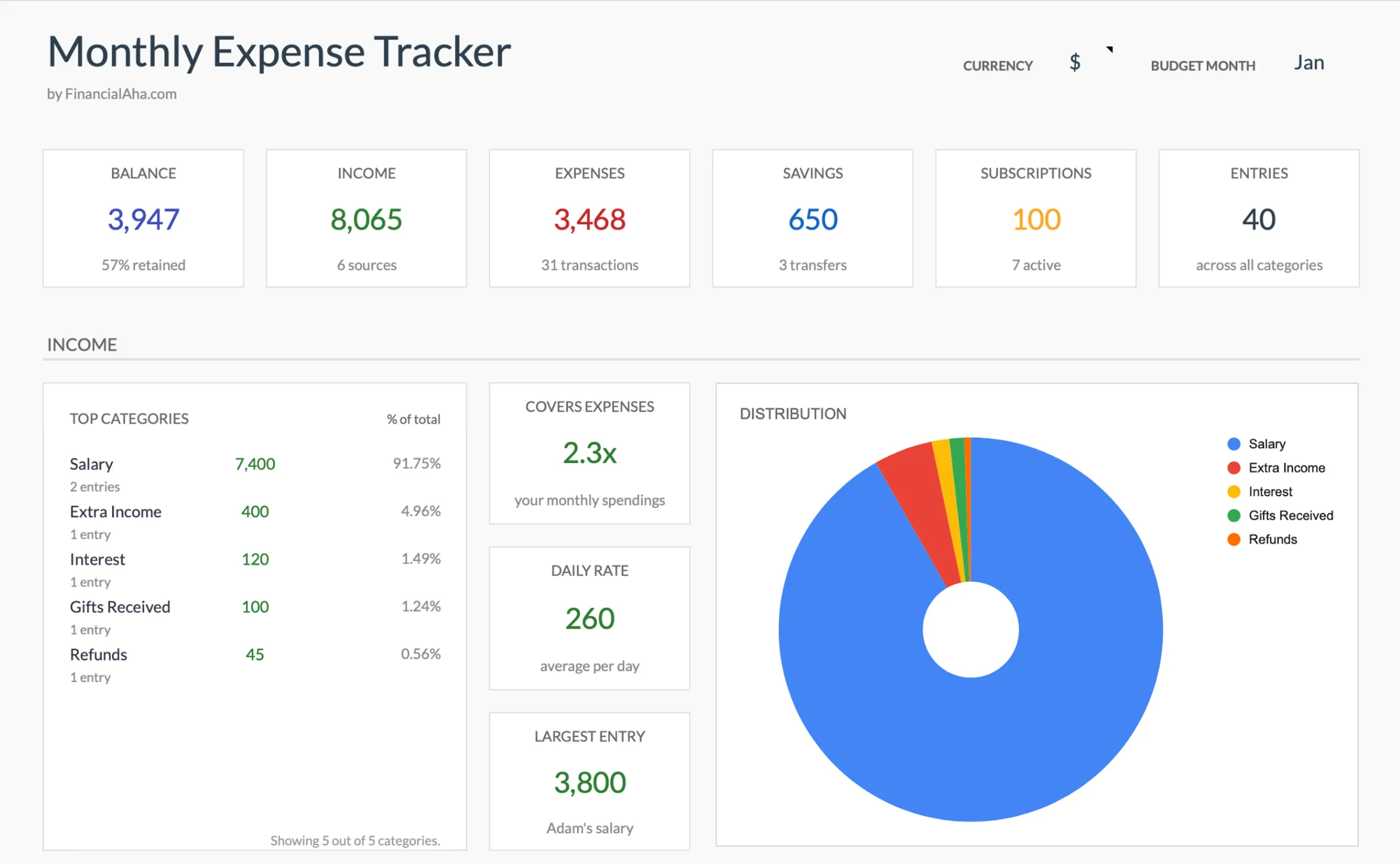
Browse through the template to see how it handles expense logging, category breakdowns, and spending analysis.
- Dashboard with key metrics at a glance
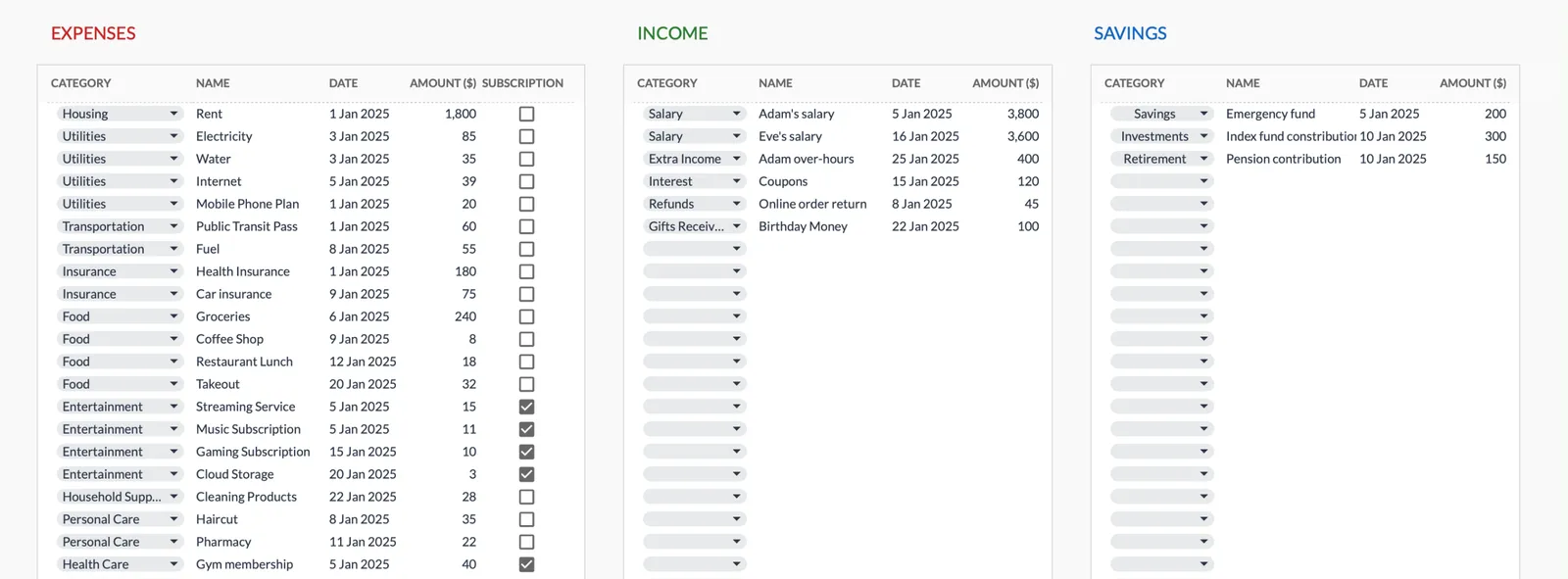
- Transaction logging with categories
- Expense tracking and summaries
- Visual charts and breakdowns
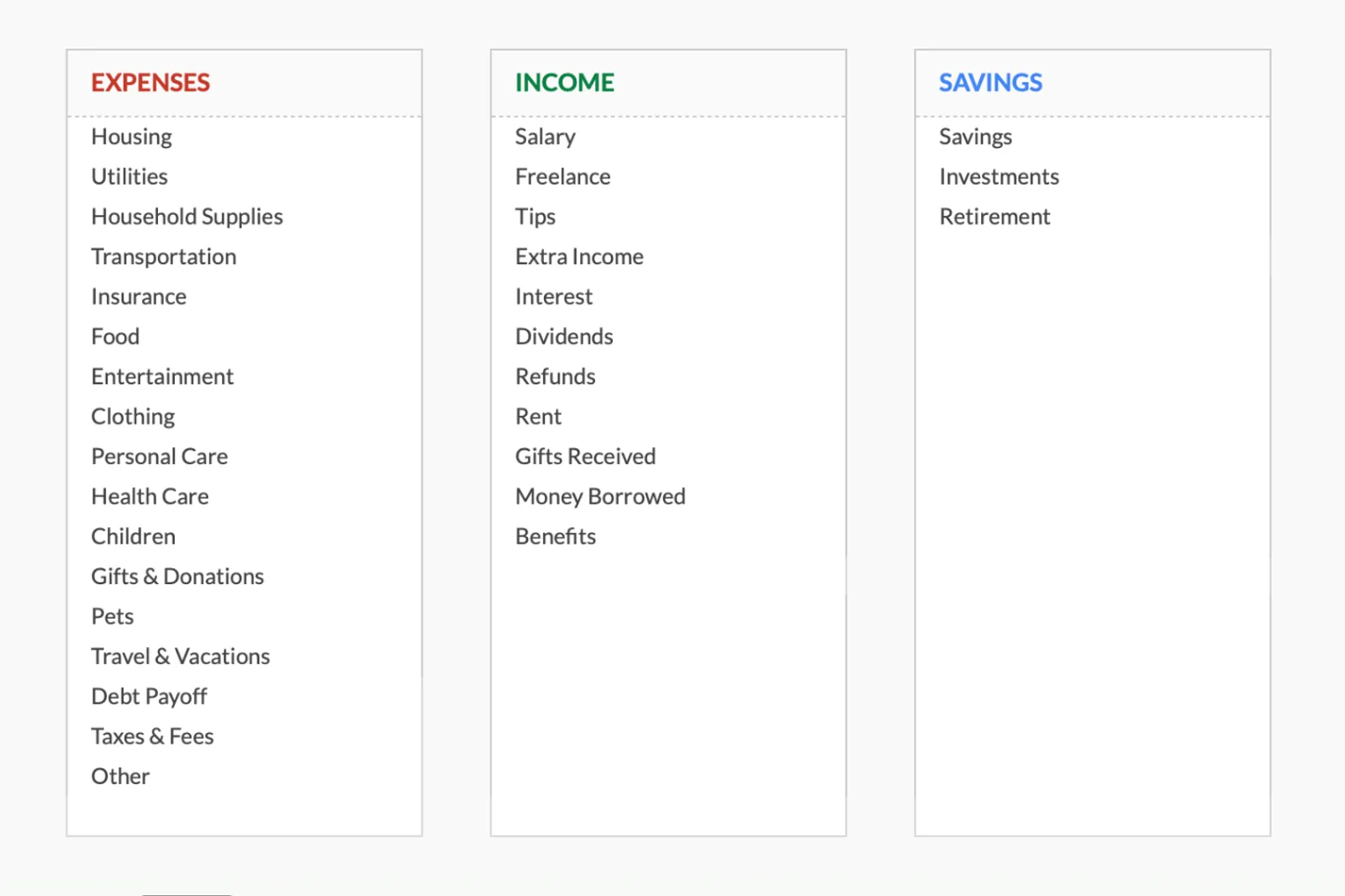
- Fully customizable categories
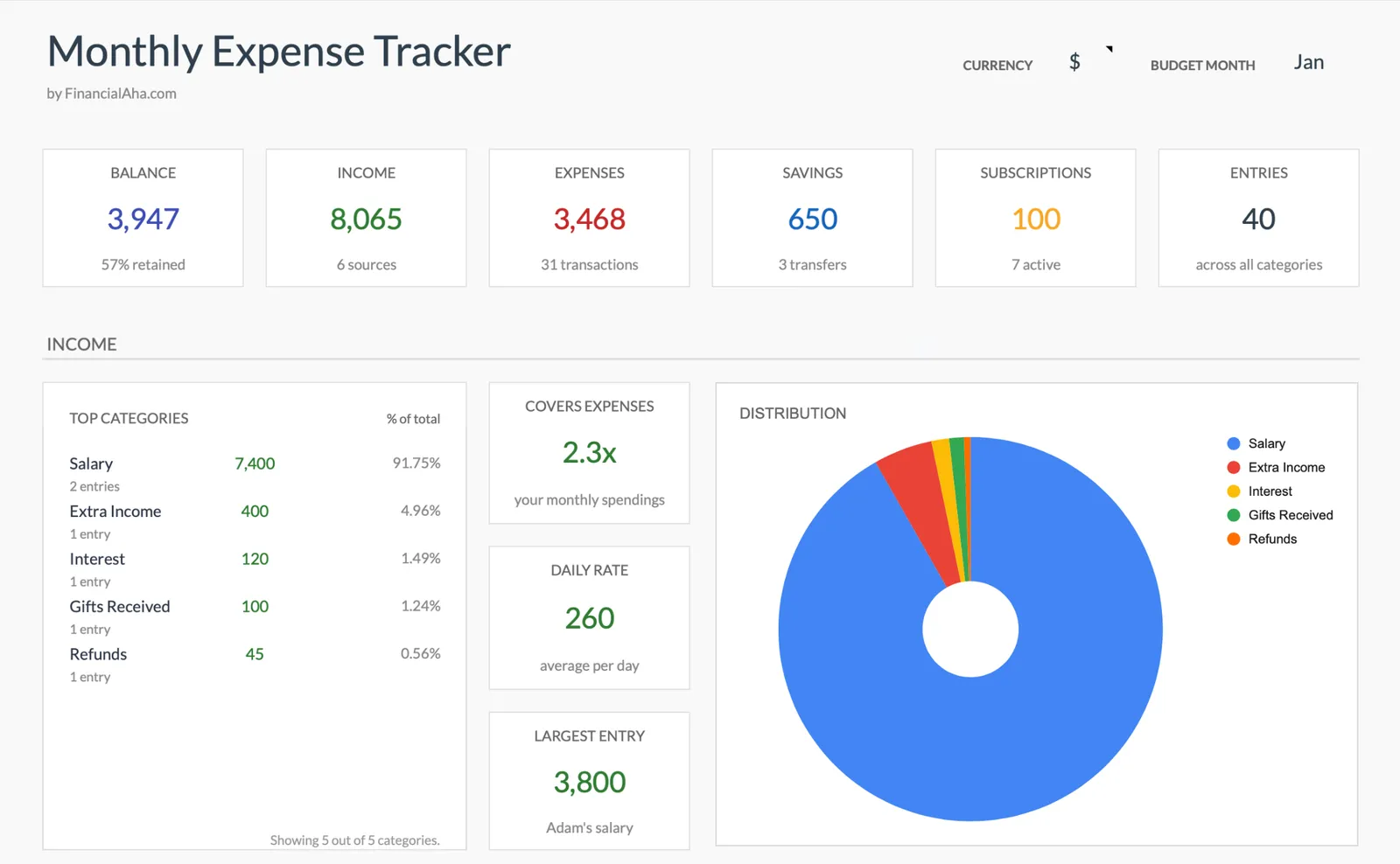
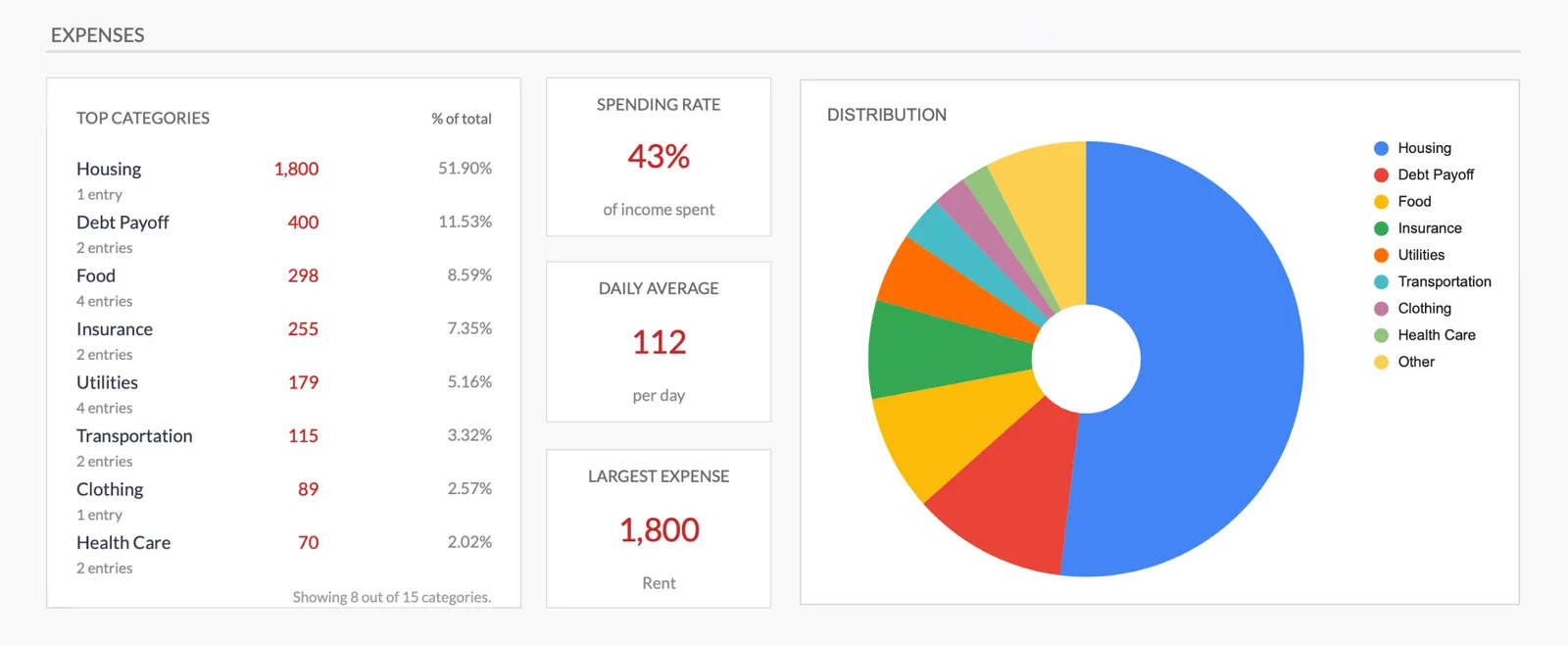
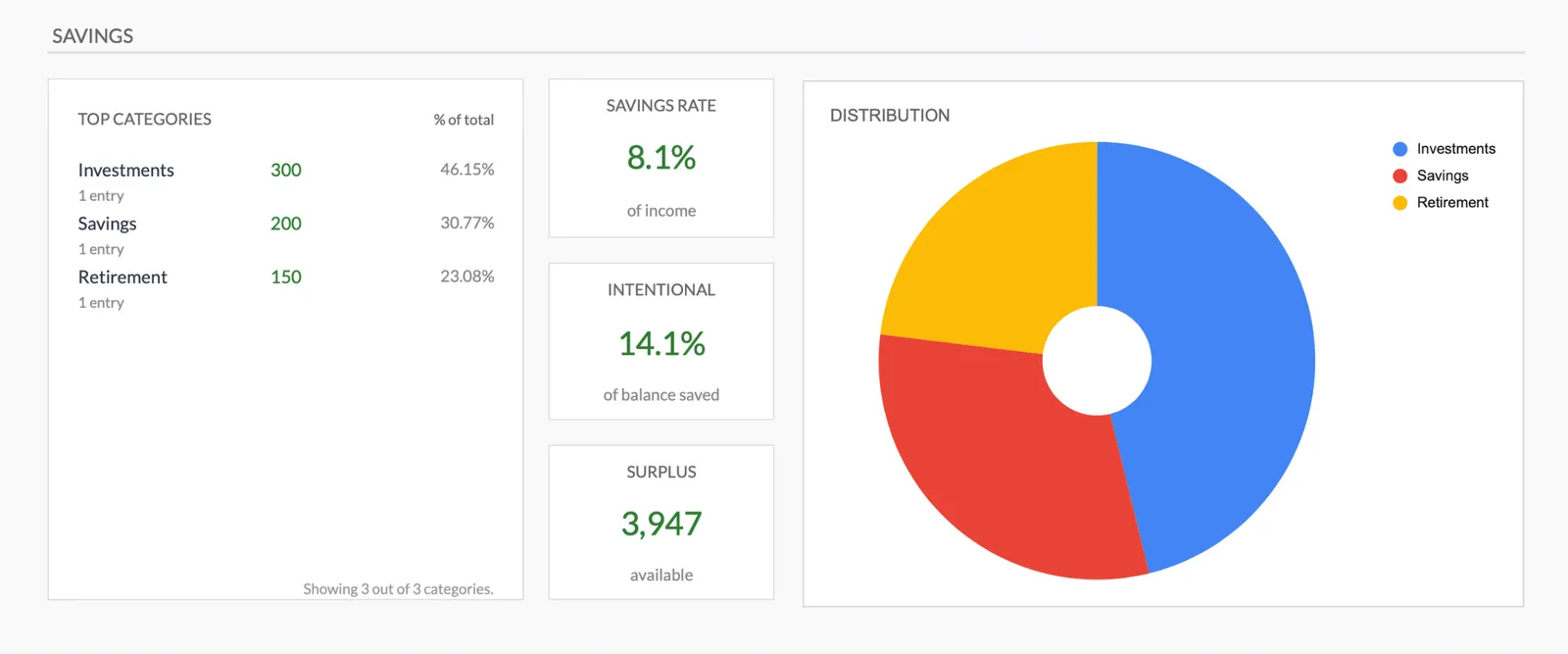
Monthly expense overview with charts
Log every expense with dates and categories
Organize spending into customizable categories
Detailed breakdown of all expenses
Track savings alongside expenses
Getting Started
Start Tracking Your Training Business Costs
Customize categories for your business model
Gym-based, home-based, mobile, or online trainers have different cost structures. Adjust the categories to match.
Log every business expense
Gym fees, equipment, certifications, marketing - enter each cost as it happens.
Track personal expenses separately
Keep living expenses in their own section so you can see true business profitability.
Review monthly
Compare business costs against your training revenue. The difference is your actual earnings from training.
Watch for seasonal patterns
January brings new clients and certification renewals. Summer may shift revenue. Monthly data reveals these patterns.
Common Questions
Expenses Tracker for Personal Trainers - FAQ
What gym costs should I track?
All of them - monthly facility fees, per-session space rental, gym membership for your own training, and any facility-related costs. Knowing the total shows whether your pricing covers your space costs.
How do I track certification renewal costs?
Enter certification and CEU costs in the month you pay them. Over a year, the total shows what maintaining your credentials costs annually.
Should I track my own gym membership?
If you train at the same facility where you work, at least part of the membership may be a business expense. Track it and consult a tax professional about the deductible portion.
What about nutrition supplements I provide to clients?
Add a category for client supplies. Any product you purchase for client use is a business expense worth tracking.
Is this useful if I work at a gym as an employee?
Employed trainers have fewer business expenses, but may still have certification costs, equipment purchases, and professional development to track. The personal expense side is useful regardless.
How is this different from a full budget template?
A budget includes income tracking and spending targets. This tracker is simpler - just expense recording. Start here to understand your costs before building a full budget.
How do I track per-session profitability?
Divide your total monthly business expenses by the number of sessions delivered. If monthly costs are $1,200 and you conduct 80 sessions, each session costs $15 in overhead before you see any profit. Subtracting that from your per-session rate shows your true margin per client hour.
How do I plan for certification renewal costs?
List each certification with its renewal date and cost. Spread the total annual renewal cost across 12 months as a savings category. A trainer with $800 in annual renewal and CEU costs would set aside roughly $67 per month so the expense is covered when it arrives.
Can't find the answer you're looking for? Contact our team
Start tracking expenses as a personal trainer
One-time purchase. No subscription. Your financial data stays in your Google Drive.