Monthly Budget Template
Monthly Budget Template for Teachers
Budget around a teacher salary with 10-month pay cycles, summer income gaps, and out-of-pocket classroom expenses factored in.
In Depth
Ten Months of Pay, Twelve Months of Bills
The choice between 9-month and 12-month pay distribution creates fundamentally different budgeting challenges. A teacher earning $55,000 annually who receives 10-month pay gets roughly $4,583 per paycheck month (before deductions) but nothing in June and July. The same teacher on 12-month distribution receives about $3,819 per month - lower per-check income but no summer gap. Neither option changes the annual total; it is purely a cash flow decision. Teachers on 10-month pay who want to smooth their income need to set aside roughly $760 per school-year month to fund the two summer months, which requires the discipline to live on less during the year to avoid borrowing during the summer.
The educator expense deduction allows teachers to deduct up to $300 per year in unreimbursed classroom supplies on their federal taxes (as of the current tax rules). This is an above-the-line deduction, meaning it reduces adjusted gross income regardless of whether the teacher itemizes. But the typical teacher spends $500-$700 out of pocket - meaning $200-$400 in annual classroom spending produces no tax benefit at all. Tracking every classroom purchase throughout the year serves two purposes: it captures the deductible amount accurately, and it makes the full scope of unreimbursed spending visible for personal budgeting.
Pension contributions and retirement savings interact in ways that affect take-home pay and long-term planning. Most teachers participate in a state pension system with mandatory contributions of 5-10% of salary. This reduces take-home pay but builds a defined-benefit retirement. Some teachers also have access to a 403(b) plan for additional tax-advantaged savings, which further reduces current take-home but creates a supplementary retirement account. Tracking both the pension deduction and any 403(b) contributions as distinct budget line items shows the total retirement savings rate and its impact on monthly spending capacity.
Side income from tutoring is common among teachers and creates its own budgeting considerations. Private tutoring rates vary by subject and location but typically run $30-$80 per hour. A teacher tutoring 5 hours per week at $50/hour adds $1,000/month to income - but as self-employment income, it carries a 15.3% self-employment tax that teaching salary does not. Setting aside 25-30% of tutoring income for taxes before considering it spendable prevents the tax-time surprise that catches many teacher-tutors off guard.
The Challenge
Why Teachers Face Specific Budget Challenges
Teaching comes with financial patterns that are unique to the profession. Pay schedules, summer gaps, and unreimbursed classroom spending create budgeting challenges that generic templates ignore.
Pay may not cover 12 months evenly
Some districts pay over 10 months, leaving teachers to self-fund summers. Even districts offering 12-month pay often base it on a 10-month salary, creating tight months regardless of schedule.
Classroom expenses come out of pocket
The average teacher spends $500-$700 per year on classroom supplies that the school does not provide. These costs spread across the year in small amounts that add up but rarely appear in a budget.
Summer income requires planning or side work
Two to three months without a paycheck - or with reduced summer school pay - creates a significant financial gap. Without a plan, summer becomes a debt-accumulating season.
Salary steps are predictable but slow
Teacher pay increases are structured and predictable. This is stable but means income growth is modest, making intentional budgeting more important for reaching financial goals.
Ready to take control of your teacher finances?
What You Get
Budget Features Teachers Actually Need
Salary and side income tracking
Track your teaching salary plus tutoring, summer school, or other supplemental income. See your actual monthly total.
Classroom expense category
A dedicated line for out-of-pocket school supplies. Track the tax-deductible amount (currently $300) separately.
Teacher salary targets vs. real spending
Set spending targets and compare against real expenses. Catch the month's overages before they become habits.
Summer savings tracker
If you are on 10-month pay, track how much you are setting aside each month to cover summer expenses.
Loan and retirement tracking
Track student loan payments and pension contributions alongside your budget. See how they affect take-home pay.
Categories for educator expenses
Adjust categories for your situation - whether that includes coaching stipends, graduate course costs, or professional development.
See It In Action
What the template looks like
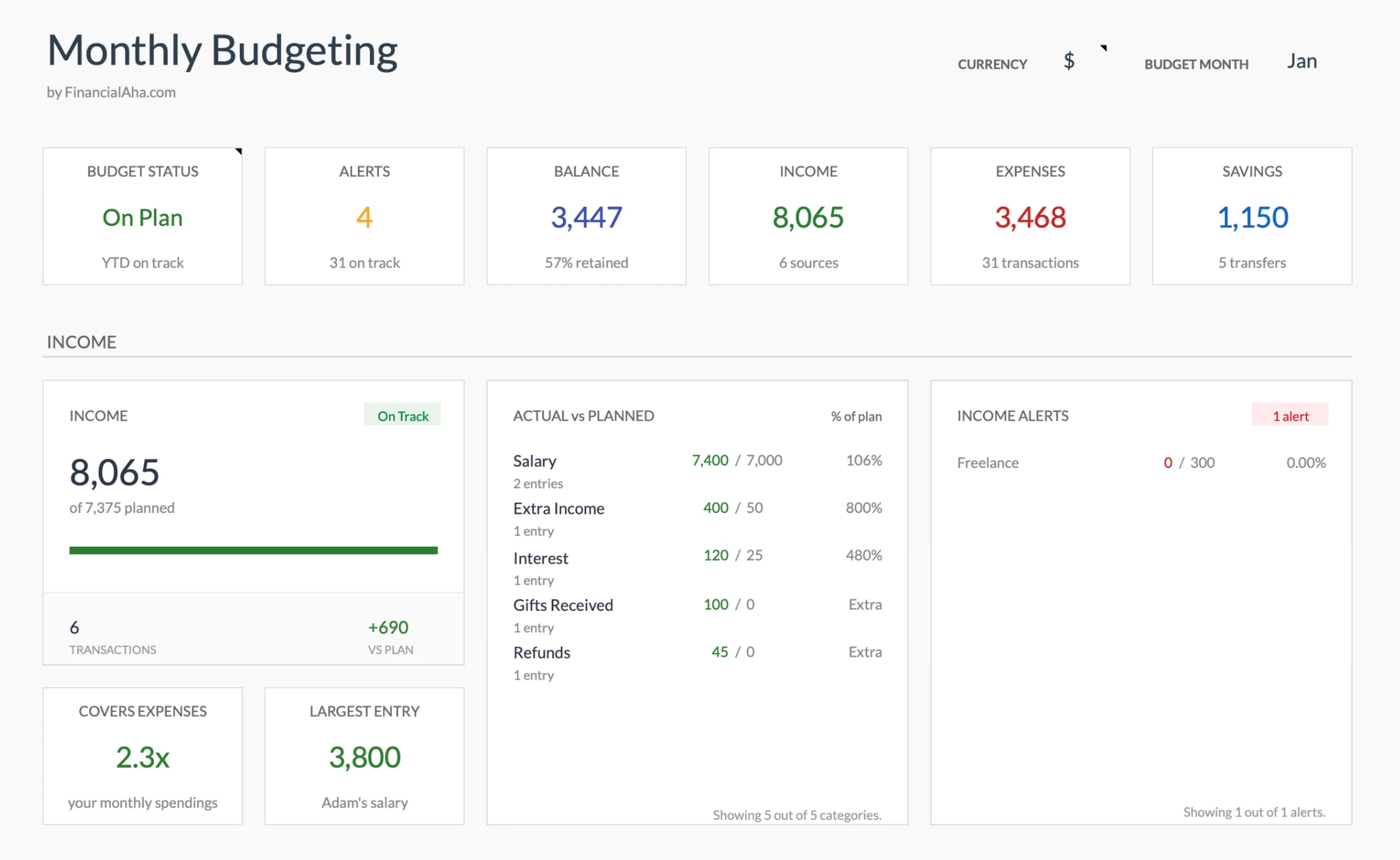
Browse through the template to see how it handles income tracking, expense budgets, savings goals, and spending analysis.
- Dashboard with key metrics at a glance
- Transaction logging with categories
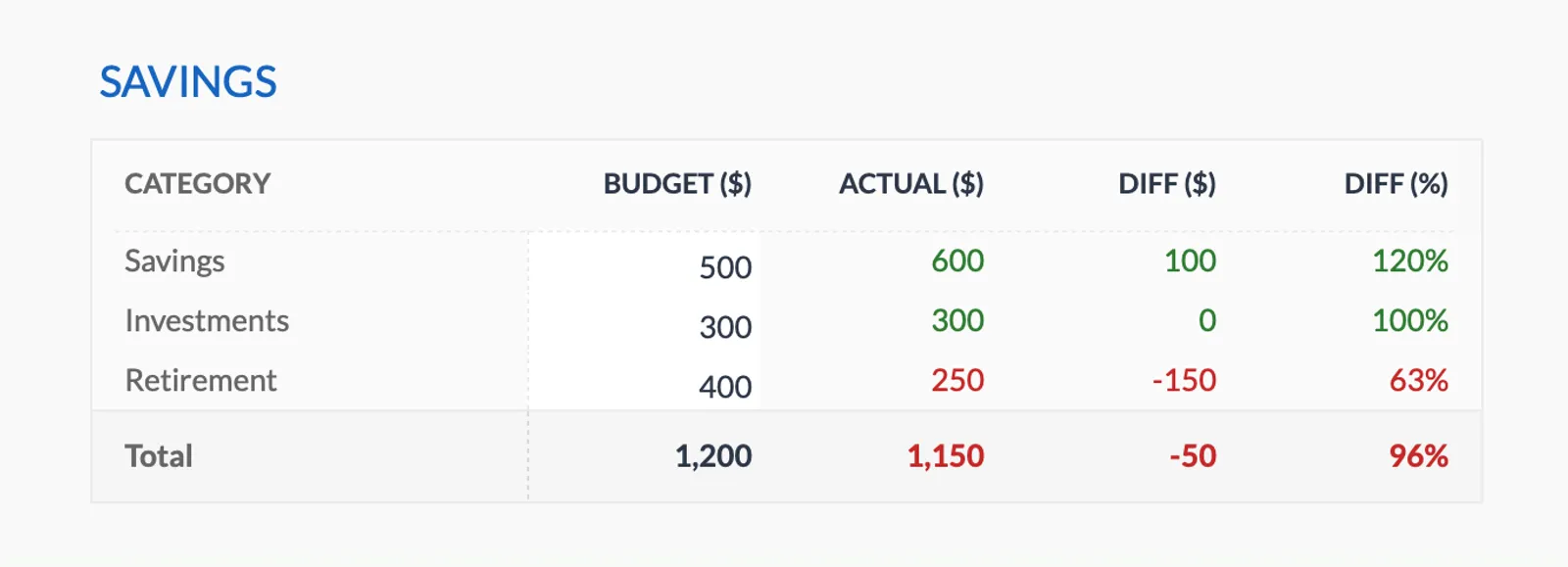
- Budget vs actual comparison
- Visual charts and breakdowns
- Fully customizable categories

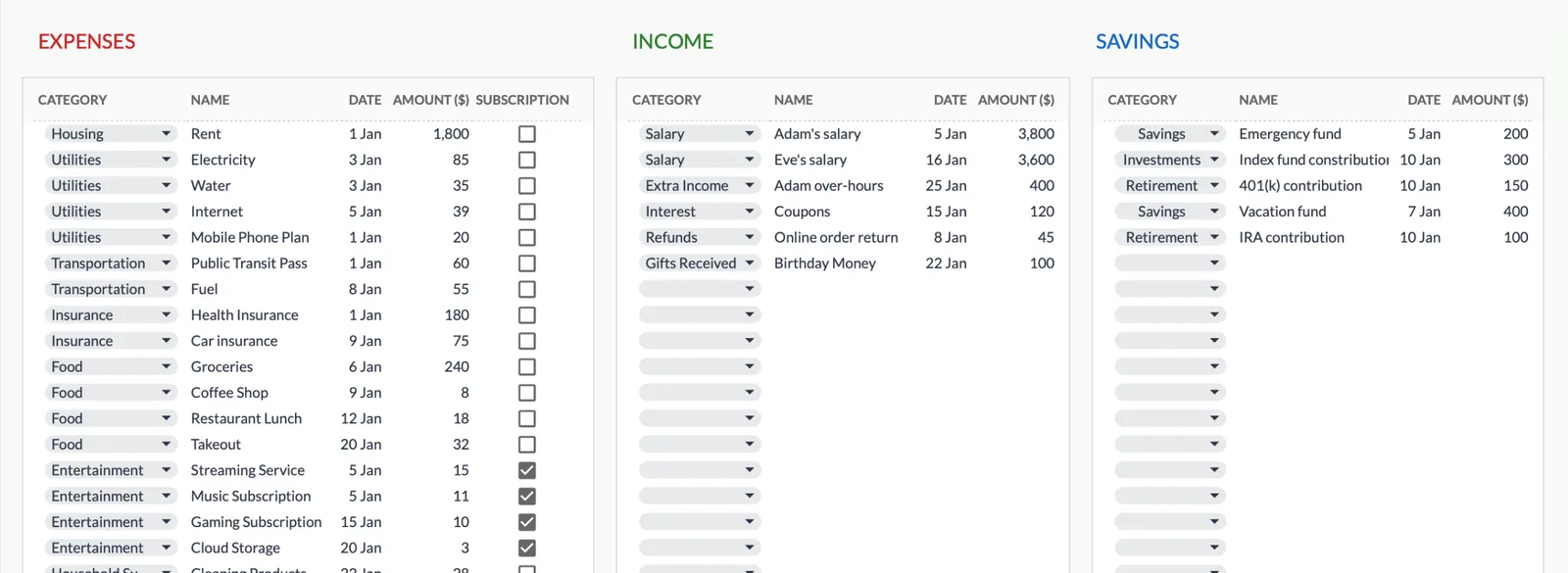
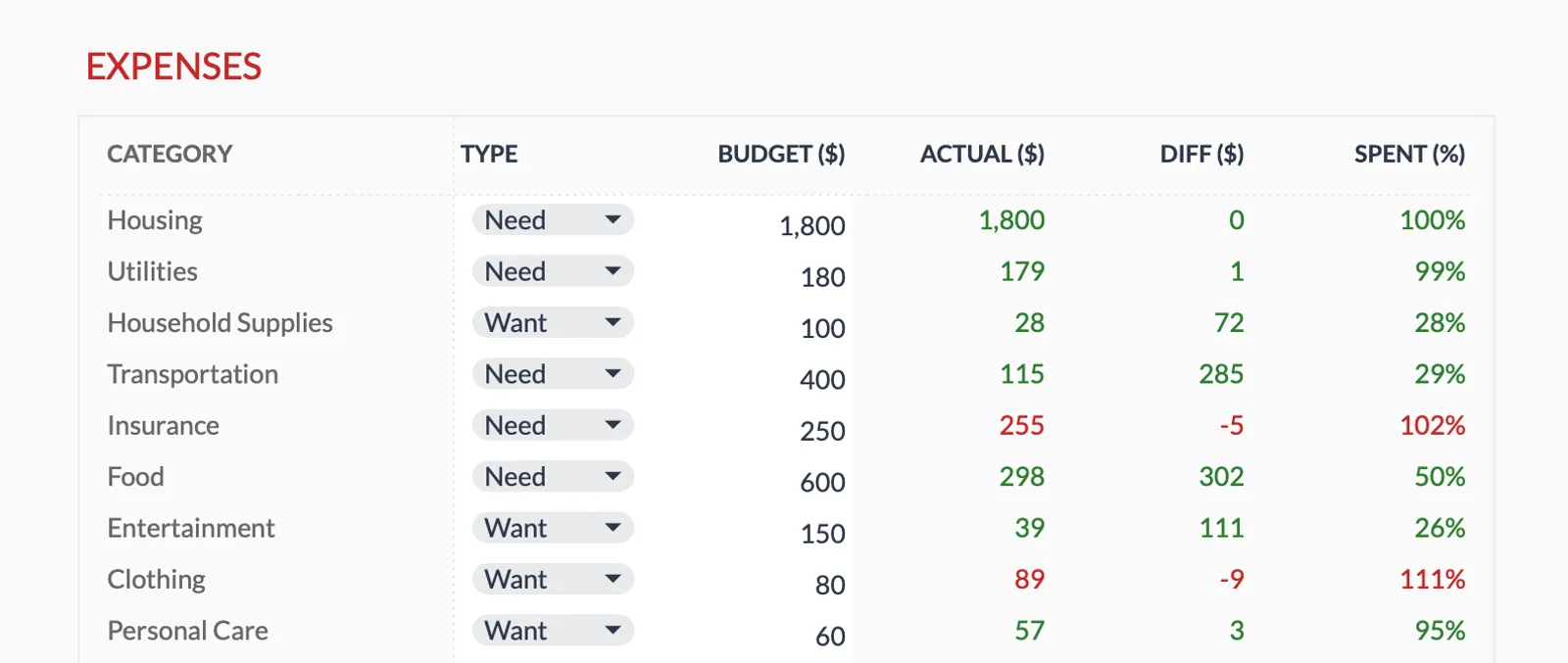
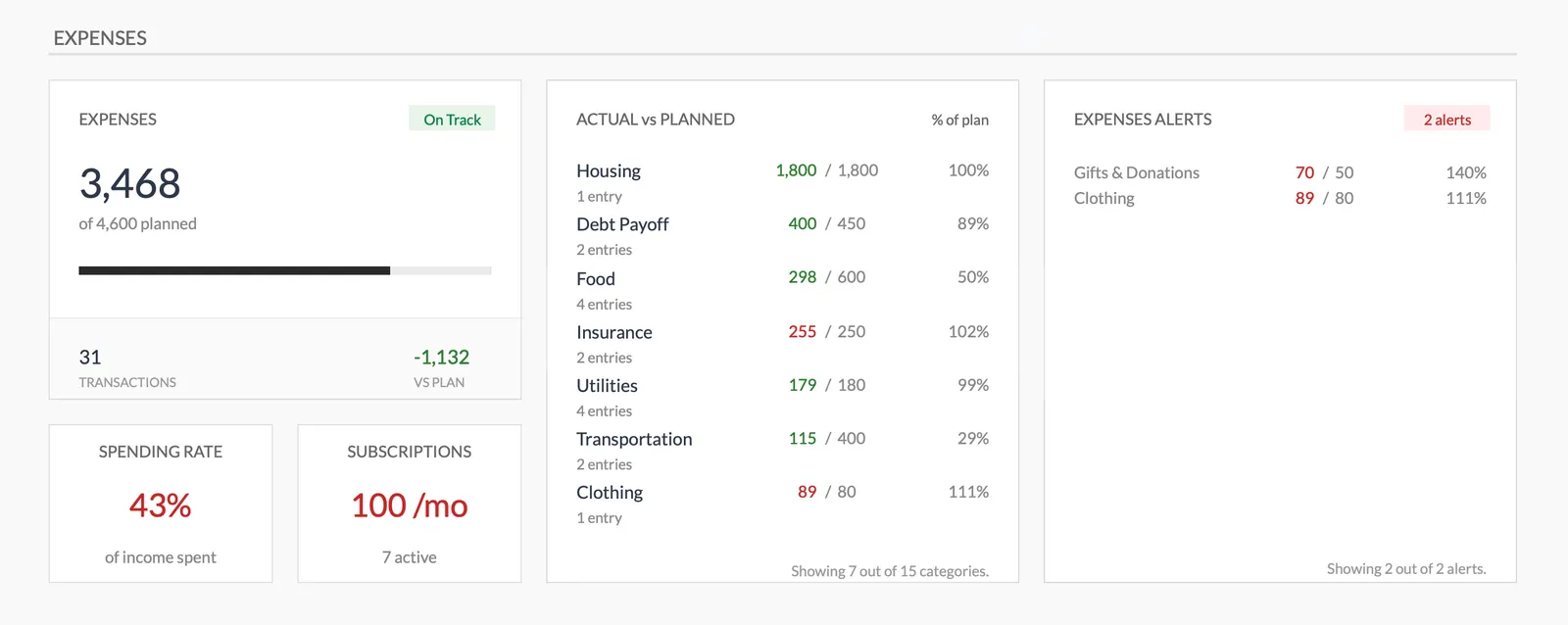
Dashboard with income, expenses, and savings at a glance
Log transactions with automatic categorization
Set targets per category and track actual spending
Visual breakdown of where your money goes
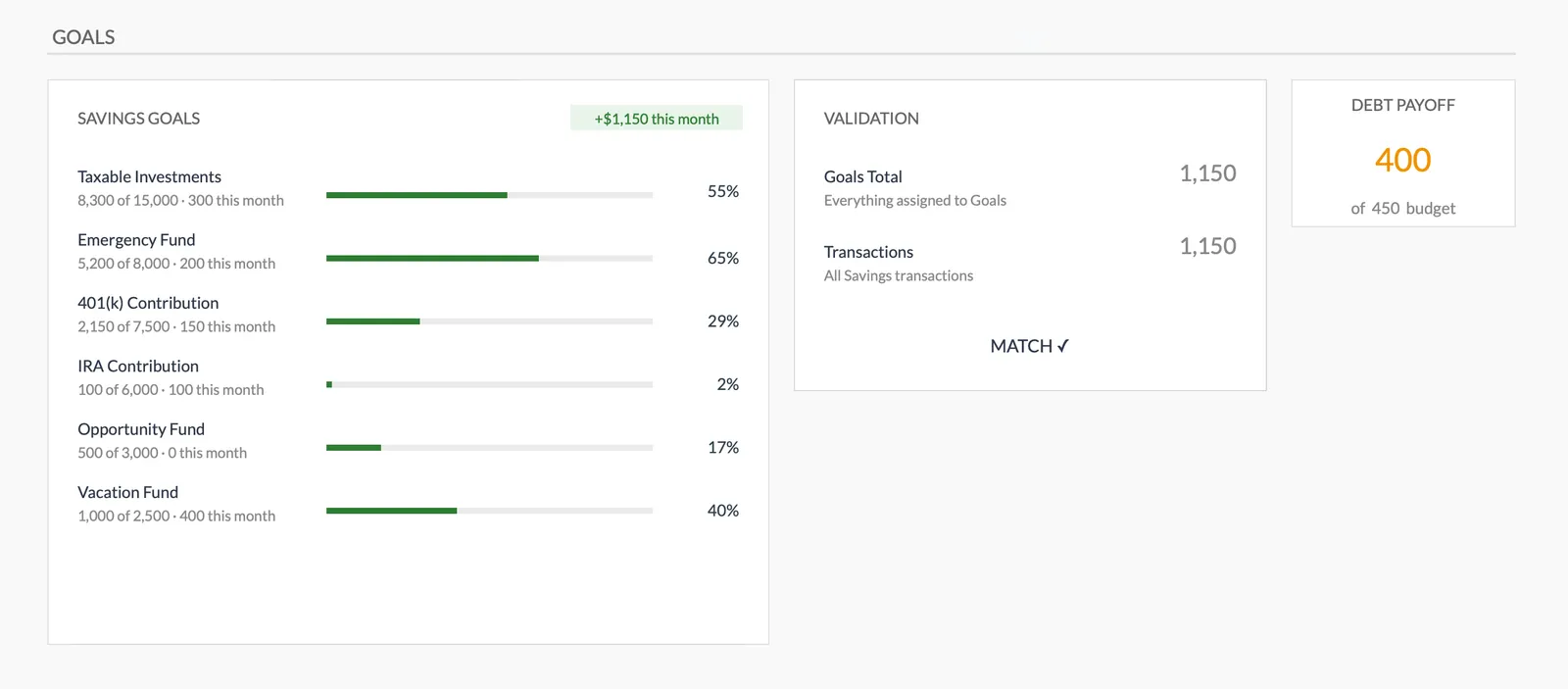
Track savings goals alongside your budget
Monitor progress toward financial goals
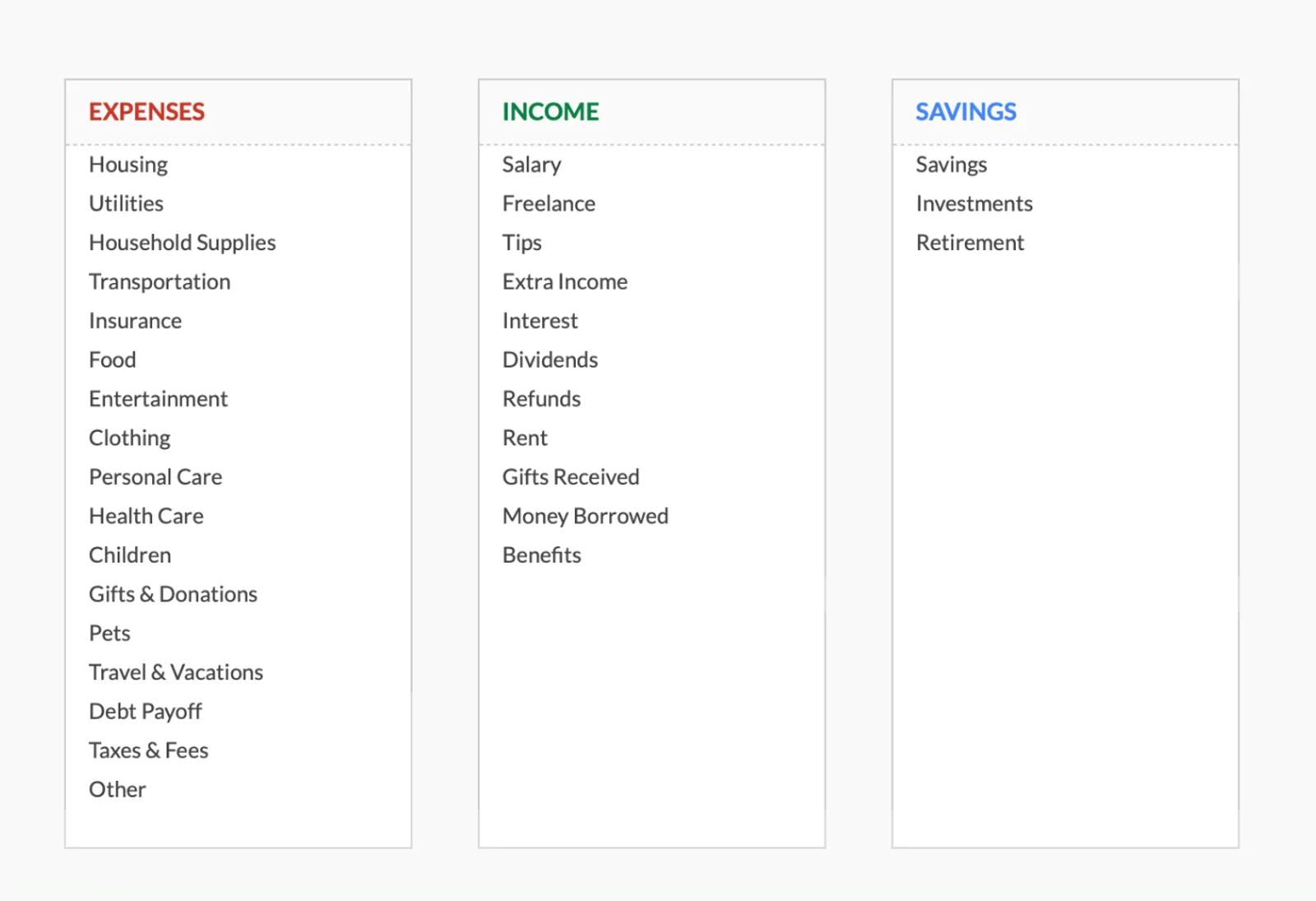
Fully customizable expense, income, and savings categories
Getting Started
Setting Up a Monthly Teacher Budget
Enter your teaching salary
Use your per-paycheck take-home amount. If you are on 10-month pay, note this so you can plan for summer separately.
Add supplemental income
Tutoring, coaching, summer school - enter any additional earnings. These may vary month to month.
Set spending targets
Allocate your income across housing, food, transportation, and other categories. If on 10-month pay, include a summer savings allocation.
Track expenses including classroom costs
Log all spending, including school supplies you purchase. This builds a record useful for both budgeting and tax time.
Adjust for the school year cycle
September and January often have heavier classroom expenses. Summer months look entirely different. Adjust targets to match the rhythm.
Common Questions
Monthly Budget for Teachers - FAQ
How do I handle 10-month pay over 12 months?
Divide your total annual salary by 12 to find your true monthly income. Set aside the difference between your actual paycheck and this monthly figure during the school year. That reserve funds the summer months.
Can I deduct classroom expenses on my taxes?
Teachers can currently deduct up to $300 in unreimbursed classroom expenses. The template helps track these purchases throughout the year so you have an accurate total at tax time.
What about summer school income?
Add summer school pay as income during those months. The template adjusts your totals automatically. Some teachers rely on this to bridge the gap.
How do I account for pension contributions?
Your pension contribution is already deducted from your paycheck. Budget from your take-home pay and note the pension deduction if you want to see total compensation.
Should I include coaching or extracurricular stipends?
Yes. These are income - add them as a separate line item. They are often seasonal, so enter them in the months they are paid.
What if I also tutor on the side?
Add tutoring as a variable income source. Since amounts may vary, budget your essentials from your teaching salary alone and treat tutoring income as a supplement.
How do I track pension contributions alongside a 403(b)?
Add separate line items for your mandatory pension deduction and any voluntary 403(b) contributions. Seeing both together shows your total retirement savings rate and makes it clear how much of your gross salary reaches your checking account.
Do I owe self-employment tax on tutoring income?
Yes. Private tutoring income is self-employment income subject to a 15.3% SE tax on top of regular income tax. Setting aside 25-30% of tutoring earnings for taxes prevents a surprise at filing time. The template can track this as a separate savings allocation.
Can't find the answer you're looking for? Contact our team
Start budgeting as a teacher
One-time purchase. No subscription. Your financial data stays in your Google Drive.