Monthly Budget Template
Monthly Budget Template for Retirees
Track Social Security, pension income, portfolio withdrawals, and healthcare expenses in a budget built for retirement finances.
In Depth
Fixed Income, Flexible Spending
Retirement reverses the fundamental flow of money. Instead of earning income and setting some aside, retirees draw from accumulated sources - Social Security, pensions, investment accounts - and the central question shifts from "how much can I save" to "how long will this last." This mental shift alone changes how budgeting works and what it needs to accomplish.
Income in retirement often comes from multiple streams that arrive on different schedules with different tax treatments. Social Security deposits monthly, a pension might arrive biweekly, and IRA withdrawals happen on whatever schedule the retiree chooses. Piecing these together into a clear monthly total takes deliberate tracking, especially when the tax implications of each source differ.
Healthcare costs tend to be the most unpredictable category in a retirement budget. Medicare covers a portion, but premiums for supplemental insurance, prescription drug plans, dental work, and out-of-pocket costs can add up to a significant monthly expense. These costs also tend to increase year over year, which means a budget that worked at 65 may need adjustment by 70.
Spending patterns in retirement are not static. Early retirement years often see higher spending on travel and activities. Later years may shift toward home maintenance, healthcare, and support services. Some retirees find that reviewing and adjusting their budget annually - rather than setting it once and forgetting it - keeps it aligned with how their needs actually evolve.
The Challenge
Why Retirement Budgeting Works Differently
Retirement flips the income equation. Instead of earning and saving, you are drawing down from multiple sources with different tax treatments and timing.
Income comes from multiple sources
Social Security, a pension, IRA withdrawals, maybe part-time work - retirement income arrives from different places on different schedules. Knowing your actual monthly income requires adding all of these together.
Healthcare costs are significant and variable
Medicare premiums, supplemental insurance, prescription costs, and out-of-pocket expenses can total hundreds per month. These costs tend to increase year over year and are harder to predict than working-age health expenses.
Withdrawal timing affects taxes
Taking money from a traditional IRA is taxed as income. Roth withdrawals are not. Social Security may be partially taxable depending on other income. The order and amount of withdrawals has tax consequences that affect how far your money stretches.
Spending patterns shift in retirement
Commuting costs disappear but travel may increase. Work clothes are gone but home maintenance becomes a bigger line item. A budget built for working years does not match retirement reality.
Ready to take control of your retiree finances?
What You Get
Budget Features Built for Retirement Life
Multi-source income tracking
Track Social Security, pensions, annuities, investment withdrawals, and any other income. See your total monthly inflow from all sources.
Healthcare expense categories
Dedicated categories for Medicare premiums, supplemental insurance, prescriptions, dental, vision, and out-of-pocket costs.
Retirement-relevant expense categories
Categories adjusted for retirement life - travel, home maintenance, hobbies, gifts to family, and charitable giving.
Retirement spending targets vs. actuals
Set spending targets and compare against actual expenses. See where you are over or under budget each month.
Retirement month in review
Total income, total expenses, and net surplus or deficit for the month. One view that shows whether your plan is working.
Categories tailored to retirement spending
Add or remove categories to match your retirement lifestyle. No two retirements look the same.
See It In Action
What the template looks like
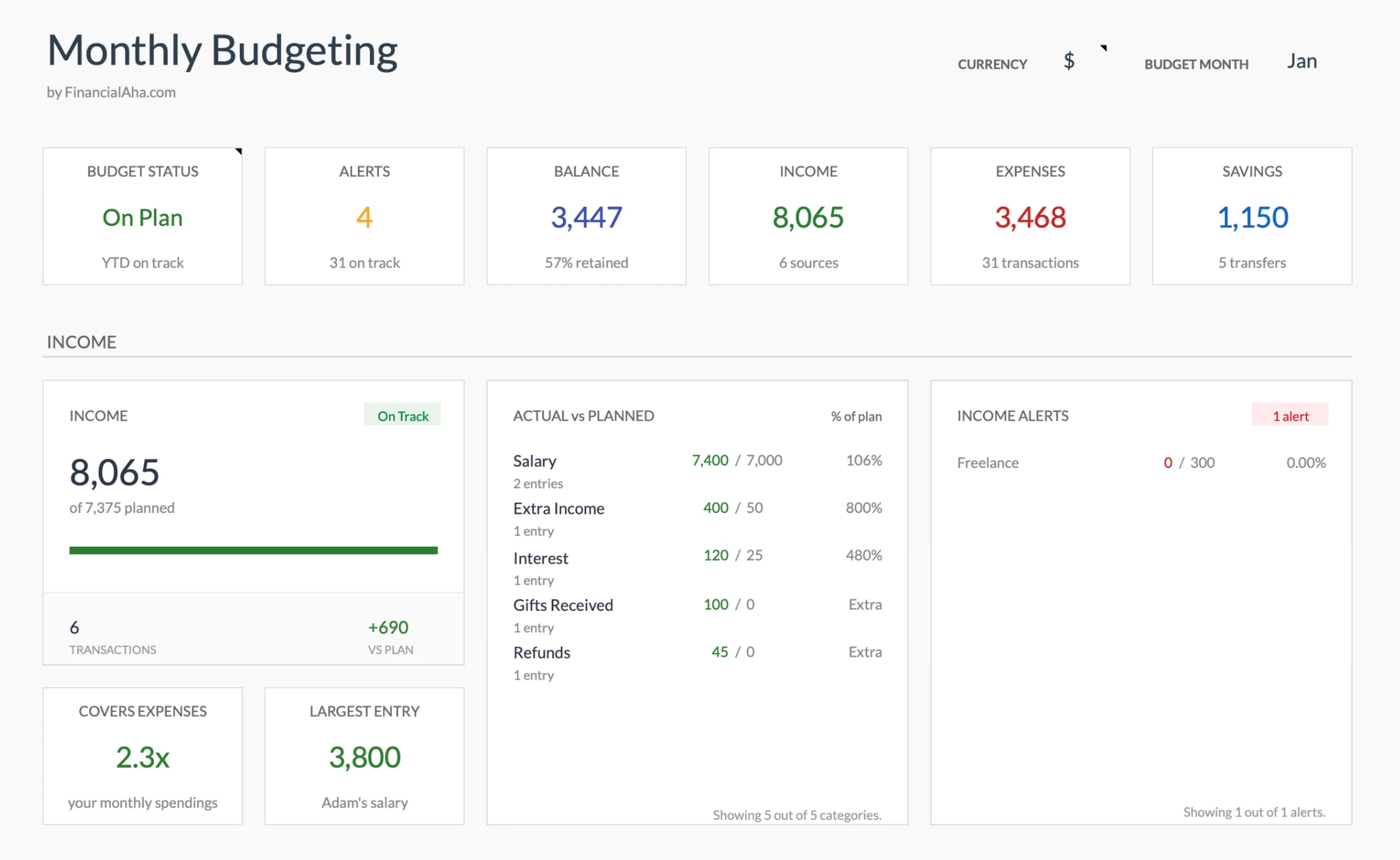
Browse through the template to see how it handles income tracking, expense budgets, savings goals, and spending analysis.
- Dashboard with key metrics at a glance
- Transaction logging with categories
- Budget vs actual comparison
- Visual charts and breakdowns
- Fully customizable categories

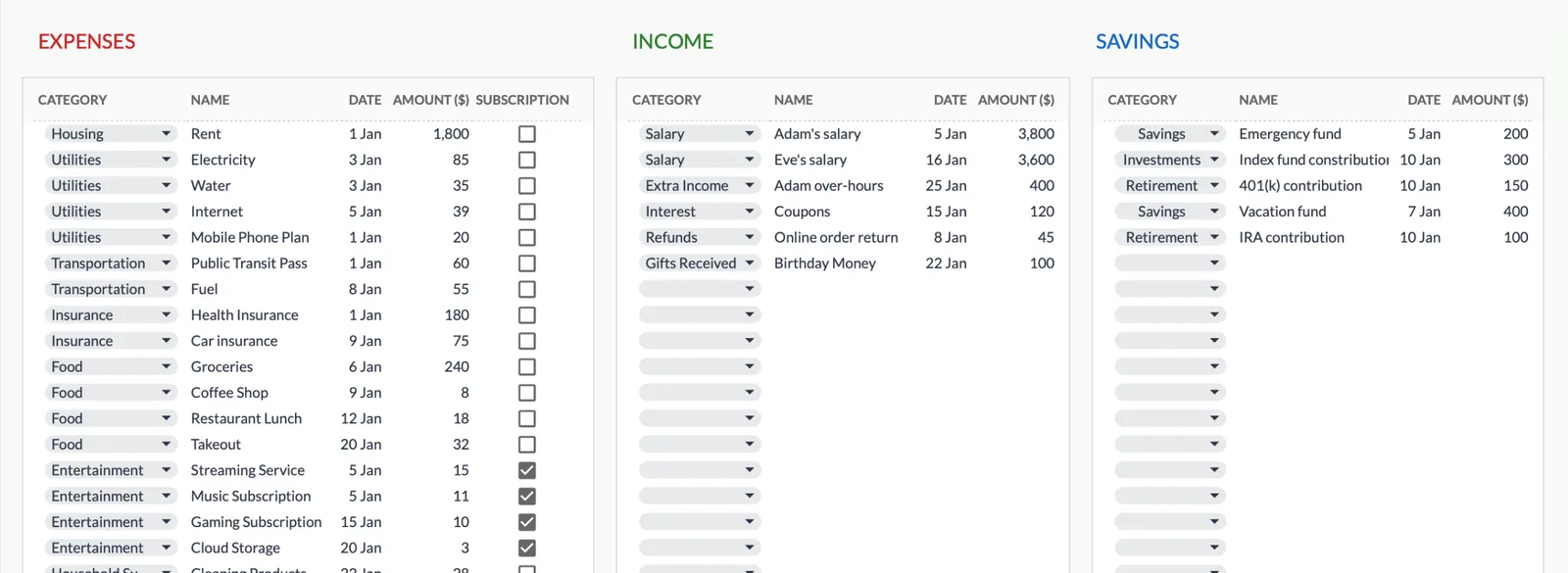
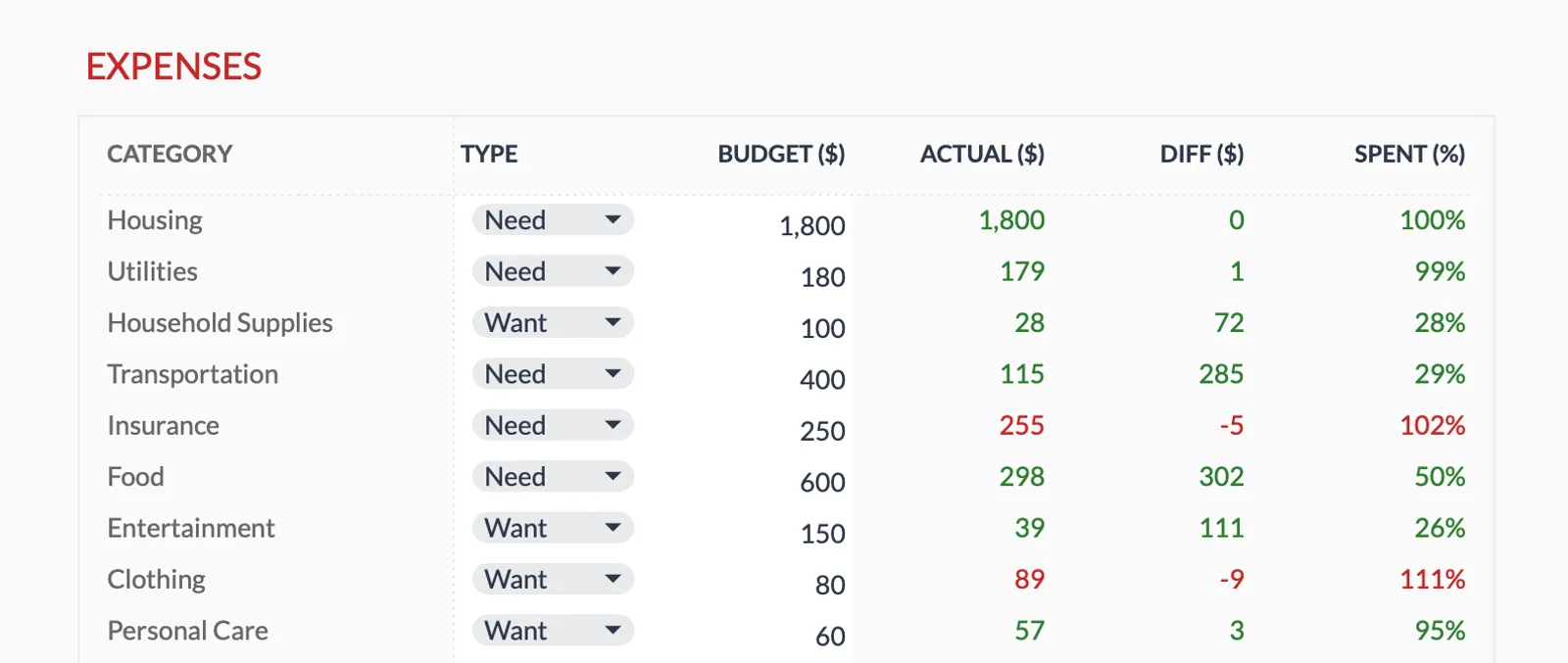
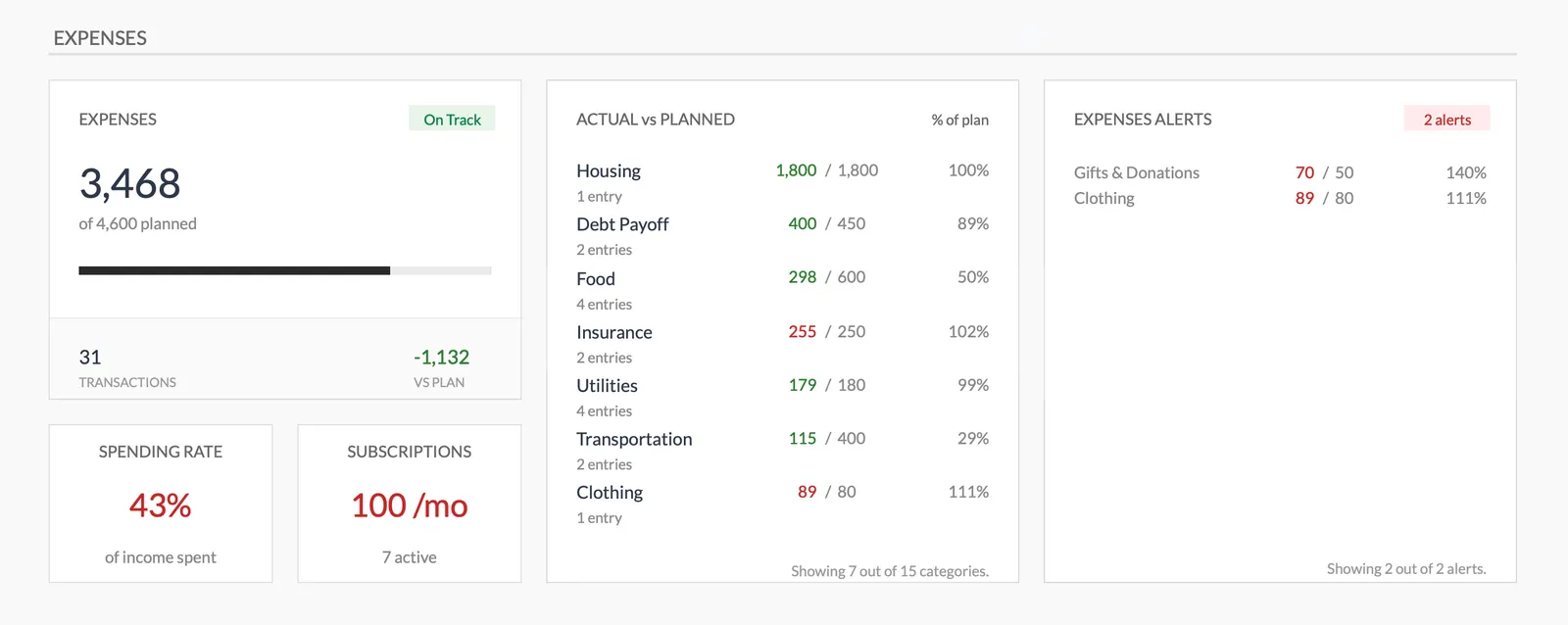
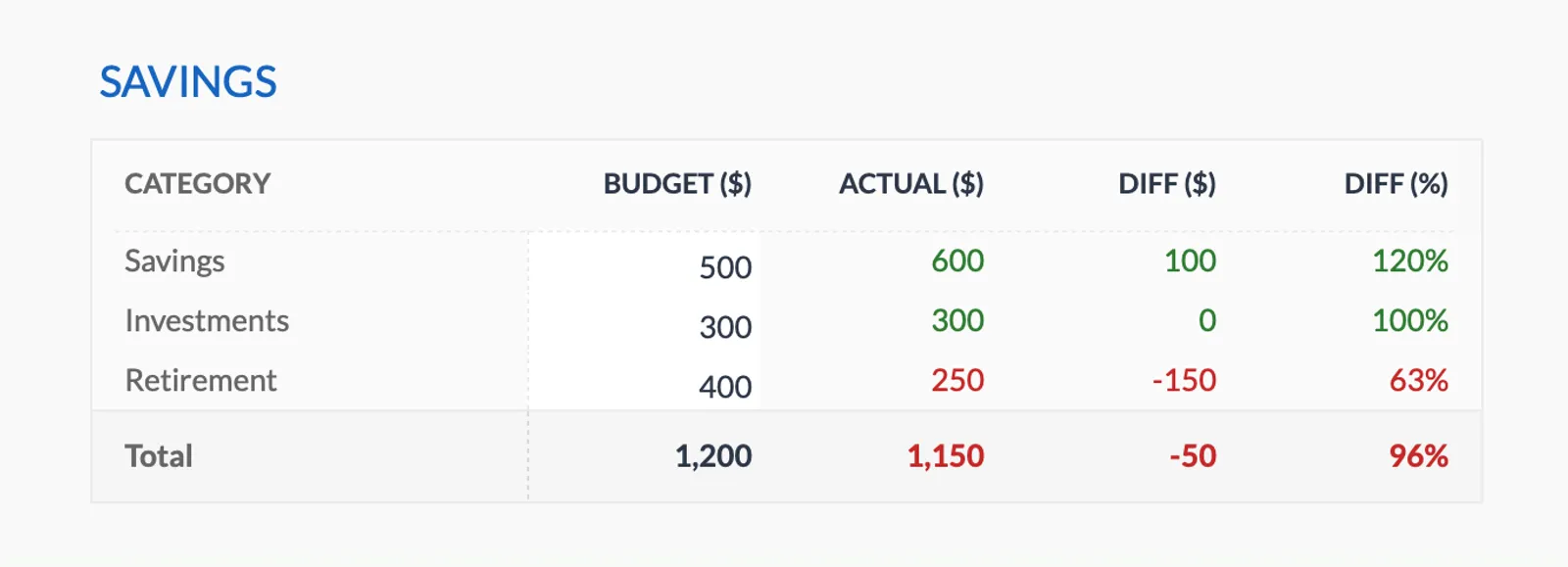
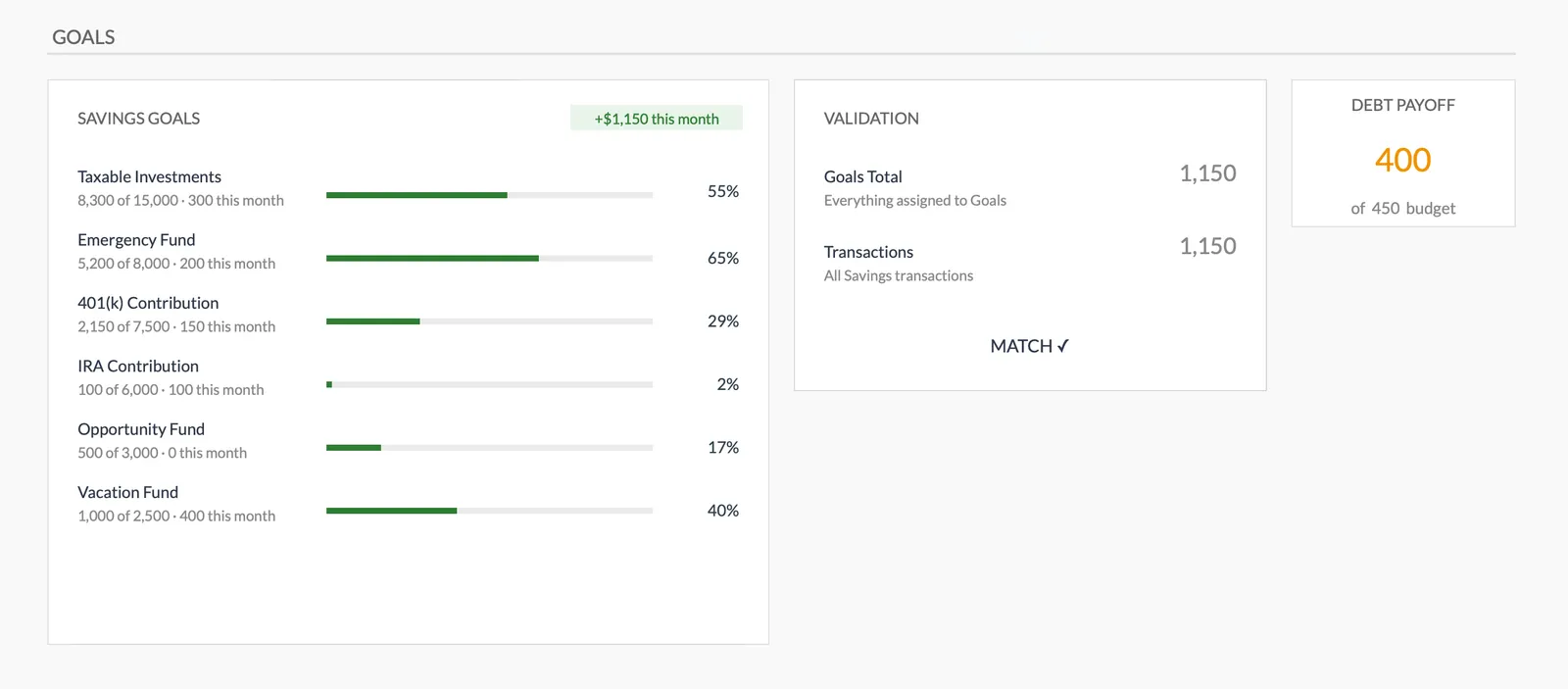
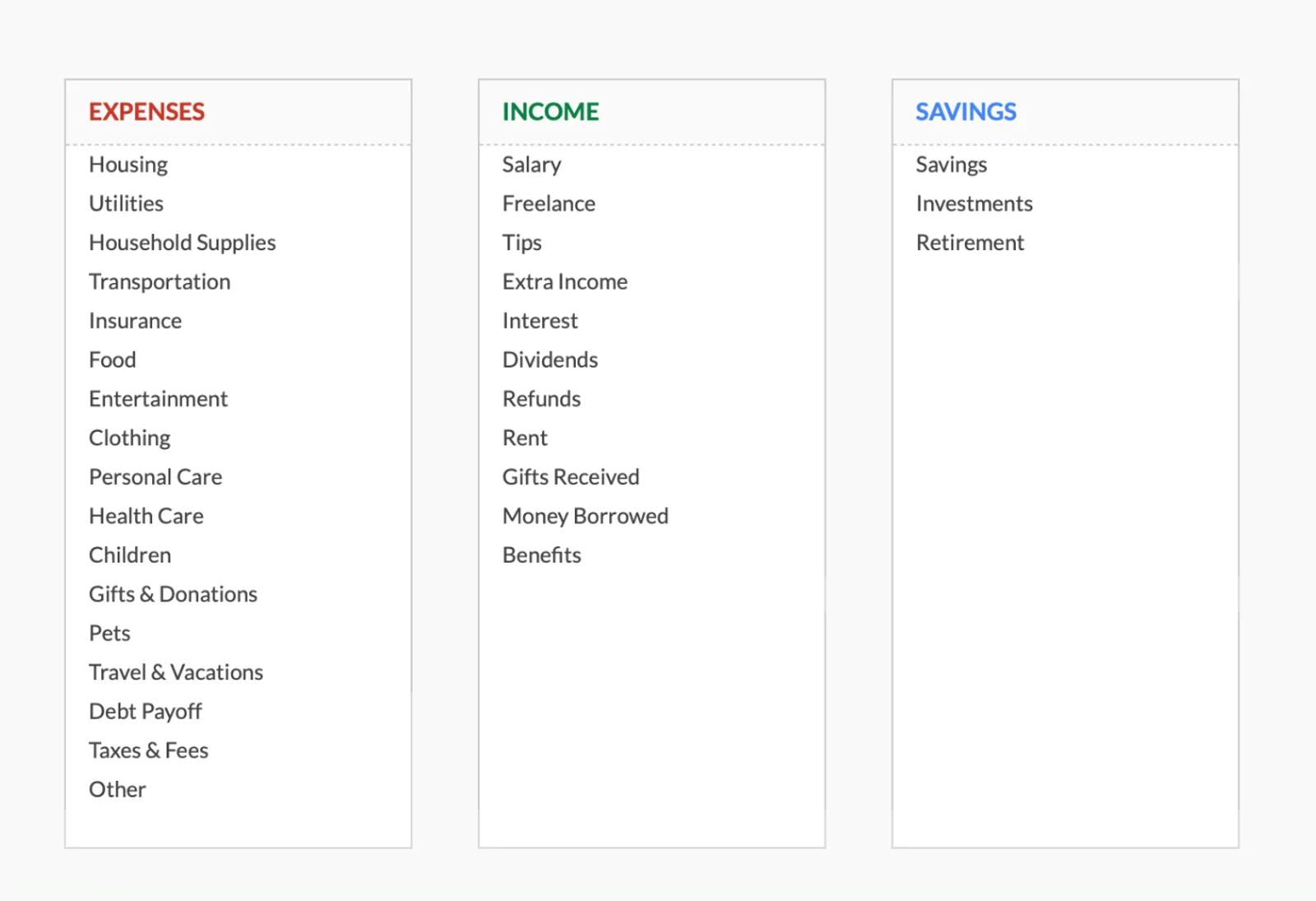
Dashboard with income, expenses, and savings at a glance
Log transactions with automatic categorization
Set targets per category and track actual spending
Visual breakdown of where your money goes
Track savings goals alongside your budget
Monitor progress toward financial goals
Fully customizable expense, income, and savings categories
Getting Started
Setting Up Your Retirement Budget
List all income sources
Enter Social Security, pension, withdrawal amounts, and any earned income. Note the schedule each arrives on.
Categorize your expenses
Use the retirement-focused categories to organize your spending. Adjust or add categories as needed.
Set monthly spending targets
Based on your total income, decide how much to allocate to each category. Leave a buffer for unexpected costs.
Track expenses through the month
Log spending as it happens. The template keeps running totals so you can see where you stand at any point.
Review at month end
Compare actual spending against targets. Adjust categories that consistently run over or under.
Common Questions
Monthly Budget for Retirees - FAQ
How do I handle income that arrives on different schedules?
Enter the monthly equivalent for each source. Social Security arrives monthly, but if you take quarterly IRA withdrawals, divide the quarterly amount by three for a monthly figure.
Can this help me decide how much to withdraw each month?
The template tracks spending against income. Seeing your actual expenses helps inform withdrawal decisions - but the specifics of withdrawal strategy depend on your tax situation and accounts.
What if my healthcare costs spike unexpectedly?
The template makes spikes visible immediately so you can adjust other categories that month. Over time, tracking healthcare costs reveals patterns that help with future estimates.
Is this useful for both early retirees and traditional retirees?
Yes. The income sources and categories may differ, but the structure works for anyone drawing from savings and other sources rather than a paycheck.
Can I track Required Minimum Distributions?
Add RMDs as an income source. The template tracks whatever you enter, so you can monitor RMD amounts alongside other withdrawal income.
What if I want a full-year view?
This template handles month-by-month budgeting. The Annual Budgeting Planner provides a 12-month view for tracking seasonal patterns and annual totals.
Can't find the answer you're looking for? Contact our team
Start budgeting as a retiree
One-time purchase. No subscription. Your financial data stays in your Google Drive.