Annual Budget Template
Annual Budget Template for Single-Income Families
Plan a full year of family finances on one income - mapping seasonal expenses, annual goals, and month-by-month progress across all 12 months.
In Depth
Planning a Full Year on One Income
Single-income families operate with a clarity that dual-income households sometimes lack - there is one number coming in, and everything has to fit within it. That constraint can feel limiting month to month, but it becomes genuinely useful when stretched across a full year. Seeing twelve months at once reveals which periods are tight and which offer breathing room.
Seasonal expenses hit single-income families harder because there is no second paycheck to absorb the shock. Back-to-school costs in August, holiday spending in December, insurance renewals in January - these are predictable events that only feel like emergencies when they are not planned for. Mapping them across the year turns them into line items rather than crises.
One pattern that some single-income families notice over time is that their annual spending is more stable than their monthly stress suggests. A difficult month is often followed by a lighter one. The annual view makes this rhythm visible, which can be reassuring when any individual month feels uncomfortably tight.
There is also a practical benefit to having a single income source when it comes to annual planning - the projection is straightforward. Raises, if they come, happen at known intervals. Tax withholding is consistent. This predictability makes the twelve-month view especially reliable for families with one earner.
The Challenge
Why One Income Needs a Full-Year Plan
Single-income families have less room for surprises. When one salary covers everything, the annual perspective reveals patterns and pinch points that monthly budgets miss.
No second income to absorb spikes
December holidays, back-to-school August, car insurance renewals - these spikes hit a single income harder. An annual view shows exactly when these peaks arrive and how to prepare.
Every raise and bonus matters more
When there is one income stream, annual raises, bonuses, and tax refunds represent a larger percentage of total household resources. Planning how to deploy these amounts has outsized impact.
Long-term goals need disciplined pacing
Building an emergency fund, saving for education, or paying down a mortgage on one income requires consistent monthly contributions. The annual view shows whether the pace is sufficient.
Insurance and benefit costs take a bigger percentage
Family health insurance, life insurance, and other benefits may consume 10-15% of a single income. The annual view shows these costs alongside all other obligations for the full year.
Ready to take control of your single-income familie finances?
What You Get
Annual Planning Features for One-Income Homes
12-month income and expense planner
Map the full year of income and expenses side by side. See which months are tight and which have surplus.
Seasonal expense planning
Place known annual costs - school expenses, holidays, insurance renewals - in the correct months.
Annual goal tracking
Set savings, debt, or investment targets for the year and track cumulative monthly progress.
Budget vs. actual for each month
Compare planned versus actual throughout the year. Spot trends early enough to course-correct.
Single-income summary metrics
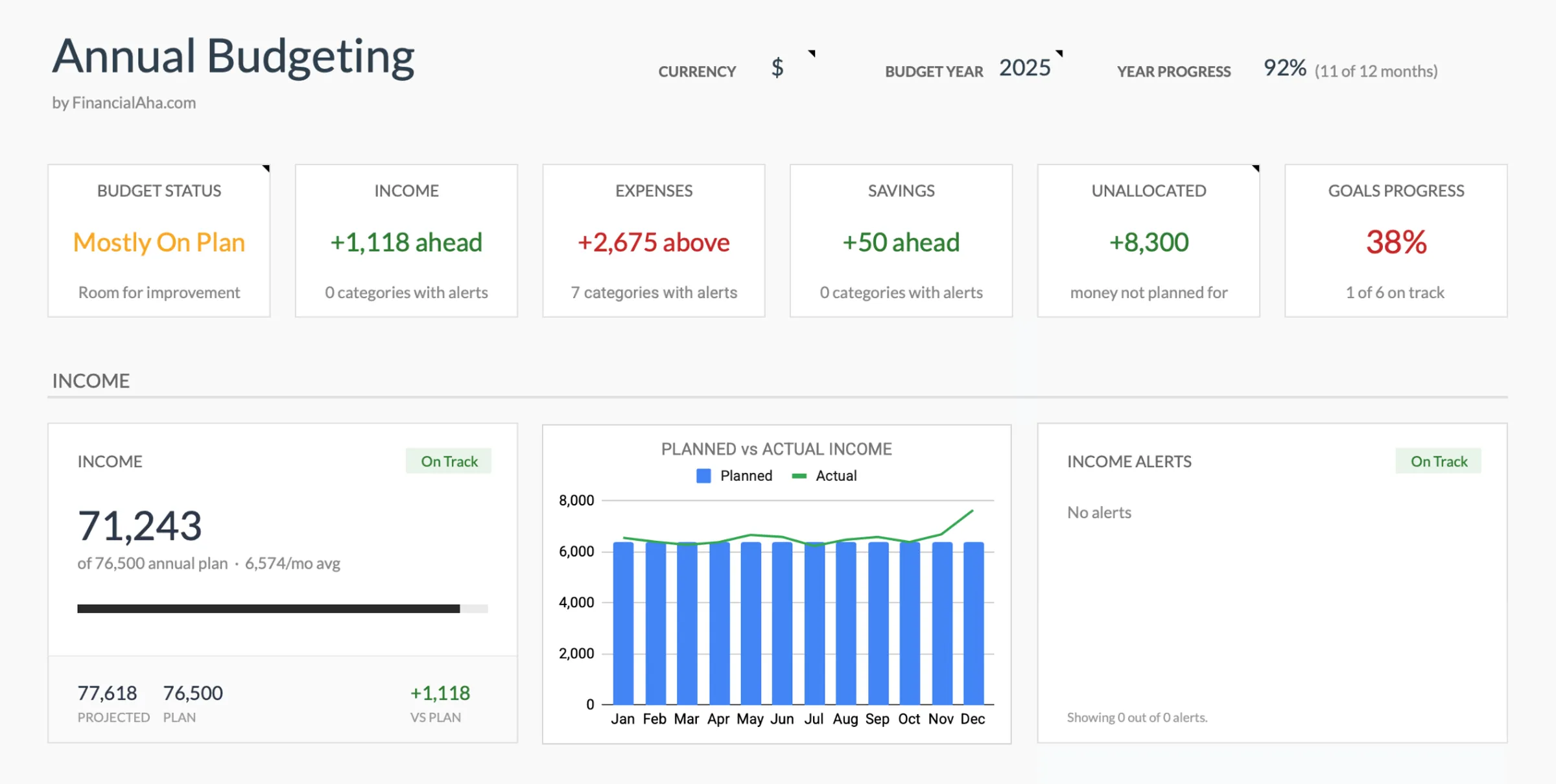
Annual income, total expenses, savings rate, and progress toward goals - all in one dashboard.
Customizable for family size
Adjust categories based on your family - number of children, their ages, and the specific costs they bring.
See It In Action
What the template looks like
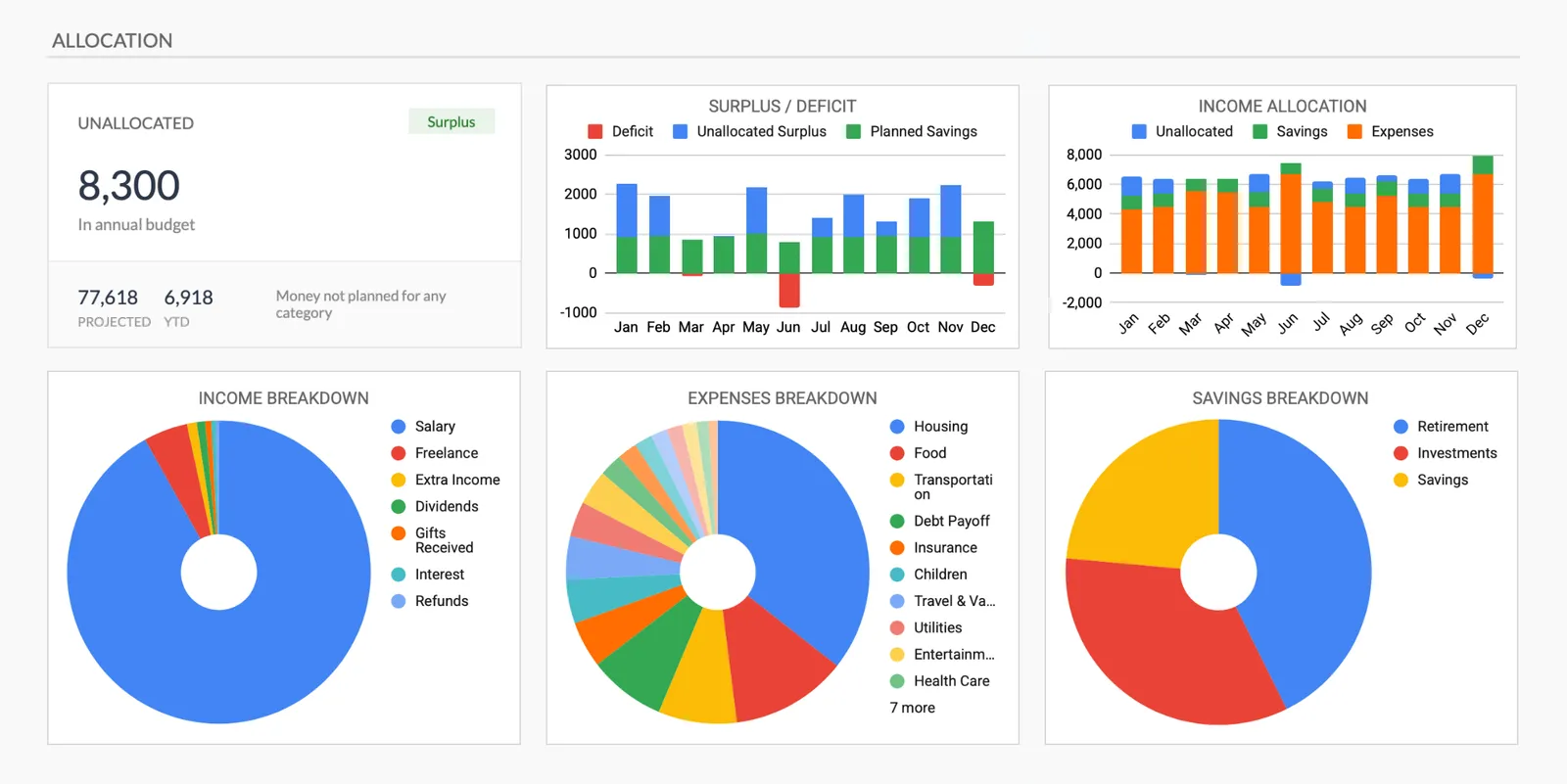
Browse through the template to see how it handles income tracking, expense budgets, savings goals, and spending analysis.
- Dashboard with key metrics at a glance
- Transaction logging with categories
- Budget vs actual comparison
- Visual charts and breakdowns
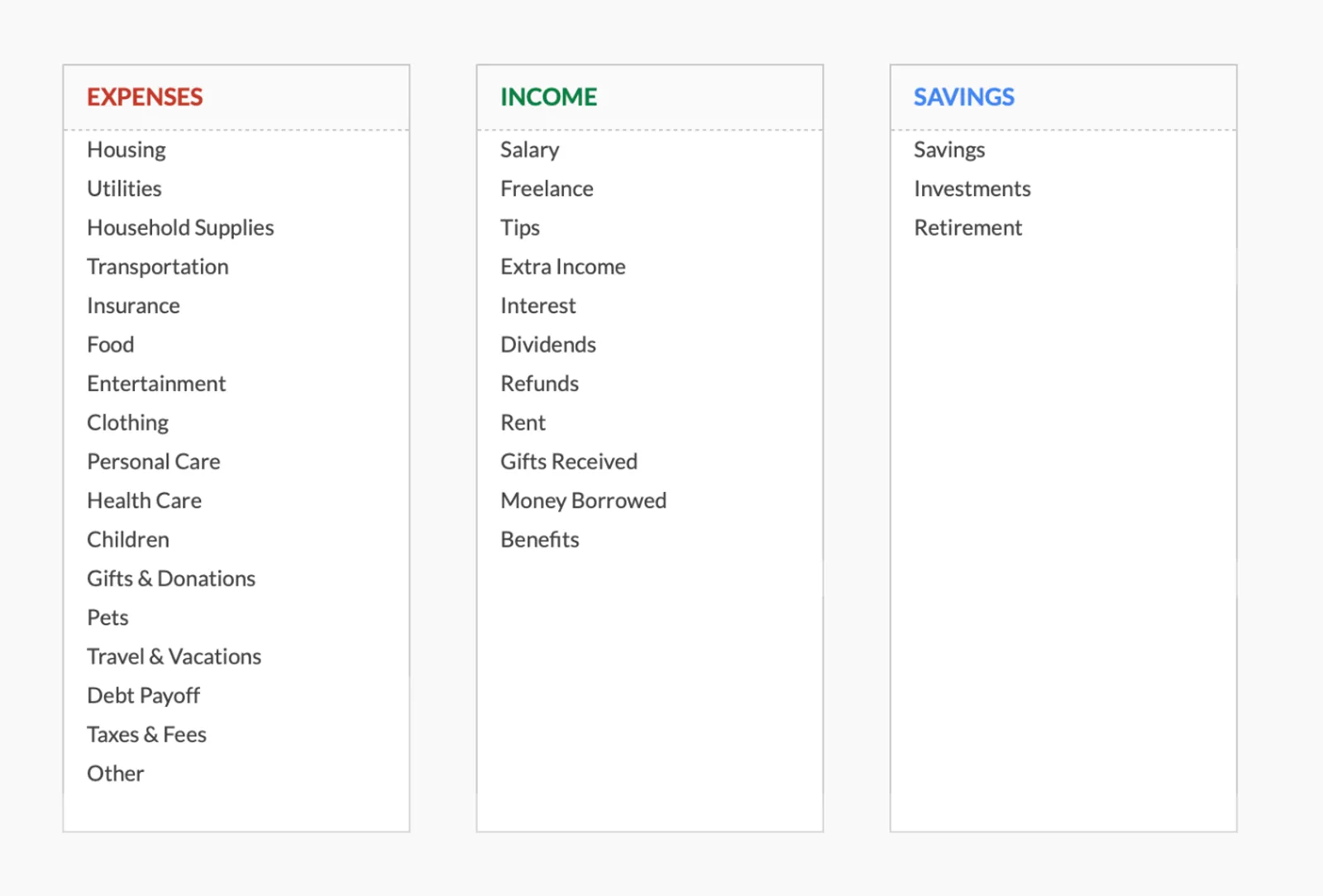
- Fully customizable categories
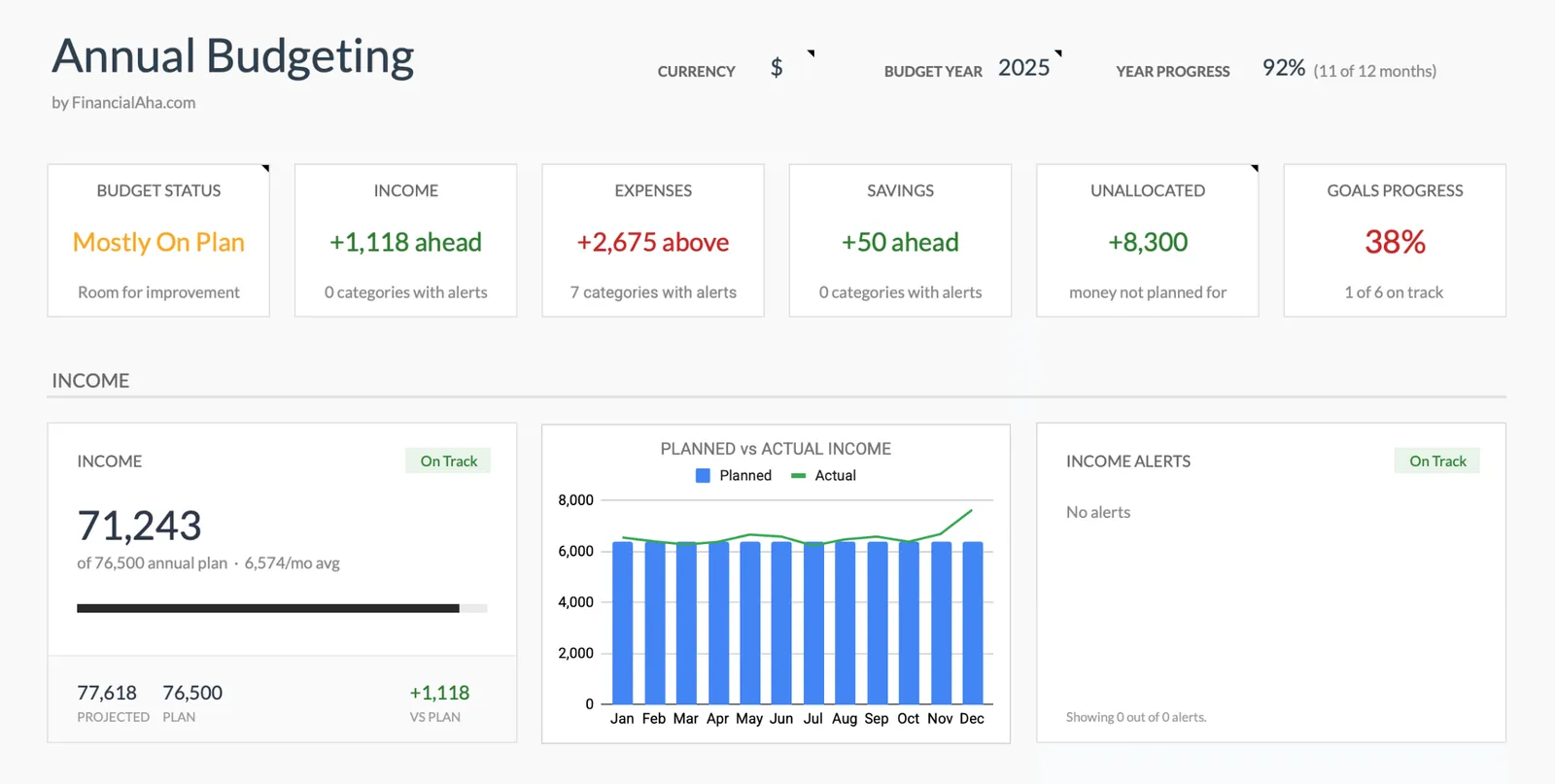

Full year budget overview with monthly breakdown
See how your budget is allocated across categories
Track key metrics across the year
Customizable categories for your annual plan
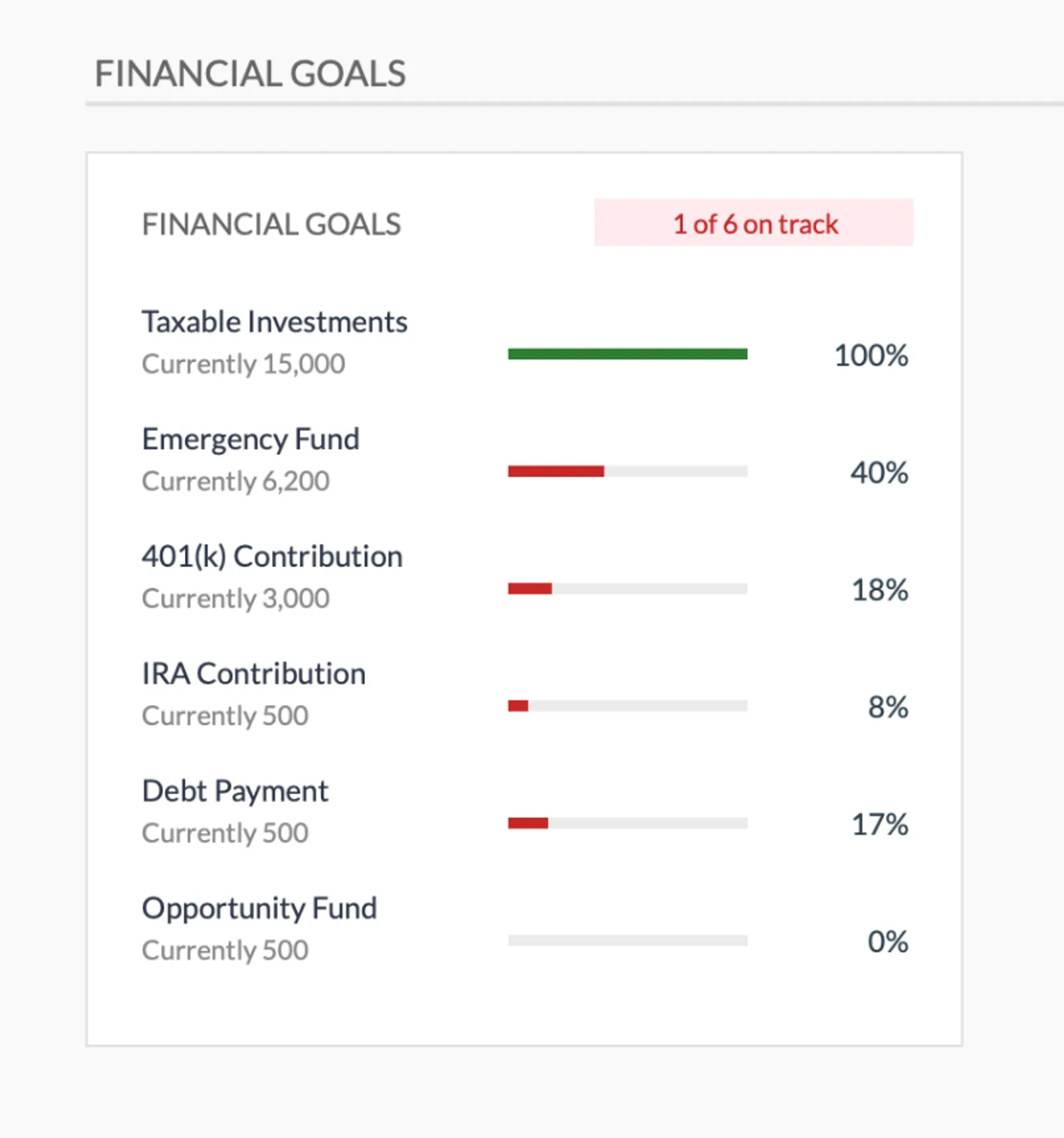
Set and track annual financial goals
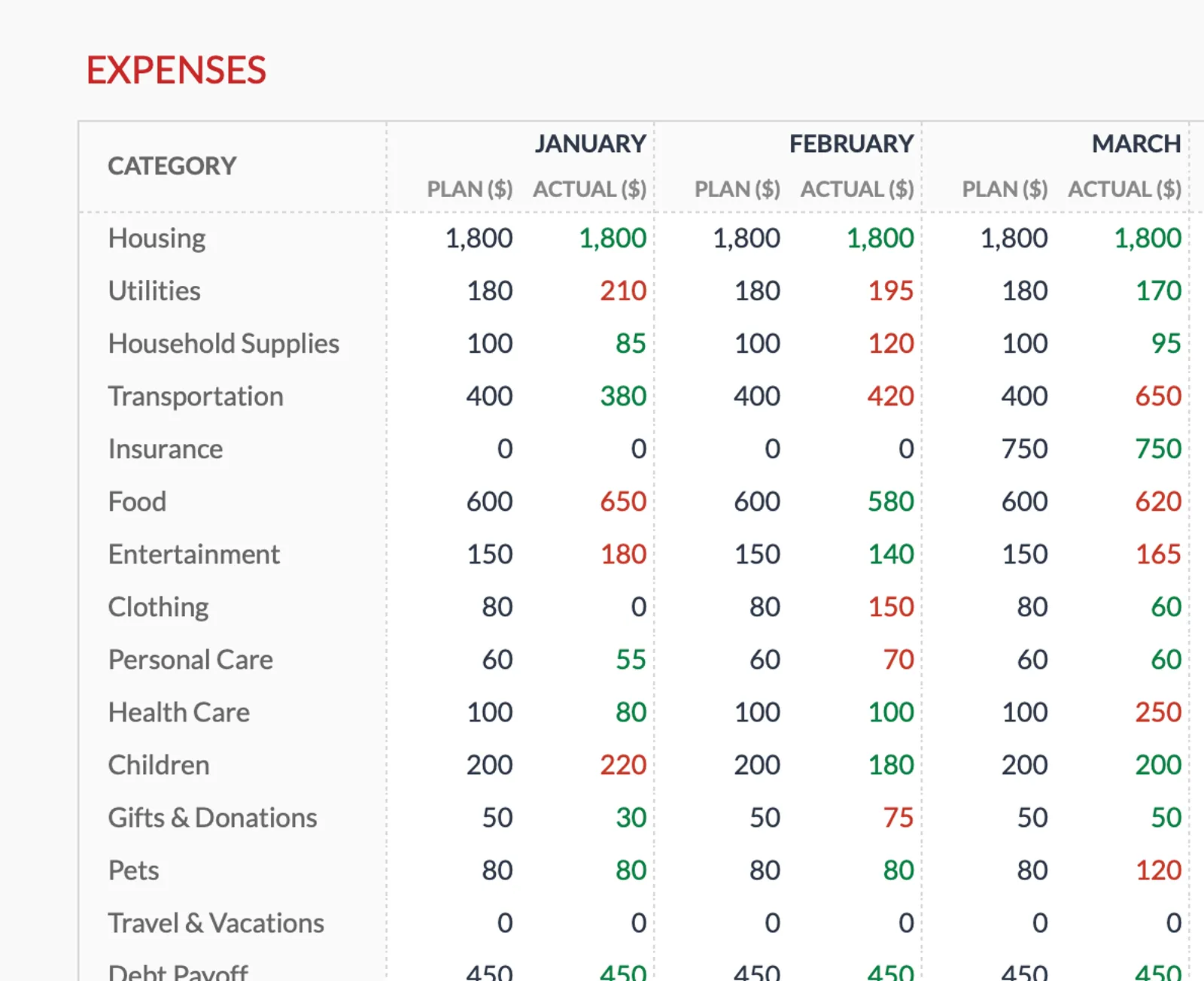
Track expenses month by month across the year
Getting Started
Start Your Single-Income Annual Plan
Enter your annual salary and expected pay dates
Map your income across 12 months including any expected raises, bonuses, or tax refund timing.
Identify annual and seasonal expenses
List every non-monthly expense: insurance renewals, school fees, holidays, birthdays, car registration.
Set annual financial goals
Define what you want to accomplish by year-end - emergency fund target, debt reduction, savings milestones.
Distribute goals across months
Break annual goals into monthly contributions. Adjust for months with higher expenses by reducing the contribution slightly.
Track actuals and review quarterly
Fill in real numbers each month. Quarterly reviews show whether the annual plan is on track or needs adjustment.
Common Questions
Annual Budget for Single-Income Families - FAQ
How do I handle months when expenses exceed income?
The annual planner shows these months in advance. Knowing December will be tight in January gives you 11 months to build a reserve. That is the power of the annual view.
What if the sole earner loses their job?
An annual budget helps you build an emergency fund more intentionally. It also shows exactly how long savings would last at current expense levels, which informs how large that fund needs to be.
Can I plan for a stay-at-home parent returning to work?
Yes. Add projected income starting in the month they plan to return. The template shows the financial impact of the transition - increased income but also new childcare and commuting costs.
How detailed should monthly estimates be?
Start with broad categories and known amounts. Fixed costs are easy to project. Variable costs can use averages. The template gets more accurate as you fill in actuals throughout the year.
Is this useful if we already track monthly expenses?
The annual view adds context that monthly tracking misses. It shows whether a bad month is actually a bad trend, reveals seasonal patterns, and tracks progress toward goals that take longer than 30 days.
Can I start mid-year?
Yes. Enter actuals for past months and projections for remaining months. The template works regardless of which month you begin.
Can't find the answer you're looking for? Contact our team
Start annual budgeting as a single-income familie
One-time purchase. No subscription. Your financial data stays in your Google Drive.