Annual Budget Template
Annual Budget Template for High Earners
Map 12 months of high-income finances including bonuses, equity compensation, tax obligations, and wealth-building priorities.
In Depth
When High Income Meets High Complexity
Higher earnings often come with financial complexity that a simple monthly budget cannot capture. Stock vesting schedules, bonus payouts, deferred compensation, multiple investment accounts - these elements interact across the full year in ways that only become clear with a twelve-month view. A strong January bonus can mask overspending that compounds through the summer.
Lifestyle inflation is one of the most discussed topics among high earners, and for good reason. The gap between what someone earns and what they spend tends to narrow over time, regardless of income level. An annual planner makes this visible in a way that monthly tracking cannot - it shows the total picture of where a large income actually went.
Tax planning is another area where the annual perspective matters. Estimated payments, capital gains timing, charitable giving strategies, and retirement contribution limits all operate on a yearly cycle. Seeing these alongside regular expenses helps high earners understand their true after-tax position rather than their gross income.
Some high earners find that their financial stress is not about scarcity but about optimization - the feeling that they are not making the most of their resources. An annual plan does not solve that entirely, but it does provide a clear accounting of what happened. That factual foundation tends to be more useful than vague unease.
The Challenge
Why High Earners Still Need a Budget
High income does not automatically create wealth. Without intentional planning, lifestyle inflation, complex compensation, and tax obligations can leave high earners with surprisingly little to show for their earnings.
Lifestyle inflation erodes high incomes silently
A $300,000 income feels enormous until a $4,000 mortgage, $800 car payments, $2,000 in dining, and $500 in subscriptions consume it. High earners often spend proportionally to income without realizing the opportunity cost.
Compensation is complex
Base salary, annual bonus, RSU vesting schedules, stock options - high-earner compensation arrives in chunks throughout the year. Without mapping these across 12 months, it is hard to know actual annual liquidity.
Tax obligations are substantial and variable
Higher tax brackets, AMT exposure, capital gains timing, and quarterly estimated taxes mean a significant portion of income goes to taxes. The annual view helps plan around these obligations.
Wealth building requires intentional allocation
Maxing out 401(k), backdoor Roth IRA, mega backdoor Roth, HSA, 529 plans - high earners have more savings vehicles but need to plan contributions strategically across the year.
Ready to take control of your high earner finances?
What You Get
Year-Round Budget Tools for High Earners
12-month income mapping
Plot salary, bonuses, RSU vesting dates, and other compensation across all 12 months. See actual cash flow timing.
Tax planning section
Track estimated tax payments, withholding adjustments, and year-to-date tax obligations.
Investment and savings allocation
Track contributions to 401(k), IRA, HSA, 529, and taxable accounts. See if you are on pace to max each vehicle.
Lifestyle expense tracking
Monitor discretionary spending across the year. Spot lifestyle inflation before it becomes permanent.
Annual wealth-building metrics
Total income, total taxes, total invested, total spent - and the resulting savings rate for the year.
Monthly allocation targets vs. actual results
Compare planned allocations against actual spending and investing. Stay on track for annual targets.
See It In Action
What the template looks like
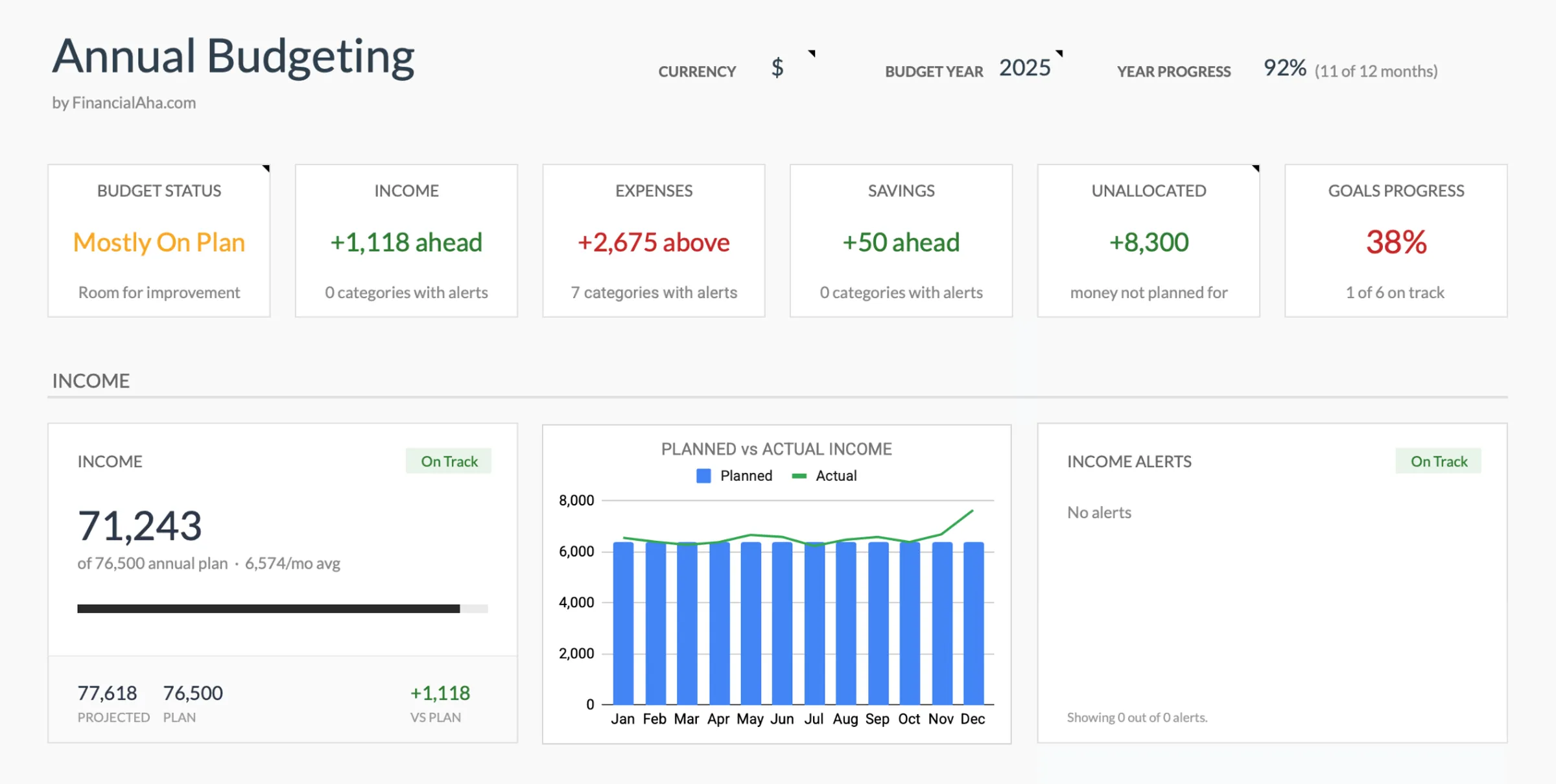
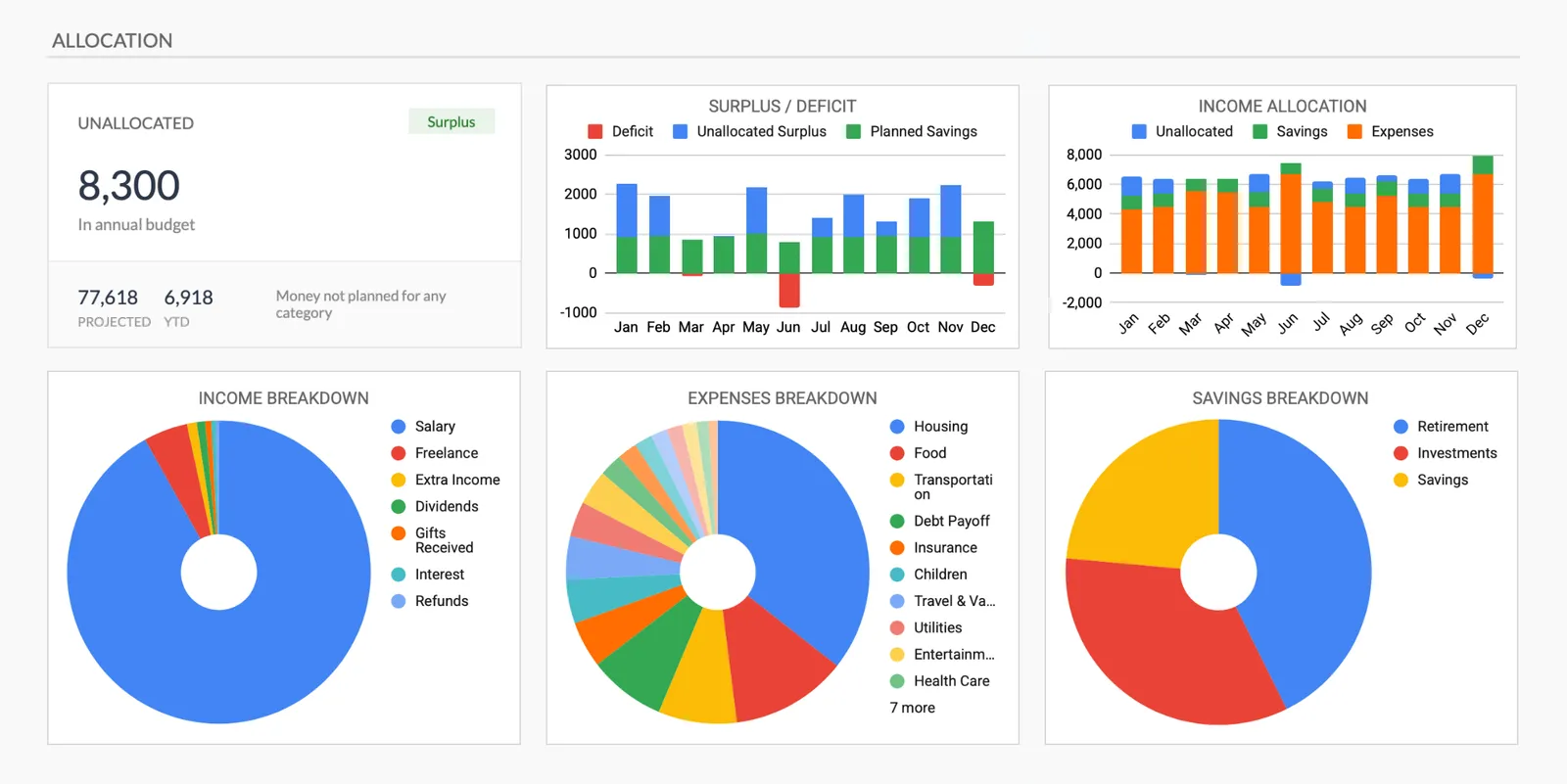
Browse through the template to see how it handles income tracking, expense budgets, savings goals, and spending analysis.
- Dashboard with key metrics at a glance
- Transaction logging with categories
- Budget vs actual comparison
- Visual charts and breakdowns
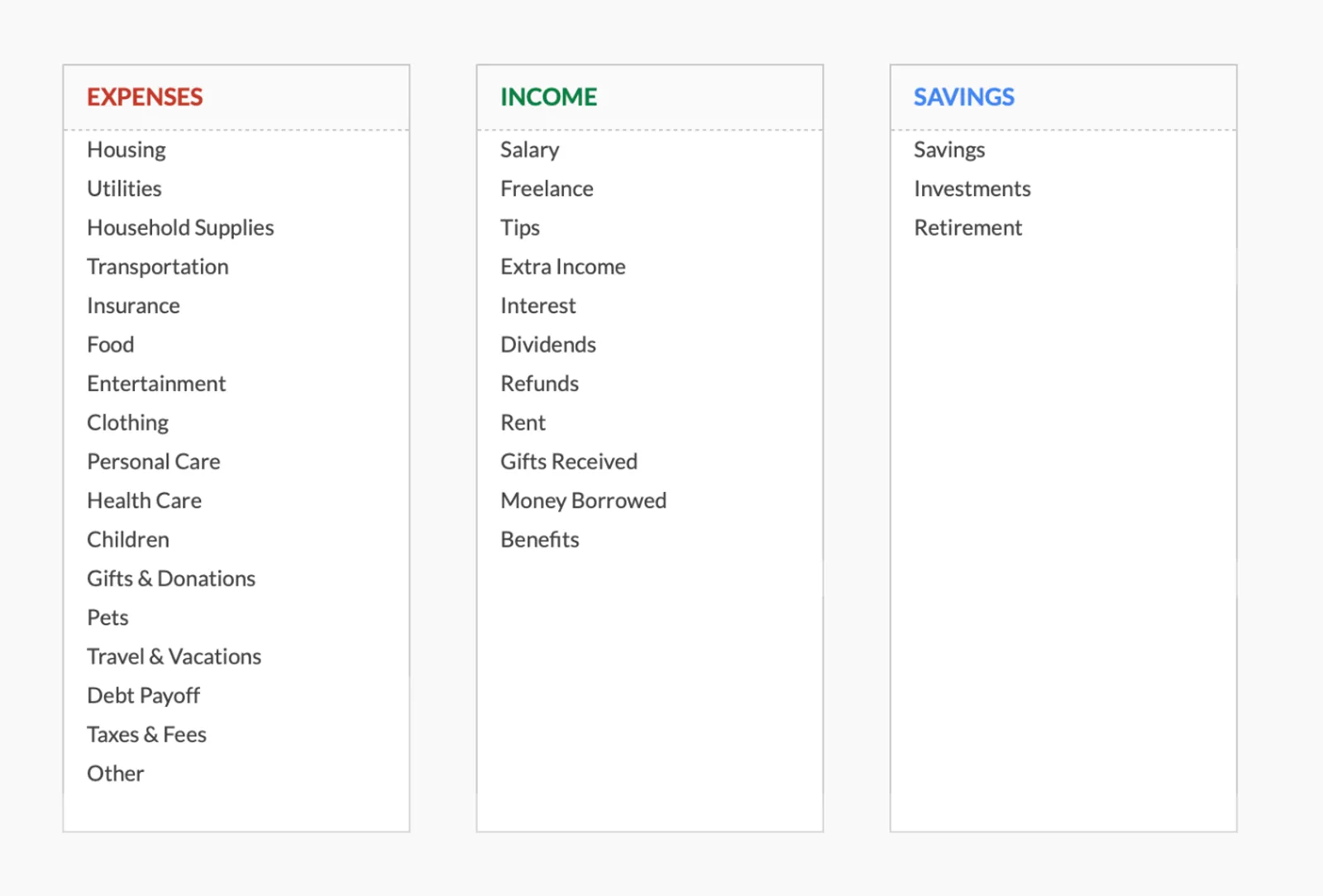
- Fully customizable categories
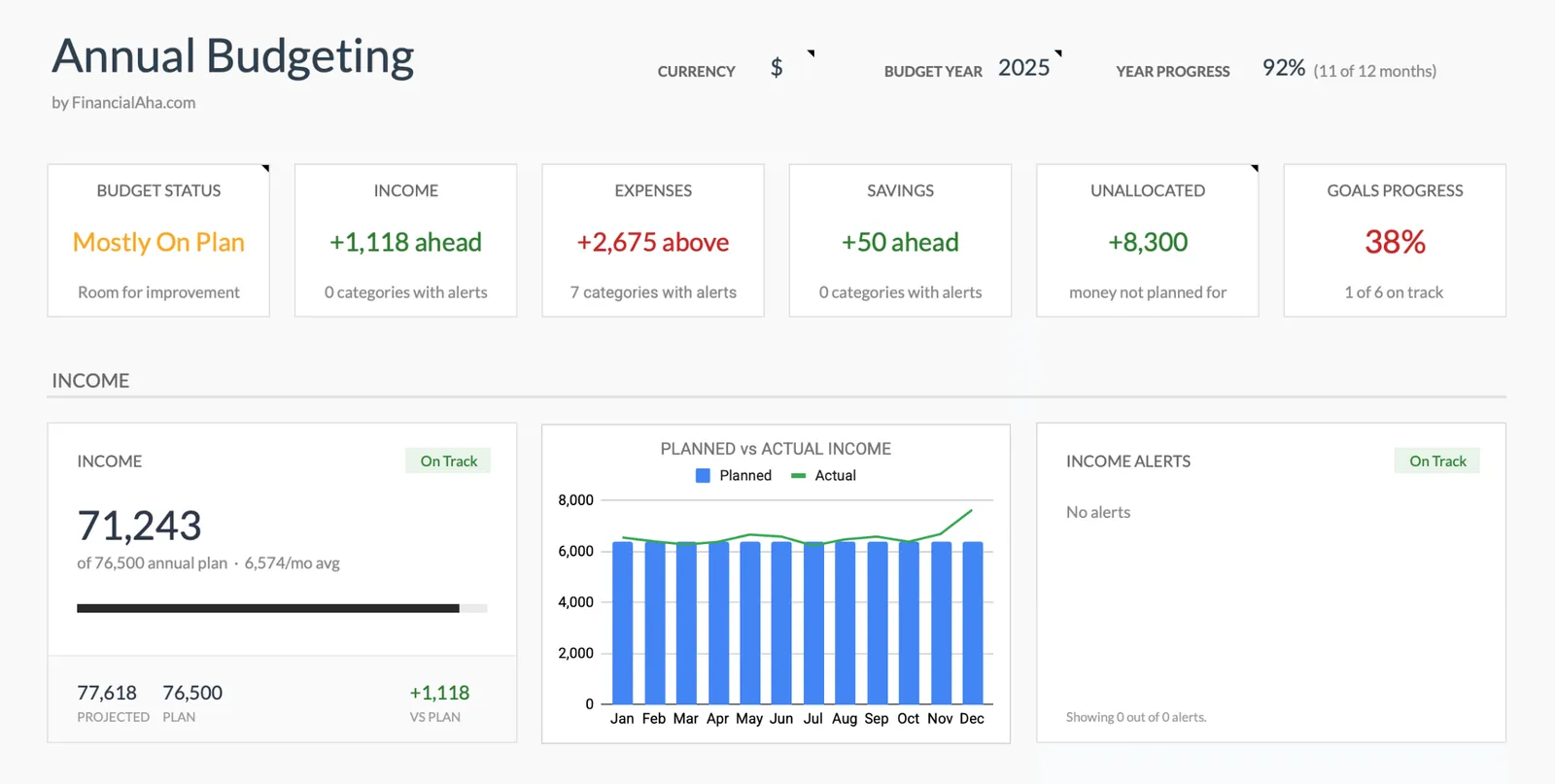

Full year budget overview with monthly breakdown
See how your budget is allocated across categories
Track key metrics across the year
Customizable categories for your annual plan
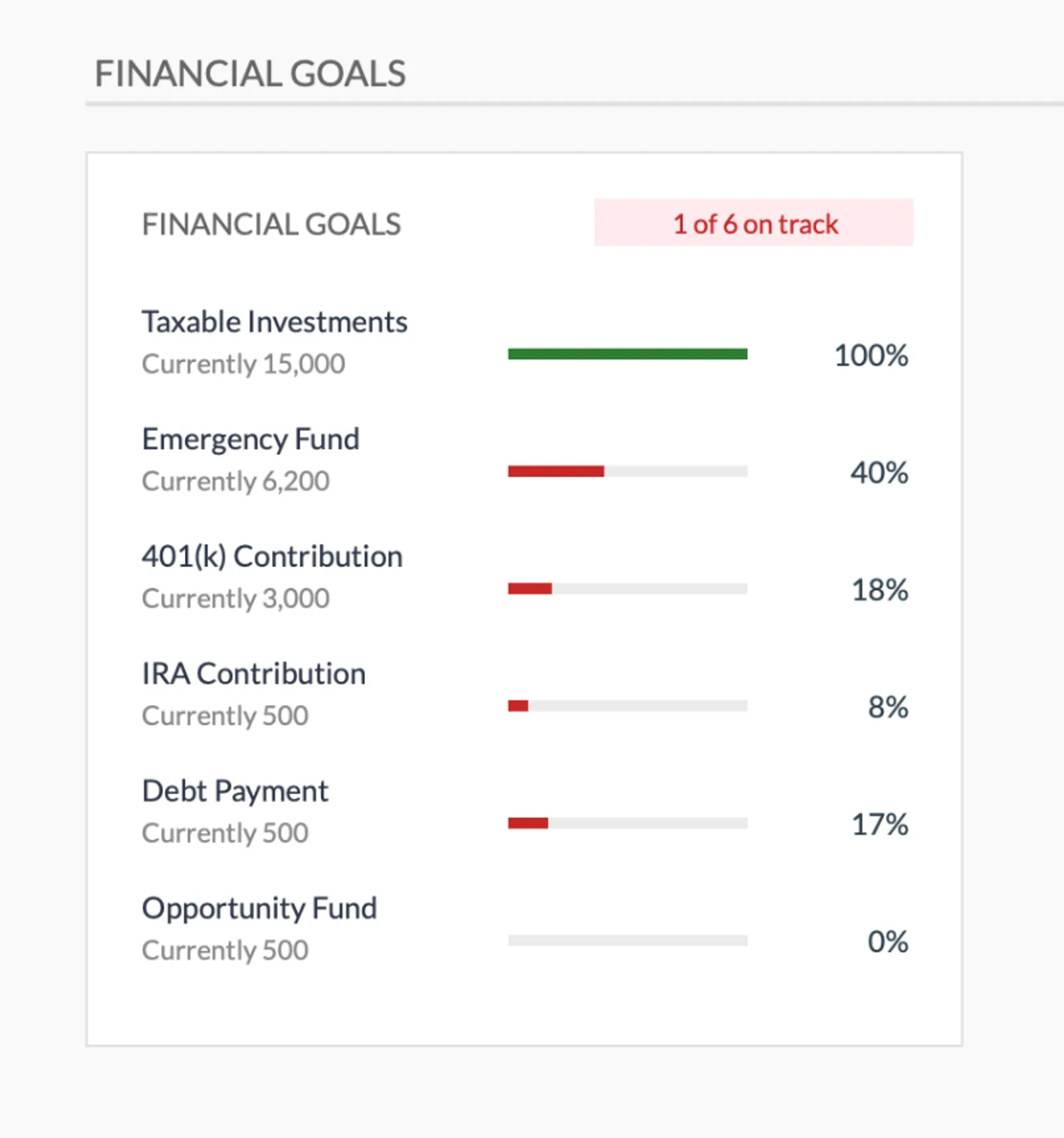
Set and track annual financial goals
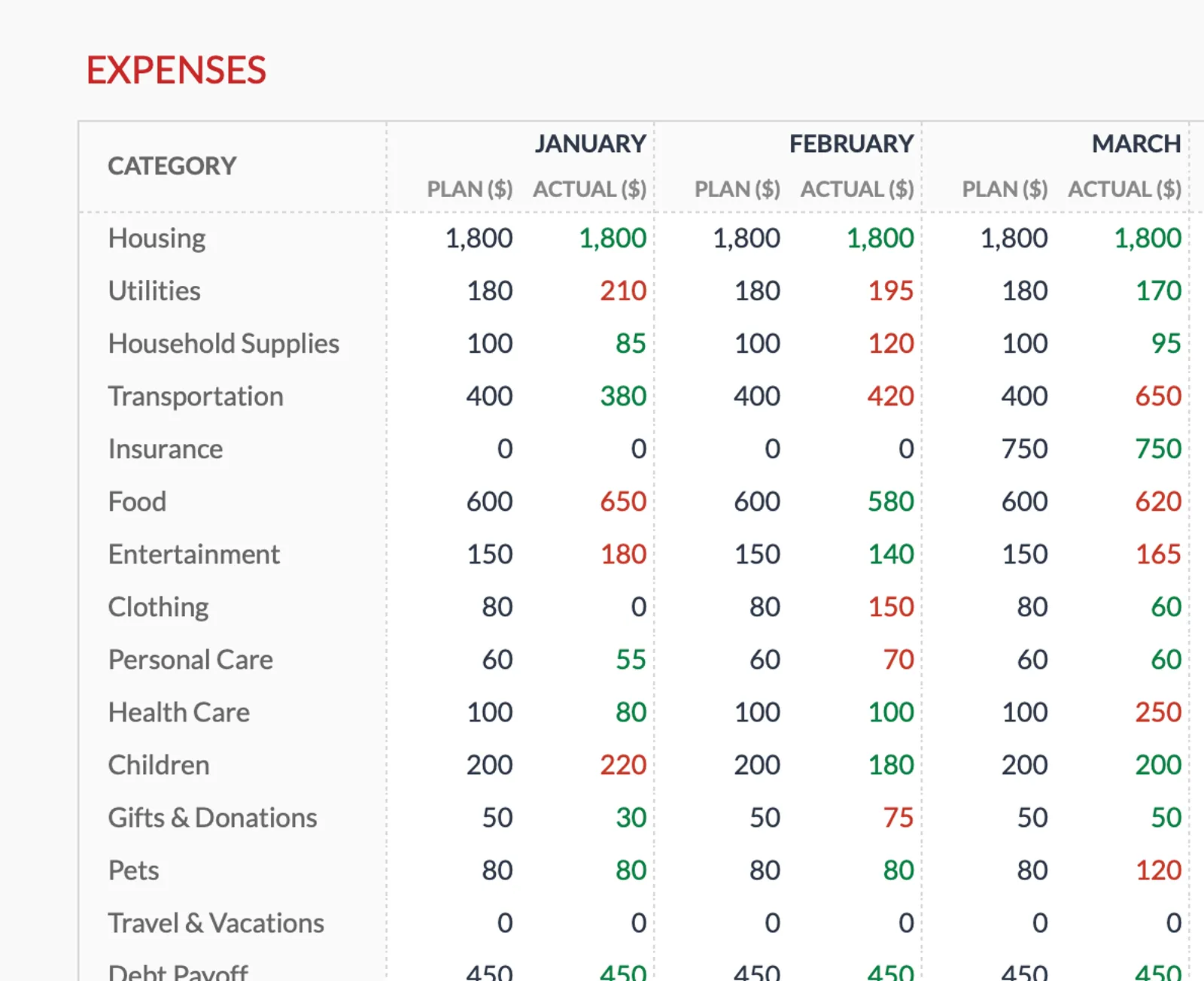
Track expenses month by month across the year
Getting Started
Quick Setup for High-Earner Annual Planning
Map your total compensation for the year
Enter base salary by month, expected bonus timing, RSU vesting dates, and any other income. See the full annual picture.
Plan tax obligations
Estimate annual tax liability and map quarterly payments. Note months with large compensation events that may affect withholding.
Set investment contribution targets
Plan 401(k) contributions to maximize employer match and tax benefit. Add IRA, HSA, and other accounts with target amounts.
Budget lifestyle expenses
Set category targets for housing, transportation, dining, travel, and discretionary spending. The annual view shows total lifestyle cost.
Review quarterly and adjust
Compare actuals to plan each quarter. Redirect bonus or RSU proceeds based on where the annual plan stands.
Common Questions
Annual Budget for High Earners - FAQ
Why would a high earner need a budget?
Income alone does not build wealth - the gap between income and spending does. Many high earners have high savings potential but without tracking, lifestyle spending consumes most of it. The annual view makes the total picture unavoidable.
How do I budget around RSU vesting?
Enter the expected vesting amount in the month it vests. Since value depends on stock price, you can estimate conservatively and update when the actual amount is known.
Can this help with tax planning?
The template tracks income timing and tax payments, which helps inform tax planning conversations. For actual tax strategy, work with a tax professional - but bring this data to the meeting.
What about charitable giving planning?
Add a charitable giving category and plan donations across the year. The annual view helps coordinate giving with tax strategy, especially for donor-advised fund contributions.
How do I handle variable bonus amounts?
Use a conservative estimate and update when the actual amount is confirmed. Budget essential spending without the bonus, then allocate the bonus to savings and investments when it arrives.
Is this useful alongside a financial advisor?
Many advisors focus on investment management and tax strategy. This template covers the spending and savings side - knowing exactly where your money goes gives your advisor better data to work with.
Can't find the answer you're looking for? Contact our team
Start annual budgeting as a high earner
One-time purchase. No subscription. Your financial data stays in your Google Drive.