Ireland
Retirement Planning Template for Ireland
Map out your retirement - occupational pension, PRSA, State Pension projections, and retirement expenses - in a Google Sheets template you own.
In Depth
Bridging the Gap Between 60 and 66
One of the trickiest parts of Irish retirement planning is the gap between when many people stop working and when the State Pension begins. Occupational pensions can often be accessed from age 60, but the State Pension (Contributory) does not start until 66. That six-year window needs its own funding strategy, and overlooking it can leave people drawing down retirement savings faster than intended.
PRSI contribution records deserve more attention than they tend to get. The Total Contributions Approach considers your entire working history from age 16, and gaps from unemployment, time spent caring for family, or years abroad can reduce the eventual payout. Checking your record at mywelfare.ie while there is still time to address gaps through voluntary contributions is a practical step that many people delay.
The tax-free lump sum at retirement is another area where the details matter. For defined contribution pensions, 25% of the fund can be taken tax-free up to EUR 200,000, with amounts above that taxed at progressively higher rates. Understanding these thresholds in advance gives more room to plan around them, particularly for people with multiple pension pots from different employers over a career.
Ireland
Retirement Planning in Ireland: Key Factors
Irish retirement planning involves maximizing tax-relieved pension contributions, understanding the State Pension system, and planning for a potentially long retirement.
Tax-relieved pension contributions are the primary tool
Pension contributions in Ireland receive tax relief at your marginal rate (20% or 40%). The age-related limits are generous: 15% of net relevant earnings up to age 29, increasing to 40% for those 60 and over. The annual earnings cap for relief is EUR 115,000 (2025). Maximizing contributions - especially at the 40% tax rate - is one of the most effective financial planning strategies available.
The State Pension (Contributory) depends on PRSI history
The maximum State Pension (Contributory) is EUR 289.30/week (2025), requiring adequate PRSI contributions over your working life. The Total Contributions Approach (TCA) uses your complete PRSI record from age 16 to State Pension age (currently 66). Periods of unemployment, caring, or education may have HomeCaring Credits. Checking your record early allows time to address gaps.
Retirement age and access to pension funds
While the State Pension age is 66, occupational pensions can often be accessed from 60 (or 50 in some cases). You can take a tax-free lump sum at retirement - typically 1.5x final salary for defined benefit, or 25% of the fund for defined contribution (up to a maximum of EUR 200,000 tax-free). Planning around these access points affects retirement income timing.
Auto-enrolment will change the landscape
Ireland's auto-enrolment pension scheme (planned for late 2025) will automatically enrol employees not currently in a pension. Initial contribution rates start low (1.5% each from employee, employer, and state) and increase over a decade. For those already in a pension, this may not change much, but it signals growing recognition that supplementary pension savings are essential.
Obter o Modelo
Primeiros Passos
Setting Up for Irish Retirement Planning
Enter current pension fund value
List your occupational pension, PRSA, Additional Voluntary Contributions (AVCs), and any previous employer pensions. Your pension provider or employer's HR department can supply current fund values. For defined benefit schemes, note the projected annual pension income.
Check your State Pension entitlement
Review your PRSI contribution record at mywelfare.ie. Note the total contributions and any gaps. Enter your projected weekly State Pension as future retirement income starting at age 66.
Track your contribution limits
Based on your age, note the maximum percentage of earnings eligible for tax relief. Track year-to-date contributions (yours and your employer's) against the annual limit. Employer contributions don't reduce your personal allowance.
Estimate retirement expenses
Project what you'll spend in retirement: housing (ideally mortgage-free), utilities, food, healthcare, travel, and hobbies. Some research suggests retirees in Ireland need EUR 14,000-28,000/year for a single person depending on lifestyle, plus housing costs.
Plan the transition
Map out the period between leaving work and receiving the State Pension. If you retire at 60, you'll need 6 years of income before the State Pension begins at 66. Your occupational pension and personal savings need to cover this gap.
Ver em Ação
Como o modelo se parece
Explore o modelo para ver como ele gerencia orçamento, categorias e acompanhamento de despesas - tudo adaptável à sua realidade financeira local.
- Seletor de moeda integrado
- Categorias personalizáveis
- Acompanhamento de orçamento vs. realizado
- Gráficos e resumos visuais
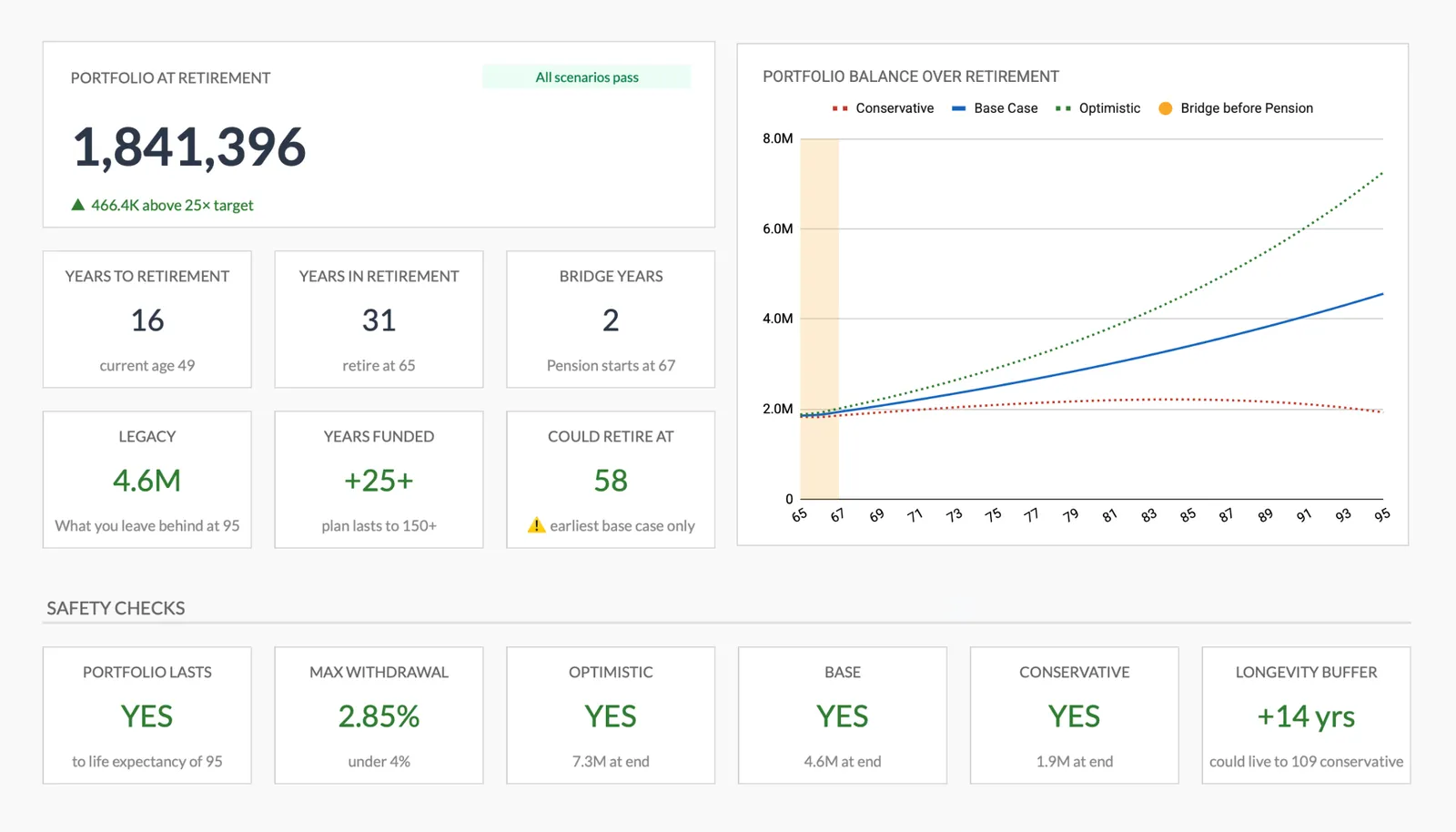
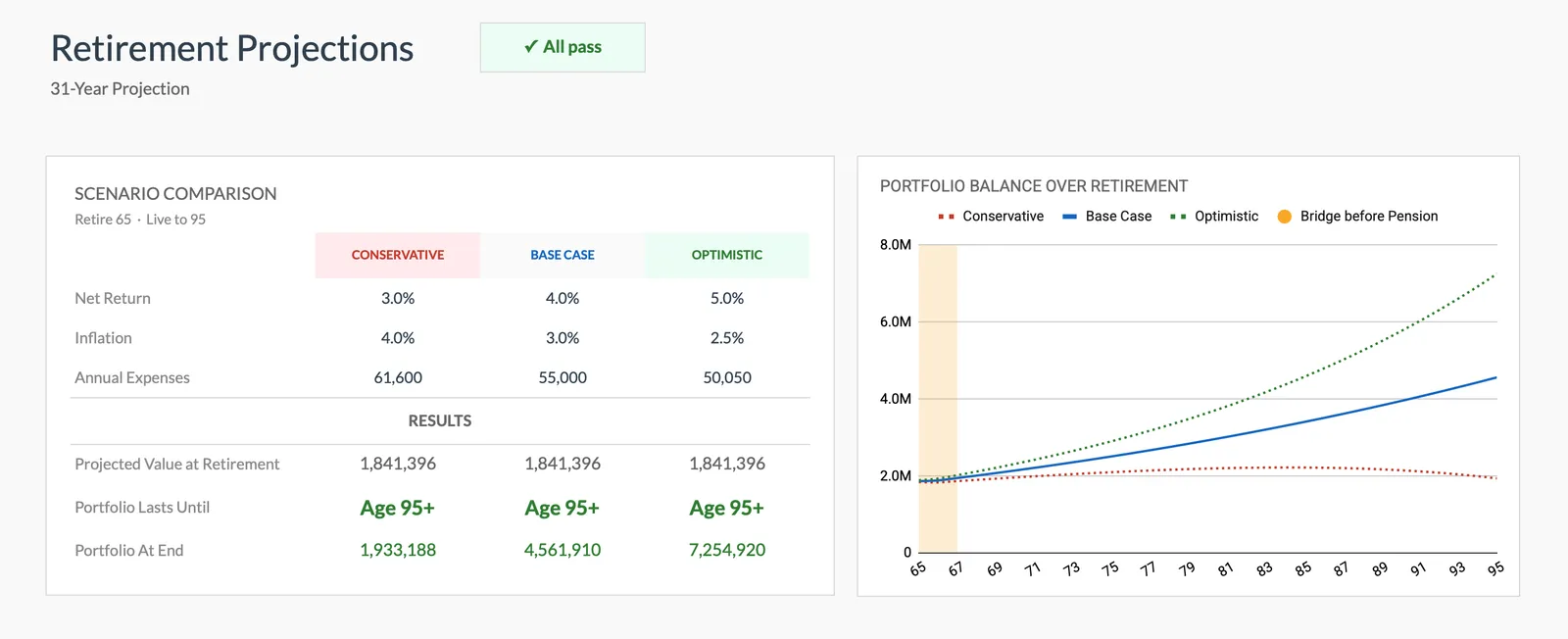
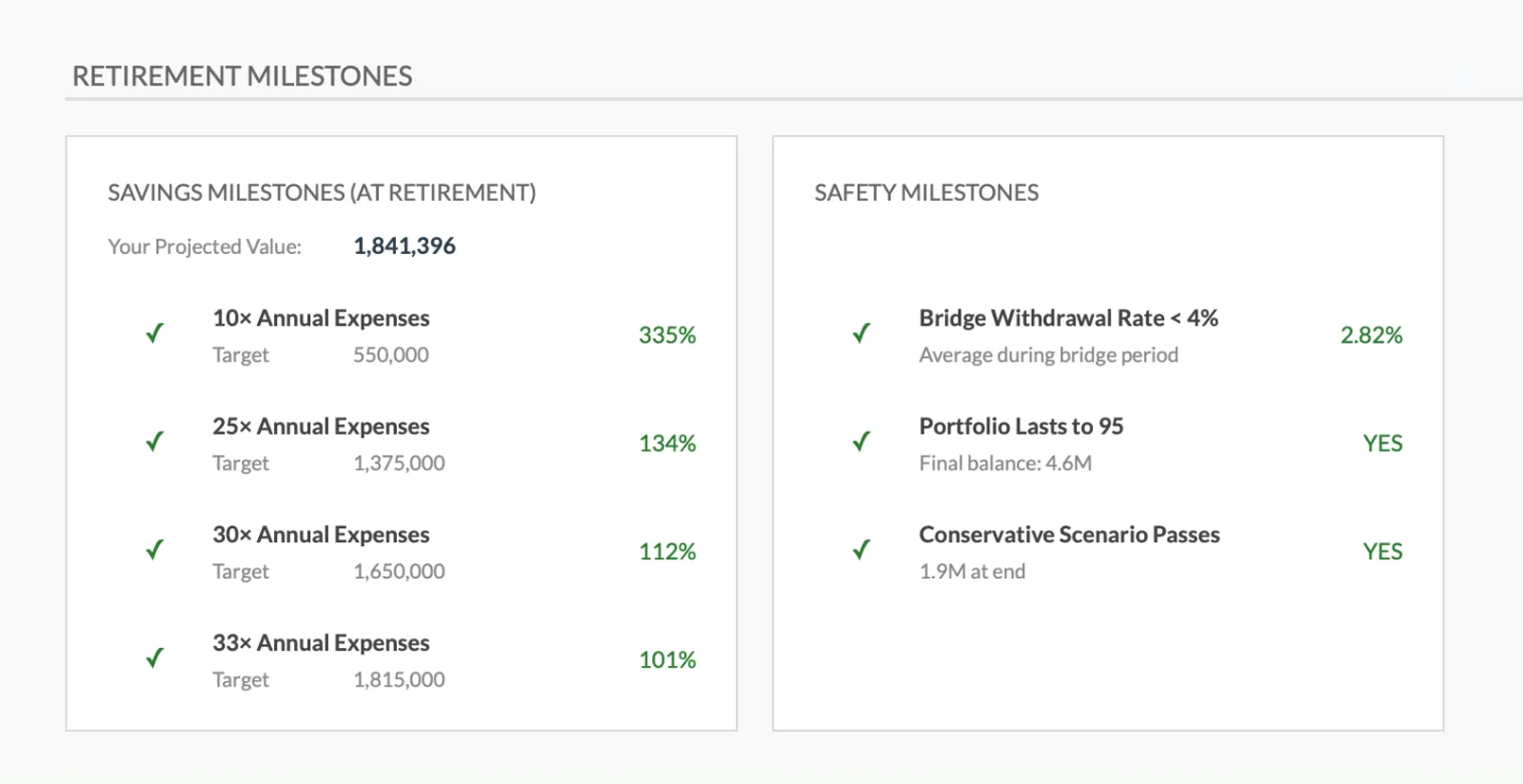
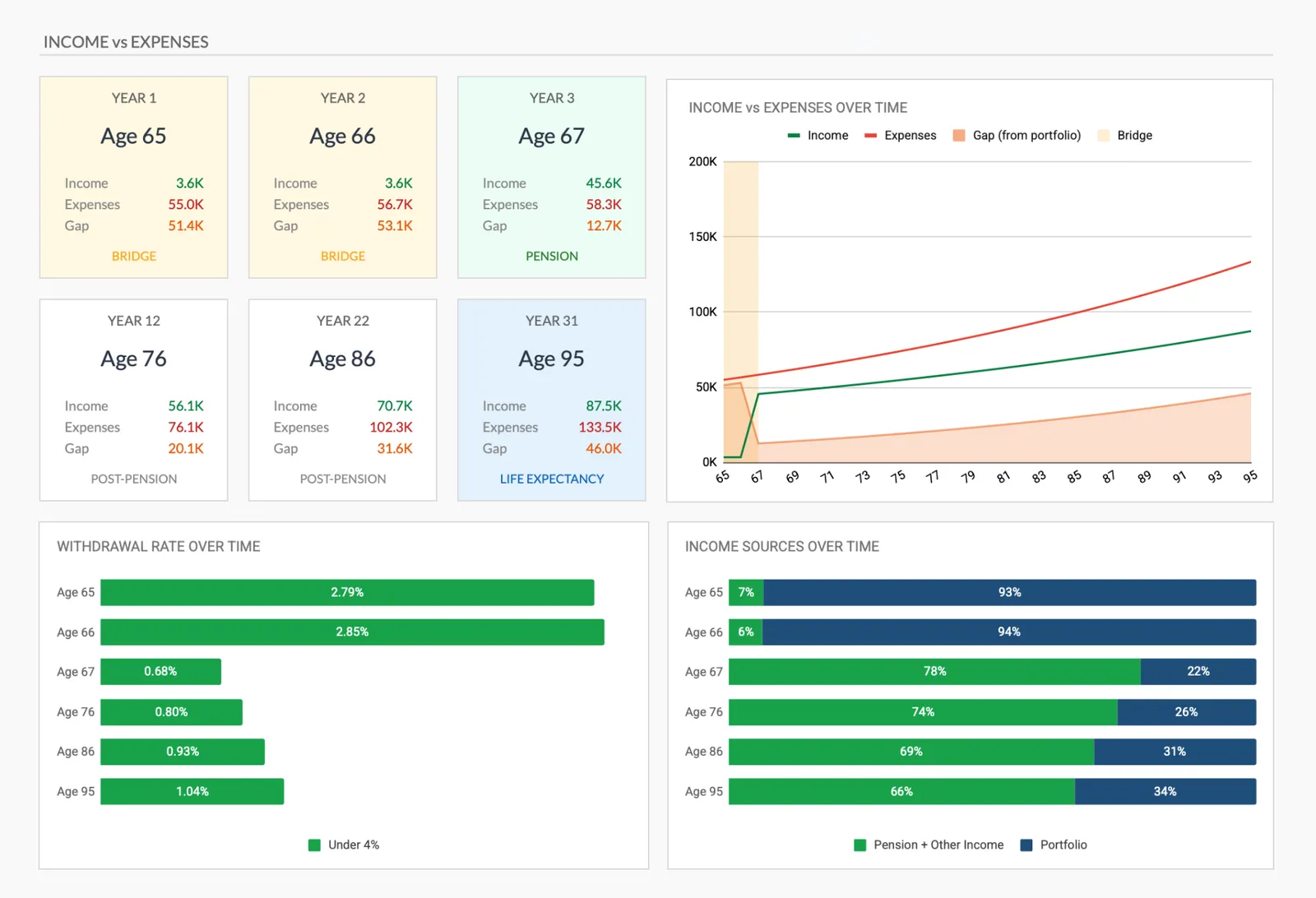
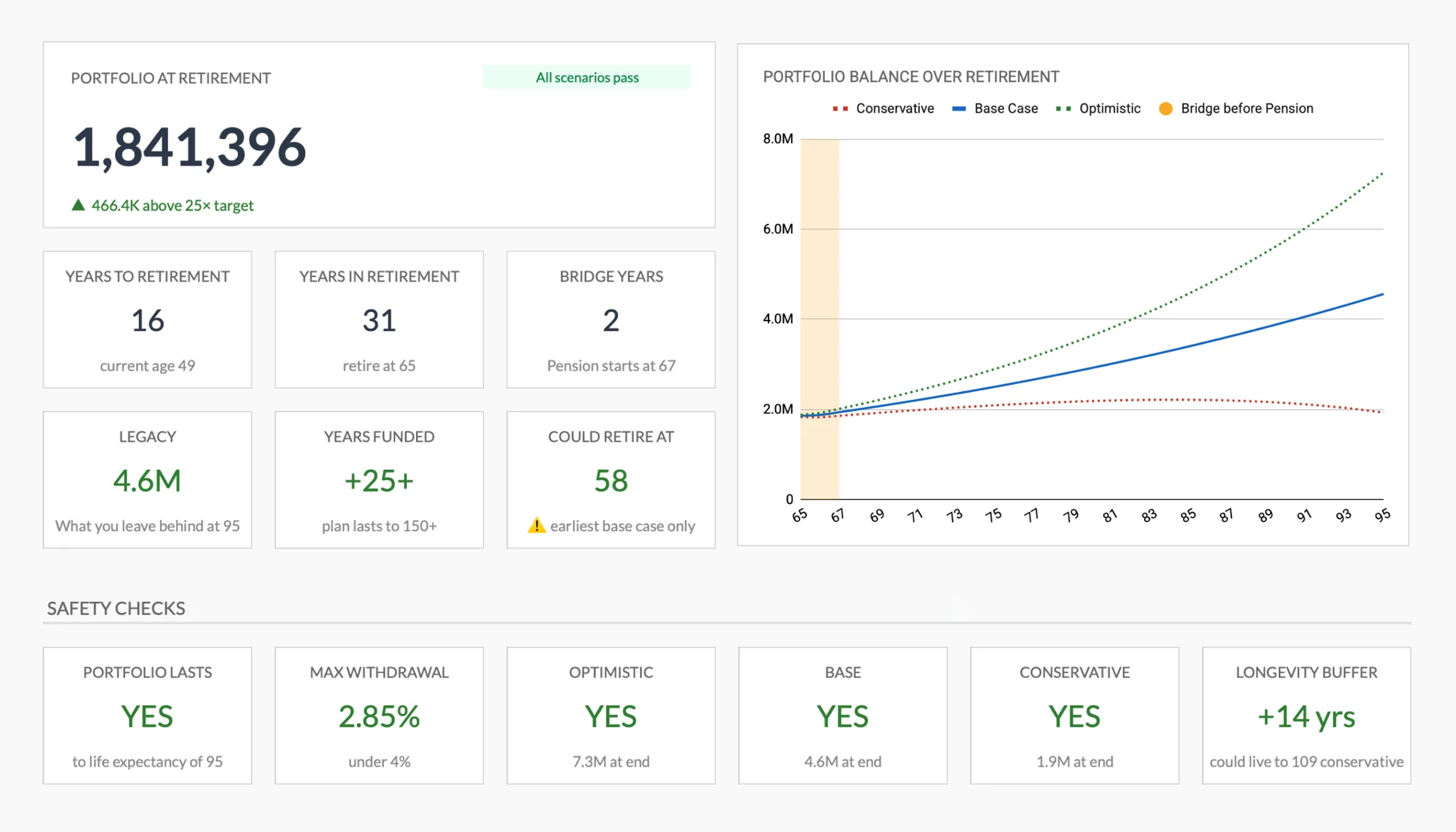
Complete retirement overview with projections
Project your retirement savings growth
Track progress toward retirement goals
Plan your retirement income against expenses
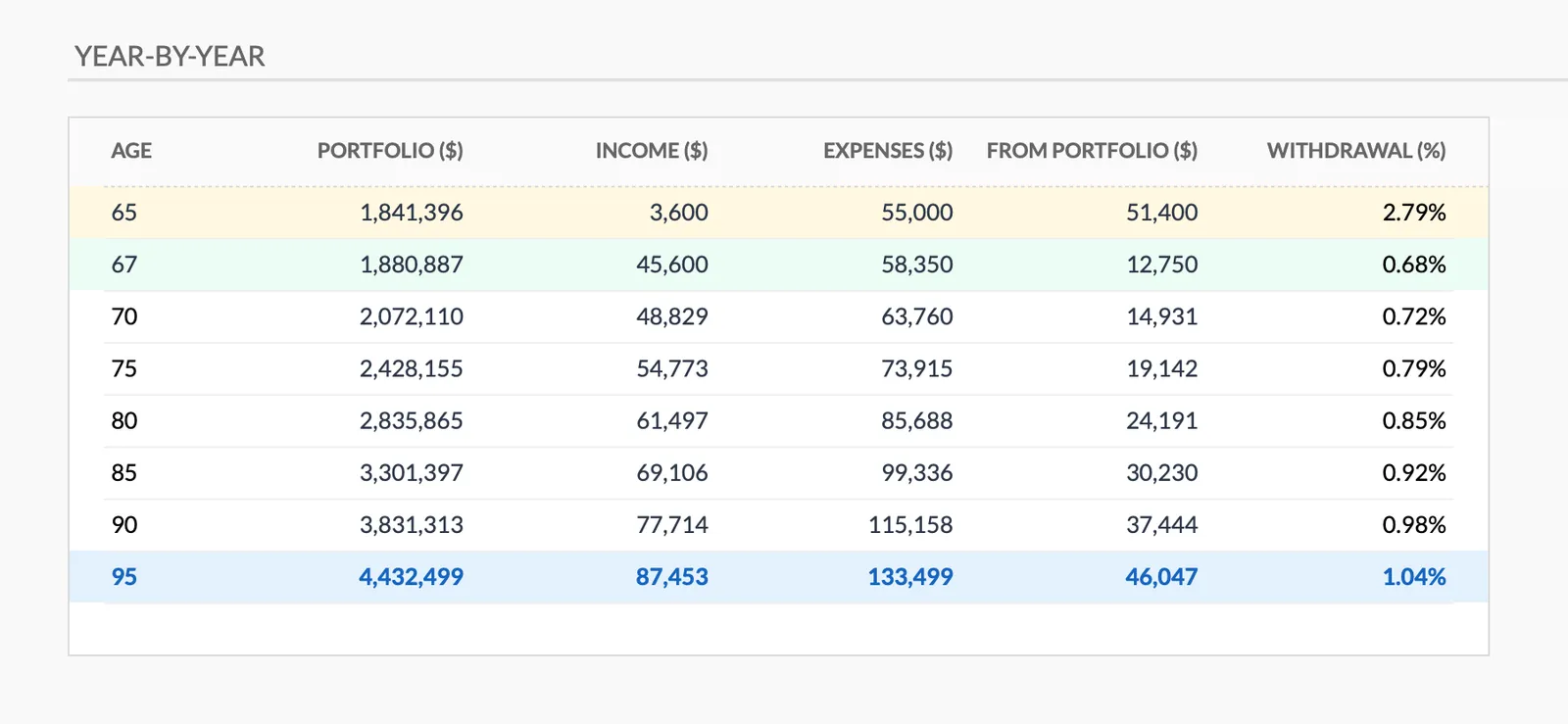
Detailed year-by-year retirement projection
Perguntas Frequentes
Retirement Planning Template for Ireland - FAQ
When can I access my pension in Ireland?
It depends on the pension type. Occupational schemes often allow access from 60 (or from 50 if you leave your employer). PRSAs can be accessed from 60. You can typically take a tax-free lump sum (25% of the fund, up to EUR 200,000). The State Pension starts at 66.
How much pension do I need?
A common guideline is to aim for 50-66% of your pre-retirement income. The State Pension (maximum EUR 15,000/year) covers a portion. The gap between the State Pension and your target income is what personal pension savings need to fill. The template helps calculate your specific gap.
Should I make Additional Voluntary Contributions?
If you haven't reached your age-related tax relief limit, AVCs reduce your tax bill at your marginal rate. For a 40% taxpayer, each EUR 100 of AVCs effectively costs EUR 60. The money is locked until retirement, but the tax efficiency makes AVCs one of the most powerful savings tools available in Ireland.
What happens to my pension if I change jobs?
You have several options: leave it with your former employer's scheme (if allowed), transfer to a new employer's scheme, move it to a Personal Retirement Bond (PRB), or transfer to a PRSA. The template can track pensions across multiple providers if you have several from different employers.
Will the State Pension age increase?
The State Pension age is currently 66, with no immediate plans to increase it (a proposed increase to 67 was reversed). However, the Pensions Commission has recommended future increases linked to life expectancy. For planning purposes, many people consider that the age may rise by the time they reach it.
How is the tax-free lump sum calculated?
For defined contribution pensions, you can take 25% of the fund tax-free (up to EUR 200,000). Between EUR 200,000 and EUR 500,000 is taxed at 20%. Above EUR 500,000 is taxed at your marginal rate. For defined benefit schemes, the tax-free amount is typically 1.5 times final salary. Planning around these thresholds can optimize the lump sum.
Can't find the answer you're looking for? Contact our team
Explorar Mais
Free Tools for Ireland
Pronto para comecar?
Baixe instantaneamente e comece a gerenciar suas financas, ou entre em contato conosco para criar um pacote de modelos personalizado para suas necessidades.