New Zealand
Financial Planning Template for New Zealand
Connect your KiwiSaver balance, NZ Super projections, savings milestones, and long-term plans in one Google Sheets template.
In Depth
KiwiSaver Fund Choice, NZ Super, and Long-Range Planning
Financial planning in New Zealand benefits from a system that is relatively straightforward compared to countries with multiple tax-advantaged account types. KiwiSaver serves as the primary retirement savings vehicle, and NZ Super provides a universal income floor from age 65. The simplicity is an advantage - fewer moving pieces means fewer decisions to make - but it also means each decision carries more weight.
The choice of KiwiSaver fund type is one of those high-impact decisions. A growth fund and a conservative fund can produce significantly different outcomes over 20 or 30 years. For someone decades away from 65, the higher volatility of a growth fund has historically been rewarded with higher long-term returns. As retirement approaches, many people shift toward more conservative allocations to reduce the risk of a poorly timed market downturn. Reviewing fund allocation as part of an annual financial plan keeps this decision current.
Housing affordability is the elephant in many New Zealand financial plans. Auckland's median house price relative to median income is among the highest globally, and even smaller centres have seen significant price increases. The KiwiSaver first home withdrawal and HomeStart grant provide some assistance, but for many first-home buyers the deposit target is a multi-year savings project that competes with other financial goals. A financial plan that shows the home deposit alongside retirement savings, emergency funds, and other priorities makes the tradeoffs visible.
New Zealand's tax year runs from April 1 to March 31, which creates a natural annual review point. Checking KiwiSaver balances, reviewing contribution rates, and reassessing goals after the tax year closes provides a structured rhythm for keeping the financial plan current. The Sorted.org.nz tools from the Retirement Commission can supplement this template with NZ-specific calculators and guidance.
New Zealand
Financial Planning in New Zealand: Key Considerations
New Zealand's financial planning landscape is simpler than many countries, with KiwiSaver and NZ Super forming the main pillars. But simplicity doesn't mean planning isn't valuable.
KiwiSaver is the primary retirement savings tool
KiwiSaver combines employee contributions (3-10% of gross pay), employer contributions (minimum 3%), and government contributions (up to $521/year). Choosing the right fund type (conservative, balanced, growth, aggressive) and contribution rate significantly affects long-term outcomes. A financial plan helps evaluate whether your current settings align with your retirement timeline.
NZ Super provides a universal retirement income
NZ Super is available from age 65 regardless of work history or savings. The rate for a single person living alone is roughly $520/week (after tax, 2025). Unlike Australia's means-tested pension, NZ Super is universal - everyone qualifies at 65. This provides a reliable income floor for retirement planning.
No capital gains tax creates different investment dynamics
The absence of a comprehensive capital gains tax means investment returns on property and shares are generally not taxed when you sell. This can make New Zealand a tax-efficient environment for long-term investing, though investment income (dividends, interest, PIE fund returns) is still taxed. Foreign Investment Funds (FIF) have specific tax rules worth understanding.
Housing affordability is a central planning challenge
NZ house prices, especially in Auckland and Wellington, are high relative to incomes. Saving for a first home often competes with other financial goals. The KiwiSaver first home withdrawal and HomeStart grant can accelerate home ownership. A financial plan helps balance the home-buying goal with other priorities.
Haal het sjabloon
Aan de Slag
Adapting the Financial Planner for NZ Accounts
List all accounts with current balances
Enter bank accounts, KiwiSaver balance, any non-KiwiSaver investments, term deposits, and debts (mortgage, student loan, personal loans, credit cards). Current values create your starting snapshot.
Review your KiwiSaver settings
Note your current contribution rate, fund type (conservative to aggressive), and provider fees. Small differences in fees compound significantly over decades. The template can help track whether your KiwiSaver is growing as expected.
Project NZ Super income
Enter NZ Super as a reliable future income starting at age 65. For planning purposes, the current rates provide a reasonable baseline, though amounts are adjusted periodically.
Define your financial goals
First home deposit, emergency fund, debt payoff, retirement target, travel, or children's costs - enter each with a dollar amount and timeline. New Zealand's relatively simple financial system means fewer accounts to juggle but the same need for clear goals.
Jaarlijks beoordelen
Een jaarlijkse beoordeling (bijvoorbeeld in april na het einde van het belastingjaar op 31 maart) is een goed moment om KiwiSaver-saldi bij te werken, doelen opnieuw te beoordelen en te controleren of je bijdragepercentage nog klopt.
Zie het in Actie
Hoe het sjabloon eruit ziet
Blader door het sjabloon om te zien hoe het omgaat met budgettering, categorieën en uitgavenbewaking - allemaal aanpasbaar aan uw lokale financiële situatie.
- Ingebouwde valutakiezer
- Aanpasbare categorieën
- Budget versus werkelijke bewaking
- Visuele grafieken en samenvattingen
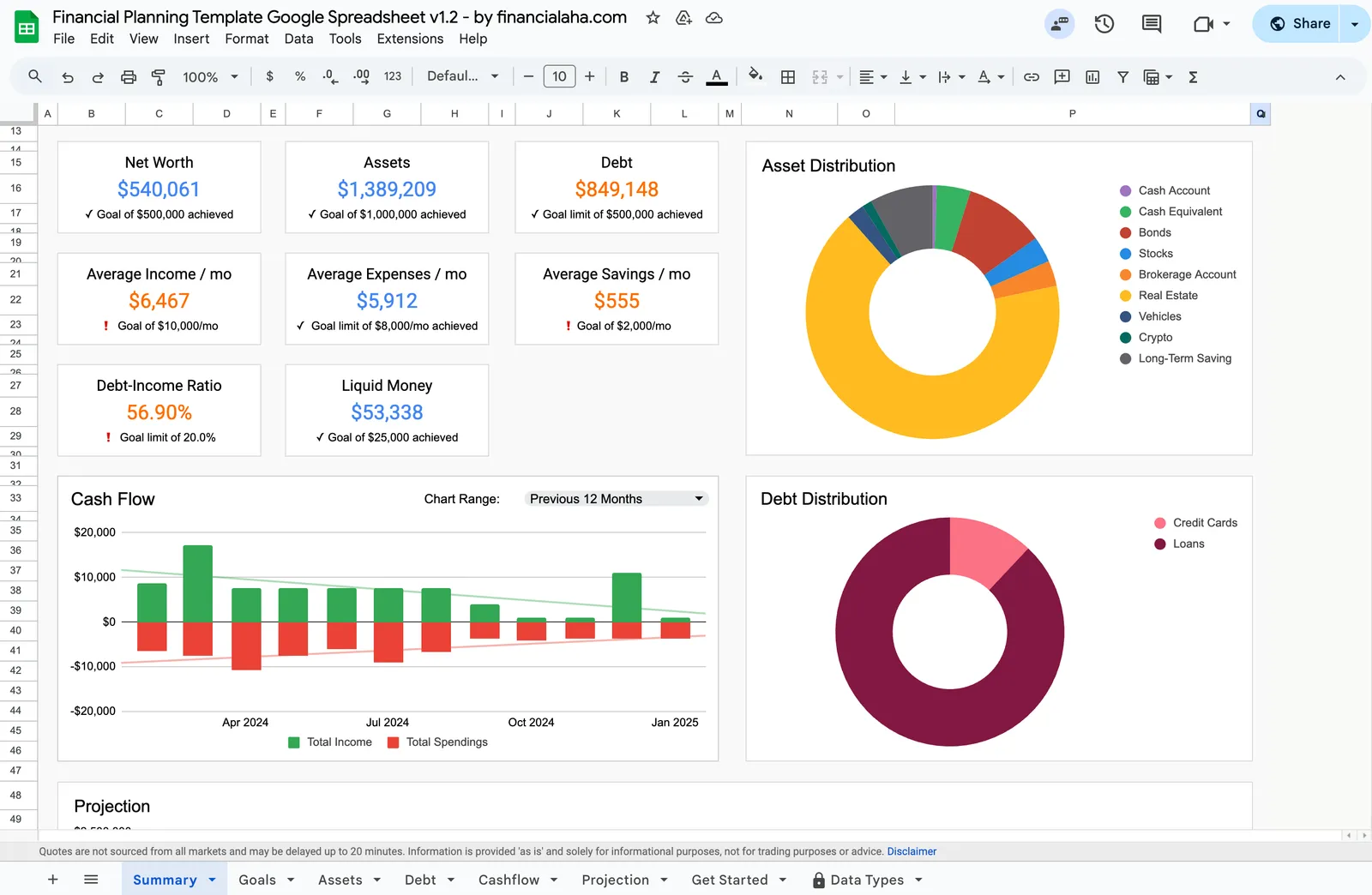
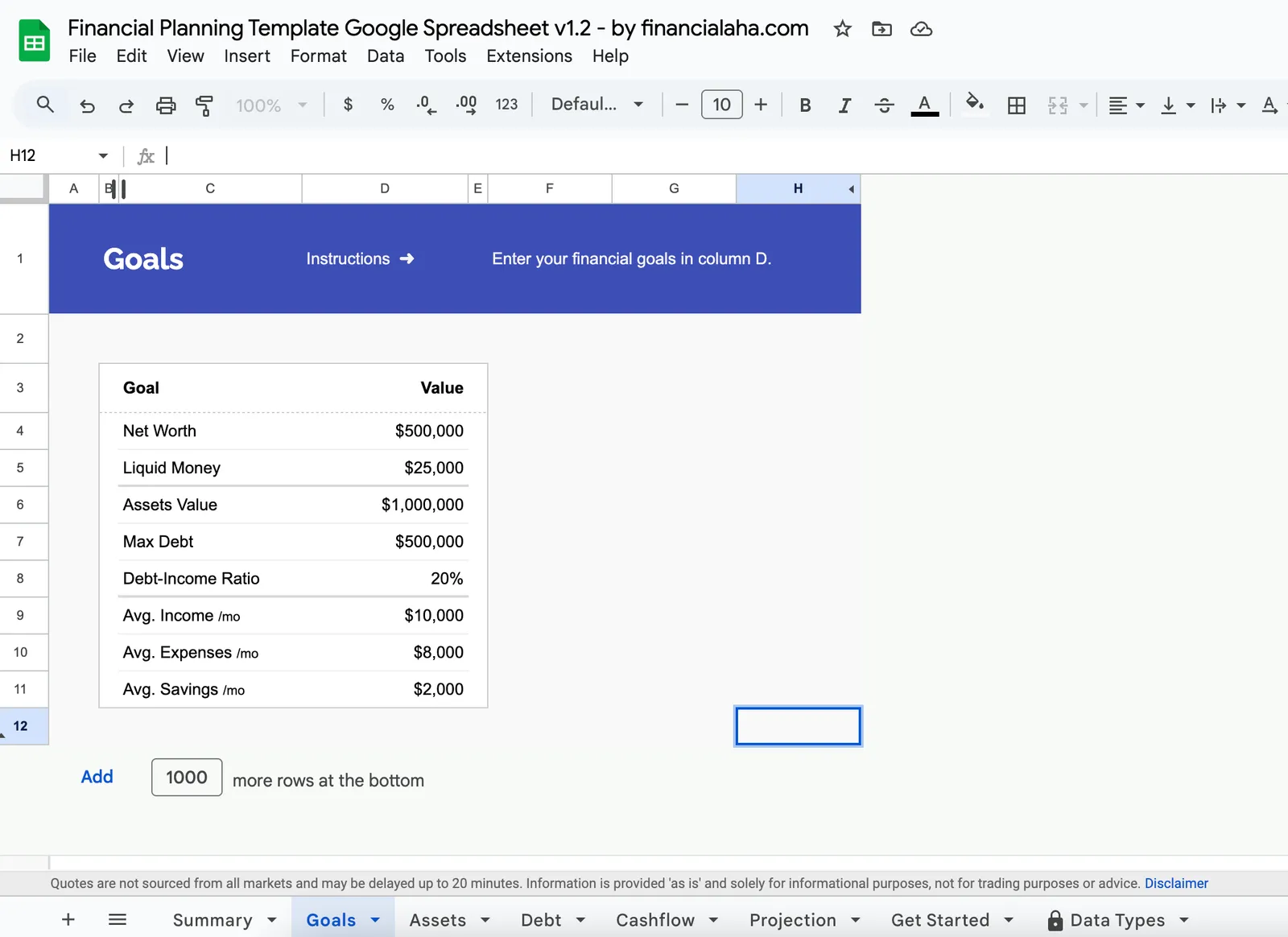
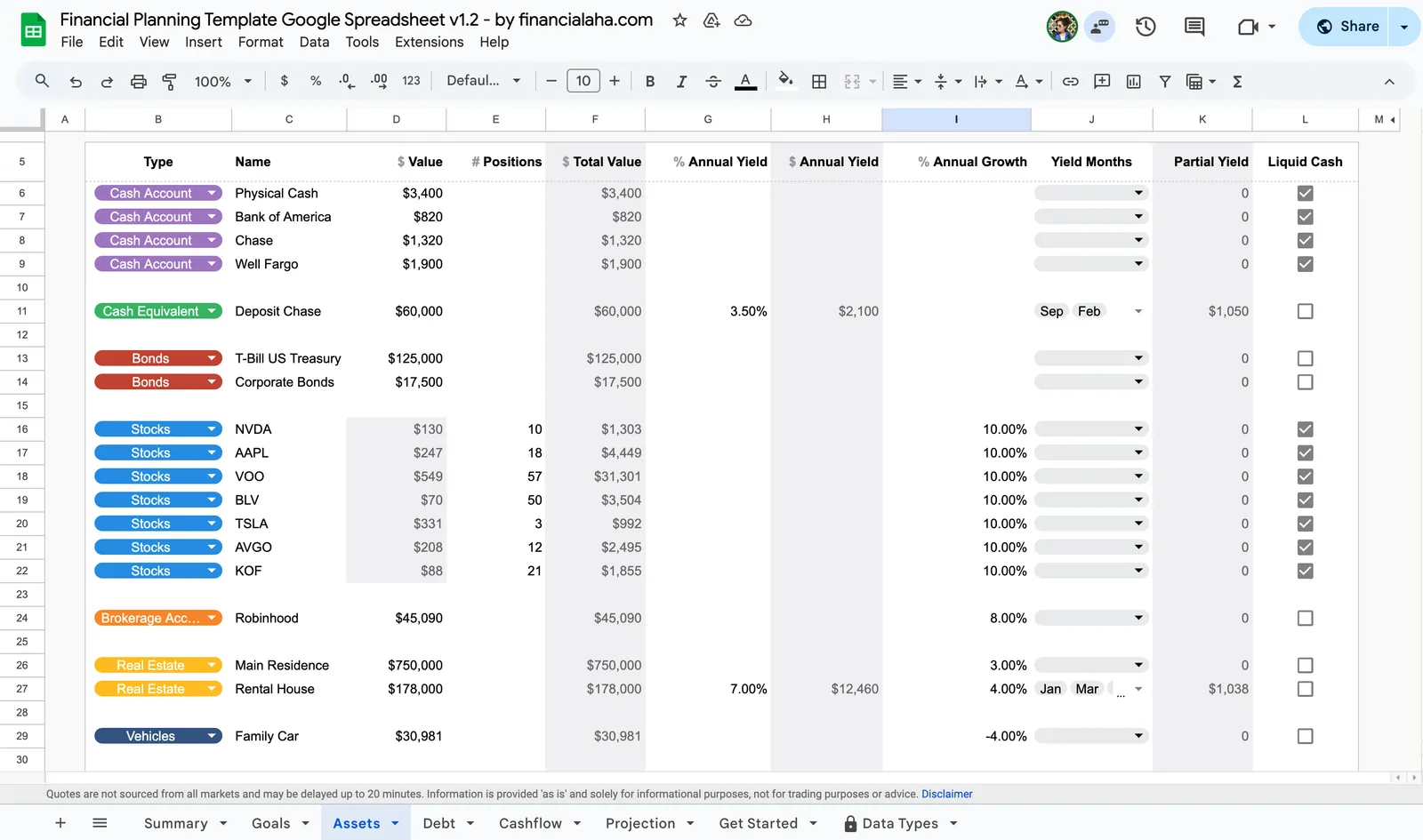
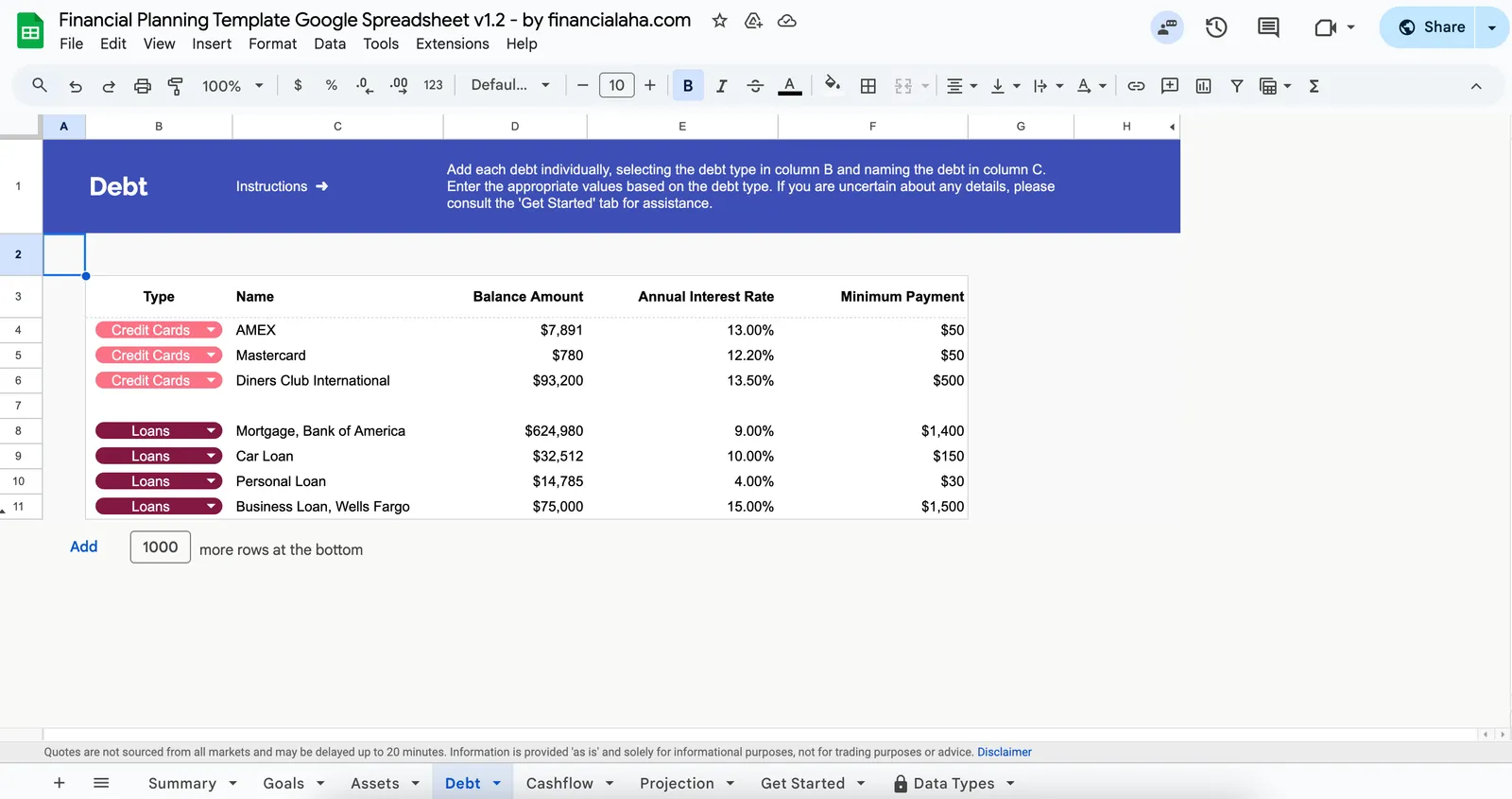
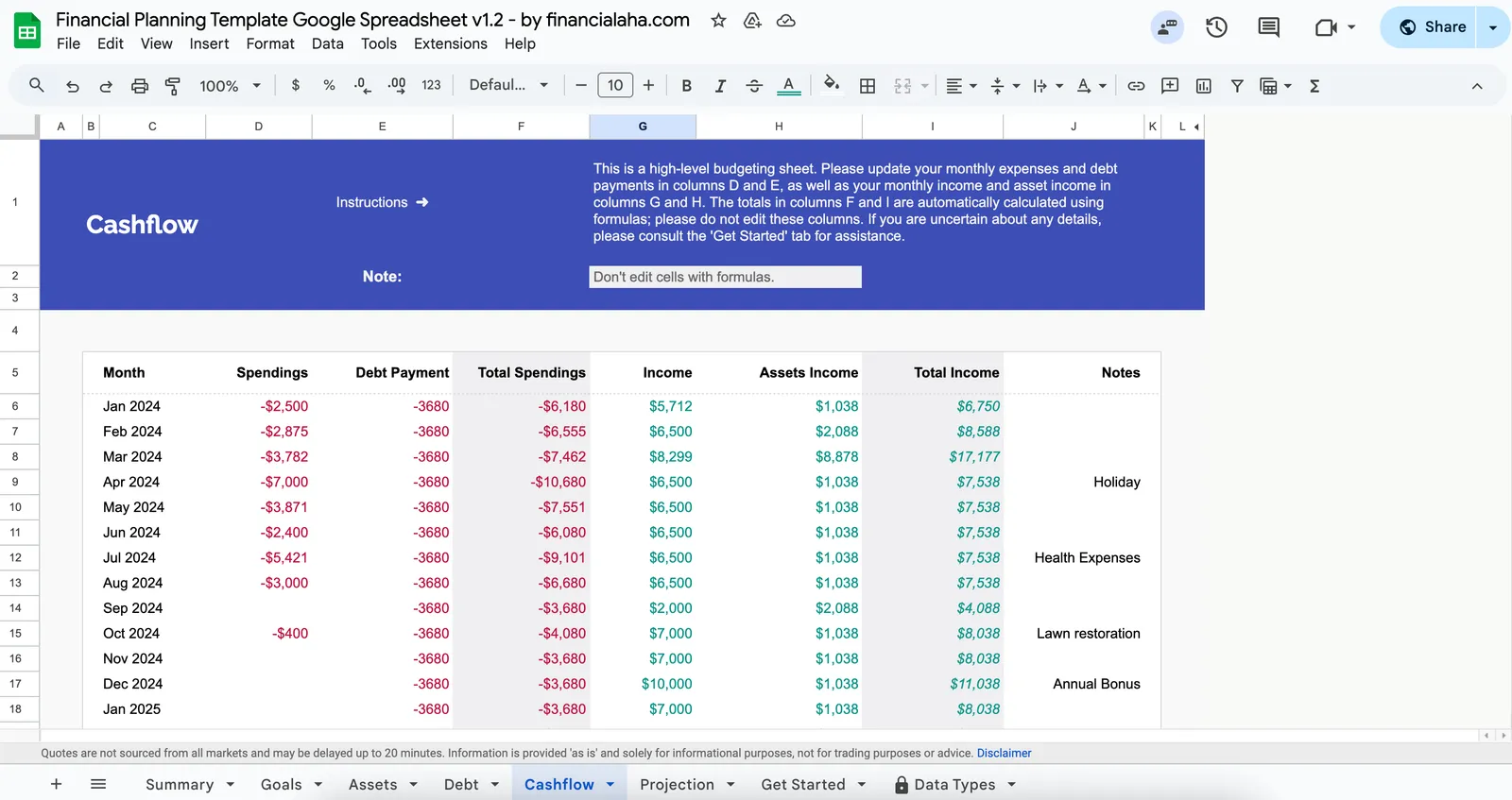
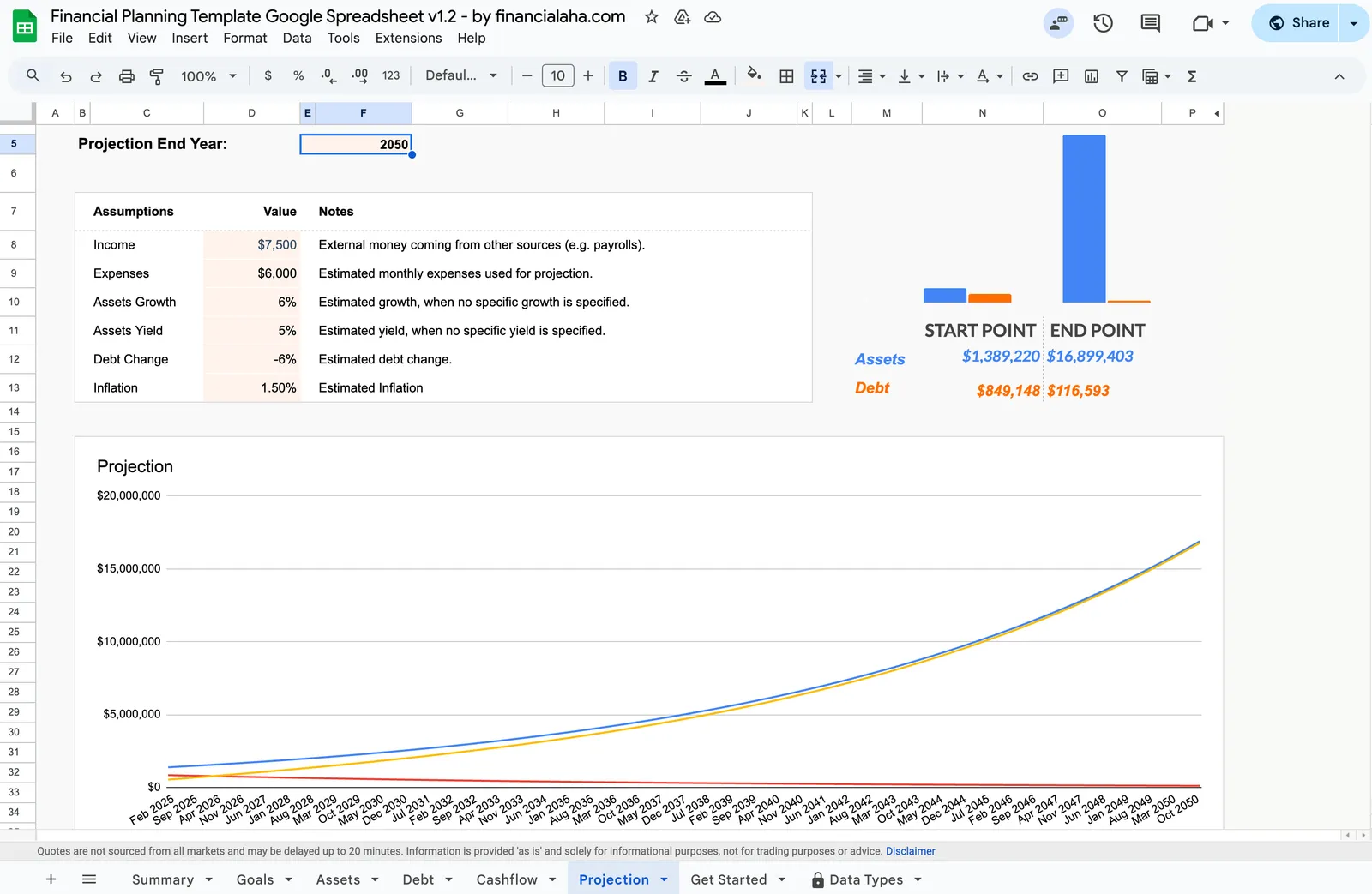
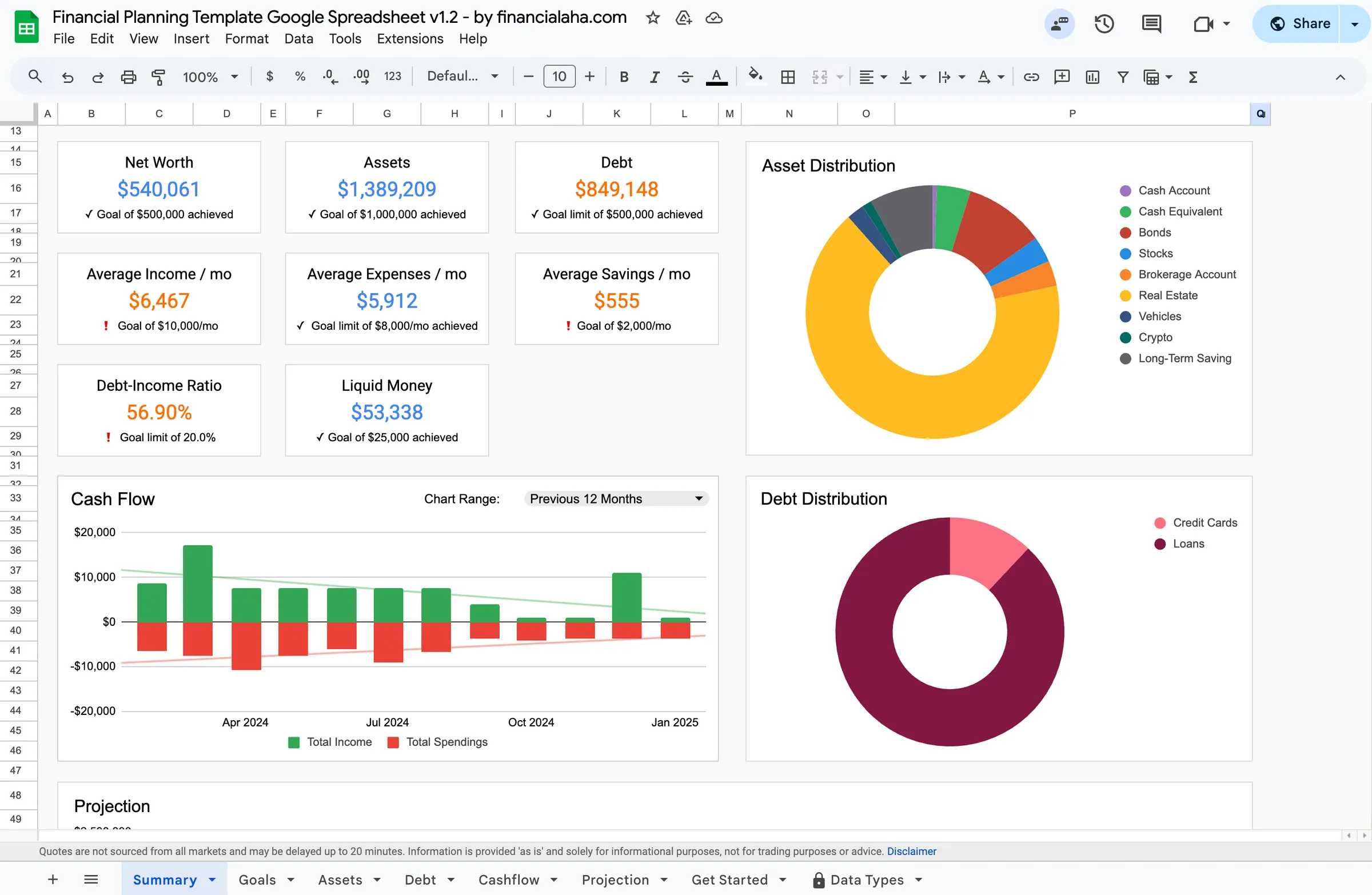
Complete financial overview with net worth and goals
Set and track progress toward financial milestones
Track all your assets in one place
Monitor and plan debt repayment
Visualize your income vs spending over time
Project your financial future
Veelgestelde Vragen
Financial Planning Template for New Zealand - FAQ
Can this replace a financial adviser?
This template organizes your financial information - it doesn't provide advice. For complex situations like trust structures, business succession, or insurance needs, a licensed financial adviser in NZ can provide guidance. The template is a useful tool to bring to those conversations.
Should I increase my KiwiSaver contribution rate?
Higher contributions mean more retirement savings but less take-home pay now. The right rate depends on your current financial situation, other savings goals, and retirement timeline. The template helps you see the impact of different contribution levels on your overall plan.
Hoe plan ik voor een eerste woning met KiwiSaver?
After 3 years in KiwiSaver, you can withdraw most of your balance for a first home purchase. The HomeStart grant adds up to $10,000 (existing home) or $20,000 (new build). Track your KiwiSaver balance and additional savings separately to see your total house deposit progress.
Does NZ Super change the amount I need to save?
Yes. Since NZ Super provides roughly $27,000/year (single, after tax) from age 65, your investments only need to cover the gap between NZ Super and your target retirement spending. This means the required retirement savings can be lower than in countries without a universal pension.
How should I think about student loan repayment?
NZ student loans are interest-free for residents. Compulsory repayments are 12% of income above the threshold ($22,828 for 2025). Since there's no interest, there's less financial urgency to repay early compared to countries where student loans accrue interest. Some people prefer to invest extra money rather than make voluntary repayments.
Can't find the answer you're looking for? Contact our team
Meer Verkennen
Free Tools for New Zealand
Klaar om te beginnen?
Download direct en begin met het beheren van uw financiën, of neem contact met ons op voor een aangepast sjabloonpakket voor uw behoeften.