Spreadsheet Guide
52-Week Savings Challenge Spreadsheet
The 52-week savings challenge is one of the most popular savings methods - start small and build up. A year-long tracking spreadsheet keeps the momentum going from week 1 to week 52.
In Depth
A Year-Long Framework for Building Financial Discipline
The 52-week challenge has become popular for a reason that goes beyond the $1,378 it produces in its classic form. The structure creates a year-long commitment with a low entry barrier - one dollar in the first week - that gradually increases the financial muscle required. By the time the larger amounts arrive in the later weeks, the participant has already built momentum and identity as "someone who saves." This gradual progression is more sustainable than abruptly committing to a large weekly savings amount from day one.
The ascending structure of the classic challenge has a design flaw that many people discover around week 40: the last thirteen weeks require saving $40-$52 per week, totaling $598. This comes during the holiday season for people who started in January, which is precisely when budgets are most strained. The reverse challenge - starting with $52 in week one and decreasing - solves this problem by front-loading the difficult weeks when motivation is highest and holiday spending is furthest away.
Connecting a 52-week challenge to a specific goal amplifies its effectiveness. "Save $1,378" is a number. "Save $1,378 for an emergency fund" or "save $1,378 for a vacation to Portugal" is a purpose. Research on goal-directed saving consistently shows that earmarking savings for a specific purpose increases both the savings rate and the likelihood of completion. The spreadsheet tracking becomes not just a financial record but a visual countdown to something meaningful.
Overview
What a 52-Week Challenge Spreadsheet Does
The spreadsheet tracks 52 weekly savings contributions, starting at $1 in week 1 and increasing by $1 each week - $2 in week 2, $3 in week 3, up to $52 in week 52. It calculates the running total (which reaches $1,378), marks completed weeks, and shows progress toward the annual goal. Many variations exist: reverse order (start with $52), random order, or doubled amounts for a $2,756 goal.
How It Works
How the 52-Week Challenge Works
Start with week 1 and build gradually
The classic version starts small - $1 in the first week. This low barrier to entry makes starting easy. The amounts increase gradually, giving time to adjust spending habits as the weekly savings amount grows.
Choose a variation that fits your cash flow
The classic ascending order means the largest amounts fall in December (weeks 49-52 total $202). Some people prefer the reverse order to get the hard part done first, or a random order to keep it flexible. Matching larger amounts to months with extra income (bonus months, tax refund) is another approach.
Track each week on the spreadsheet
Marking each week as complete, entering the amount saved, and watching the running total grow provides consistent motivation. The visual progress of checking off weeks is a simple but effective motivational tool.
Decide what happens with the savings
Having a specific goal for the $1,378 (or more) makes the challenge more meaningful. Common destinations include emergency fund, vacation fund, holiday gift budget, or a specific purchase. Knowing what the money is for helps power through the higher-amount weeks.
See The Template
A ready-made 52-week savings challenge tool
Instead of building from scratch, start with a template that has the structure, formulas, and visuals already in place.
- Pre-built formulas and calculations
- Visual charts and dashboards
- No setup required
- Works in Google Sheets and Excel
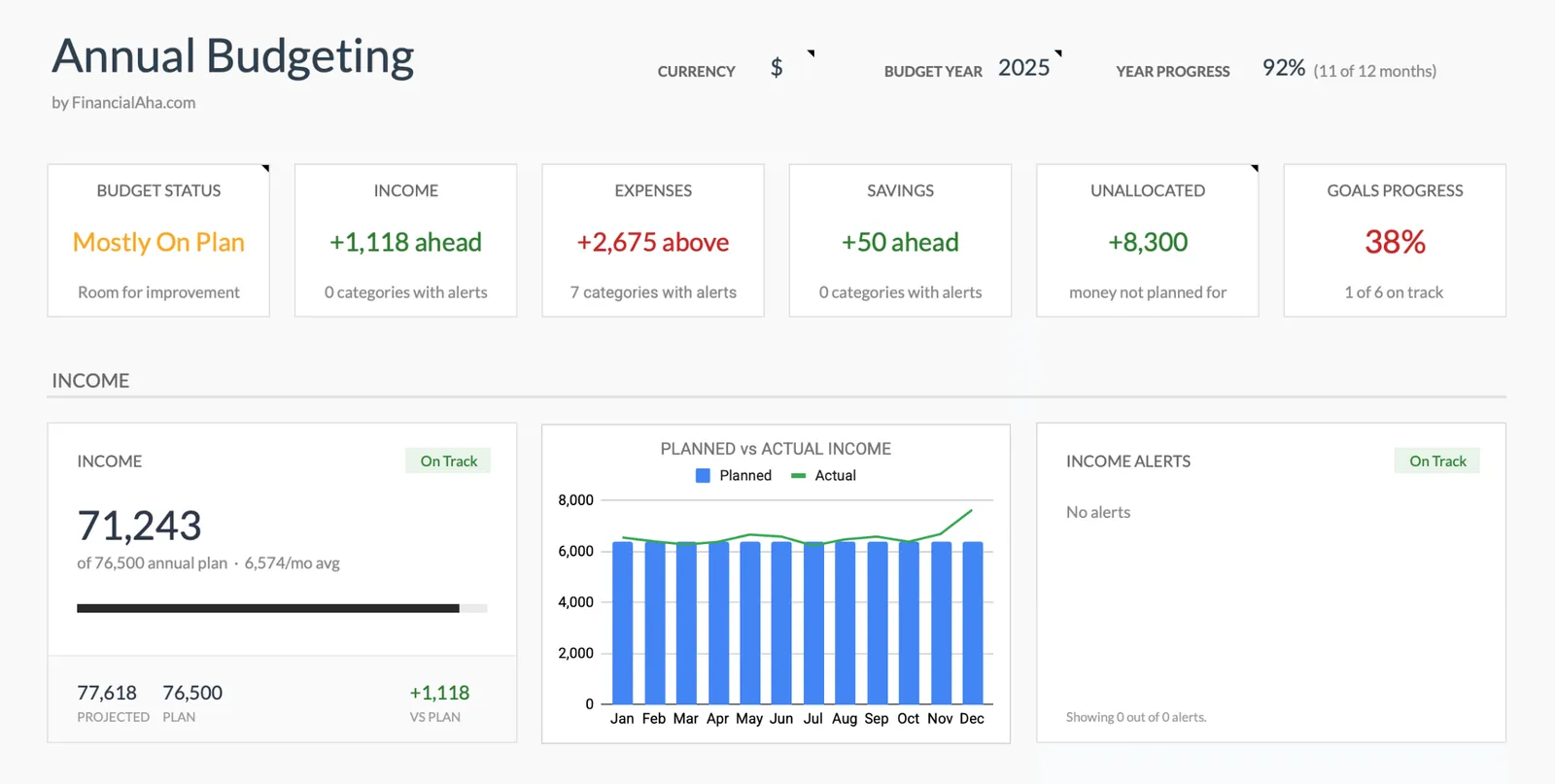
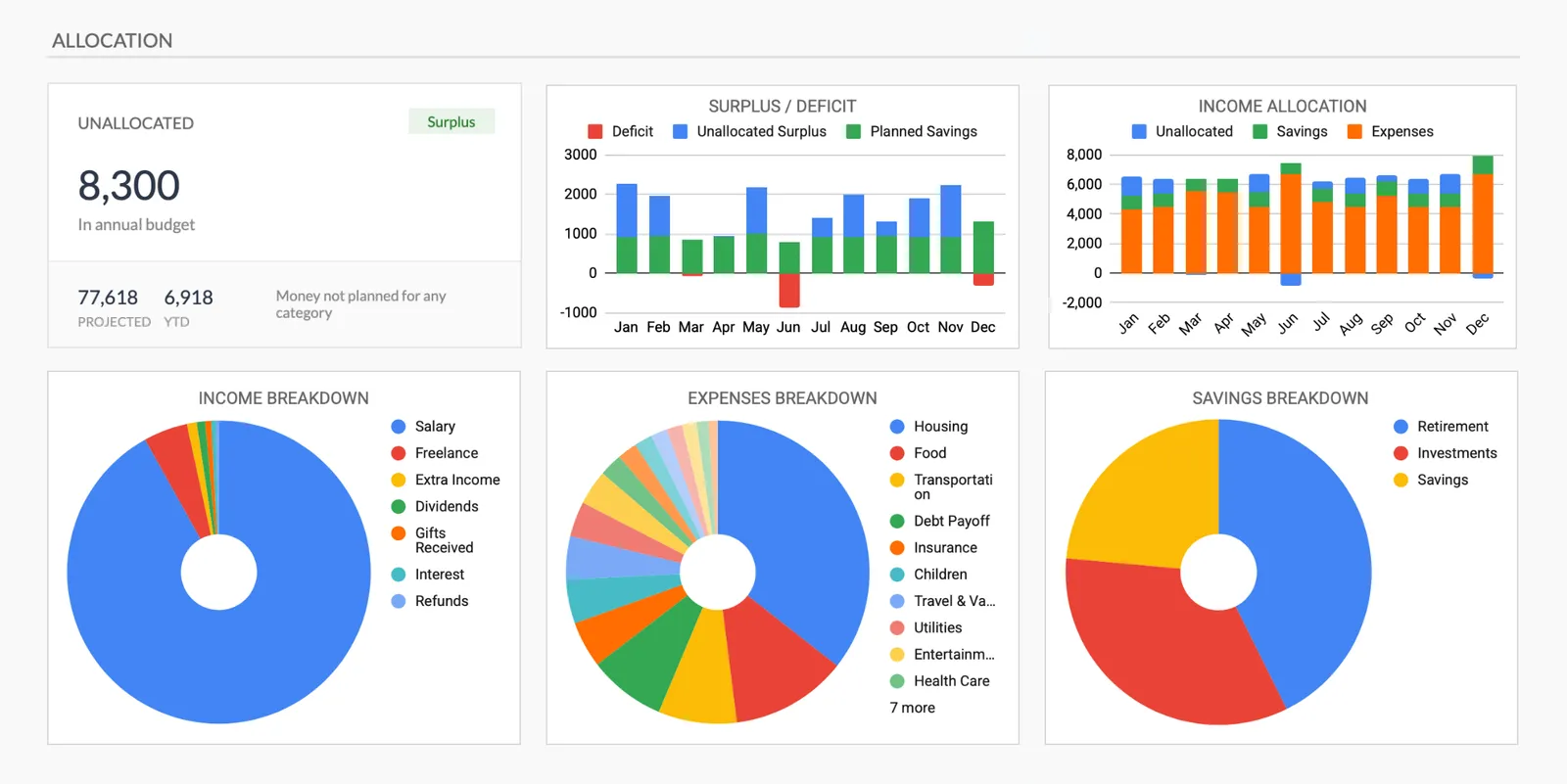

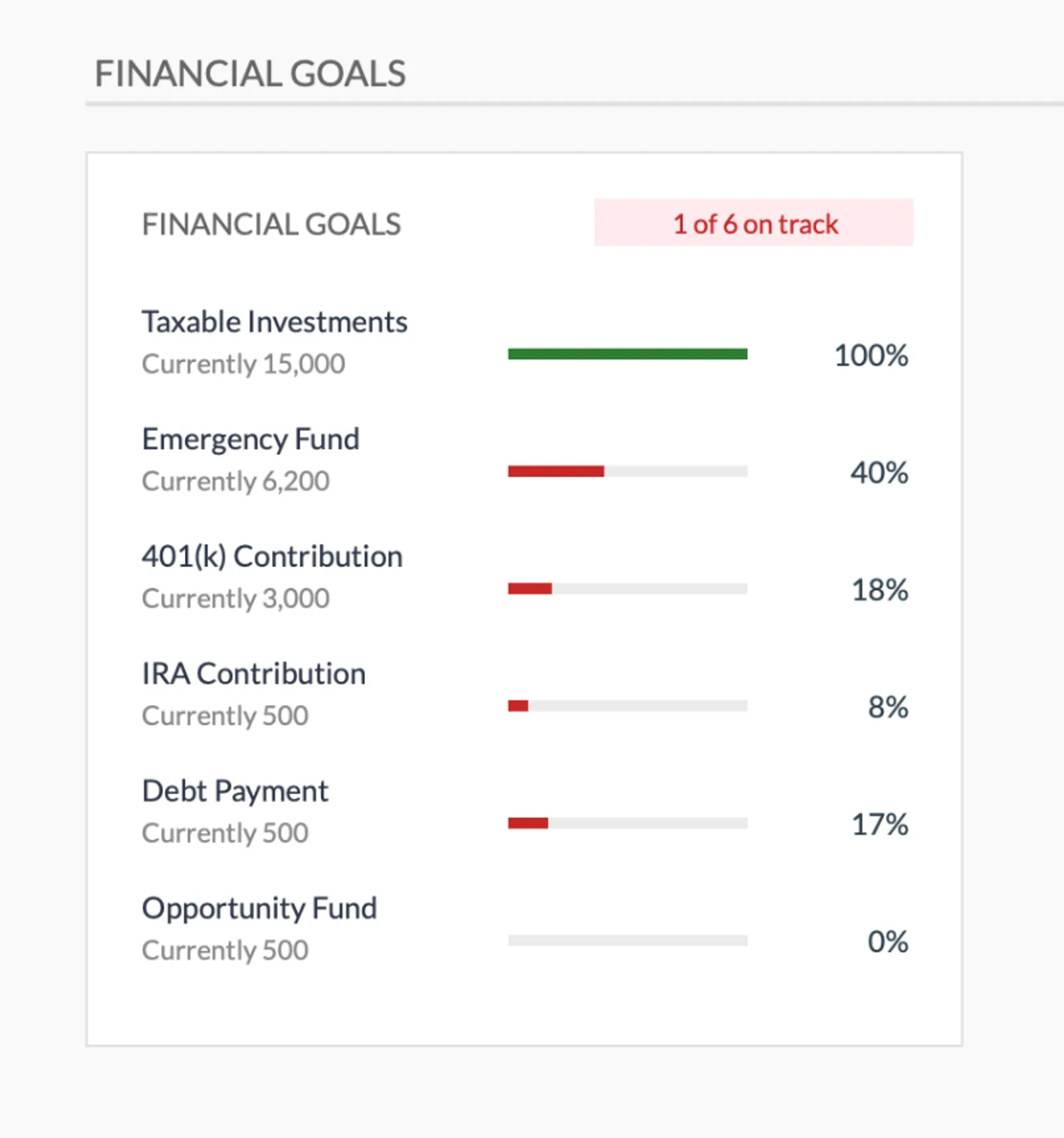
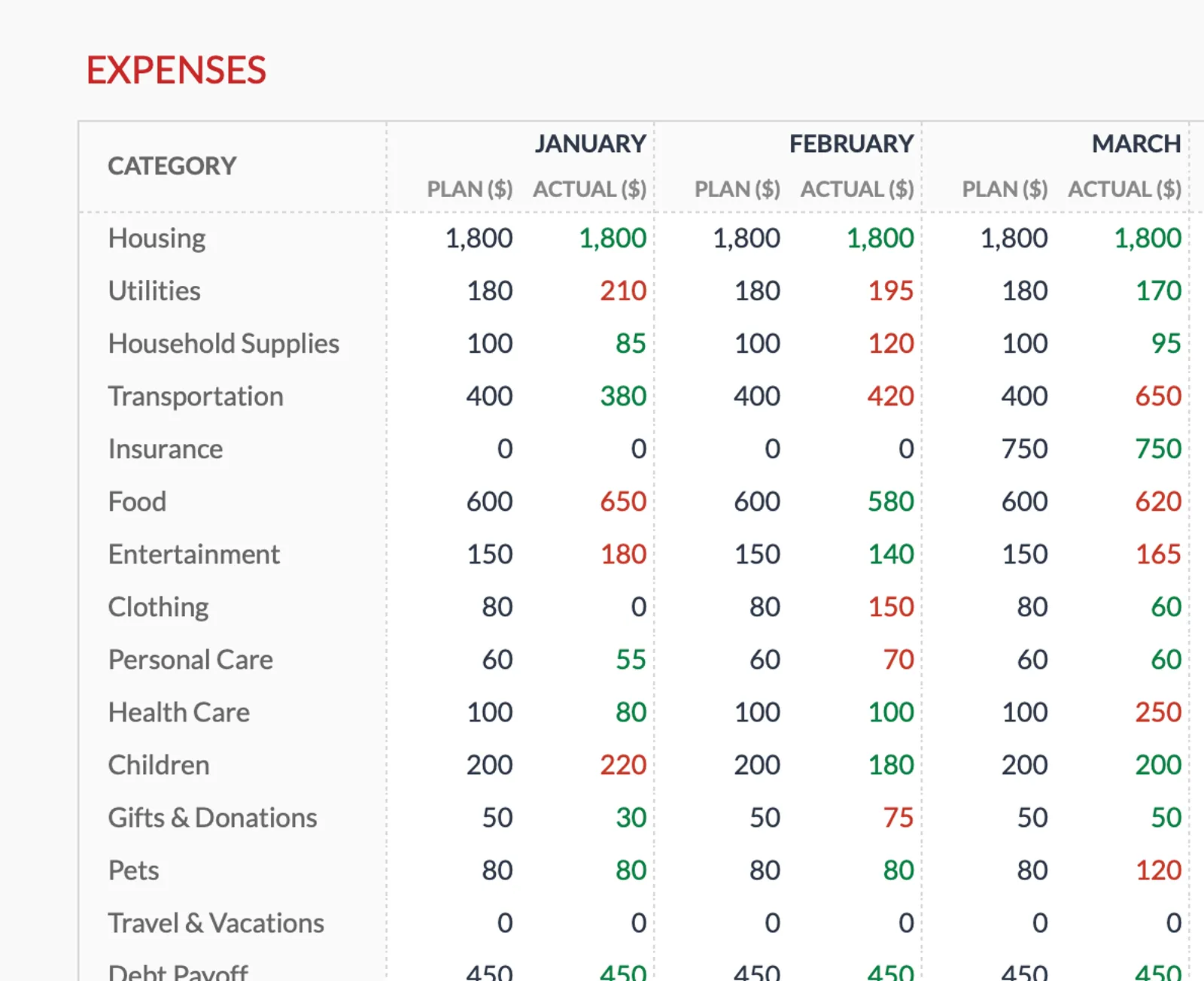
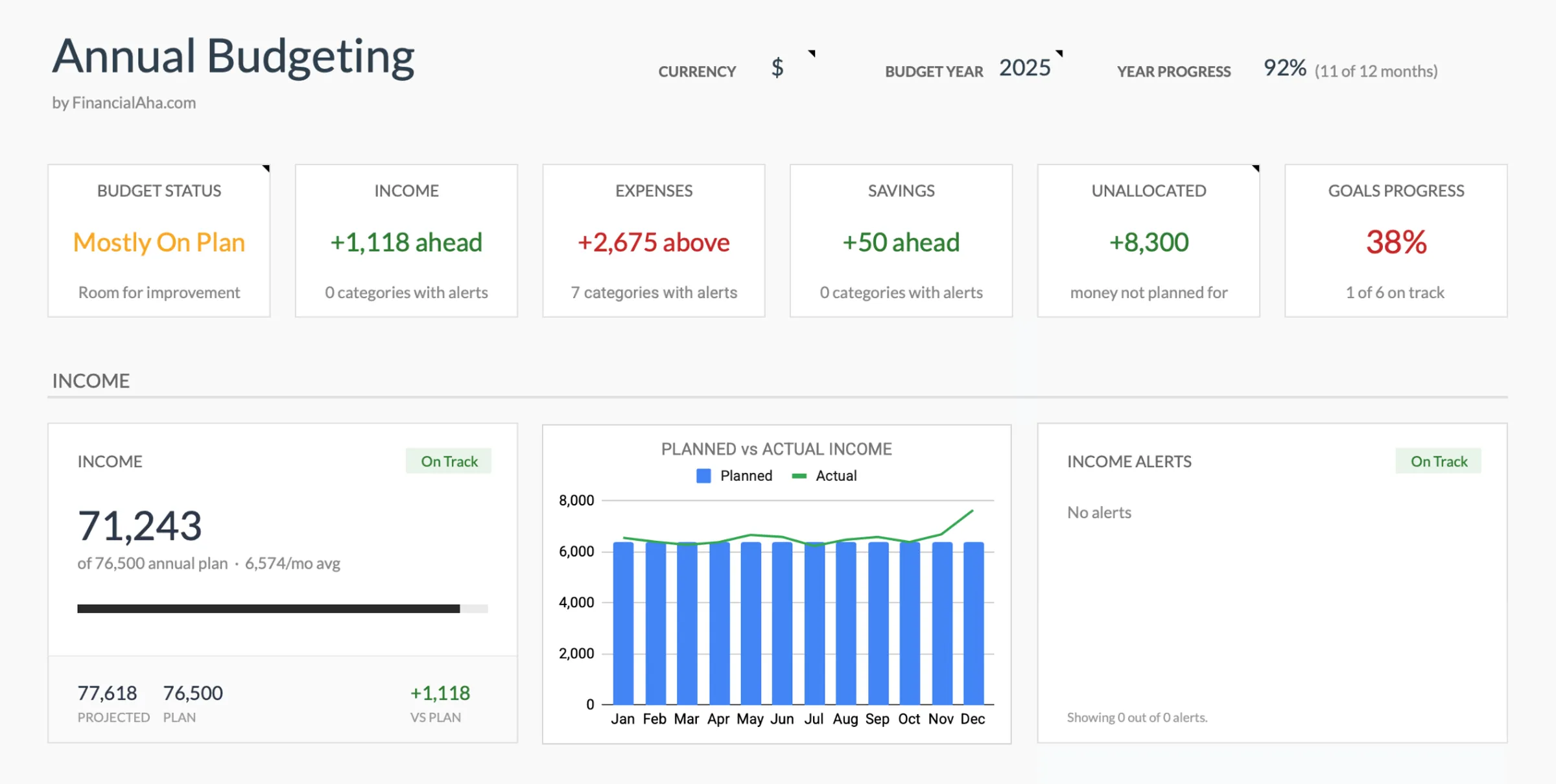
Full year budget overview with monthly breakdown
See how your budget is allocated across categories
Track key metrics across the year
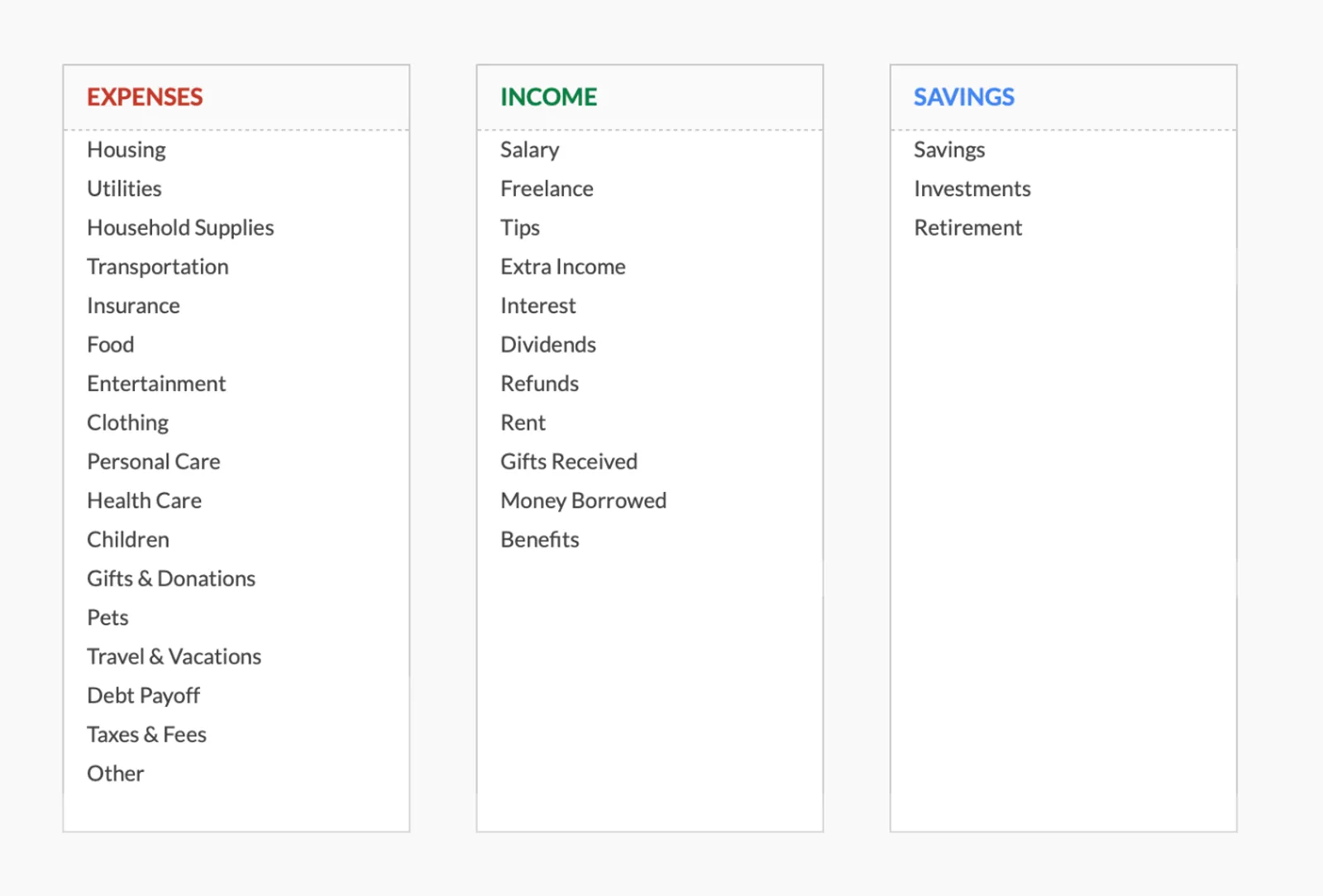
Customizable categories for your annual plan
Set and track annual financial goals
Track expenses month by month across the year
Get Started
Template for This Use Case
Track the 52-week challenge as part of your full annual budget. See savings goals alongside monthly expenses across all 12 months, with a year-long view that matches the challenge timeline.
View template Save $24Get annual planning, monthly budgeting, and a travel planner together. Useful for tracking the savings challenge while managing your regular budget throughout the year.
Includes 3 templates
View bundleCommon Questions
52-Week Savings Challenge Spreadsheet FAQ
How much is saved in the 52-week challenge?
The classic version (1+2+3+...+52) totals $1,378. Doubled ($2+$4+$6...) totals $2,756. The reverse version saves the same total but front-loads the larger amounts. Some people increase the increment to $2 per week ($2+$4+$6...) for a more ambitious goal.
What if the later weeks are too expensive?
Weeks 40-52 require saving $40-52 per week ($598 total in those 13 weeks). If this feels too steep, options include: doing the challenge in reverse, choosing random weekly amounts from the list, or capping the maximum at a comfortable level and repeating that amount for remaining weeks.
When is the best time to start?
January is the most popular starting point since it aligns with the calendar year. However, any week works - the challenge takes 52 weeks regardless of start date. Some people start when they feel motivated rather than waiting for a specific date.
Can the 52-week challenge be done with biweekly or monthly deposits?
Absolutely. Converting to biweekly (26 deposits) or monthly (12 deposits) of equivalent amounts achieves the same goal. Monthly might be: $21, $42, $63, etc., or equal monthly amounts of about $115. The format should match how someone gets paid and manages money.
What comes after completing the 52-week challenge?
Many people increase the amounts for the next year, set a specific savings goal to work toward, or transition the habit into regular automatic savings. The real value of the challenge is building the savings habit - the specific amount is secondary to the consistency.
Can't find the answer you're looking for? Contact our team
Get a ready-made 52-week savings challenge spreadsheet
Skip the setup and start with a professionally designed spreadsheet template. All formulas, charts, and tracking built in.
Ready to get started?
Download instantly and start managing your finances, or contact us to design a custom template package for your needs.