Life Event Guide
Financial Planning When Sending Kids to College
College costs have outpaced inflation for decades - understanding the real numbers and planning ahead helps families make informed decisions about funding education.
Financial Impact
The Financial Impact of College Costs
College is one of the largest expenses most families face, often rivaling a home purchase. The costs extend beyond tuition, and the decisions made about funding affect both the student and the family for years afterward.
Tuition is only part of the total cost
Average annual costs (2024-2025): in-state public university runs about $11,000 in tuition, but $24,000-$28,000 including room, board, books, and personal expenses. Private universities average $42,000 in tuition alone, with total costs reaching $60,000-$80,000 per year. Over four years, families are looking at $96,000-$320,000 per student. These numbers continue to rise 3-5% annually.
Financial aid can significantly reduce costs
The sticker price is not what most families pay. Average net price (after grants and scholarships) at public universities is about $15,000-$19,000 per year. At private universities, it drops from $60,000+ to $30,000-$35,000 on average. Filing the FAFSA is worth doing regardless of income - some aid is need-based, some is merit-based, and some is available to all. Many families leave money on the table by not applying.
Parent finances can be affected for decades
Parent PLUS loans (at 8%+ interest rates) can add $20,000-$100,000 in debt taken on during peak earning years. This delays retirement savings during the period when compound growth matters most. $50,000 in parent loans at age 50 means $50,000 less invested for retirement over the next 15 years - which at 7% returns represents roughly $138,000 in missed retirement wealth.
529 plans offer significant tax advantages
Contributions to 529 plans grow tax-free, and withdrawals for qualified education expenses are also tax-free. Many states offer income tax deductions for contributions ($2,000-$10,000/year). Starting early amplifies the benefit: $300/month from birth to age 18 at 7% average returns grows to approximately $116,000 - of which $51,000 is investment growth that will never be taxed.
Getting Ready
How to Budget for College Costs
Calculate the expected family contribution
The FAFSA determines your Student Aid Index (SAI, formerly EFC), which estimates what the family is expected to pay. Run the Federal Student Aid estimator tool with current income and asset data to get a preliminary number. This gives you a realistic target rather than the full sticker price.
Start or maximize 529 contributions
Even starting a few years before college helps. Contributing $500/month for 5 years at 7% returns grows to about $36,000 - of which $6,000 is tax-free growth. Grandparent contributions, birthday gifts directed to the account, and state tax deductions all enhance the strategy. The earlier contributions begin, the more compound growth does the work.
Model different scenarios
Community college for two years plus a four-year university for two years can cut costs by 40-50%. In-state vs. out-of-state can differ by $15,000-$25,000 per year. Scholarships, work-study, and part-time employment all change the math. Building a spreadsheet with 3-4 scenarios helps families have informed conversations about what is realistic.
Adjust your monthly budget for college years
If college costs are $20,000/year out of pocket, that is $1,667/month during the school year. This may require reducing other savings, cutting discretionary spending, or a combination. Some families start practicing the reduced budget 1-2 years before college begins, directing the freed-up funds to a college savings account.
Protect your own retirement savings
A common pattern: parents reduce or stop retirement contributions to fund college, then struggle to catch up later. There are loans for college but not for retirement. Maintaining at least employer-match contributions to retirement accounts during college years helps prevent a long-term shortfall. This tradeoff is worth modeling in a financial planning spreadsheet.
See The Templates
Tools for this stage of life
Browse the templates that help with financial planning during major life transitions.
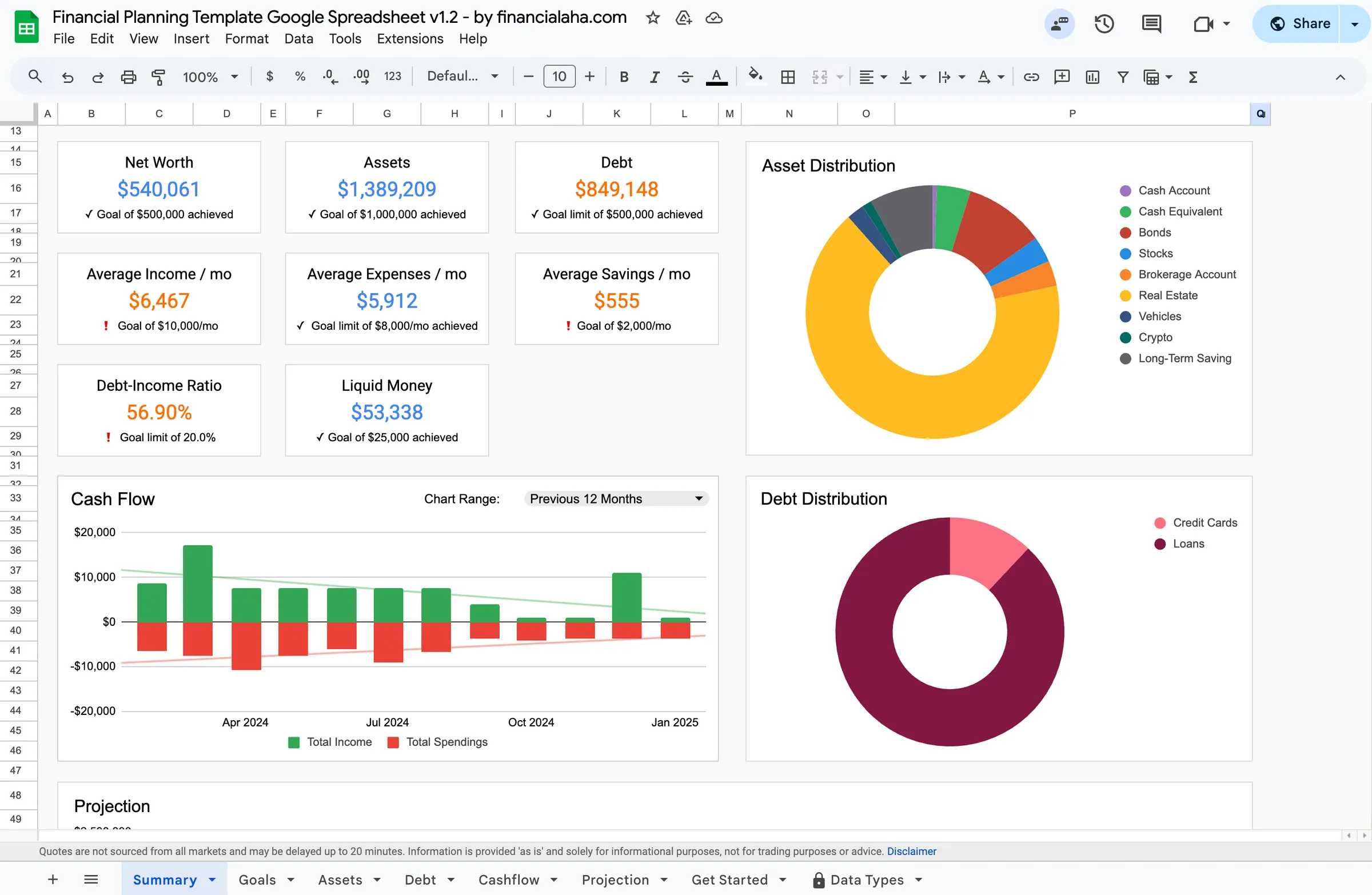
- Financial planning dashboard
- Monthly budget tracking
- Net worth over time
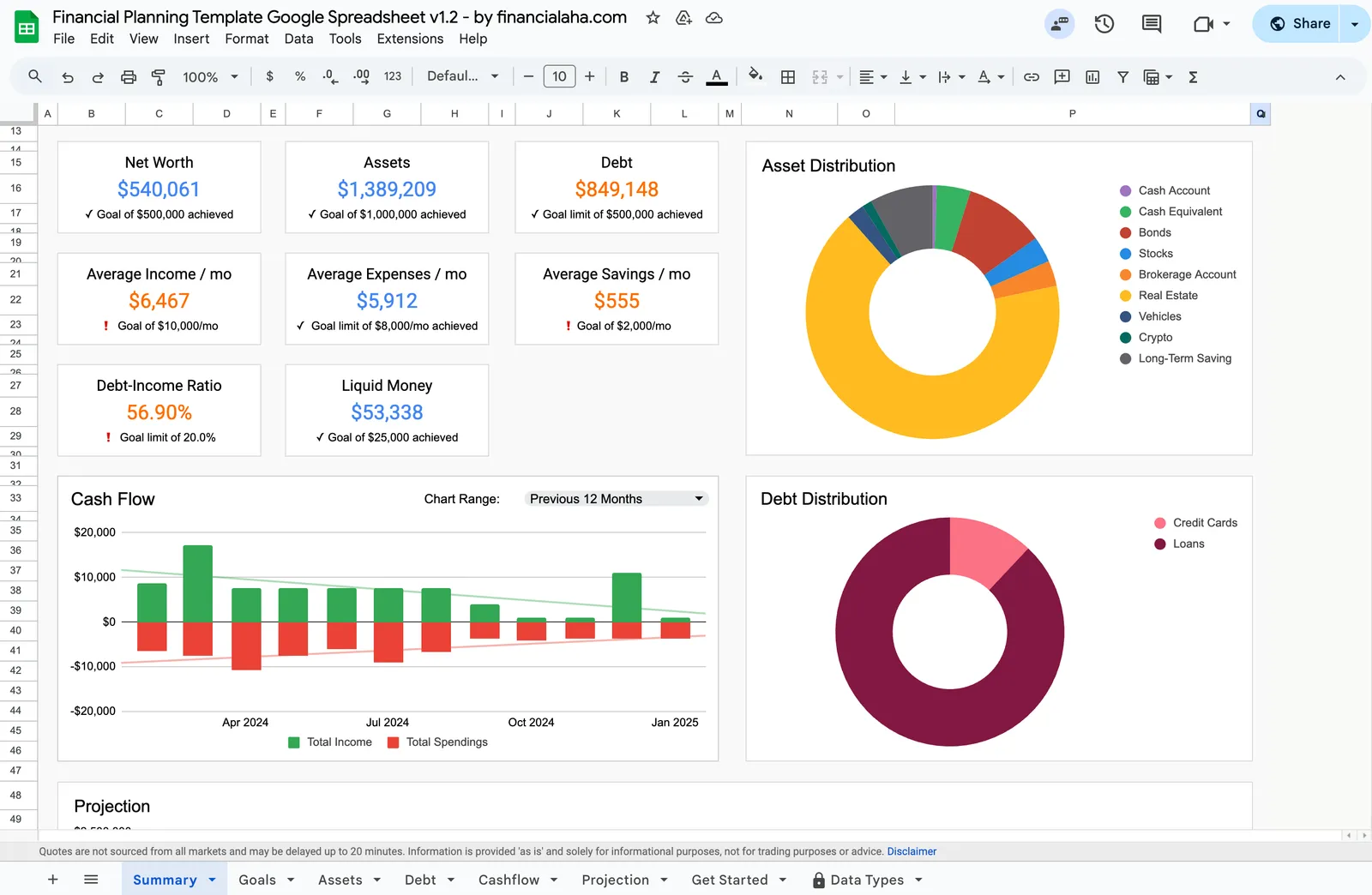
- Goal setting and tracking
Complete financial overview with net worth and goals
Set and track progress toward financial milestones
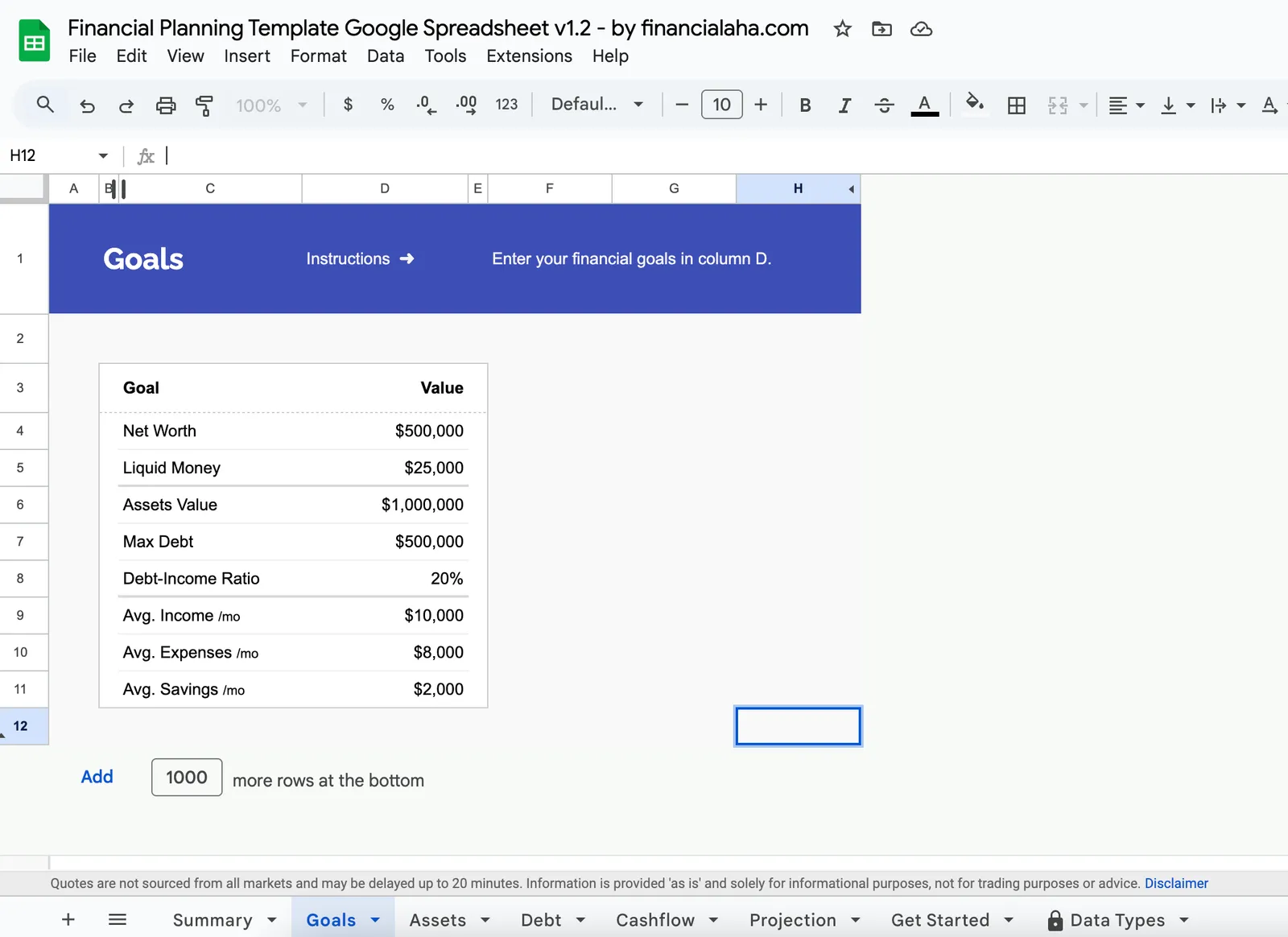
Track all your assets in one place
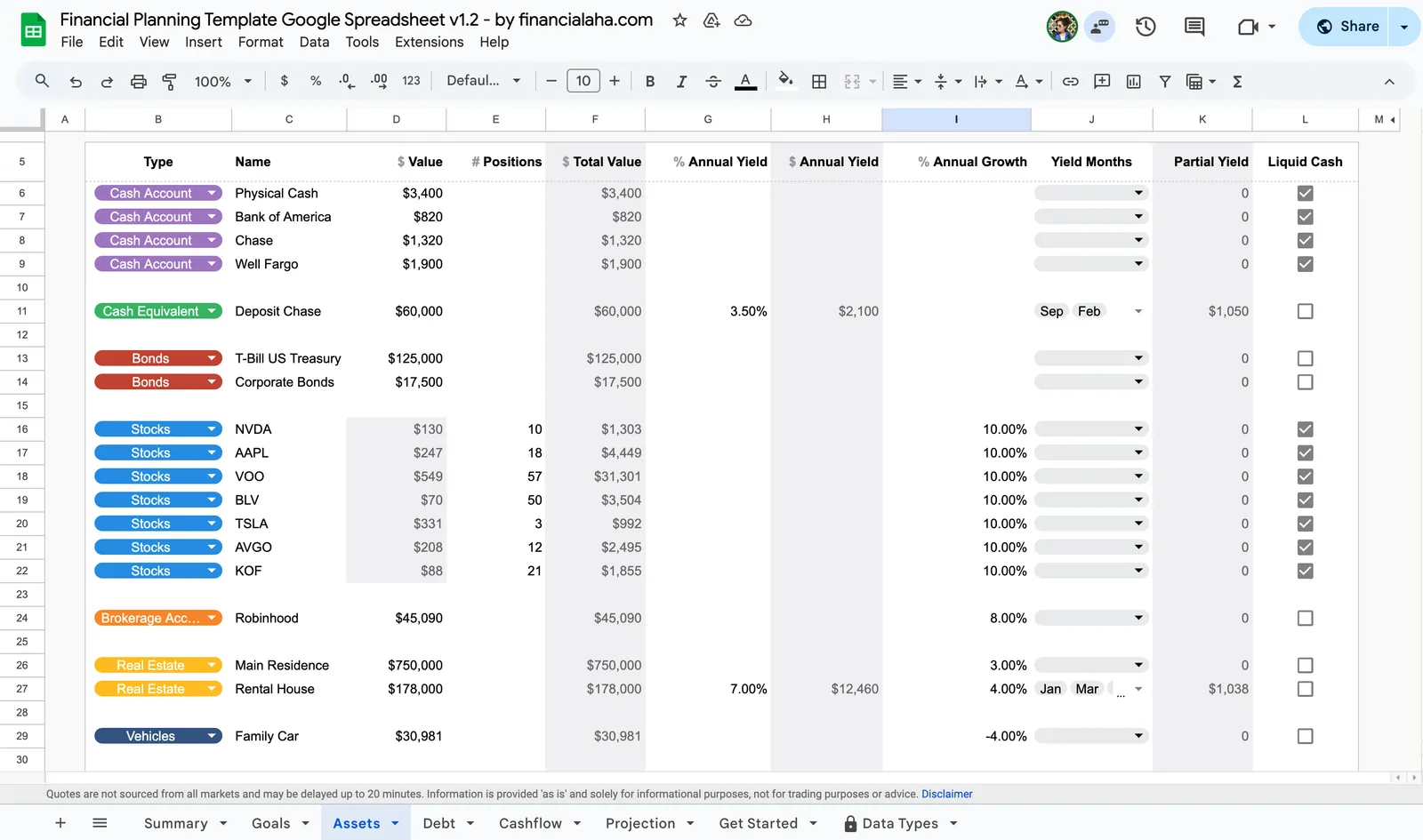
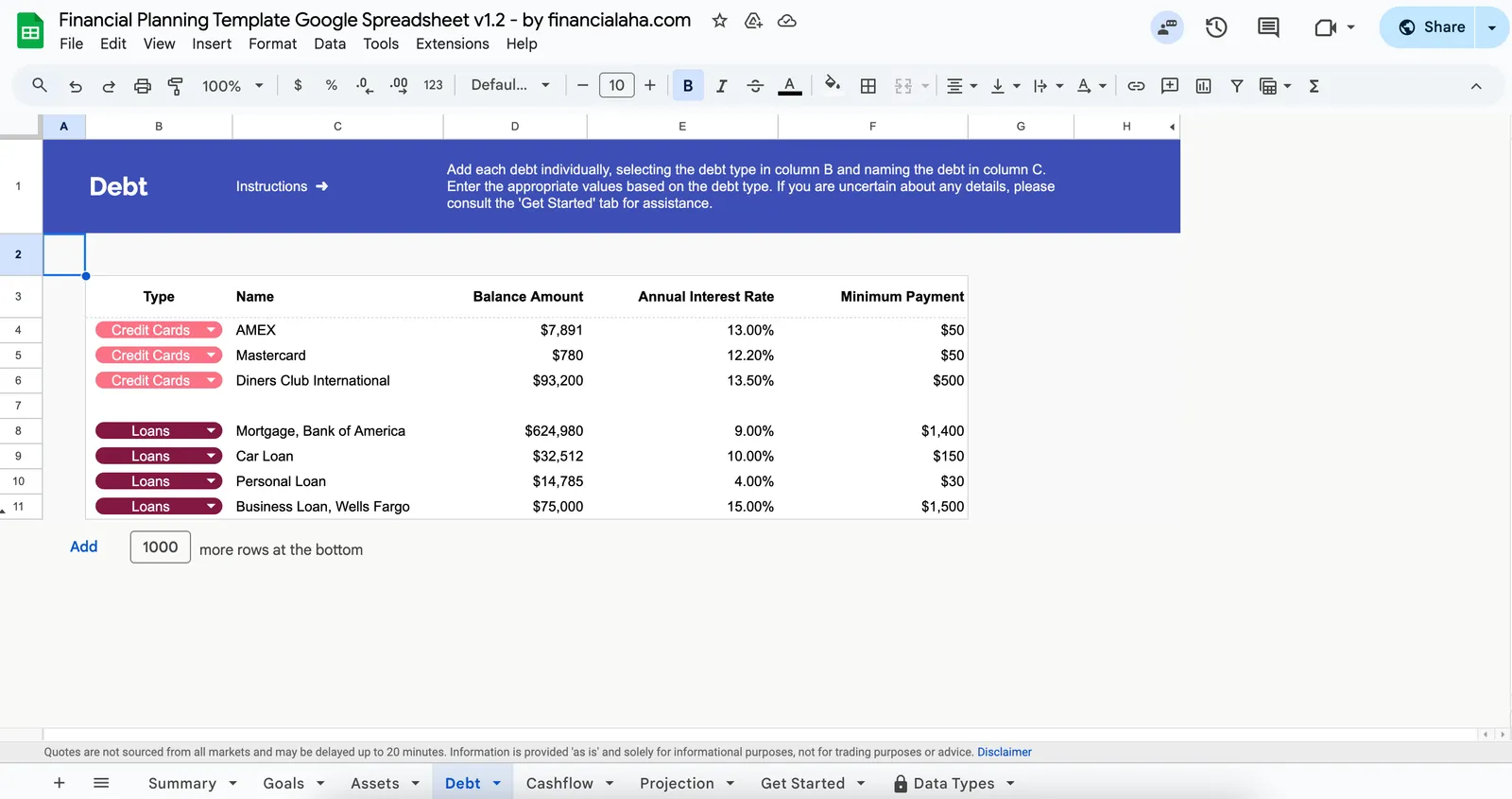
Monitor and plan debt repayment
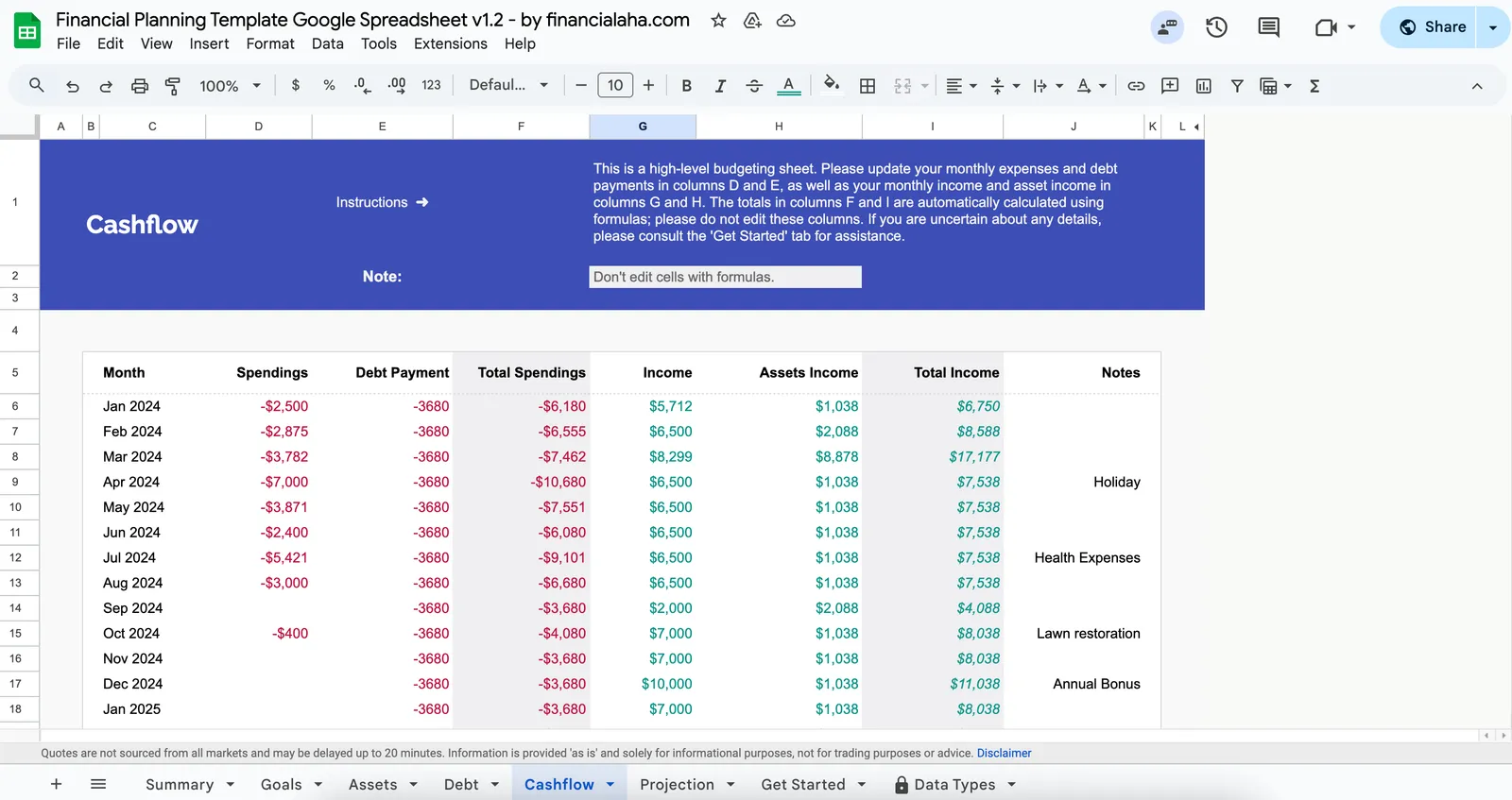
Visualize your income vs spending over time
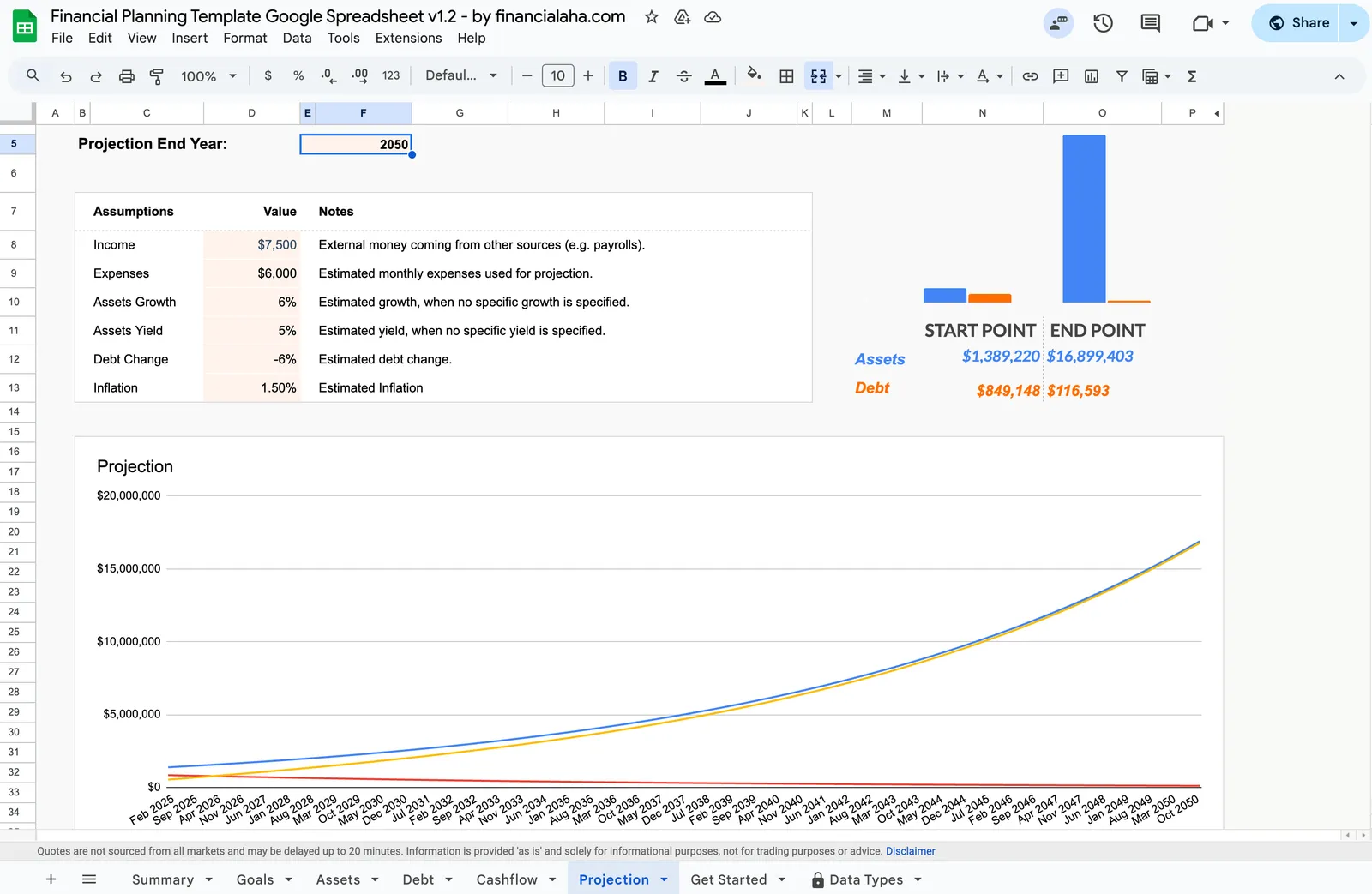
Project your financial future
Recommended Templates
The Right Templates for This Stage
College funding is a multi-year financial project. These templates help plan and track the journey:
Adjust your household budget for the college years. See how tuition payments affect monthly cash flow and identify areas where spending can flex to accommodate education costs.
View templateModel the long-term impact of different college funding approaches. Compare scenarios - how does paying cash vs. taking loans affect your retirement timeline? What does starting 529 contributions earlier look like?
View templateFree Tools
Calculators to Help You Plan
Common Questions
Sending Kids to College - Financial FAQ
How much does college really cost?
Total annual costs (tuition, room, board, books, expenses) in 2024-2025: in-state public averages $24,000-$28,000, out-of-state public runs $44,000-$48,000, and private universities range from $55,000-$80,000. However, the net price after financial aid is often 30-50% lower. Using a college's net price calculator (available on every school's website) gives a more accurate estimate for your specific situation.
When is it too late to start saving for college?
Starting at any point helps. Even 3-5 years of 529 contributions provide tax-free growth and potential state tax deductions. If college is 1-2 years away, building a dedicated savings fund in a high-yield savings account (4-5% APY currently) is still valuable. The bigger question is balancing college savings against other financial priorities like retirement and debt payoff.
How much student debt is considered manageable?
A common guideline: total student loan debt should not exceed the expected first-year salary after graduation. For a graduate expecting to earn $55,000, keeping total loans under $55,000 means manageable monthly payments of roughly $550-$600 over 10 years at current rates. Beyond this level, payments can strain post-graduation budgets significantly.
Can I track college savings progress in a spreadsheet?
Yes. The Financial Planning template can track 529 plan growth, project future balances based on contribution rates, and model how college expenses affect the overall financial picture. Setting up a dedicated section for education funding alongside retirement and other goals provides a complete view.
Can't find the answer you're looking for? Contact our team
Ready to get started?
Download instantly and start managing your finances, or contact us to design a custom template package for your needs.