Life Event Guide
Financial Planning When Preparing for Retirement
The years leading up to retirement involve some of the most consequential financial decisions of your life - from Social Security timing to healthcare coverage to drawdown strategy.
Financial Impact
The Financial Impact of Retirement Planning
For people in their 50s and 60s actively preparing for retirement, the decisions made in this window can affect income for decades. The complexity comes from multiple moving parts that interact with each other.
Social Security timing changes lifetime income significantly
Claiming Social Security at 62 versus 70 can mean a 77% difference in monthly benefits. For someone with a full retirement age benefit of $2,500/month at 67, claiming at 62 yields about $1,750/month while waiting until 70 yields about $3,100/month. The breakeven point is typically around age 80 - after which the higher benefit pays more in total. Health, other income sources, and spousal benefits all factor into this decision.
Healthcare costs between retirement and Medicare require planning
If you retire before 65, you need to bridge the healthcare gap until Medicare kicks in. ACA marketplace plans run $500-$1,500/month per person depending on age and location. Even after Medicare begins, supplemental insurance (Medigap), Part D drug coverage, and dental/vision add $200-$500/month per person. Healthcare is often the largest expense retirees underestimate.
Tax-efficient withdrawal sequencing preserves more wealth
Most pre-retirees have money in multiple account types: pre-tax (401k, traditional IRA), after-tax (Roth IRA, Roth 401k), and taxable brokerage accounts. The order you draw from these accounts affects your tax bill, Medicare premiums (IRMAA surcharges), and how long your money lasts. A common approach is drawing from taxable accounts first, then pre-tax, then Roth - but individual circumstances vary widely.
Pension decisions are often irreversible
If you have a pension, you typically choose between a lump sum and various annuity options (single life, joint and survivor at 50%, 75%, or 100%). A single-life annuity pays the most monthly but stops when you die. Joint and survivor options pay less but protect a spouse. Lump sums offer flexibility but shift investment risk to you. These decisions are usually permanent once made.
Getting Ready
How to Prepare Your Budget for Retirement
Map out all income sources and their start dates
List every expected income source: Social Security (and the age you plan to claim), pension payments, 401(k)/IRA withdrawals, part-time work, rental income, and any other sources. Note when each begins - there may be gap years between retirement and when certain income starts. Seeing all sources on a timeline reveals whether you have enough and when the lean years might be.
Estimate your actual retirement spending
Track your current spending, then adjust for retirement: commuting and work-related costs disappear, healthcare costs often increase, and discretionary spending may rise initially (travel, hobbies) before declining in later years. Many people find retirement spending is 70-85% of pre-retirement spending, but this varies widely. Using actual numbers rather than rules of thumb gives a more reliable picture.
Model different Social Security claiming ages
Run the numbers for claiming at 62, full retirement age, and 70. Factor in your health, other income sources, and whether you have a spouse who might benefit from survivor benefits. The Social Security Administration provides personalized estimates at ssa.gov. Comparing scenarios side by side - total lifetime benefits at different claiming ages - helps clarify the tradeoff between early money and higher later payments.
Plan for healthcare costs year by year
Build a year-by-year healthcare cost estimate from retirement through age 85+. Include insurance premiums, out-of-pocket maximums, dental and vision, and prescription costs. If retiring before 65, include the ACA marketplace bridge. After 65, include Medicare Parts B and D premiums, supplemental coverage, and potential IRMAA surcharges if your income exceeds certain thresholds.
Create a withdrawal strategy across account types
Determine how much to draw from each account type each year to minimize taxes and maximize longevity. Roth conversions in lower-income years (between retirement and Social Security/RMDs) can reduce future tax burden. Required Minimum Distributions (RMDs) beginning at age 73 force withdrawals from pre-tax accounts whether you need the money or not - planning around these is worth the effort.
See The Templates
Tools for this stage of life
Browse the templates that help with financial planning during major life transitions.
- Financial planning dashboard
- Monthly budget tracking
- Net worth over time
- Goal setting and tracking
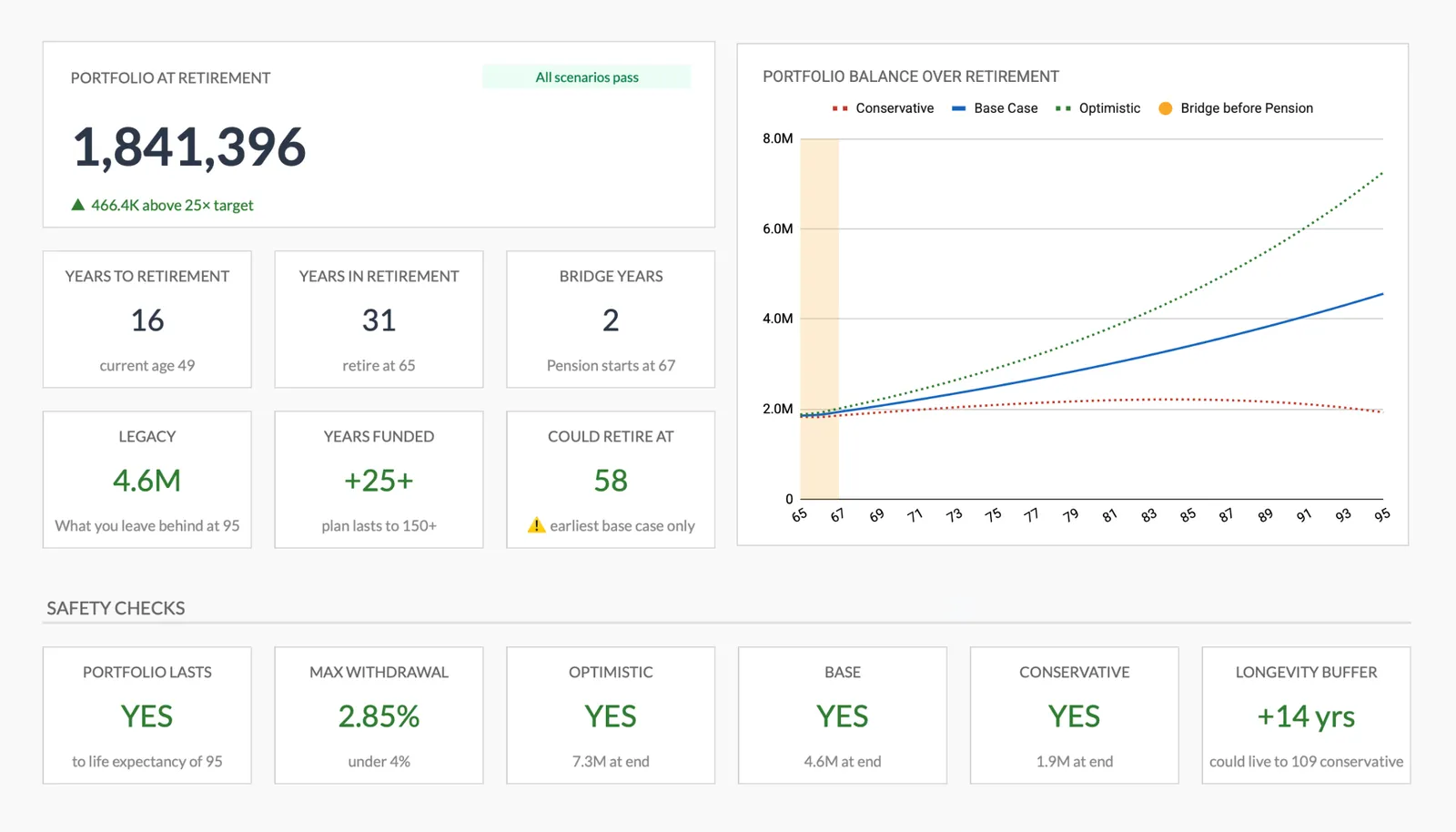
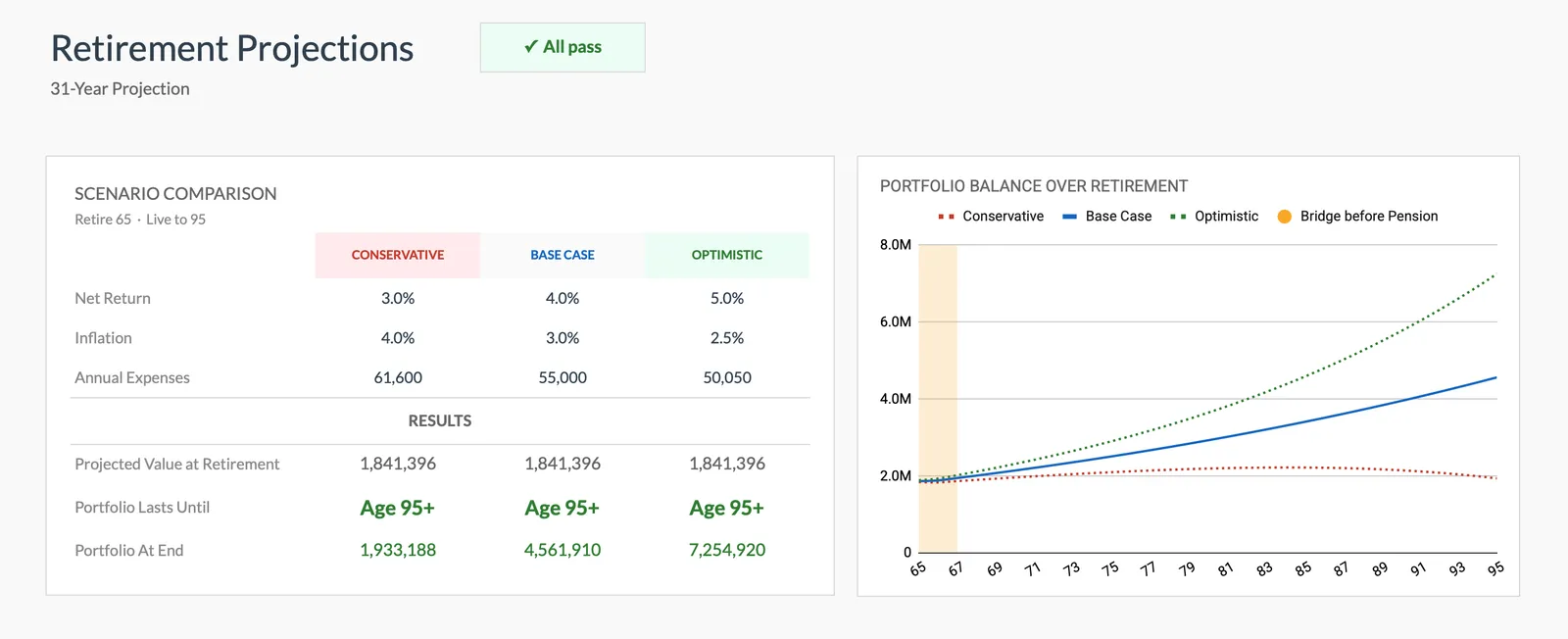
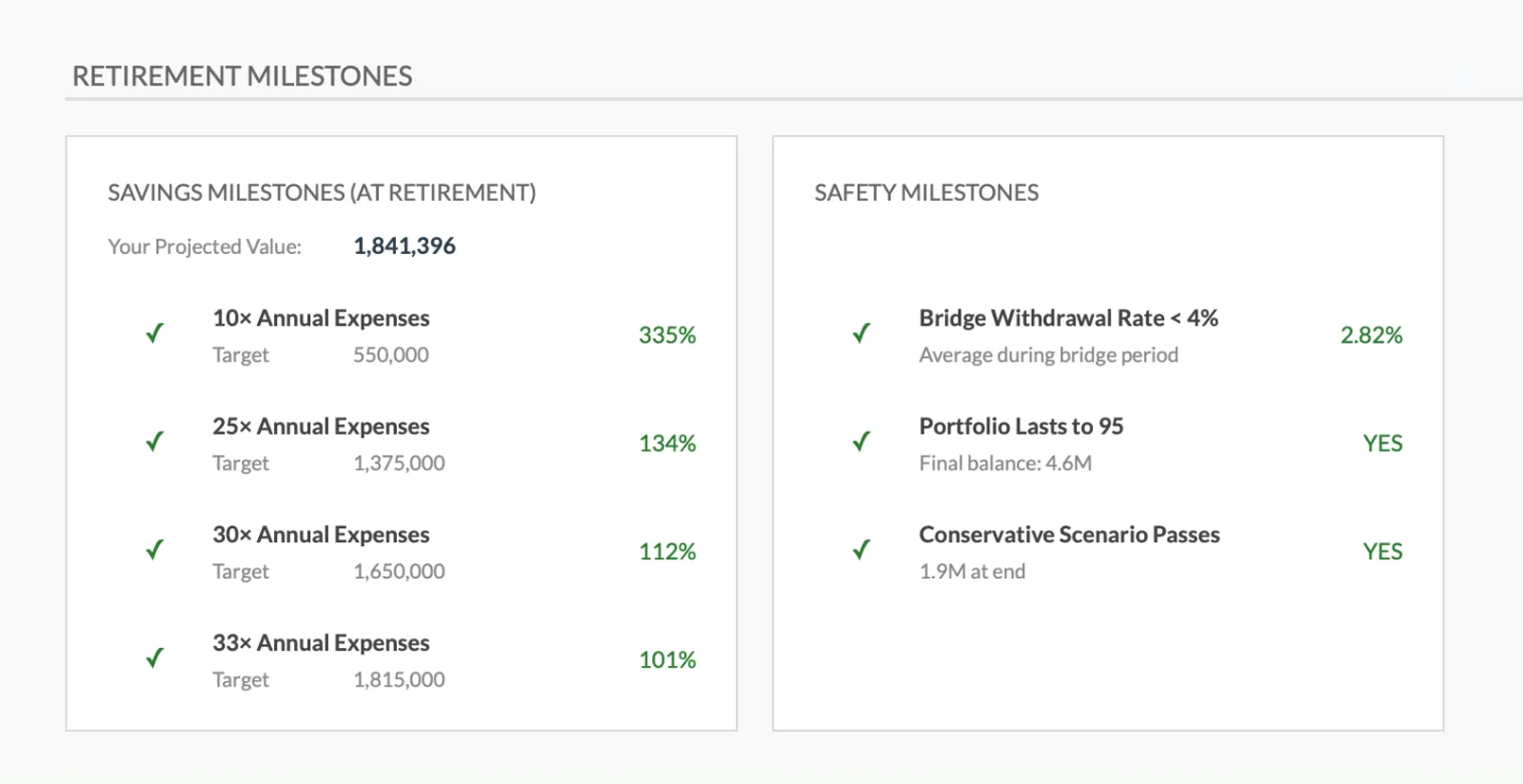
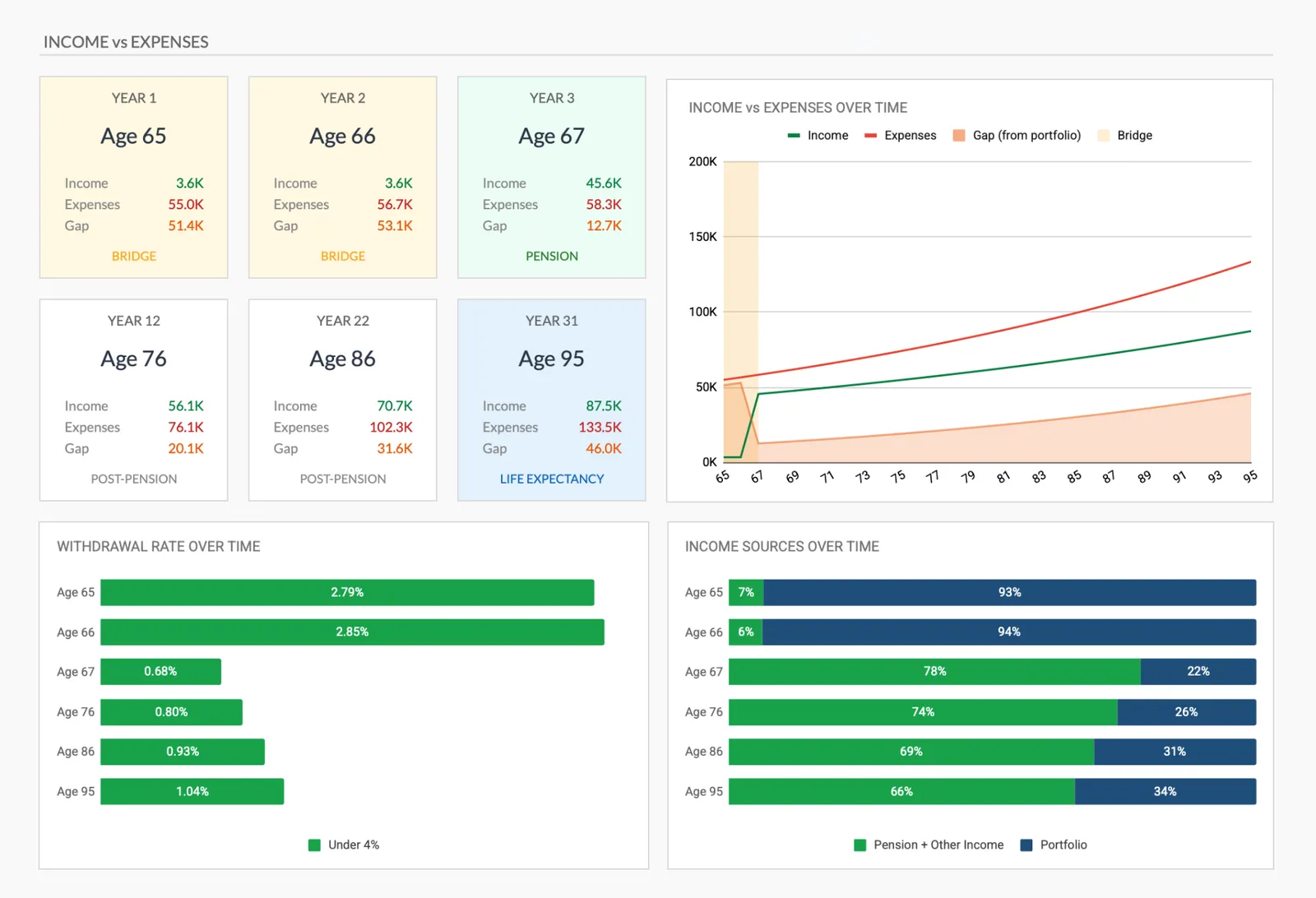
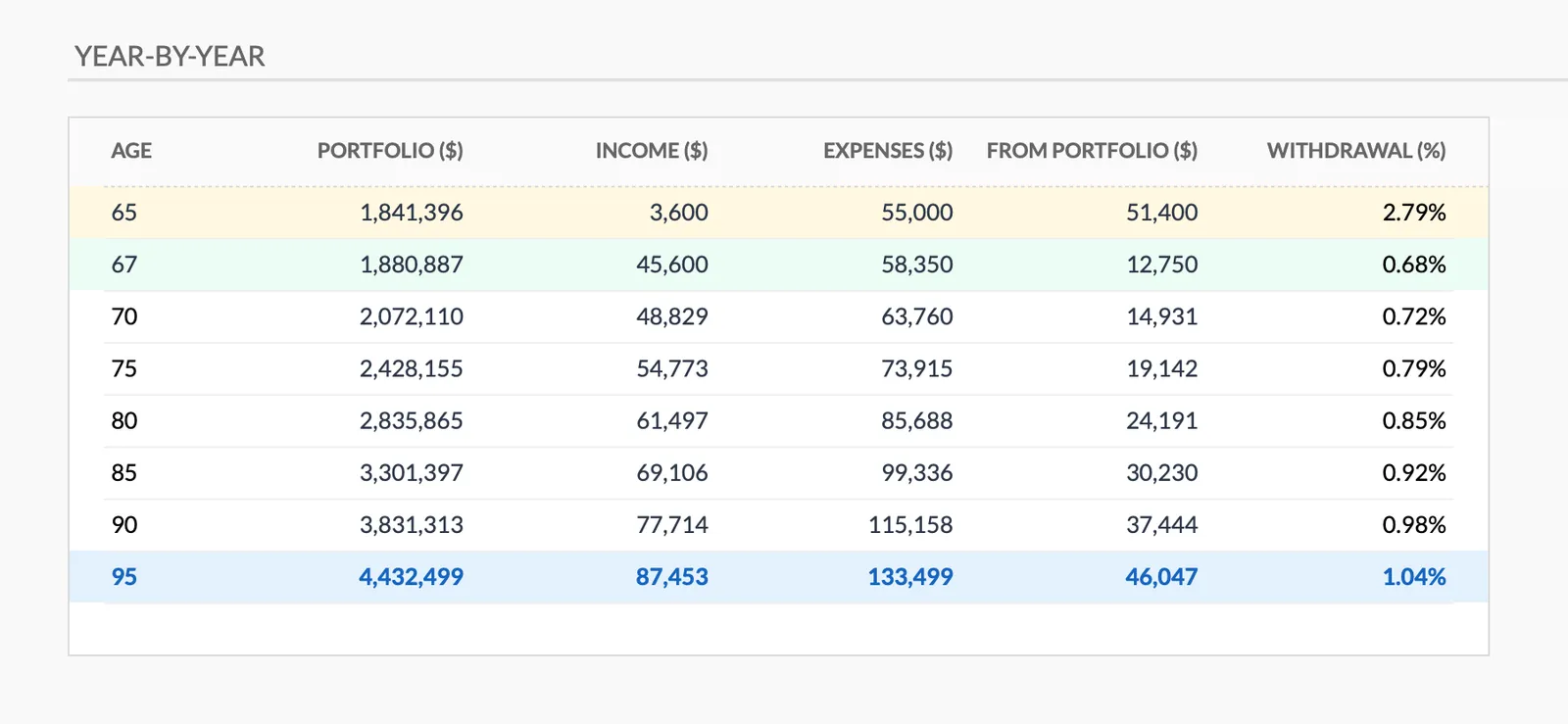
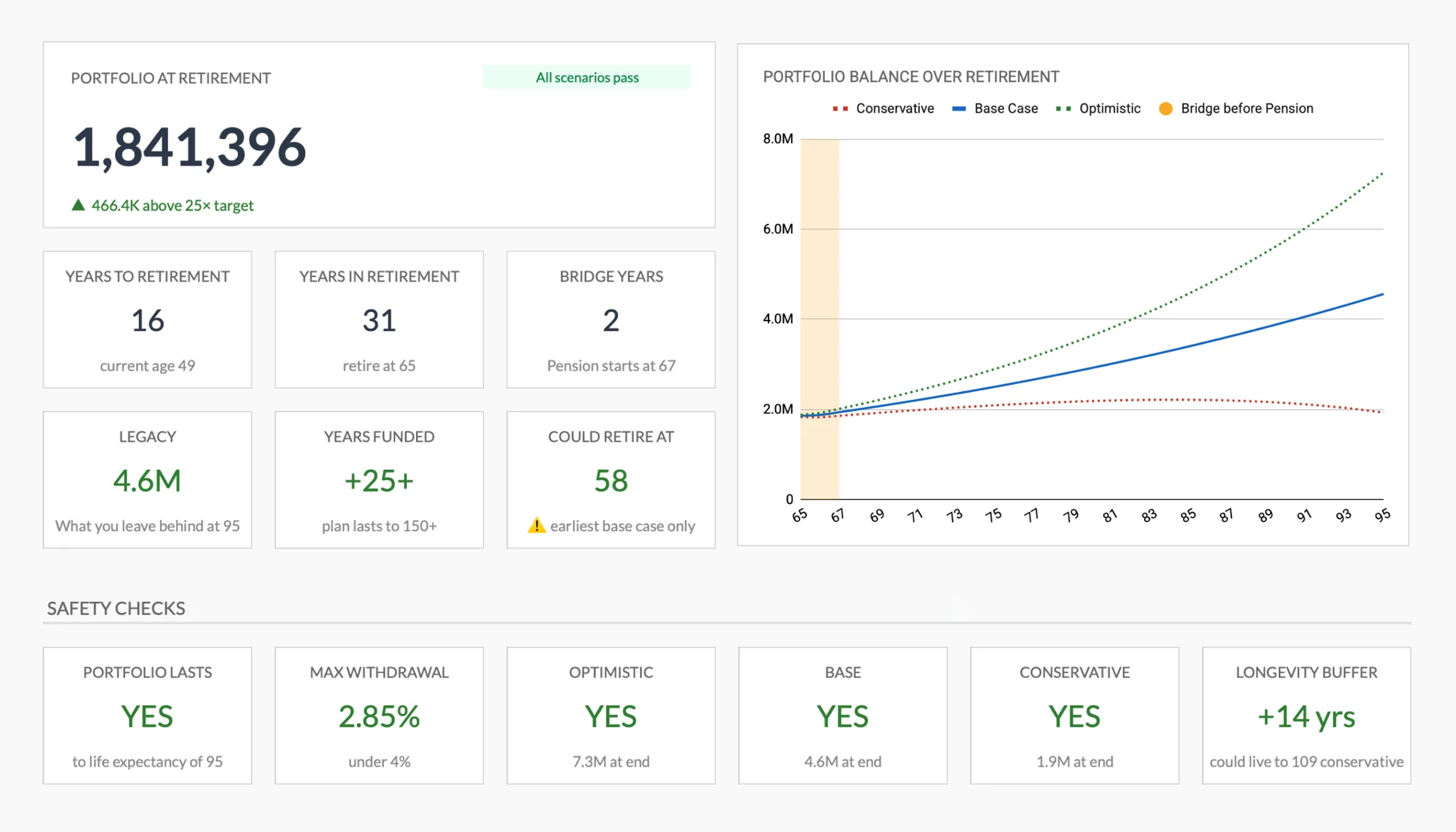
Complete retirement overview with projections
Project your retirement savings growth
Track progress toward retirement goals
Plan your retirement income against expenses
Detailed year-by-year retirement projection
Recommended Templates
The Right Templates for This Stage
Retirement planning involves projections, asset tracking, and ongoing adjustments. These templates cover the key areas:
Model retirement income from all sources, project spending needs, and test different claiming strategies for Social Security and pension. See how your plan holds up across various scenarios.
View templateTrack all assets and liabilities as you approach retirement. Monitoring your total picture - including 401(k), IRA, brokerage accounts, real estate, and any debts - shows whether you are on track and how the transition affects your net worth.
View templateMap out the full financial picture including tax-efficient withdrawal sequencing, Roth conversion opportunities, and the transition from accumulation to distribution phase.
View templateFree Tools
Calculators to Help You Plan
Common Questions
Planning for Retirement - Financial FAQ
When should I start planning for retirement?
The most impactful planning window is typically 5-10 years before your target retirement date. This gives enough time to adjust savings rates, make Roth conversions at lower tax rates, pay off debts, and model different scenarios. That said, any time is useful - even 1-2 years of focused planning can significantly improve outcomes.
How much do I need to retire?
A common starting point is 25 times your expected annual retirement spending (based on the 4% withdrawal rule). If you expect to spend $60,000/year, that suggests a $1.5 million portfolio. But this varies based on Social Security income, pensions, retirement age, and healthcare costs. Running your specific numbers through a detailed projection gives a more useful answer than any rule of thumb.
Should I claim Social Security early or wait?
There is no universal answer. Claiming at 62 makes sense for some people - those with health concerns, those who need the income, or those with a shorter life expectancy. Waiting until 70 maximizes the monthly benefit and can be valuable for higher earners, those in good health, and those whose spouse may rely on survivor benefits. The breakeven age is typically around 80.
What is the biggest retirement planning mistake?
Underestimating healthcare costs is consistently cited as one of the most common planning gaps. A couple retiring at 65 may spend $300,000-$400,000 on healthcare over their lifetime (per Fidelity estimates). Those retiring earlier face even higher totals due to the pre-Medicare gap. Building healthcare into the plan as a specific line item rather than a general assumption helps avoid this.
How do I handle Required Minimum Distributions?
RMDs begin at age 73 for most people (rising to 75 in 2033). The amount is based on your account balance and an IRS life expectancy factor. RMDs from pre-tax accounts are taxed as ordinary income and can push you into higher tax brackets or trigger Medicare IRMAA surcharges. Strategies like Roth conversions before RMDs begin can reduce the impact, but require careful tax planning.
Can't find the answer you're looking for? Contact our team
Ready to get started?
Download instantly and start managing your finances, or contact us to design a custom template package for your needs.