Life Event Guide
Financial Planning When Paying Off Debt
Whether it is credit cards, student loans, or medical bills - seeing all your debts in one place with a clear payoff plan makes the process less overwhelming and more achievable.
Financial Impact
The Financial Impact of Carrying Debt
Debt costs more than just the monthly payments. Interest compounds, opportunity costs accumulate, and the psychological weight affects financial decision-making. Understanding the true cost of your debt is the first step toward eliminating it.
Interest costs are often invisible until you add them up
A $10,000 credit card balance at 22% APR with minimum payments ($200/month) takes over 9 years to pay off and costs roughly $12,000 in interest - more than the original balance. A $30,000 student loan at 6% over 10 years costs about $10,000 in interest. Adding up the total interest cost across all debts often provides the motivation to prioritize payoff.
Debt payments reduce available cash flow
Minimum payments on $25,000 in mixed debt (credit cards, car loan, student loans) might total $600-$900/month. That is money unavailable for savings, investing, or other goals. Eliminating each debt frees up its payment for the next debt or for building wealth - creating a compounding effect in reverse.
The opportunity cost of debt is real
Money used for interest payments could have been invested. At 7% average market returns, $500/month invested over 10 years grows to approximately $86,000. If $300 of that $500 is going to debt interest instead, you are only building $34,000 in investments. The gap widens every year the debt persists.
Credit scores improve as debt decreases
Credit utilization (the percentage of available credit being used) accounts for about 30% of your credit score. Reducing credit card balances from 80% utilization to 30% can improve scores by 50-100 points. Better credit scores lead to lower interest rates on future borrowing - mortgages, car loans, and even insurance premiums.
Getting Ready
How to Build a Debt Payoff Budget
List every debt with full details
Write down each debt: creditor name, total balance, interest rate, minimum payment, and due date. Include everything - credit cards, student loans, car loans, personal loans, medical bills, and money owed to family. This complete inventory is the foundation of any payoff strategy. Many people discover debts they had mentally minimized or forgotten.
Choose a payoff strategy that fits your personality
The avalanche method (highest interest rate first) saves the most money mathematically. The snowball method (smallest balance first) provides quicker psychological wins. A $500 credit card and a $15,000 student loan both feel like burdens - eliminating the $500 one quickly builds momentum. Some people find the avalanche approach more motivating because they can see interest savings adding up. Neither is wrong.
Find extra money in your current budget
Track expenses for one full month to find potential payoff fuel: unused subscriptions ($20-$100/month), dining out reduction ($100-$300/month), entertainment cuts ($50-$200/month). Even $200/month extra toward debt dramatically reduces payoff time. On that $10,000 credit card example, increasing payments from $200 to $400/month cuts the payoff time from 9+ years to about 2.5 years.
Automate payments to prevent backsliding
Set up automatic payments for at least the minimum on every debt, plus the extra amount on your target debt. Automation removes the temptation to redirect debt payoff money toward other spending. Schedule payments for the day after payday so the money moves before it can be spent elsewhere.
Track progress visually
Watching debt balances decrease month over month provides ongoing motivation. A spreadsheet that shows total debt declining, percentage paid off, interest saved, and projected debt-free date turns an abstract process into something tangible. Many people find that updating their tracker becomes a motivating monthly ritual.
See The Templates
Tools for this stage of life
Browse the templates that help with financial planning during major life transitions.
- Financial planning dashboard
- Monthly budget tracking
- Net worth over time
- Goal setting and tracking

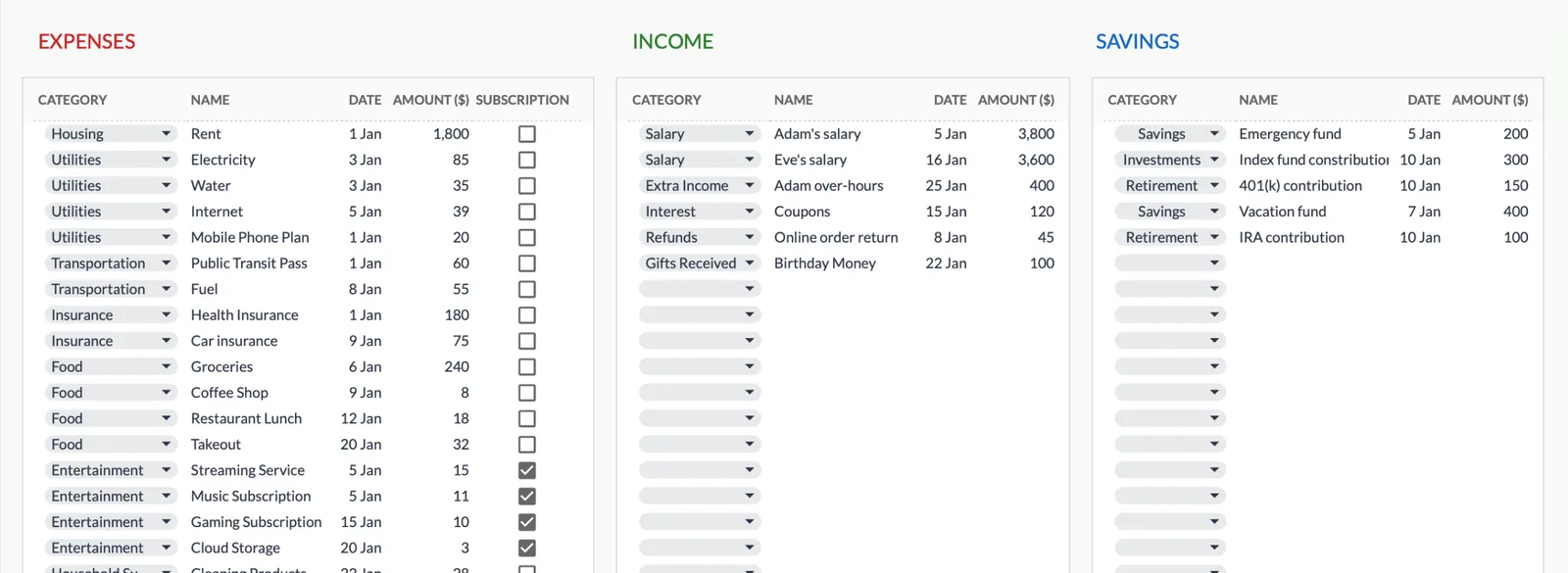
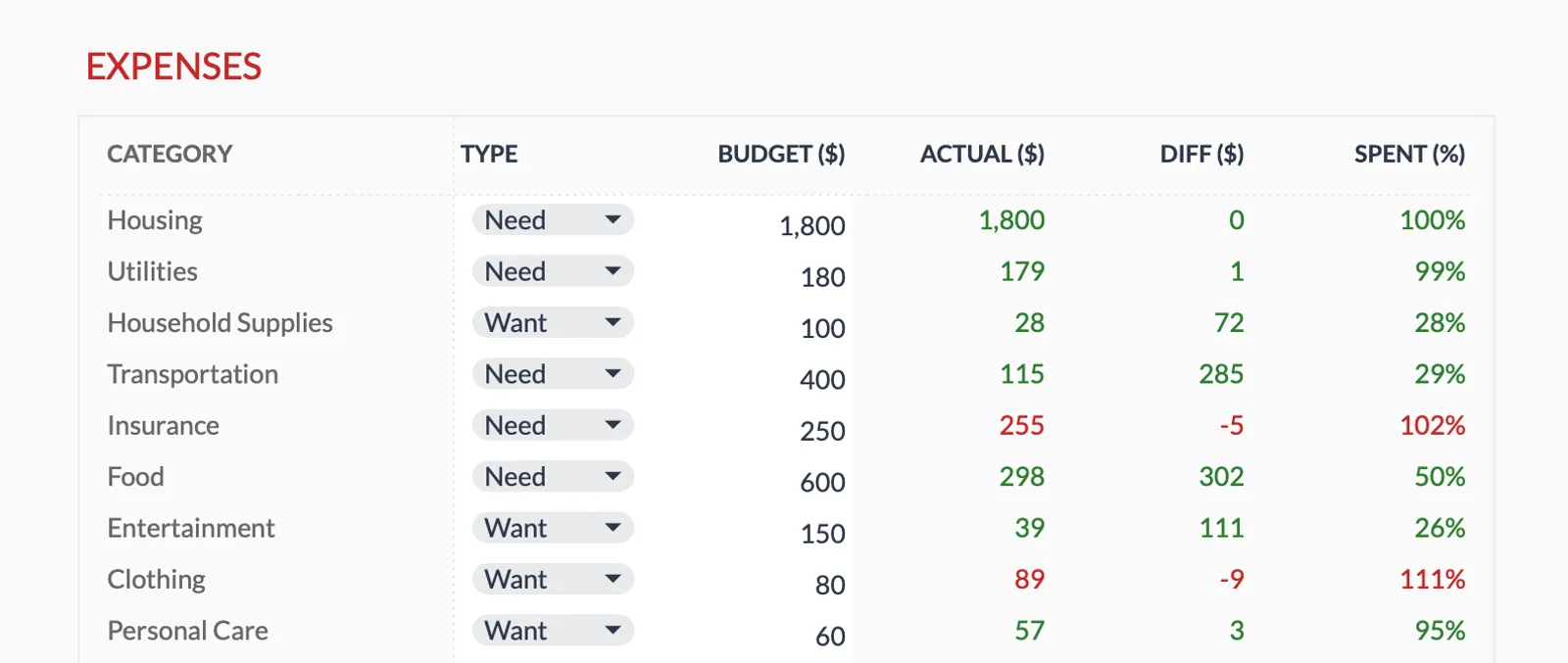
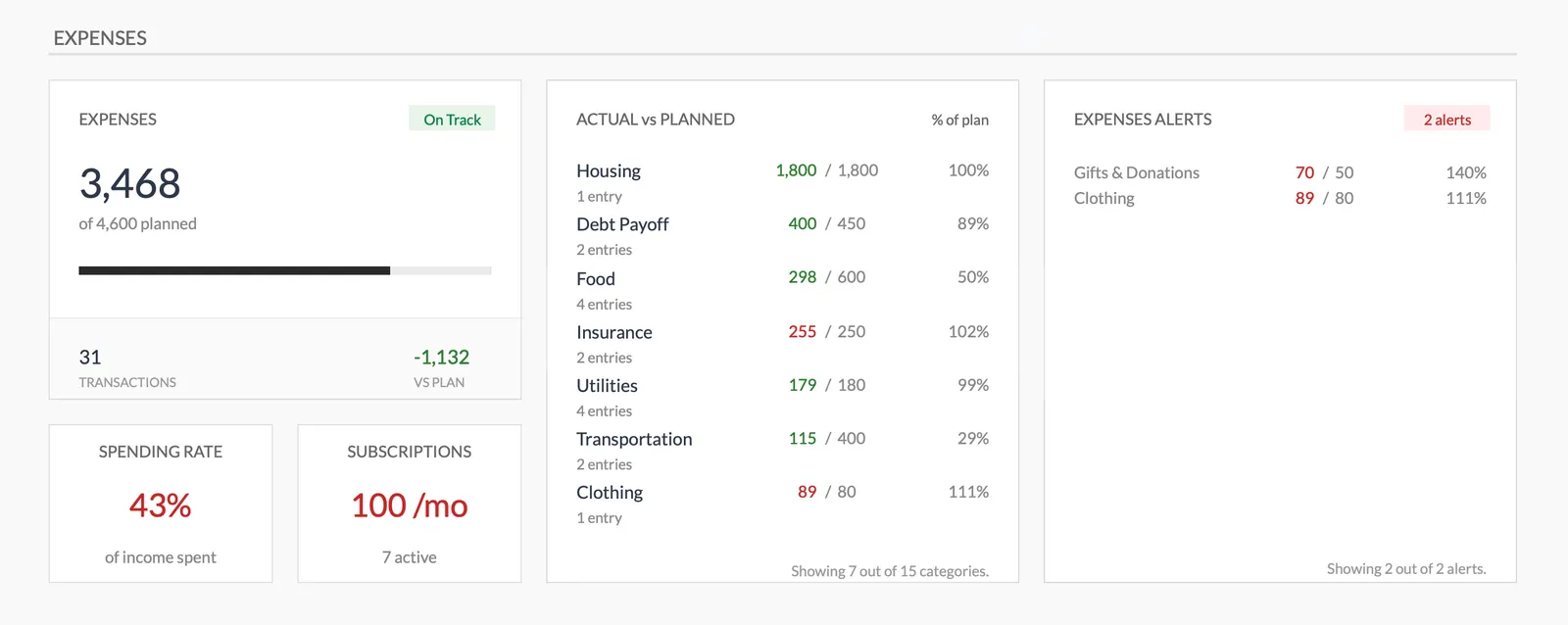
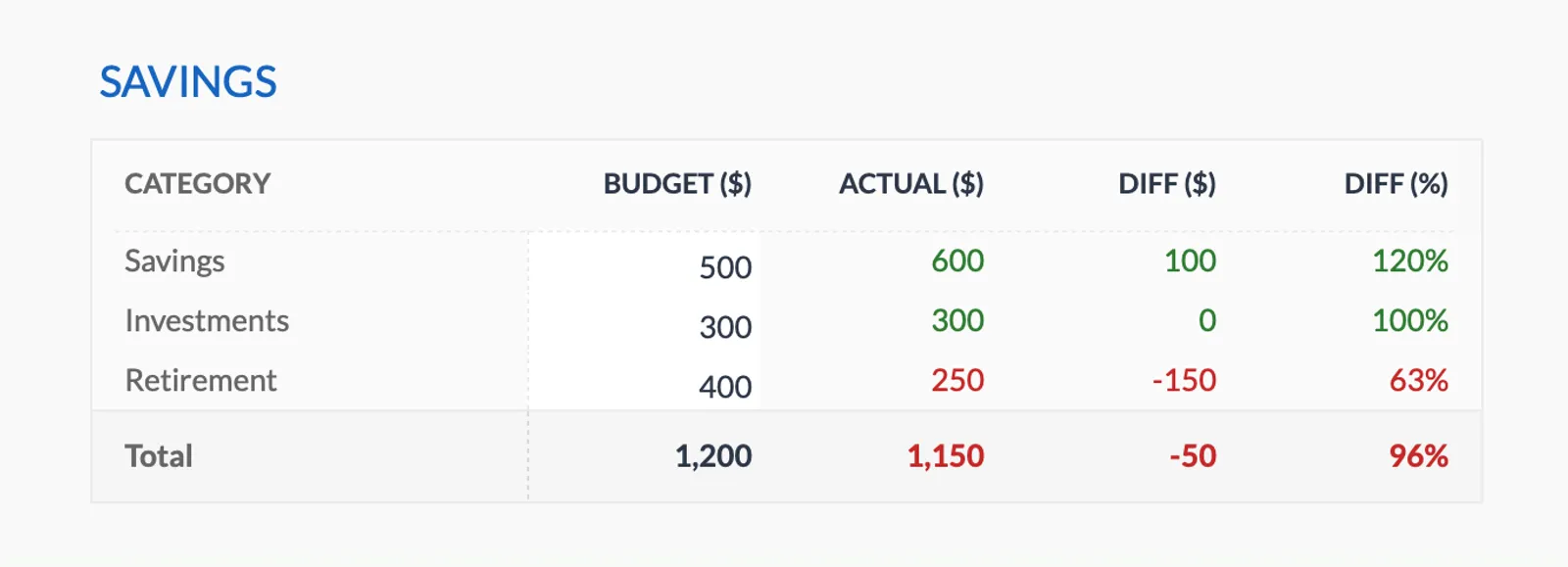
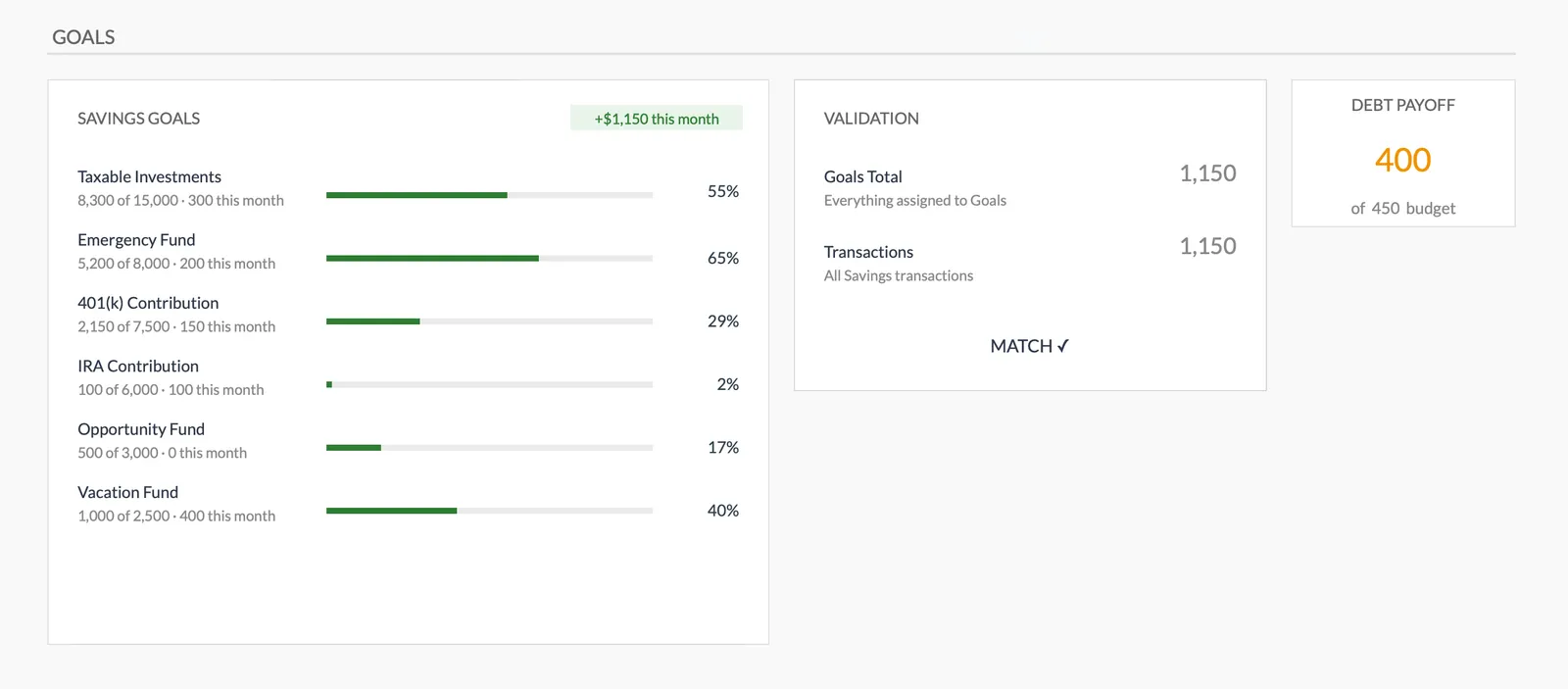
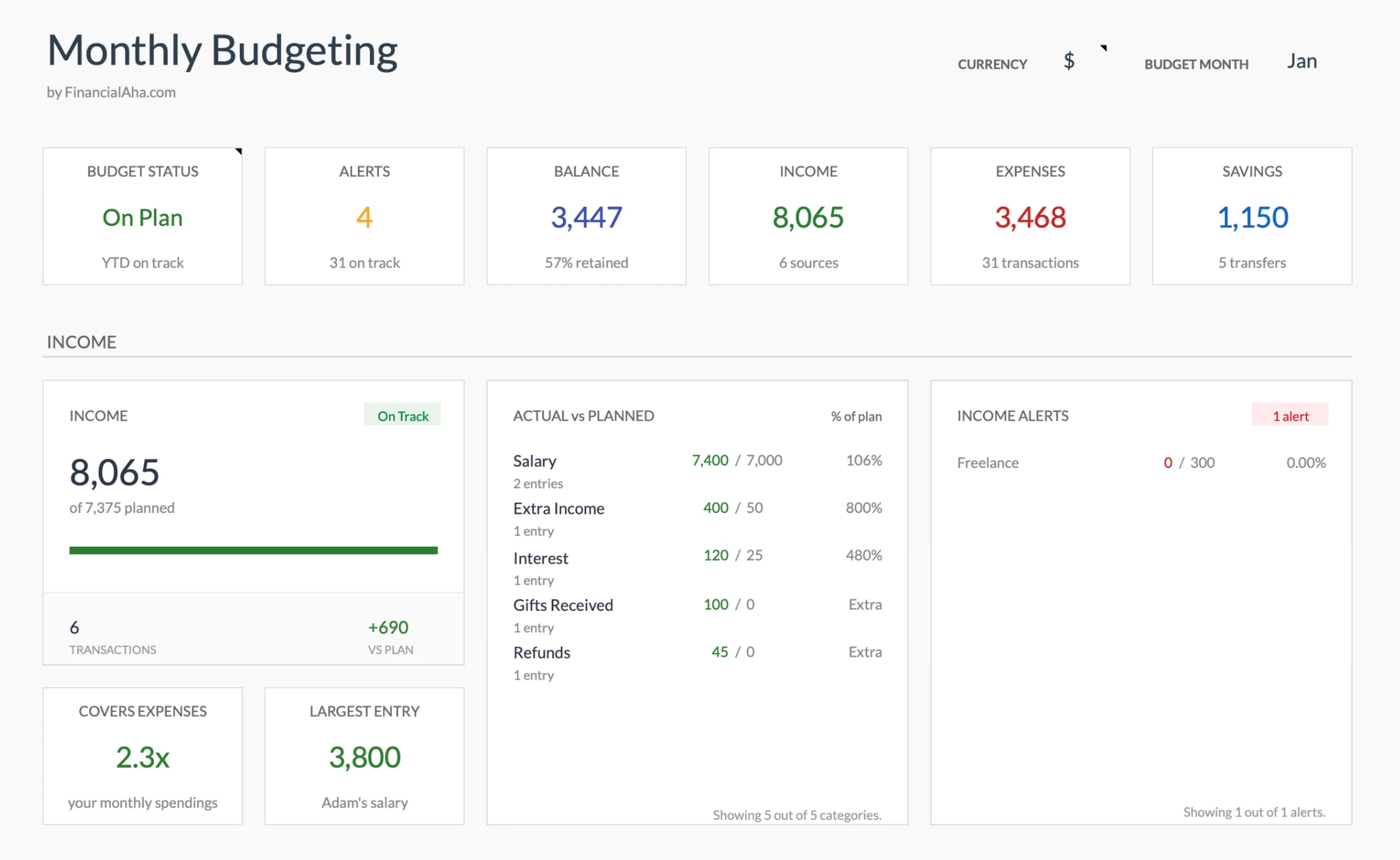
Dashboard with income, expenses, and savings at a glance
Log transactions with automatic categorization
Set targets per category and track actual spending
Visual breakdown of where your money goes
Track savings goals alongside your budget
Monitor progress toward financial goals
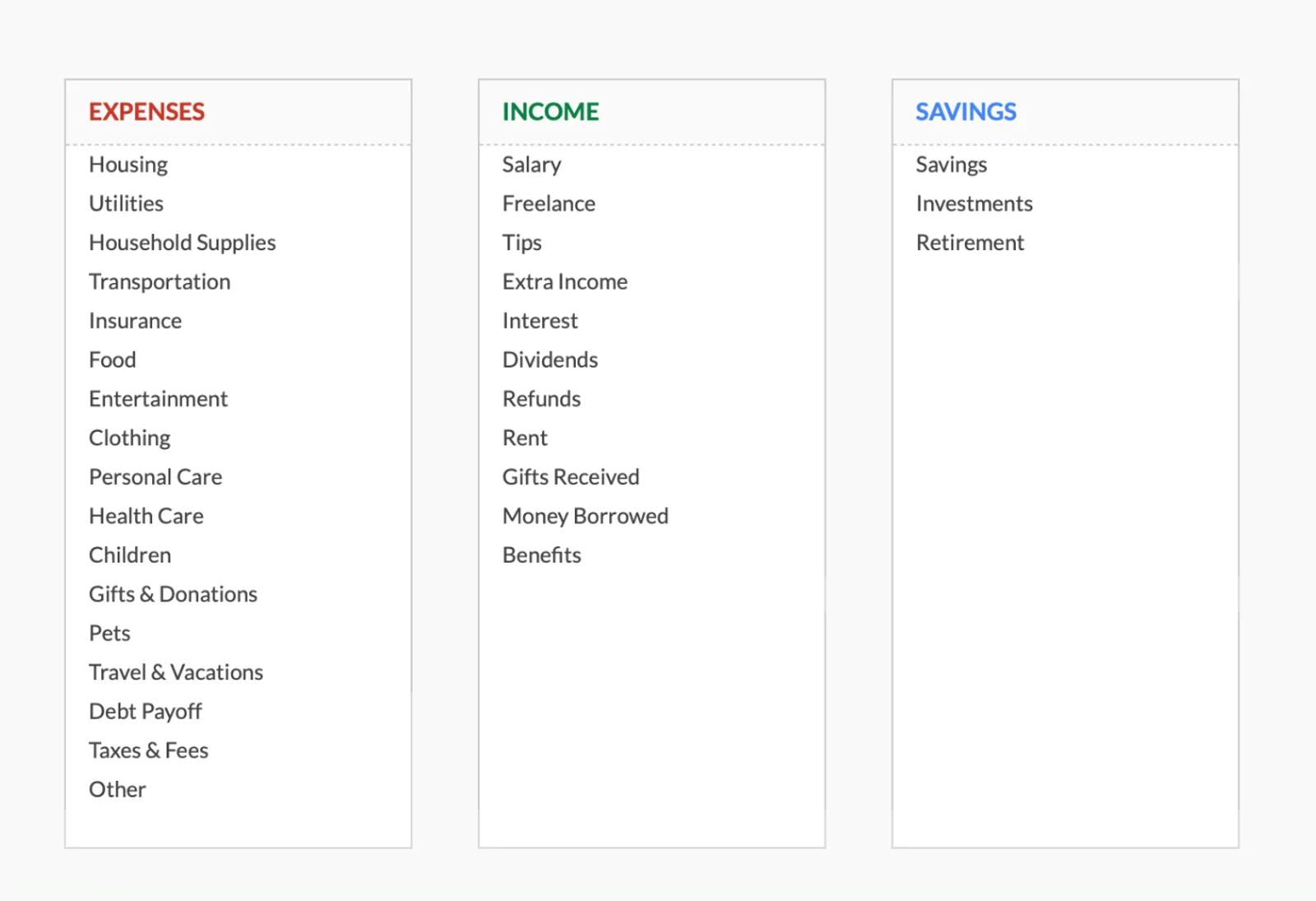
Fully customizable expense, income, and savings categories
Recommended Templates
The Right Templates for This Stage
Paying off debt is a budget challenge at its core. These templates help you find the money and track the progress:
Build a budget that prioritizes debt payments. See exactly how much is available each month above minimum payments, and allocate it using your chosen payoff strategy.
View templateFind hidden money in your spending to redirect toward debt. Tracking actual expenses often reveals $200-$500/month in cuts that can dramatically accelerate payoff timelines.
View templateFree Tools
Calculators to Help You Plan
Common Questions
Paying Off Debt - Financial FAQ
Which debt payoff method is most effective?
The avalanche method (highest interest rate first) saves the most money. The snowball method (smallest balance first) works better psychologically for some people. Research suggests the snowball method has slightly higher completion rates because the early wins maintain motivation. The most effective method is whichever one you will stick with consistently.
How long does it take to pay off $20,000 in credit card debt?
At 20% APR with $400/month payments: about 8 years, with roughly $18,000 in interest. At $800/month: about 2.5 years, with roughly $6,000 in interest. At $1,200/month: about 1.5 years, with roughly $3,500 in interest. The debt payoff calculator can model your specific balances, rates, and payment amounts.
Is it worth paying off debt versus investing?
Mathematically, if your debt interest rate is higher than expected investment returns, paying off debt first provides a better guaranteed return. Credit card debt at 20% should almost always be prioritized over investing. Student loans at 5% are less clear-cut since long-term market returns average 7-10%. Some people choose a balanced approach, doing both simultaneously.
How do I stay motivated during a long debt payoff?
Track your progress monthly in a spreadsheet - seeing the total decrease keeps the goal tangible. Celebrate milestones (every $1,000 paid off, each debt fully eliminated). Calculate and display the interest you have avoided. Some people find that projecting their debt-free date and counting down the months maintains focus.
Can't find the answer you're looking for? Contact our team
Ready to get started?
Download instantly and start managing your finances, or contact us to design a custom template package for your needs.