Life Event Guide
Financial Planning When Moving Abroad
Moving to another country changes every financial assumption - from currency and cost of living to taxes and banking. Clear financial planning helps make the transition smoother.
Financial Impact
The Financial Impact of Moving Abroad
An international move introduces financial complexities that domestic moves do not. Currency fluctuations, dual tax obligations, different cost structures, and new banking systems all need attention. Understanding these before you move prevents expensive surprises.
Cost of living can shift dramatically
Monthly expenses in London might be 40% higher than Atlanta, while living in Lisbon could be 30% lower than New York. A $5,000/month budget in the U.S. might need to become $7,000 in Singapore or could stretch to cover more in Mexico City at $3,500. Researching actual costs (housing, groceries, transportation, healthcare) in your destination city provides the baseline for your new budget.
Currency exchange affects real purchasing power
If you earn in one currency and spend in another, exchange rate fluctuations can swing your effective income by 5-15% in a single year. A 10% currency move on a $60,000 salary means $6,000 more or less purchasing power. Expats earning and spending in the same local currency are less affected, but savings or debts in the home currency still fluctuate.
Tax obligations often double - at least temporarily
U.S. citizens pay taxes on worldwide income regardless of where they live. The Foreign Earned Income Exclusion ($126,500 in 2024) and Foreign Tax Credit help prevent double taxation, but the filing requirements are complex. Many countries also tax residents on local income. Professional tax preparation for expats typically costs $500-$2,000/year - but missing requirements can result in severe penalties.
The move itself is expensive
International shipping for household goods runs $3,000-$15,000 depending on volume and distance. Flights for a family of four: $2,000-$8,000. Temporary housing while finding a permanent place: $2,000-$5,000/month for 1-3 months. Security deposits and first/last month rent in a new country: $3,000-$10,000. Visa and immigration fees: $500-$5,000. Total transition costs of $15,000-$40,000 are common.
Getting Ready
How to Prepare Your Budget for Moving Abroad
Research actual cost of living in your destination
Go beyond averages - look at specific neighborhoods, real apartment listings, grocery store prices, and local transportation costs. Expat forums and cost-of-living databases (Numbeo, Expatistan) provide useful starting points. Build a line-by-line budget in local currency, then convert to your home currency for comparison.
Build a transition fund
The first 3-6 months abroad involve overlapping expenses: maintaining some costs in your home country while establishing yourself in the new one. Security deposits, temporary housing, initial setup costs (SIM card, local bank account, household basics), and the income gap during a job transition all draw from this fund. $15,000-$30,000 in accessible savings covers most scenarios.
Set up international banking before you move
Opening a local bank account before arrival (when possible) or within the first week simplifies everything. Multi-currency accounts (Wise, Revolut) can bridge the gap and reduce currency conversion fees. Traditional international wire transfers cost $25-$50 per transaction - modern fintech alternatives often charge 0.5-1% of the transfer amount.
Understand your tax obligations in both countries
Research tax residency rules in your destination country and filing requirements in your home country. Some countries tax worldwide income, others only local income. Tax treaties between countries may prevent double taxation. Setting up quarterly estimated tax payments in both jurisdictions prevents year-end surprises.
Create a dual-currency budget
Track expenses in local currency for day-to-day spending and in your home currency for obligations that remain (student loans, home country subscriptions, family support). A spreadsheet that shows both currencies side by side - with a regularly updated exchange rate - gives the clearest picture of total monthly costs.
See The Templates
Tools for this stage of life
Browse the templates that help with financial planning during major life transitions.
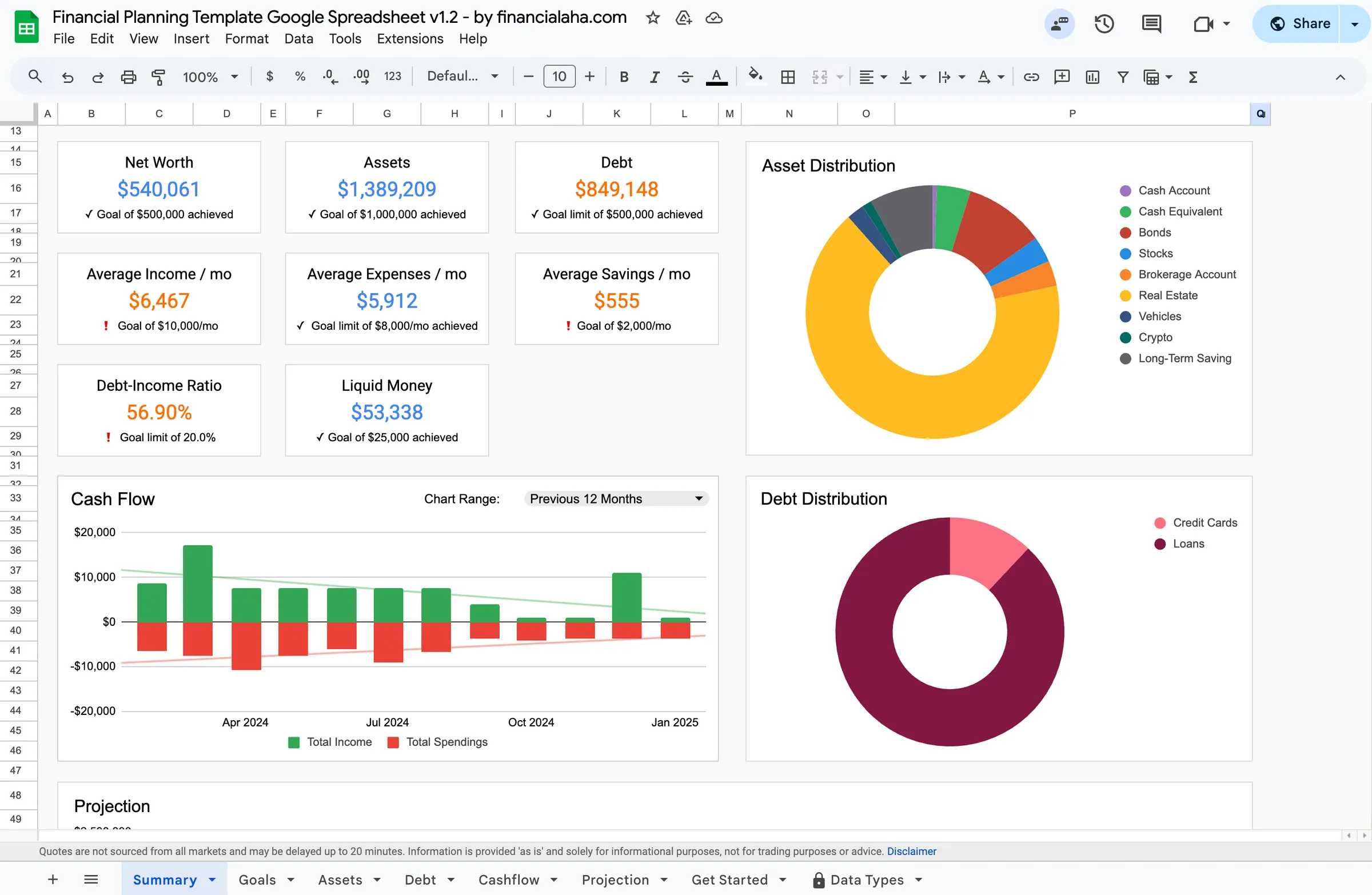
- Financial planning dashboard
- Monthly budget tracking
- Net worth over time
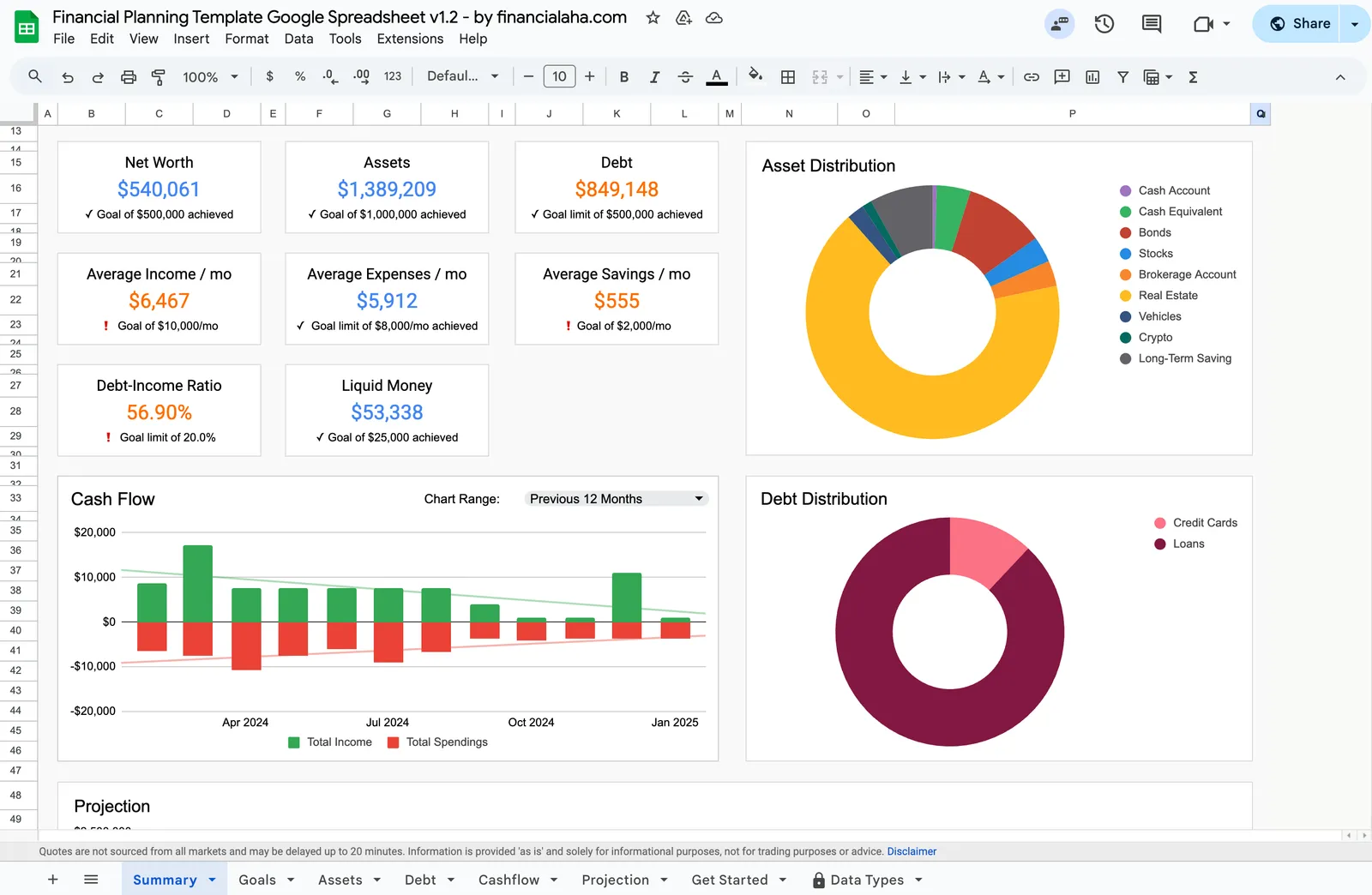
- Goal setting and tracking
Complete financial overview with net worth and goals
Set and track progress toward financial milestones
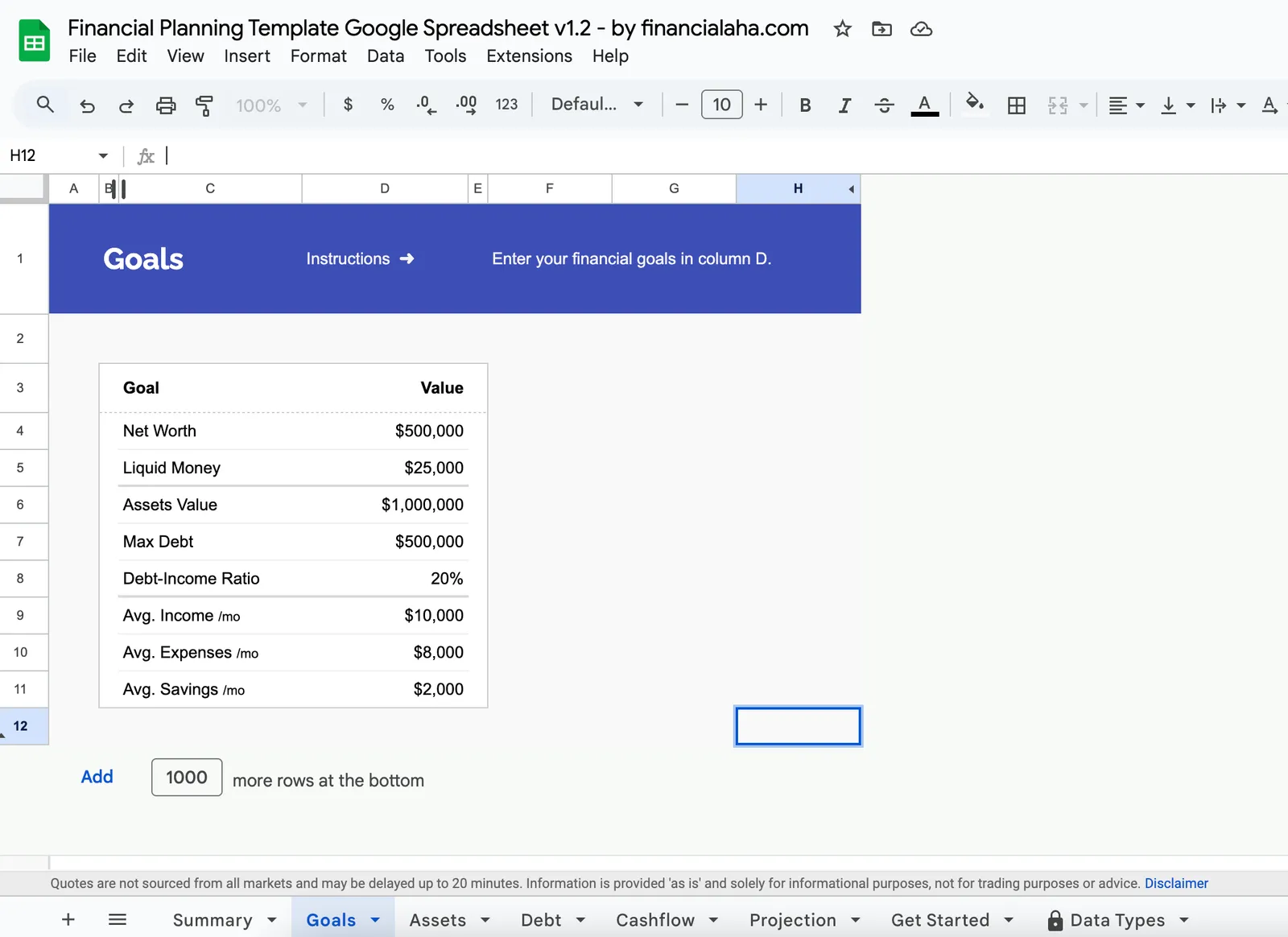
Track all your assets in one place
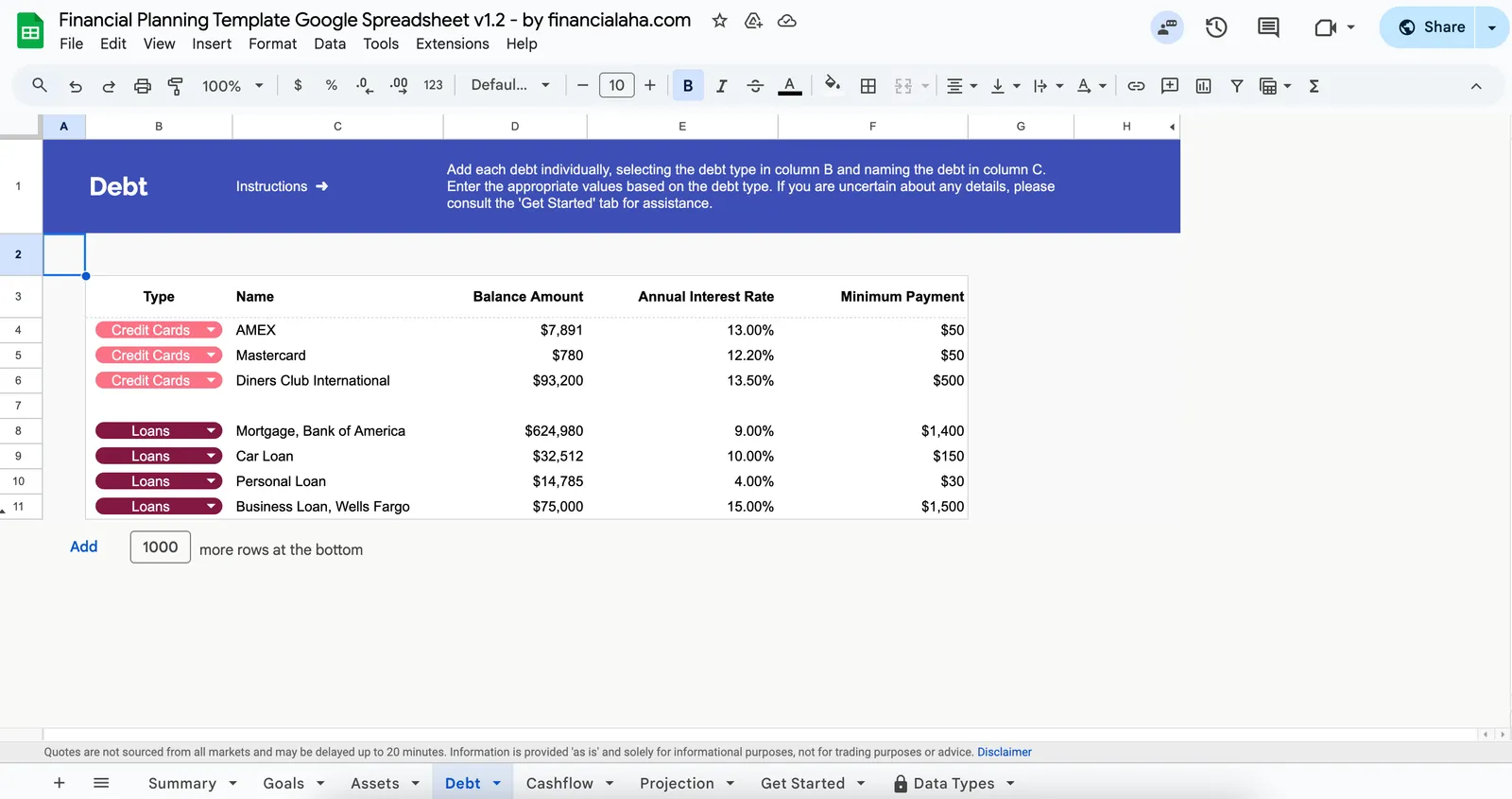
Monitor and plan debt repayment
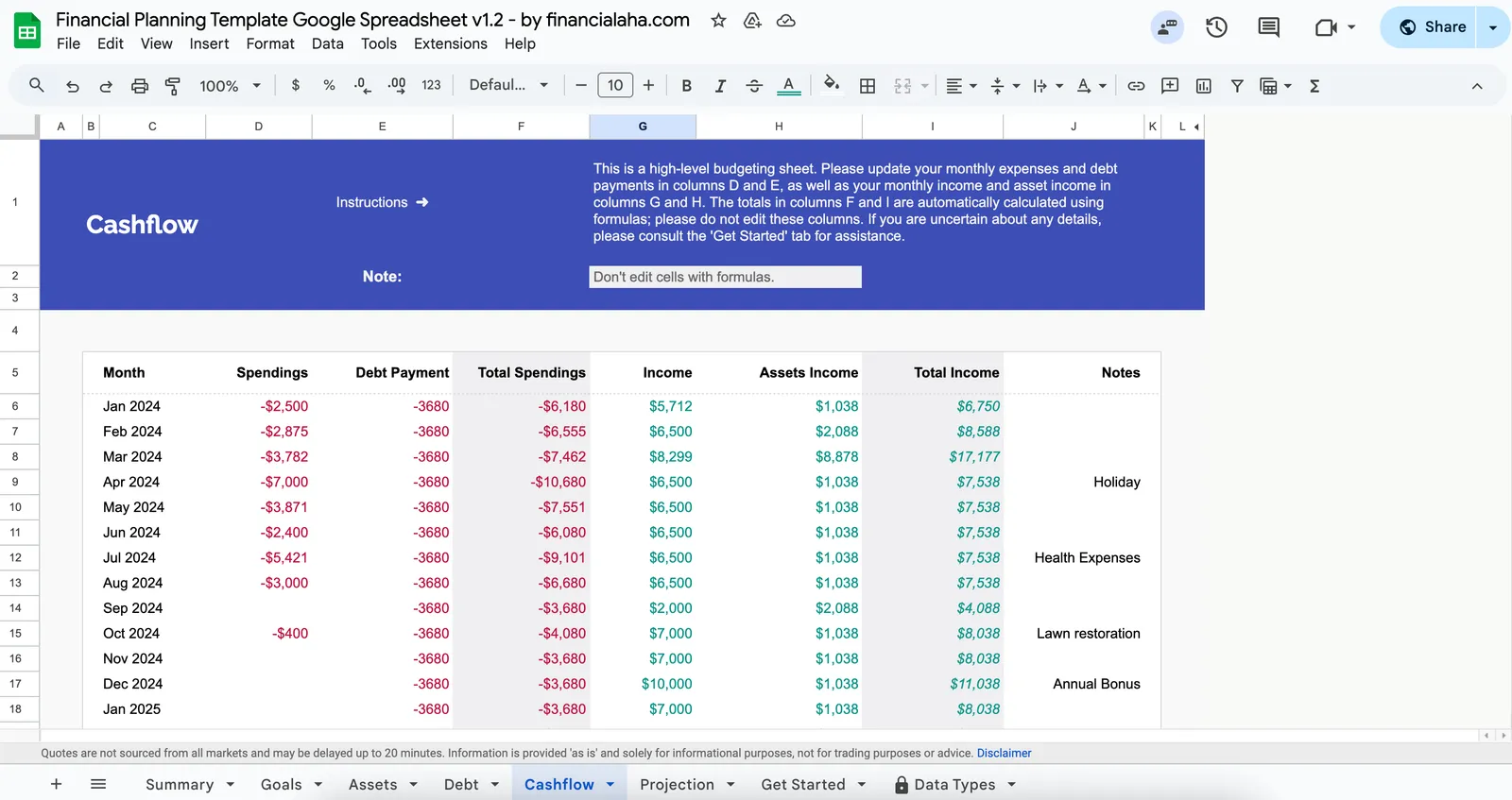
Visualize your income vs spending over time
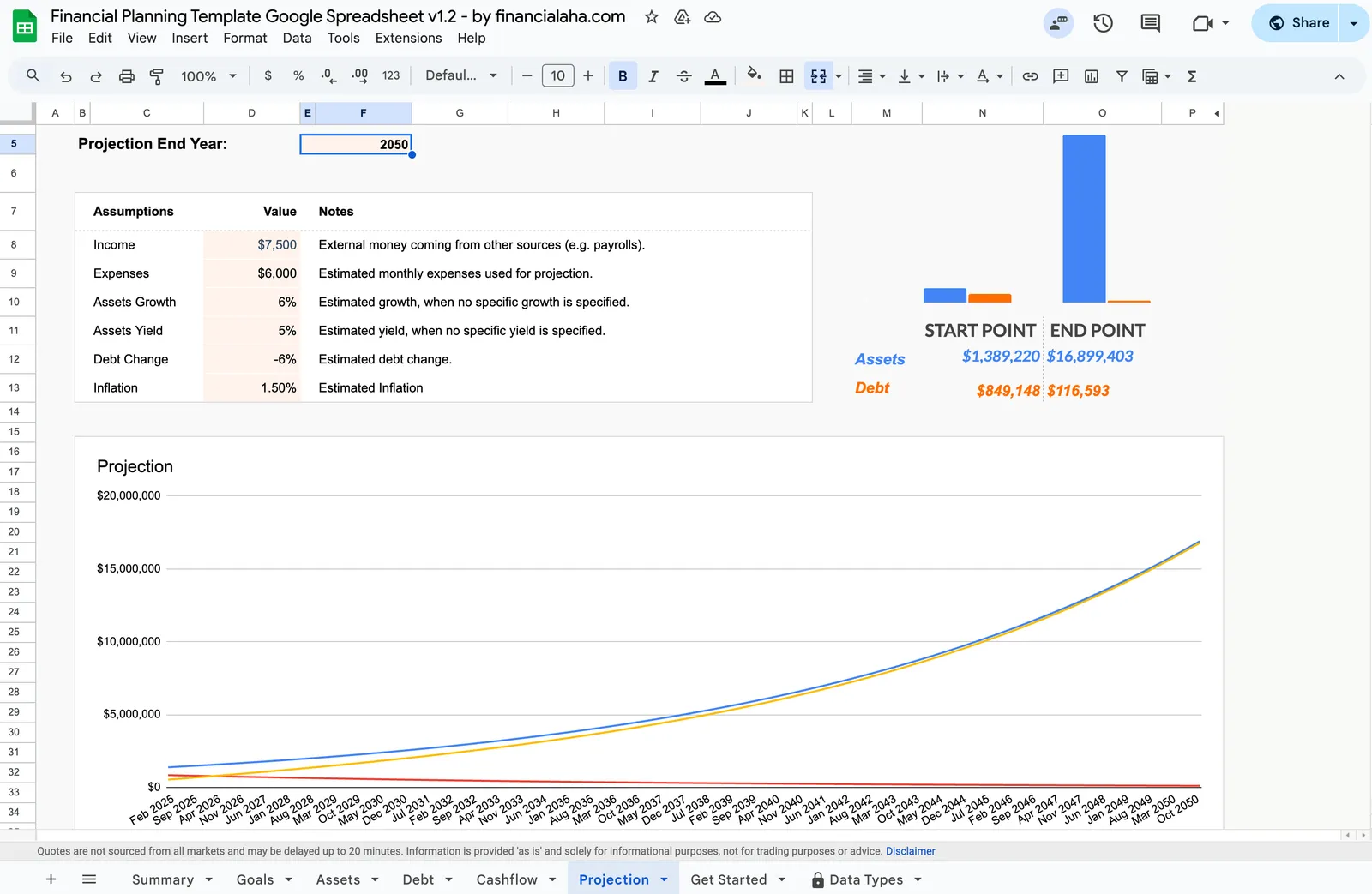
Project your financial future
Recommended Templates
The Right Templates for This Stage
Moving abroad means rebuilding your financial picture from scratch. These templates help manage the transition:
Build your new budget in local currency while tracking any remaining home-country obligations. The flexibility to customize categories is especially useful when expense structures differ between countries.
View templateTrack actual spending in a new country where your cost intuitions may be wrong. The first 3-6 months of tracked data reveal what your real cost of living is - which often differs from pre-move estimates.
View templateCommon Questions
Moving Abroad - Financial FAQ
How much does it cost to move abroad?
Typical total transition costs range from $10,000 for a solo move to a lower-cost country to $40,000+ for a family moving to an expensive city. Major cost categories: international shipping ($3,000-$15,000), flights ($1,000-$8,000), temporary housing ($2,000-$15,000), security deposits ($2,000-$10,000), visa fees ($500-$5,000), and initial setup expenses ($1,000-$3,000).
Do I still pay taxes in my home country if I move abroad?
U.S. citizens and permanent residents owe taxes on worldwide income regardless of where they live. The Foreign Earned Income Exclusion (up to $126,500 in 2024) and Foreign Tax Credit help reduce the burden. Most other countries tax based on residency - once you establish tax residency abroad, home-country obligations may decrease or end. Professional tax advice for your specific situation is worth the investment.
How do I budget in a different currency?
Two approaches work well: budget entirely in local currency for daily life, or maintain a dual-currency spreadsheet that tracks local expenses alongside home-currency obligations. Update the exchange rate weekly or monthly. Over time, you will develop intuition for local prices, but the first 3-6 months of detailed tracking are especially valuable.
What financial accounts do I need when moving abroad?
At minimum: a local bank account for daily expenses, your home-country bank account (keep it open for obligations and as a backup), and a multi-currency transfer service (Wise or similar) for moving money between countries. Some expats also maintain a home-country credit card with no foreign transaction fees for emergencies and ongoing subscriptions.
Can't find the answer you're looking for? Contact our team
Ready to get started?
Download instantly and start managing your finances, or contact us to design a custom template package for your needs.