Life Event Guide
Financial Planning When Getting Divorced
Divorce reshapes every aspect of your financial life - from splitting assets to rebuilding a single-income budget, having clear numbers makes a difficult process more manageable.
Financial Impact
The Financial Impact of Getting Divorced
Divorce is one of the most significant financial events a person can experience. Two people who shared expenses now each need to cover a full set of living costs independently, and the asset division process requires a complete understanding of the financial picture.
Household income splits but expenses do not halve
Going from a dual-income household to a single income is the biggest immediate impact. If a couple earned $150,000 combined and split roughly equally, each person now has $75,000 - but a single-person household does not cost half of a two-person one. Housing, utilities, insurance, and transportation costs remain largely the same. Many people find their expenses are 70-80% of what they were as a couple, on roughly 50% of the income.
Asset division requires a complete inventory
Equitable distribution (the standard in most states) requires knowing exactly what exists: retirement accounts, real estate, investment accounts, vehicles, debts, and even things like frequent flyer miles. A $500,000 retirement account and a $500,000 home are not equivalent after taxes - the retirement account faces income tax on withdrawal while the home may have tax-free gains. Accurate net worth tracking before and during the process helps ensure fair outcomes.
Legal costs add up quickly
The average contested divorce costs $15,000-$30,000 per person in legal fees. Even mediated or collaborative divorces typically run $5,000-$10,000 total. These costs come during a period of financial transition when cash flow is already strained. Some people set aside a dedicated legal fund or negotiate payment plans with attorneys.
Retirement timelines may shift
Splitting retirement assets through a QDRO (Qualified Domestic Relations Order) can reduce retirement savings by 30-50%. A person who was on track to retire at 60 with $1 million may now have $500,000-$700,000. Rebuilding takes time, and adjusting retirement projections early helps set realistic expectations for the years ahead.
Getting Ready
How to Prepare Your Budget After Divorce
Create a complete personal financial inventory
List every asset and liability - both joint and individual. Include bank accounts, retirement funds (401k, IRA, pensions), real estate, vehicles, investments, credit card balances, loans, and any other debts. Having this documented in a spreadsheet before negotiations begin provides clarity and helps ensure nothing is overlooked.
Build your solo budget from scratch
Do not simply take the old joint budget and cut it in half. Start fresh with your actual post-divorce income (including any alimony or child support) and list every expense category. Housing alone may take 30-35% of a single income that previously went to 20-25% of a combined one. Be realistic about what your new normal looks like.
Account for transitional costs
The first 6-12 months often carry extra expenses: security deposits on a new apartment ($2,000-$4,000), furnishing a new place ($3,000-$8,000), updating insurance policies, legal fees, and potentially therapy costs. Building a transition fund of $5,000-$15,000 helps cover these without adding credit card debt.
Re-establish individual credit
If credit cards and loans were primarily in your spouse's name, your credit history may be thin. Opening an individual credit card, ensuring utilities are in your name, and monitoring your credit score become important steps. Good credit affects housing options, insurance rates, and borrowing costs for years to come.
Update all financial accounts and beneficiaries
Remove your ex-spouse from bank accounts, update beneficiaries on retirement accounts and life insurance, revise your will and power of attorney, and update tax withholding to reflect single filing status. A checklist approach prevents important items from being forgotten during an emotionally difficult time.
See The Templates
Tools for this stage of life
Browse the templates that help with financial planning during major life transitions.
- Financial planning dashboard
- Monthly budget tracking
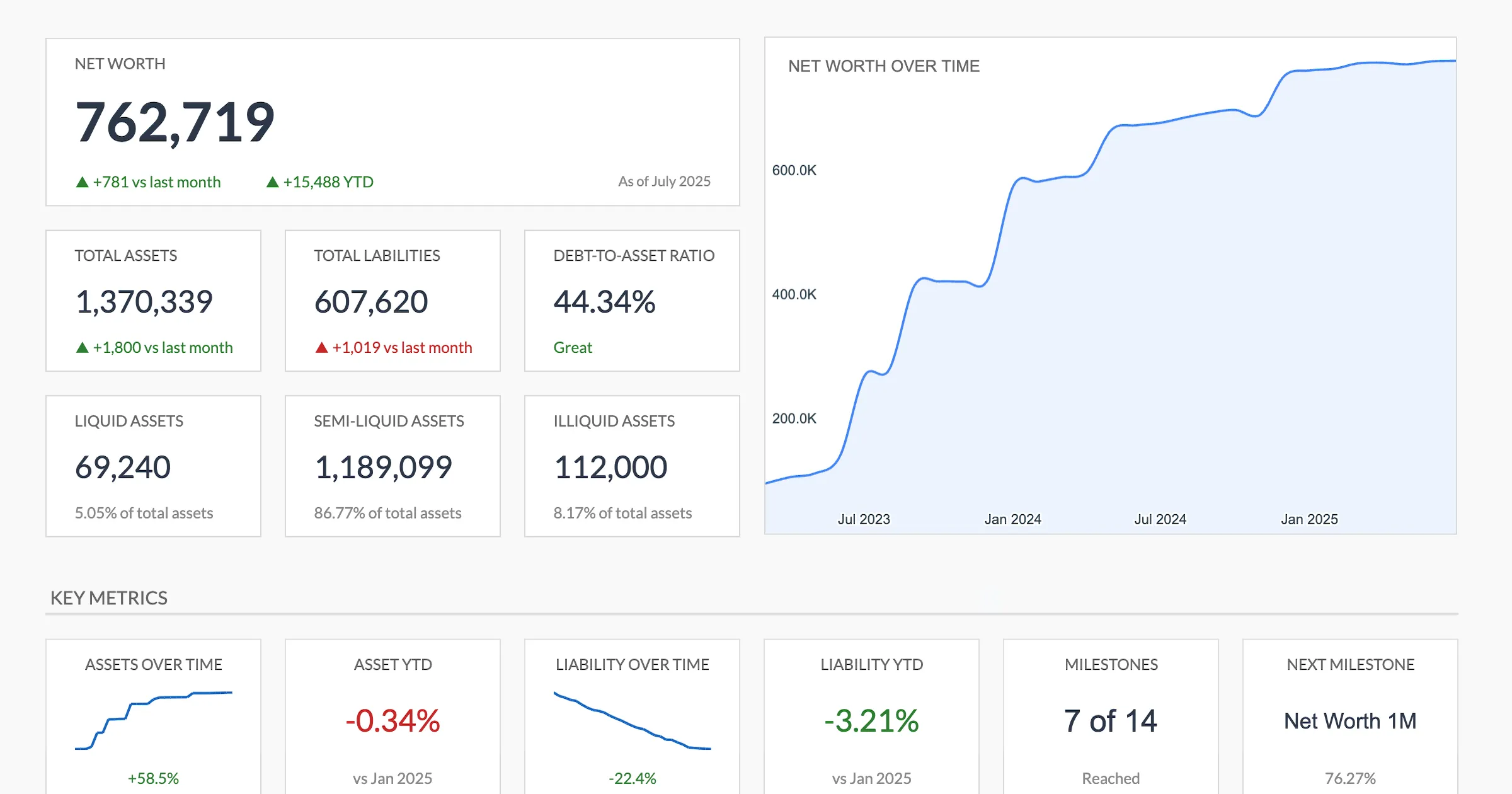
- Net worth over time
- Goal setting and tracking
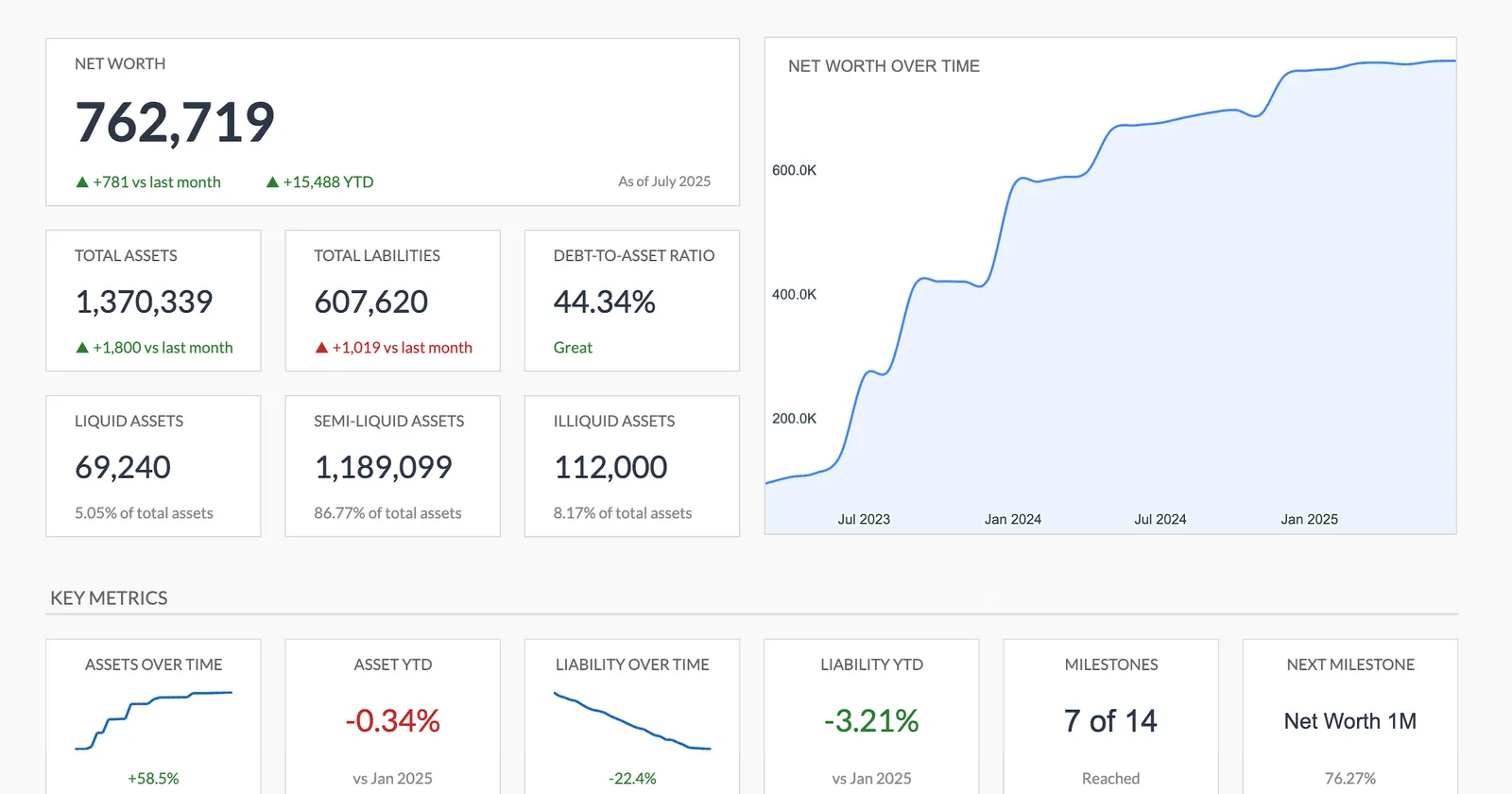

Track your net worth over time with charts
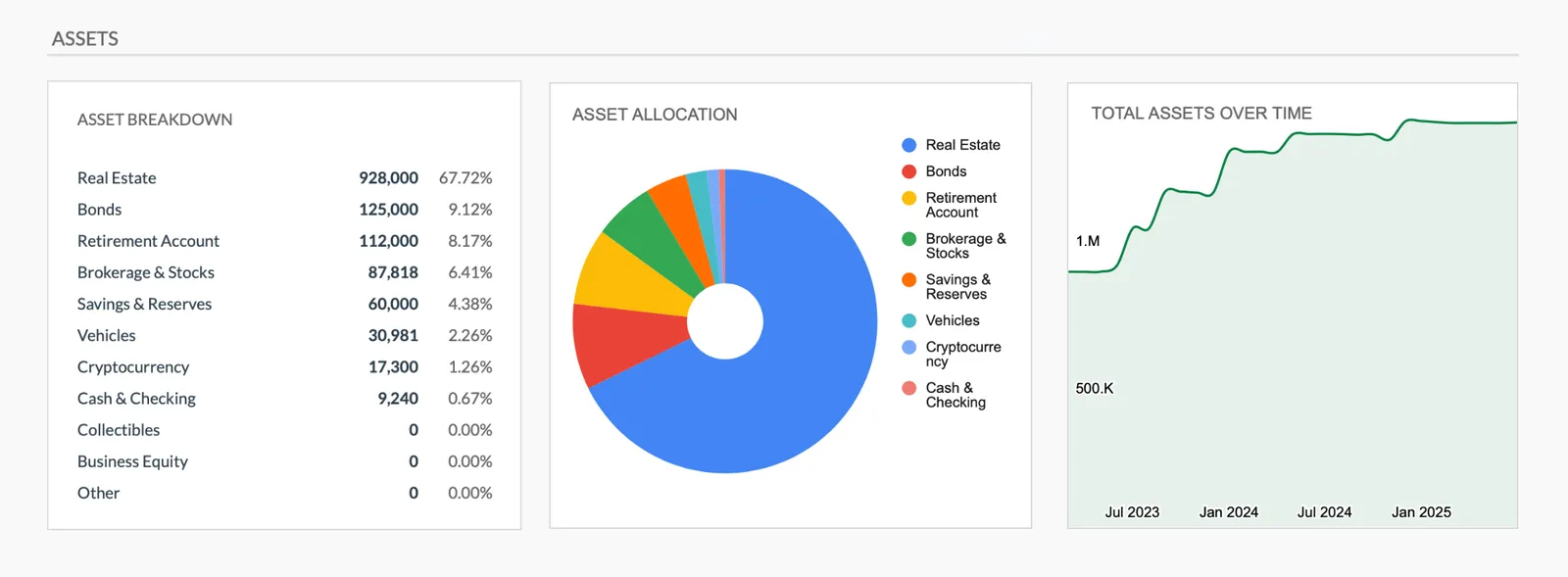
Breakdown of all your assets
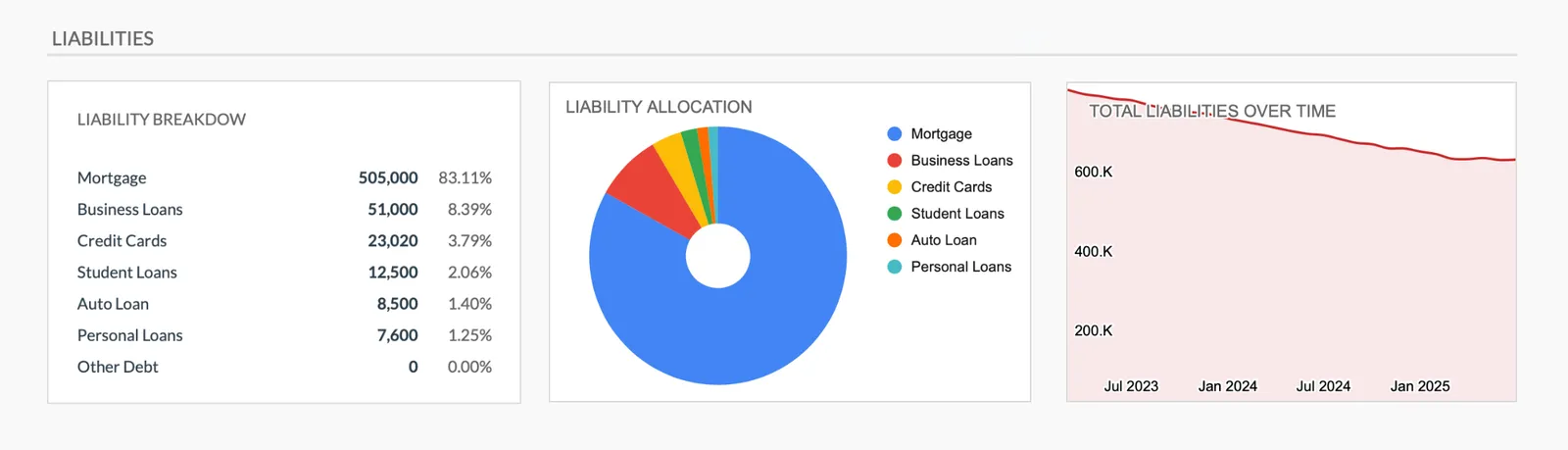
Track all debts and liabilities
Key financial health indicators
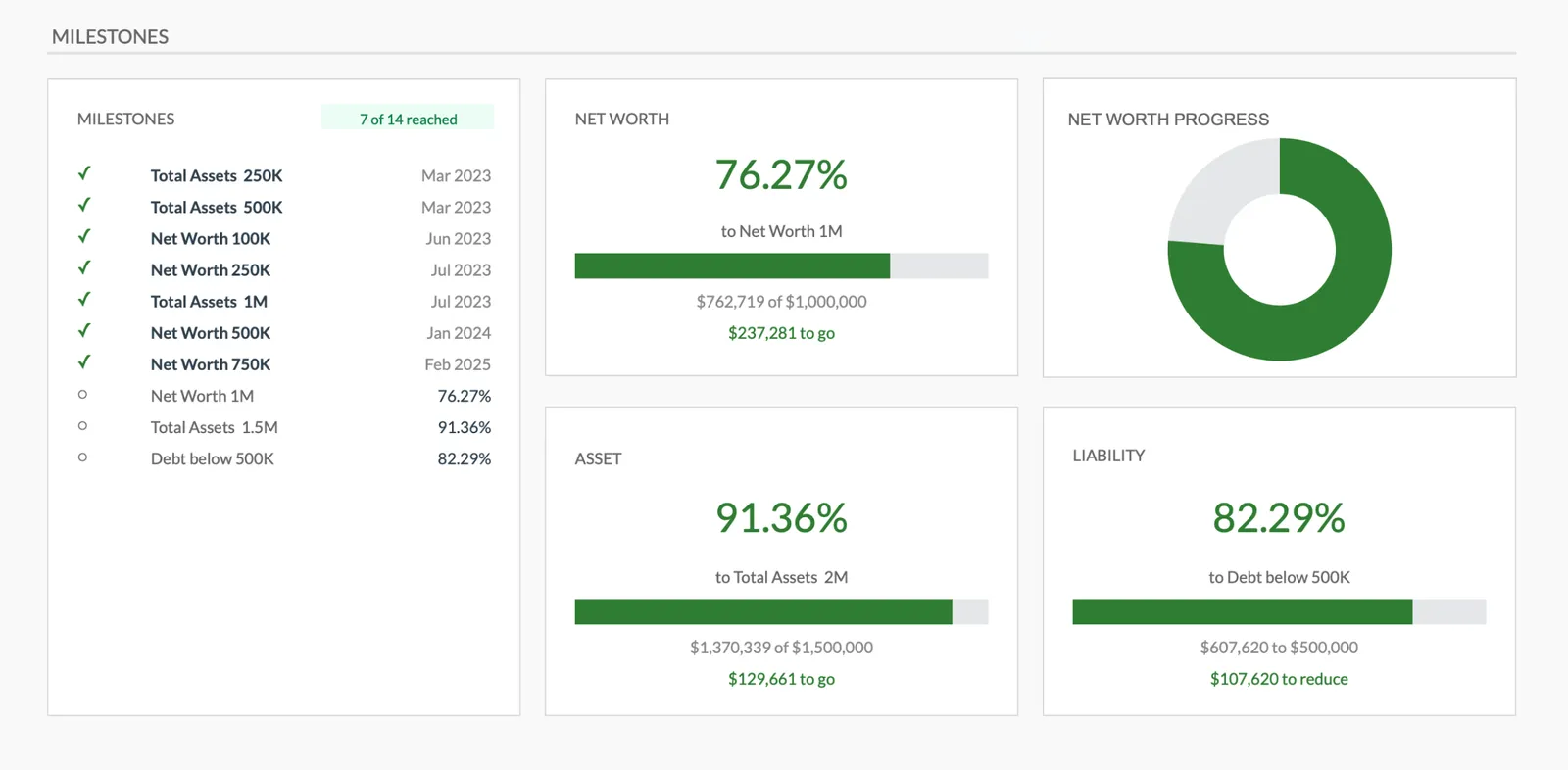
Set and celebrate net worth milestones
Recommended Templates
The Right Templates for This Stage
Divorce requires financial clarity at every step - from asset division through rebuilding:
Build your new individual budget from the ground up. Understanding exactly what single-income life costs is the foundation for every other financial decision during and after divorce.
View templateDocument all assets and liabilities for the division process, then track your individual net worth as you rebuild. Seeing progress - even slow progress - after a major financial setback can be encouraging.
View templateRecalculate long-term projections based on your new financial reality. Retirement timelines, savings goals, and debt payoff plans all need updating with post-divorce numbers.
View templateFree Tools
Calculators to Help You Plan
Common Questions
Getting Divorced - Financial FAQ
How does divorce affect retirement savings?
Retirement accounts accumulated during the marriage are typically considered marital property and subject to division. A QDRO (Qualified Domestic Relations Order) splits 401(k) and pension assets without early withdrawal penalties. IRAs are divided through a transfer incident to divorce. The impact varies, but losing 30-50% of retirement savings is common, making it important to update retirement projections post-divorce.
What is the real cost of getting divorced?
Direct costs include legal fees ($5,000-$30,000+), mediation ($3,000-$8,000), and court filing fees ($200-$400). Indirect costs include setting up a new household ($5,000-$15,000), potentially higher housing costs as a single person, and the opportunity cost of divided assets. Total first-year costs can reach $20,000-$50,000 beyond the asset division itself.
How do I budget on a single income after divorce?
Start by listing your actual post-divorce income including any support payments. Then build expense categories from scratch rather than modifying the old joint budget. Housing will likely take a larger percentage - 30-35% is common for single-income households. The Monthly Budgeting template helps visualize the new reality and identify areas where adjustments are needed.
What financial documents do I need during divorce proceedings?
Key documents include: tax returns (3-5 years), pay stubs, bank and investment account statements, retirement account statements, mortgage documents, credit card statements, loan agreements, insurance policies, and property appraisals. Having these organized in advance speeds up the process and reduces billable attorney hours.
Can't find the answer you're looking for? Contact our team
Ready to get started?
Download instantly and start managing your finances, or contact us to design a custom template package for your needs.