Life Event Guide
Financial Planning When Getting a Raise
A raise is a chance to accelerate financial goals - but only if the extra income is directed intentionally before lifestyle inflation absorbs it.
Financial Impact
The Financial Impact of a Raise
A salary increase feels great - but the actual impact on your finances depends largely on what happens with the extra money in the first few months. Understanding the real numbers and having a plan before the first bigger paycheck arrives makes a significant difference.
The after-tax increase is smaller than the headline number
A $10,000 raise does not mean $10,000 more in your pocket. After federal income tax (22-24% for many earners), state income tax (0-13% depending on state), and FICA taxes (7.65%), a $10,000 gross raise becomes roughly $6,500-$7,500 net - about $540-$625 per month in actual take-home pay. Knowing this real number prevents overcommitting to new expenses.
Lifestyle inflation is the silent raise-killer
Studies show that spending tends to rise nearly dollar-for-dollar with income increases. A $10,000 raise that funds a nicer apartment ($300/month more), upgraded car payment ($200/month more), and more dining out ($100/month more) is fully consumed. The same raise directed to investments could grow to over $100,000 in 15 years at 7% average returns. The first few months after a raise set the pattern.
Tax bracket changes are often misunderstood
Moving into a higher tax bracket does not mean all your income is taxed at the higher rate - only the income above the bracket threshold. Going from $95,000 to $105,000 means only $5,375 is taxed at 24% instead of 22% (2024 brackets). The additional tax on the whole raise is modest - roughly $100-$200 more than if the bracket had not changed. The raise is still a net positive.
Employer benefits may also increase
A higher salary often means a higher 401(k) employer match in dollar terms. If your employer matches 4% and your salary goes from $80,000 to $90,000, the maximum match increases from $3,200 to $3,600/year - $400 in free money. HSA contributions, life insurance coverage, and disability benefit calculations may also increase proportionally.
Getting Ready
How to Budget After a Raise
Calculate the actual after-tax increase
Before making any spending changes, determine the real monthly increase in take-home pay. A $10,000 raise at a 30% combined tax rate yields $583/month after taxes. This is the number to work with - not the gross amount. Check your first post-raise pay stub to confirm the actual amount.
Allocate the increase before it arrives
One approach that works well for many people: decide where the extra money goes before the first bigger paycheck. A common split might be 50% to financial goals (debt payoff, savings, investments) and 50% to lifestyle improvement. This way, you enjoy some benefit of the raise while still accelerating long-term progress.
Increase retirement contributions first
Increasing your 401(k) contribution by even 1-2% of salary happens before you see the money in your checking account - which makes it painless. Going from 6% to 8% on a $90,000 salary adds $1,800/year to retirement savings. With employer matching, the total impact could be $2,500+/year in additional retirement growth.
Accelerate high-priority financial goals
Direct a portion of the raise toward your most impactful financial goal: an extra $200/month on credit card debt, $300/month toward an emergency fund, or $250/month into a down payment savings account. The compounding benefit of these increases over time often outweighs the temporary pleasure of upgrading spending.
Update your budget to reflect the new reality
Update income figures in your budget, add any new allocation lines (increased savings, debt payments), and adjust spending categories if you have chosen to increase some. Reviewing the updated budget confirms that the raise is being used intentionally rather than trickling away into general spending.
See The Templates
Tools for this stage of life
Browse the templates that help with financial planning during major life transitions.
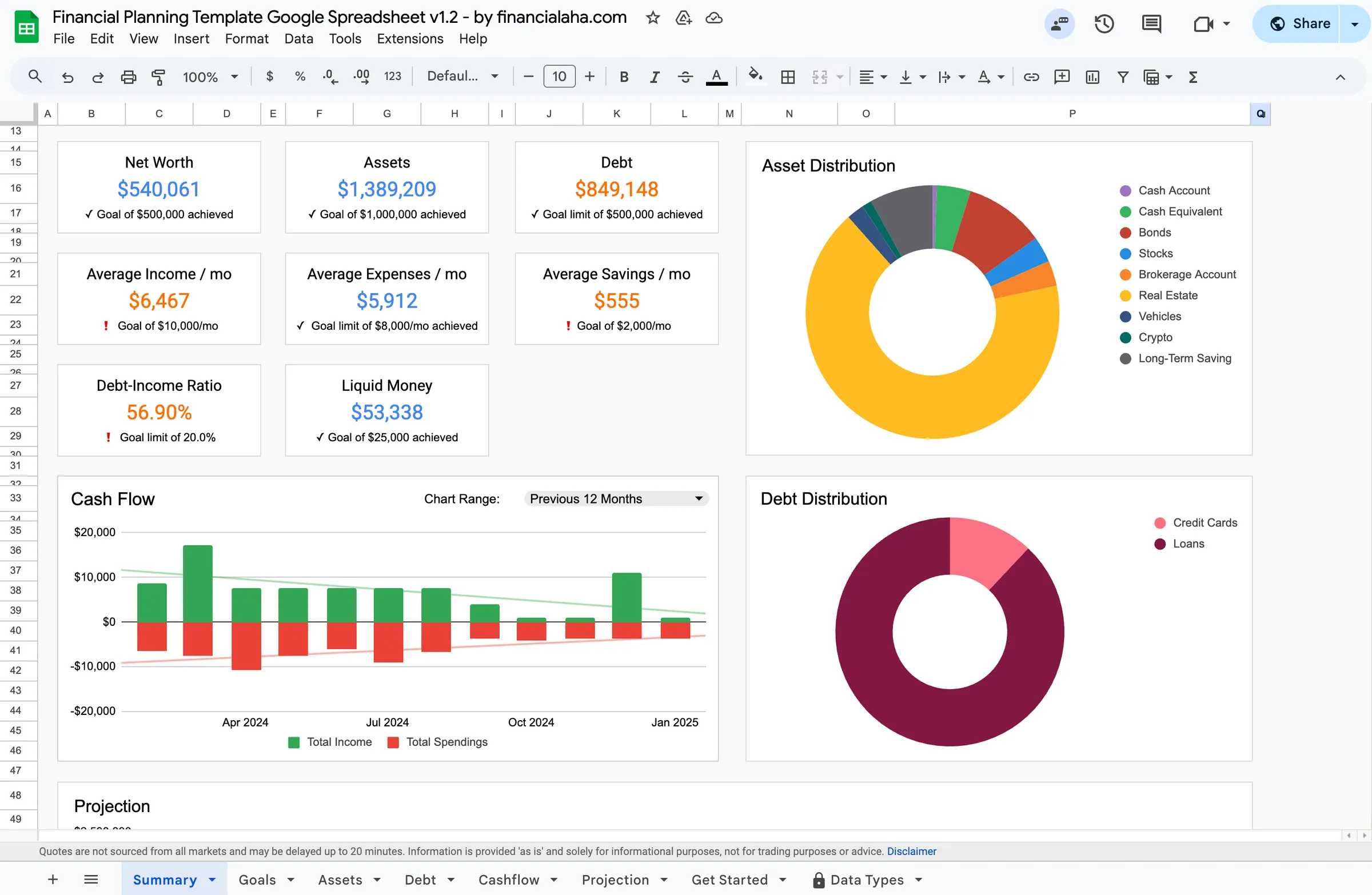
- Financial planning dashboard
- Monthly budget tracking
- Net worth over time
- Goal setting and tracking
Complete financial overview with net worth and goals
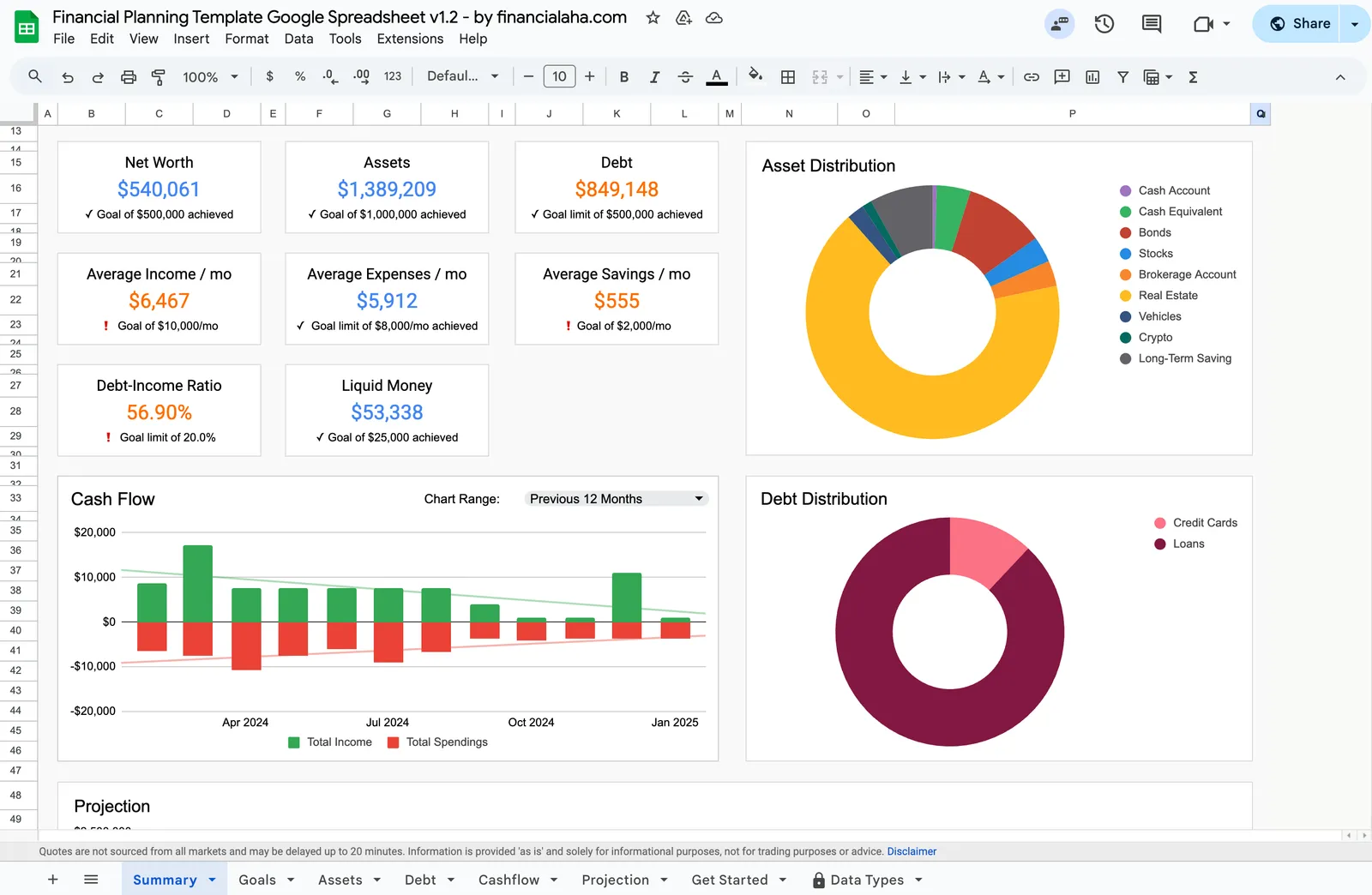
Set and track progress toward financial milestones
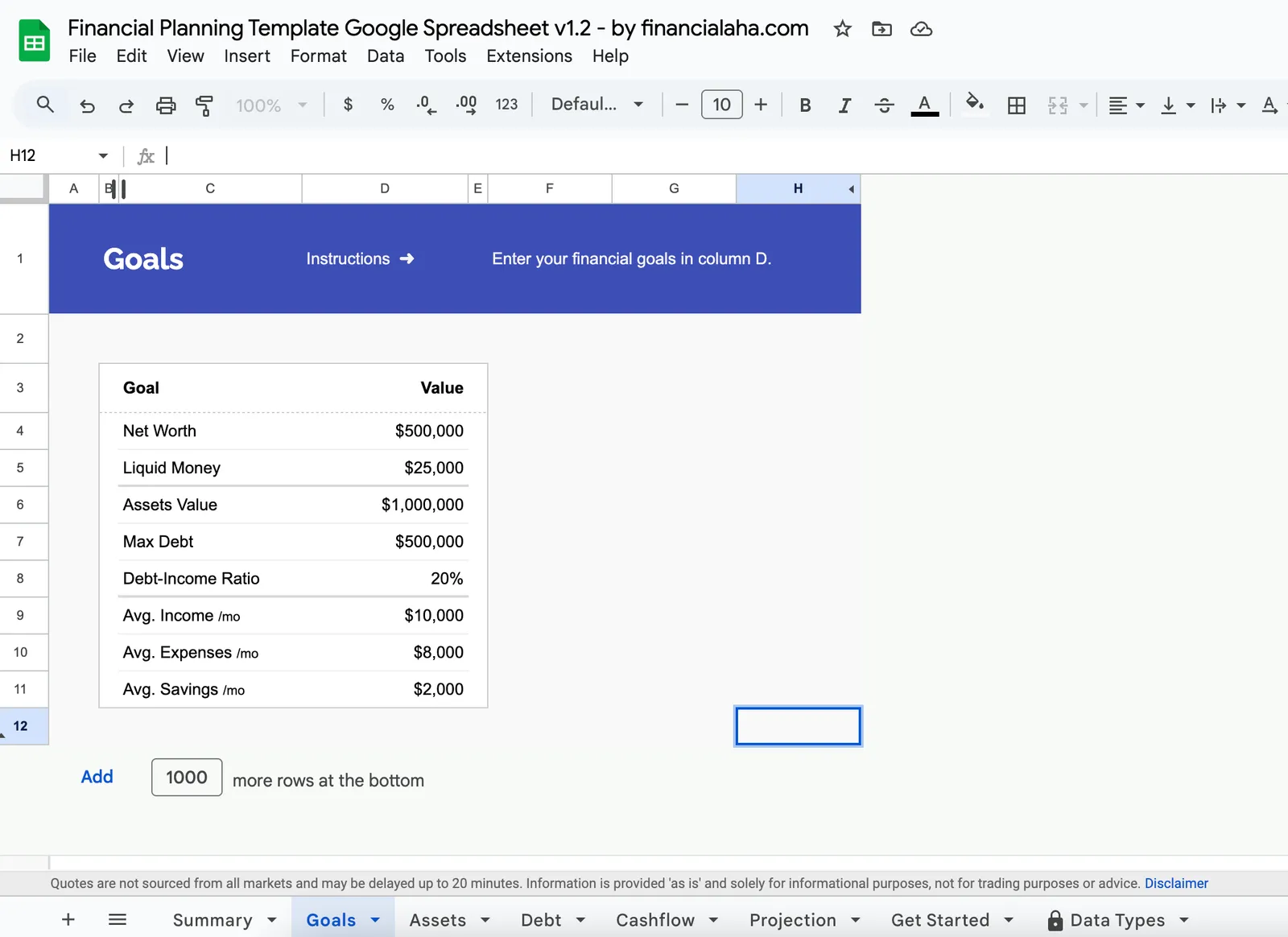
Track all your assets in one place
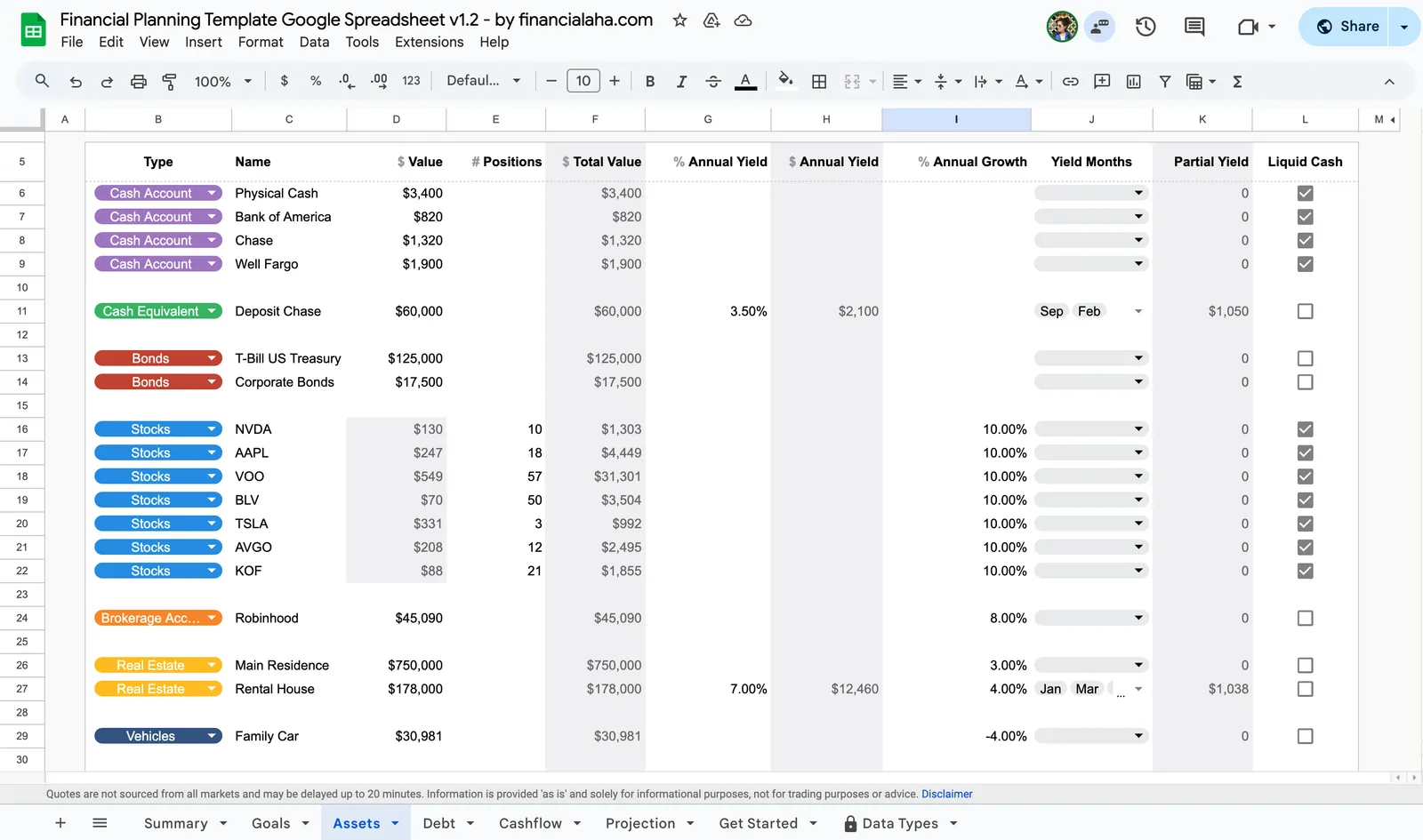
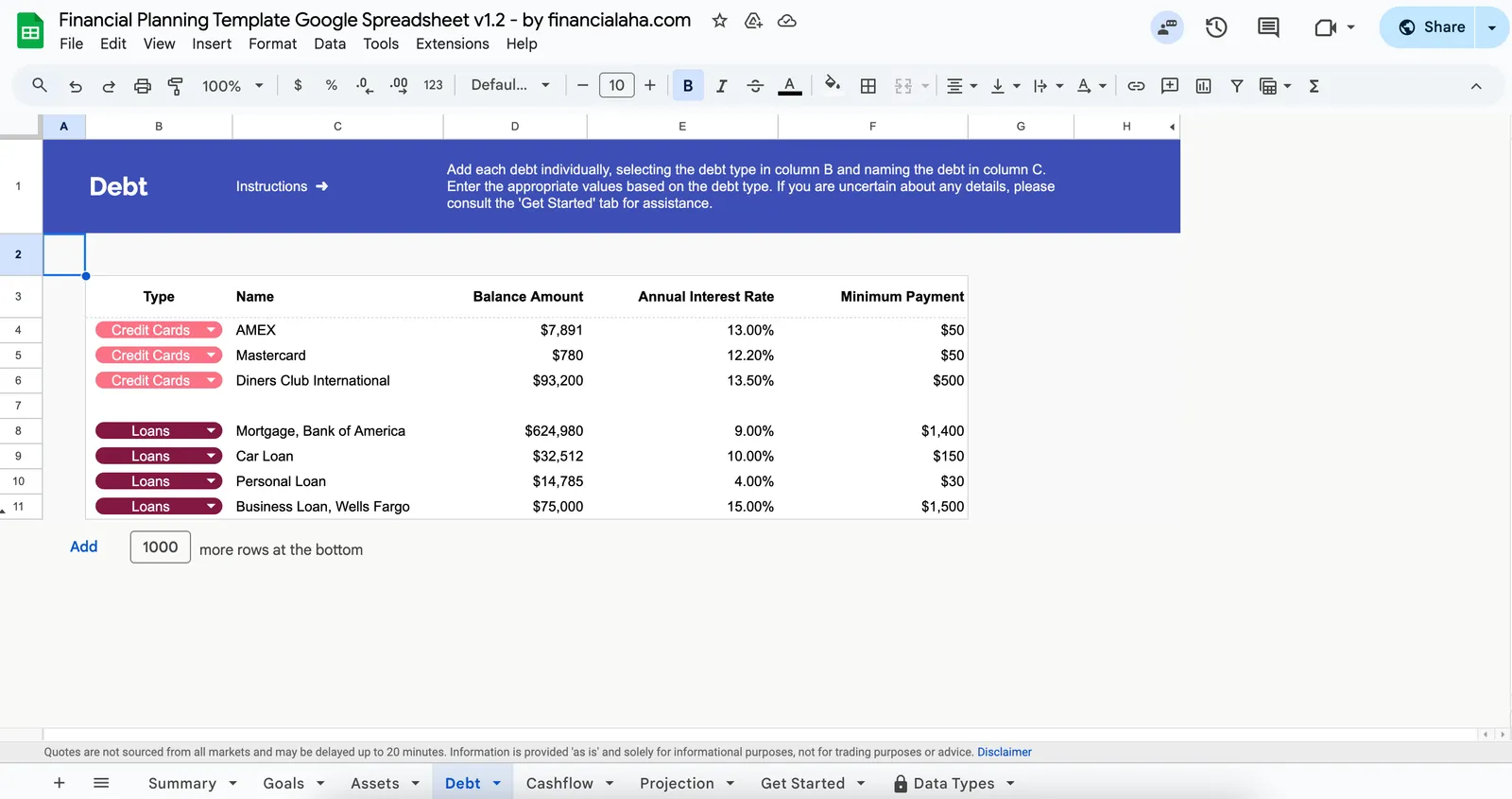
Monitor and plan debt repayment
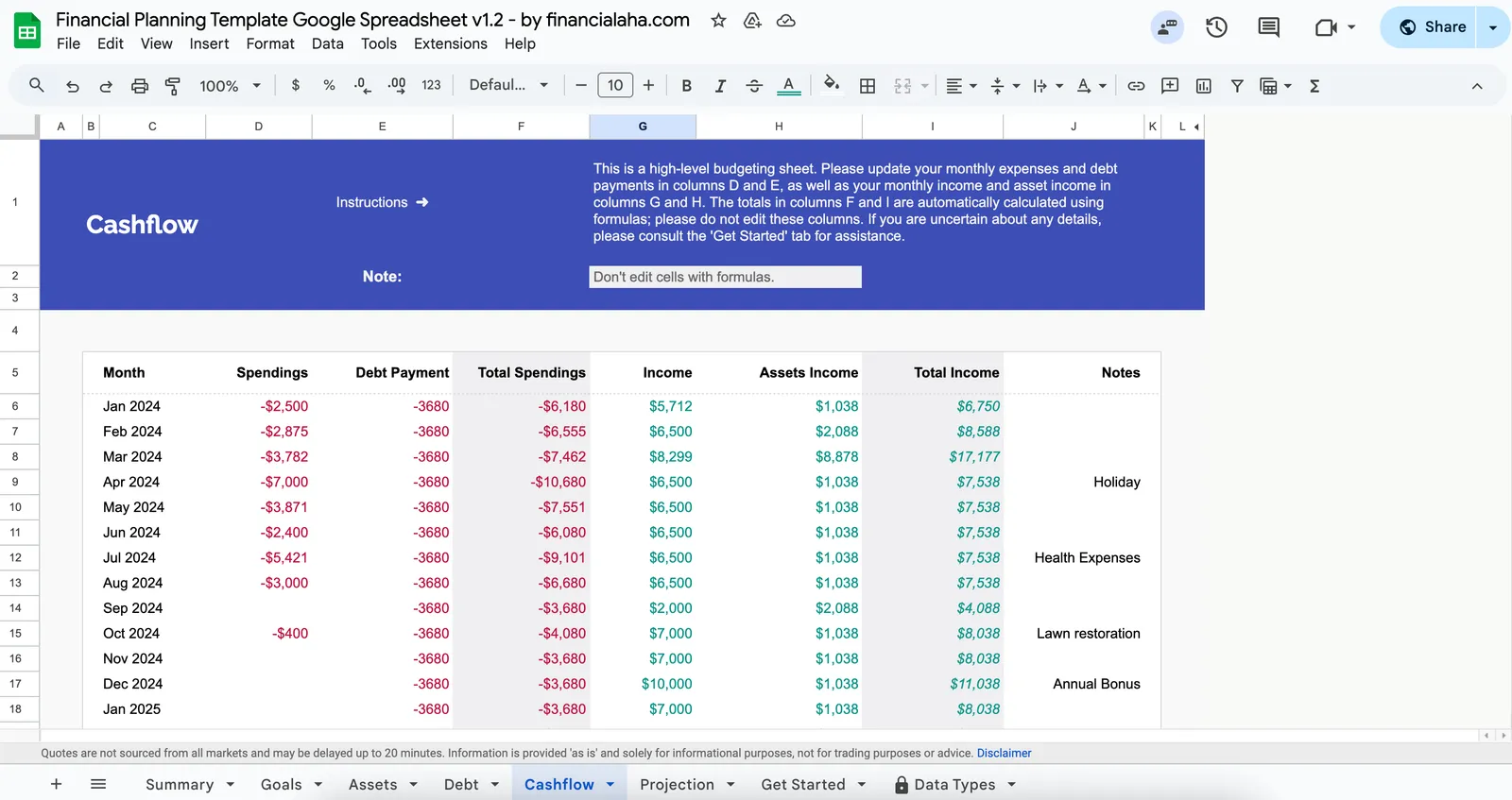
Visualize your income vs spending over time
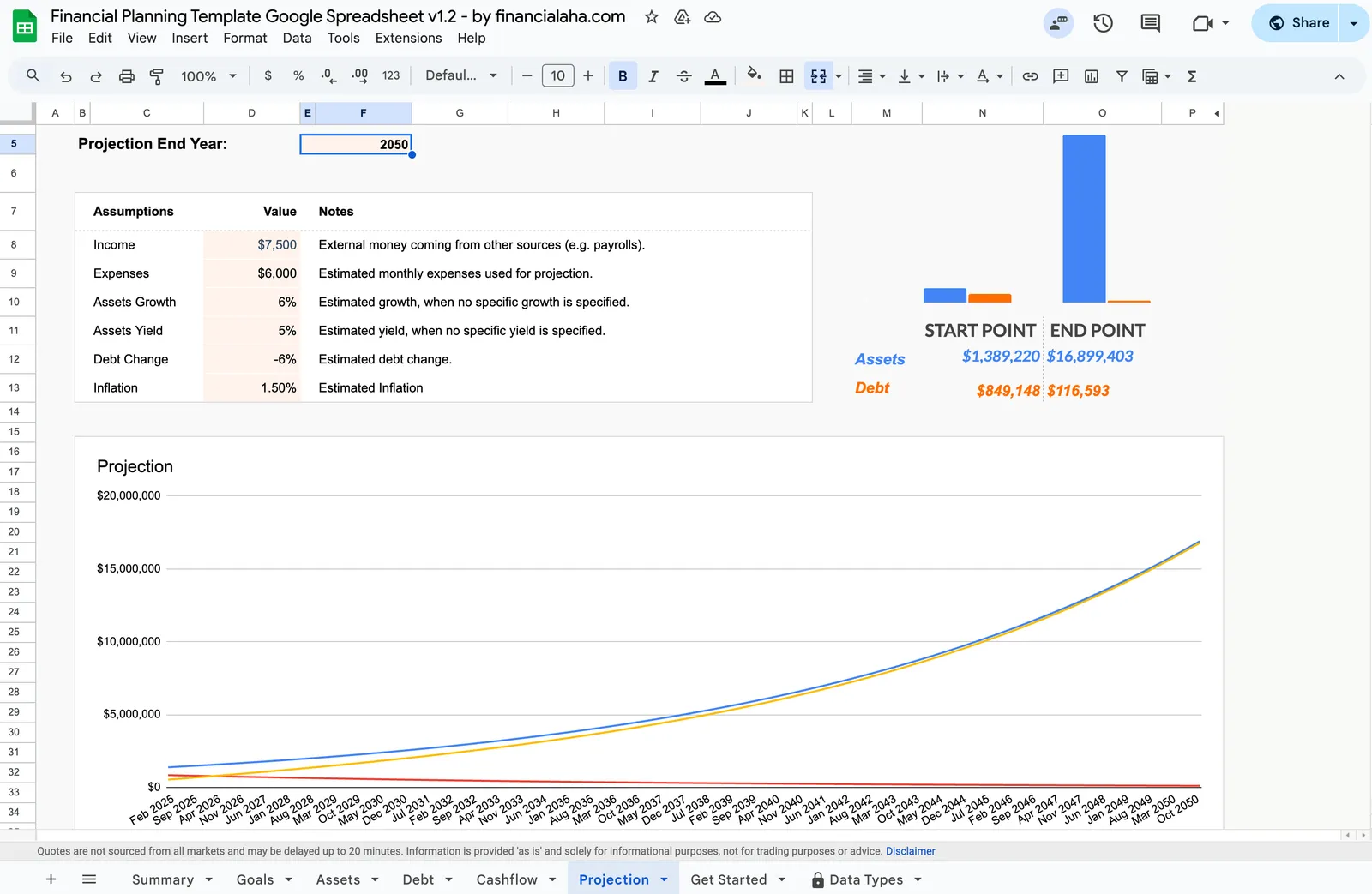
Project your financial future
Recommended Templates
The Right Templates for This Stage
A raise is an opportunity that benefits from intentional planning. These templates help capture the full value:
Update your budget to reflect the new income and intentionally allocate the increase. Seeing the raise as distinct line items (increased savings, accelerated debt payoff, lifestyle budget) keeps the plan on track.
View templateModel how the raise affects long-term projections. How much sooner could you retire with an extra $500/month invested? What does accelerated debt payoff look like? Seeing the 10-20 year impact makes the allocation decision clearer.
View templateFree Tools
Calculators to Help You Plan
Common Questions
Getting a Raise - Financial FAQ
How much of a raise goes to taxes?
Depending on your income level and state, 25-40% of a raise goes to taxes. Federal income tax takes 22-32% for most earners, state taxes add 0-13%, and FICA takes 7.65%. A $10,000 raise typically yields $6,000-$7,500 in additional annual take-home pay. Your first post-raise pay stub shows the exact impact for your situation.
What is the best way to avoid lifestyle inflation?
Automating the allocation before the money hits your checking account is the most effective approach for many people. Increase retirement contributions, set up automatic transfers to savings, or increase automatic debt payments - all before the first bigger paycheck. What you do not see in your spending account is easier to not spend.
How much more should I save if I get a 10% raise?
There is no universal percentage, but one common framework is to save at least half of any raise. A 10% raise on $80,000 ($8,000 gross, roughly $5,500 after taxes) could mean $2,750/year in additional savings - about $229/month. This still leaves $229/month for lifestyle improvement, creating a balance between enjoying the present and building for the future.
Does a raise affect my tax bracket?
It might move you into a higher bracket, but this is less dramatic than it sounds. Only the income above the bracket threshold is taxed at the higher rate. Moving from the 22% to the 24% bracket costs an extra 2% on the portion above the threshold - not on your entire income. A raise always results in more take-home pay, never less.
Can't find the answer you're looking for? Contact our team
Ready to get started?
Download instantly and start managing your finances, or contact us to design a custom template package for your needs.