West Virginia
Tax Planner Template for West Virginia
Organize your federal and West Virginia state tax planning in Google Sheets. West Virginia has been reducing its income tax rates.
In Depth
West Virginia's Rate Reductions and Social Security Exemption
West Virginia has been actively working to reduce its income tax rates as part of a broader effort to improve the state's economic competitiveness. The graduated brackets remain in place, but the rates at each tier have been coming down. The state has also expressed interest in eventually eliminating the income tax entirely, though that remains a long-term aspiration rather than a near-term reality.
The completed Social Security exemption is a notable change for West Virginia retirees. Previously, West Virginia was one of a shrinking group of states that taxed Social Security benefits. The legislature phased that tax out gradually, exempting 35% of benefits in 2024 and 65% in 2025, and benefits are fully exempt from the 2026 tax year onward. Households comparing recent filing years may see different state treatment of the same benefit amount.
Beyond Social Security, West Virginia does not offer a broad retirement income exclusion, aside from a modification of up to $8,000 for residents age 65 and older. Pensions, 401(k) distributions, and IRA withdrawals are generally taxed at regular graduated rates. Some specific exemptions exist for certain types of government pensions, but private retirement income faces the standard rates. Combined with one of the lowest costs of living in the country, the overall financial picture in West Virginia depends heavily on the composition of a household's income.
West Virginia
Tax Planning in West Virginia
West Virginia has a graduated income tax and has been working to reduce rates in recent years. The state also offers favorable treatment of Social Security benefits.
Graduated Income Tax
West Virginia has a graduated income tax with multiple brackets. The state has been gradually reducing its rates over time.
Social Security Exemption
West Virginia fully exempts Social Security benefits from state income tax starting with the 2026 tax year, after a phase-in that exempted 35% of benefits in 2024 and 65% in 2025.
Retirement Income
Beyond Social Security, West Virginia taxes most other retirement income at regular rates. The state does not have a broad retirement income exclusion, though specific exemptions may apply to certain pension types.
Low Cost of Living
West Virginia has one of the lower costs of living in the country. Combined with moderate tax rates and the full Social Security exemption in place since the 2026 tax year, the overall financial picture can be favorable.
Get the Annual Tax Planner
Getting Started
Getting Started with West Virginia Tax Planning
Enter income with declining rates in mind
Add all income sources - wages, self-employment, investments, and other earnings. West Virginia's graduated rates run from 2.22% to 4.82% for the 2026 tax year and have been trending down over recent years, so an older year's rate may not match the current one. Using current-year figures ensures your state projection is accurate as the rate reductions take effect.
Apply the full Social Security exemption
West Virginia exempts Social Security benefits in full for the 2026 tax year, while federal rules may still tax part of the same benefits. Enter Social Security income separately so you can see the federal treatment alongside the state exemption.
Note the absence of a broad retirement income exclusion
Unlike some neighboring states, West Virginia taxes most private retirement income - pensions, 401(k)s, IRAs - at regular rates. The full Social Security exemption is the main retirement provision, alongside a modification of up to $8,000 of other income for residents age 65 and older. Enter each retirement income type separately to see which portions face state tax and plan accordingly.
Plan estimated payments with rate changes in mind
For self-employed residents or those with variable income, estimated payments based on prior-year liability may not match current-year obligations due to declining rates. Use the template's projection rather than last year's numbers when calculating quarterly payments to avoid overpaying or underpaying.
Review the total picture with cost-of-living context
The dashboard shows projected liability at federal and state levels. West Virginia's low cost of living combined with declining income tax rates creates an evolving financial picture. Review quarterly, especially as any further triggered rate reductions take effect.
See It In Action
What the tax planner looks like
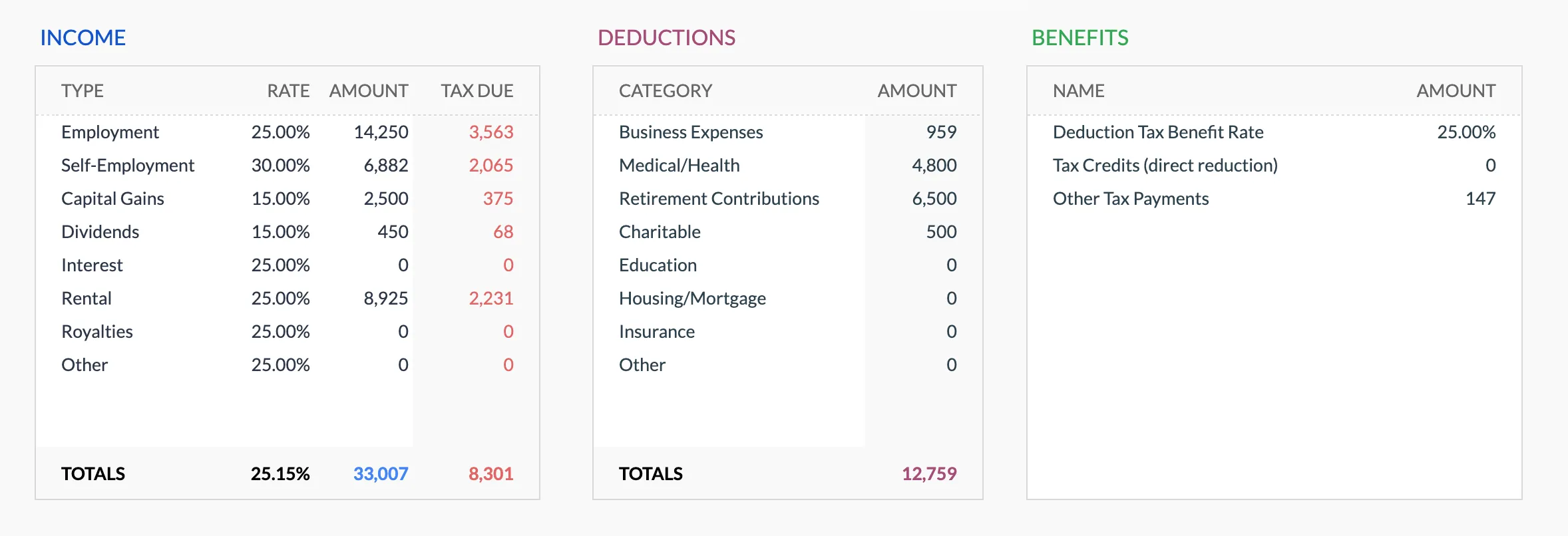
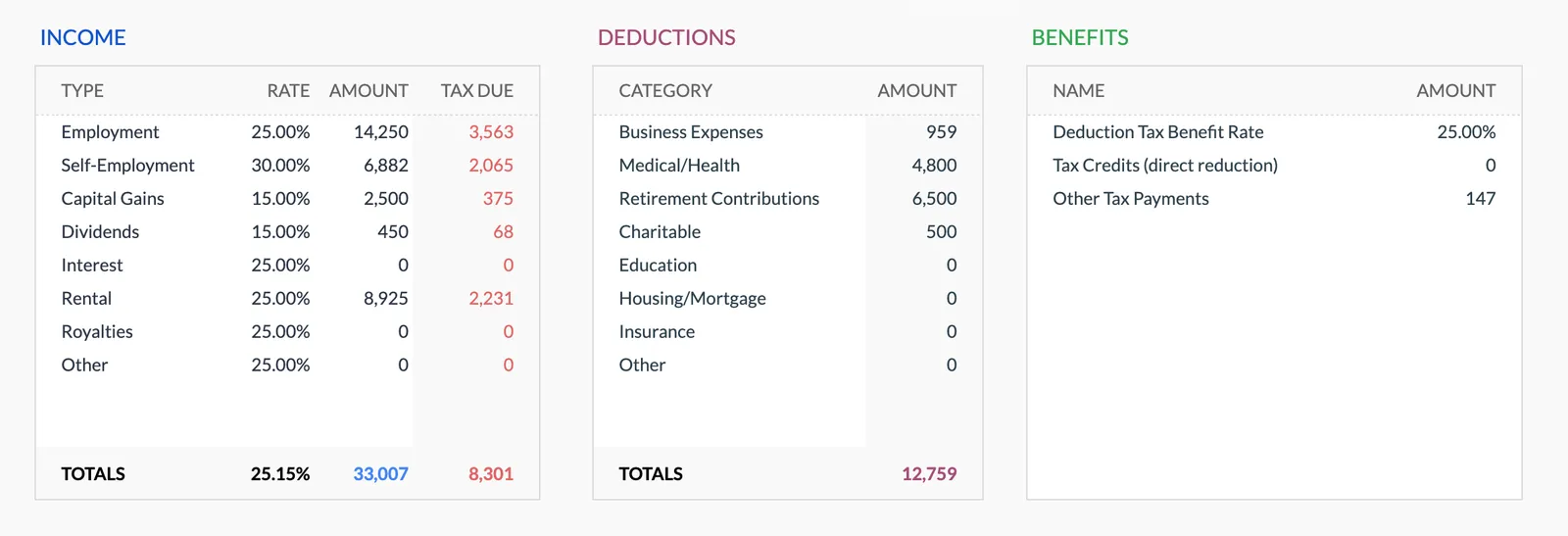
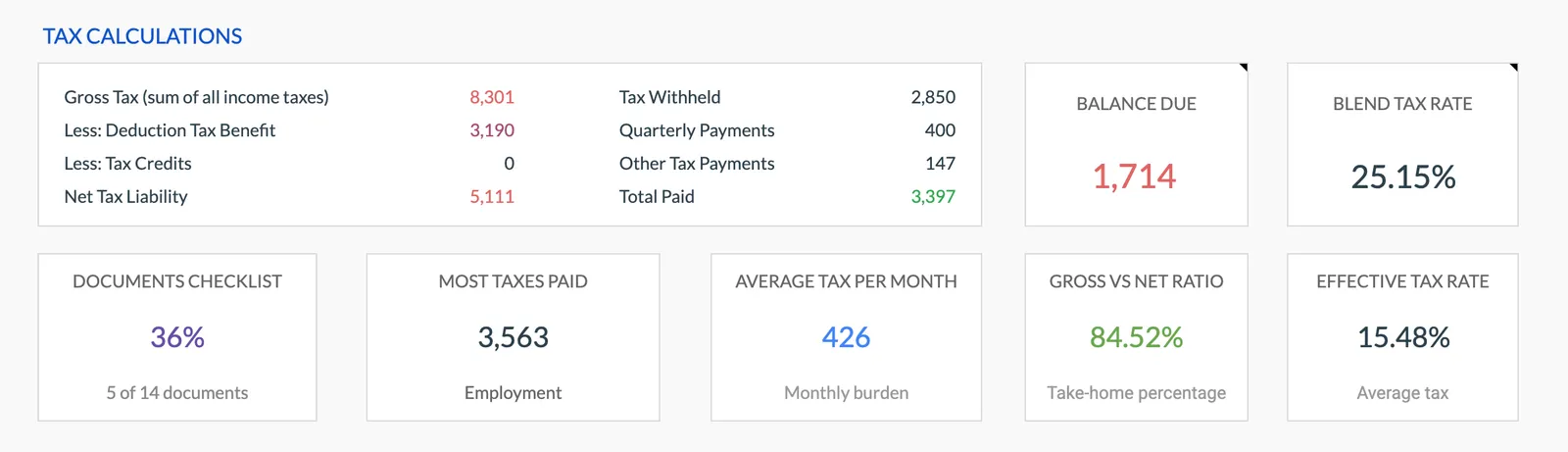
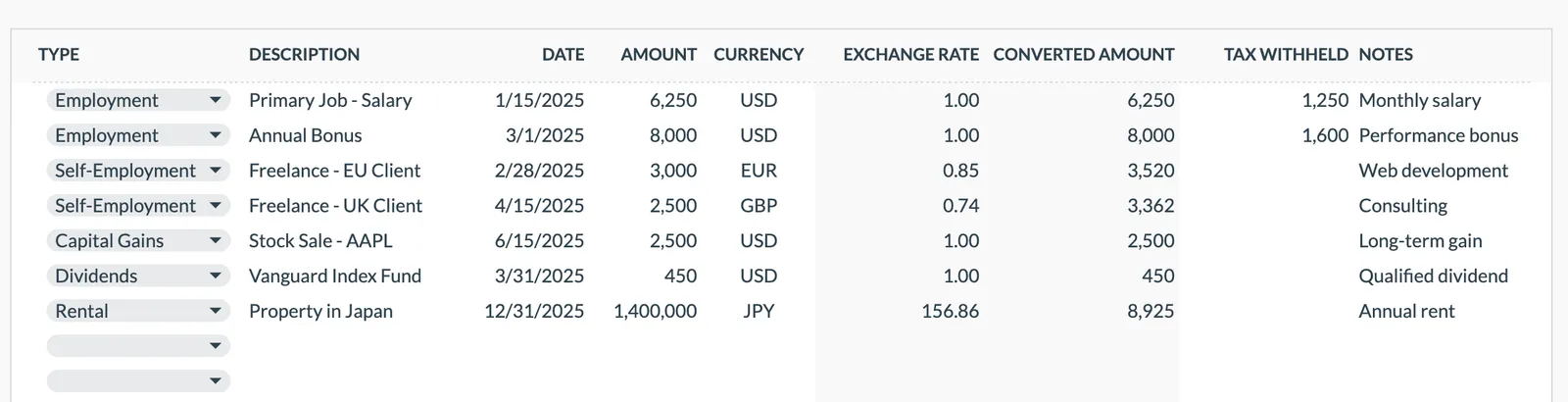
Browse through the template to see how it tracks income, deductions, credits, and estimated quarterly payments.
- Annual tax overview dashboard
- Income tracking by source
- Deductions and credits organizer
- Quarterly payment tracker
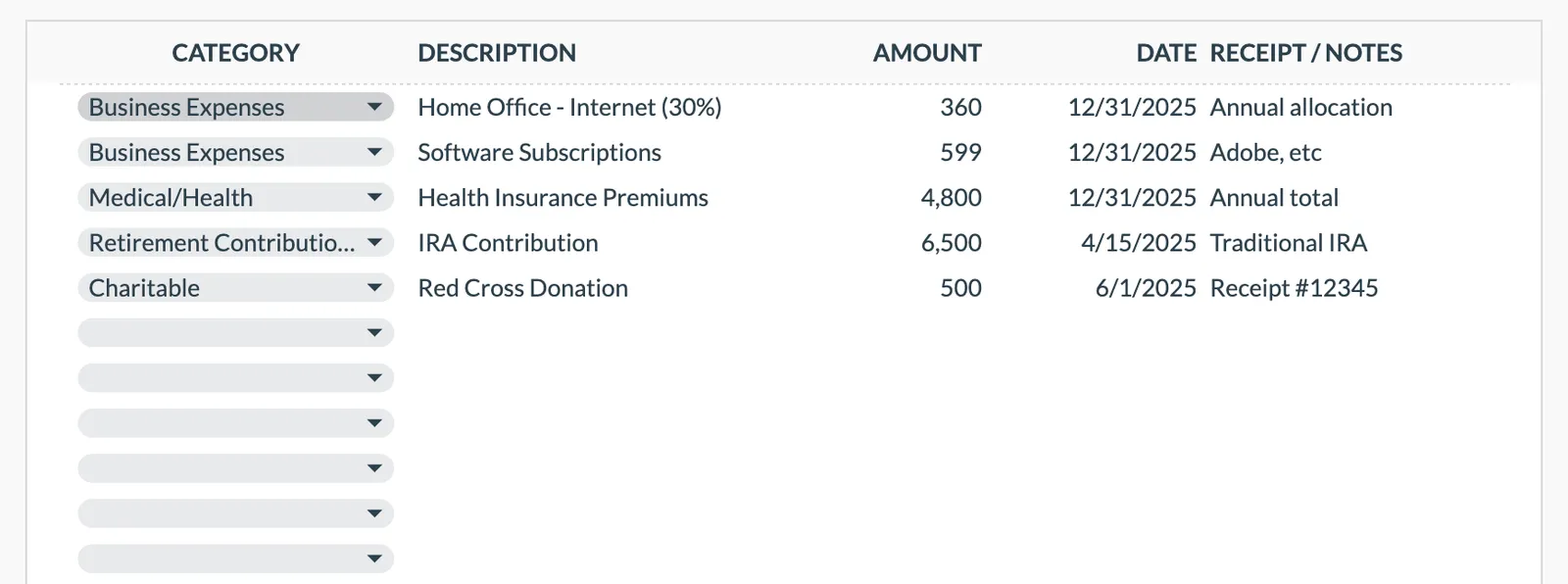
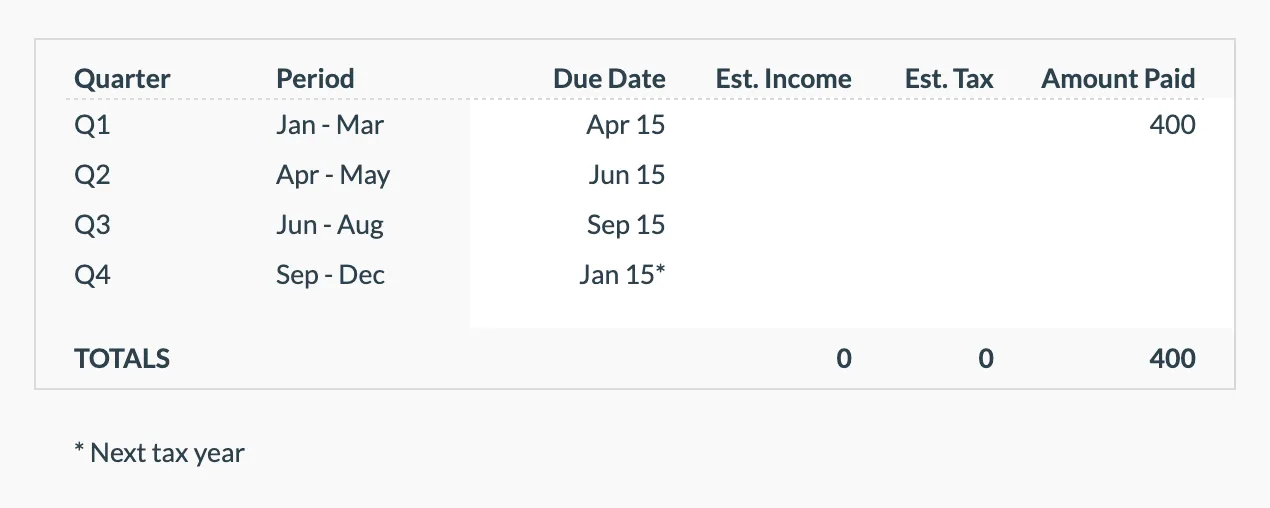
Annual tax overview with key figures
Detailed tax breakdown and projections
Track all income sources for tax purposes
Organize and track tax deductions
Plan and track quarterly estimated tax payments
Common Questions
Tax Planning in West Virginia - FAQ
What are West Virginia's current income tax rates?
West Virginia has a graduated income tax with rates ranging from 2.22% to 4.82% for the 2026 tax year [1], unchanged from 2025 after earlier cuts, with further reductions possible under the state's revenue trigger law. The state is actively working to lower its income tax burden as part of a broader effort to improve economic competitiveness [2]. Because rates change year to year, using current-year figures matters for accurate projections.
Does West Virginia tax Social Security benefits?
No. West Virginia fully exempts Social Security benefits from state income tax beginning with the 2026 tax year. The state was previously one of a shrinking group that taxed benefits, and the legislature phased the tax out gradually, exempting 35% of benefits in 2024 and 65% in 2025 before reaching full exemption. Returns for those earlier years still reflect the partial treatment.
Are West Virginia's income tax rates still decreasing?
Yes. West Virginia has enacted legislation to reduce income tax rates over time, with the eventual aspiration of eliminating the income tax entirely - though that remains a long-term goal rather than a near-term reality. The graduated brackets remain in place, but the rates at each tier have been coming down. This means year-over-year comparisons can show meaningful differences.
How does West Virginia treat other retirement income?
Beyond the Social Security exemption, West Virginia does not offer a broad retirement income exclusion, though residents age 65 and older can subtract up to $8,000 of other income. Pensions, 401(k) distributions, and IRA withdrawals are generally taxed at the regular graduated rates. Some specific exemptions exist for certain types of government pensions, but private retirement income faces the standard rates.
Are there manufacturing or equipment tax exemptions in West Virginia?
West Virginia provides exemptions for manufacturing equipment and certain business investments from property tax and other taxes. While these primarily affect business-level planning rather than personal income tax, business owners and self-employed individuals in manufacturing may find these relevant to their overall tax picture. The template's notes section can track how business-level exemptions interact with personal tax planning.
Can't find the answer you're looking for? Contact our team
Official Tax Resources
For current rates, forms, and filing deadlines specific to West Virginia:
Sources
Organize your tax planning for West Virginia
One-time purchase. No subscription. Your financial data stays in your Google Drive.
Tax rules, rates, and contribution limits change, and official publications can themselves lag behind the law in force. We review these figures on a best-effort basis against sources we consider authoritative, but we cannot guarantee they are current, complete, or that better sources do not exist, and nothing here is tax, legal, or financial advice. For decisions, the relevant government authority is the reference. Last reviewed: August 2026.