Louisiana
Tax Planner Template for Louisiana
Organize your federal and Louisiana state tax planning in Google Sheets. Louisiana moved to a flat 3% income tax rate in 2025.
In Depth
Louisiana's Move to a Flat Tax
Louisiana's income tax got dramatically simpler in two steps. A 2021 reform, approved by voters as a constitutional amendment, ended the state's long-standing deduction for federal income taxes paid and lowered the graduated rates from 2022. A 2024 reform then went further: beginning with tax year 2025, the graduated brackets of 1.85% to 4.25% gave way to a single flat 3% rate. What used to be one of the more convoluted state calculations, with federal liability feeding back into state taxable income, is now among the simplest.
The flat rate came paired with a much larger standard deduction: $12,500 for single filers and $25,000 for joint filers in 2025, indexed to inflation from 2026, with taxpayers 65 and older receiving double the amount. The trade-off sits in the sales tax, which rose from 4.45% to 5% in January 2025 to fund the income tax cut and is scheduled to drop to 4.75% in 2030. A companion constitutional amendment was defeated at the ballot in March 2025, but the statutory reform stands.
Louisiana's homestead exemption on property taxes is among the most generous in the country, shielding the first $75,000 of a home's market value from most parish property taxes. On the retirement side, Social Security is exempt, income from the Louisiana State Employees Retirement System and Teachers Retirement System is exempt, and taxpayers 65 and older can exempt up to $12,000 per person of other retirement income. The rest is taxed at the flat 3% rate.
Louisiana
Tax Planning in Louisiana
Louisiana replaced its graduated brackets with a flat 3% income tax rate beginning in 2025, paired with a much larger standard deduction. The old deduction for federal income taxes paid is gone, which makes the state calculation far simpler than it used to be.
Flat Income Tax
Louisiana taxes individual income at a flat 3% rate beginning with tax year 2025, replacing the old graduated brackets of 1.85% to 4.25% [1].
Larger Standard Deduction
The 2024 reform nearly tripled the standard deduction to $12,500 for single filers and $25,000 for joint filers in 2025, indexed to inflation from 2026. Taxpayers 65 and older receive a doubled standard deduction.
Retirement Income
Louisiana exempts Social Security benefits from state tax. State employee and teacher retirement system income is also exempt, and taxpayers 65 and older can exempt up to $12,000 per person of other retirement income, indexed from 2026.
Homestead Exemption
Louisiana offers a generous homestead exemption on a primary residence. This can significantly reduce property tax, which may affect your federal SALT deduction.
Get the Annual Tax Planner
Getting Started
Setting Up the Tax Planner for Louisiana
Enter income under the flat 3% rate
Add all income sources - wages, self-employment, investments, and retirement distributions. Since tax year 2025, Louisiana taxes individual income at a flat 3% rate, so the state projection is a straightforward calculation once the standard deduction is applied. The federal side, with its graduated brackets, is where detailed tracking pays off.
Apply the larger standard deduction
The 2024 reform raised the standard deduction to $12,500 for single filers and $25,000 for joint filers (2025 amounts, indexed to inflation from 2026), and taxpayers 65 and older receive double the standard amount. Note your filing status in the template so the state projection reflects the right deduction.
Note state retirement system exemptions
Louisiana exempts Social Security benefits from state tax. Income from the Louisiana State Employees Retirement System and Teachers Retirement System is also exempt, and taxpayers 65 and older can exempt up to $12,000 per person of other retirement income. Enter each retirement income source separately so you can identify which portions are exempt and which face the flat rate.
Factor in the homestead exemption for SALT planning
Louisiana offers one of the most generous homestead exemptions in the country, which can reduce property tax to zero on many primary residences. Enter your actual property tax amount - which may be very low - in the deductions section. This affects your federal SALT deduction calculation.
Keep the sales tax trade-off in view
The income tax cut was funded partly through the state sales tax, which rose from 4.45% to 5% in January 2025 and is scheduled to drop to 4.75% in 2030. That shift never appears on an income tax return, but it changes where Louisiana households actually pay tax. The dashboard keeps the income tax side of that picture clear.
See It In Action
What the tax planner looks like
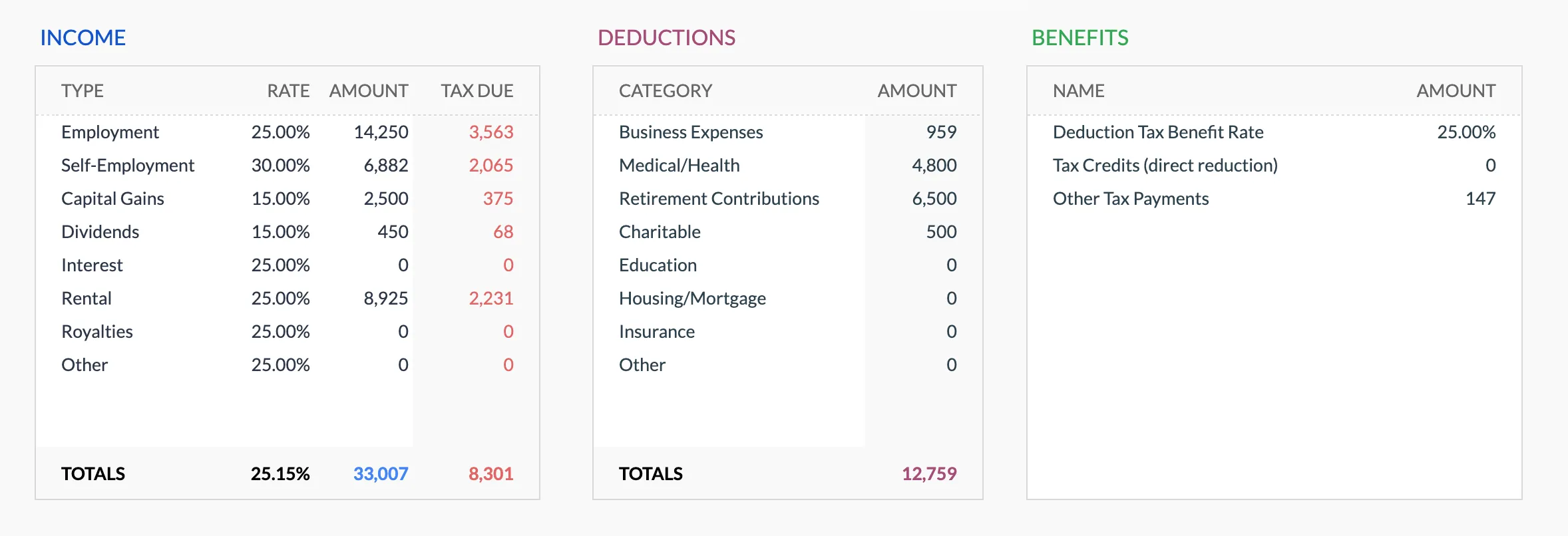
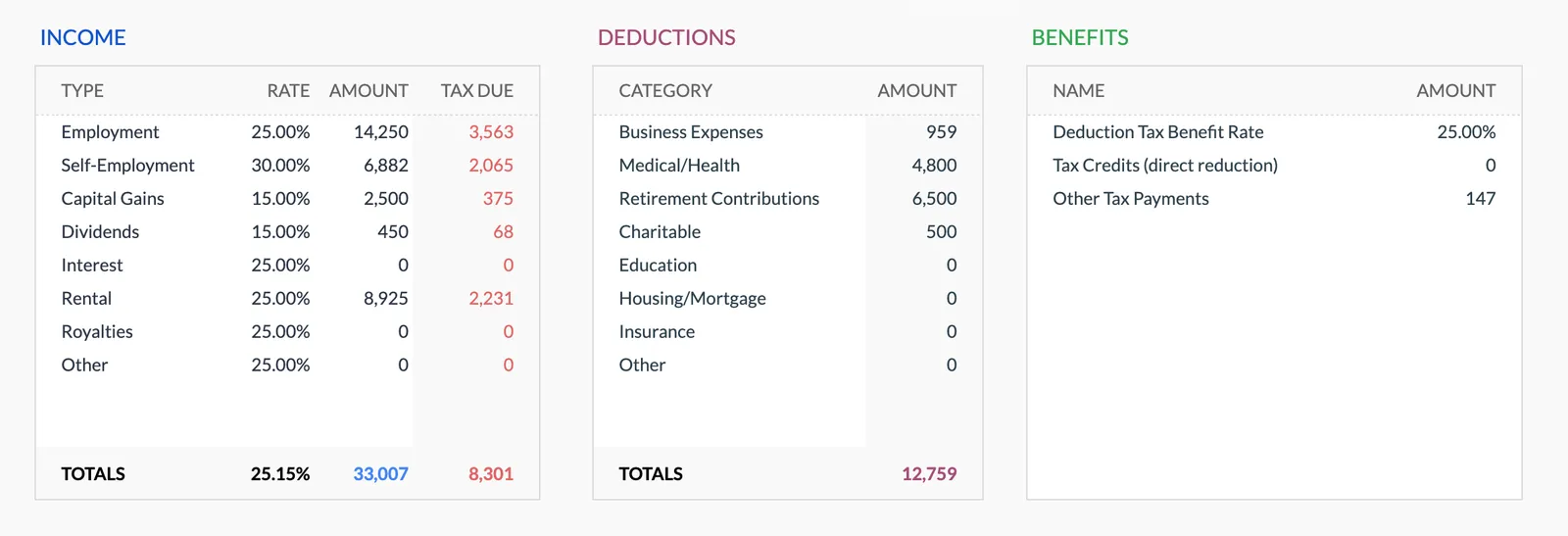
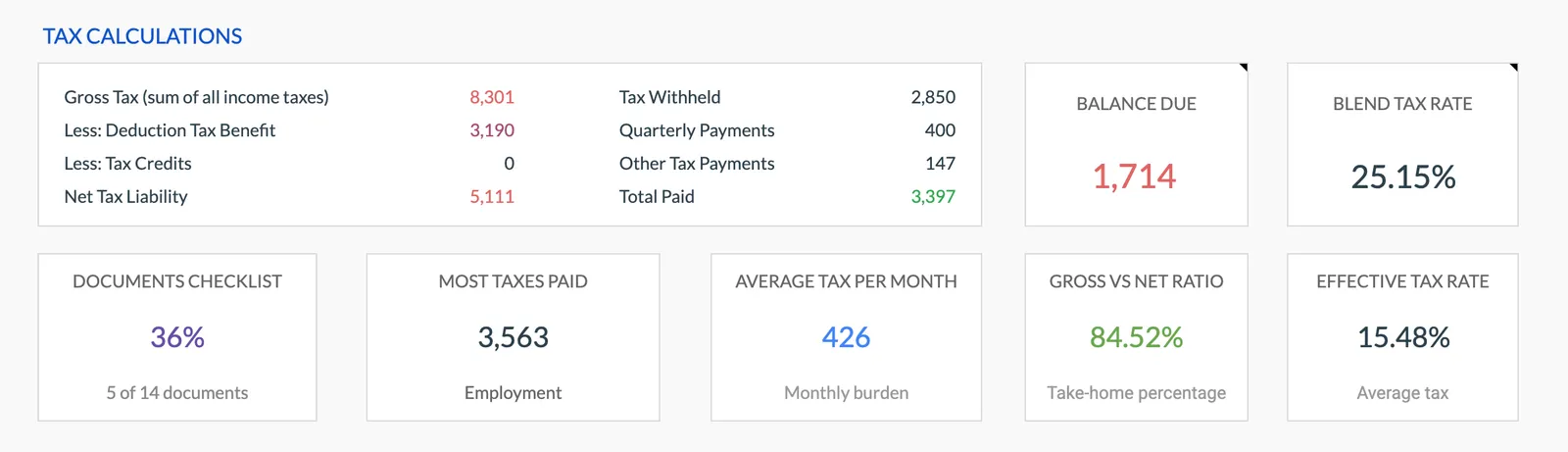
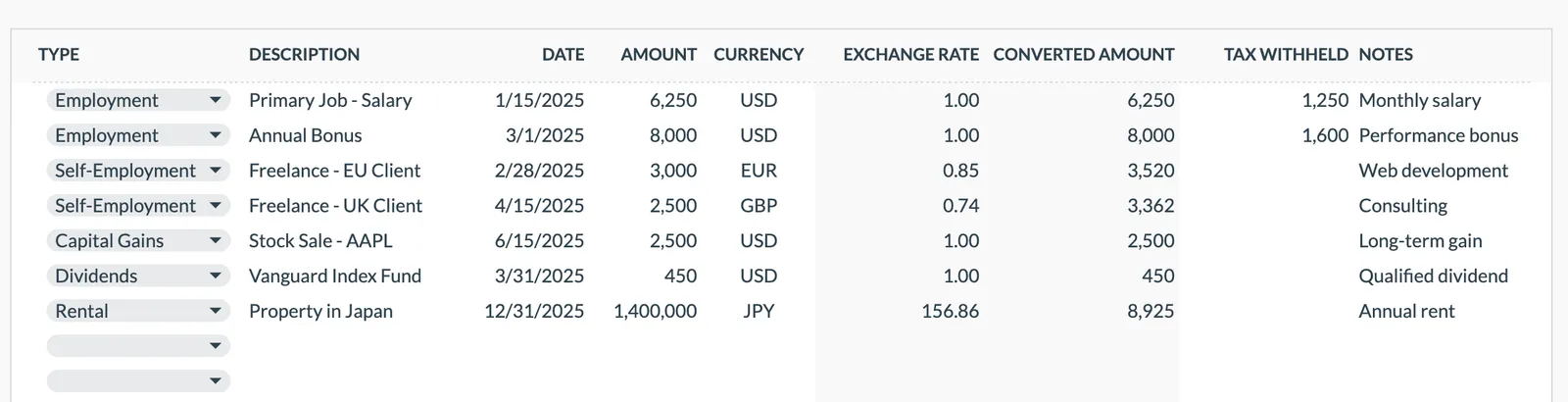
Browse through the template to see how it tracks income, deductions, credits, and estimated quarterly payments.
- Annual tax overview dashboard
- Income tracking by source
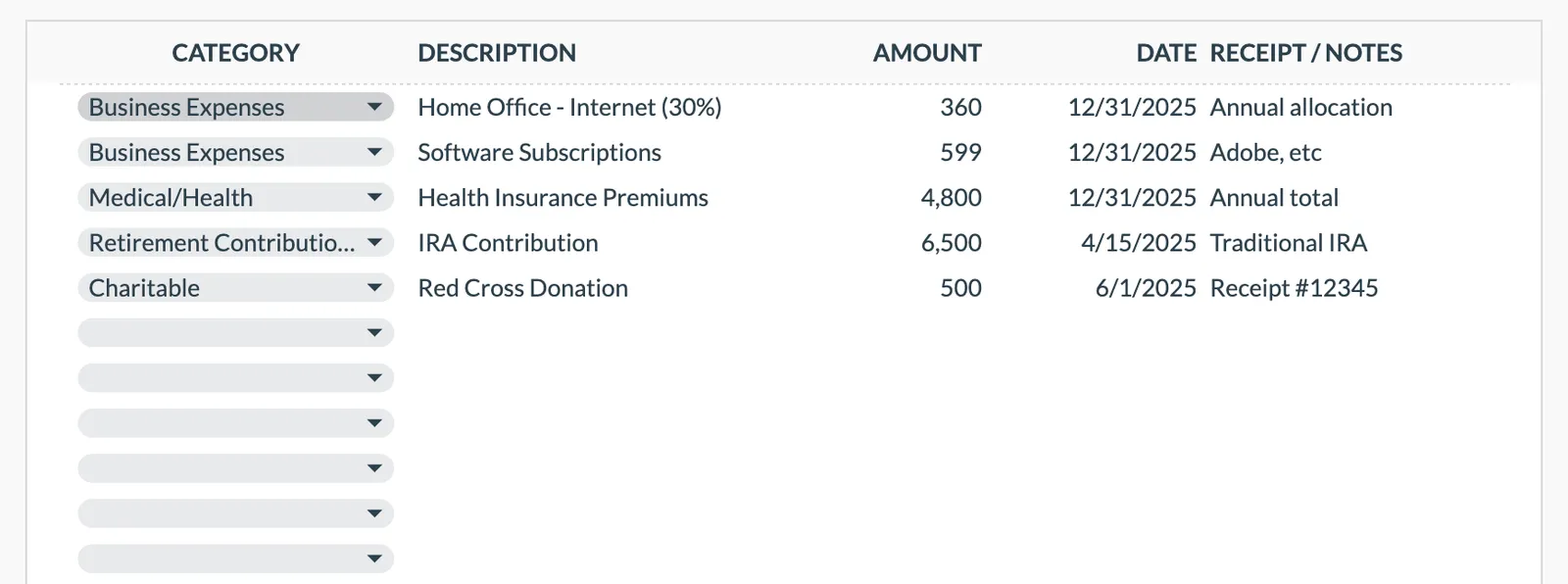
- Deductions and credits organizer
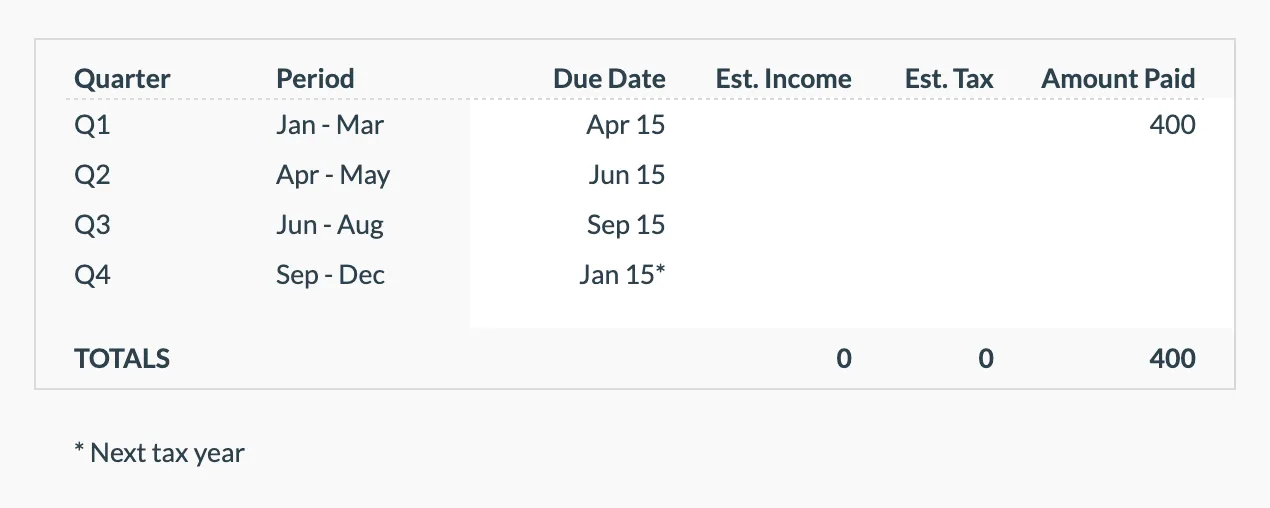
- Quarterly payment tracker
Annual tax overview with key figures
Detailed tax breakdown and projections
Track all income sources for tax purposes
Organize and track tax deductions
Plan and track quarterly estimated tax payments
Common Questions
Tax Planning in Louisiana - FAQ
Does Louisiana still allow a deduction for federal taxes paid?
No. Louisiana repealed the deduction for federal income taxes paid effective with the 2022 tax year, after a 2021 constitutional amendment removed the requirement to offer it. The 2024 reform that introduced the flat 3% rate kept it repealed. Among the states, only Alabama, Missouri, and Oregon still allow a version of this deduction.
What is Louisiana's income tax rate?
A flat 3% on taxable income, beginning with tax year 2025 [1]. This replaced graduated brackets of 1.85%, 3.5%, and 4.25%. The reform paired the flat rate with a standard deduction of $12,500 for single filers and $25,000 for joint filers, indexed to inflation from 2026, so a substantial portion of income is shielded before the 3% applies [2].
How is retirement income taxed in Louisiana?
Social Security benefits are fully exempt from Louisiana state tax. Income from the Louisiana State Employees Retirement System (LASERS), Teachers Retirement System, and other state and local government retirement systems is also exempt. For other retirement income, taxpayers 65 and older can exempt up to $12,000 per person (2025 amount, indexed annually from 2026), doubled from the previous $6,000 by the reform. Beyond these exemptions, retirement income is taxed at the flat 3% rate.
How does Louisiana's homestead exemption work?
Louisiana's homestead exemption shields the first $7,500 of assessed value, which corresponds to $75,000 of market value, from most parish property taxes on a primary residence. For many homeowners, this results in very low or even zero property tax on their home. The exemption is among the most generous in the nation. While it does not directly affect income tax, the low property tax means less to deduct under the federal SALT cap.
What changed in Louisiana's recent tax reform?
The 2024 reform, effective for tax year 2025, replaced the graduated brackets with a flat 3% rate, nearly tripled the standard deduction, and doubled the retirement income exemption for taxpayers 65 and older. To fund the cut, the state sales tax rose from 4.45% to 5% in January 2025, scheduled to fall to 4.75% in 2030. A companion constitutional amendment was defeated at the ballot in March 2025, but the statutory changes stand.
Can't find the answer you're looking for? Contact our team
Official Tax Resources
For current rates, forms, and filing deadlines specific to Louisiana:
Sources
Organize your tax planning for Louisiana
One-time purchase. No subscription. Your financial data stays in your Google Drive.
Tax rules, rates, and contribution limits change, and official publications can themselves lag behind the law in force. We review these figures on a best-effort basis against sources we consider authoritative, but we cannot guarantee they are current, complete, or that better sources do not exist, and nothing here is tax, legal, or financial advice. For decisions, the relevant government authority is the reference. Last reviewed: August 2026.