Kansas
Tax Planner Template for Kansas
Organize your federal and Kansas state tax planning in Google Sheets. Kansas has a two-bracket income tax and fully exempts Social Security benefits.
In Depth
Understanding Kansas's Two-Bracket System
Kansas simplified its income tax in 2024, moving from three brackets to two: 5.2% on the first $23,000 of taxable income for single filers ($46,000 for joint filers) and 5.58% above that. The thresholds are modest, so most households with two earners reach the top rate. A 2025 law points further down: when state revenue meets defined triggers, the rates step toward a single 4% flat rate. The first trigger was not met, so the rates are unchanged for 2026.
Kansas has a complicated history with income tax policy. A dramatic tax cut experiment in 2012 significantly reduced rates and exempted pass-through business income entirely, which led to revenue shortfalls and was largely reversed in 2017. That history explains the shape of the current reforms: the 2024 law paired its rate cuts with a higher standard deduction and personal exemptions, and the 2025 law makes further cuts conditional on actual revenue rather than projections.
For retirement planning, Kansas has fully exempted Social Security benefits for all residents since tax year 2024, ending the old $75,000 income cliff, and KPERS (Kansas Public Employees Retirement System) income is exempt entirely. Other retirement income, including private pensions, 401(k) distributions, and IRA withdrawals, is taxed at the normal rates. The state sales tax on groceries reached zero in January 2025, and with it the food sales tax credit on the income tax return came to an end.
Kansas
Tax Planning in Kansas
Kansas moved to a two-bracket income tax in 2024, with rates of 5.2% and 5.58%, and fully exempted Social Security benefits at the same time. Future revenue triggers could step the rates down toward a single 4% rate.
Two-Bracket Income Tax
Since tax year 2024, Kansas has two income tax brackets: 5.2% on Kansas taxable income up to $23,000 for single filers ($46,000 for joint filers) and 5.58% above that [2]. A 2025 law adds revenue-triggered reductions toward an eventual 4% flat rate; the trigger was not met for 2026, so the rates stand.
Food Sales Tax Eliminated
The state sales tax on groceries phased down to zero on January 1, 2025. Local sales taxes still apply to food, and the old food sales tax credit ended with tax year 2024.
Retirement Income
Kansas fully exempts Social Security benefits from state tax for all residents since tax year 2024, with the old $75,000 income cliff repealed. Kansas public employee pension income (KPERS) is also exempt.
Itemized Deductions
Kansas allows residents to itemize on the state return even when they take the federal standard deduction. Kansas itemized amounts can differ from the federal ones because some federal deductions are not allowed on the Kansas return.
Get the Annual Tax Planner
Getting Started
How to Use the Template for Kansas Taxes
Enter income and identify your Kansas bracket
Add all income sources - wages, self-employment, investments, and retirement distributions. Kansas has two income tax brackets: 5.2% on taxable income up to $23,000 for single filers or $46,000 for joint filers, and 5.58% above those thresholds. Most full-time households reach the top bracket, so the second rate usually drives the projection.
Mark Social Security as exempt
Kansas fully exempts Social Security benefits from state tax for all residents, regardless of income, since tax year 2024. The old rule that taxed benefits once federal adjusted gross income passed $75,000 is gone. Enter Social Security separately from other income so the exempt amount stays visible in your state projection.
Review itemized deductions for Kansas
Kansas lets you itemize on the state return even if you took the federal standard deduction, and the Kansas standard deduction ($3,605 single, $8,240 joint) is much lower than the federal one. Enter all deduction items in the template to compare the standard and itemized approaches at each level.
Track KPERS and other retirement income
Income from the Kansas Public Employees Retirement System (KPERS) is fully exempt from state tax. Other retirement income, including private pensions, 401(k) distributions, and IRA withdrawals, is taxed at the regular rates. Categorize each retirement source to see which are exempt and which are not.
Record quarterly estimated payments
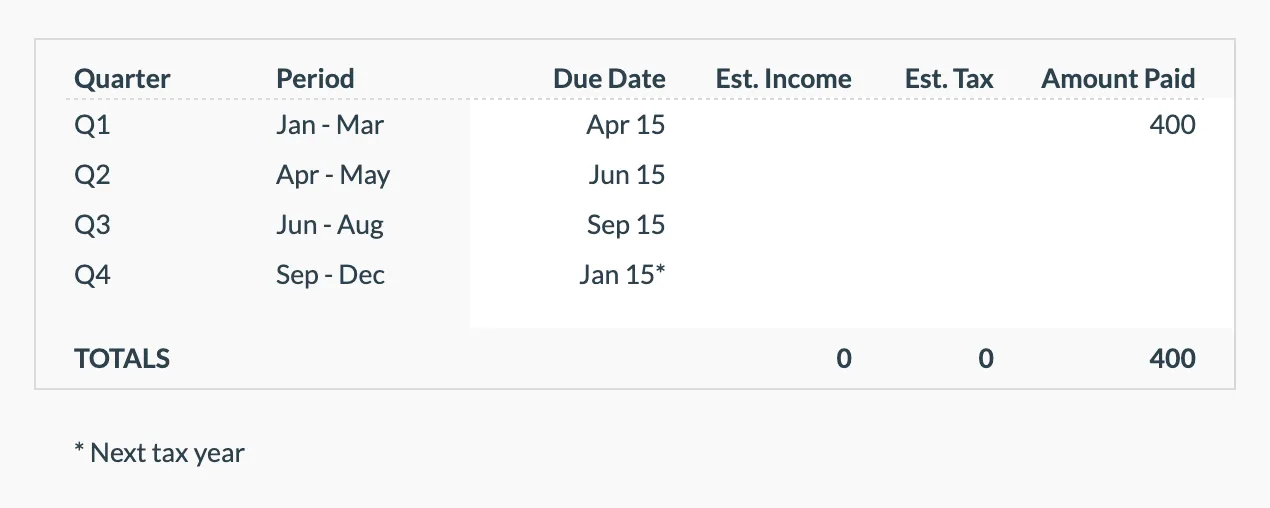
Kansas requires estimated payments on income not subject to withholding. Use the template's quarterly tracker to log federal and Kansas payments side by side and compare the running totals against your projected liability, which is especially relevant for self-employment and investment income.
See It In Action
What the tax planner looks like
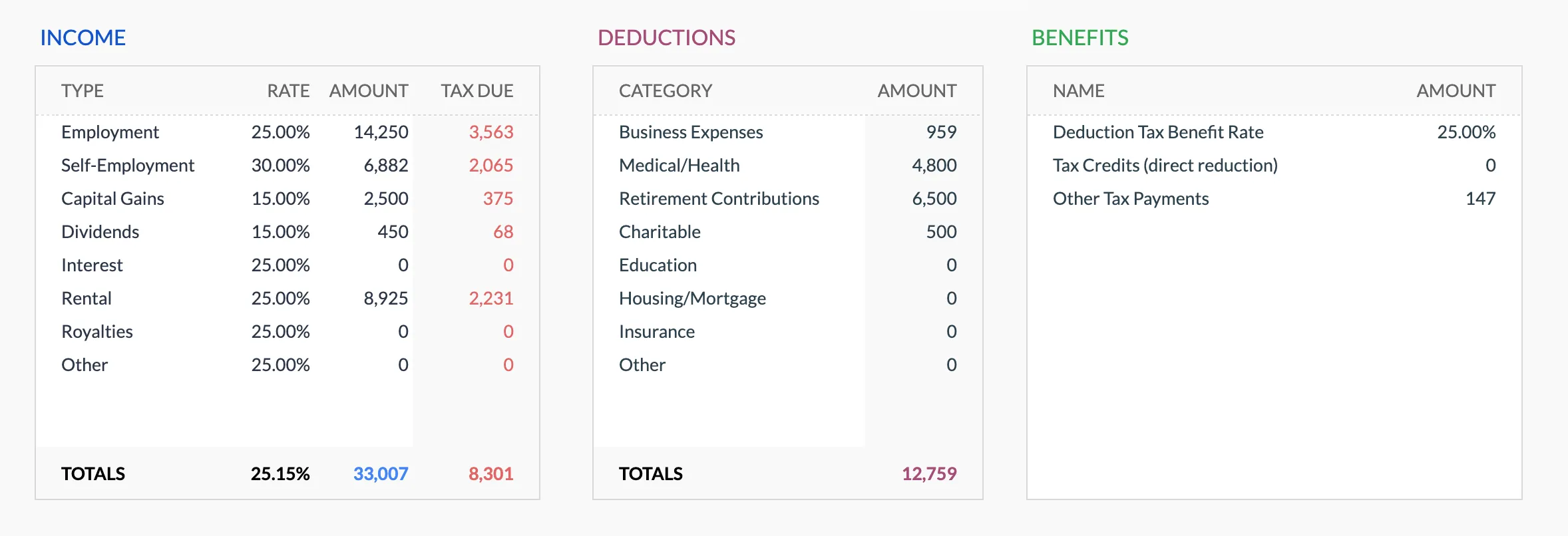
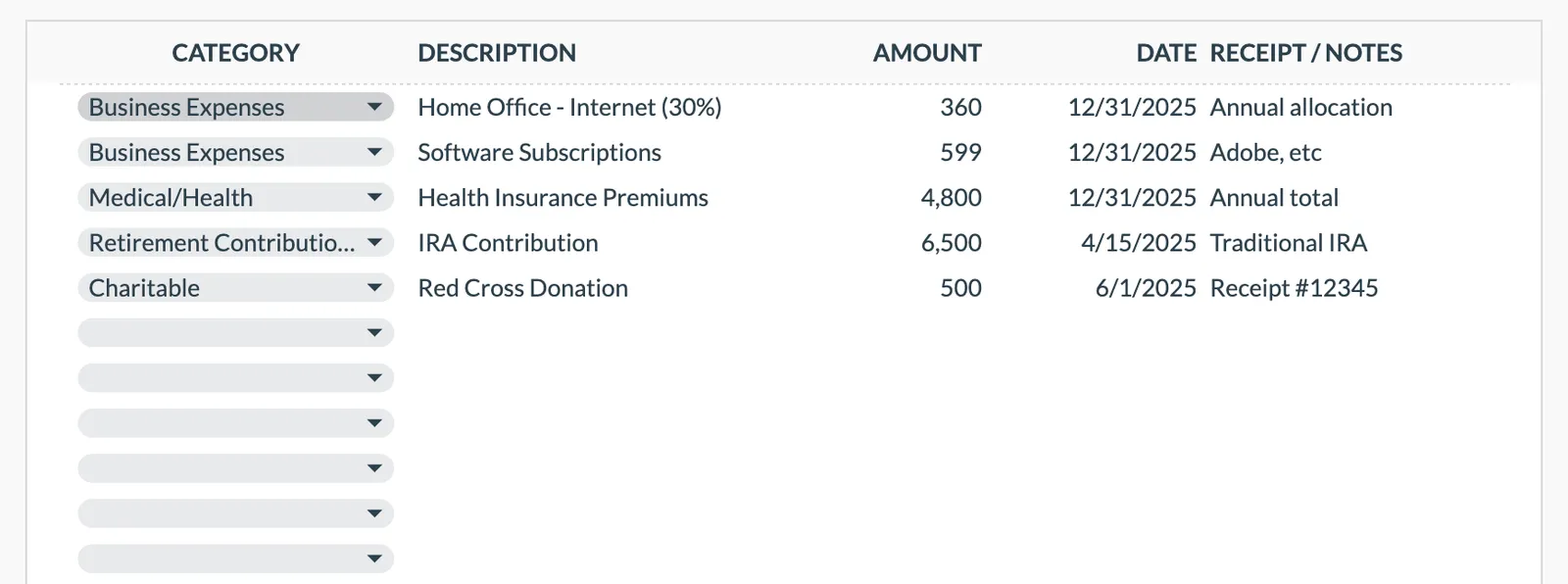
Browse through the template to see how it tracks income, deductions, credits, and estimated quarterly payments.
- Annual tax overview dashboard
- Income tracking by source
- Deductions and credits organizer
- Quarterly payment tracker
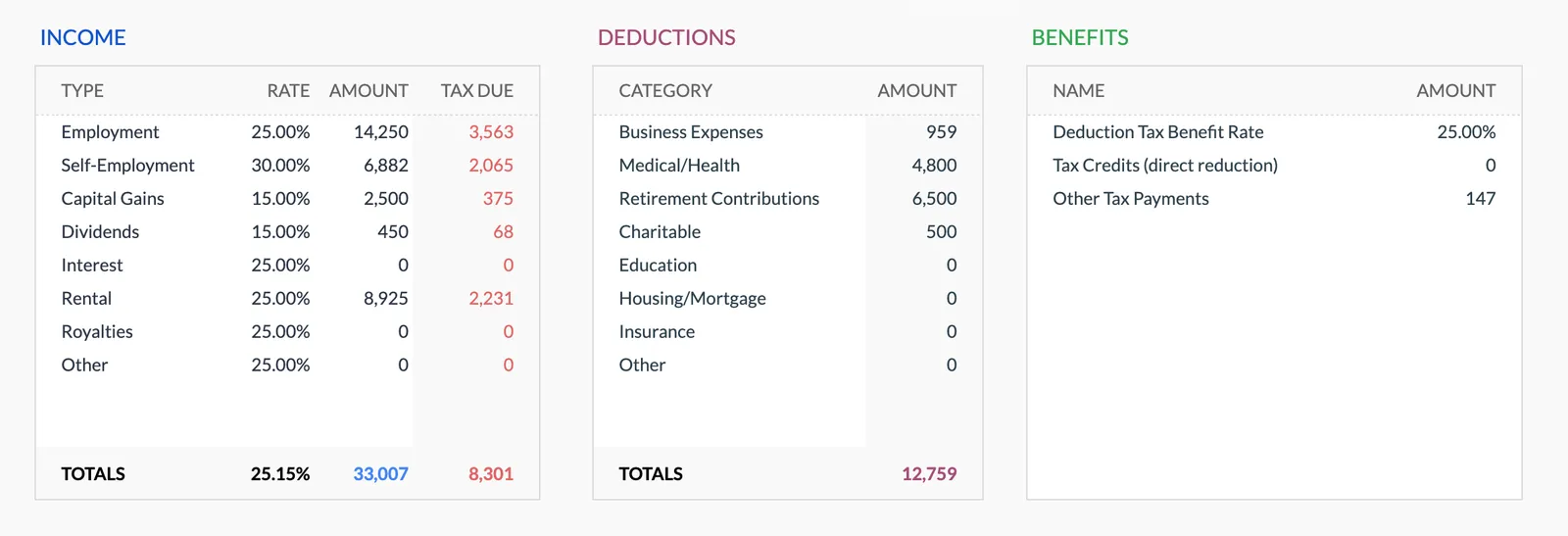
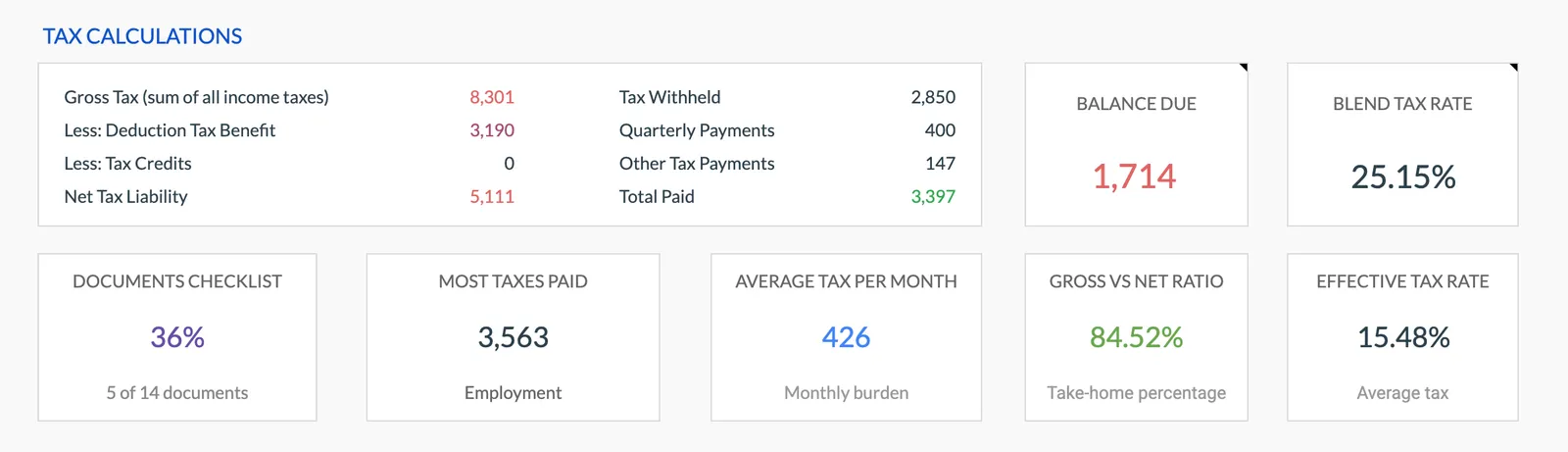
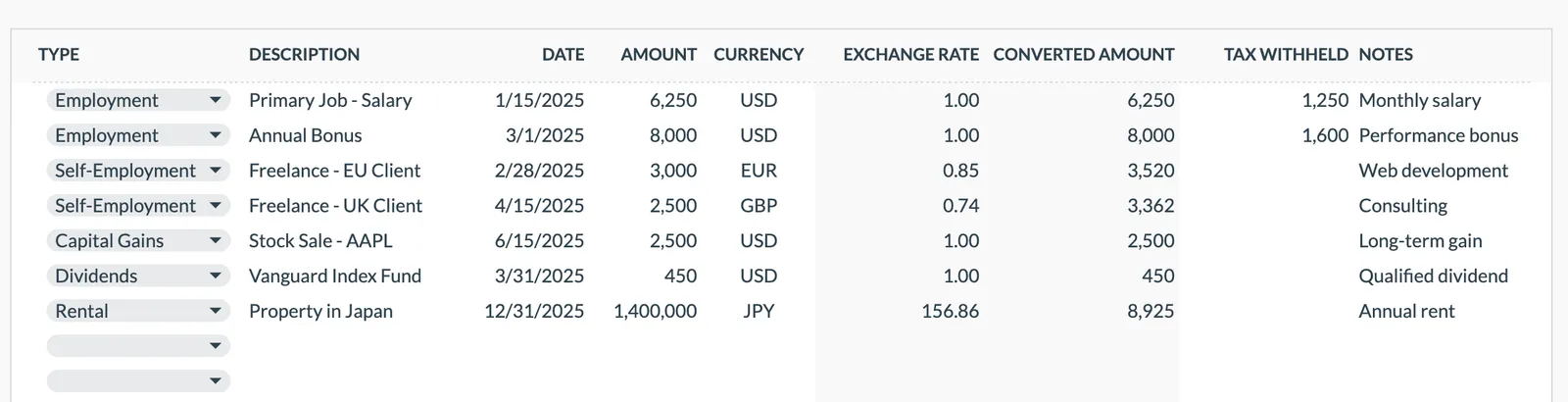
Annual tax overview with key figures
Detailed tax breakdown and projections
Track all income sources for tax purposes
Organize and track tax deductions
Plan and track quarterly estimated tax payments
Common Questions
Tax Planning in Kansas - FAQ
What are Kansas's income tax rates?
Kansas has had two graduated brackets since tax year 2024: 5.2% on Kansas taxable income up to $23,000 for single filers ($46,000 for married filing jointly) and 5.58% on income above that [1]. The 2024 law replaced the previous three brackets of 3.1%, 5.25%, and 5.7%, and also raised the standard deduction and personal exemptions. A 2025 law adds revenue-triggered cuts toward an eventual 4% flat rate, but the trigger was not met for 2026, so the two-bracket rates stand.
Is Social Security taxed in Kansas?
No. Since tax year 2024, Kansas fully exempts Social Security benefits from state income tax for all residents. The previous rule, which included benefits in taxable income once federal adjusted gross income passed $75,000, was repealed. There is no income test anymore.
Is KPERS income exempt from Kansas state tax?
Yes. Retirement income from the Kansas Public Employees Retirement System (KPERS) is fully exempt from Kansas state income tax. This applies to teachers, state employees, and other public workers who participated in KPERS. Private sector pensions and 401(k)/IRA distributions do not receive this exemption and are taxed at the regular two-bracket rates.
What happened with the Kansas tax experiment?
In 2012, Kansas dramatically cut income tax rates and exempted pass-through business income entirely, which led to significant revenue shortfalls and was largely reversed in 2017. That history shaped the current reforms: the 2024 law that created the two-bracket structure paired its cuts with a higher standard deduction and personal exemptions, and the 2025 follow-up makes any further rate cuts conditional on actual revenue collections rather than projections.
What happened to the Kansas food sales tax?
The state sales tax on groceries phased down from 6.5% in 2022 to zero on January 1, 2025. Local sales taxes still apply to food, and prepared food, alcohol, and tobacco remain taxed at the full state rate. The food sales tax credit that used to appear on the income tax return ended with tax year 2024, since the state tax it offset no longer exists.
Can't find the answer you're looking for? Contact our team
Official Tax Resources
For current rates, forms, and filing deadlines specific to Kansas:
Sources
Organize your tax planning for Kansas
One-time purchase. No subscription. Your financial data stays in your Google Drive.
Tax rules, rates, and contribution limits change, and official publications can themselves lag behind the law in force. We review these figures on a best-effort basis against sources we consider authoritative, but we cannot guarantee they are current, complete, or that better sources do not exist, and nothing here is tax, legal, or financial advice. For decisions, the relevant government authority is the reference. Last reviewed: August 2026.