United Kingdom
Net Worth Tracker for United Kingdom
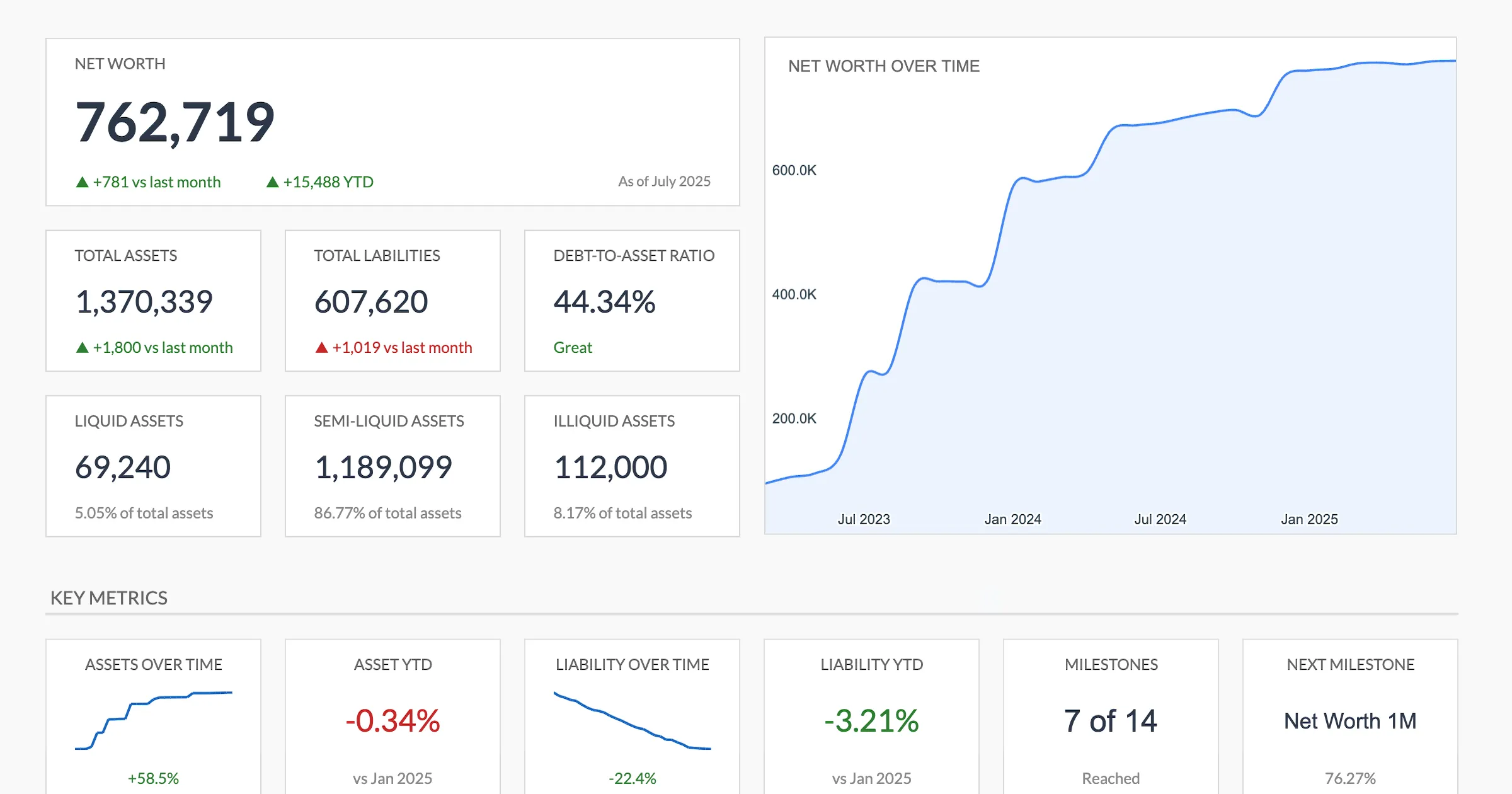
Track every asset and liability - ISAs, pensions, property equity, student loans, and investments - to see your complete financial picture over time.
United Kingdom
Net Worth in the United Kingdom: What to Track
UK residents typically hold wealth across pensions, property, ISAs, and other accounts. A net worth tracker brings everything into one view.
Pensions often represent the largest single asset
Between workplace pensions and SIPPs, pension wealth can dwarf other savings - especially since auto-enrolment began in 2012. Including pension values in net worth gives a more complete picture, though these funds aren't accessible until minimum pension age (55, rising to 57 in 2028).
Property equity dominates many UK balance sheets
With average UK house prices significantly higher than in many countries, property equity (home value minus mortgage) is often the largest single component of net worth. Tracking this requires periodic property valuations - Zoopla or Rightmove estimates provide reasonable approximations.
Student loans are unique in the UK
UK student loans behave more like a graduate tax than traditional debt - they're repaid as a percentage of income above a threshold and written off after 30-40 years. Some financial planners argue they shouldn't be included in net worth calculations at all. Including them gives a conservative view; excluding them gives a practical view.
ISAs and GIAs provide accessible wealth
Cash ISAs, Stocks & Shares ISAs, and general investment accounts (GIAs) represent liquid, accessible wealth. Unlike pensions, these can be drawn on at any time. Tracking pension and non-pension wealth separately helps understand what's accessible now vs. in retirement.
Get the Net Worth Tracker
Getting Started
How to Set Up This Template for the United Kingdom
List all assets with current values
Enter bank accounts, Cash ISAs, Stocks & Shares ISAs, workplace pension, SIPP, GIA, Premium Bonds, NS&I savings, property value, and any other assets. Use your latest statements or online portal values.
List all liabilities
Include mortgage balance, student loans (if you choose to include them), personal loans, credit card balances, car finance, overdrafts, and any other debts.
Set the currency to GBP
Use the template's built-in currency selector to display amounts in GBP (£). All calculations are currency-agnostic.
Update on a regular schedule
Monthly or quarterly updates work well. Pension values and investment account balances fluctuate with markets - focus on the long-term trend rather than short-term movements.
Consider tracking accessible vs. total net worth
Some people find it useful to track two figures: total net worth (including pension and property) and liquid net worth (excluding pension and property). This shows both the long-term picture and what's actually available.
See It In Action
What the template looks like
Browse through the template to see how it handles budgeting, categories, and expense tracking - all adaptable to your local financial setup.
- Built-in currency selector
- Customizable categories
- Budget vs actual tracking
- Visual charts and summaries
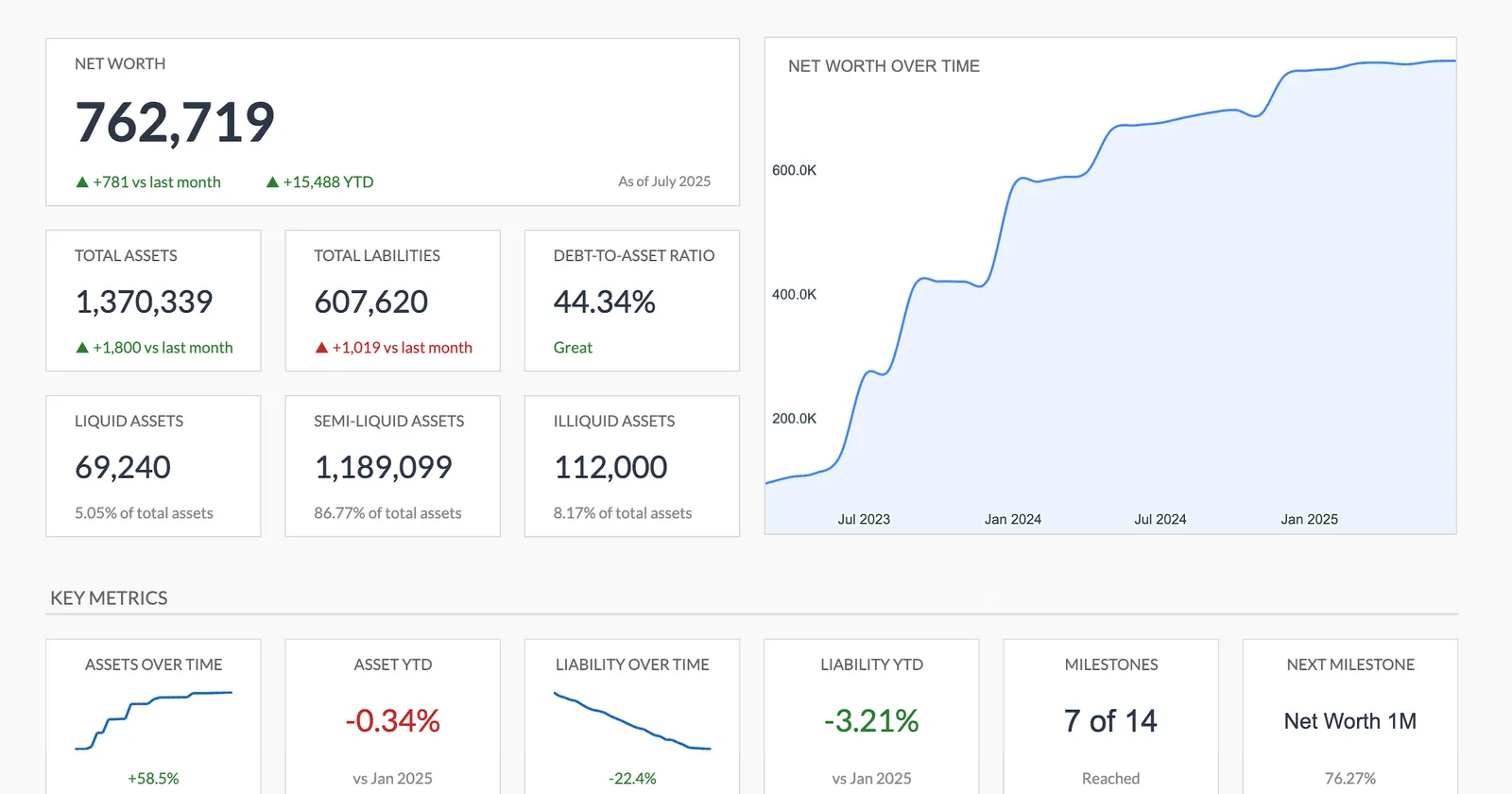
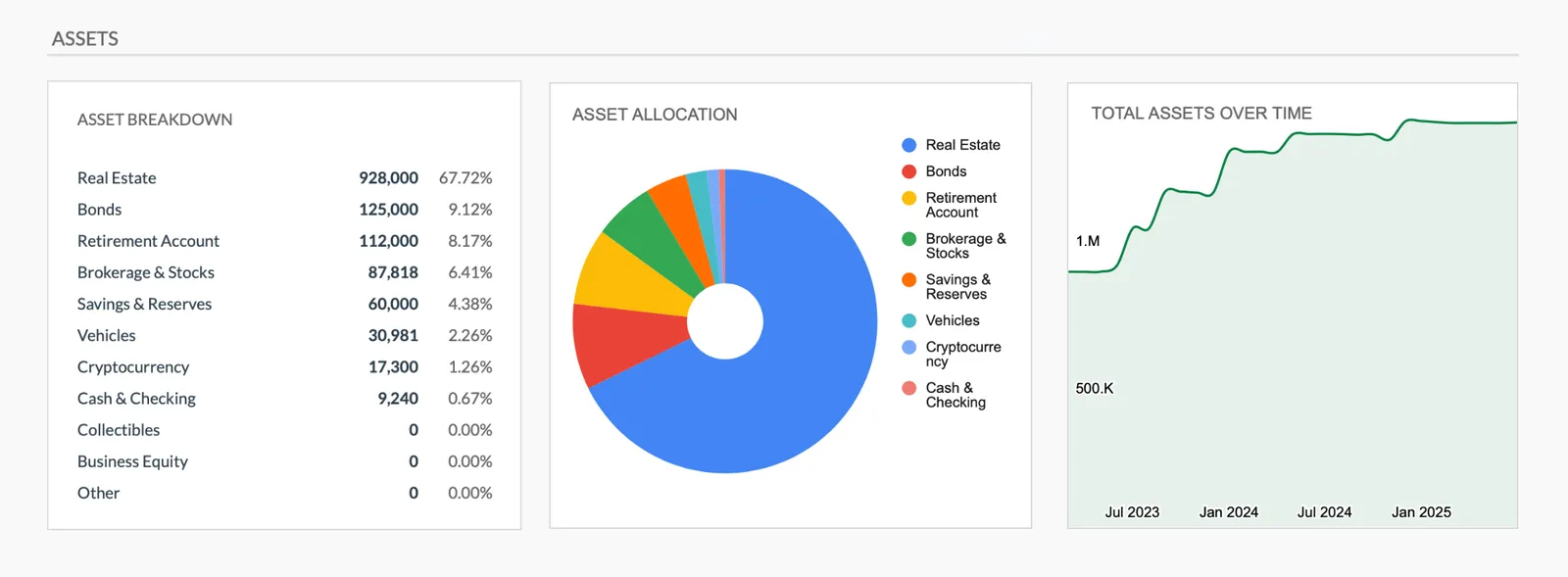
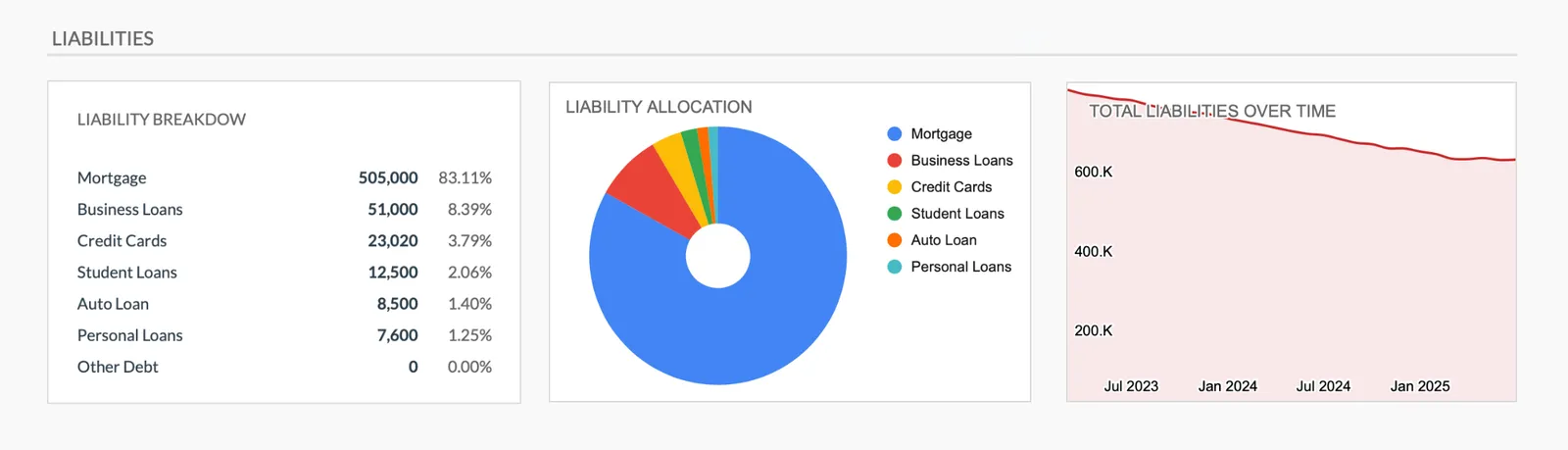

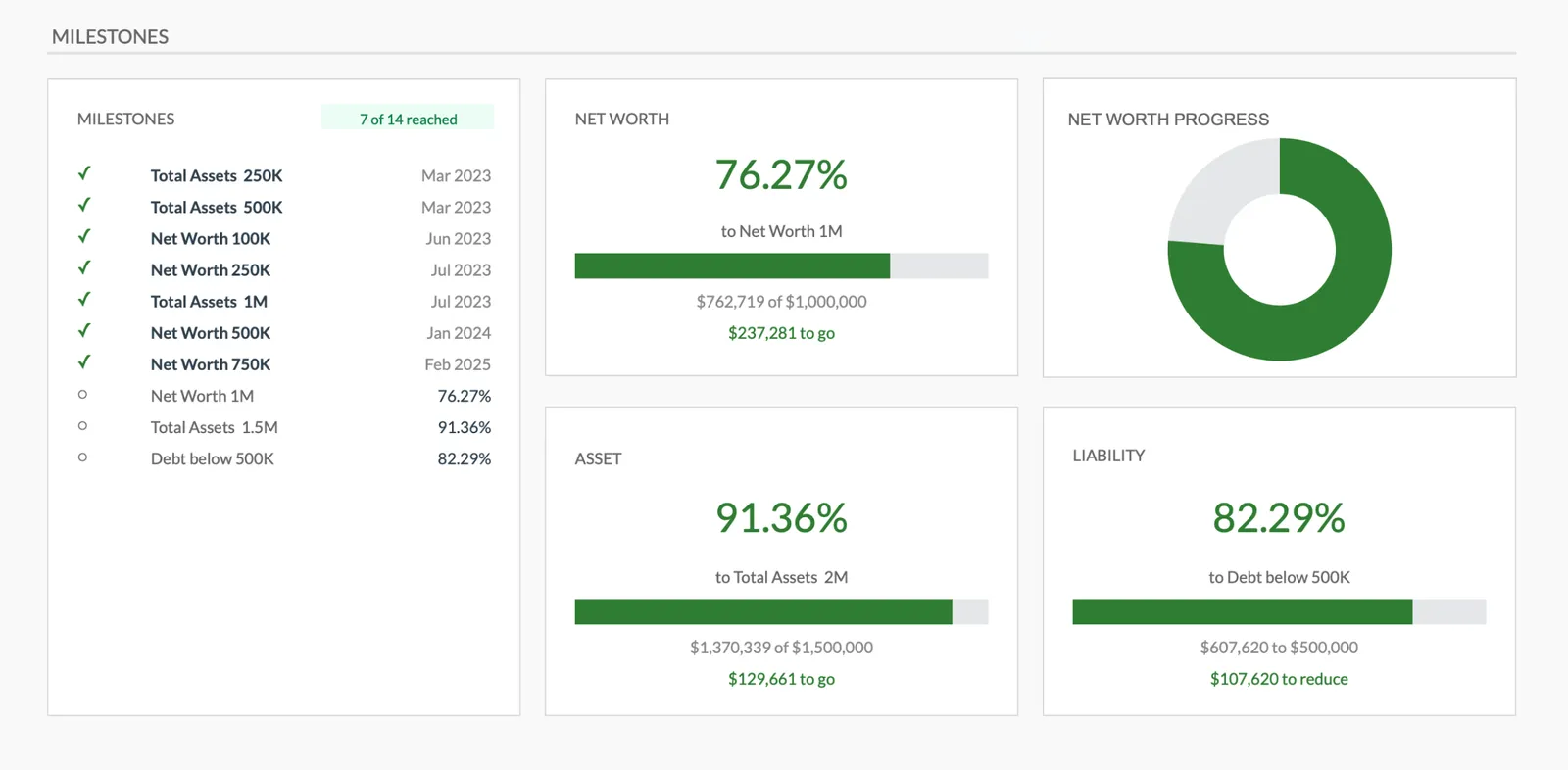
Track your net worth over time with charts
Breakdown of all your assets
Track all debts and liabilities
Key financial health indicators
Set and celebrate net worth milestones
Common Questions
Net Worth Tracker for United Kingdom - FAQ
Should I include my pension in net worth?
Most people include pensions in total net worth for a complete picture. Since pensions aren't accessible until age 55 (57 from 2028), some also track a "liquid net worth" excluding pensions. Both views are useful for different purposes.
How do I value my property?
Use a reasonable estimate based on similar recent sales in your area. Zoopla, Rightmove, or a recent estate agent valuation provide reasonable starting points. Update annually rather than monthly - property values don't change as frequently as investment portfolios.
Should I include student loans as a liability?
This is a personal choice. UK student loans are written off after 30-40 years and repayments are income-contingent, making them more like a tax than traditional debt. Including them gives a conservative view of net worth; excluding them reflects the practical reality that many graduates never fully repay.
What about Premium Bonds and NS&I savings?
Include these as assets at their face value. Premium Bonds are always worth their purchase price (you can cash them in at any time), and NS&I savings products have their stated value.
How does UK net worth compare internationally?
Median household net worth in the UK is around £300,000, though this is heavily skewed by property. Age, location (especially proximity to London), and home ownership status are the biggest factors. The template helps you track your own trajectory rather than comparing to averages.
Can't find the answer you're looking for? Contact our team
Explore More
Free Tools for United Kingdom
Ready to get started?
Download instantly and start managing your finances, or contact us to design a custom template package for your needs.