UAE
Monthly Budget Template for UAE
Track your income in AED, manage your tax-free salary, housing allowances, and everyday expenses - all in a Google Sheets template you own.
In Depth
Zero Income Tax, 5% VAT, and the Real Cost Structure of the UAE
The UAE levies no personal income tax - zero on salaries, bonuses, and investment income alike. There is no PAYE, no social security withholding, and no need to estimate tax brackets. Combined with no capital gains tax, this creates a genuinely tax-free environment for individuals. But this simplicity can mask the reality that UAE living costs, particularly housing in Dubai and Abu Dhabi, absorb a large share of income. Rent alone often represents 30-40% of salary, and DEWA bills include not just electricity and water but also a 5% municipality housing fee calculated on annual rent.
VAT at 5% applies to most goods and services since its introduction in 2018, with exemptions for basic food items, healthcare, and education. While 5% is among the lowest VAT rates globally, it is included in prices at the register rather than added at checkout, making it less visible in daily spending. For families, the education and healthcare exemptions can translate to meaningful savings compared to fully taxed jurisdictions. Corporate tax of 9% was introduced in 2023, but this applies to businesses, not personal income.
Remittances and savings transfers to a home country are a major budget category for many UAE residents, yet they frequently go untracked. Money sent to family, mortgage payments on property abroad, or transfers to home-country investment accounts represent real outflows that deserve visibility. For those considering long-term residency, the Golden Visa pathway requires AED 2 million in property or investment - a threshold that shapes how some residents allocate their tax-free savings over time.
UAE
Budgeting in the UAE: What's Different
The UAE's financial system has unique features - no income tax, employer-provided benefits, and a transient expat population - that shape how budgeting works.
No income tax means your gross salary is your net salary
The UAE does not levy personal income tax [1]. Your salary package is what you receive (minus any voluntary pension contributions). This simplifies budgeting since there's no tax withholding to account for. However, if you're a citizen of a country that taxes worldwide income (like the US), you may still have tax obligations at home.
VAT at 5% applies to most purchases
The UAE introduced 5% VAT in 2018 on most goods and services [2], with some exemptions (basic food items, healthcare, education). For budgeting, this is typically included in the prices you pay - no need to calculate separately. It's worth noting that VAT-free categories can make a meaningful difference for families with children (education and healthcare).
Housing is typically the largest expense
Rent in Dubai and Abu Dhabi is a significant portion of most budgets. Many employers provide housing allowances, and some still pay rent annually (though monthly and quarterly payments are becoming more common via Ejari). Whether your rent is covered by an allowance or paid from salary, tracking the actual cost is important for understanding your real spending.
End-of-service gratuity is the main savings mechanism
Instead of a pension system, UAE employers pay an end-of-service gratuity when you leave - typically 21 days' basic salary per year for the first 5 years and 30 days per year after that. This is separate from your monthly pay. Some companies are now moving to the DEWS (DIFC Employee Workplace Savings) scheme, which functions more like a traditional pension.
DEWA and housing costs shape the monthly picture
DEWA (Dubai Electricity and Water Authority) bills include a 5% municipality fee on rental value added to electricity charges, plus a housing fee of 5% of annual rent divided across 12 monthly DEWA bills. For tenants, this means the DEWA bill is not just utilities - it includes a de facto housing levy. Abu Dhabi has a similar structure through ADDC. These combined charges can run to AED 500-1,500/month depending on property size and usage.
Golden Visa has financial requirements worth planning around
The UAE Golden Visa (10-year residency) is available to investors, entrepreneurs, and certain professionals. The investor pathway requires AED 2 million in property or deposits, while the real estate route requires property valued at AED 2 million or more. For those pursuing long-term residency, these thresholds affect savings and investment allocation decisions.
Get the Monthly Budget Template
Getting Started
Getting Started With Your UAE Budget in AED
Switch the currency to AED
Pick AED from the currency list at the top of the dashboard. The calculations stay the same - only the display currency changes.
Enter your full salary package
Since there's no income tax, your gross salary is effectively your net. Enter the total amount credited to your account. If your employer provides separate housing and transport allowances, add these as individual income lines for clarity.
Customize expense categories for UAE life
Add categories for rent (the single largest expense for most), DEWA (electricity and water), district cooling (if applicable), mobile and internet (du or Etisalat), groceries, dining out, petrol, Salik (road tolls), car insurance, and health insurance top-ups.
Track remittances and savings transfers
Many UAE residents send money to family abroad or transfer savings to accounts in their home country. Adding a remittance category makes these outflows visible in the budget, helping you see the full picture of where your income goes.
Plan for annual and one-off expenses
Visa renewal fees, medical insurance renewals, annual rent payments (if paying in one cheque), school fees (for families), and flights home are common annual expenses in the UAE. Spreading these across the year in your budget avoids cash flow surprises.
See It In Action
What the template looks like
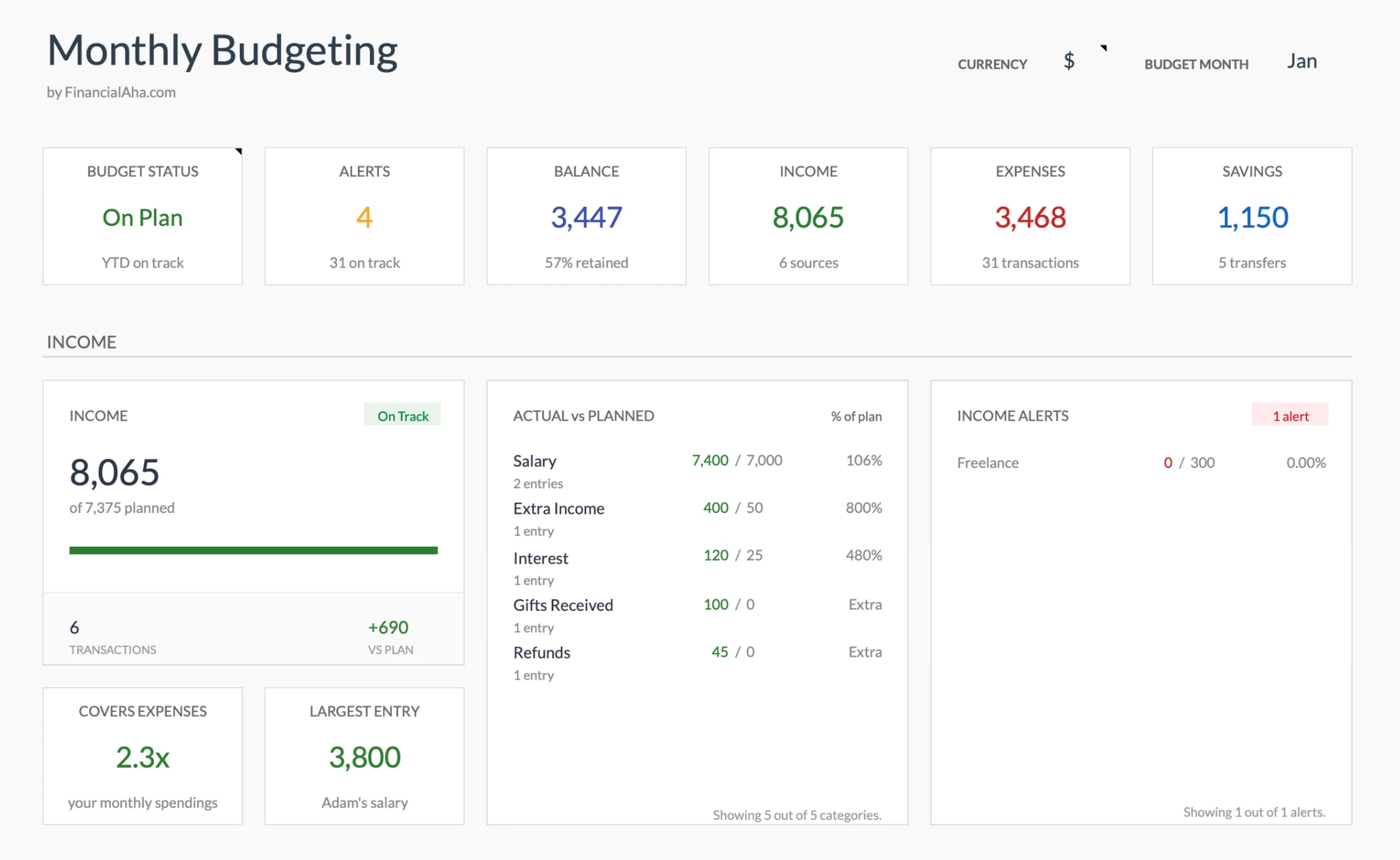
Browse through the template to see how it handles budgeting, categories, and expense tracking - all adaptable to your local financial setup.
- Built-in currency selector
- Customizable categories
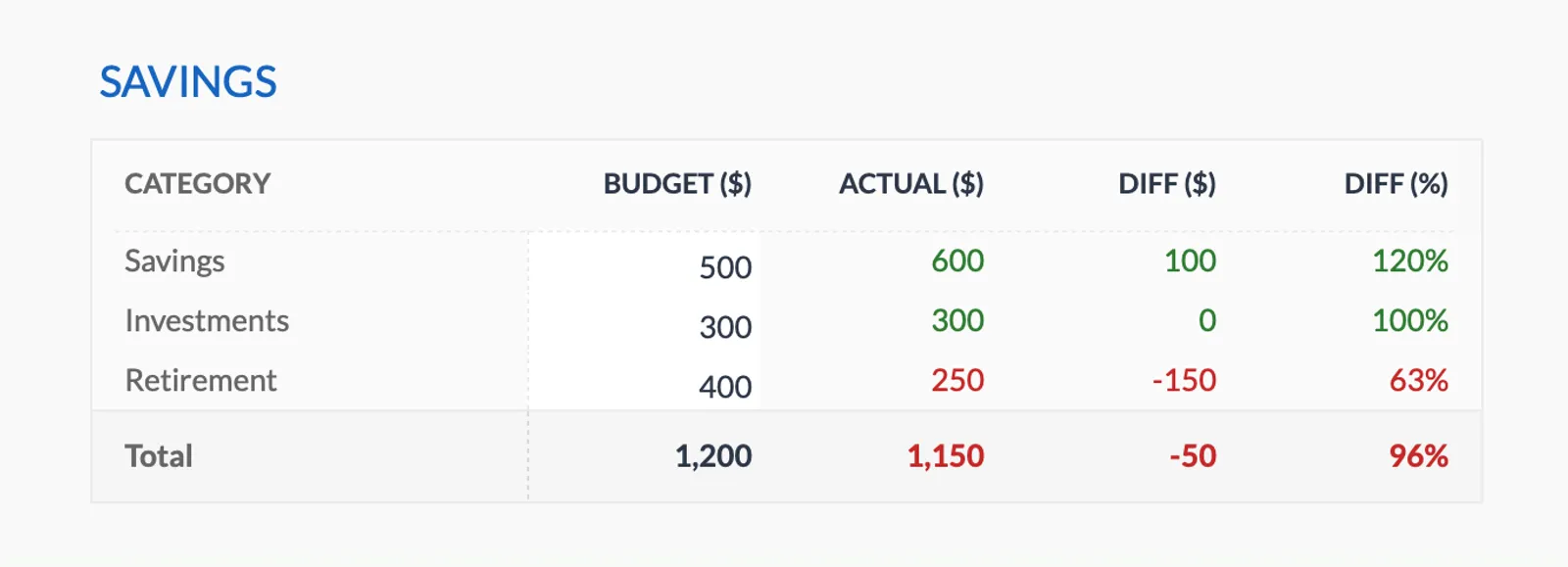
- Budget vs actual tracking
- Visual charts and summaries

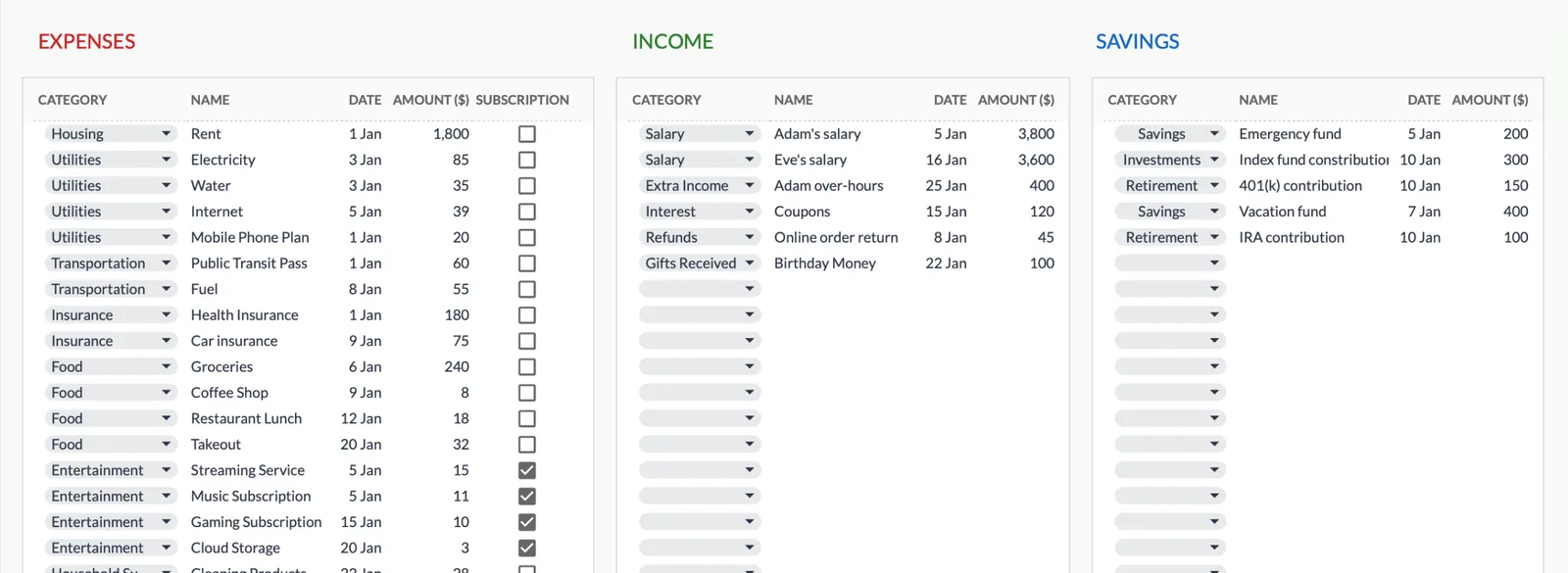
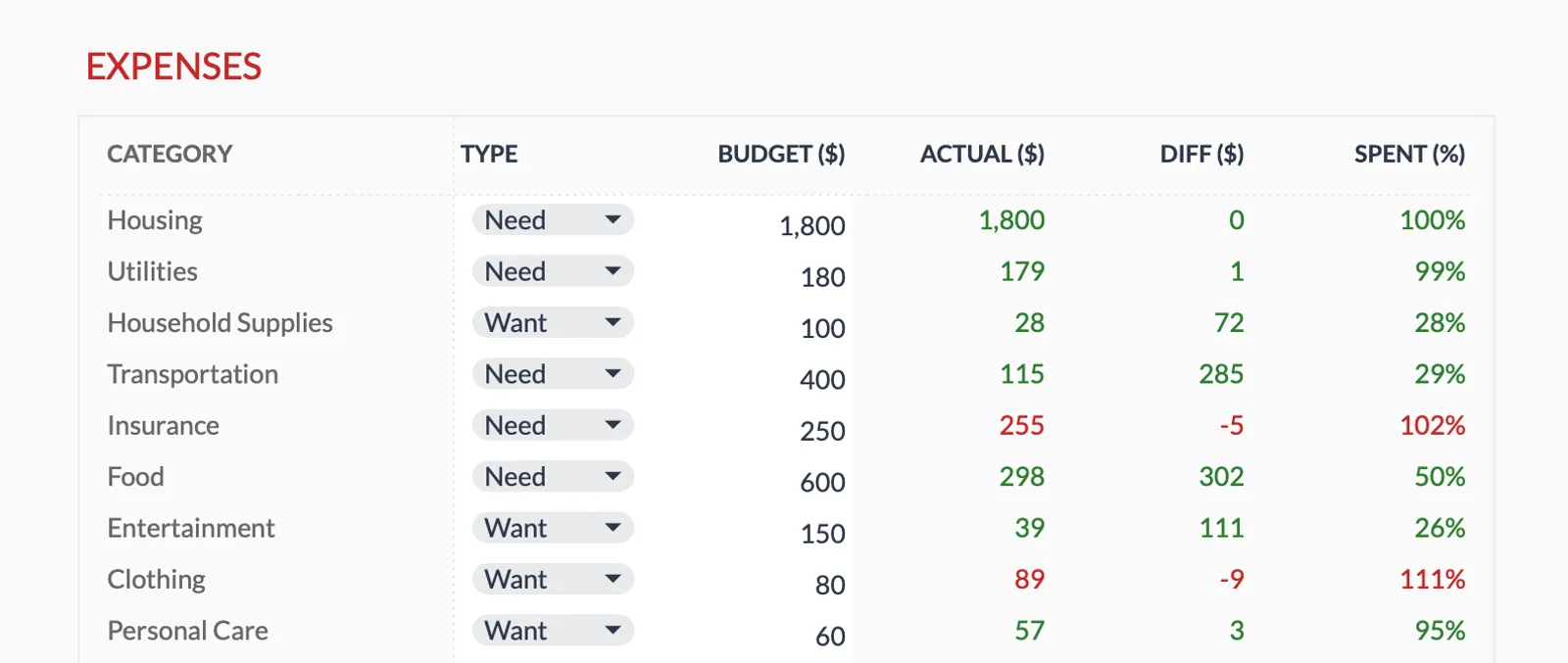
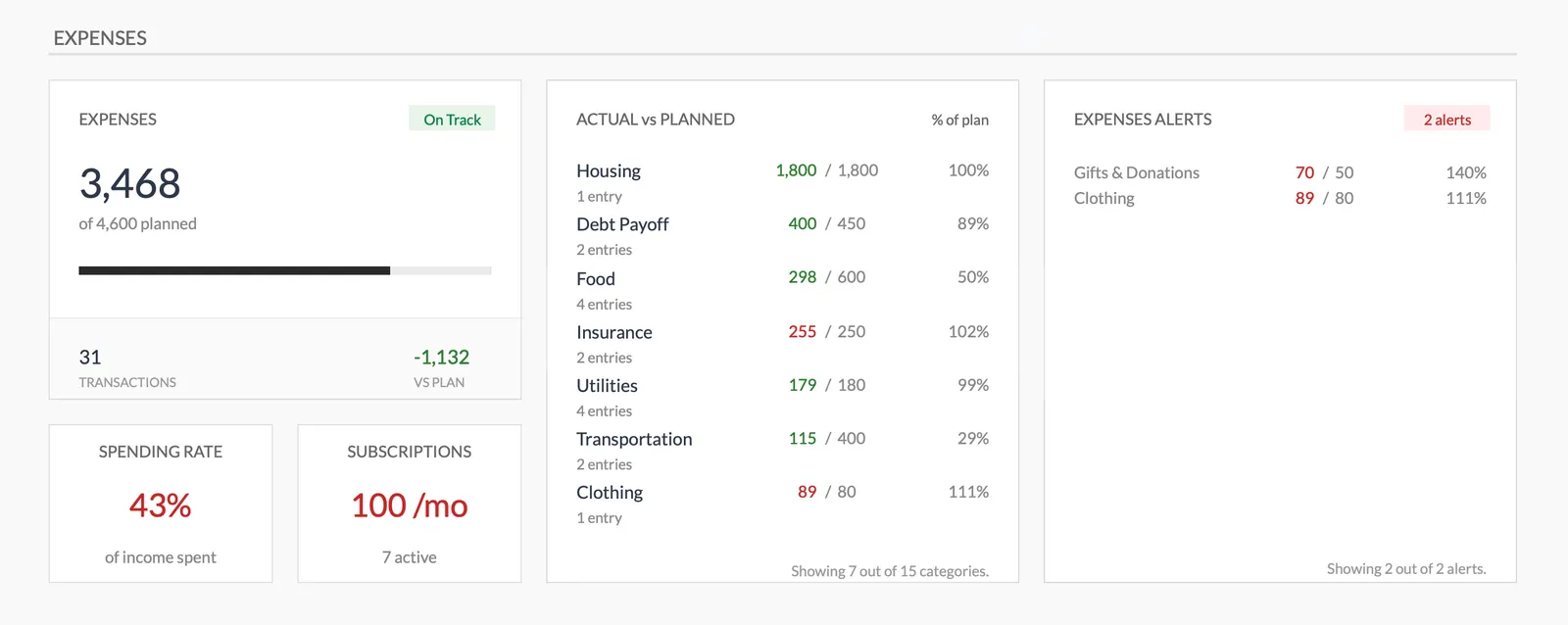
Dashboard with income, expenses, and savings at a glance
Log transactions with automatic categorization
Set targets per category and track actual spending
Visual breakdown of where your money goes
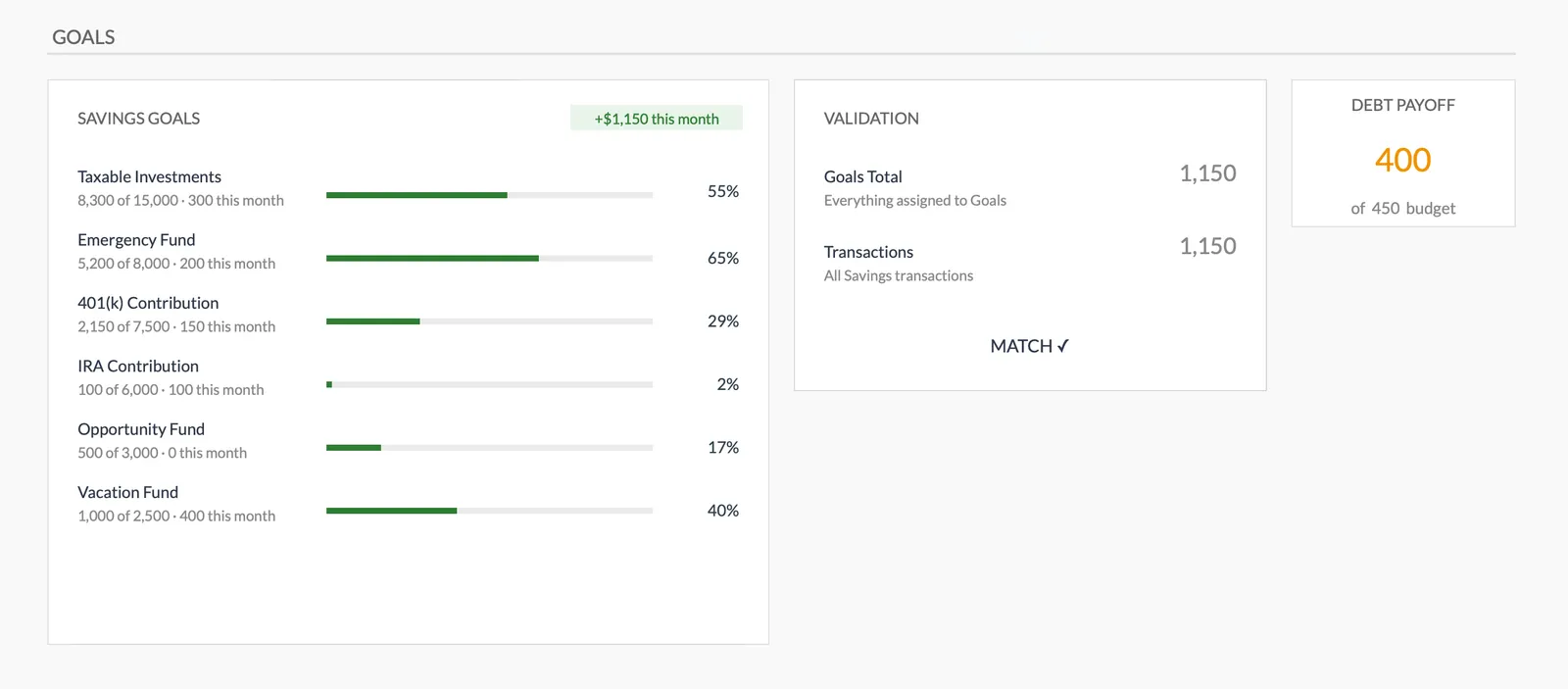
Track savings goals alongside your budget
Monitor progress toward financial goals
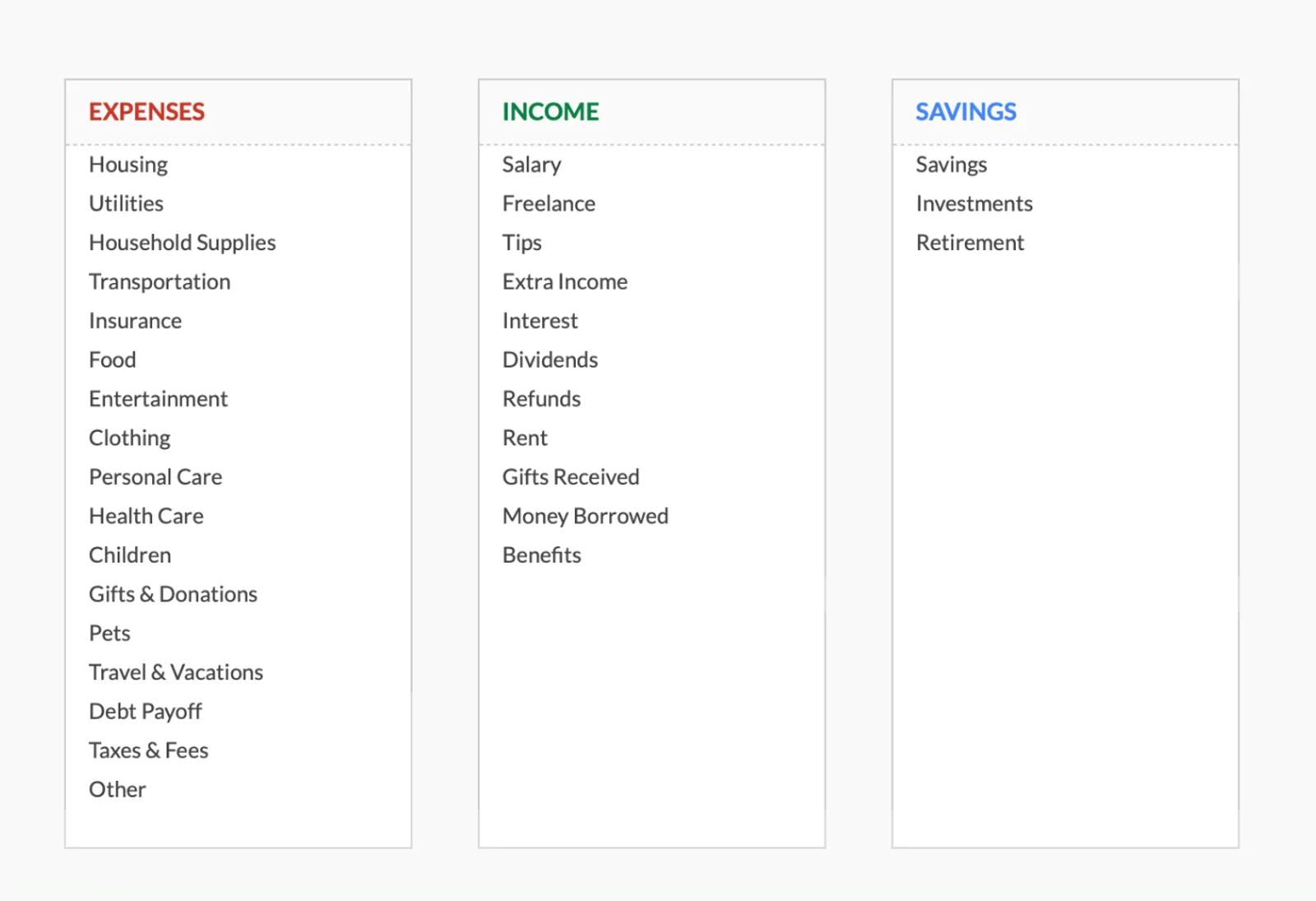
Fully customizable expense, income, and savings categories
Sources
Common Questions
Monthly Budget Template for UAE - FAQ
Does this template use AED?
Yes - choose AED from the currency option in the header. The calculations are currency-neutral, so the math works the same regardless of the currency displayed.
Do I need to account for taxes?
The UAE has no personal income tax, so your salary is tax-free. VAT at 5% is typically included in prices you pay. If you're a US citizen or citizen of another country that taxes worldwide income, you may have tax obligations in your home country - worth consulting a tax professional.
How do I budget for annual rent payments?
If you pay rent annually or in a few large cheques, divide the total by 12 and budget that amount monthly. This way, you're setting aside money each month rather than facing a large lump sum. Some landlords now accept monthly payments via Ejari.
Can I track savings and remittances?
Yes. Add categories for savings transfers to your home country, remittances to family, and local savings or investments. Tracking these outflows helps you see how much of your salary is going to living expenses vs. savings vs. family support.
Is there a UAE-specific version of this template?
The template is the same worldwide - designed to be fully customizable. This page explains how to adapt it for UAE finances. The flexibility means you can rename categories and set it up to match your specific situation.
Can't find the answer you're looking for? Contact our team
Ready to get started?
Download instantly and start managing your finances, or contact us to design a custom template package for your needs.