Germany
Monthly Budget Template for Germany
Track your income in EUR, manage German tax deductions, social insurance contributions, and everyday expenses - all in a Google Sheets template you own.
In Depth
Solidaritätszuschlag, Kirchensteuer, and Why German Netto Feels So Far From Brutto
Germany's payslip is among the most complex in Europe. Income tax (Einkommensteuer) at 14-45% is just the start. The Solidaritätszuschlag - a 5.5% surcharge on income tax originally introduced for German reunification - still applies to higher earners, though since 2021 the vast majority of taxpayers are exempt. Anyone registered with a recognized church pays Kirchensteuer at 8% (Bavaria, Baden-Württemberg) or 9% (all other states) of their income tax, which can add hundreds of euros per month for higher earners.
Social insurance contributions represent another major slice. Health insurance (Krankenversicherung) at roughly 14.6% plus the Zusatzbeitrag averaging 1.7%, pension insurance (Rentenversicherung) at 18.6%, unemployment insurance (Arbeitslosenversicherung) at 2.6%, and long-term care insurance (Pflegeversicherung) at 3.4% for childless individuals - each split between employer and employee. The employee's combined social contribution share alone can exceed 20% of gross salary. This explains why the gap between Brutto and Netto frequently reaches 40% or more.
Riester-Rente subsidies offer some tax relief within this heavy-deduction environment. Contributing EUR 4% of the previous year's gross income (up to EUR 2,100 including the basic subsidy) to a Riester contract triggers a Grundzulage of EUR 175/year plus EUR 300 per child. Property buyers face a separate financial reality: Grunderwerbsteuer ranges from 3.5% to 6.5% depending on the federal state, plus notary fees, land registration, and potentially agent commission - making the total acquisition cost 10-15% above the purchase price.
Germany
Budgeting in Germany: What's Different
Germany's financial system has significant deductions from gross pay and specific expense patterns. Understanding these helps you set up a budget that reflects reality.
Social contributions take a large share of gross pay
German social insurance contributions - health insurance (Krankenversicherung), pension insurance (Rentenversicherung), unemployment insurance (Arbeitslosenversicherung), and long-term care insurance (Pflegeversicherung) - total roughly 20% of gross salary (employee share). Combined with income tax (14-45% progressive), the gap between gross and net salary is substantial. Budgeting from your Nettolohn (net pay) is essential.
Income tax includes the solidarity surcharge for higher earners
German income tax rates range from 14% to 45%, with the top rate applying to income above roughly EUR 278,000 [1]. The Solidaritaetszuschlag (solidarity surcharge of 5.5% of income tax) still applies to higher earners [1]. Tax class (Steuerklasse) significantly affects monthly withholding - especially relevant for married couples choosing between Class III/V and Class IV/IV combinations.
Church tax adds another deduction for registered members
Members of recognized churches (Catholic, Protestant, and some others) pay Kirchensteuer - 8% or 9% of income tax depending on the state [2]. This is deducted automatically from salary. Formally leaving the church (Kirchenaustritt) is the only way to stop the deduction - a personal decision with financial implications.
German expense patterns differ from Anglophone countries
Rent (often including Nebenkosten for utilities) is typically the largest expense. The Rundfunkbeitrag (broadcasting fee) of EUR 18.36/month is mandatory per household. Private liability insurance (Privathaftpflicht) is essentially considered necessary. Health insurance copays are minimal compared to the US system.
Health insurance contributions are a major deduction
Statutory health insurance (GKV) contributions total roughly 14.6% of gross salary (split equally between employer and employee), plus a provider-specific Zusatzbeitrag averaging around 1.7% in 2025 [1]. Long-term care insurance (Pflegeversicherung) adds 3.4% for those without children (lower for parents). For employees earning above the Versicherungspflichtgrenze (EUR 73,800 in 2025), private health insurance (PKV) is an option - with premiums based on age and health rather than income.
Property purchase costs in Germany are unusually high
Buying property in Germany involves Grunderwerbsteuer (real estate transfer tax) that varies by federal state from 3.5% (Bavaria, Saxony) to 6.5% (Brandenburg, NRW, Thuringia, Schleswig-Holstein). Add notary fees (~1.5-2%), land registration (~0.5%), and potentially real estate agent commission (3-6% plus VAT), and the total purchase costs can reach 10-15% of the property price. These one-off costs are substantial and not recoverable if the property is sold at cost.
Get the Monthly Budget Template
Getting Started
Getting Started With Your German Budget
Set the currency to EUR
Set EUR as the display currency using the option at the top of the dashboard. The calculations stay the same - only the display changes.
Enter your Nettolohn (net salary)
Use the amount actually credited to your bank account after all deductions - Lohnsteuer, social insurance, Solidaritaetszuschlag, and Kirchensteuer if applicable. Your Gehaltsabrechnung (payslip) shows the Auszahlungsbetrag - that's your number.
Customize expense categories for German life
Add categories for Miete (rent) including Nebenkosten, health insurance top-up (Zusatzbeitrag if private), Rundfunkbeitrag, Haftpflichtversicherung (liability insurance), internet and mobile, groceries, BahnCard or car expenses (fuel, Versicherung, Steuern), and Kindergarten fees if applicable.
Track Riester or Ruerup contributions if applicable
If you contribute to a Riester-Rente or Ruerup-Rente (Basisrente), add these as budget categories. Riester contributions of EUR 2,100/year maximize the government subsidy. These are worth tracking separately since they offer tax advantages.
Plan for German annual expenses
Account for annual costs like Haftpflichtversicherung, Hausratversicherung, car tax and insurance renewals, GEZ (Rundfunkbeitrag, billed quarterly), and year-end Nebenkostenabrechnung adjustments. Spreading these across 12 months in your budget avoids surprises.
See It In Action
What the template looks like
Browse through the template to see how it handles budgeting, categories, and expense tracking - all adaptable to your local financial setup.
- Built-in currency selector
- Customizable categories
- Budget vs actual tracking
- Visual charts and summaries

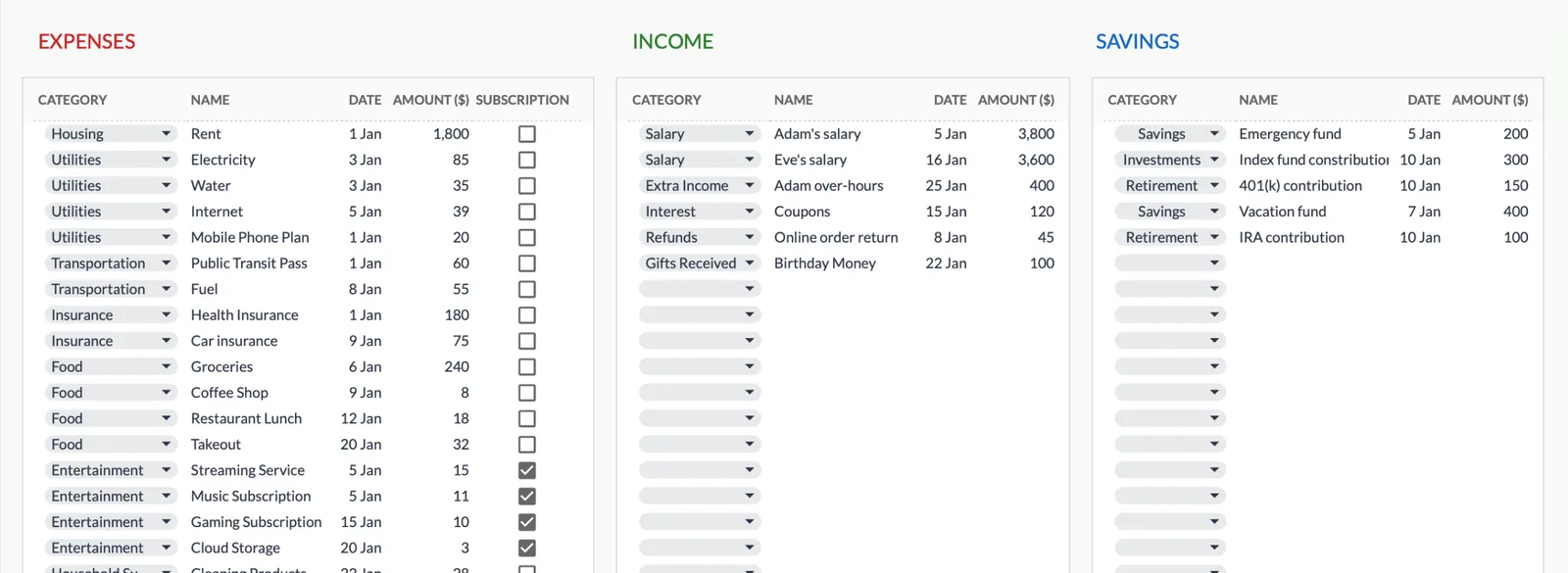
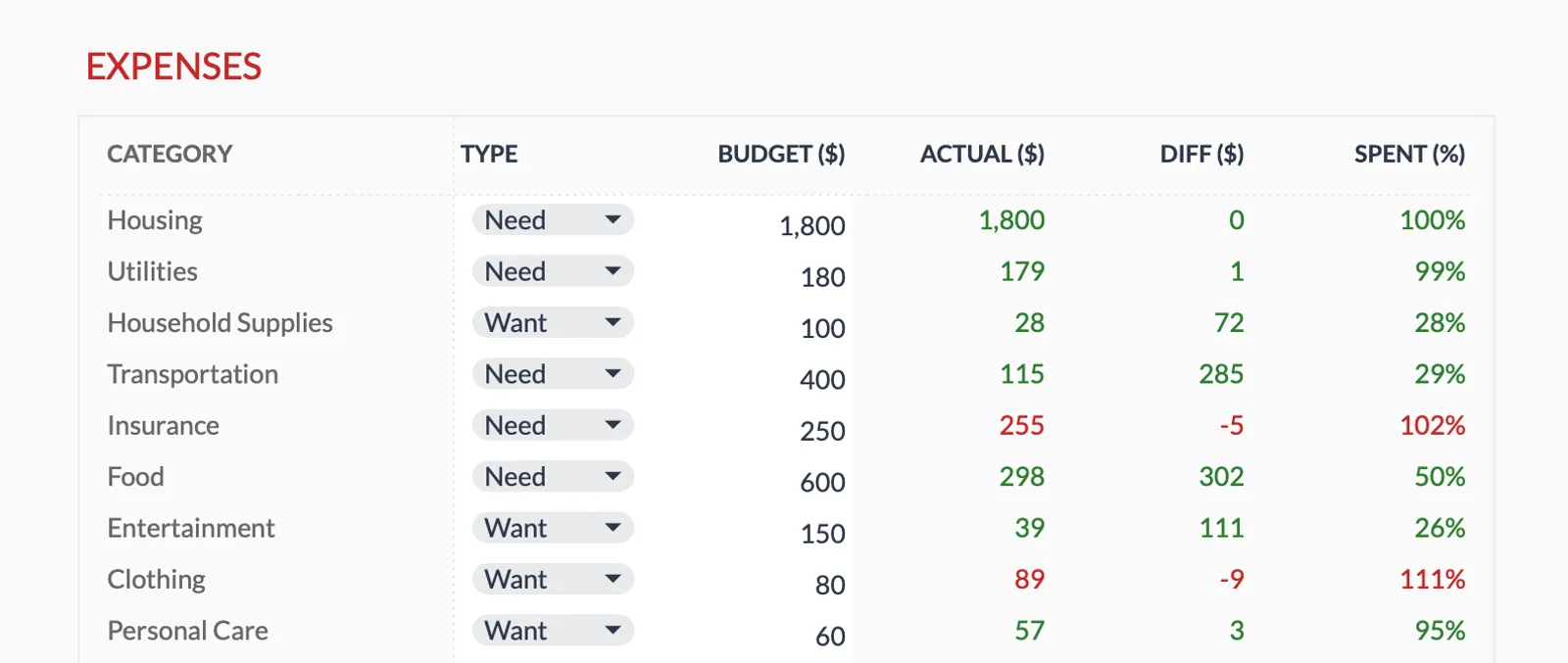
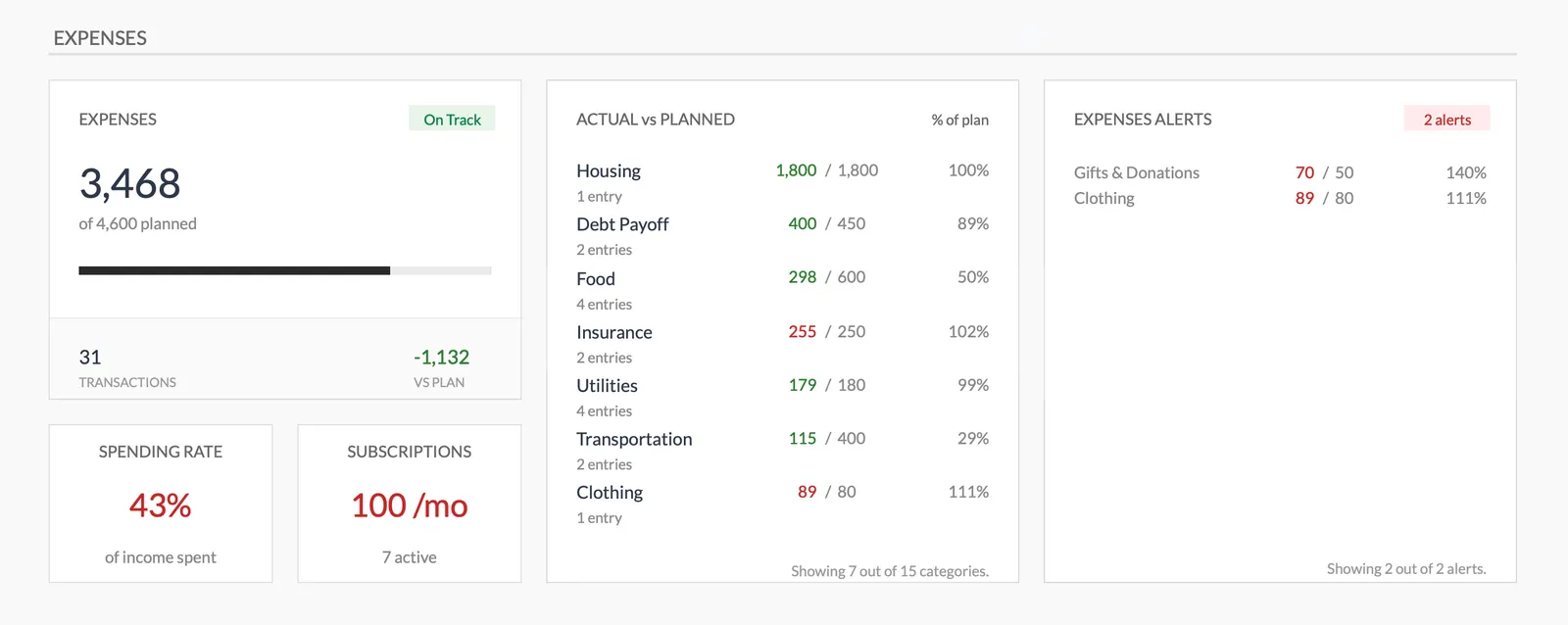
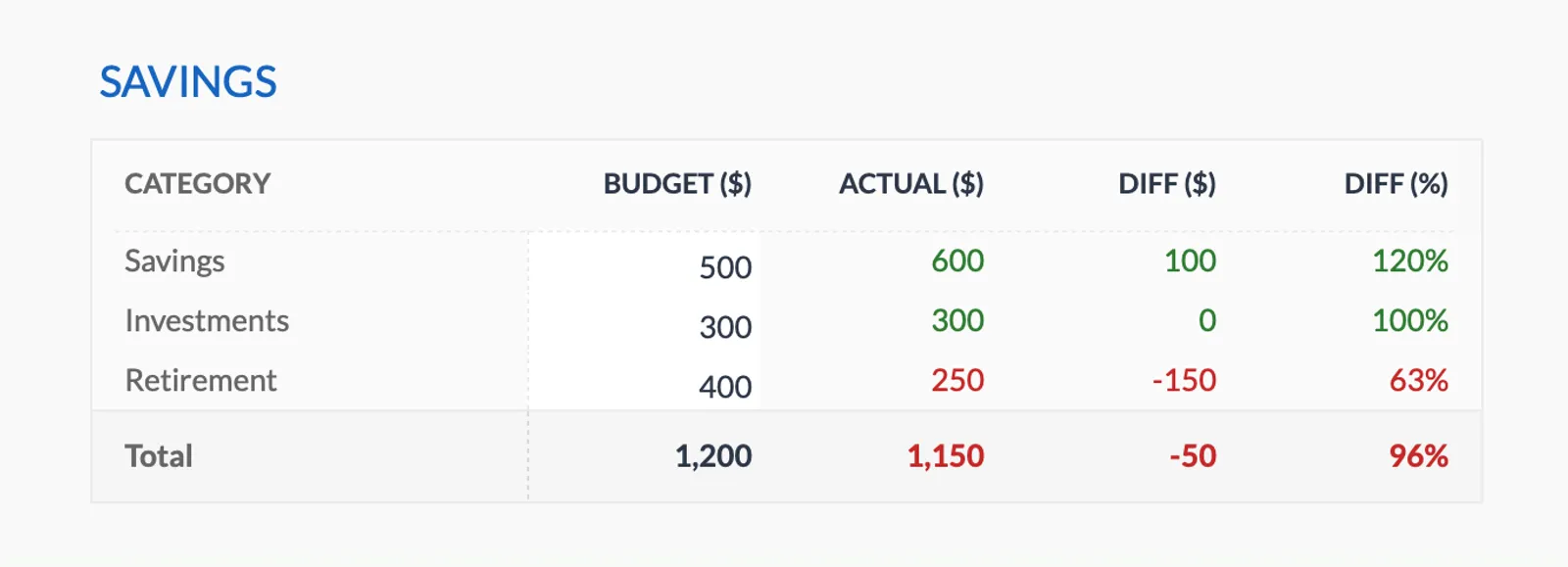
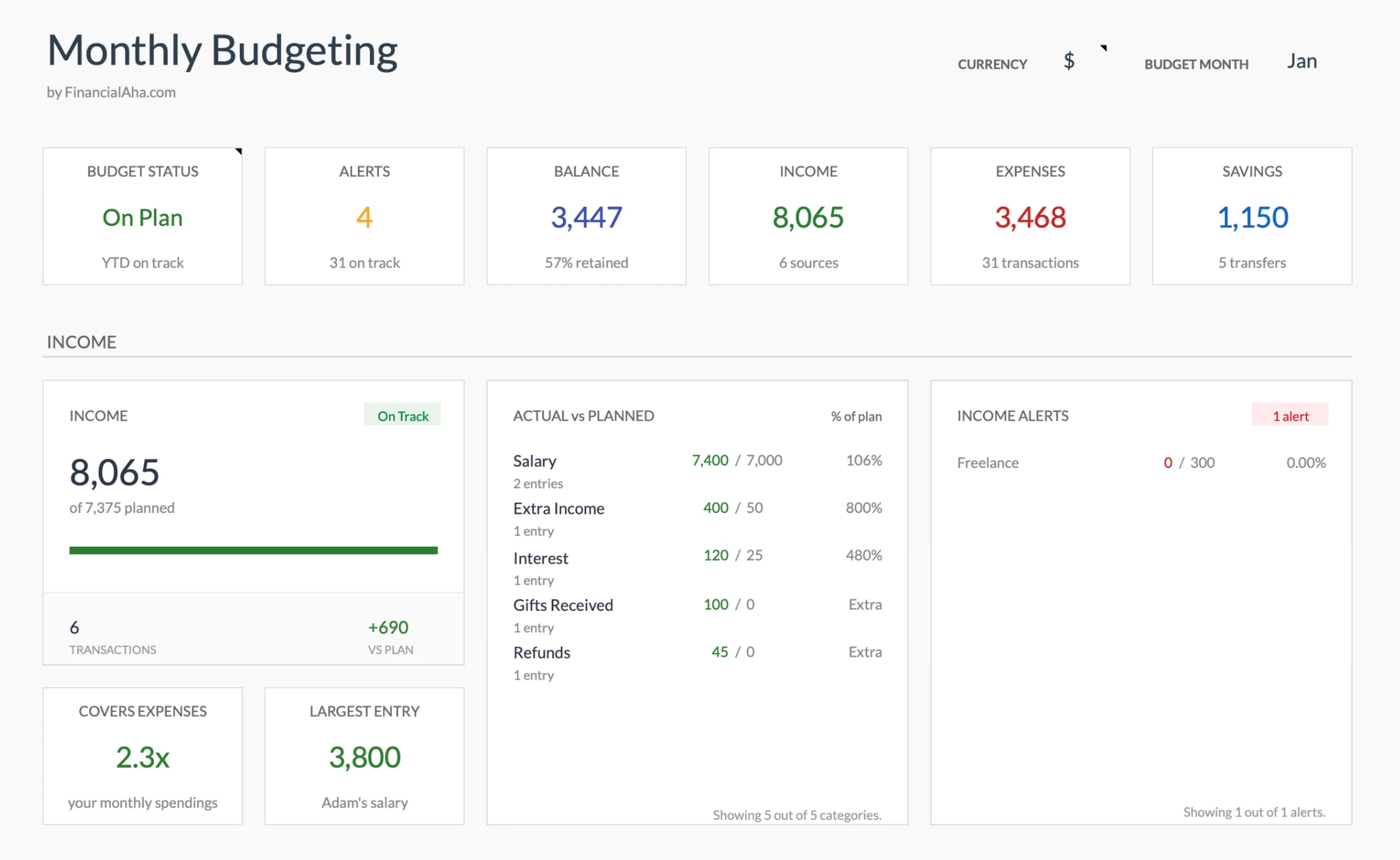
Dashboard with income, expenses, and savings at a glance
Log transactions with automatic categorization
Set targets per category and track actual spending
Visual breakdown of where your money goes
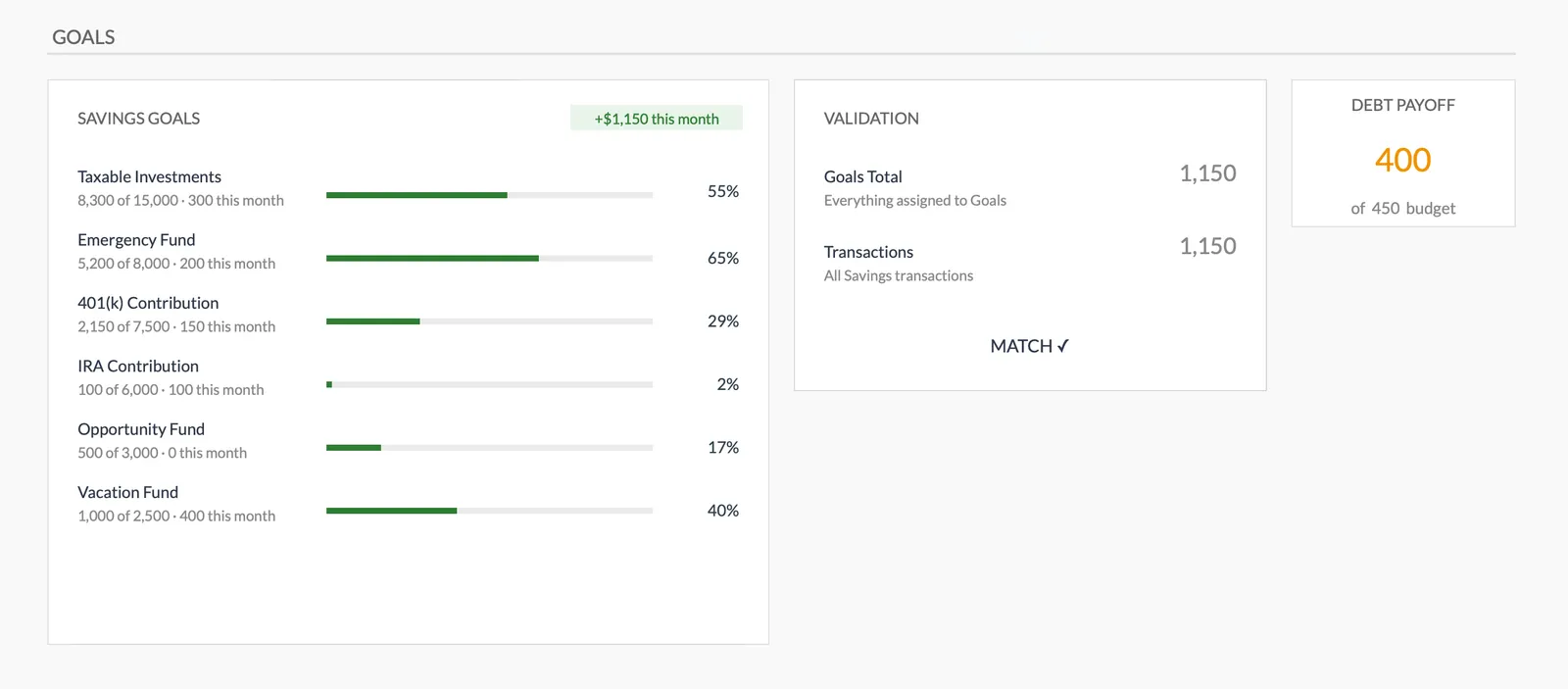
Track savings goals alongside your budget
Monitor progress toward financial goals
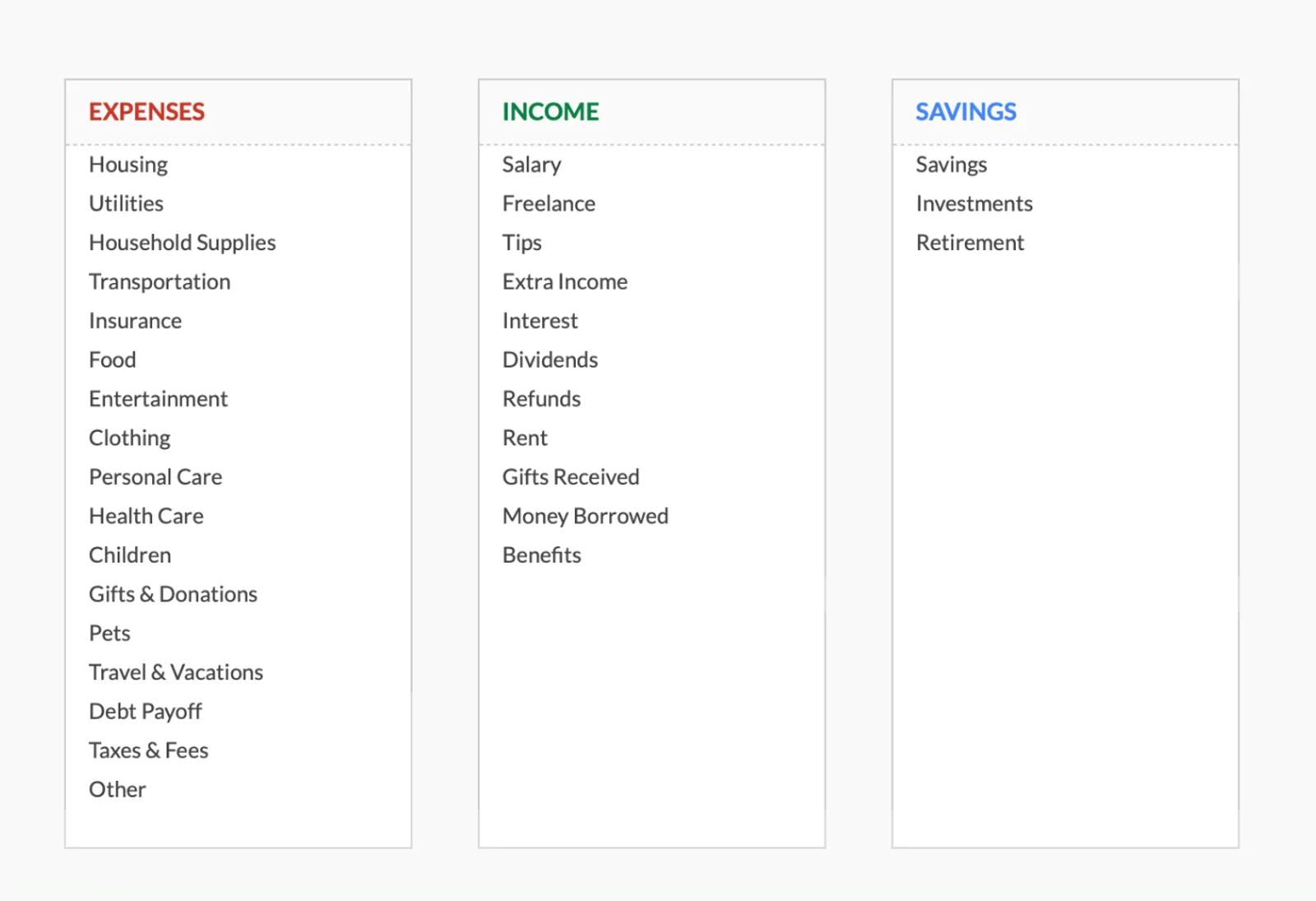
Fully customizable expense, income, and savings categories
Sources
Common Questions
Monthly Budget Template for Germany - FAQ
Does this template use euros?
Yes - choose EUR from the currency setting at the top of the dashboard. The formulas work the same in any denomination, so the math doesn't change.
How much is the gap between Brutto and Netto in Germany?
It depends on your tax class, salary, and state, but the gap is typically 35-45% of gross salary for most employees. A EUR 60,000 gross salary might result in roughly EUR 35,000-38,000 net depending on circumstances. Budgeting from the actual Nettolohn keeps planning realistic.
Should I track Riester contributions separately?
Yes, if you make Riester or Ruerup contributions from your net pay. These reduce your taxable income (providing a tax refund) and qualify for government subsidies. Tracking them as a budget category keeps these retirement savings visible.
How do I handle the Nebenkostenabrechnung?
The annual Nebenkosten settlement can result in either a refund or additional payment. Setting aside a small monthly buffer for this helps absorb either outcome. Some people add a "Nebenkosten buffer" category to their budget.
Is there a Germany-specific version?
The template is the same worldwide - designed to be customizable. This page explains how to adapt it for German finances. You can rename all categories in German if you prefer and set it up to match your specific situation.
Can't find the answer you're looking for? Contact our team
Ready to get started?
Download instantly and start managing your finances, or contact us to design a custom template package for your needs.