Free 60/20/20 Budget Spreadsheet Template
Structure spending with 60% for committed expenses, 20% for financial goals, and 20% for flexible spending. A security-first budgeting approach.
What's Included
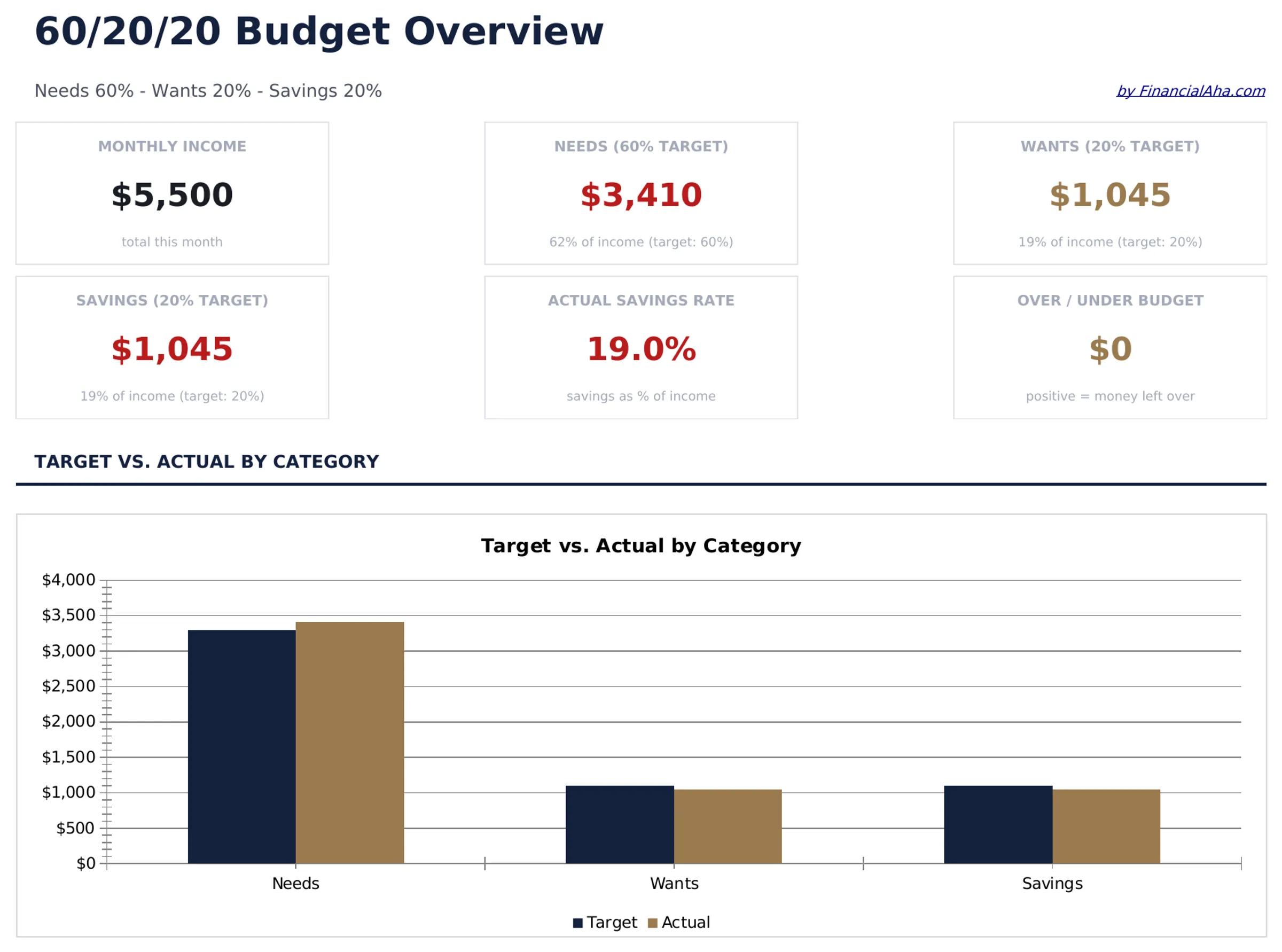
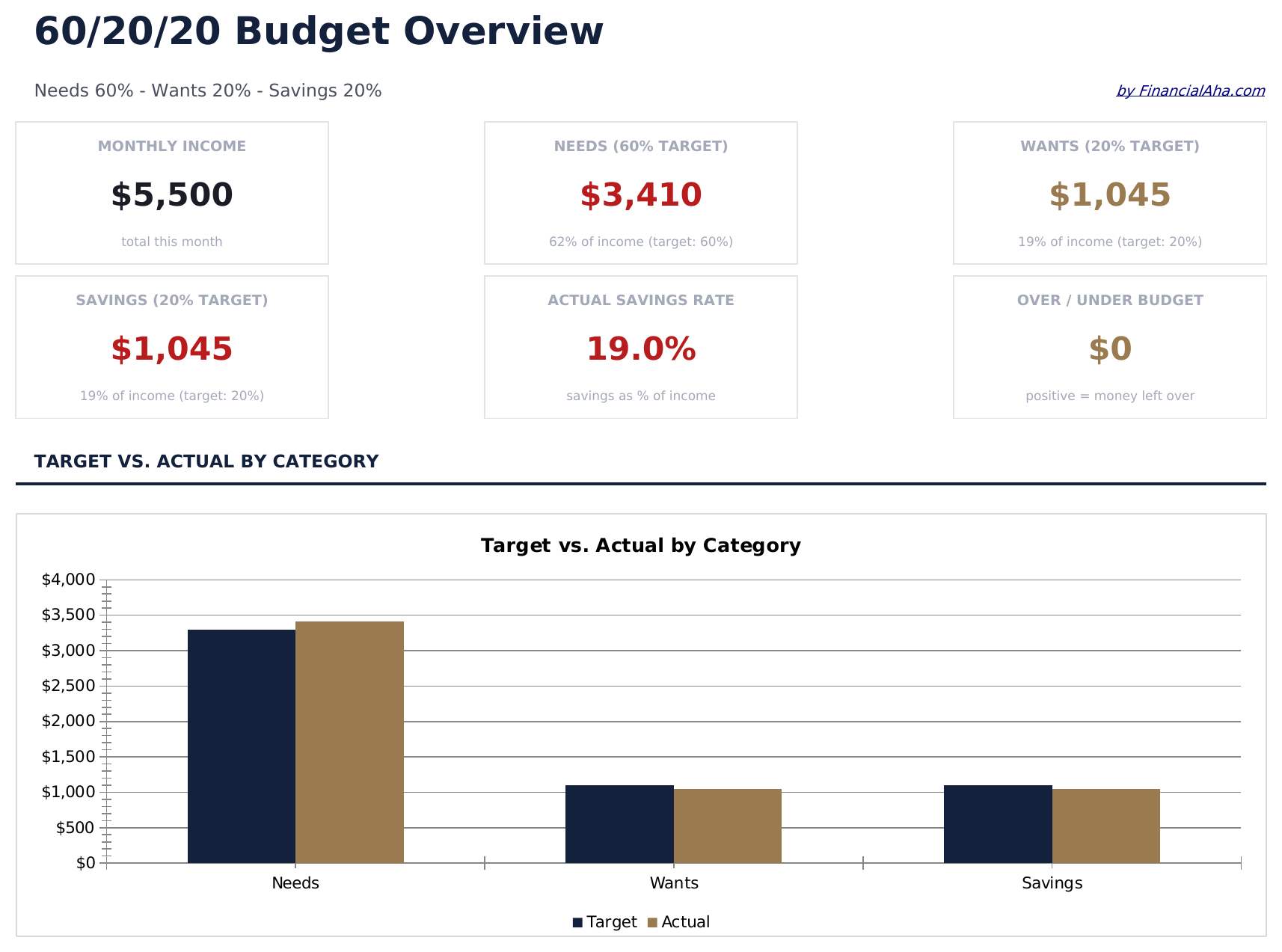
- Dashboard with 60/20/20 allocation view splitting income into committed, goals, and flexible buckets
- Automatic percentage calculations that compute target amounts for each bucket based on total income
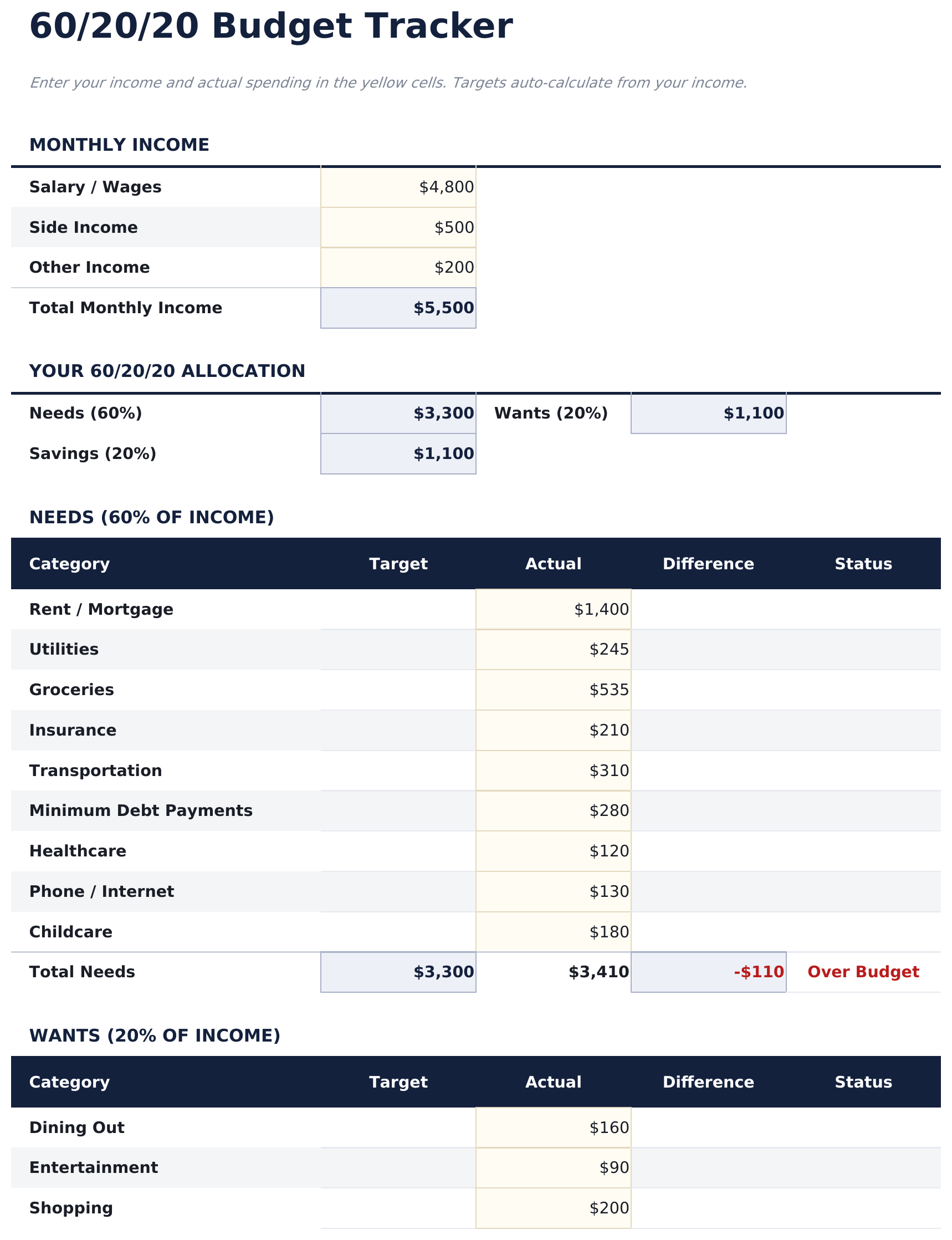
- Budget tracker with category breakdowns for housing, insurance, debt payments, and savings goals
- Income-based target amounts with variance tracking showing how actual spending compares to each bucket
- Color-coded input cells and formatted result areas for a clean, professional budget layout
- Works in Microsoft Excel, Google Sheets, and LibreOffice Calc with no setup required
Preview
See what's inside this template
How to Use This 60/20/20 Budget Template
Enter your income
Type your monthly after-tax income. The template calculates 60%, 20%, and 20% target amounts for each bucket automatically.
Fill in committed expenses
Add fixed costs like housing, insurance, utilities, and debt payments into the 60% committed expenses bucket.
Assign goals and flexible spending
Put savings and investment amounts in the 20% goals bucket, and discretionary spending in the 20% flexible bucket.
Review the variance
The dashboard shows how each bucket compares to its target. Adjust spending or savings amounts to move closer to the 60/20/20 split.
Built by Claude AI. Perfected by us.
We use Claude AI to draft each free template, after a deep research. Then our team steps in. We refine the layout, stress-test every formula, fix edge cases, and polish the design until it feels like something we would actually use ourselves. The AI gets us 80% there. The last 20% is all human judgment.
Frequently Asked Questions
What goes in the 60% committed bucket?
Committed expenses are obligations you cannot easily change month to month - rent or mortgage, insurance premiums, loan payments, utilities, and transportation costs.
What is the difference between goals and flexible?
Goals (20%) cover savings, investments, and debt payoff beyond minimums. Flexible (20%) is for discretionary items like dining, entertainment, and shopping.
Can I customize the percentages?
Yes. The percentage cells are editable. You can change 60/20/20 to any split that works for your financial situation.
How does this differ from 50/30/20?
The 60/20/20 approach allocates more to committed expenses and less to discretionary spending compared to 50/30/20. It suits people with higher fixed costs.
How do I open this in Google Sheets?
Upload the .xlsx file to Google Drive, then open it with Google Sheets. All formulas and formatting will be preserved.
What license is this template under?
All free templates are released under CC BY 4.0 (Creative Commons Attribution). You can use, modify, and share them freely - including for commercial purposes - as long as you credit FinancialAha.com. They are provided as-is and do not constitute financial advice.
More Free Personal Budgeting Templates
Looking for premium spreadsheet templates?
Our paid templates include advanced multi-sheet dashboards, native Excel charts, and ongoing updates.