Retirement Planning Template
Retirement Planning Template for Retirees
Model withdrawal strategies, income scenarios, and portfolio sustainability - built for people who are already in retirement and need to manage what they have.
In Depth
Withdrawal Sequencing and the Math of Making Savings Last
The transition from accumulating wealth to spending it down represents a fundamental shift in financial thinking. During working years, the goal is growth. In retirement, the goal becomes sustainability - making sure the money lasts as long as it is needed. The commonly referenced 4% rule provides a starting point, but individual circumstances - health, lifestyle, other income sources, and market conditions - can make the right withdrawal rate higher or lower for any given person.
Required Minimum Distributions add a forced element to retirement withdrawals that many retirees do not anticipate. Once traditional IRA and 401(k) accounts reach the required beginning date, the IRS mandates annual withdrawals based on account balance and life expectancy. These distributions are taxable income and can push retirees into higher brackets, increase Medicare premiums through IRMAA surcharges, and make more Social Security income taxable. Planning around RMDs - including potential Roth conversions in the years before they begin - is where organized tracking proves especially valuable.
Social Security timing is one of the most consequential decisions retirees face. Benefits increase roughly 8% per year for each year of delay between age 62 and 70. For someone whose full retirement age benefit is $2,500 per month, the difference between claiming at 62 and 70 is approximately $1,400 per month for life. The right claiming age depends on health, other income, spousal benefits, and how long savings need to last - factors that are clearer when the full financial picture is organized in one place.
The Challenge
Why Active Retirement Planning Does Not Stop at Retirement
Reaching retirement is not the finish line for financial planning - it is a transition to a different kind of planning. Managing withdrawals, adapting to market conditions, and planning for decades of living requires ongoing attention.
Withdrawal sequencing affects how long money lasts
Which account to draw from first - taxable, traditional, or Roth - affects both tax efficiency and portfolio longevity. The wrong sequence can cost years of sustainability.
Market conditions in early retirement matter most
Sequence of returns risk means that poor market performance in the first few years of retirement has a disproportionate impact on long-term portfolio survival.
Healthcare costs are the biggest unknown
Medicare coverage gaps, supplemental insurance costs, prescription expenses, and potential long-term care create a category of spending that is difficult to predict and impossible to ignore.
Inflation erodes purchasing power over decades
A 3% annual inflation rate means your dollar buys half as much in 24 years. Retirement plans that ignore inflation paint an unrealistically optimistic picture.
Ready to take control of your retiree finances?
What You Get
Retirement Planning Features for Current Retirees
Income source mapping
Track Social Security, pension, annuity income, investment withdrawals, and any other income. See total monthly and annual income.
Withdrawal strategy modeler
Plan which accounts to draw from in which order. Model tax-efficient sequencing across traditional, Roth, and taxable accounts.
Portfolio sustainability projection
See how your portfolio performs under different withdrawal rates and return scenarios. Model 20, 25, 30, and 35 year time horizons.
What-if scenario comparison
Compare multiple scenarios - lower spending, different market returns, Social Security timing, downsizing. See how each choice affects long-term outcomes.
Healthcare cost planning section
Track and project healthcare expenses separately. Model increasing costs over time as a distinct category.
Inflation-adjusted projections
All projections account for inflation. See purchasing power in future dollars, not just nominal values.
See It In Action
What the template looks like
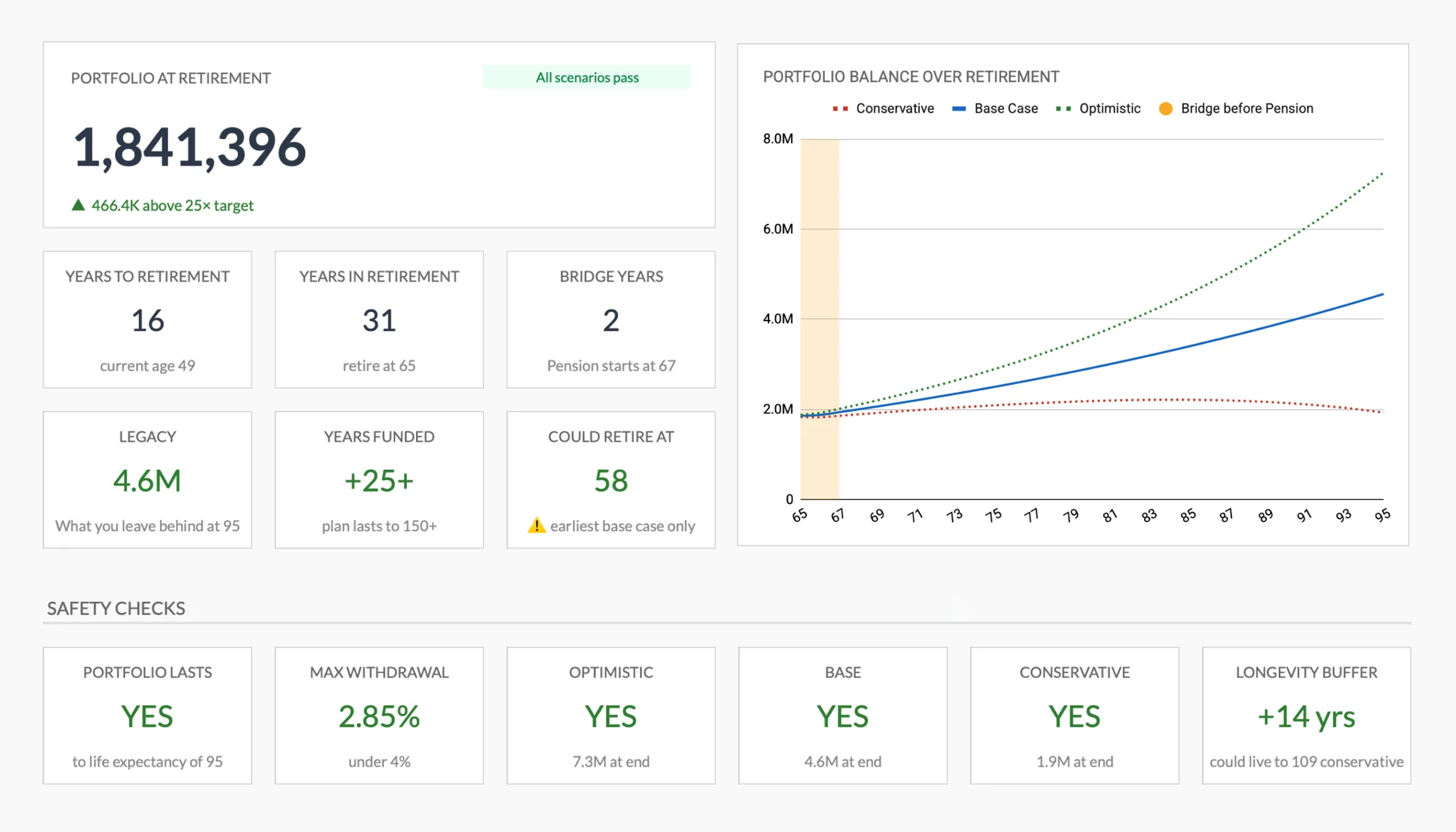
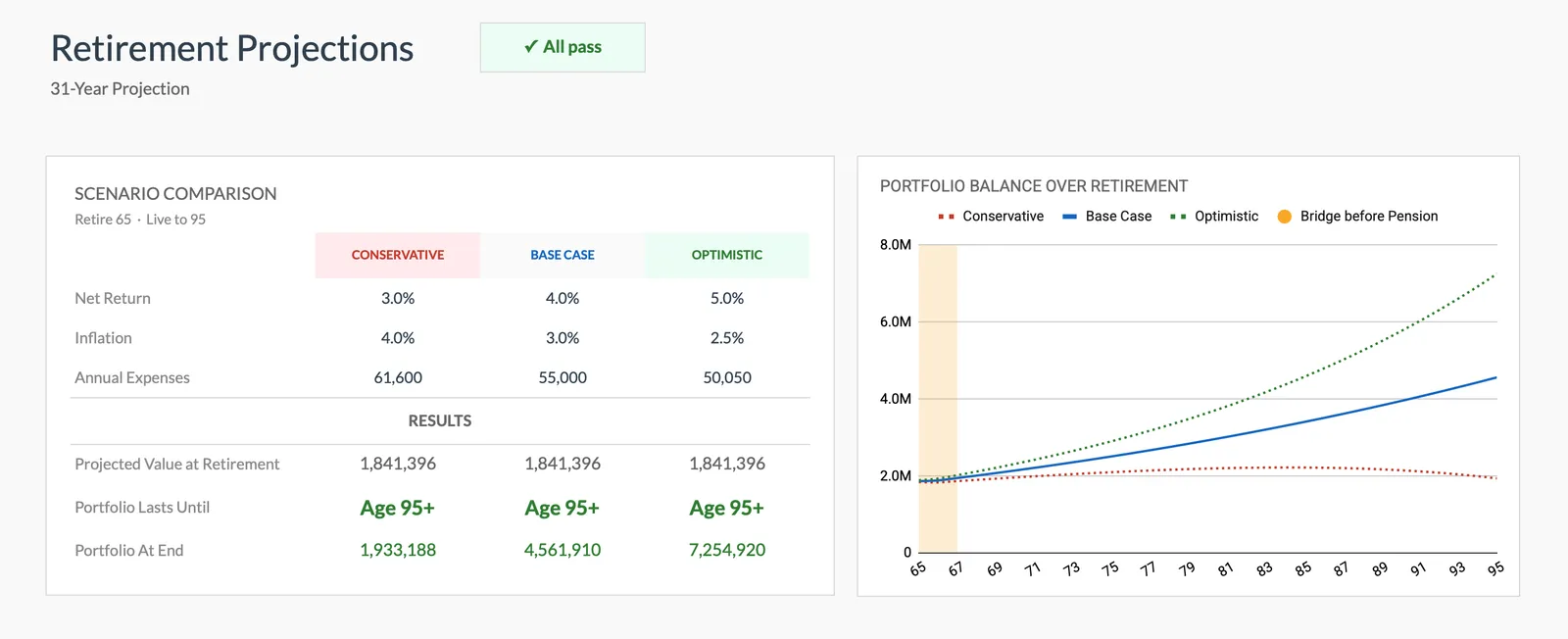
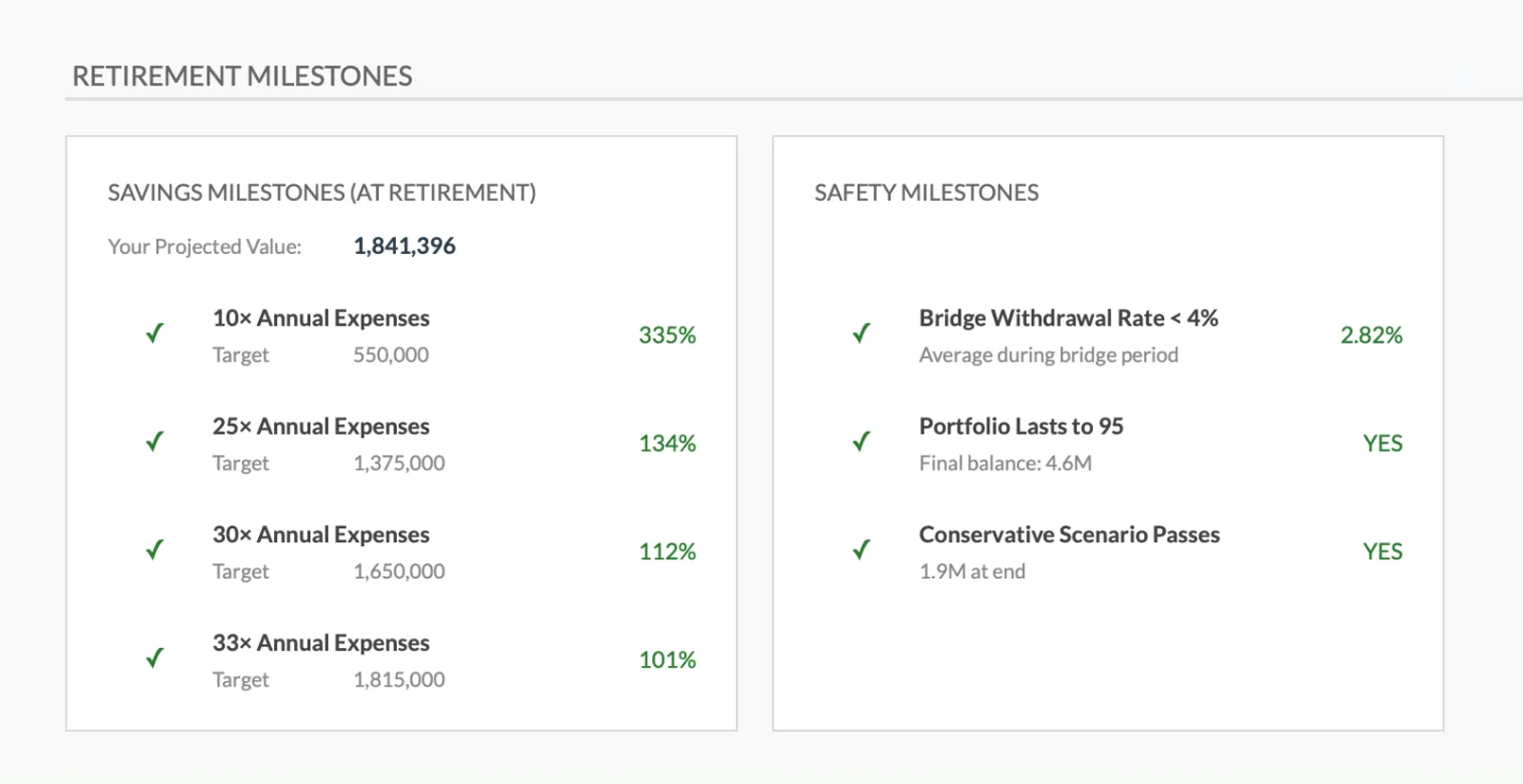
Browse through the template to see how it handles retirement projections, milestone tracking, and income planning.
- Retirement overview dashboard
- Savings growth projections
- Retirement milestone tracking
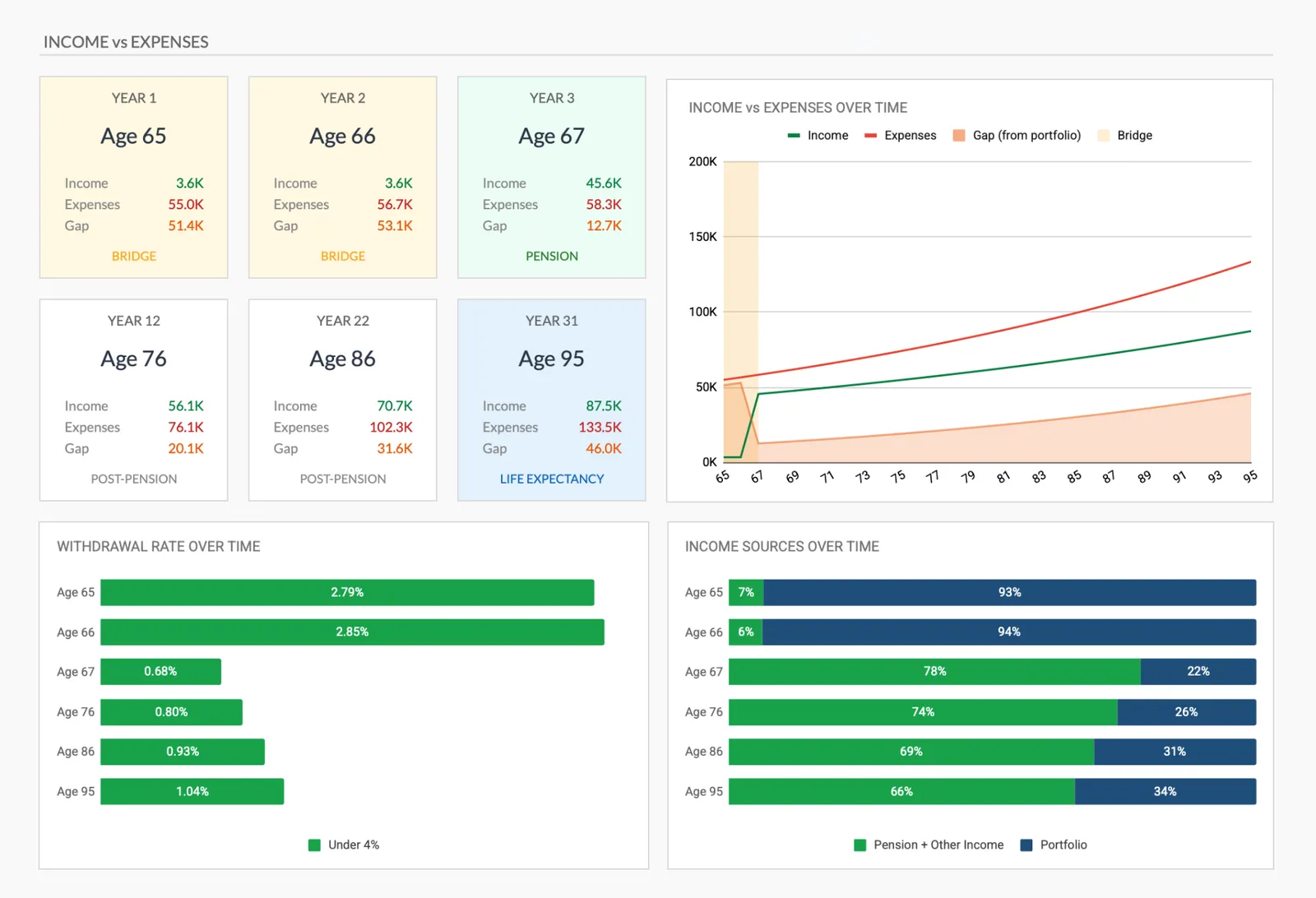
- Income vs expenses analysis
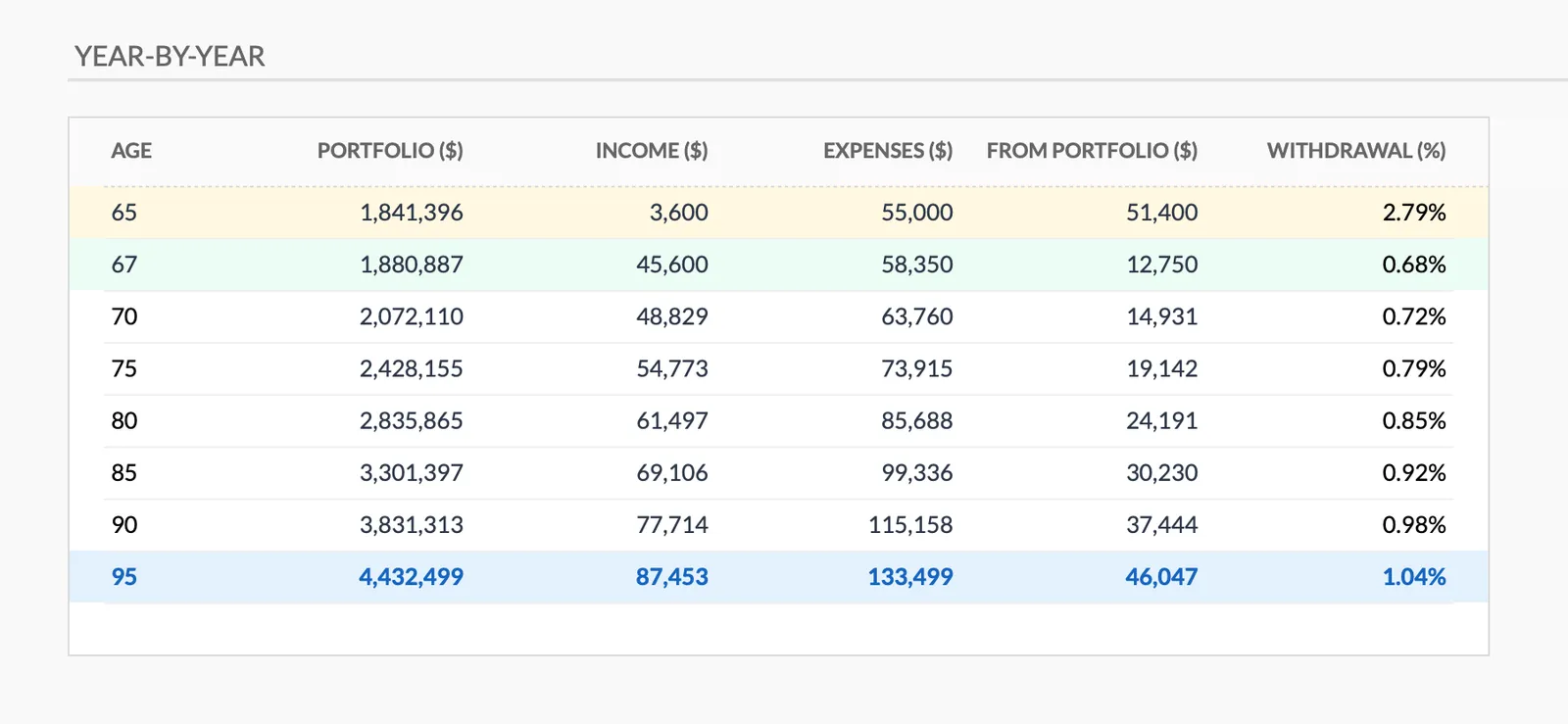
- Year-by-year projection
Complete retirement overview with projections
Project your retirement savings growth
Track progress toward retirement goals
Plan your retirement income against expenses
Detailed year-by-year retirement projection
Getting Started
Start Setting Up Your Retirement Plan
Enter all income sources
Social Security, pension, annuity payments, part-time work - list everything with amounts and timing.
Record portfolio balances by account type
Enter balances for traditional IRA, Roth IRA, 401(k), taxable accounts, and other investments.
Define your baseline spending
Enter your current annual spending level. This is the starting point for all projections.
Run baseline and alternative scenarios
Start with your current plan, then model alternatives. What if spending increases? What if returns are lower than expected?
Review and update annually
Refresh balances, update spending, and re-run projections annually. Market changes and life events may require plan adjustments.
Common Questions
Retirement Planning for Retirees - FAQ
What withdrawal rate should I use?
The template lets you model any rate. The commonly referenced 4% rule is a starting point, but your situation - portfolio size, age, risk tolerance, other income - may call for a different rate.
How does this handle Required Minimum Distributions?
Model RMDs as forced withdrawals from traditional accounts starting at the required age. The template shows how RMDs affect your withdrawal strategy and tax situation.
Can I model delaying Social Security?
Yes. Run scenarios with different Social Security start ages. See the trade-off between earlier, smaller payments and later, larger payments.
What if my expenses change significantly?
Update the spending level and re-run projections. Healthcare increases, downsizing, or lifestyle changes all affect the plan.
Does this account for taxes on withdrawals?
The template helps you plan withdrawal sequencing for tax efficiency. Factor in tax brackets when deciding how much to draw from traditional versus Roth accounts.
Can I plan for leaving money to heirs?
Include a legacy goal in your projections. See how maintaining a target bequest amount affects your withdrawal options.
Can't find the answer you're looking for? Contact our team
Start retirement planning as a retiree
One-time purchase. No subscription. Your financial data stays in your Google Drive.