Financial Planning Template
Financial Planning Template for Small Business Owners
See personal and business finances in one view - track business equity alongside personal assets, plan for growth, and measure total wealth.
In Depth
Seeing the Full Picture When Business and Personal Finances Overlap
Running a small business creates a financial reality that most planning tools are not built for. The line between personal and business wealth is blurry by nature - owner draws fluctuate with business performance, personal guarantees on business debt create hidden liabilities, and the business itself may represent the single largest asset on the balance sheet. A financial plan that acknowledges this overlap, rather than pretending the two sides are separate, gives a much more honest assessment of where things stand.
Business equity is the asset that most business owners struggle to pin down. Unlike a stock portfolio with a daily quote, a business is worth what someone would pay for it, and that number depends on revenue trends, profitability, customer concentration, and a dozen other factors. Some owners carry a mental estimate that has not been updated in years. Putting a number in a spreadsheet - even a rough one - and updating it periodically forces a more realistic assessment of total wealth.
Retirement planning for business owners operates differently than for employees. There is no employer match, no automatic enrollment, and no HR department sending reminders about open enrollment. Every dollar going into a SEP-IRA or Solo 401(k) is a conscious choice that competes with reinvesting in the business. A financial plan that shows both paths - business reinvestment growth and personal retirement accumulation - helps clarify the trade-off without prescribing an answer.
The Challenge
Why Business Owners Need a Unified Financial Plan
Small business owners live in two financial worlds. Business assets and personal assets are often intertwined, and decisions in one affect the other.
Business equity is hard to value
Your business may be your biggest asset, but its value is not as clear as a brokerage account balance. A financial plan that includes business valuation estimates gives a more complete picture.
Personal and business finances blur
Business loans guaranteed personally, owner draws that fluctuate, reinvestment decisions that reduce personal income - the boundary between business and personal wealth gets fuzzy.
Retirement planning is self-directed
No employer match, no pension, no default enrollment. Business owners need to actively plan and fund their own retirement, often through SEP-IRAs, Solo 401(k)s, or other vehicles.
Cash flow variability complicates goal-setting
When business income varies month to month or season to season, setting personal financial goals requires understanding the business cycle and planning around it.
Ready to take control of your small business owner finances?
What You Get
Planning Tools for Business Owner Finances
Combined personal and business asset view
Track personal accounts, business accounts, and business equity in one dashboard. See total wealth across both domains.
Business equity estimate tracker
Enter and update your business valuation estimate. Track how business growth contributes to your overall net worth.
Retirement account planning
Track SEP-IRA, Solo 401(k), or other self-employed retirement accounts. See contributions, growth, and projected retirement readiness.
Debt and liability overview
Business loans, personal debts, lines of credit - see all obligations in one place with rates and payment schedules.
Goal tracking for business and personal life
Separate goals for business growth, personal savings, retirement funding, and other targets. Track progress on each.
Financial projections
Model future scenarios based on business growth assumptions, personal savings rates, and investment returns.
See It In Action
What the template looks like
Browse through the template to see how it handles financial planning, goal tracking, asset management, and projections.
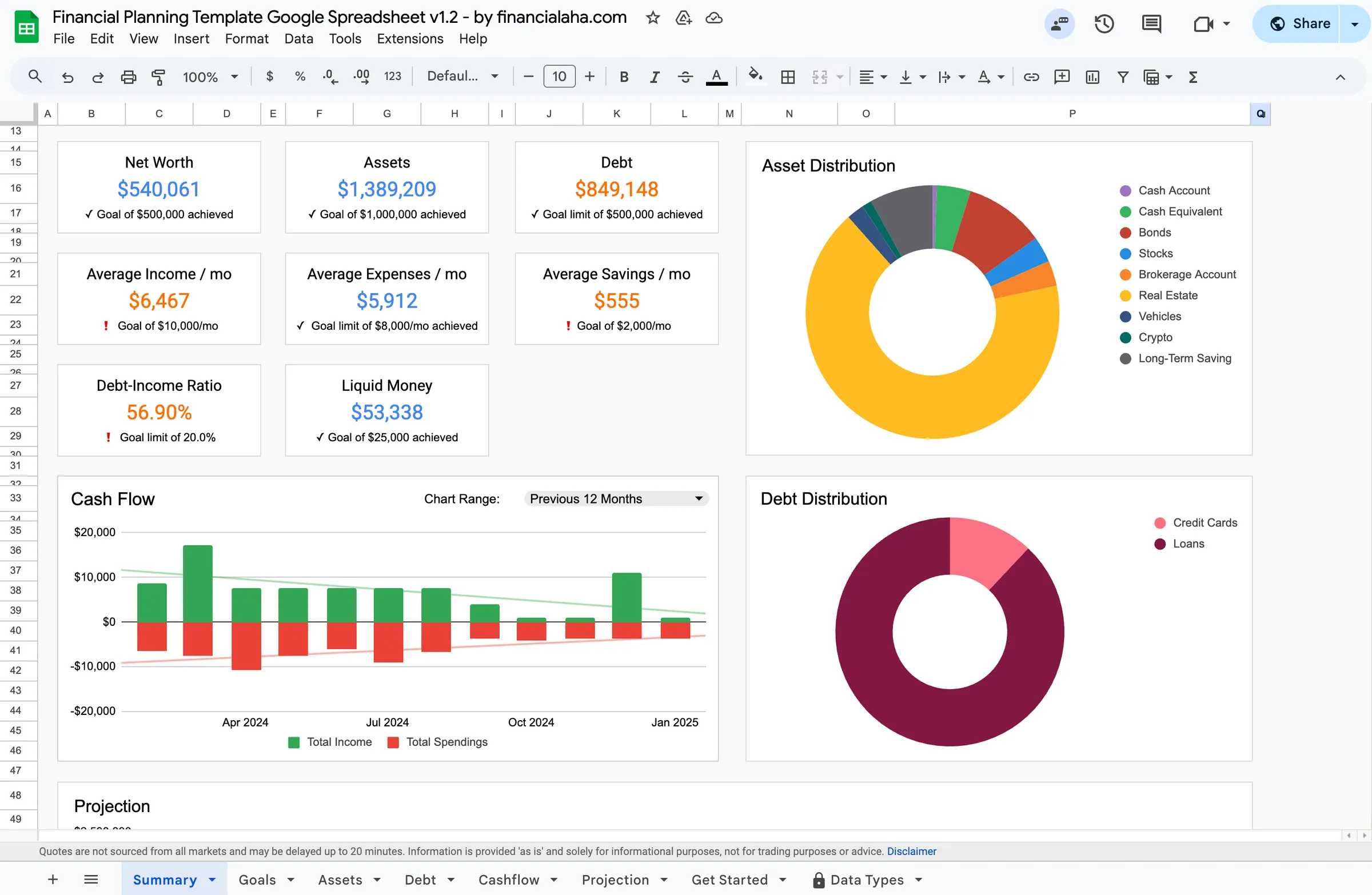
- Complete financial overview dashboard
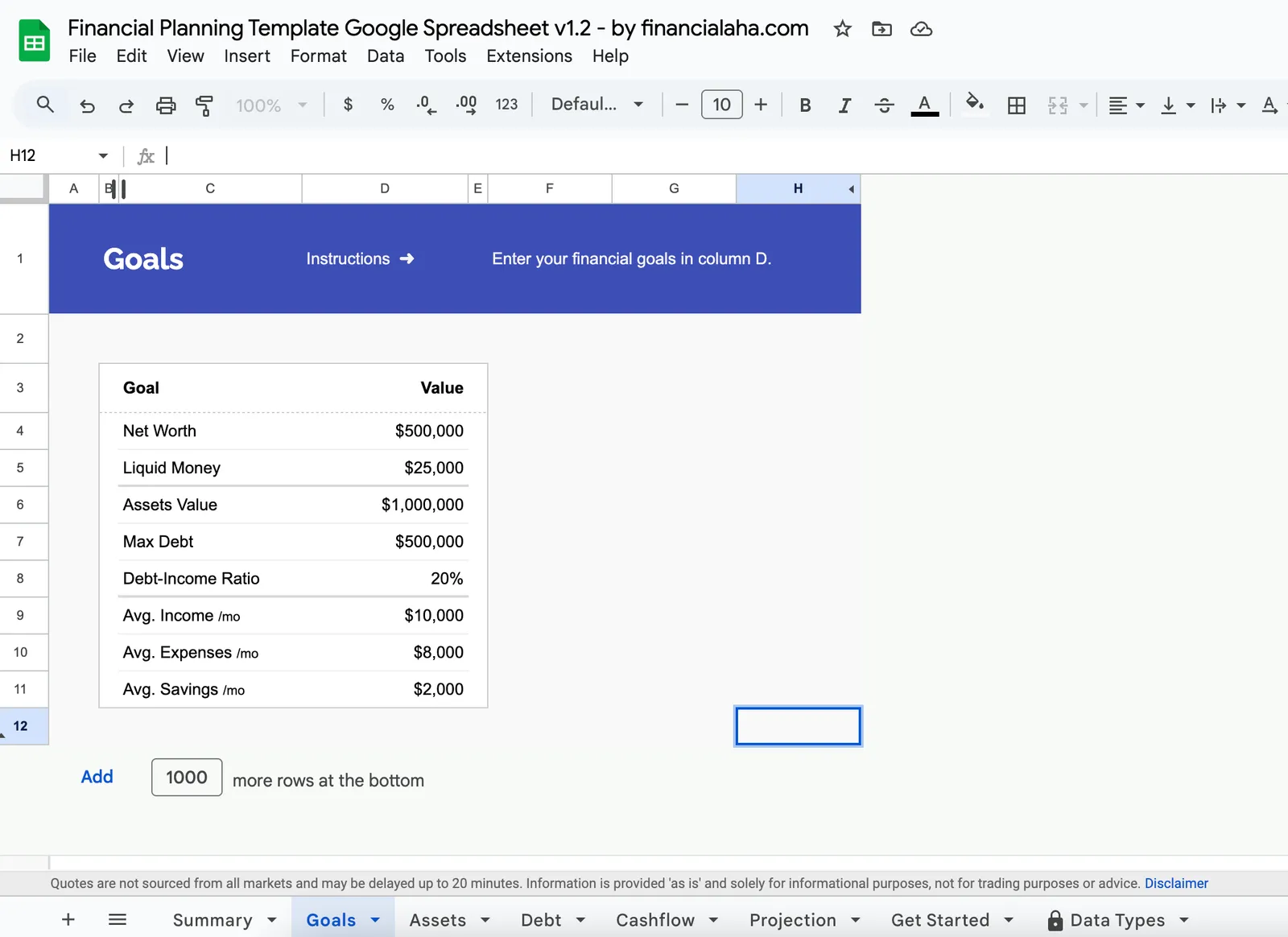
- Goal setting and progress tracking
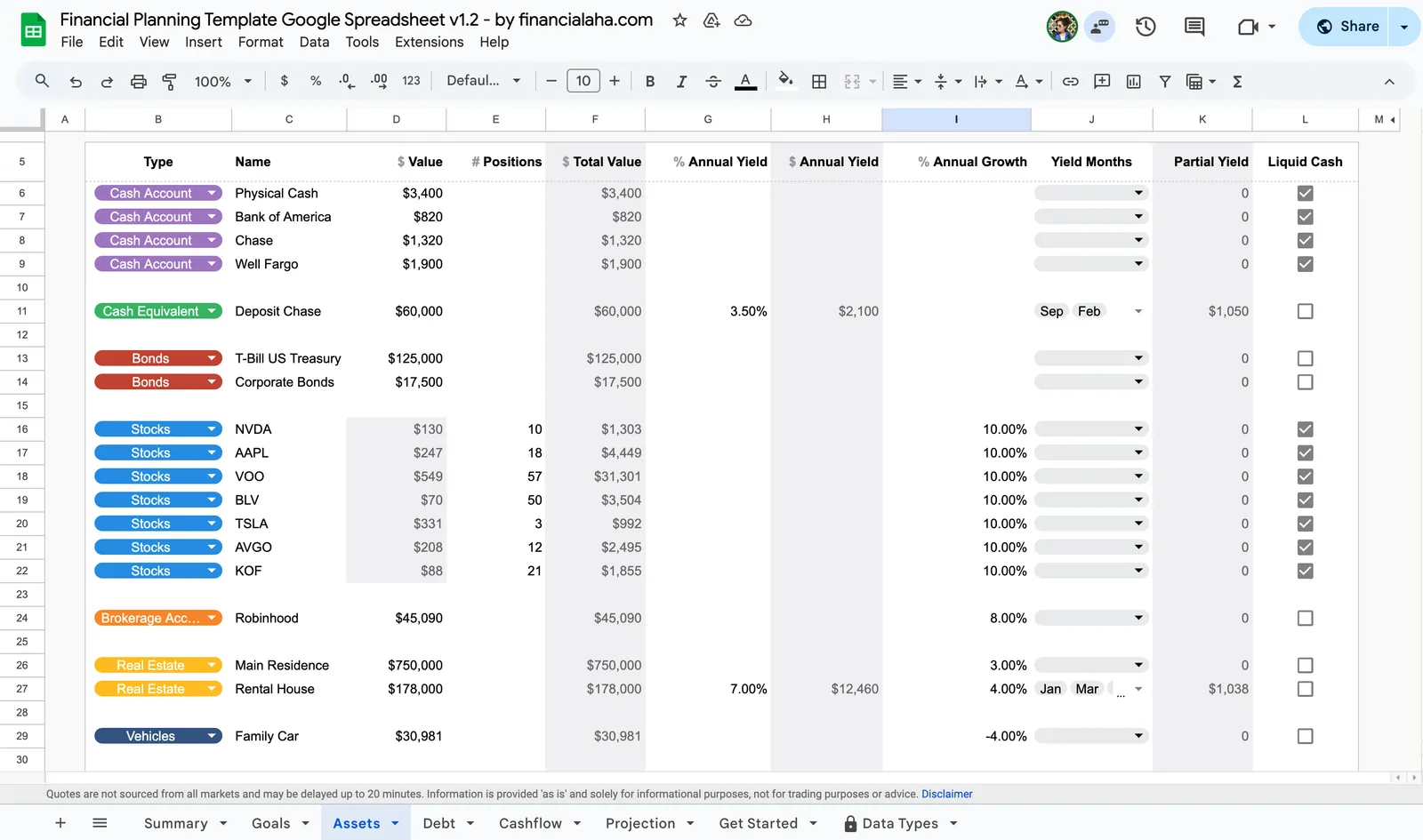
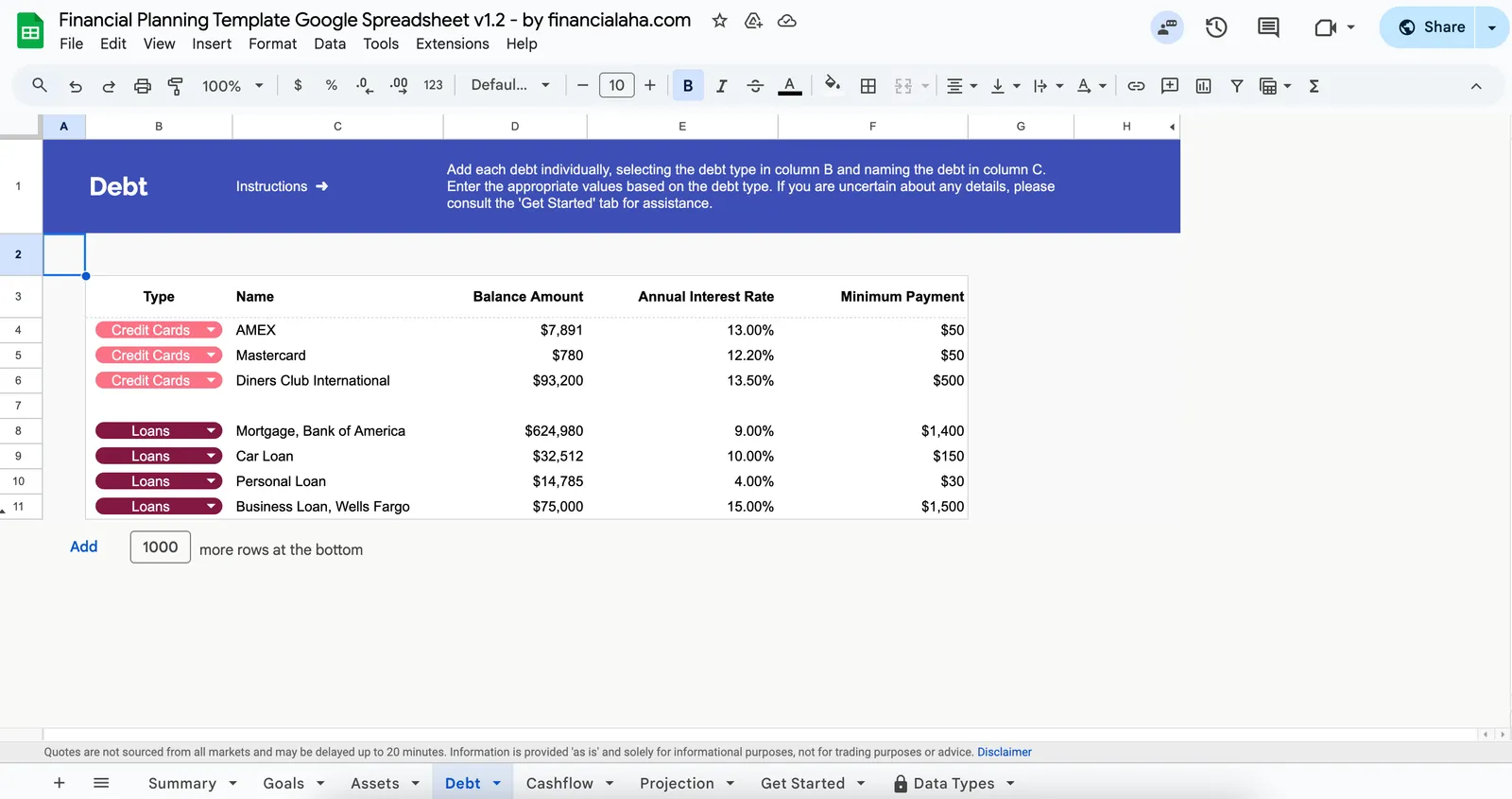
- Asset and debt management
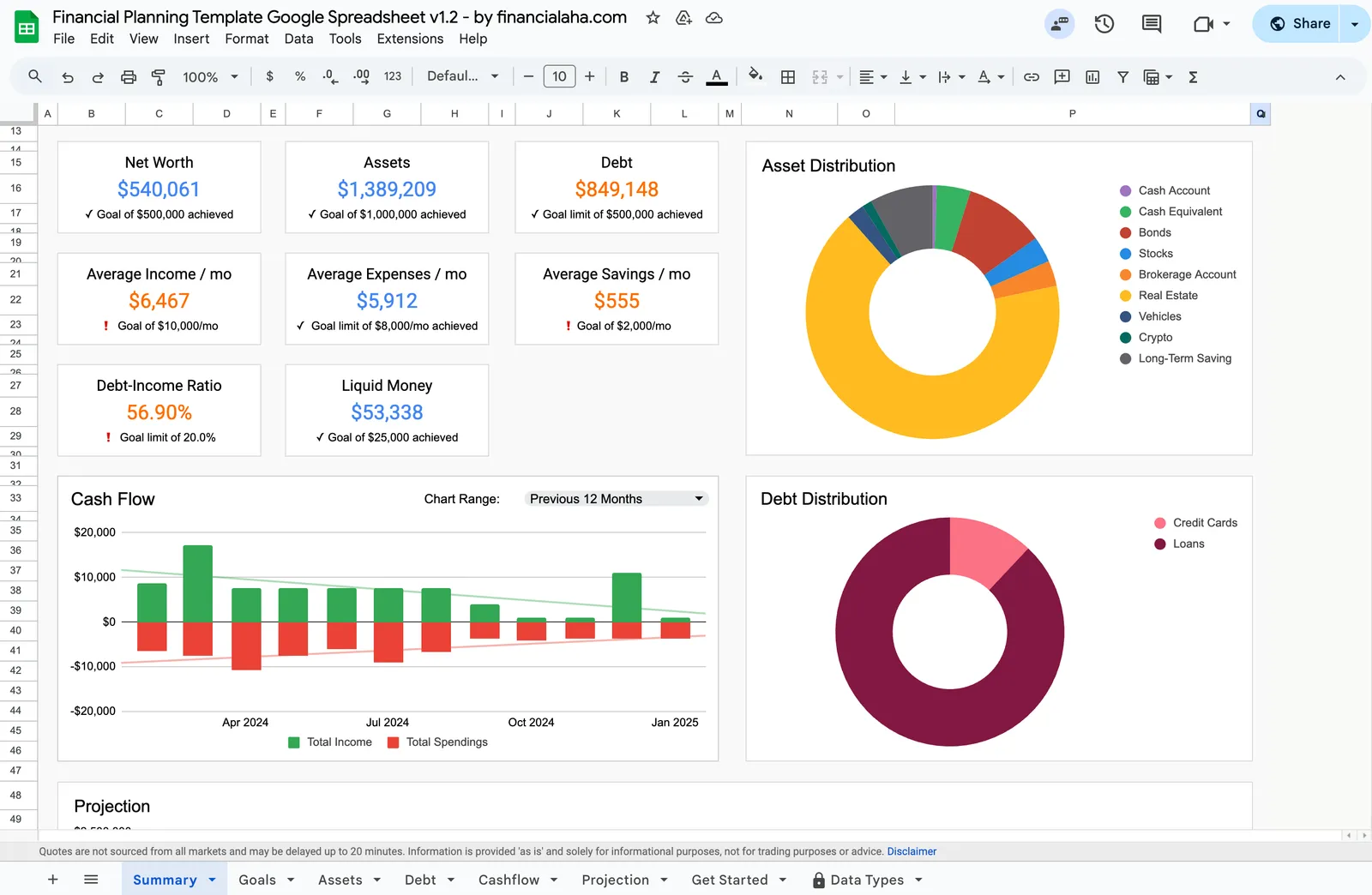
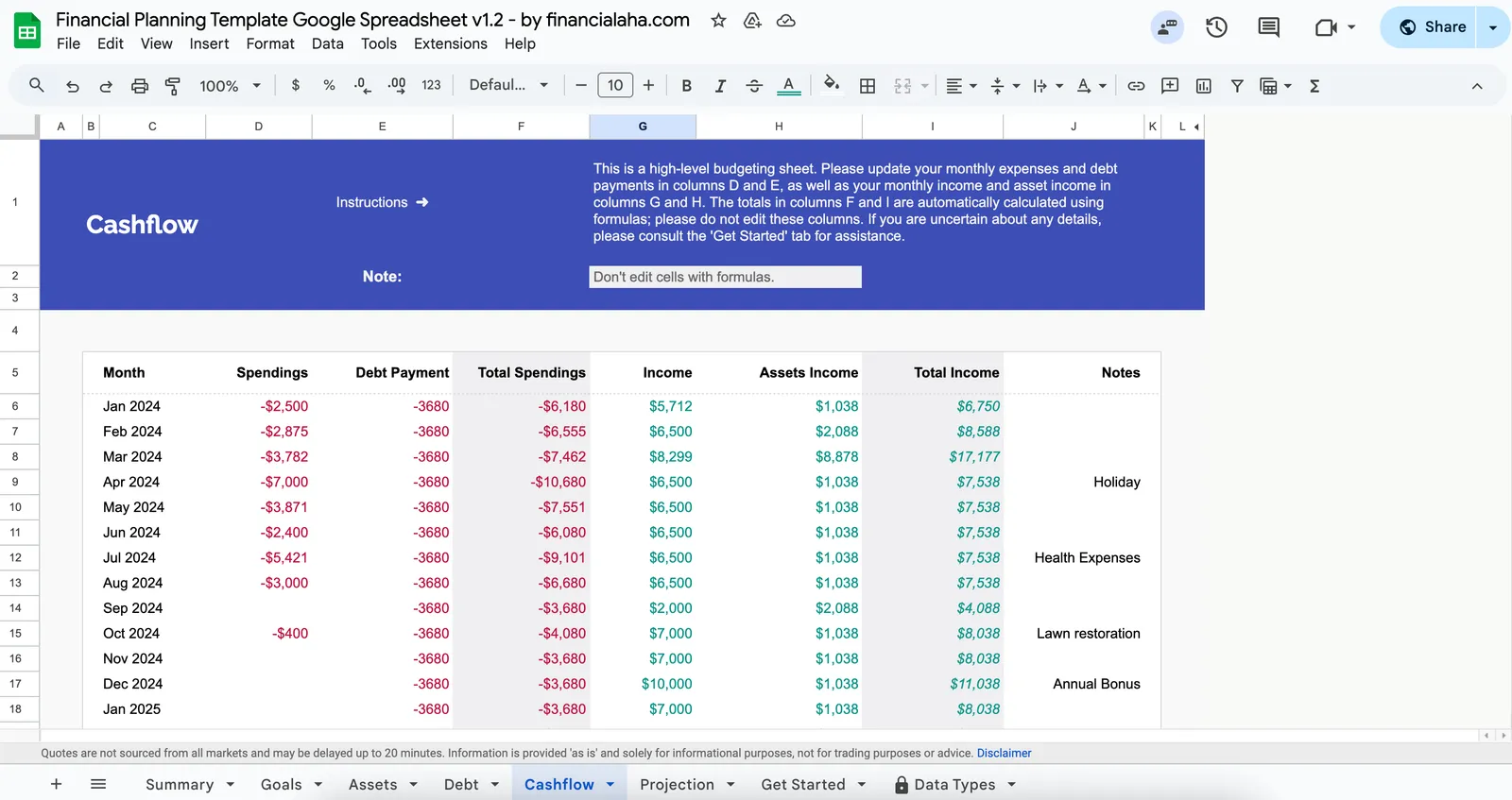
- Cash flow analysis
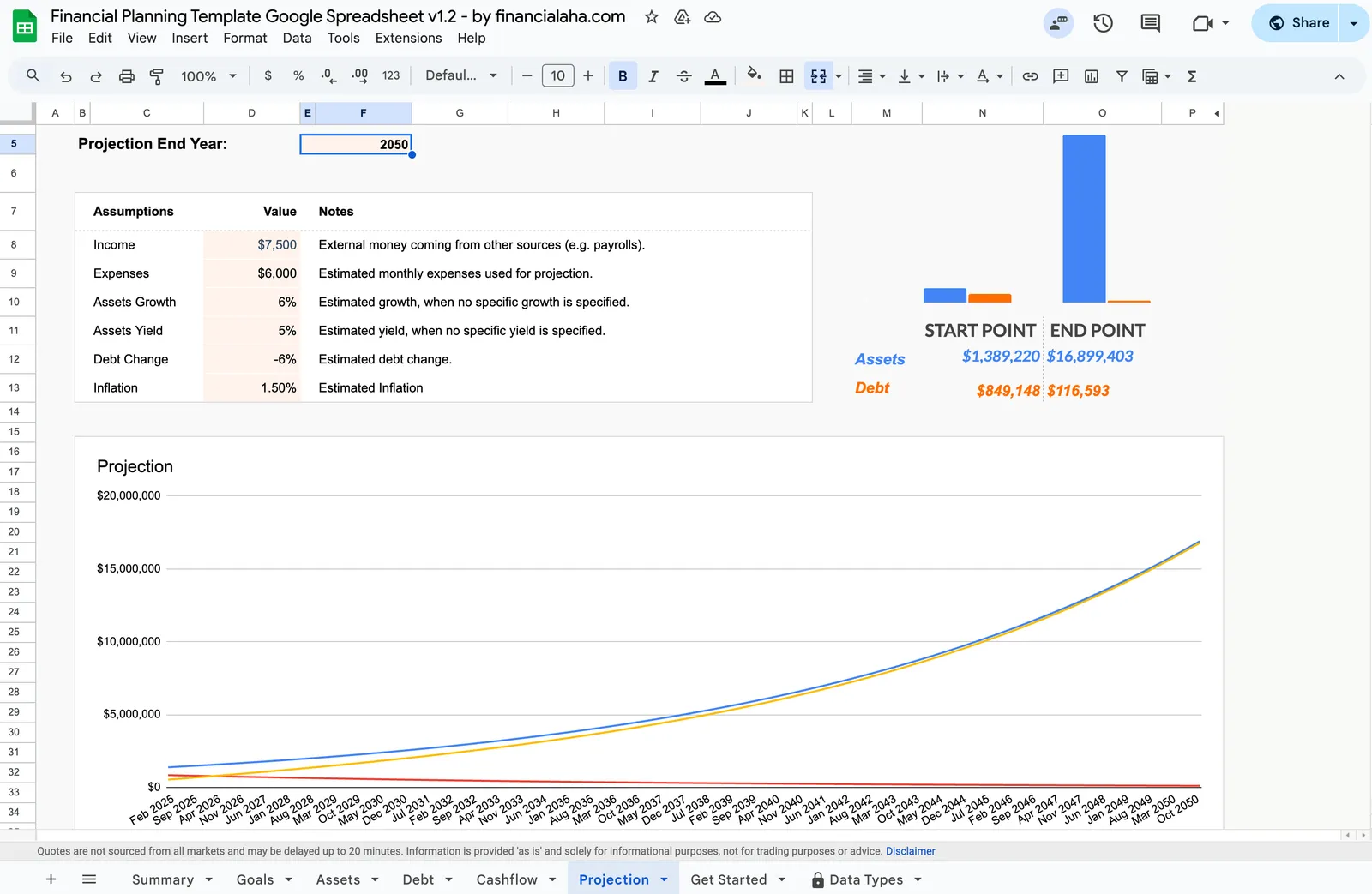
- Financial projections
Complete financial overview with net worth and goals
Set and track progress toward financial milestones
Track all your assets in one place
Monitor and plan debt repayment
Visualize your income vs spending over time
Project your financial future
Getting Started
Start Your Business Owner Financial Plan
Separate personal and business accounts
List all accounts in both categories. The template keeps them organized while showing the combined total.
Estimate your business equity
Use a reasonable valuation method - revenue multiple, asset-based, or a recent offer. Update as the business grows.
Set goals in both domains
Business goals like debt reduction or equipment fund. Personal goals like retirement contributions or emergency reserves.
Update monthly with owner draws and contributions
Track how money moves between business and personal. This flow is critical for understanding your full financial position.
Review projections quarterly
Business conditions change frequently. Quarterly projection reviews keep your financial plan aligned with reality.
Common Questions
Financial Planning for Small Business Owners - FAQ
How should I value my business?
Common approaches include revenue multiples, earnings multiples, or asset-based valuations. Use a conservative estimate and update it periodically.
Does this handle business cash flow?
This template tracks the financial planning view - assets, debts, goals, and net worth. For detailed business cash flow management, a dedicated business accounting tool may be more appropriate.
What about business retirement accounts?
Track any self-employed retirement account - SEP-IRA, Solo 401(k), SIMPLE IRA, or defined benefit plan. See contributions and growth alongside personal retirement savings.
Can this show how business growth affects personal wealth?
Yes. As you update business equity estimates, the net worth calculation reflects the change. Projections show how business growth contributes to your overall financial trajectory.
What if I have partners in the business?
Track your ownership share. If you own 50% of a business valued at $500K, your business equity is $250K.
Is this useful for someone just starting a business?
Yes. Tracking finances from the start establishes a baseline. You can see how business investment affects personal finances and plan accordingly.
Can't find the answer you're looking for? Contact our team
Start financial planning as a small business owner
One-time purchase. No subscription. Your financial data stays in your Google Drive.