Financial Planning Template
Financial Planning Template for Single-Income Families
Plan and track your family finances on one income - see assets, debts, goals, and projections calibrated for single-income reality.
In Depth
Planning With Precision on a Single Income
A single income supporting a family operates with narrower margins than most financial planning tools assume. The standard advice about splitting savings across multiple goals - retirement, emergency fund, education, debt payoff - was largely written for dual-income households where the math is more forgiving. Single-income families face the same goals with roughly half the flexibility, which makes the sequencing and prioritization of financial decisions significantly more consequential.
The emergency fund takes on a different character when it represents the only buffer between a family and financial crisis. Dual-income households can absorb the loss of one income stream, at least temporarily. A single-income family has no such cushion. Some families in this situation find that sizing their emergency fund at nine to twelve months of expenses - rather than the commonly suggested three to six months - provides a level of security that matches their actual risk profile.
Long-term financial projections are particularly revealing for single-income families because they make trade-offs explicit. Adding $200 per month to retirement savings versus putting it toward college savings versus accelerating debt payoff - each choice shifts the trajectory in ways that are only visible when modeled forward over years. The financial plan does not resolve the tension between competing priorities, but it does quantify it in a way that supports informed decisions.
The Challenge
Why Single-Income Families Need a Clear Financial Plan
One income supporting a family leaves less margin for error. Every financial decision carries more weight when there is no second paycheck to fall back on.
One income means less financial cushion
Job loss, illness, or unexpected expenses hit harder when there is only one income stream. A financial plan that tracks emergency reserves and insurance coverage is essential.
Saving competes with daily needs
Retirement contributions, college funds, and emergency savings all pull from the same single paycheck. A plan shows what is possible and helps sequence priorities.
Long-term security depends on smart allocation
With limited income, how you allocate money between goals matters more. A financial plan reveals trade-offs and helps make informed choices.
Income loss risk is concentrated
Dual-income families can absorb one job loss. Single-income families cannot. Planning for this scenario - insurance, emergency fund, skills investment - is critical.
Ready to take control of your single-income familie finances?
What You Get
Financial Planning for One-Income Families
Family asset tracker
Track all household assets - savings, retirement accounts, investments, property, and other holdings.
Debt management overview
See all debts with balances, rates, and payments. Understand total debt burden relative to a single income.
Emergency fund tracker
Track progress toward an emergency fund sized for a single-income household - typically larger than dual-income recommendations.
Multi-goal priority planner
List and prioritize goals - emergency fund, retirement, education savings, debt payoff. See how much goes toward each.
Net worth tracking
Monthly snapshots of total assets minus debts. Track your family wealth trajectory over time.
Projection models
See where current savings rates lead in 5, 10, and 20 years. Model the impact of income changes or new expenses.
See It In Action
What the template looks like
Browse through the template to see how it handles financial planning, goal tracking, asset management, and projections.
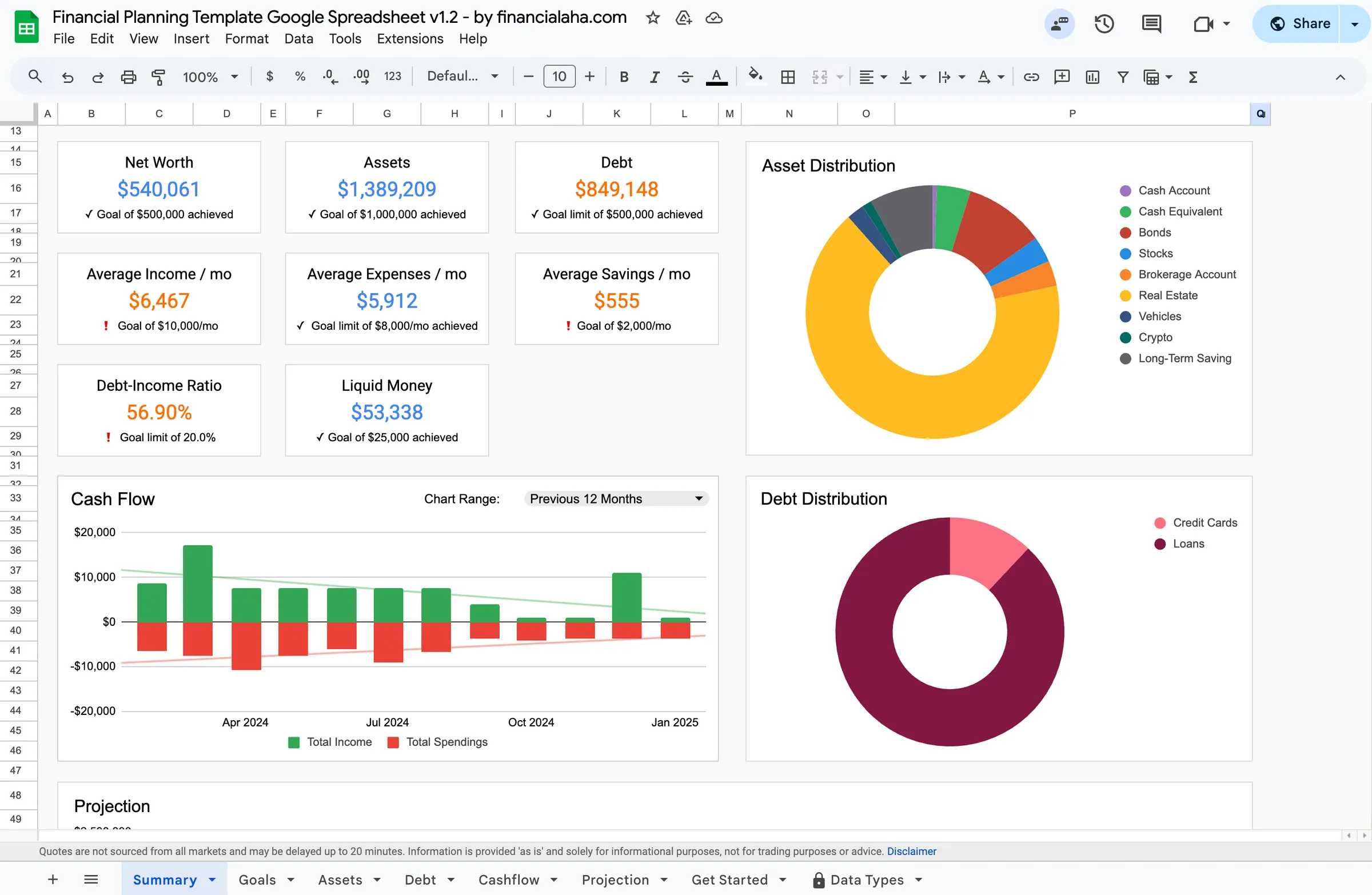
- Complete financial overview dashboard
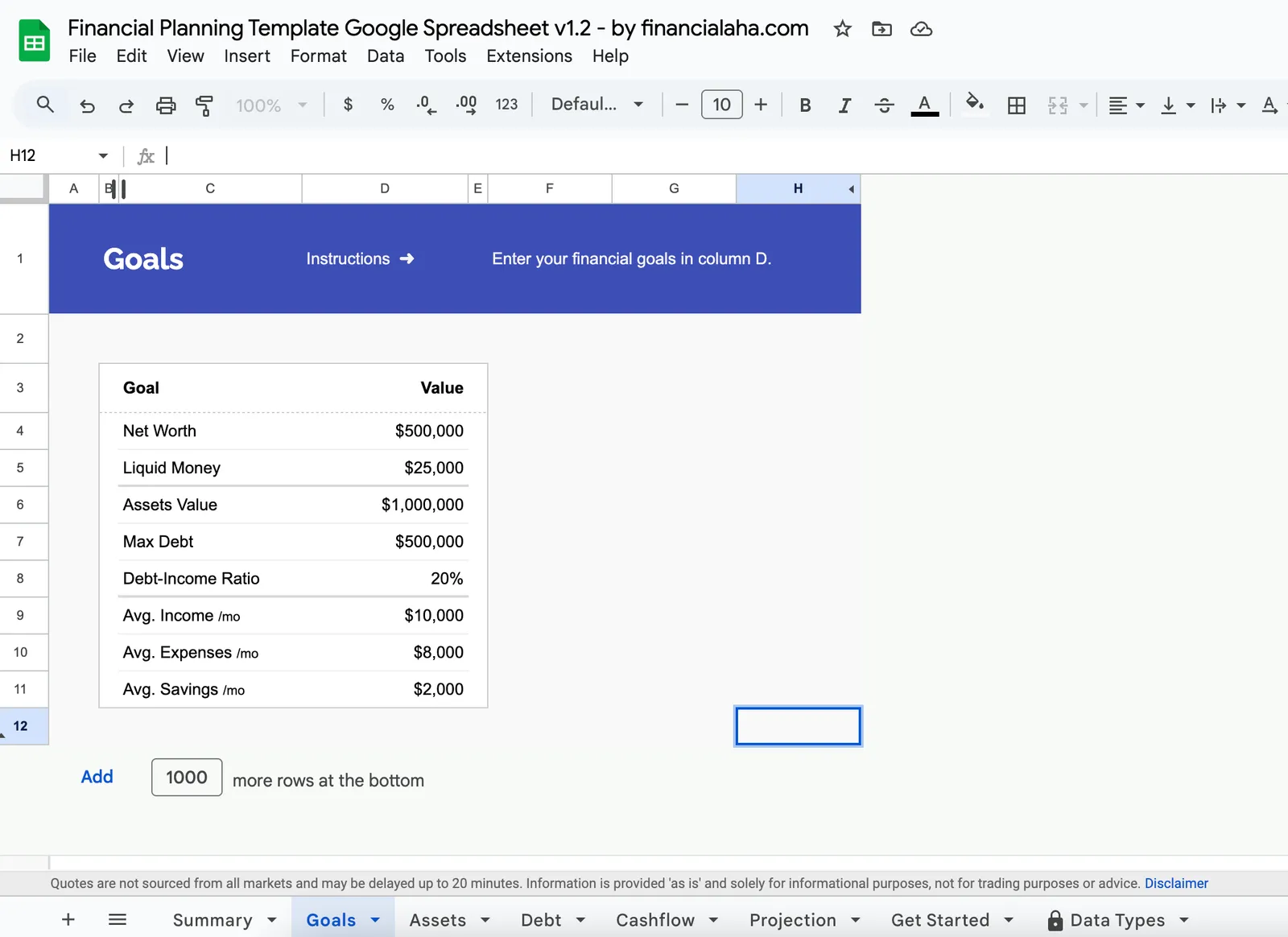
- Goal setting and progress tracking
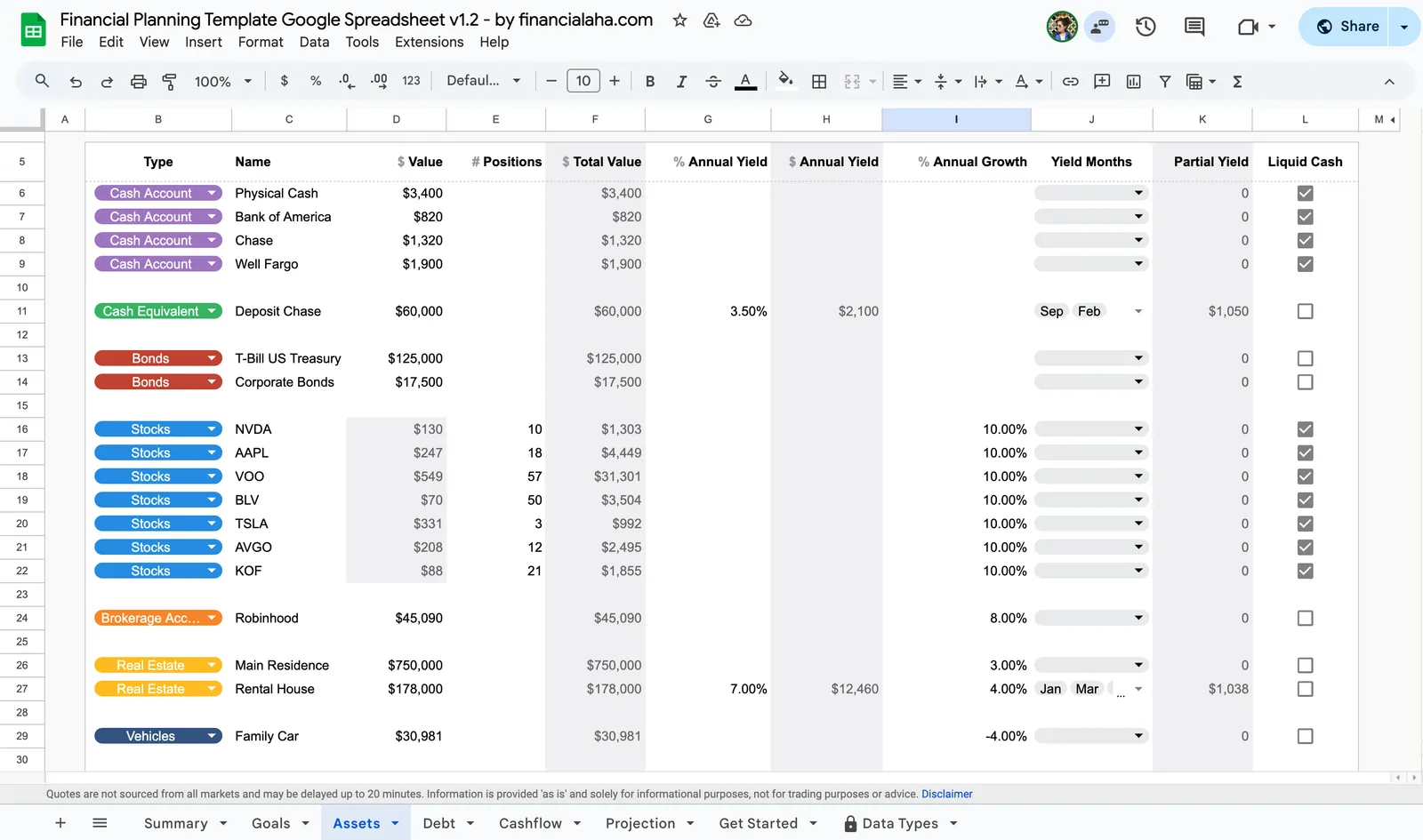
- Asset and debt management
- Cash flow analysis
- Financial projections
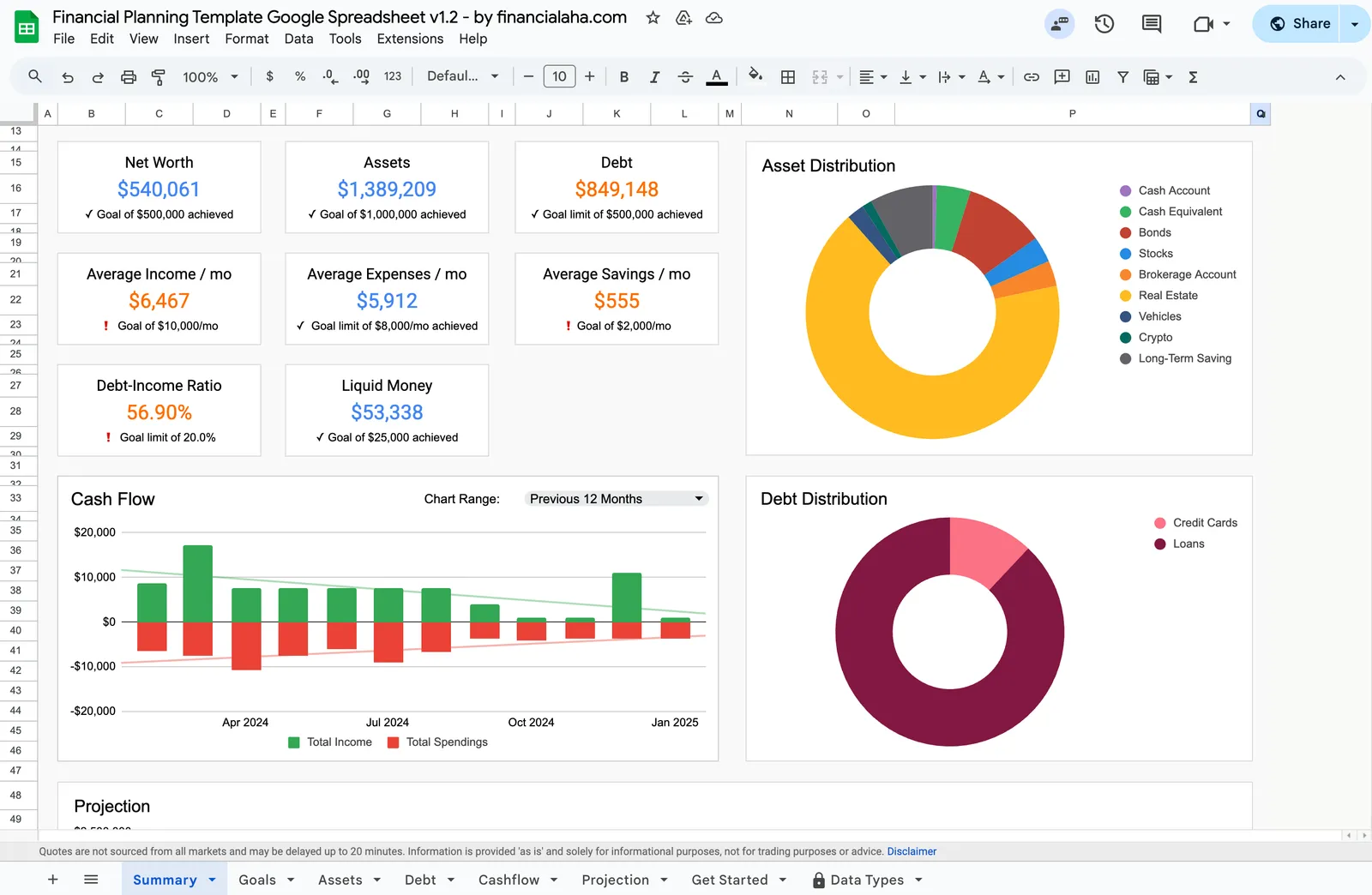
Complete financial overview with net worth and goals
Set and track progress toward financial milestones
Track all your assets in one place
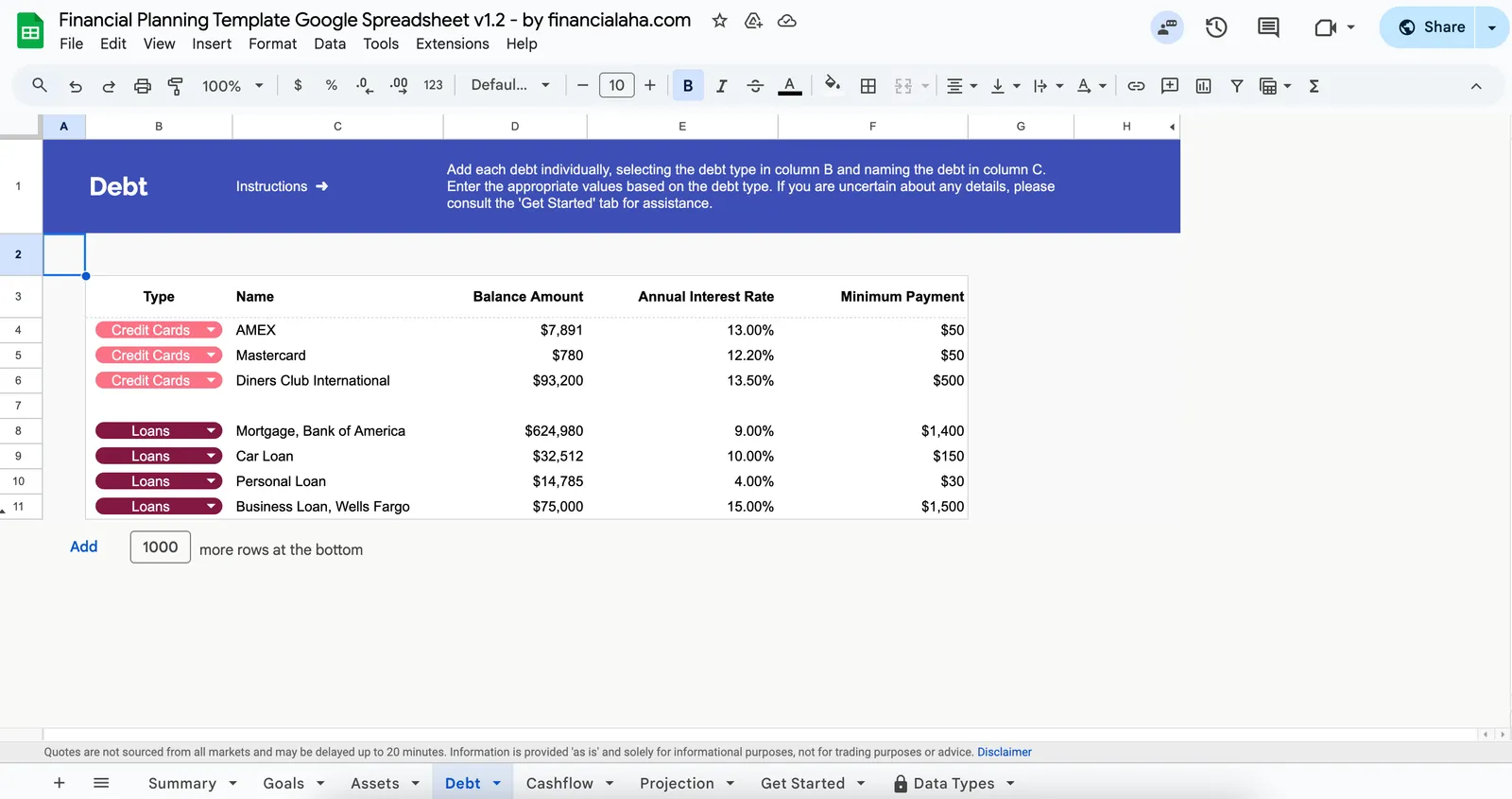
Monitor and plan debt repayment
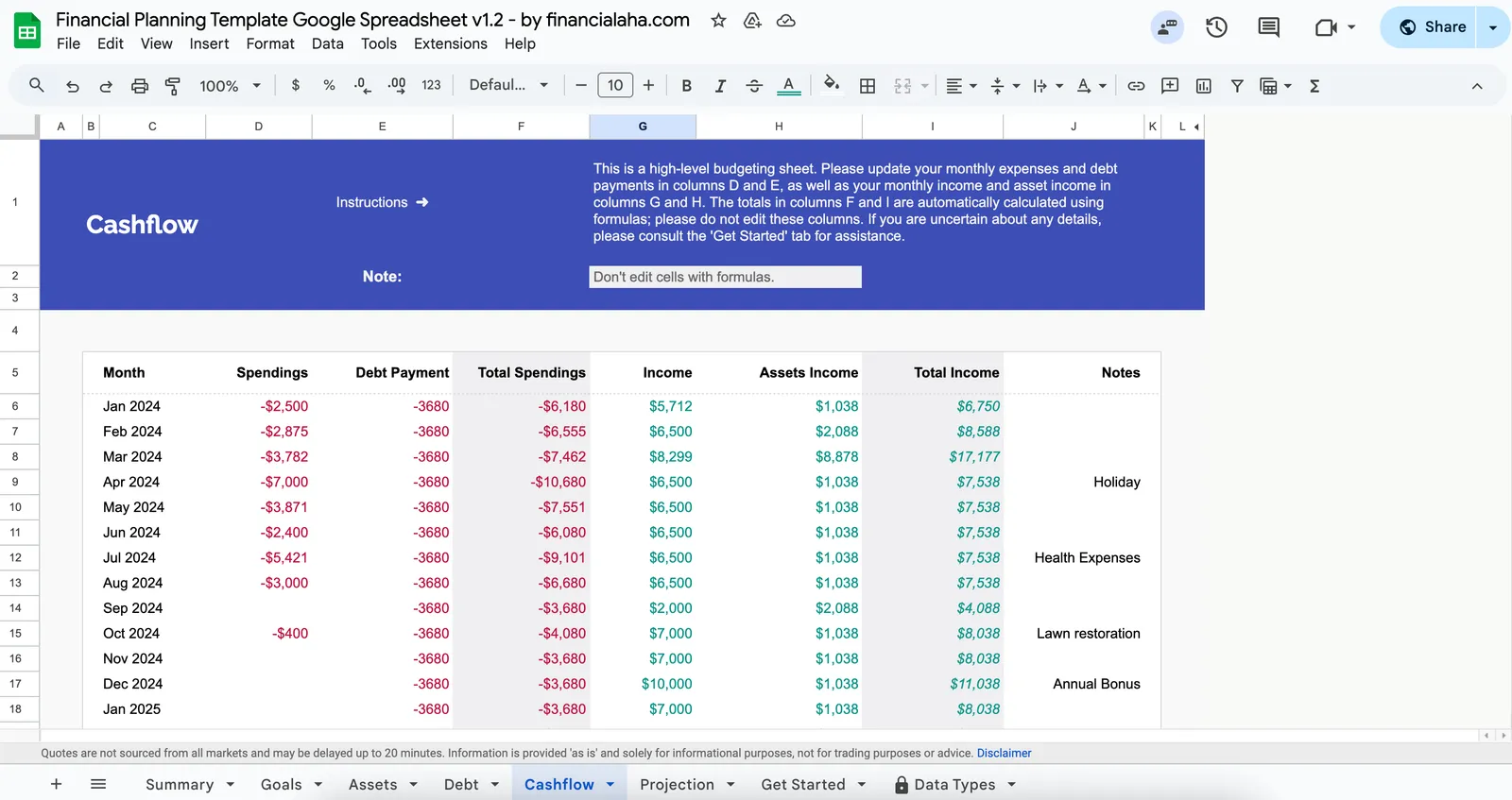
Visualize your income vs spending over time
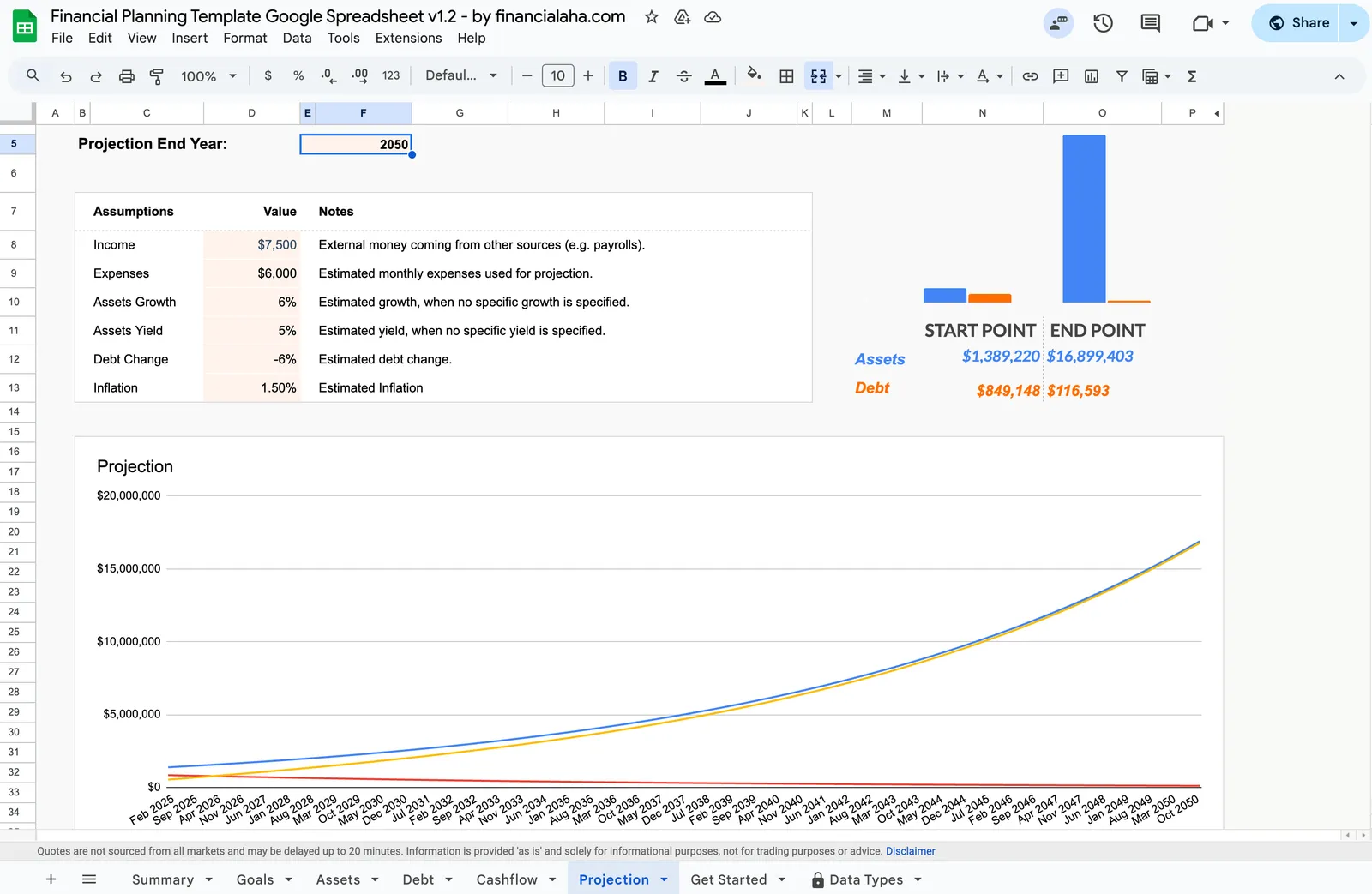
Project your financial future
Getting Started
Begin Financial Planning on One Income
List all family assets and debts
Gather balances for every account and obligation. This is your starting financial position as a family.
Assess your emergency fund
Calculate how many months of expenses your current savings covers. Single-income families often target 6 to 12 months.
Prioritize your goals
With one income, sequencing matters. Decide which goals get funded first and which can wait.
Update balances monthly
Refresh account values each month. The template recalculates net worth and goal progress automatically.
Review and adjust quarterly
Check whether your priorities still make sense. Life changes fast with a family - the plan should keep up.
Common Questions
Financial Planning for Single-Income Families - FAQ
How large should our emergency fund be?
Common guidance for single-income households ranges from 6 to 12 months of expenses. The template tracks your progress toward whatever target you set.
Can this help plan for the non-earning partner to return to work?
Yes. Model the financial impact of a second income using the projection feature. See how it would change savings rates, goal timelines, and net worth trajectory.
What about life insurance planning?
The template tracks financial assets and goals. Life insurance is a critical consideration for single-income families - the plan can show the financial gap that insurance needs to cover.
Does this help with education savings?
Include 529 plans or other education savings in the asset tracker. Set education funding goals and track contributions alongside other priorities.
How do I balance retirement saving with current needs?
The plan shows all goals side by side. You can see the trade-off between increasing retirement contributions and funding other priorities.
Is this useful if we are just getting by?
Yes. Seeing the full picture - even when resources are tight - helps identify opportunities and avoid surprises. Financial planning is most valuable when margins are slim.
Can't find the answer you're looking for? Contact our team
Start financial planning as a single-income familie
One-time purchase. No subscription. Your financial data stays in your Google Drive.