Financial Planning Template
Financial Planning Template for New Graduates
Start your financial life with a clear view of student loans, early savings, and first investments - a foundation you can build on for years.
In Depth
The Early Years Set the Financial Trajectory
The first few years after graduation carry a disproportionate amount of financial weight, even though they rarely feel that way at the time. Decisions about how much to contribute to a first 401(k), whether to aggressively pay down student loans or build savings first, and how to handle the gap between a starting salary and living costs - these choices compound over decades. A financial plan created early does not need to be sophisticated. It just needs to exist.
Starting from negative net worth is a psychologically difficult position that many new graduates share. Student loan balances can make it feel like progress is impossible, even when real headway is being made. Some people find that tracking the gap between debts and assets - and watching it narrow month by month - reframes what feels like treading water into visible forward motion. The numbers tell a different story than the feeling.
There is also a practical benefit to building the planning habit early, before finances become complex. Learning to track accounts, set goals, and review projections when the picture is relatively simple makes it much easier to maintain those habits as income grows, investments diversify, and life adds new financial dimensions. The template grows with the person using it.
The Challenge
Why New Graduates Need a Financial Plan Early
The transition from school to working life brings financial complexity fast. Student loan payments, first retirement contributions, emergency fund goals, and new expenses all arrive at once.
Student loans dominate early finances
Loan balances, interest rates, repayment plans, and forgiveness timelines create a web of decisions. Seeing loans alongside income and other obligations helps clarify priorities.
First jobs bring unfamiliar financial decisions
401(k) contribution rates, health insurance choices, HSA versus FSA, Roth versus traditional - these decisions have long-term impact and arrive with little preparation.
Building from zero feels overwhelming
Emergency fund, retirement savings, loan payments, and daily expenses all compete for a first paycheck. Without a plan showing how the pieces fit together, it is easy to freeze.
Early habits compound dramatically
Savings started at 22 versus 32 can mean hundreds of thousands in difference by retirement. A financial plan makes the long-term impact of early decisions visible.
Ready to take control of your new graduate finances?
What You Get
Financial Planning Features for New Grads
Student loan tracker
Enter all loans with balances, rates, and minimum payments. See total debt, weighted average rate, and projected payoff timeline.
Asset and account overview
Track checking, savings, retirement accounts, and any other assets. See your starting financial position clearly.
Goal setting framework
Set targets for emergency fund, loan payoff, and early savings milestones. The template tracks progress toward each.
Net worth tracker
Assets minus debts, updated monthly. New graduates often start with negative net worth - tracking the climb toward positive is motivating.
Projection models
See how current savings rates grow over 5, 10, and 20 years. Visualize the impact of starting early.
Financial milestone markers
Track milestones like positive net worth, fully funded emergency fund, or first investment account opened.
See It In Action
What the template looks like
Browse through the template to see how it handles financial planning, goal tracking, asset management, and projections.
- Complete financial overview dashboard
- Goal setting and progress tracking
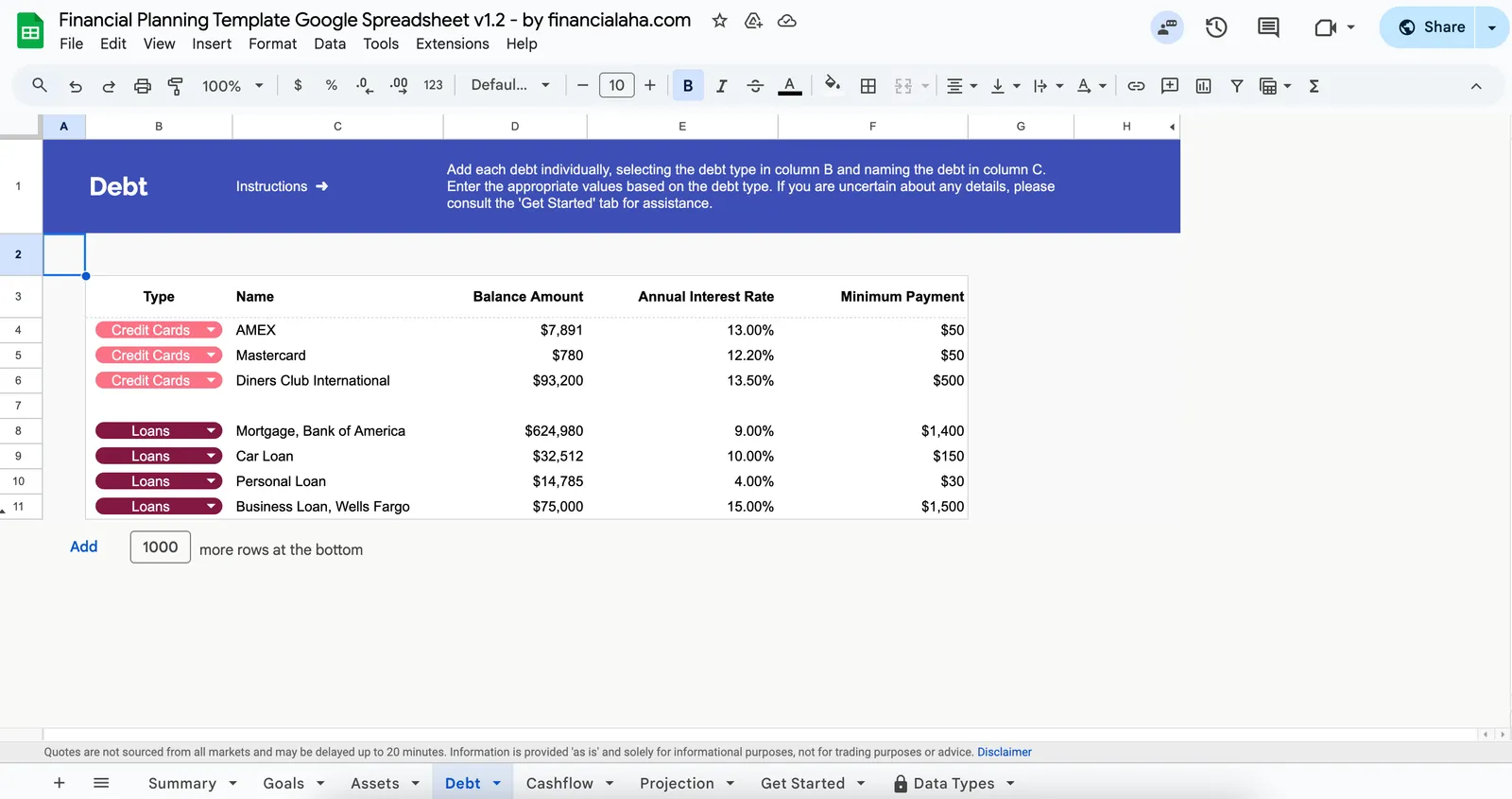
- Asset and debt management
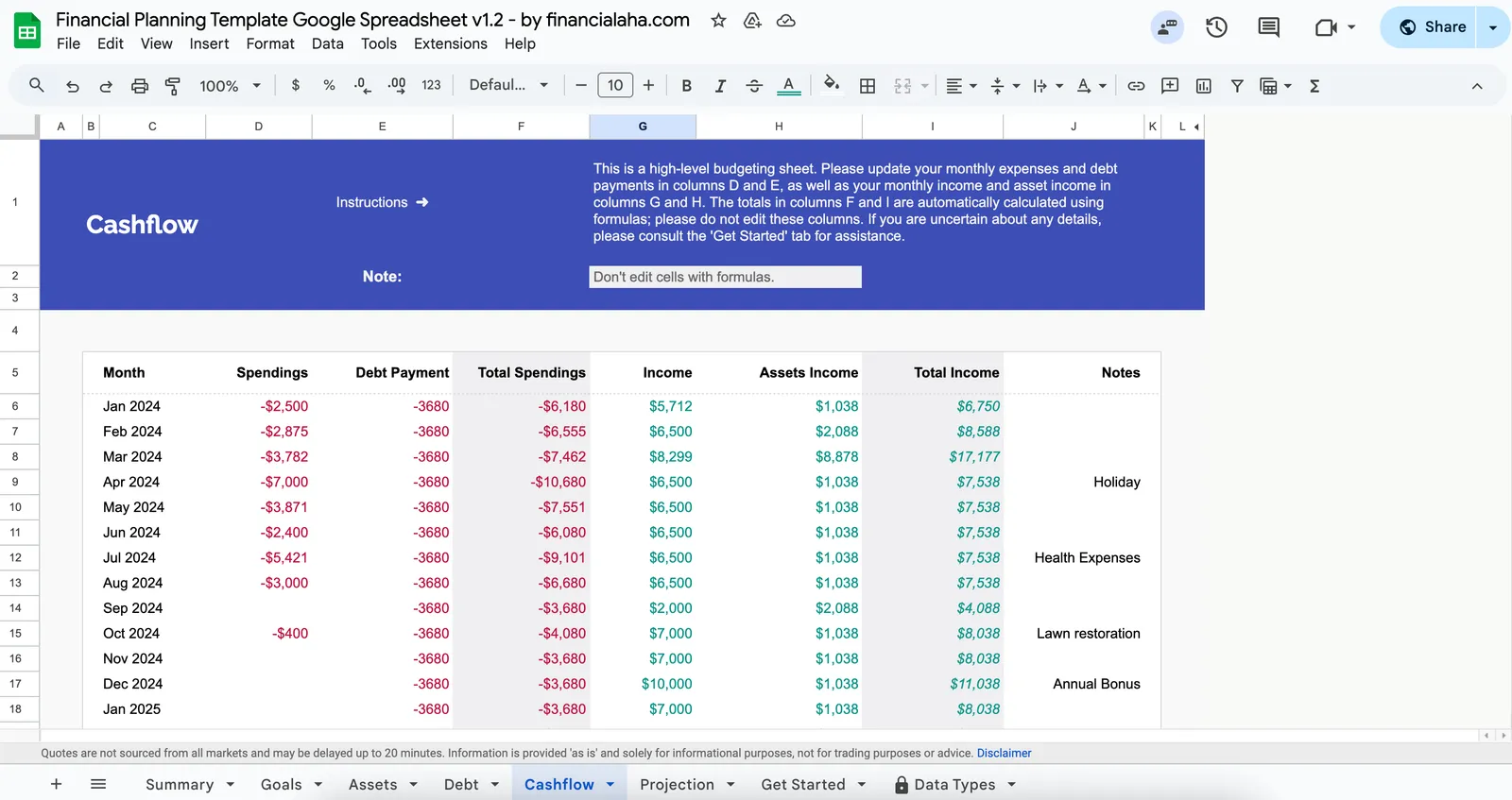
- Cash flow analysis
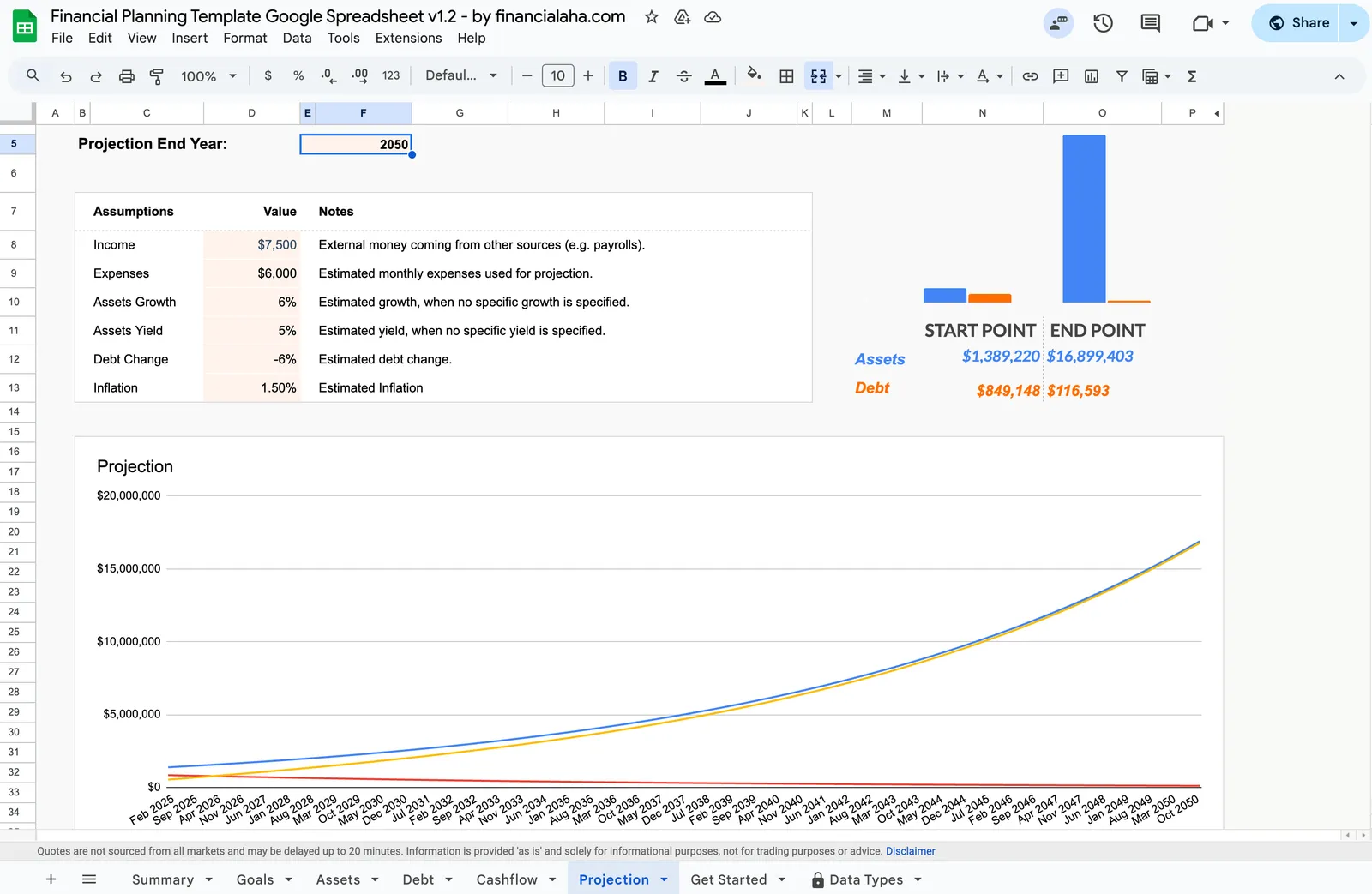
- Financial projections
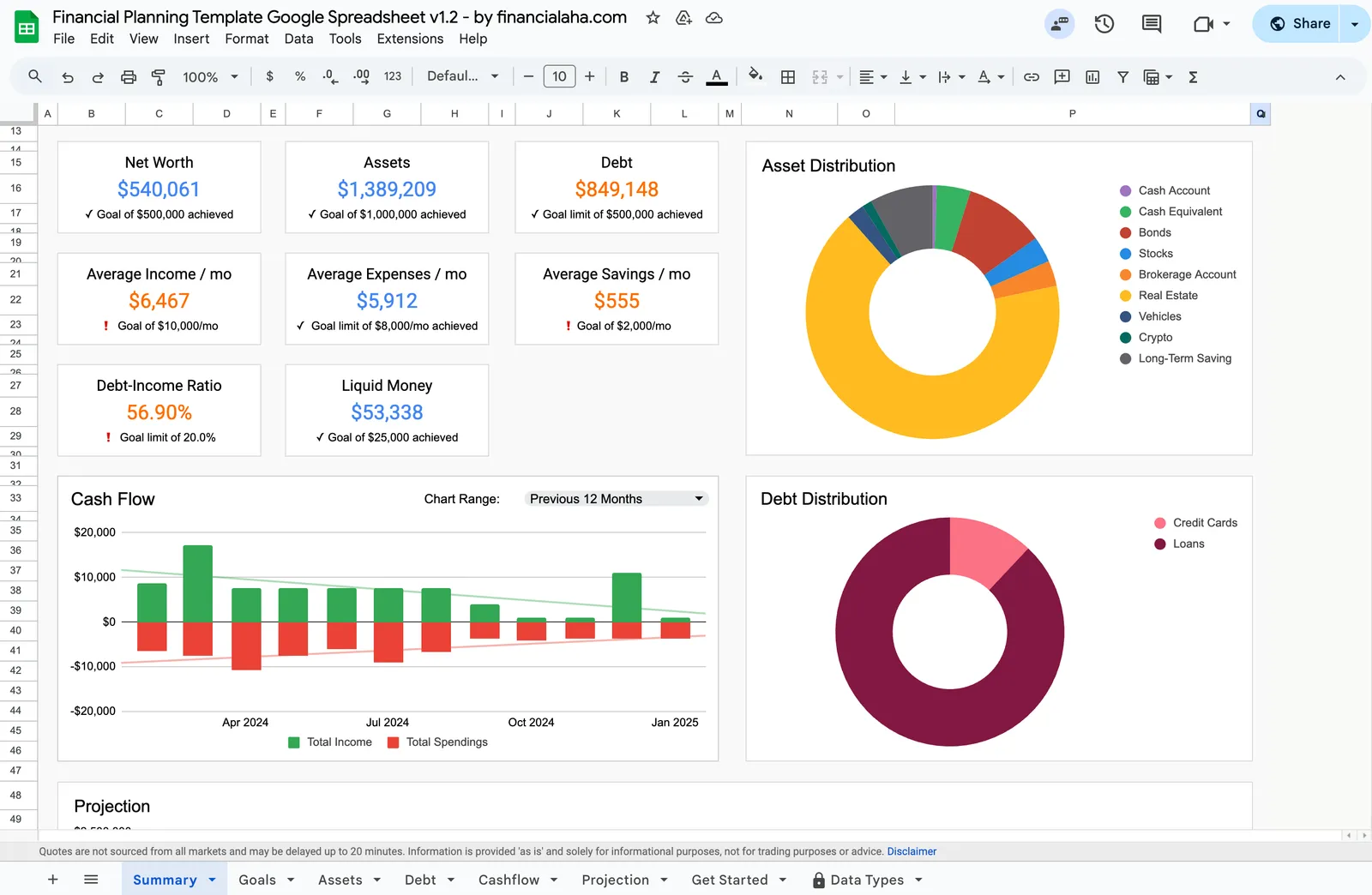
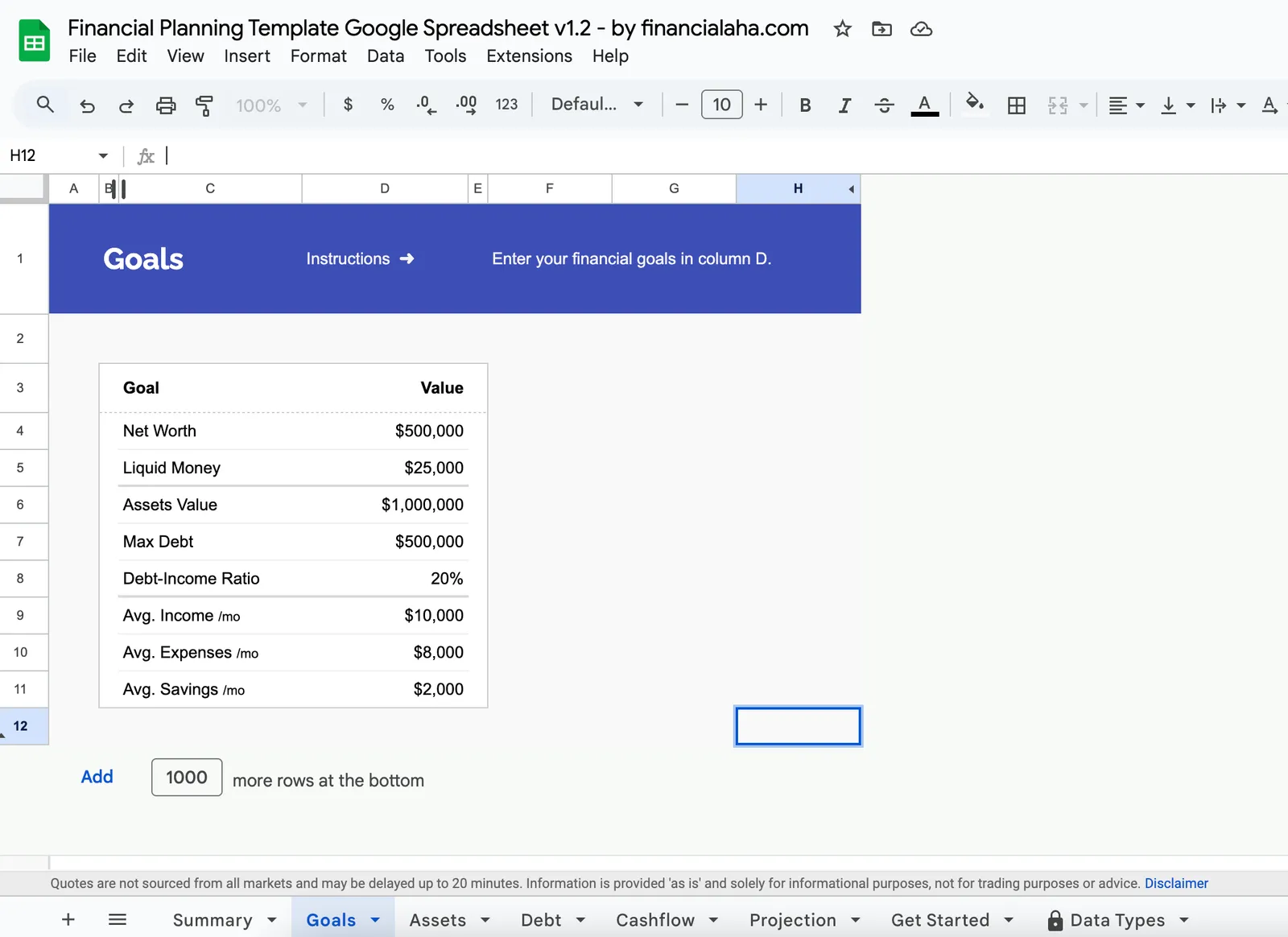
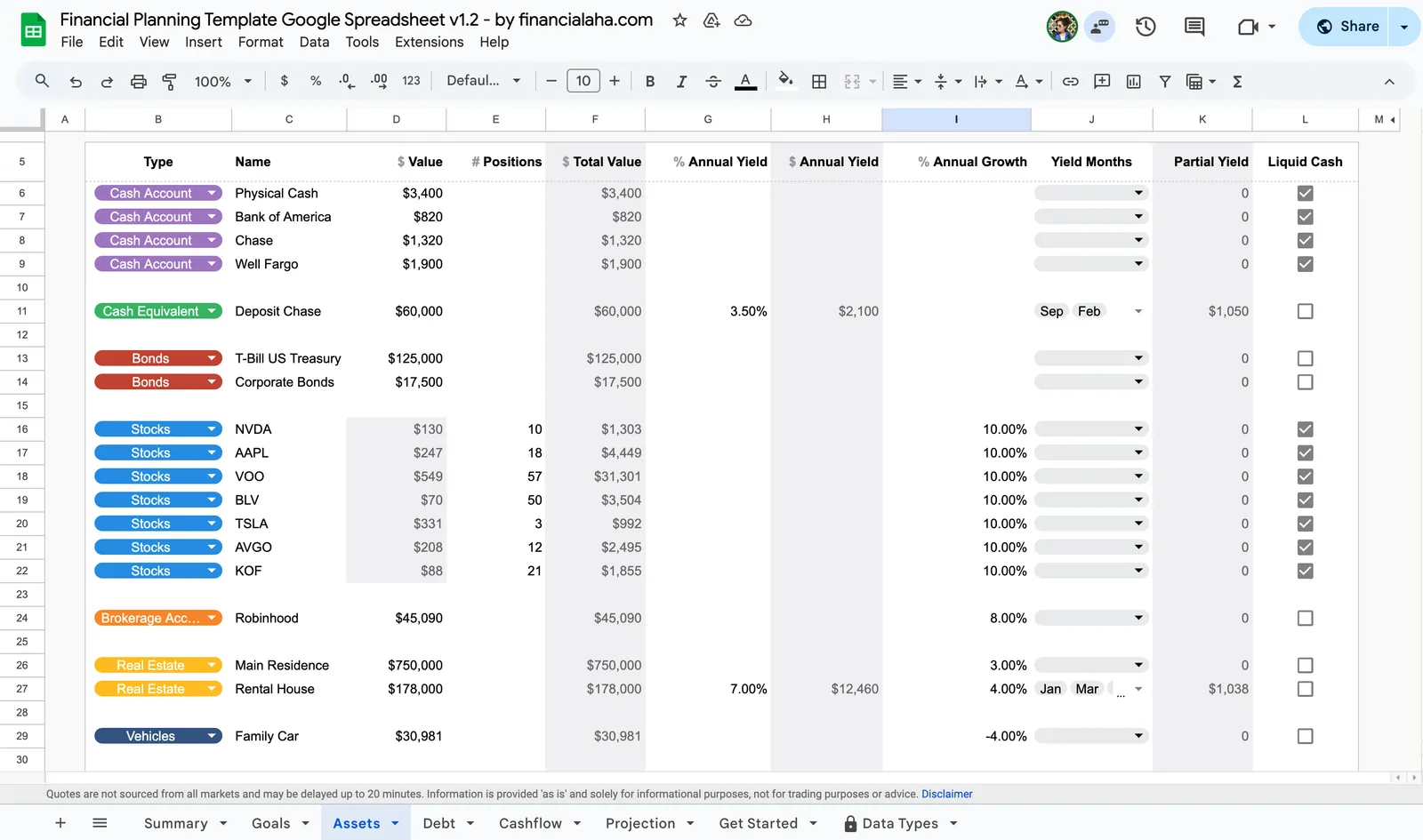
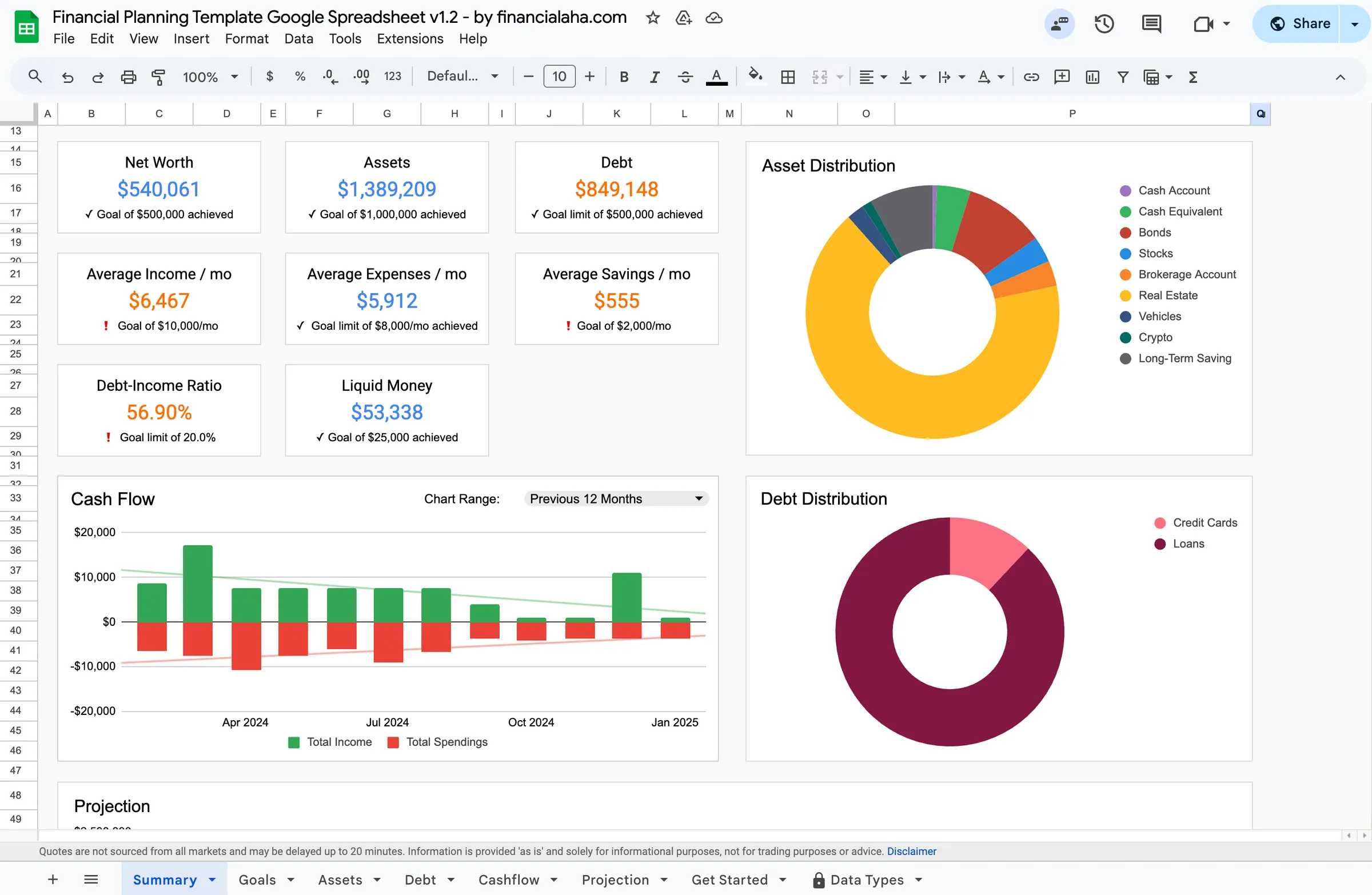
Complete financial overview with net worth and goals
Set and track progress toward financial milestones
Track all your assets in one place
Monitor and plan debt repayment
Visualize your income vs spending over time
Project your financial future
Getting Started
Launch Your Post-Graduation Financial Plan
List all student loans
Enter every loan with its balance, interest rate, and minimum payment. This is your starting debt picture.
Add your income and accounts
Enter your salary and list every financial account you have, including new employer retirement accounts.
Set your first three goals
Pick concrete targets - a starter emergency fund, a debt milestone, and a savings goal. Keep it focused.
Update monthly as you build
Refresh balances each month. Watch your net worth climb and goals get closer.
Revisit projections annually
As income grows and debts shrink, update your projections to see the improving trajectory.
Common Questions
Financial Planning for New Graduates - FAQ
What if I have no savings at all?
That is common for new graduates. The template starts wherever you are and tracks your progress forward. Starting from zero is perfectly normal.
Should I focus on loans or savings first?
The template shows both side by side. Many people build a small emergency fund while making minimum loan payments, then increase loan payments or savings based on their situation.
How does this help with 401(k) decisions?
The projection model shows how different contribution rates grow over time. Seeing the long-term difference between 3% and 10% contributions can inform your choice.
Is this too advanced for someone just starting out?
Not at all. It is designed to grow with you. Start with just loans and a savings account, then add investment accounts and more complex assets over time.
Can this replace a budget template?
This tracks the big picture - assets, debts, and goals. For tracking daily spending and monthly income, a budget template handles that level of detail.
What if my income changes significantly?
Update your income in the template and re-run projections. The plan adapts to your current situation.
Can't find the answer you're looking for? Contact our team
Start financial planning as a new graduate
One-time purchase. No subscription. Your financial data stays in your Google Drive.