Financial Planning Template
Financial Planning Template for High Earners
Organize complex finances across multiple investment accounts, asset classes, and tax-advantaged vehicles - designed for income levels where the default advice stops being useful.
In Depth
When High Income Meets Financial Complexity
Earning well above average creates a particular kind of financial challenge that most generic tools do not address. The decisions facing someone with RSUs vesting quarterly, a backdoor Roth contribution strategy, and investment property alongside a primary residence are fundamentally different from the decisions facing someone with a single checking account and a 401(k). The complexity is not a sign of poor organization - it is simply what happens when income opens more doors.
One pattern that tends to surface when high earners lay out their complete financial picture is concentration risk they did not realize they had. Company stock from equity compensation, combined with a 401(k) invested in a target-date fund heavy in the same sector, plus a career dependent on that industry - the exposure adds up in ways that are only visible when everything is in one view. A financial plan does not tell anyone what to do about it, but it makes the exposure impossible to overlook.
There is also the question of whether income is converting to wealth at the rate it could be. Some people find that tracking net worth alongside income reveals a gap - high earnings flowing through rather than accumulating. This is not about judgment. It is about visibility. A financial plan that shows both the inflow and the accumulation side gives a clearer picture of where things stand.
The Challenge
Why High Earners Need a Holistic Financial View
Higher income creates more financial complexity, not less. More accounts, more asset classes, more tax considerations, and more options that need coordination.
Multiple accounts create fragmentation
401(k), backdoor Roth, HSA, taxable brokerage, stock options, RSUs, real estate - high earners accumulate accounts across employers, institutions, and asset classes. The total picture gets lost.
Tax optimization requires visibility
Asset location across tax-deferred, tax-free, and taxable accounts matters significantly at higher income levels. Without seeing all accounts together, tax-efficient placement is guesswork.
Lifestyle inflation is hard to detect
When income is high, spending can creep upward without obvious consequences. A financial plan that tracks both accumulation and spending patterns reveals whether wealth is actually building.
Standard financial tools assume simpler situations
Most templates and apps are built for straightforward finances. High earners need space for equity compensation, multiple property holdings, alternative investments, and more nuanced planning.
Ready to take control of your high earner finances?
What You Get
Planning Tools for High-Income Households
Multi-account asset tracker
Track retirement accounts, taxable investments, real estate, equity compensation, and alternative investments. See everything in one view.
Debt and liability overview
Mortgage balances, investment property loans, margin accounts, or other obligations. Full picture of what you owe alongside what you own.
Investment allocation view
See your asset allocation across all accounts combined - not just one account at a time. Identify concentration risk and rebalancing needs.
Goal tracking with projections
Model wealth accumulation over time. See how current savings rates and investment returns compound toward long-term targets.
Net worth tracking
Monthly net worth snapshots that reveal whether your financial trajectory matches your income level.
Financial independence metrics
Track ratios like savings rate, years to FI, and passive income coverage. See how close you are to optional work.
See It In Action
What the template looks like
Browse through the template to see how it handles financial planning, goal tracking, asset management, and projections.
- Complete financial overview dashboard
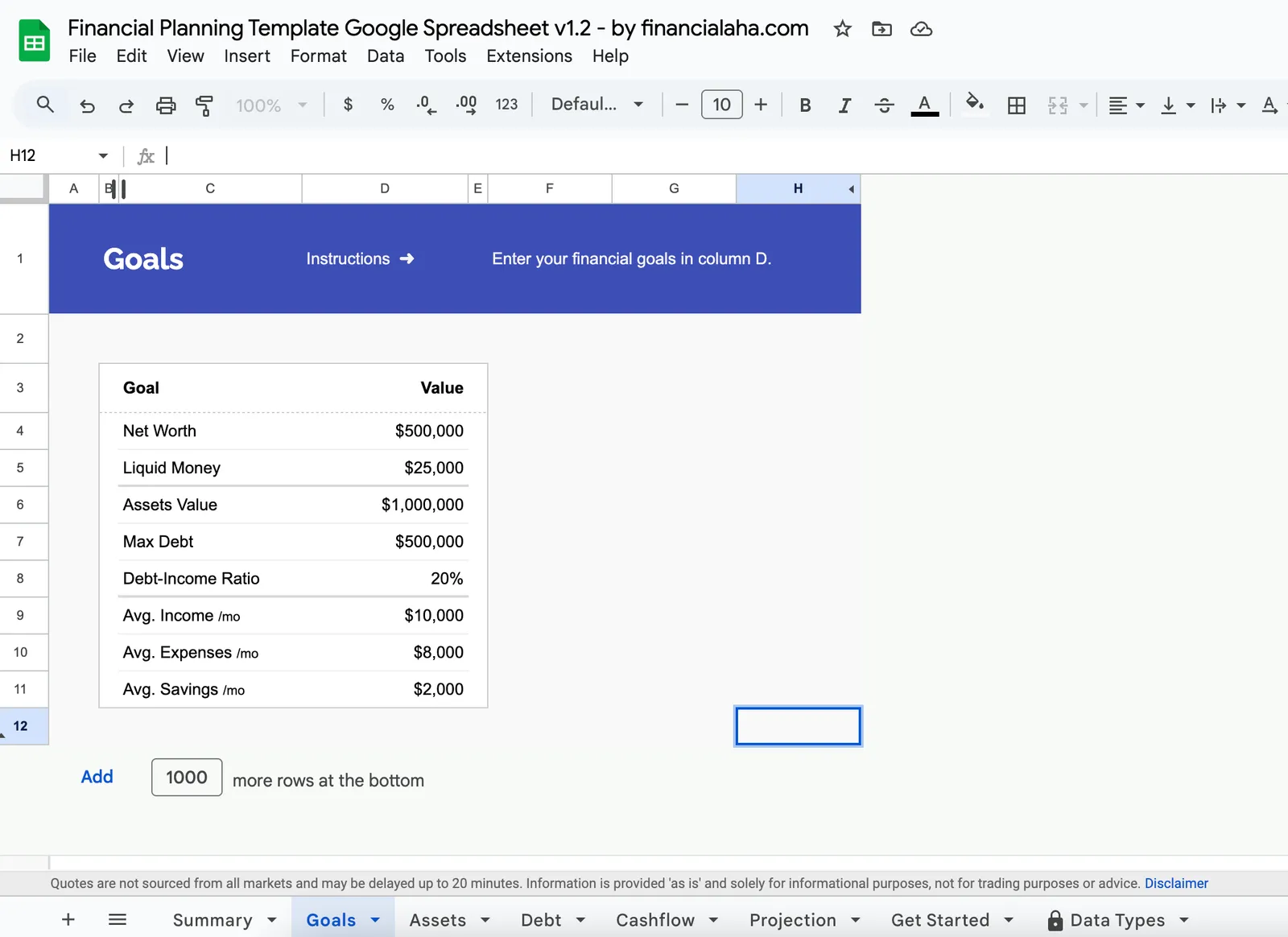
- Goal setting and progress tracking
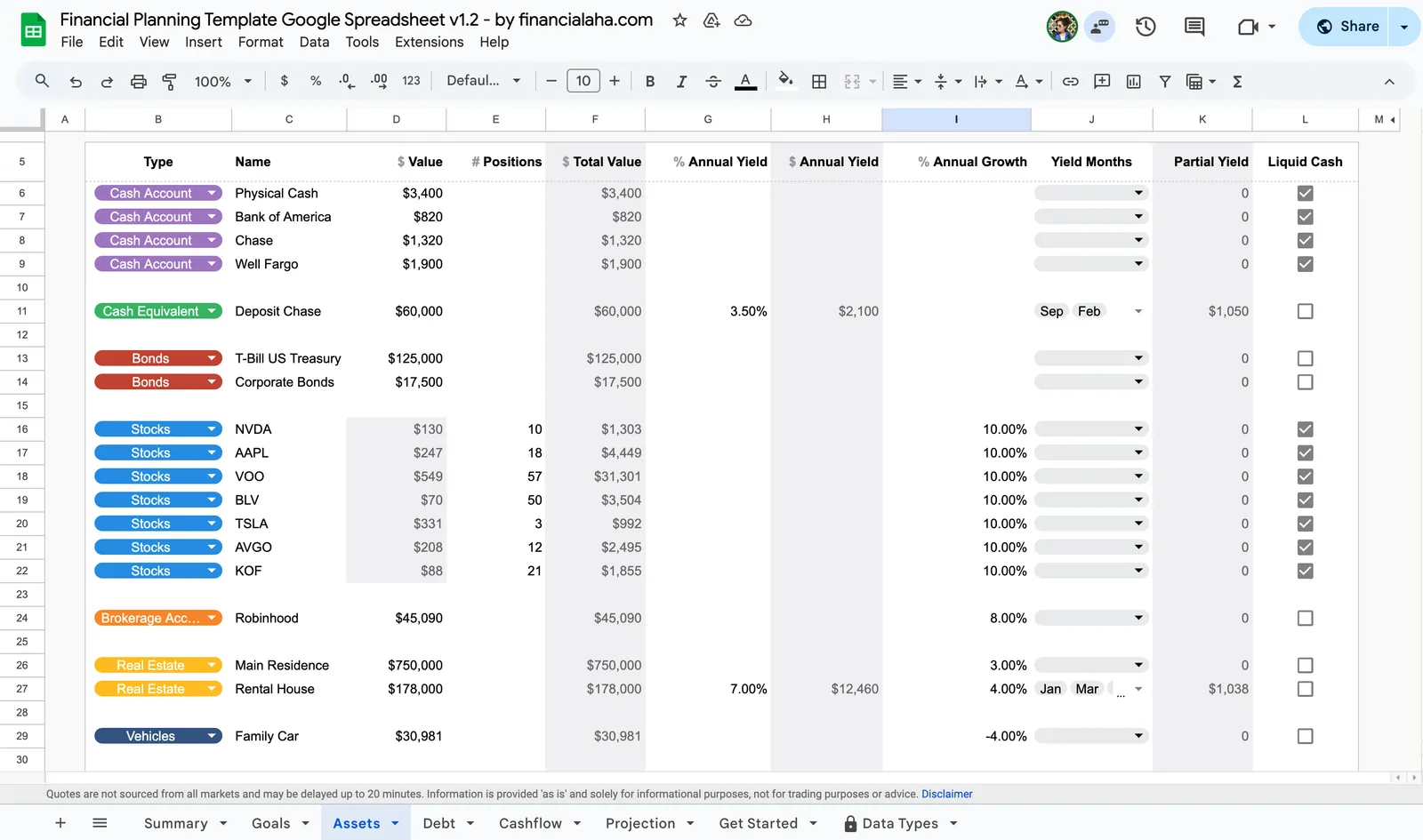
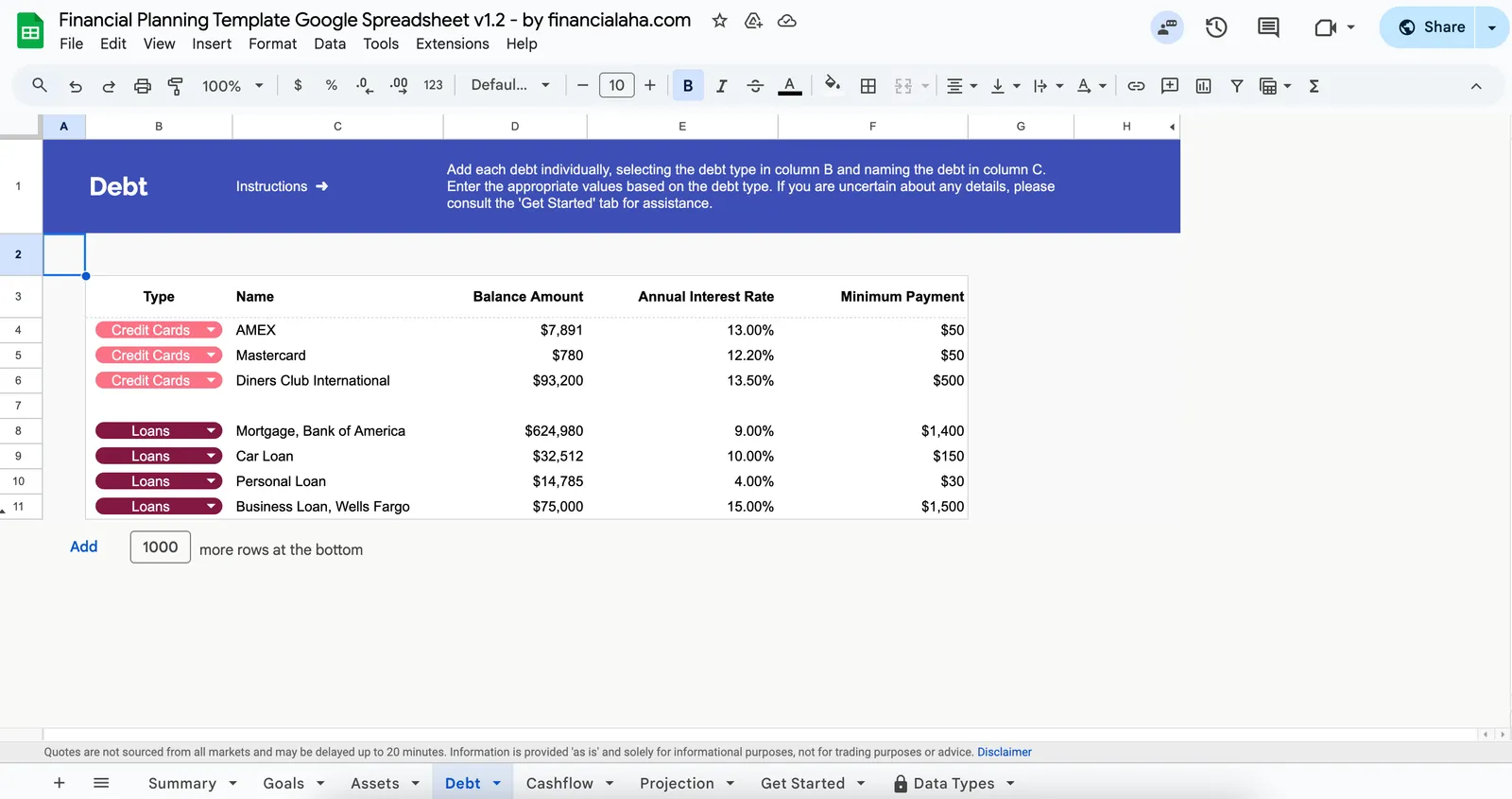
- Asset and debt management
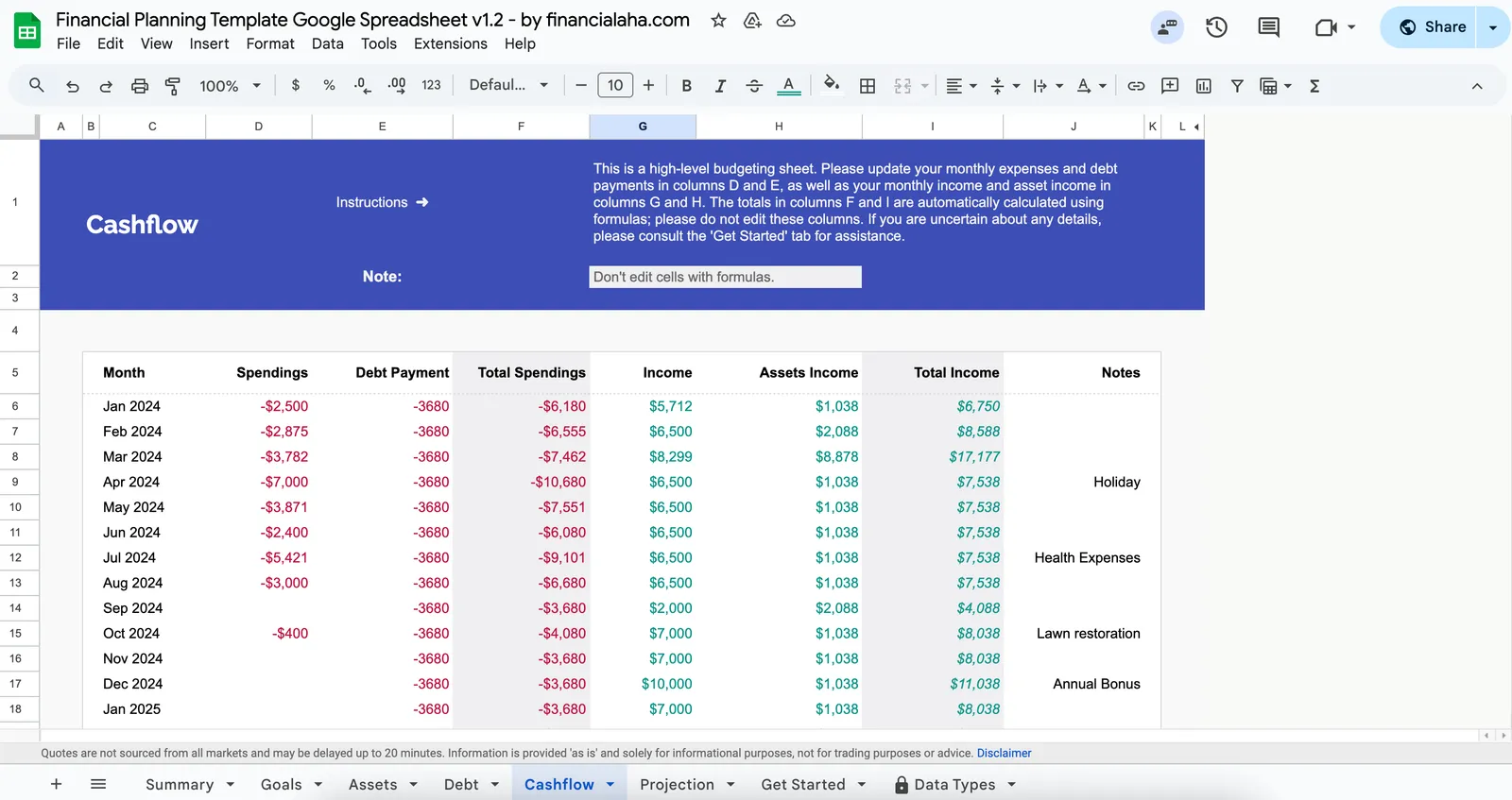
- Cash flow analysis
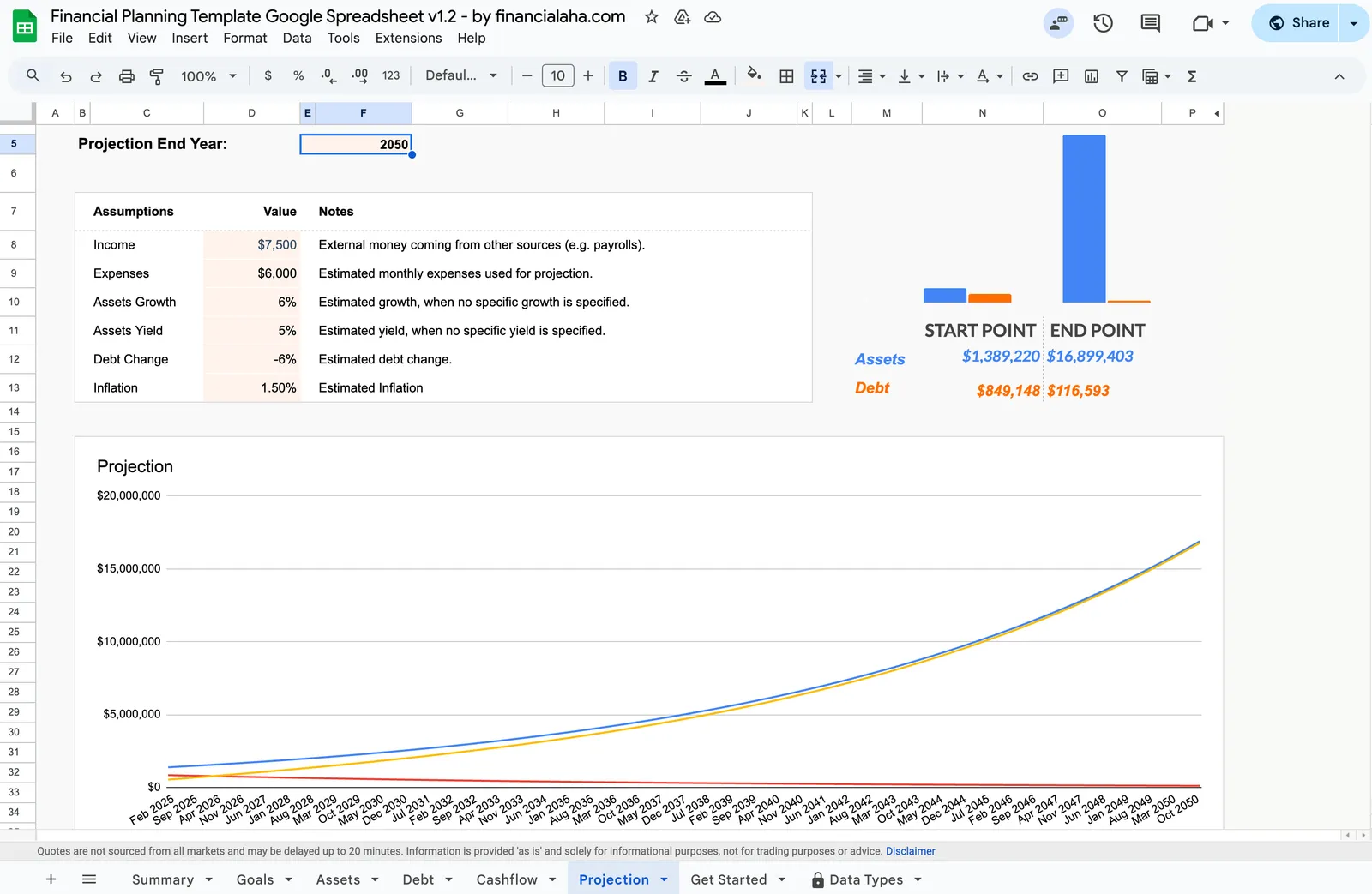
- Financial projections
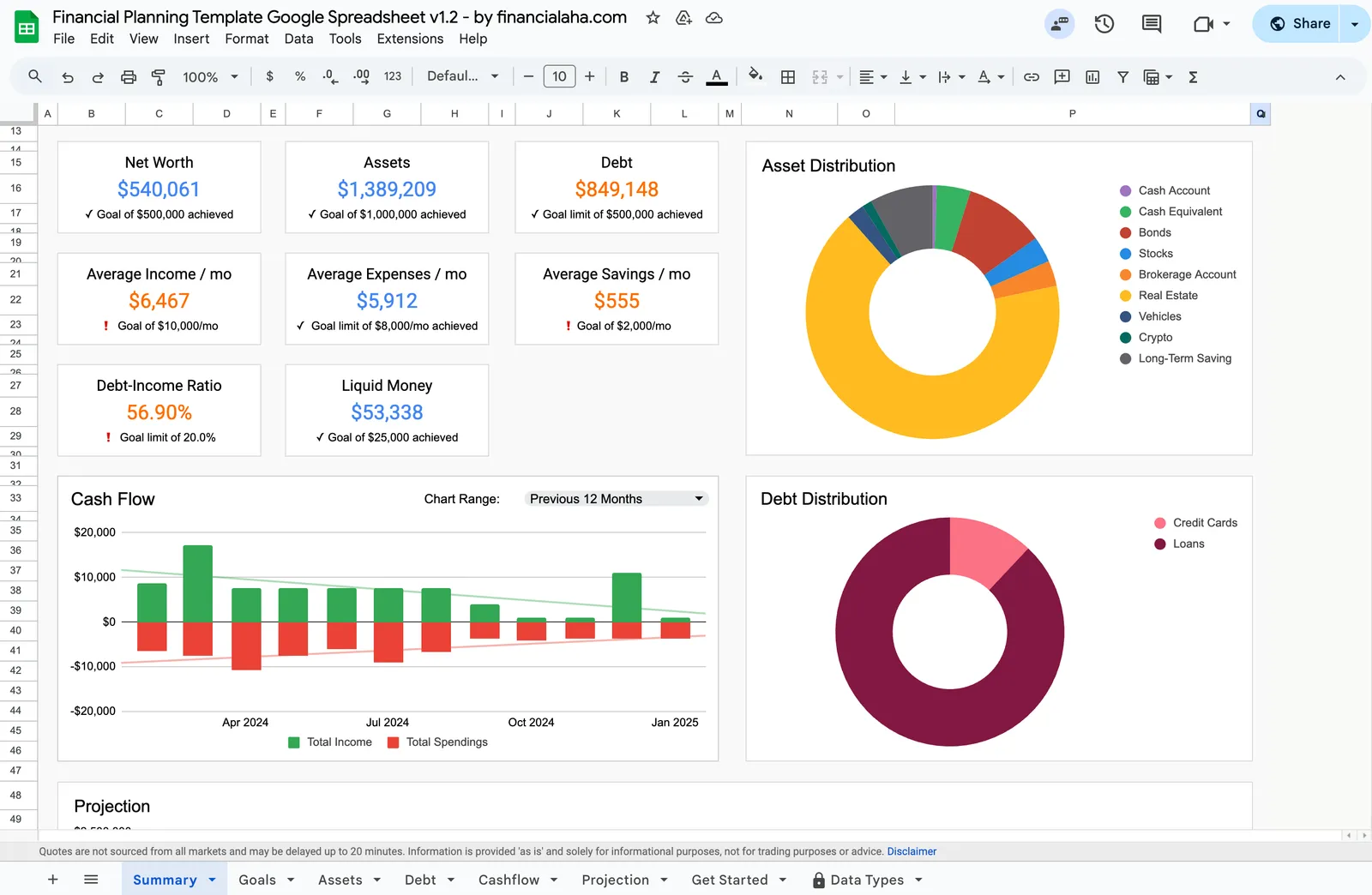
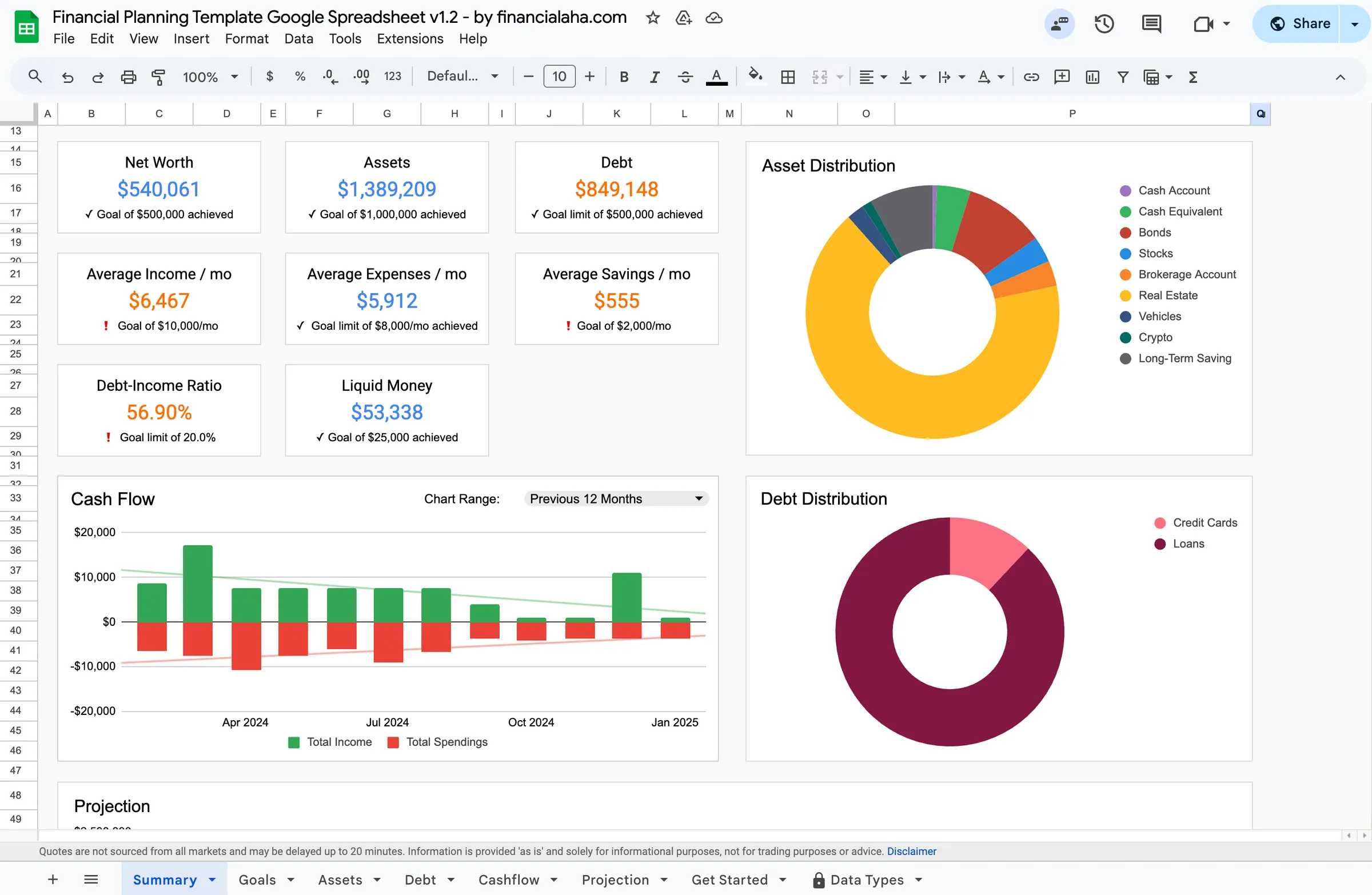
Complete financial overview with net worth and goals
Set and track progress toward financial milestones
Track all your assets in one place
Monitor and plan debt repayment
Visualize your income vs spending over time
Project your financial future
Getting Started
Begin Your High-Income Financial Plan
Inventory all accounts and assets
List every financial account, investment holding, and property. Include employer accounts, personal accounts, and any alternative investments.
Enter current balances and allocations
Record current values for each asset and liability. The template calculates your total net worth and asset allocation.
Define your financial targets
Set goals for retirement, financial independence, specific savings targets, or wealth milestones.
Update monthly and review quarterly
Monthly balance updates keep the data fresh. Quarterly reviews show trends and whether adjustments are needed.
Use projections for major decisions
Before big financial moves - career changes, property purchases, early retirement - run the numbers through the projection model.
Common Questions
Financial Planning for High Earners - FAQ
Does this handle equity compensation like RSUs and stock options?
You can track the current value of vested equity in the asset tracker. For unvested grants, list them separately with vesting dates as a reference.
Can I track alternative investments?
Yes. Add categories for private equity, venture capital, cryptocurrency, collectibles, or any other asset class you hold.
How does this differ from what a financial advisor provides?
This template gives you a personal, always-current view of your finances that you control. It complements advisor relationships by helping you stay informed about your own position.
Is this useful if my finances change frequently?
The monthly update cycle accommodates frequent changes. The template adapts as you add or remove accounts, change jobs, or adjust goals.
Can I model different scenarios?
The projection feature lets you adjust savings rates, return assumptions, and timelines. Compare outcomes under different assumptions.
What if I also want detailed tax planning?
This template focuses on the overall financial picture. For detailed tax tracking with deductions and quarterly estimates, the Annual Tax Planner covers that specifically.
Can't find the answer you're looking for? Contact our team
Start financial planning as a high earner
One-time purchase. No subscription. Your financial data stays in your Google Drive.