Annual Tax Planner
Annual Tax Planner for Rideshare Drivers
Track rideshare income, mileage, vehicle expenses, and quarterly tax payments - built for the tax reality of gig driving.
In Depth
Mileage, Deductions, and the Gig Driver Tax Picture
The tax situation for rideshare drivers is deceptively complex for what appears to be straightforward work. The 1099-NEC or 1099-K from platforms reports gross earnings - including the portion that went to platform commissions and fees. Drivers are taxed on net income after deductions, and the gap between gross and net can be substantial. A driver who earned $45,000 in gross fares might have $12,000 in mileage deductions, $3,000 in other expenses, and $5,000 in platform fees - producing a net taxable income closer to $25,000. Without tracking each component throughout the year, quarterly estimates become guesswork.
The standard mileage deduction ($0.67 per mile for 2024) is typically the single largest deduction for rideshare drivers, and it is also the one most often underreported. Business miles include not just the distance with a passenger in the car, but also miles driven to the pickup location, miles spent repositioning between rides, and miles driven while the app is active and waiting for requests. A driver who logs 25,000 business miles in a year generates a $16,750 mileage deduction at the 2024 rate - but a driver who only tracked passenger miles might log 15,000, leaving $6,700 in deductions unclaimed. The IRS requires a contemporaneous log with date, miles, and business purpose for each trip.
Quarterly estimated tax payments for rideshare drivers need to account for both income tax and self-employment tax (15.3% on net earnings). Many drivers also have a W-2 job, which creates a layered calculation: the W-2 withholding covers some of the tax obligation, but the rideshare income often pushes total earnings into a higher bracket than either income source assumes. Some drivers find that adjusting their W-4 at their primary job to withhold extra is simpler than making separate quarterly payments, though either approach works when the combined tax picture is tracked clearly.
The Challenge
Why Rideshare Drivers Need Tax Planning
Rideshare income is self-employment income. That means no tax withholding, quarterly estimated payments, self-employment tax, and a vehicle that is both your biggest tool and your biggest deduction.
No taxes are withheld from earnings
Uber, Lyft, and other platforms pay gross earnings. No federal, state, or self-employment tax is removed. If you do not plan for it, the tax bill arrives as a shock.
Vehicle deductions are critical but need documentation
Mileage is usually the largest deduction for rideshare drivers. But the IRS requires a log - date, miles, and purpose. Without year-round tracking, this deduction gets estimated poorly.
Self-employment tax adds 15.3%
On top of income tax, rideshare drivers owe SE tax on net earnings. Many new drivers are surprised by this additional tax that does not exist in traditional employment.
Platform reports do not match tax reality
The income on your 1099 from Uber or Lyft may not match what you actually received after platform fees. Tracking actual deposits versus reported income prevents confusion.
Ready to take control of your rideshare driver finances?
What You Get
Tax Planning Features for Rideshare Income
Rideshare income tracker
Record income by platform and period. Track gross earnings, platform fees, and net deposits.
Mileage log
Track business miles by date. The template calculates the standard mileage deduction based on your logged miles.
Vehicle expense tracker
Alternative to the standard mileage rate - track actual gas, maintenance, insurance, and depreciation. Compare both methods.
Gig driver deduction categories
Categories for phone expenses, car accessories, tolls, parking, roadside assistance, and other driving-specific costs.
Rideshare quarterly tax tracker
Based on net income after deductions, see your quarterly payment amount. Adjust as earnings change.
Tax year wrap-up for drivers
Total income, total deductions, net profit, estimated SE tax, and payments made. Ready for Schedule C preparation.
See It In Action
What the template looks like
Browse through the template to see how it handles income tracking, deductions, quarterly payments, and tax projections.
- Tax overview dashboard
- Income source tracking
- Deduction organization
- Quarterly payment planning
- Tax projection estimates
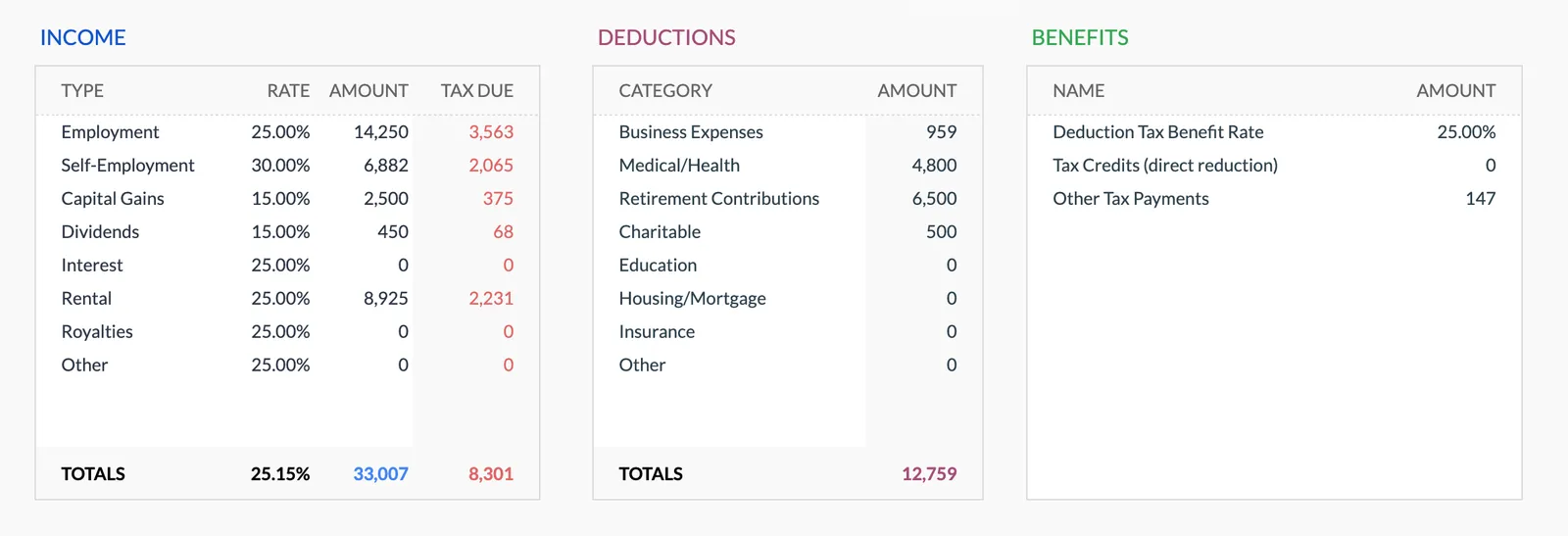
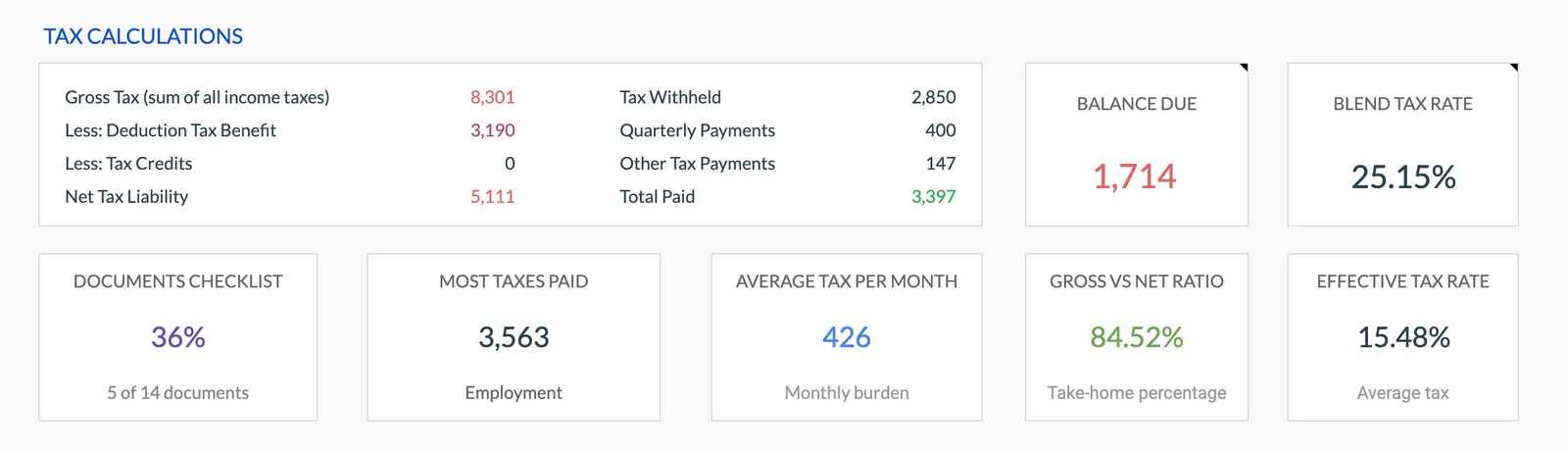
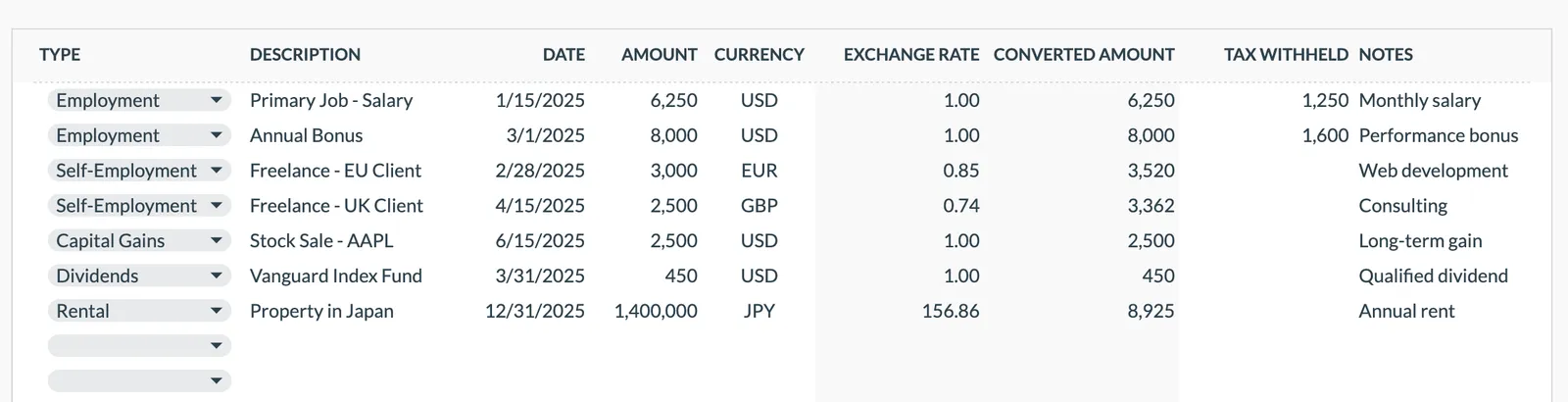
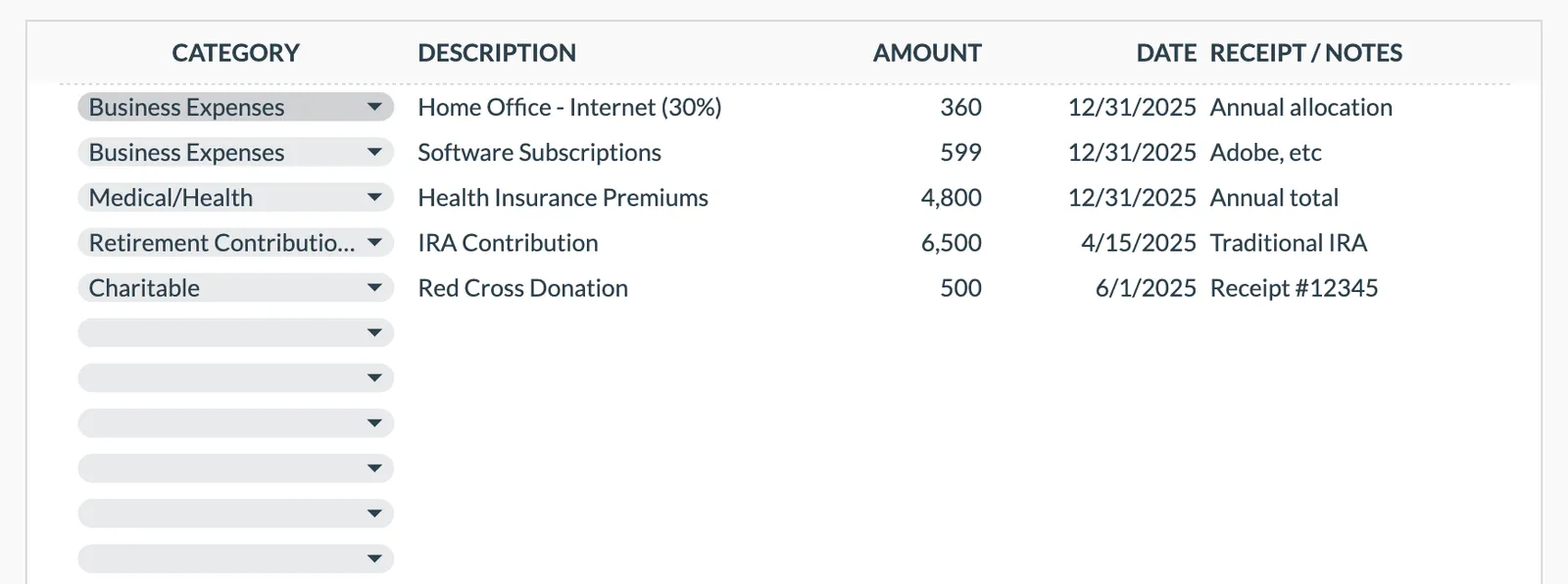
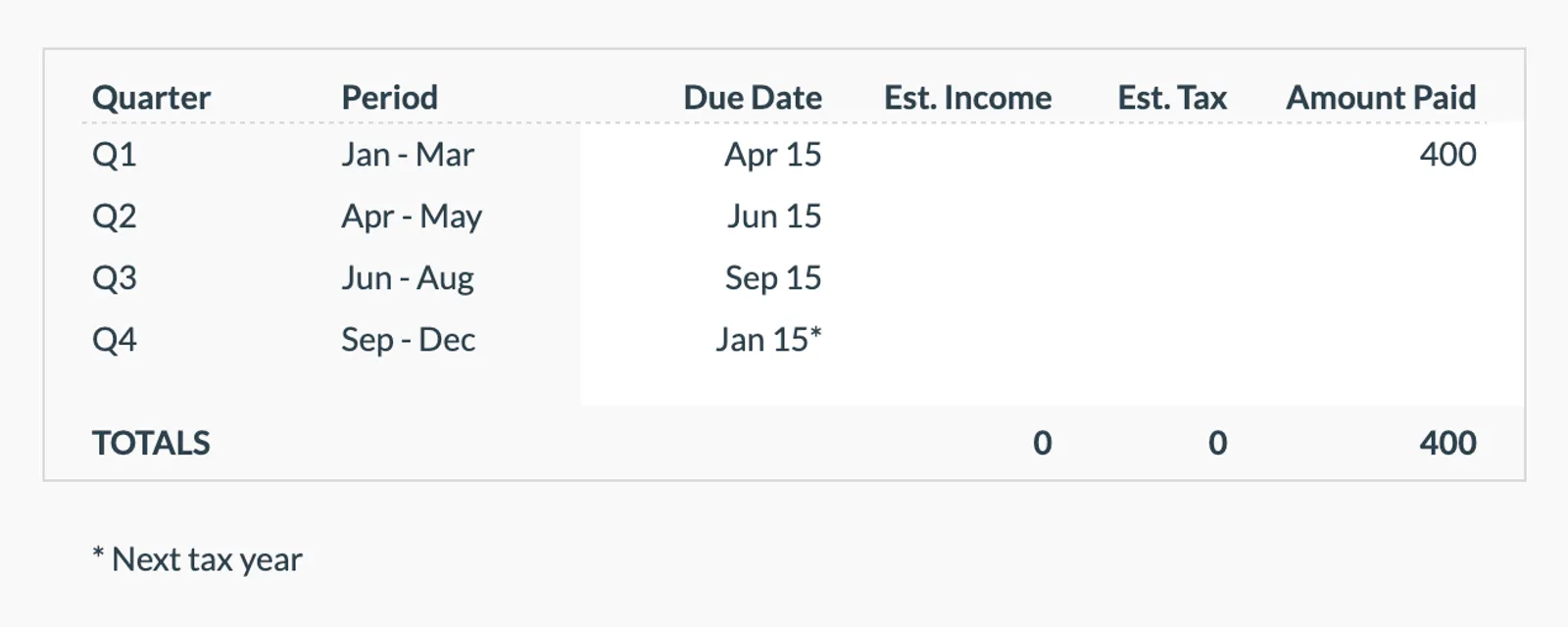
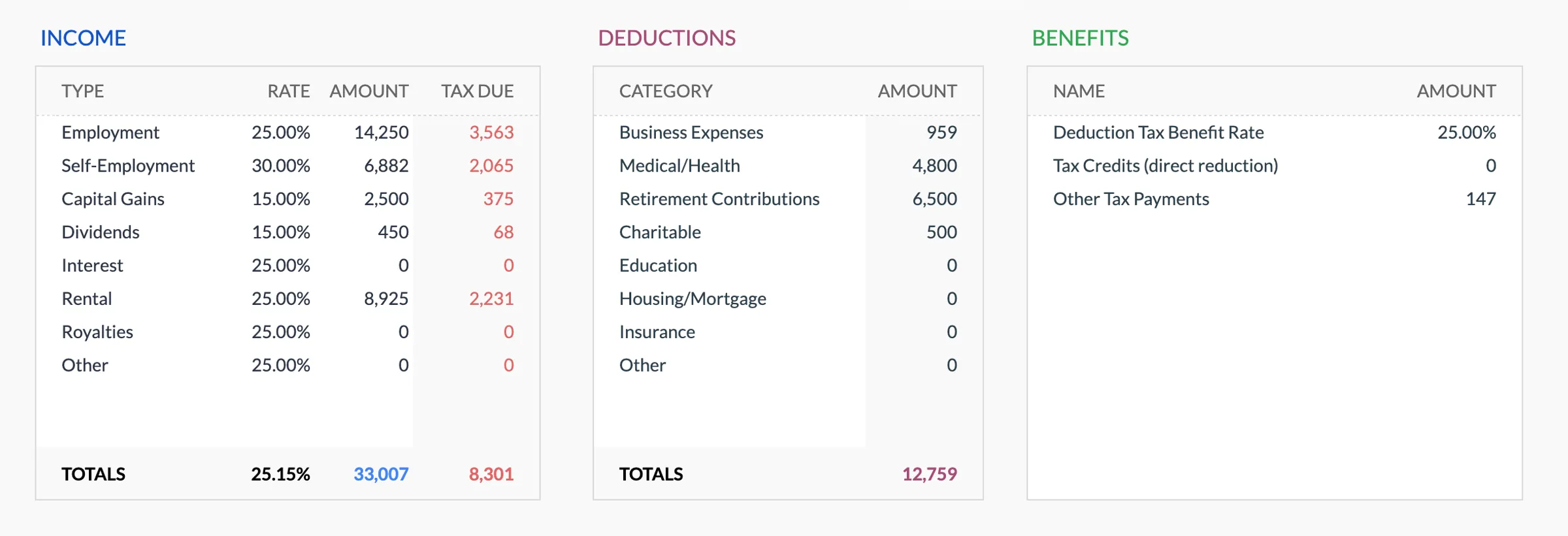
Annual tax overview with key figures
Detailed tax breakdown and projections
Track all income sources for tax purposes
Organize and track tax deductions
Plan and track quarterly estimated tax payments
Getting Started
Start Planning Your Rideshare Taxes
Log every drive
Track business miles for every shift. The template provides a mileage log format that satisfies IRS requirements.
Record income weekly
Enter your weekly earnings from each platform. Include tips, bonuses, and any incentive pay.
Track vehicle and other expenses
Log gas receipts, maintenance costs, phone bills, and other business expenses as they happen.
Calculate quarterly payments
Before each quarterly deadline, calculate your estimated payment based on year-to-date net income.
Compare mileage versus actual expenses
At year end, compare the standard mileage deduction to actual expenses. Use whichever is larger.
Common Questions
Tax Planner for Rideshare Drivers - FAQ
Do I count miles driving to the first pickup?
Miles from your home to the area where you start driving are generally commuting miles - not deductible. Miles between pickups, during rides, and while waiting for rides in the driving area are typically business miles.
Should I use the standard mileage rate or actual expenses?
Track both and compare at year end. For many rideshare drivers, the standard mileage rate produces a larger deduction, but it depends on your vehicle costs.
What about my phone bill?
The business-use percentage of your phone bill is deductible. If you estimate 50% of phone use is for rideshare driving, you can track 50% of the bill as a business expense.
Do I need to file quarterly if I also have a W-2 job?
If your W-2 withholding covers your total tax liability including rideshare income, you may not need quarterly payments. The template helps you compare withholding to total estimated tax.
What if I drive for multiple platforms?
Track each platform separately. The template combines all rideshare income into your total, but keeping platform-specific records helps reconcile 1099s at year end.
What is the most commonly missed deduction for drivers?
Mileage between rides and while waiting for pings. Many drivers only track miles with a passenger. All miles driven for business purposes - including repositioning and waiting - count.
How much is the standard mileage deduction worth for a typical rideshare driver?
At $0.67 per mile for 2024, a driver who logs 25,000 business miles generates a $16,750 deduction. This includes miles with passengers, miles driving to pickups, repositioning miles, and miles driven while the app is active. Tracking all qualifying miles - not just passenger miles - is where the biggest difference is made.
Can't find the answer you're looking for? Contact our team
Start tax planning as a rideshare driver
One-time purchase. No subscription. Your financial data stays in your Google Drive.